Original piece: 《14亿人全民通电,中国如何做到的?》
Produced by Institute for Planets (星球研究所)
Written by 桢公子
Translated by Kelvin Kwok
Posted with permission from Institute for Planets
The Wonders of Electric Power
In 2018, when the global power generation growth was lingering at 3.7%, China took the lead and achieved an 8.4% growth.
The annual power generation in China that year reached 7.1118 trillion kilowatt-hours (kWh), which accounted for a fourth of the power generated in the world. To put it into perspective, the power generated every two seconds was sufficient to meet a Chinese person’s lifetime demand for electricity (based on average longevity of 76 years and electricity consumption per capita in 2018).
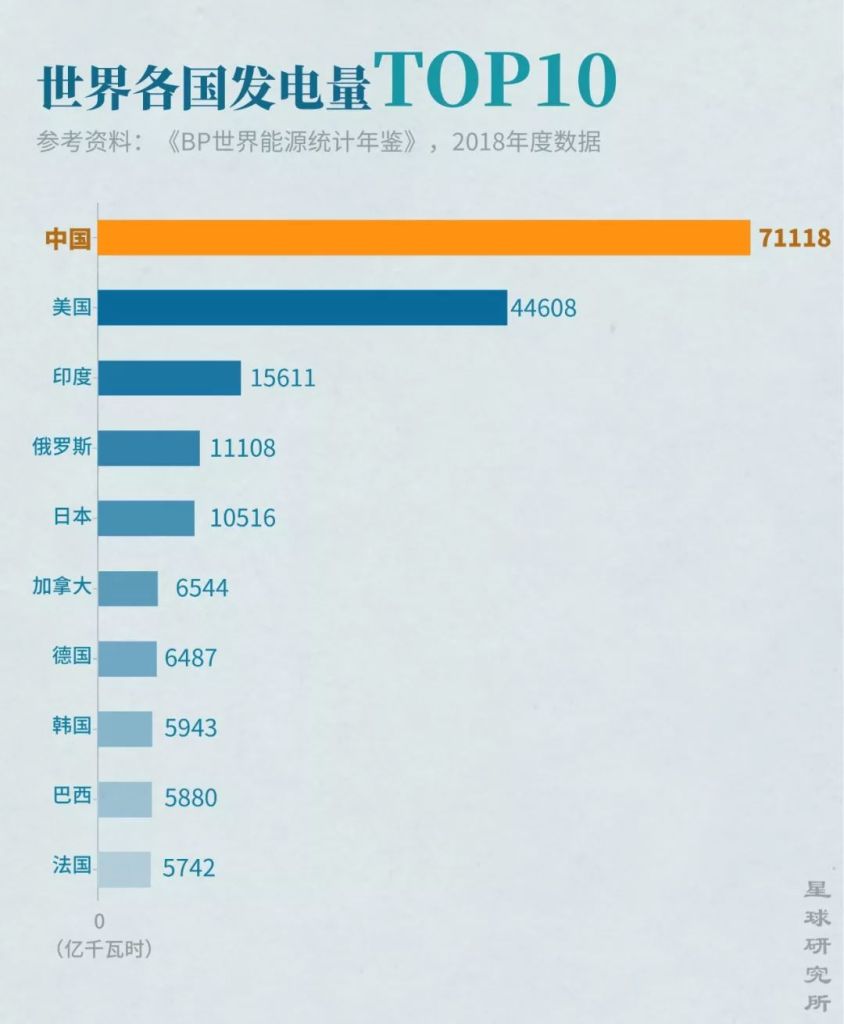
Countries: China (中国), United States (美国), India (印度), Russia (俄罗斯), Japan (日本), Canada (加拿大), Germany (德国), Korea (韩国), Brazil (巴西), France (法国)
Power generation measured in 100 million kWh (亿千瓦时)
Reference: BP Statistical Review of World Energy 2018
(diagram: 郑伯容, Institute for Planets)
Among all the 233 countries and regions in the world, China is the first and currently the only one to have the entire population of 1.4 billion connected to electricity.
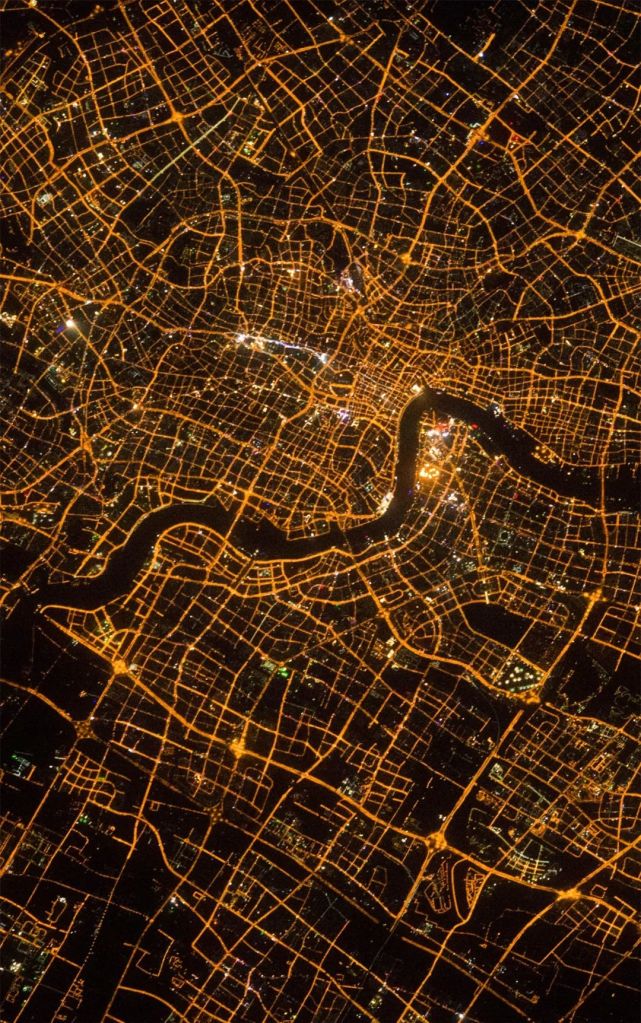
(photo: NASA)
How did China achieve this?
1. 70.4%
Of the 7.1118 trillion kWh of electricity generated in China, 70.4% is contributed by thermal power alone.
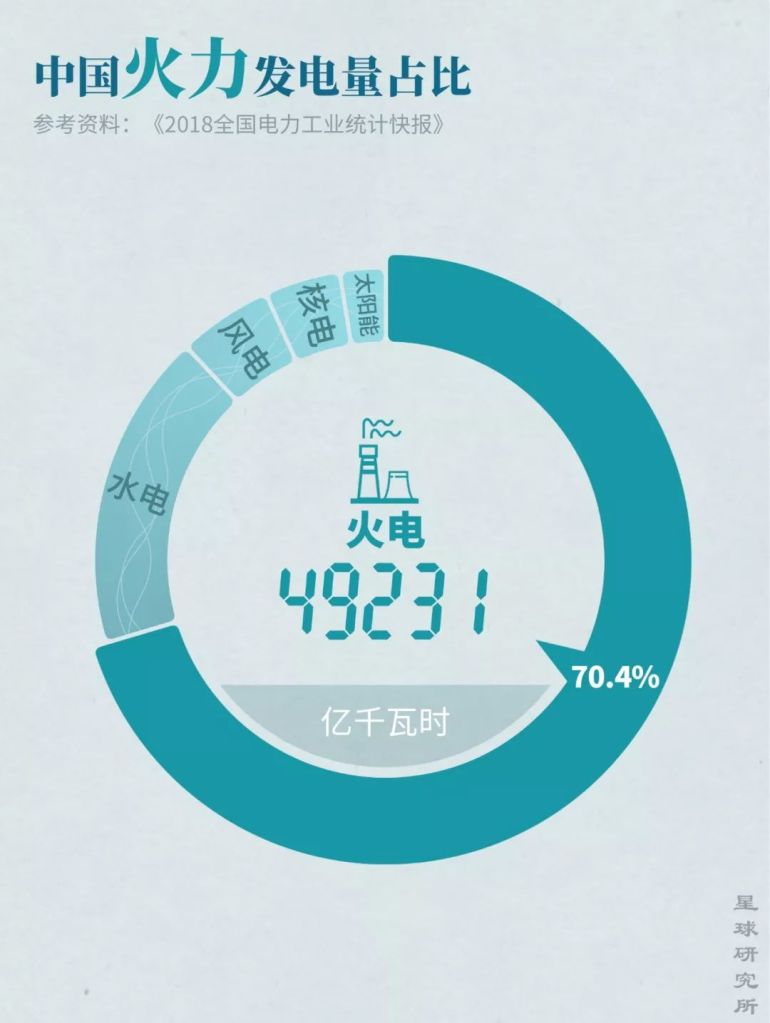
Types of electric power: thermal power (火电), hydropower (水电), wind power (风电), nuclear power (核电), solar power (太阳能)
· Unit: 100 million kWh (亿千瓦时)
· Reference: National Electrical Industry Statistical Bulletin 2018
(diagram: 郑伯容, Institute for Planets)
Soaring chimneys and massive cooling towers are the most common features of a thermal power plant.
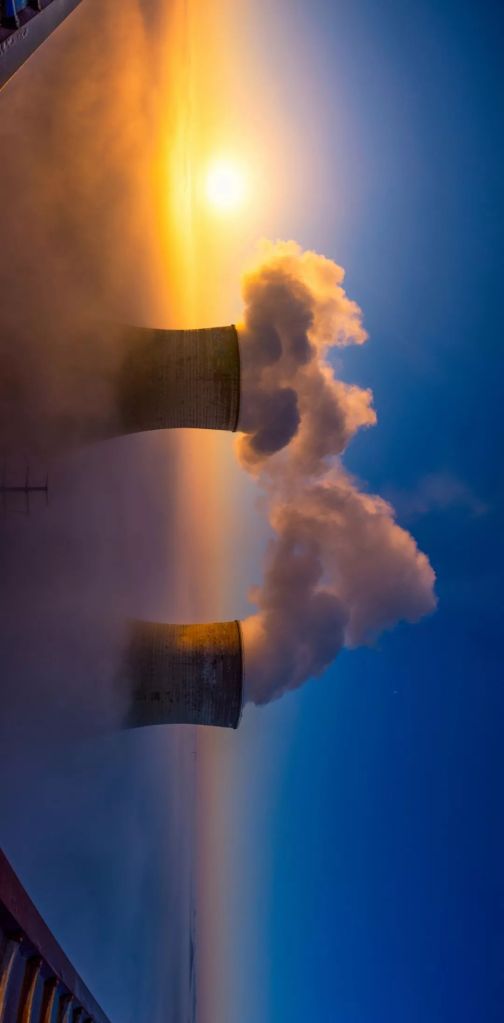
Heated cooling agents in the power plant are cooled down and recycled in the cooling towers. With recent advancement in treatment processes, chimneys in thermal power plants are increasingly combined with desulphurisation towers
(photo: 孟祥和)
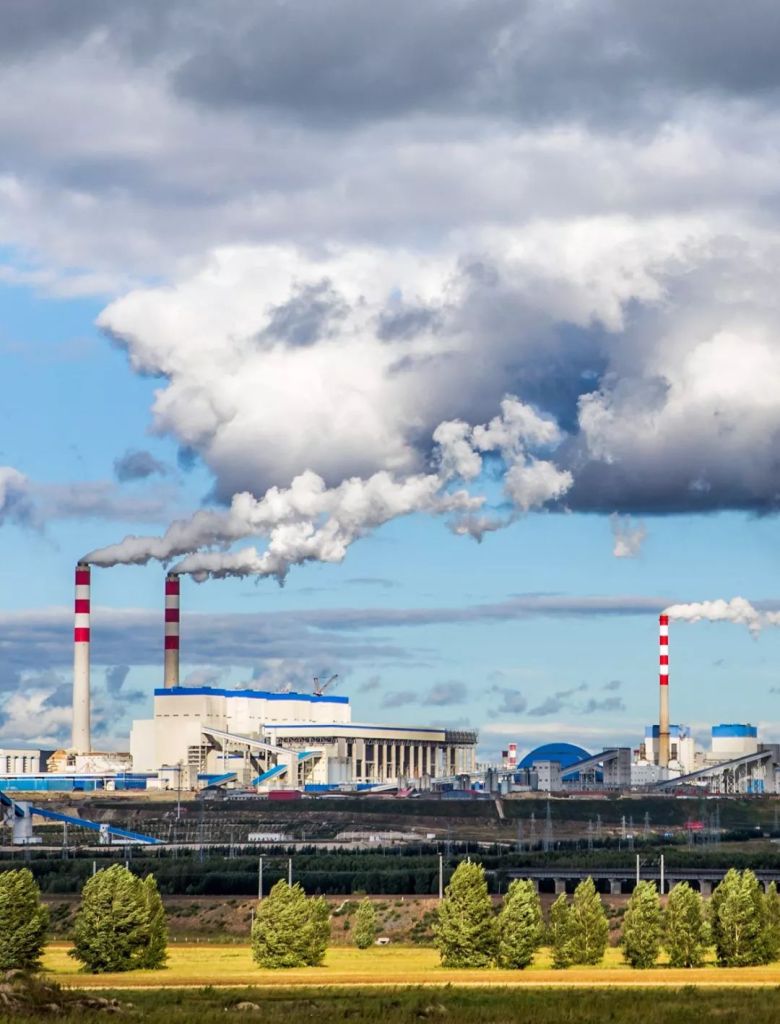
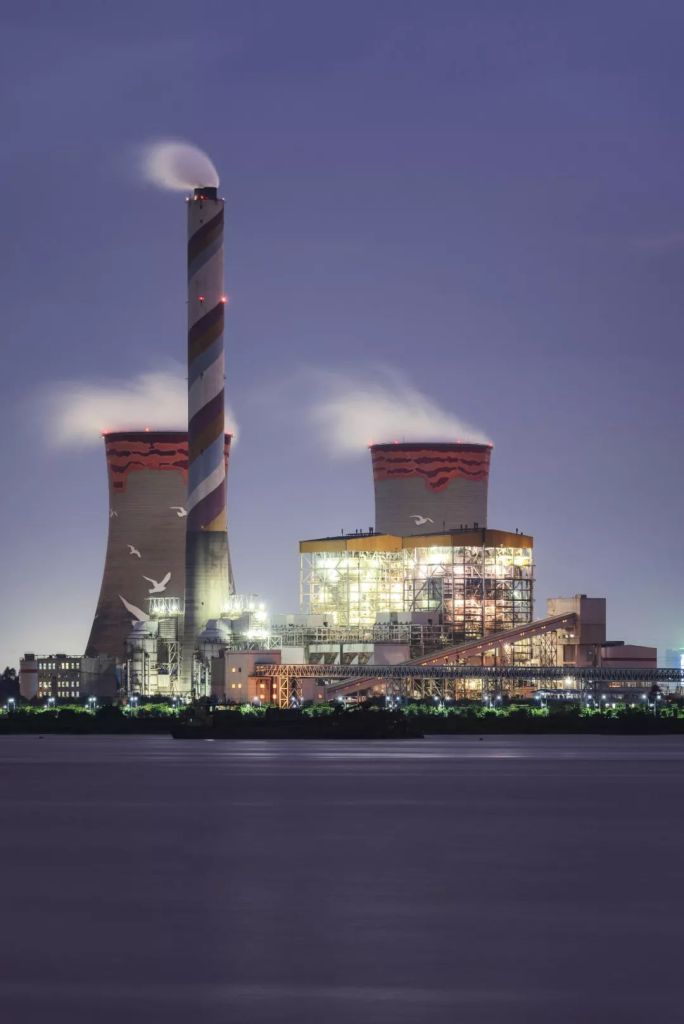
Commonly used fuels for thermal power plants include coal, oil, natural gas, and even straw and garbage. Owing to the relatively mature technology and ample fuel supply, thermal power plants are widely distributed in China.
(photo: 鹿钦平)
(photo: 陈国亨)
In a ‘country of coal’ like China, coal-fired power plants are destined to dominate thermal power generation, with their installed capacity accounting for almost 90% of all thermal power plants.
Every year, 3.68 billion tons of raw coal are mined from more than 5800 coal mines across the country, and at least half of them are sent to these thermal power plants to be burnt*.
* 2018-2019 Analysis and Forecast Report on Electricity Supply and Demand

Lower right shows the coal reserve for the power plant
(photo: 尚影)
Thus, the thermal power landscape in China is closely associated with the capacity of coal production. Indeed, in northern regions* where coal is relatively abundant, the installed capacity of thermal power contributes more than 70% of all electric power.
* ‘Northern regions’ refer to Northeast China, Northwest China excluding Qinghai, Northern China, Shandong and Henan
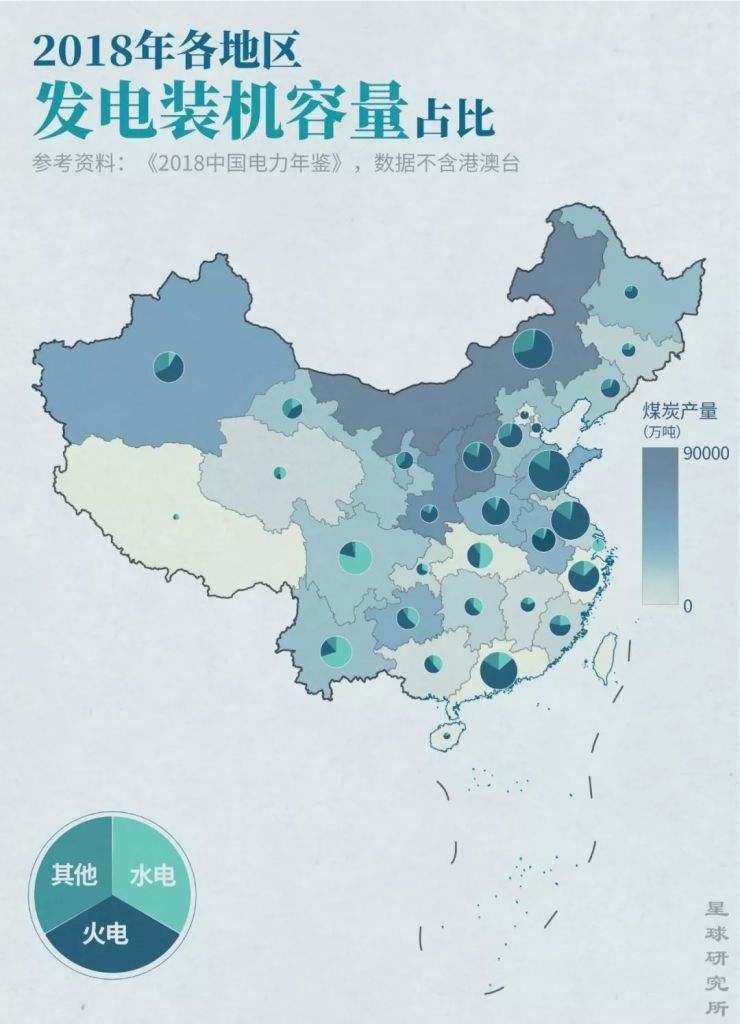
Power type: thermal power (火电), hydropower (水电) and others (其他)
Coal production (煤炭产量) measured in 10,000 tons (万吨)
Reference: China Electric Power Yearbook 2018, excluding data from Hong Kong, Macau and Taiwan
(diagram: 郑伯容, Institute for Planets)
It may seem surprising, though, that many coastal provinces in the south are ranked among the top 10 based on their absolute thermal power installed capacity, outcompeting many coal-producing provinces.
These ‘special’ regions, including Shandong, Jiangsu, Inner Mongolia, Guangdong, Henan Shanxi, Zhejiang, Anhui, Xinjiang and Hebei, are usually densely populated with a more developed economy, and thus have an extremely high demand for electric power.
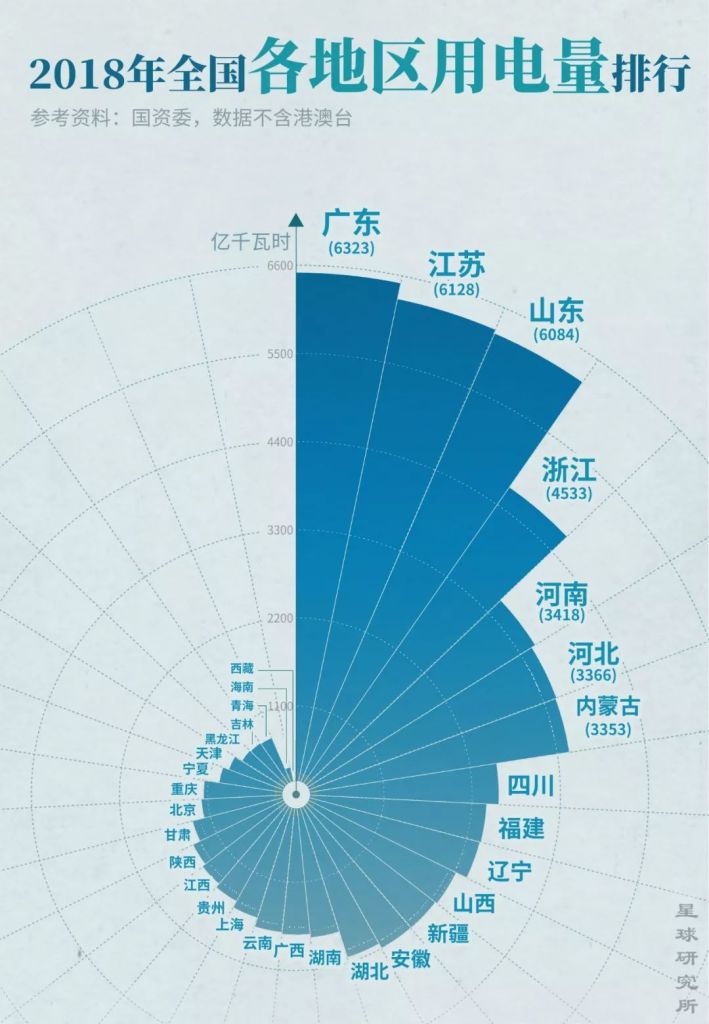
Regions: Guangdong (广东), Jiangsu (江苏), Shandong (山东), Zhejiang (浙江), Henan (河南), Hebei (河北), Inner Mongolia (内蒙古), Sichuan (四川), Fujian (福建), Liaoning (辽宁), Shanxi (山西), Xinjiang (新疆), Anhui (安徽), Hubei (湖北), Hunan (湖南), Guangxi (广西), Yunnan (云南), Shanghai (上海), Guizhou (贵州), Jiangxi (江西), Shaanxi (陕西), Gansu (甘肃), Beijing (北京), Chongqing (重庆), Ningxia (宁夏), Tianjin (天津), Heilongjiang (黑龙江), Jilin (吉林), Qinghai (青海), Hainan (海南), Tibet (西藏)
Reference: State-owned Assets Supervision and Administration Commission of the State Council, excluding data from Hong Kong, Macau and Taiwan
(diagram: 郑伯容, Institute for Planets)
Numerous thermal power plants were built to meet their urgent demand for electricity.
For instance, the thermal power generated only for Guangdong in 2017 was 316.5 billion kWh, far exceeding that for coal-producing Shanxi by 26 %.
To generate power at such scale, coal consumption is measured in hundreds of millions of tons. But major load centres like Guangdong usually lack coal mines, and the closest one may be thousands of miles of way.
How are mountains of coal delivered to these regions?
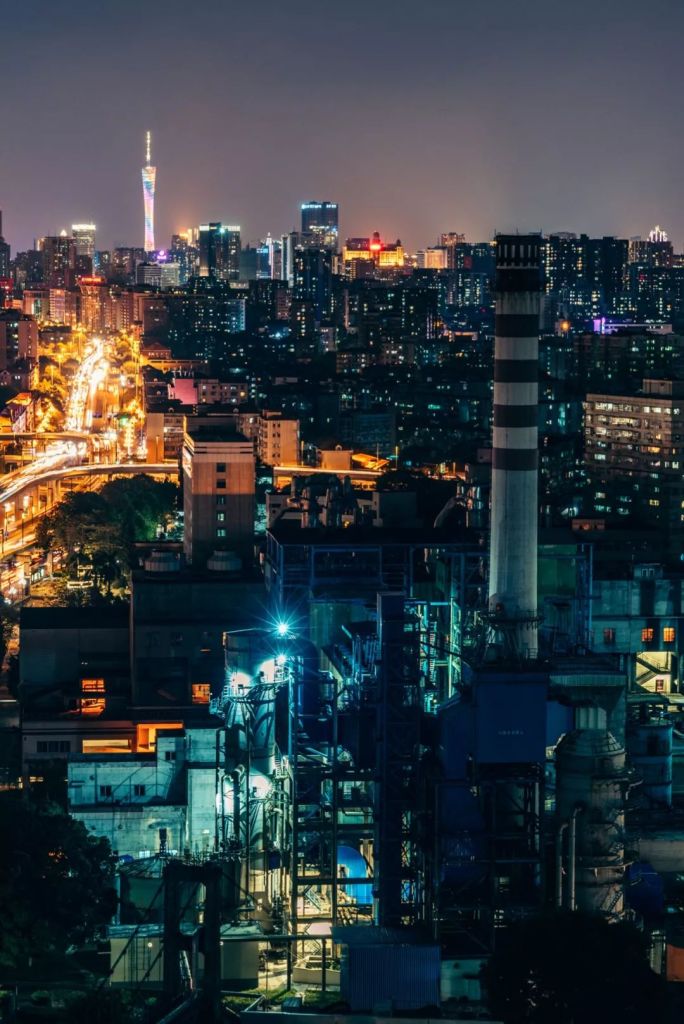
Coal is either domestically produced or imported in China
Since imported coal accounts for only approximately 10% of the country’s coal consumption, this piece will focus mainly on the domestically produced coal
(photo: 刘文昱)
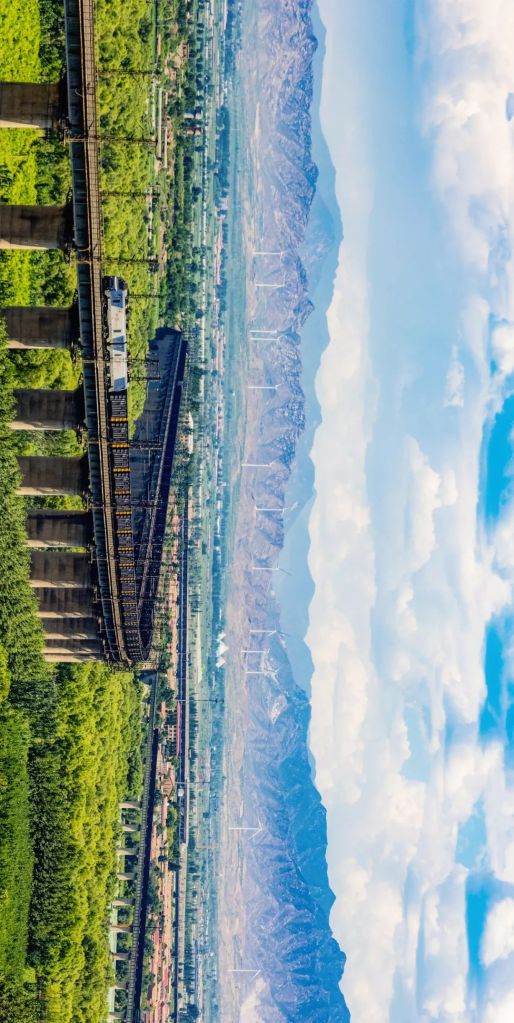
Let us take a look at the famous railway running between Datong, Shanxi, and Qinhuangdao, Hebei.
Accounting for less than 0.5% of the total railway mileage in China, it is responsible for almost 20% of all railway transportation of coal. Every second there are approximately 14 tons of coal arriving at the coast of the Bohai Gulf on this train.
This is the Datong-Qinhuangdao Railway, or the Daqin Railway.
It is the first heavy-haul railway in China. A single train is about 4000 metres long, which is about the length of 10 to 20 concatenated high-speed railway trains. Once the coal arrives at the Qinhuangdao Port, it can be shipped more economically to the coastal regions in the east and southeast.
The cost for river transportation is about 30-60% of that for railway transportation, and will be even less for shipping by sea
(photo: 姚金辉)
During the Spring Festival in 2008, the southern regions of China were freezing cold with snow and rain. Many power transmission lines and transportation routes were damaged, forcing 17 provinces to restrict power usage despite the tough winter.
It was then when the single-day transportation volume of Daqin Railway exceeded 1 million tons for the first time. Thanks to this additional freight capacity, enormous amount of coal was sent to the south continuously for the next 20 days, literally ‘delivering coal in the snow when it is most needed (雪中送炭)’.
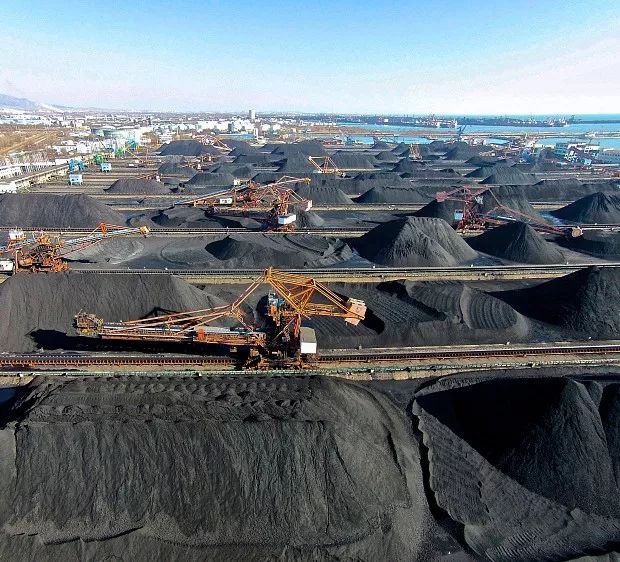
(photo: VCG)
But the Daqin Railway is just the tip of the iceberg of the coal railway transportation network in China.
The Kholbolji-Ji’an Railway (or Haoji Railway, previously known as Menghua Railway), which inaugurated in September 2019, is another heavy-haul railway carrying coal from Inner Mongolia, Shanxi and Shaanxi to Central China. Spanning more than 1800 kilometres and crossing seven provinces, this railway is the largest of its kind in the world.
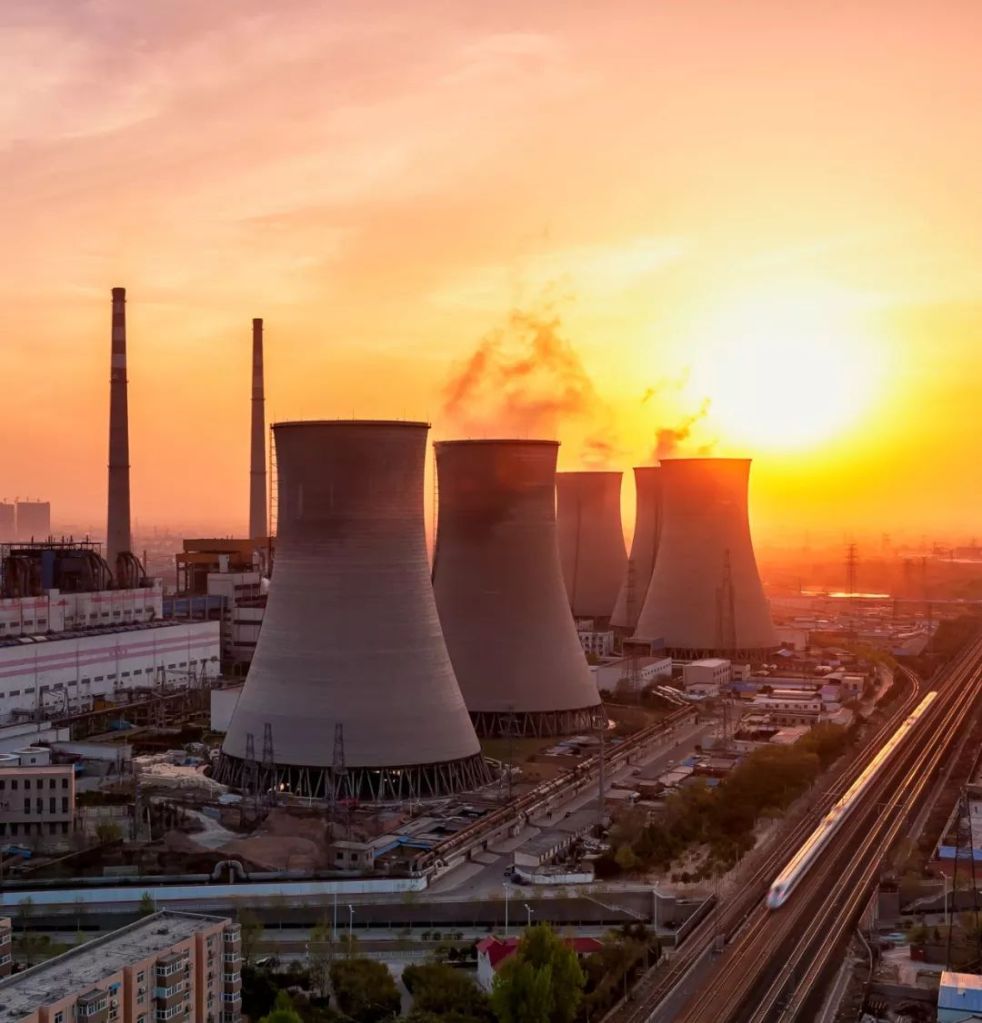
(photo: 焦潇翔)
According to the master plan, there will be a massive railway network connecting Shanxi, Shaanxi, Inner Mongolia, Xinjiang, coastal areas, as well as regions along rivers. Like arteries in the body, they will distribute 75% of domestically produced coal to regions all over the country.
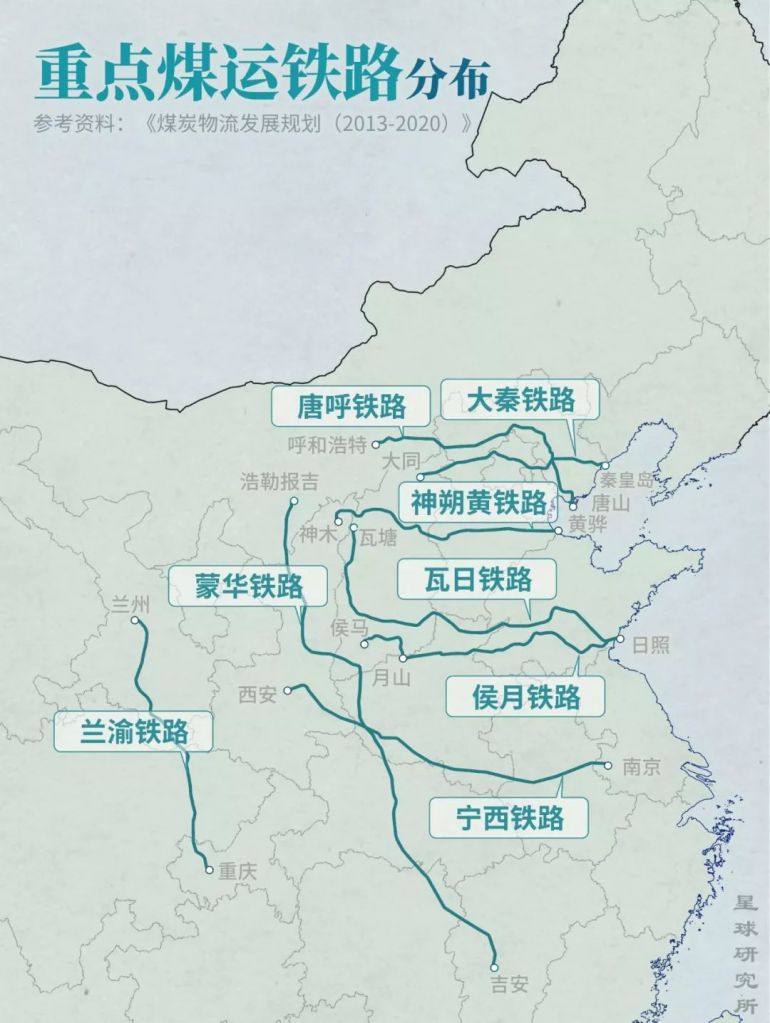
Together with other transportation means such as road and waterway transport, the railway routes form a ‘nine vertical and six horizontal’ coal transportation network
Railways: Daqin Railway (大秦铁路), Tanghu Railway (唐呼铁路), Shenshuohuang Railway (神朔黄铁路), Haoji Railway (浩吉铁路/蒙华铁路), Wari Railway (瓦日铁路), Houyue Railway (侯月铁路), Lanyu Railway (兰渝铁路), Ningxi Railway (宁西铁路)
Cities: Datong (大同), Qinhuangdao (秦皇岛), Tangshan (唐山), Hohhot (呼和浩特), Shenmu (神木), Huanghua (黄骅), Kholbolji (浩勒报吉), Ji’an (吉安), Watang (瓦塘), Rizhao (日照), Houma (侯马), Yueshan (月山), Lanzhou (兰州), Chongqing (重庆), Nanjing (南京), Xi’an (西安)
(diagram: 郑伯容, Institute for Planets)
However, the coal transportation network, no matter how established it is, is still not a long-term solution for the rapidly rising electricity demand.
Moreover, the thermal power plants scattered around load centres are usually small or medium-sized. While the cost of construction of these plants is lower, they generate power at a much lower efficiency and consume 30-50% more coal than large plants.
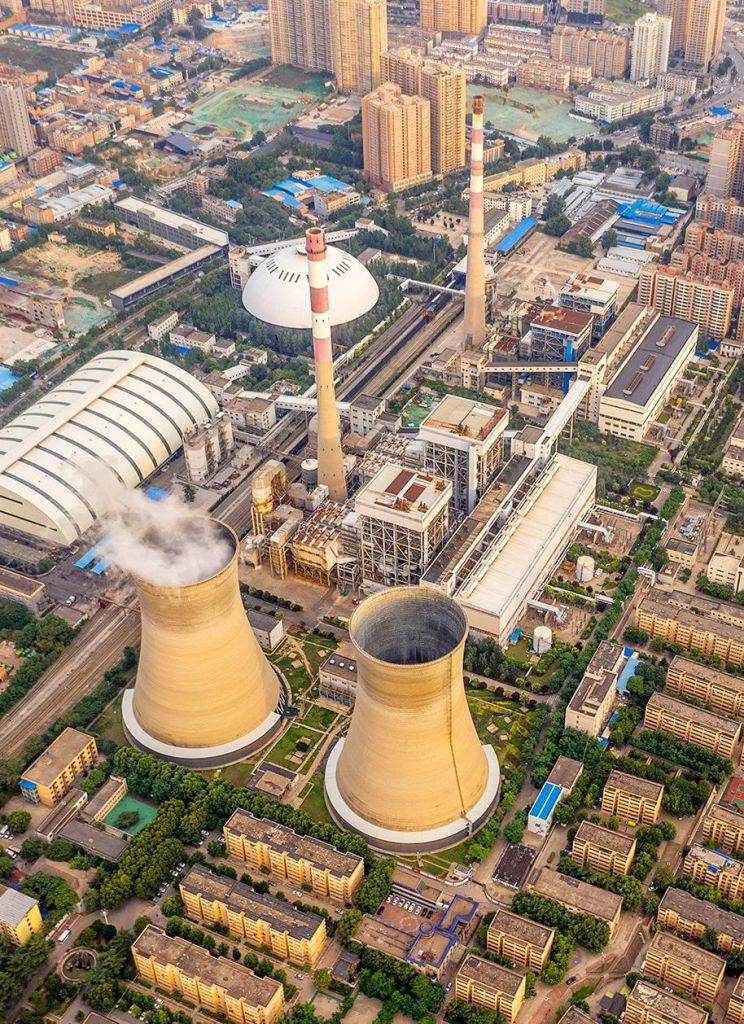
Located in the city centre of Xi’an, it has an installed capacity of 249,000 kWh
(photo: 李顺武)
Particularly during the early days when China was relatively underdeveloped, it was practically impossible to have a centralised and efficient system to process air pollutants, including soot, sulphur dioxide and nitric oxides, that were released by all these small and medium-sized power plants.
The turning point came in the 1960s, when large thermal power plants located near coal mines and transit ports started booming.
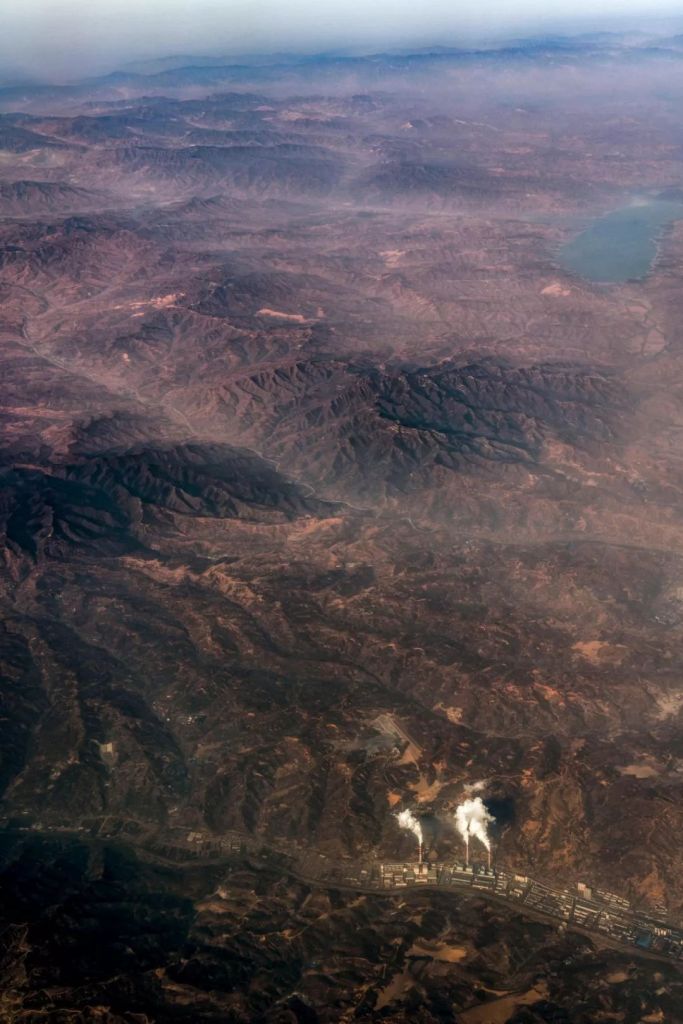
Also known as mine-mouth power station, it is located near a coal mine
(photo: 陈剑峰)
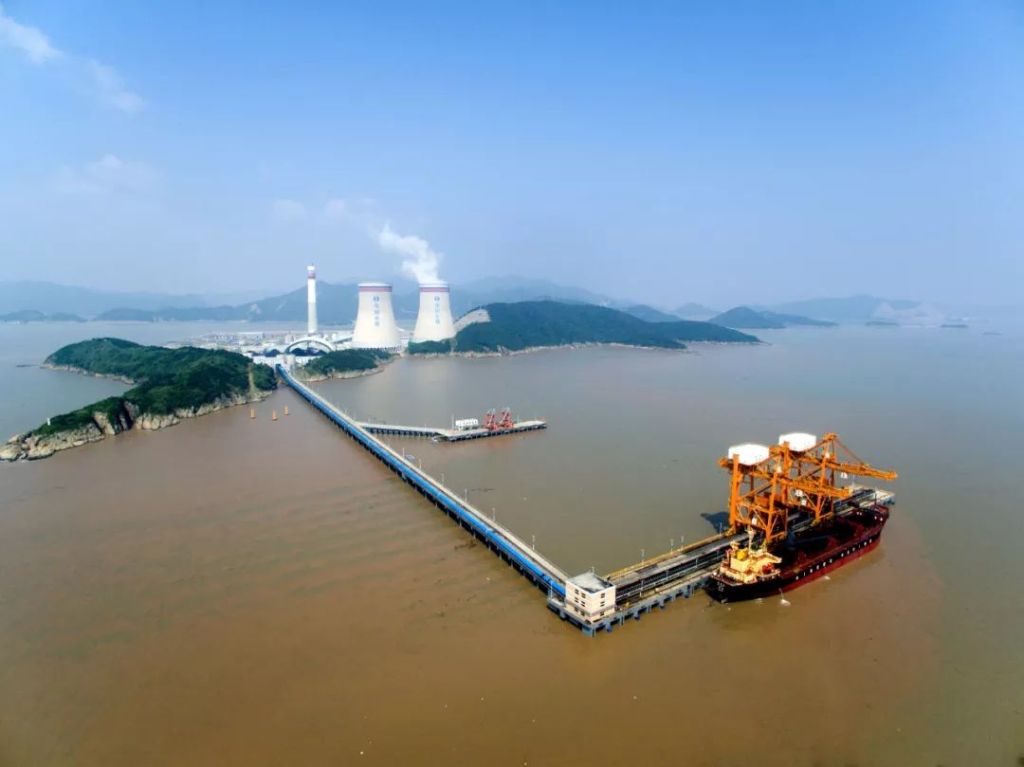
Also known as harbour power station, it is sitting right next to a port
(photo: 汪开敏)
One of them is the Tuoketuo Power Station in Hohhot, Inner Mongolia, located just 50 kilometres away from the Dzungaria coal field. It is the largest coal-fired power plant in the world with an installed capacity of 6.72 million kWh.
Building large power plants at mine mouths or by a port not only substantially alleviates the burden on coal transportation, but also improves thermal efficiency for power generation and allows centralised emission controls.
But now the load centres are thousands of miles away from the plants.
What’s next?
The simple answer is power transmission.
As always, it is easier said than done.
First, the electrical resistance in the transmission line will become enormous when transmitting power across vast distances. Therefore, the transmission current will have to be reduced as much as possible to minimise power loss. To maintain a given transmission power, the transmission voltage has to be maximised while being economical.
Joule’s Law is given by Q = I2Rt, where Q is the energy loss. When resistance (R) becomes substantial, a smaller current (I) results in a smaller energy loss.
Electric power can be calculated by P = I x U, where P is the power. To maintain a constant P while minimising the current (I), the voltage (U) has to be maximised.
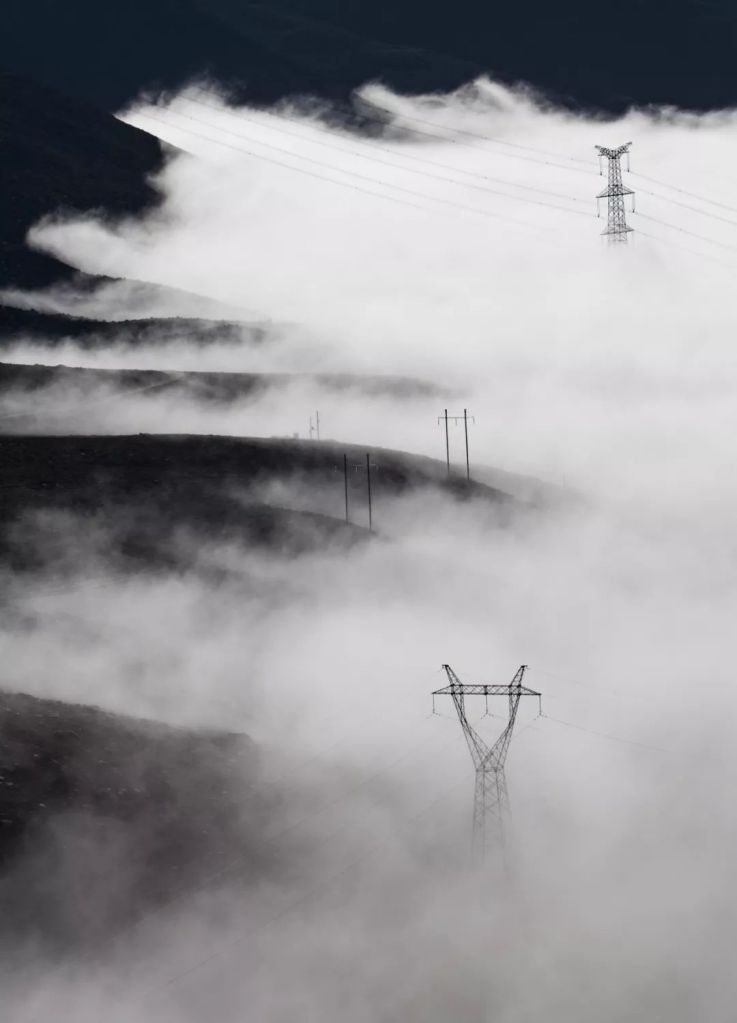
(photo: 李珩)
The first domestically designed and constructed high-voltage transmission line in China was completed in 1954. With a transmission distance of only 369 kilometres and a voltage of 220 kilovolts (kV), the technology then was about 30 years behind the world.
But in the next 65 years, the Chinese managed to conquer extra-high voltage and ultra-high voltage transmission one after another. It was an explosive advancement in long-distance electric power transmission, that the highest voltage achieved has today reached 1000 kV for alternating current (AC) and ±1100 kV for direct current (DC) transmission. The single-route transmission distance has even exceeded 3000 kilometres, which is approximately the straight-line distance between Urumqi and Nanjing.
For AC transmission, high, extra-high and ultra-high voltages are defined as 35-220 kV, 330-1000 kV and >1000 kV, respectively.
For DC transmission, extra-high and ultra-high voltages are defined as ±400-±600 kV and >±800 kV, respectively
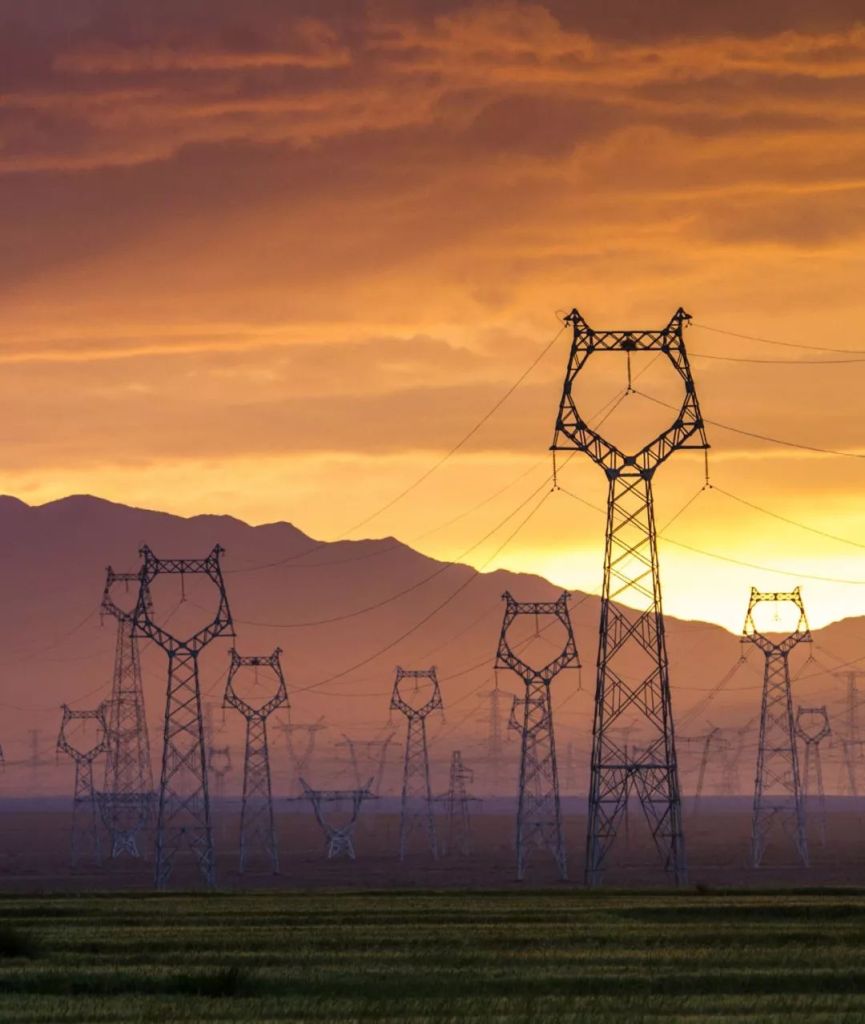
(photo: 刘忠文)
The coal transportation railway and power transmission networks work together to coordinate the operation of all thermal power plants, be they located in load centres, next to coal mines or by the sea. They serve as the mainstay for the power industry in China.
Having said that, in spite of the constant improvement in dust removal, desulphurisation and denitrification processes, thermal power generation is still a major consumer of fossil fuel and emitter of greenhouse gas. A cleaner alternative for energy is desperately needed.
Therefore, the Chinese turned to hydropower.
2. 88%
China tops the world ranking in both the total reserve in hydraulic resource and the potential installed capacity that comes with it.
The country is so rich in hydraulic resources that hydropower is currently the second largest energy source, accounting for 17.6% of total power generation. Together, hydropower and thermal power supply as much as 88% of the electricity generated in China.
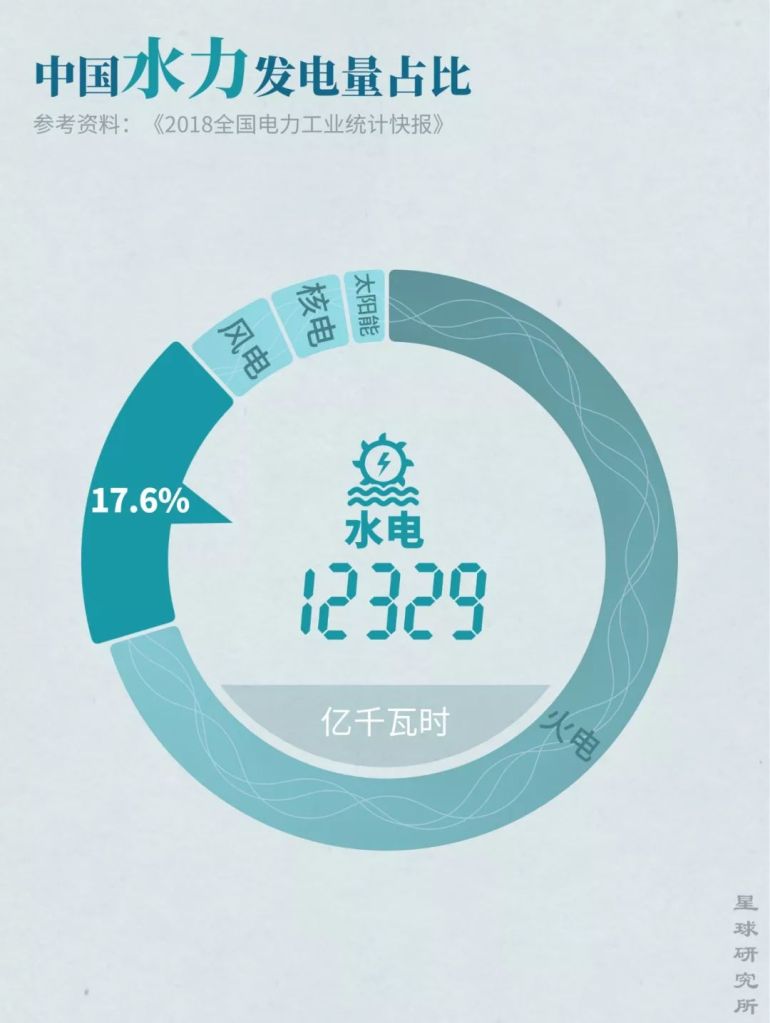
(diagram: 郑伯容, Institute for Planets)
Hydropower exploits the potential energy derived from falling water or kinetic energy of running water to drive the rotation of turbines in a power generator. It neither burns fuels nor emits any exhaust gas, and is therefore much cleaner than thermal power.
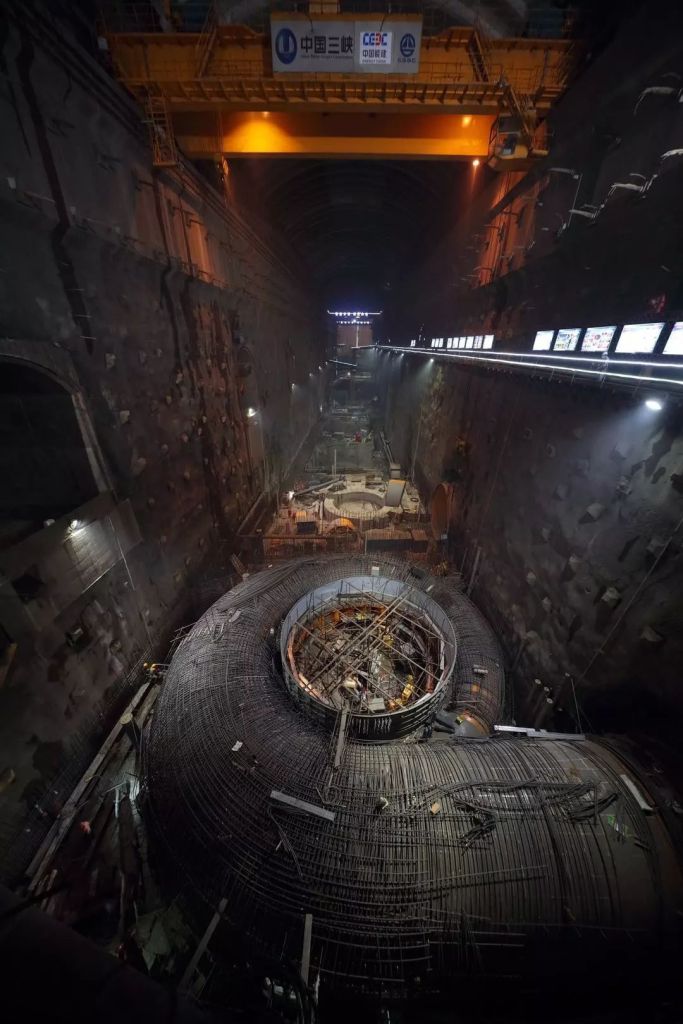
It is designed to divert flowing water that drives the turbine along the circumferential direction
(photo: 李亚隆)
In 2018, hydropower generated 1.2329 trillion kWh in China, saving almost 400 million tons of coal.
When carefully designed and located, hydropower plants can also be utilised for flood control, shipping and as a water supply.
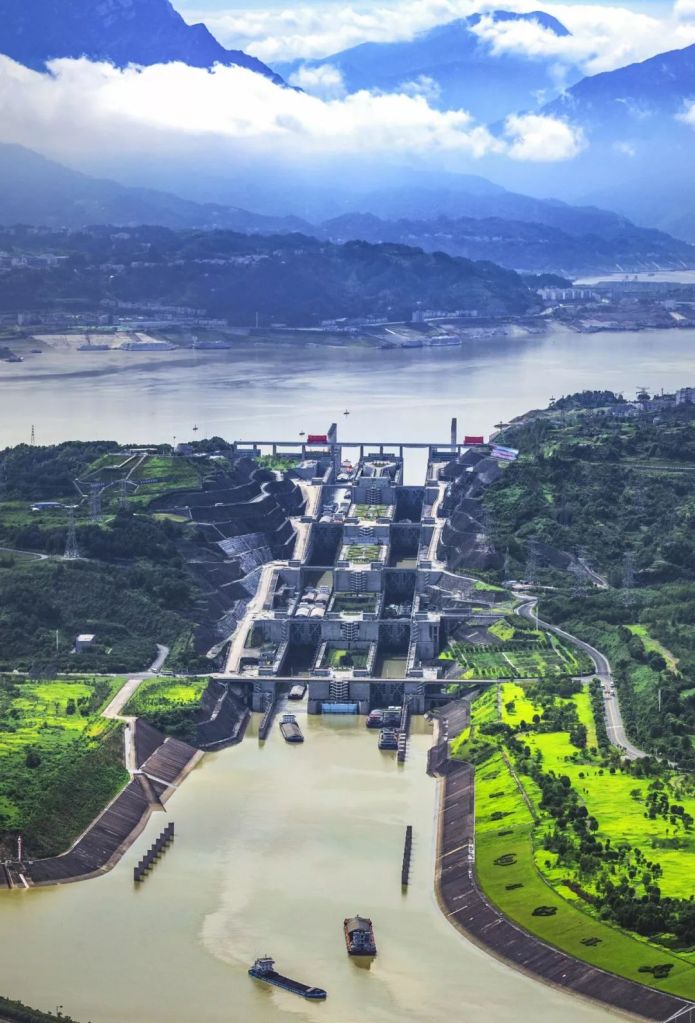
The difference in water level in the ship lock can be as much as 113 metres, approximately 35 stories high
(photo: 李心宽)
As well as for water transfer or sand discharge.
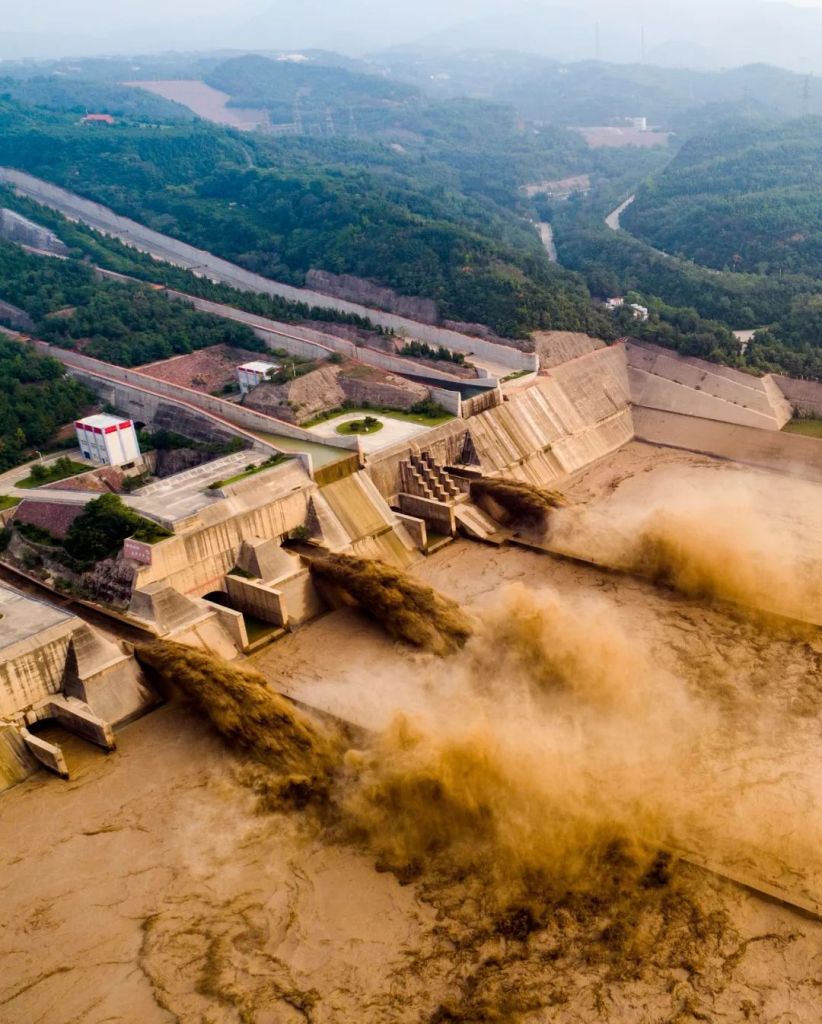
(photo: 邓国晖)
Or even paint a beautiful landscape in the upstream reservoir area.
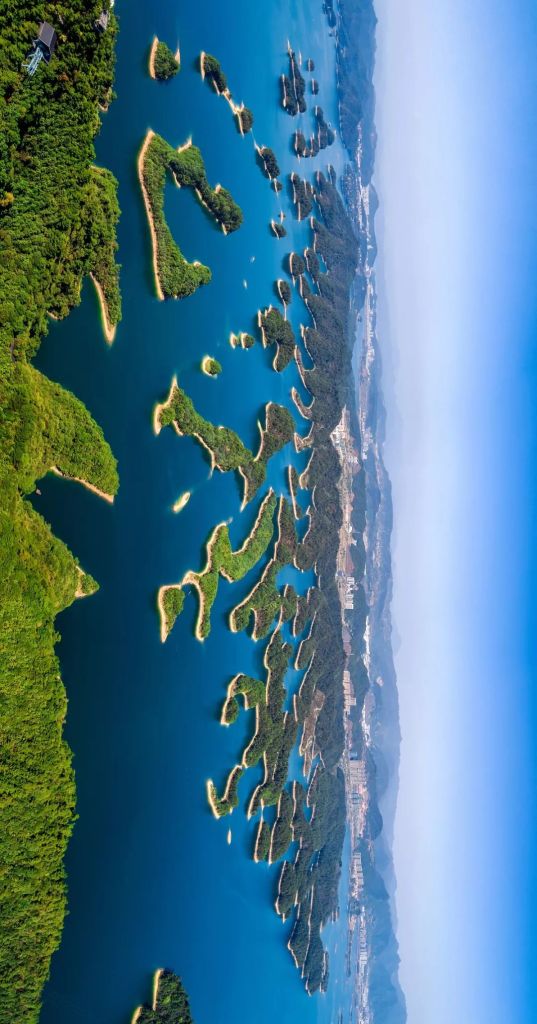
(photo: VCG)
The problem with hydropower in China, however, is the uneven distribution of hydraulic resources.
More than 60% of the exploitable resources are concentrated in the southwest regions, where large rivers originate and rush down from the Tibetan Plateau through mountains and canyons.
These regions accommodate 8 out of the 13 large hydropower plants (installed capacity >1.2 million kW) in China, which are dispersed along Jinsha River, Salween River (or Nu River in Chinese, literally meaning ‘furious river’), Lancang River, Dadu River, Wu River, Yalong River, Nanpan River, Hongshui River and the upstream stretches of Yangtze River.
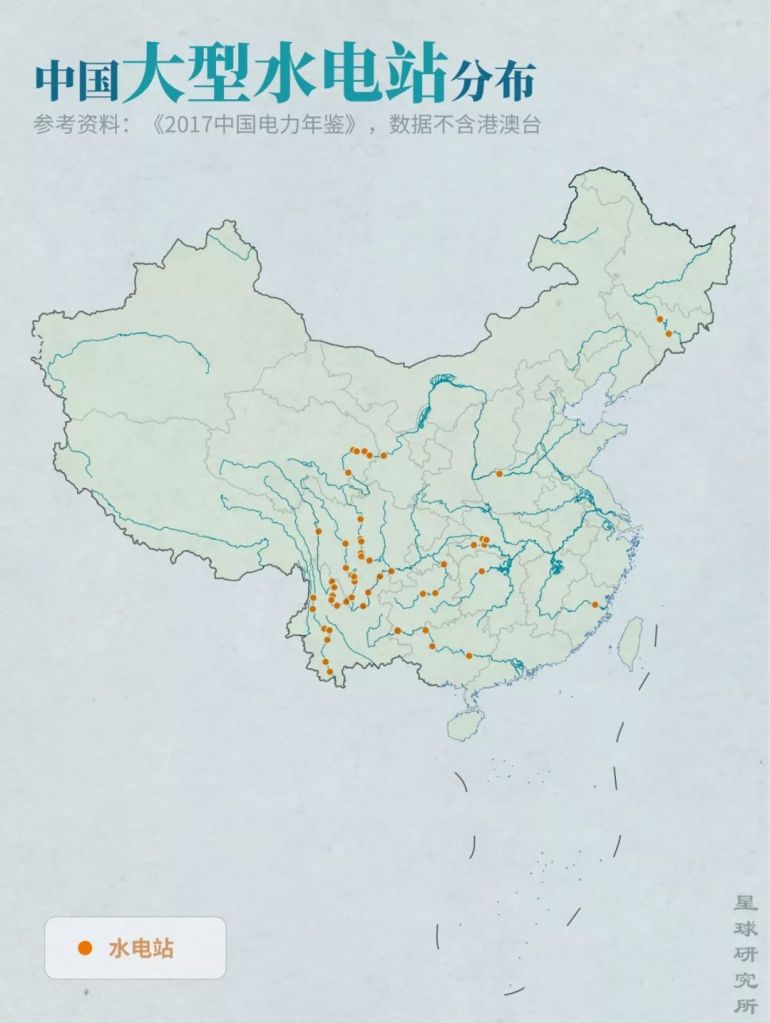
Upstream basin of Yangtze River refers to Yibin-to-Yichang section of the river
Orange dots indicate hydropower plants
(diagram: 郑伯容 & 巩向杰, Institute for Planets)
In contrast to thermal power, the ‘fuel’ in hydropower is not mobile, and the power plant has to be placed right next to it. Hence, it has o rely on power transmission to supply electricity to load centres.
This is why the potential of hydropower is always tightly coupled with the development in long-range power transmission technologies.
And that is exactly what catalysed the continuous technological leaps in the latter.
One by one, Chinese engineers succeeded in building the country’s first 10 kV AC transmission line, the first 110 and 220 kV high voltage AC transmission line, the first 330 kV extra-high voltage AC transmission line, and the first high voltage DC transmission line.
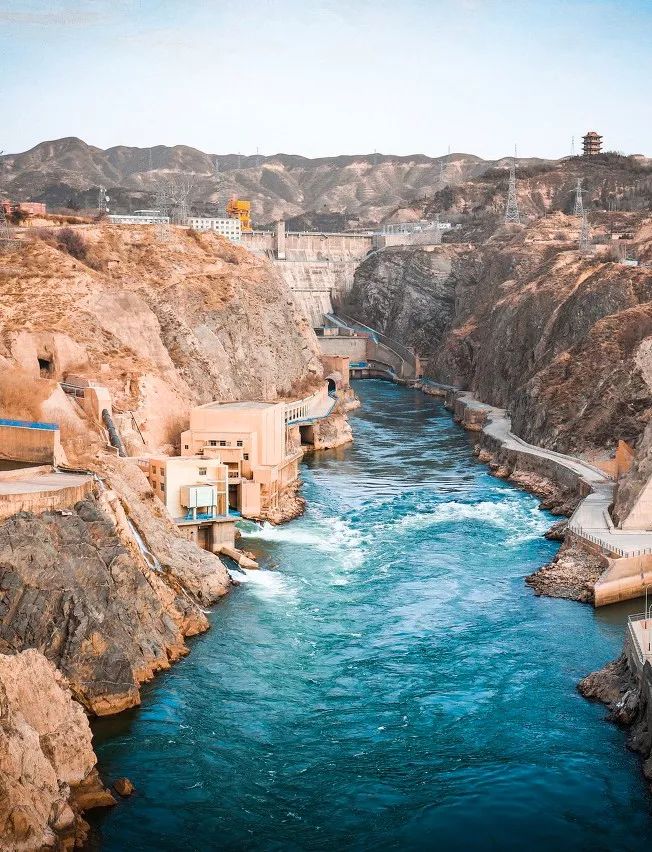
(photo: 图虫创意)
The Gezhou Dam, completed towards the end of 1988, was the first hydropower plant on the Yangtze River. Famously referred to as the ‘first dam of the thousand-mile Yangtze’, it is complemented by the country’s first extra-high voltage AC transmission line with a transmission voltage of ±500 kV and a transmission distance of 1046 kilometres.
Joining force with the Central China and Eastern China power grid, the Gezhou Dam diligently generates electricity for Shanghai.
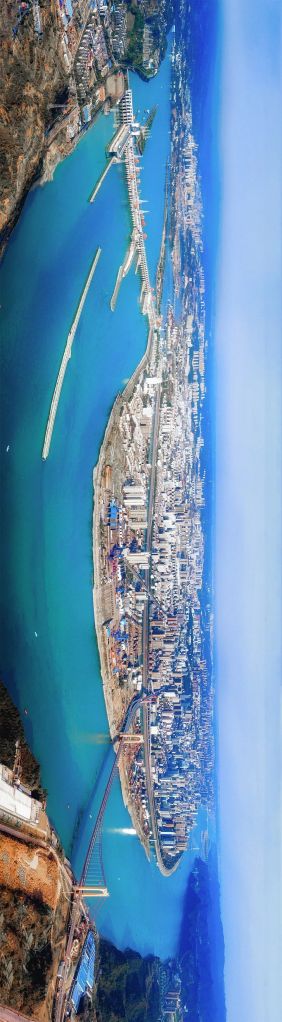
(photo: 李理)
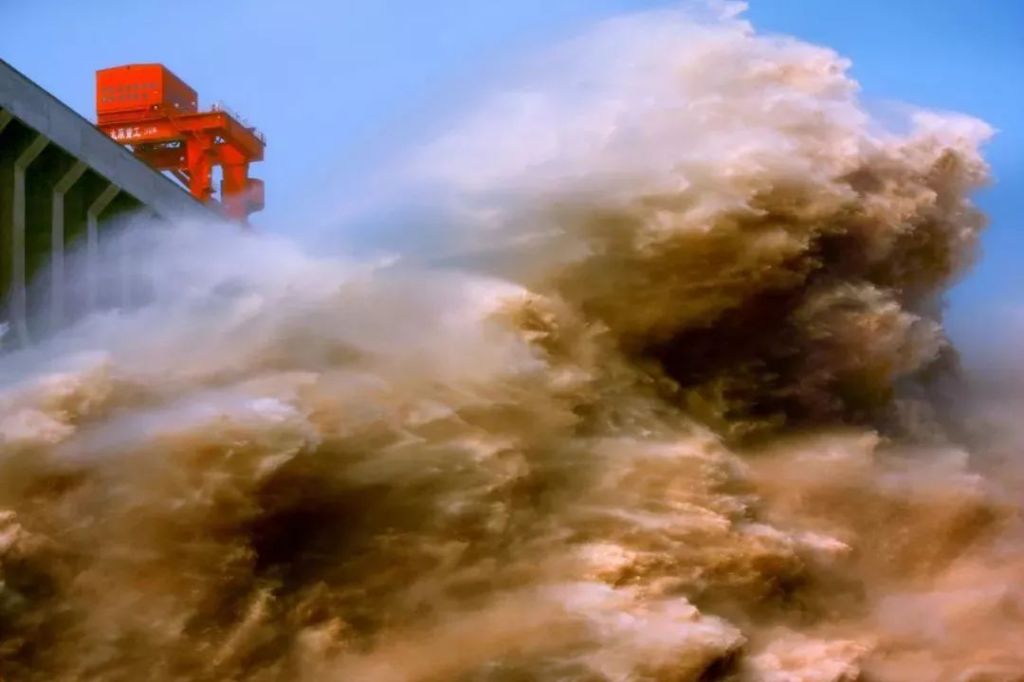
The world’s largest hydroelectric dam, Three Gorges Dam, has an installed capacity of 22.5 million kW. This is equivalent to 8 Gezhou Dams and 3 Tuoketuo Power Stations (world’s largest thermal power plant) combined.
The electric power generated by the Three Gorges Dam in 2018 exceeded 100 billion kW for the first time since its completion. This equates to a good 40% of the power generation capacity of the entire Hubei province, and easily sets the new world record for annual hydroelectric power generation.
Jiangsu, Guangdong and Shanghai on the other side of the country are also connected to this ‘super generator’ via three ±500 kV DC transmission lines.
(photo: 黄正平)
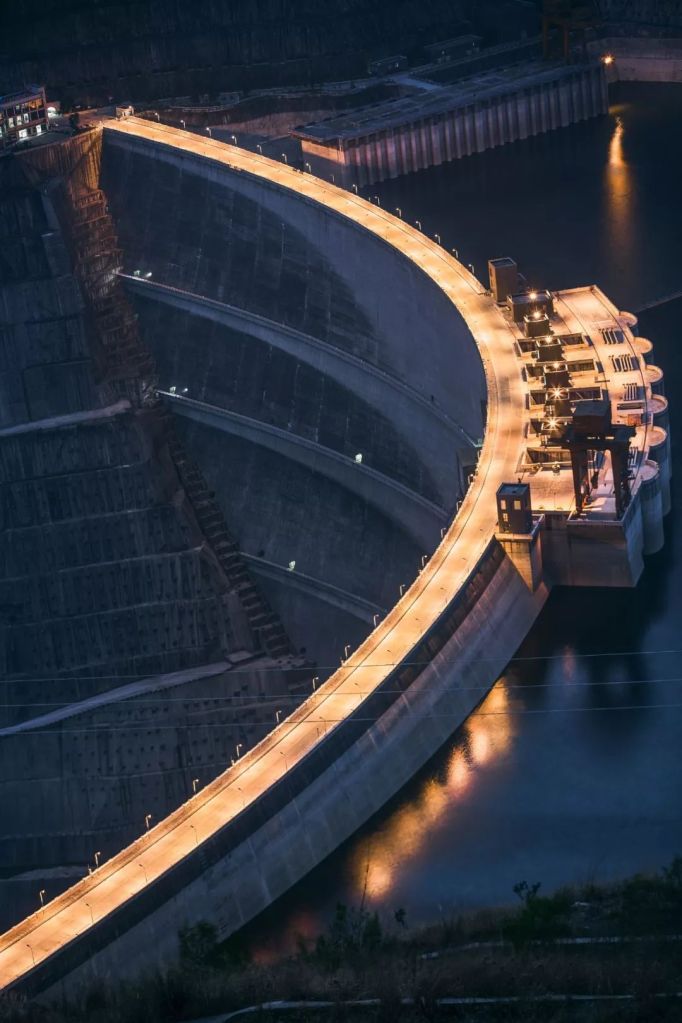
And with the Xiaowan Dam in Yunan coming into service, the world’s first ±800 kV ultra-high voltage DC transmission line made its timely debut. The transmission distance is about 1438 kilometres, which is capable of sending electric power from Yunan all the way to Guangdong.
After decades of catching up, China is now finally back at the forefront with the rest of the world in the upcoming era of ultra-high voltage power transmission.
(photo: 熊发寿)
The coverage of hydropower has grown substantially since then.
Numerous hydroelectric power plants have risen from the grounds of Southwest China to keep the east and southeast regions connected to the grid.
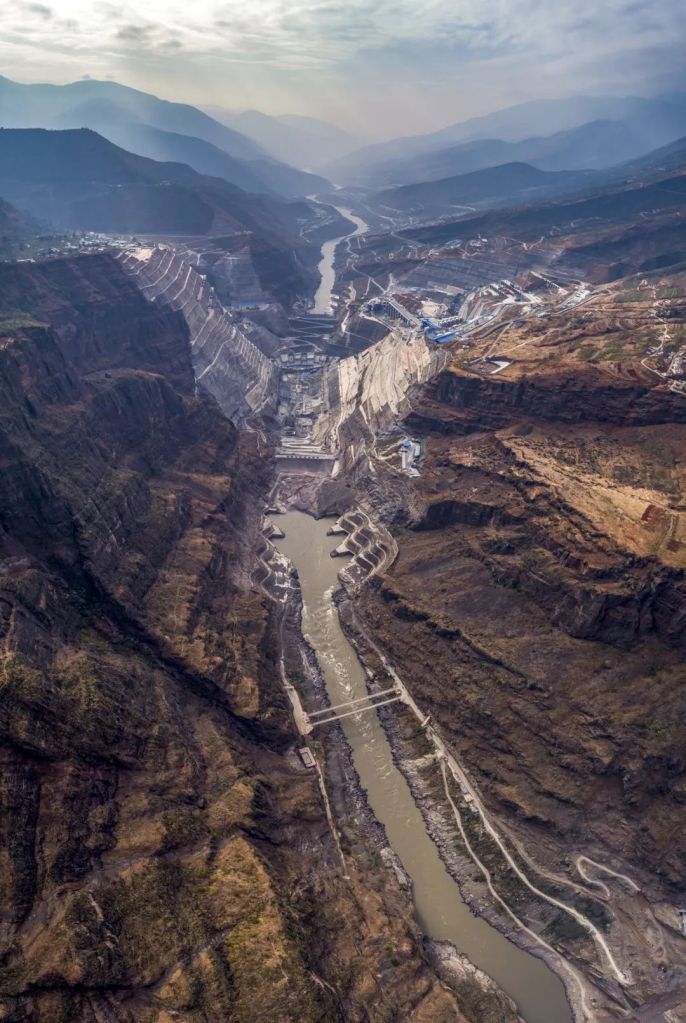
Expected to be completed in 2022, it will be the third largest hydroelectric power plant in the world with an installed capacity second only to the Three Gorges Dam
(photo: 柴峻峰)
Situated in the lower course of Jinsha River, the Xiangjia Dam delivers electricity to 8 provinces and municipalities via the 1907 metres long ±800 kV DC ultra-high voltage transmission line.
It supplies 30 billion kWh of electricity to Shanghai every year, which is about 20% of the city’s total consumption in 2018 (rough approximation excluding power loss during transmission).
(photo: 柴峻峰)
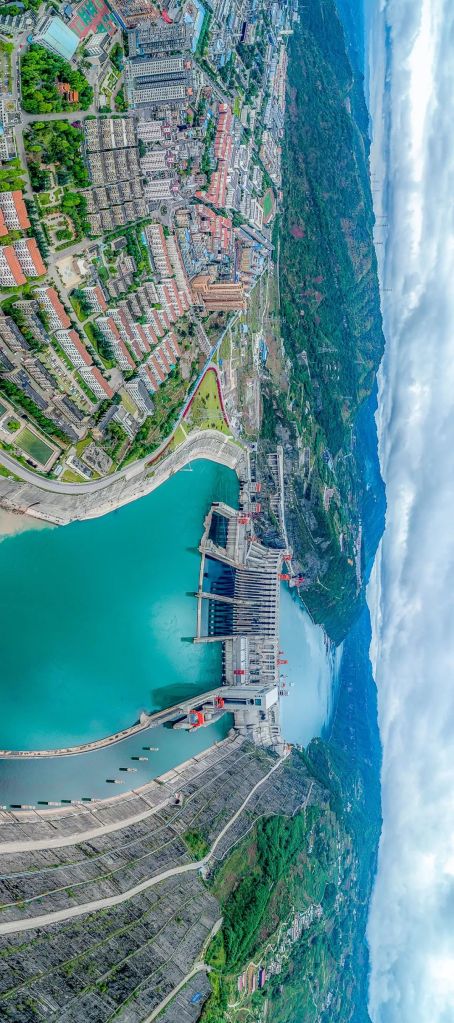
Also located on the Jinsha River but with an even more stunning appearance is the Xiluodu Dam. Its 285.5 metres high arch dam is on par with a 90-storey skyscraper, and with an installed capacity of 13 million kW, it is currently the third largest hydroelectric power plant in the world. The 8 million kW transmission capacity of the ±800 kV transmission line linking Xiluodu and Zhexi is also among the largest in the world.
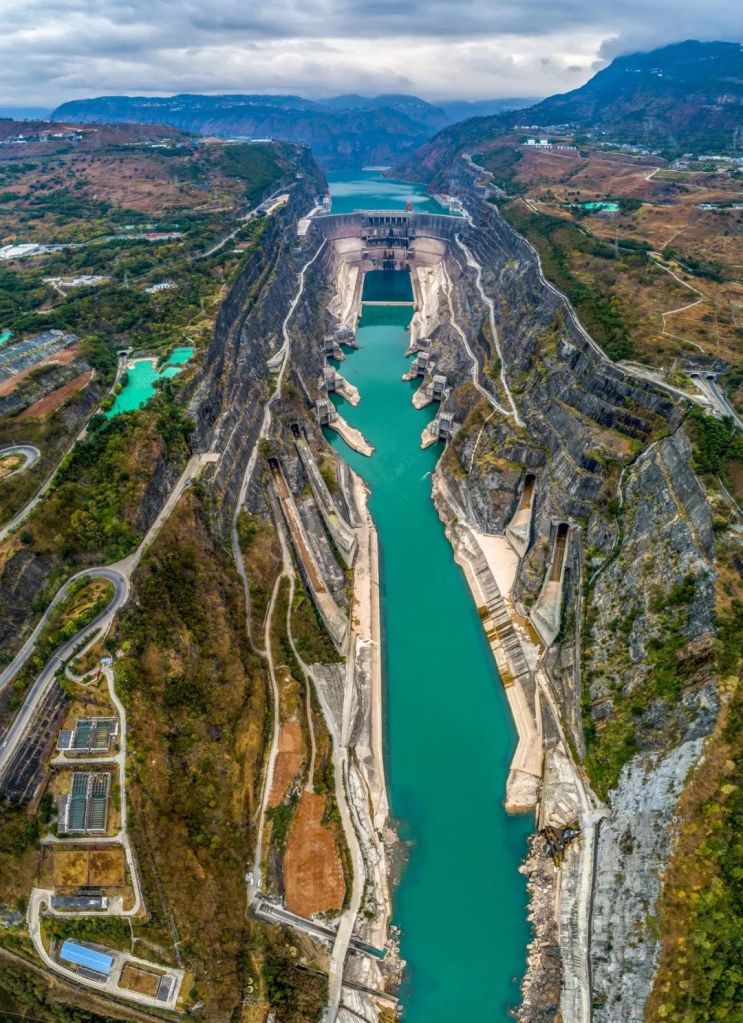
(photo: : 柴峻峰)
The Jinping-I Dam on the Yalong River, Sichuan, on the other hand, has the tallest arch dam in the world with a height of 305 metres. The ±800 kV DC transmission line delivering electricity from the dam to southern Jiangsu was also the first to travel beyond 2000 kilometres.
Thanks to all these cross-country power transmission lines, electricity generated by hydropower in the upstream and midstream of Yangtze River and Yellow River, as well as that derived from thermal power around coal mines, can now be steadily transmitted to the far east. The grand West-East Electricity Transfer Project has finally begun to take form.
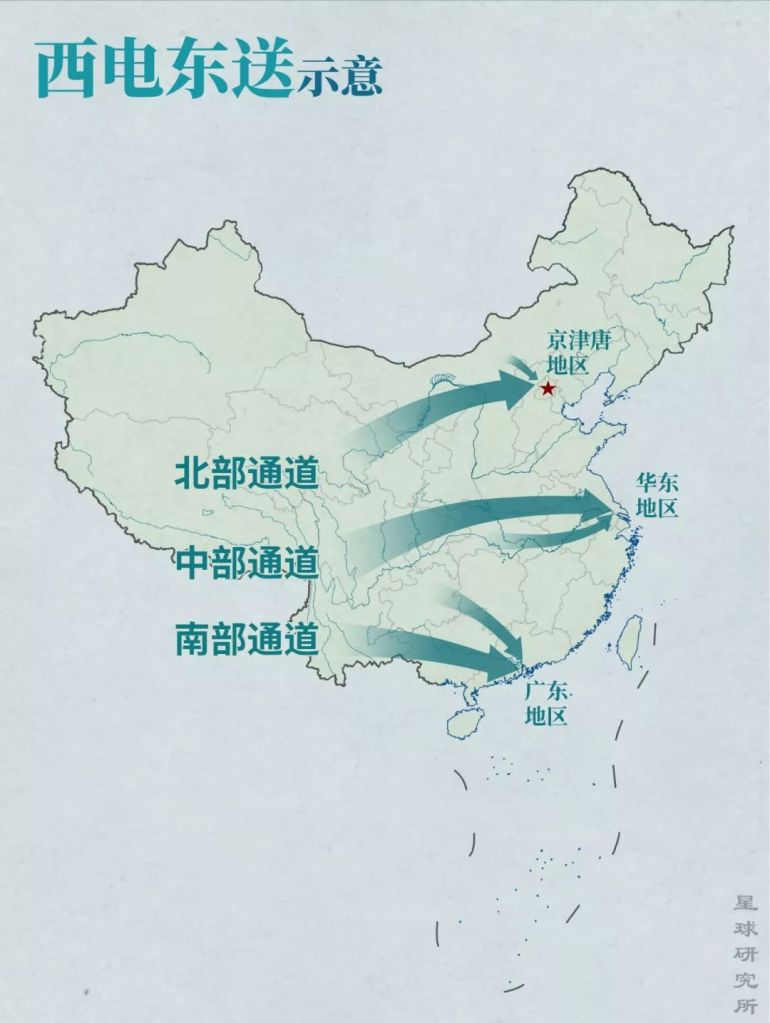
Electricity is transfer from the northern (北部通道), central (中部通道) and southern channels (南部通道) to the Jingjintang metropolitan region (京津唐地区), Eastern China (华东地区) and Guangdong region (广东地区) respectively
(diagram: 郑伯容 & 巩向杰, Institute for Planets)
Hydraulic resources are certainly not unlimited.
After all, hydropower involves flooding the upstream, relocating thousands of citizens and impacting the river ecosystem, which are all extremely controversial measures that cannot be avoided. Therefore, the construction of hydroelectric power plants always requires extremely strict evaluation and rigorous validation.
The Chinese have to continue looking for alternative clean energy, including wind and solar power.
3. 95.7%
Adding wind and solar power to the 88% electric power generated by thermal and hydropower makes up for 95.7% of the electricity demand in the whole country.
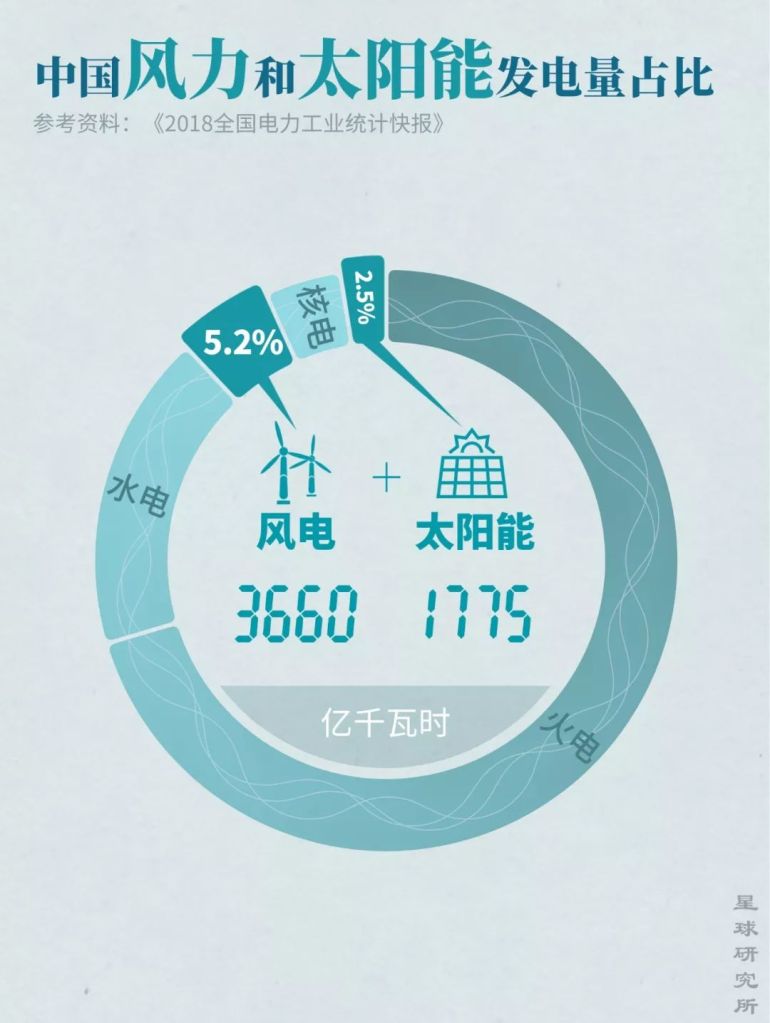
(diagram: 郑伯容, Institute for Planets)
But it is tricky to utilise wind and solar power.
Wind power uses the mechanical force carried in moving air to push and turn the blades of wind turbines connected to a power generator.
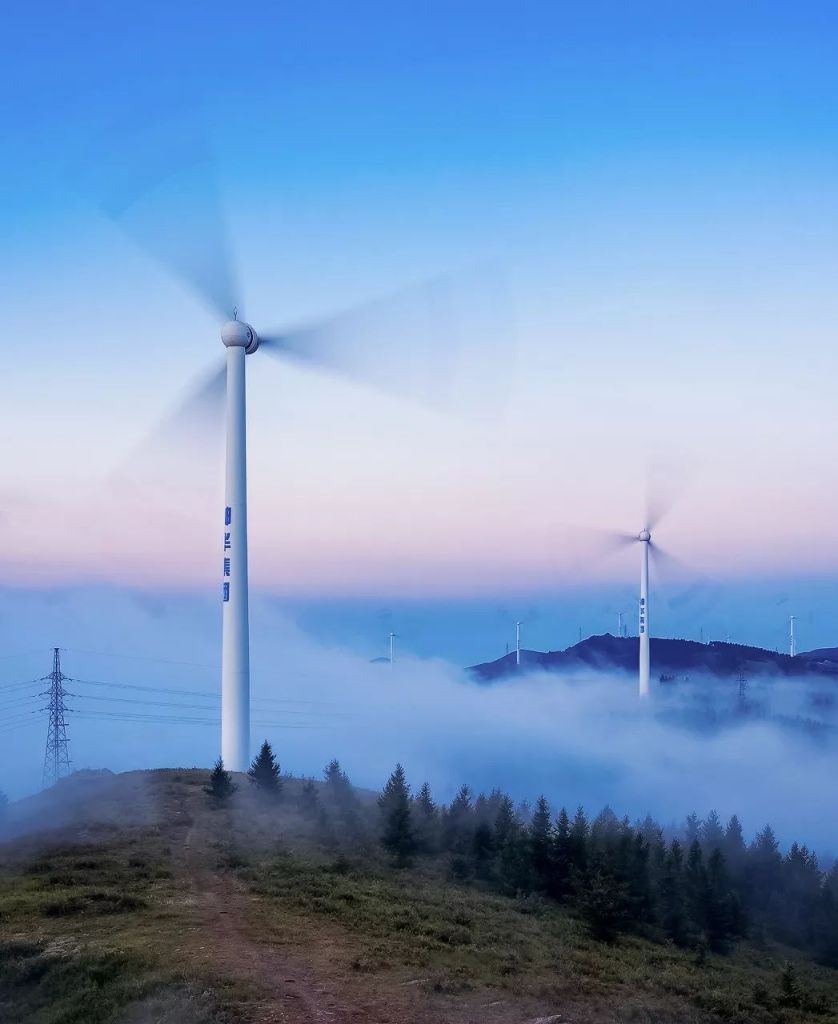
(photo: 刘高攀)
The blades of wind turbines are massive. They can be dozens of metres long, which makes their transportation and assembly extremely challenging.
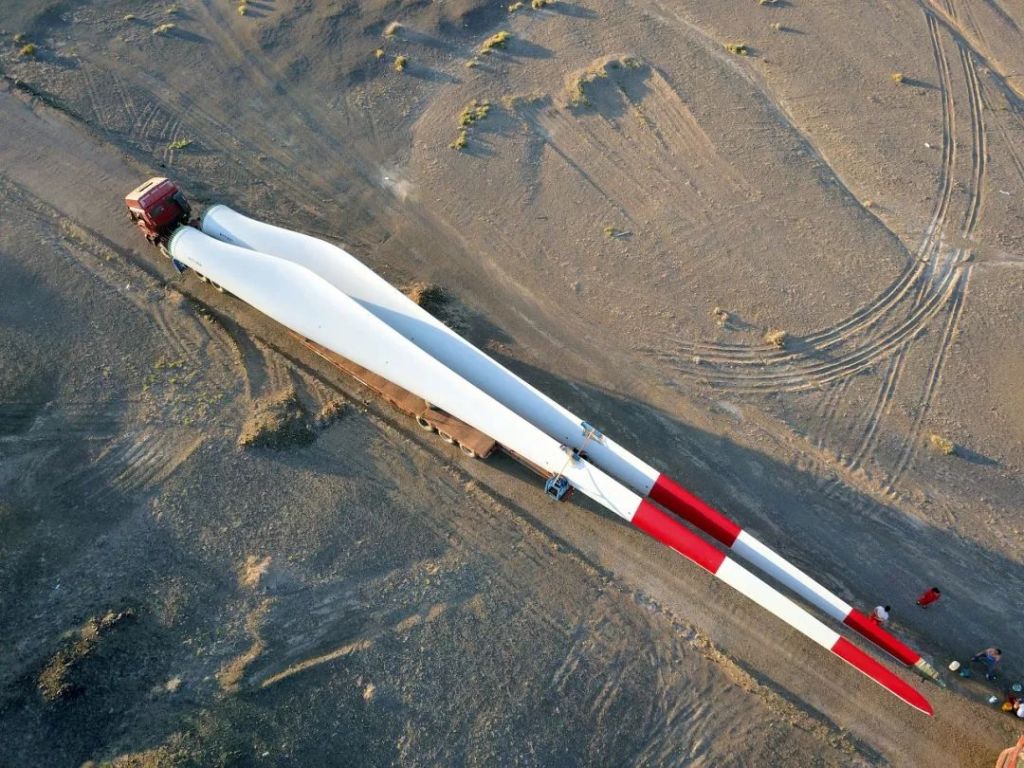
(photo: 李旭安)
And for photovoltaic solar power, the working voltage of a single solar cell is only about 0.4-0.5 V. It also has a very weak working current. To generate power, we need arrays of solar modules each containing a collection of solar cells assembled with seemingly endless serial and parallel connections.
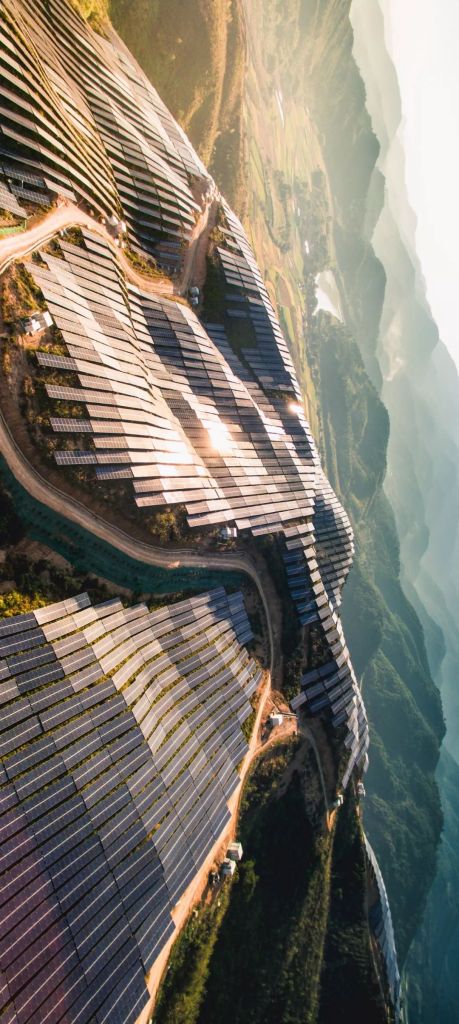
(photo: 在远方的阿伦)
Concentrated solar power has the same issue. Only when there is considerably large number of lenses to concentrate sunlight onto a receiver can it produce enough heat to drive the steam turbine connected to a power generator.
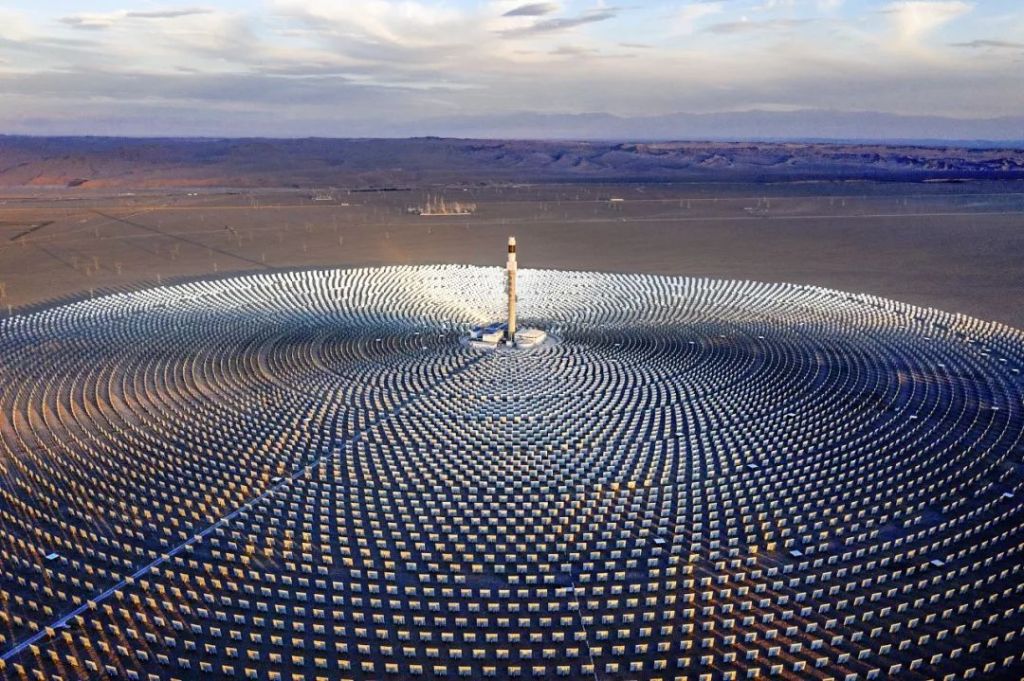
Solar power is concentrated on the central receiver atop the solar tower standing in the centre, hence the alternative name solar tower plant. Photovoltaics and concentrated solar power are the two major technologies in solar power generation
(photo: 孙志军)
To put it simply, for both wind and solar power generation to be scaled up, large areas of land are required, and that means high construction cost. Thus, land utilisation has to be maximised especially in eastern regions, where the population is relatively dense and with little space to spare.

Photovoltaic solar cells are constructed above the fish ponds
(photo: 潘劲草)
While the output of hydropower fluctuates with wet and dry seasons, wind and solar power have equally unreliable power sources. As trivial as a morning of bad weather or time of the day can significantly impact the continuity and stability of power generation.
To counter these uncontrollable factors and maintain steady power generation, engineers started to do mix and match with the wind, solar, hydro and thermal power and have them complement with each other.

(photo: 焦潇翔)
Or store excess power generated when the demand is low, and release it during peak times to ensure stable and continuous electricity supply.
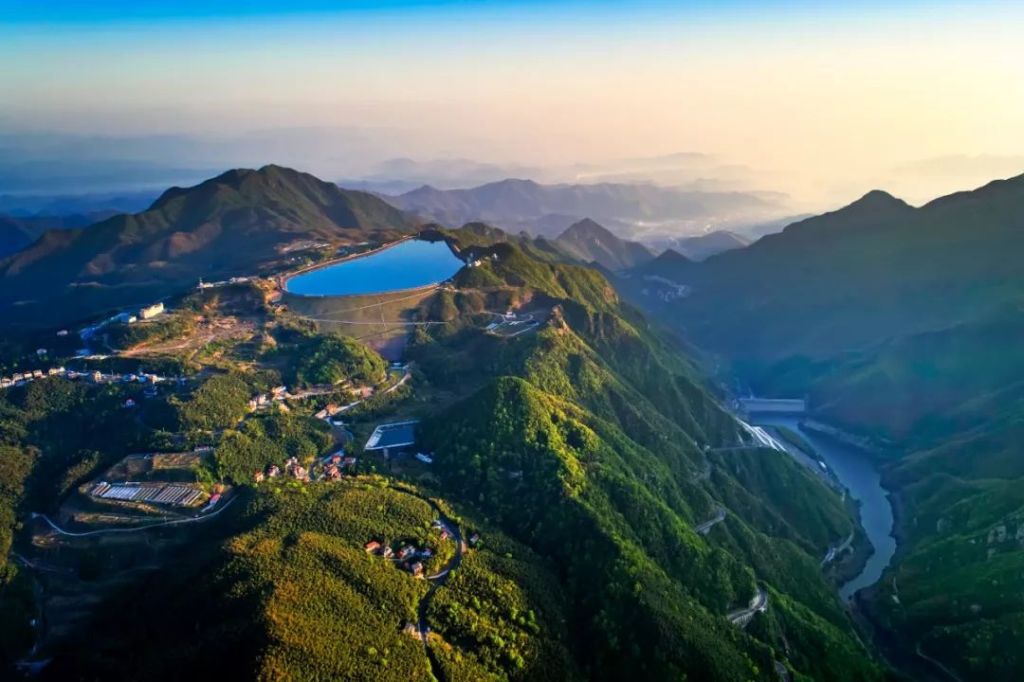
Currently available energy storage technologies include batteries, flywheel energy storage, pumped-storage hydroelectricity, water electrolysis and compressed-air energy storage
In pumped-storage power plants, excess power is used to pump water from a lower reservoir up to an upper reservoir. When power is needed, water in the upper reservoir is released back to the lower reservoir and generates electricity with the same principles as in hydroelectric power.
(photo: 潘劲草)
Another complication shared among wind, solar and hydropower is the uneven distribution of the energy source across the country. The regions richest in wind power resources are in the east and along the coast, most of which having a wind speed above 7 metres per second.
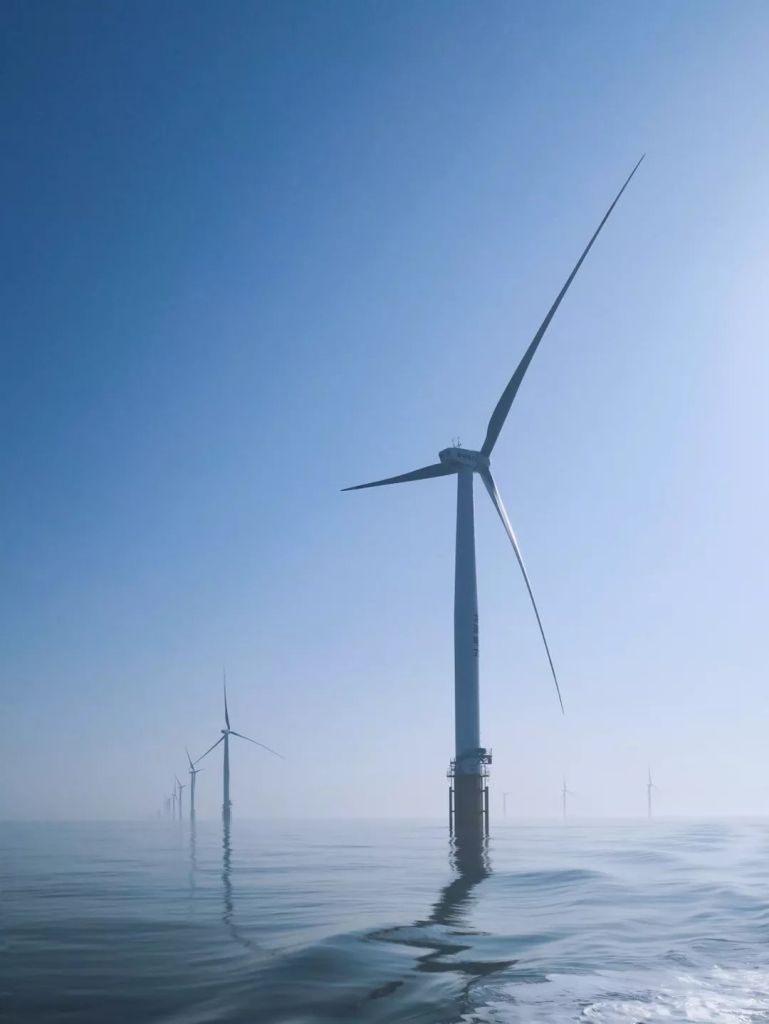
(photo: 朱金华)
However, these wind-rich areas are greatly restricted to narrow geographic ranges between the coastline and the mountains lining the coast. In contrast, wind-rich areas in the Three-North Region (Northwest China, North China and Northeast China) are large and contiguous.
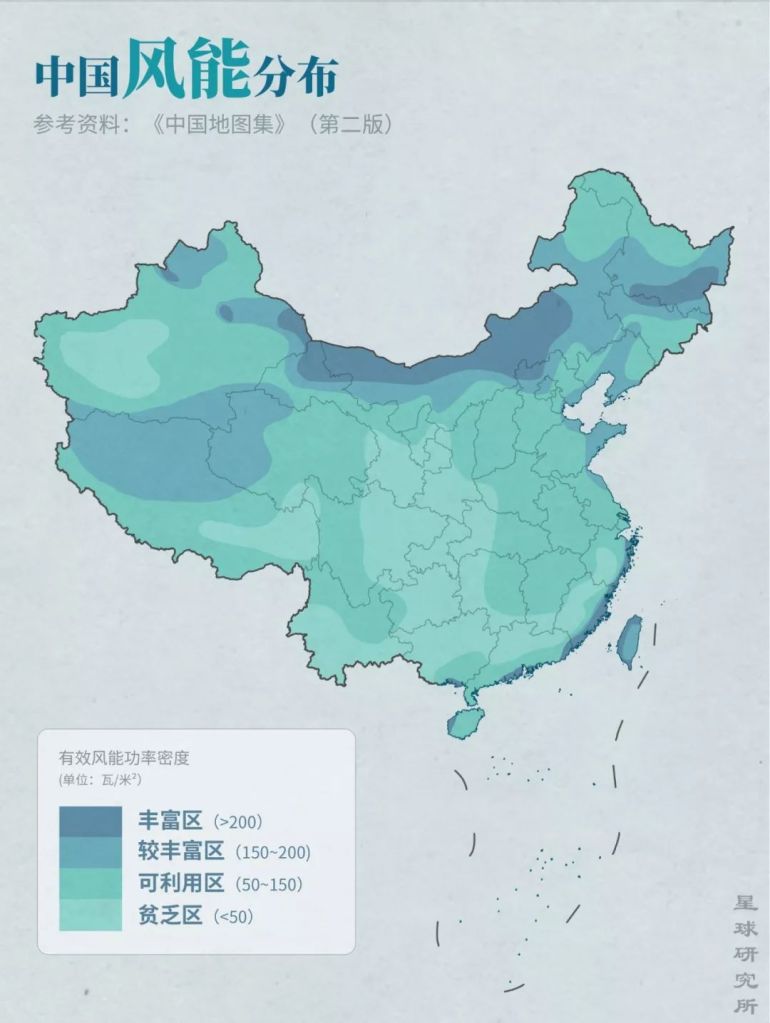
Effective wind power (有效风能功率密度) measured in W/m2 (瓦/米2)
Wind-rich (丰富区) and poor areas (贫乏区)
Reference: Map of China, Second Edition
(diagram: 郑伯容 & 巩向杰, Institute for Planets)
Because of this, Inner Mongolia has become one of the most important bases for wind farms in China. In 2017, its wind power generated 55.1 billion kWh, accounting for 20% of all the wind power in the country.
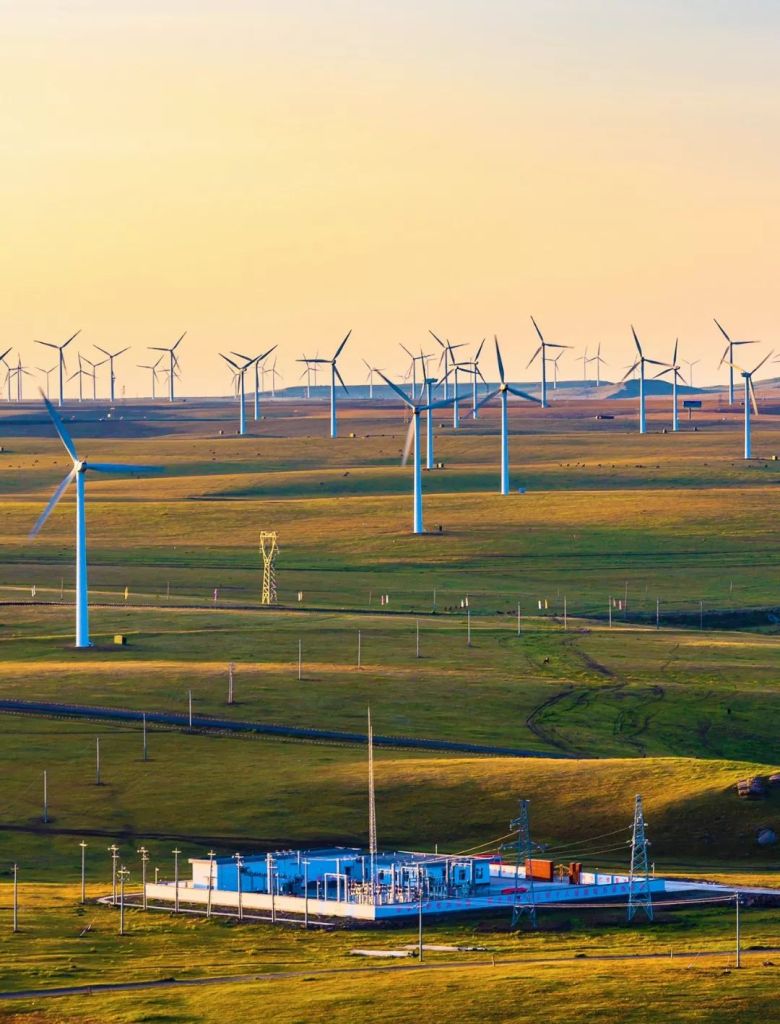
Note the height difference between the wind turbines and high voltage transmission towers
(photo: 石耀臣)
Solar resource, on the contrary, is mostly concentrated around the western inland regions, including the western reaches of the Tibetan Plateau, southern regions of Xinjiang, as well as the northern areas of Ningxia and Gansu. The annual sunshine duration in these regions can last up to 3200-3300 hours. As a comparison, there are only about 1100 sunshine hours in provinces like Sichuan and Guizhou where solar radiation is the weakest.
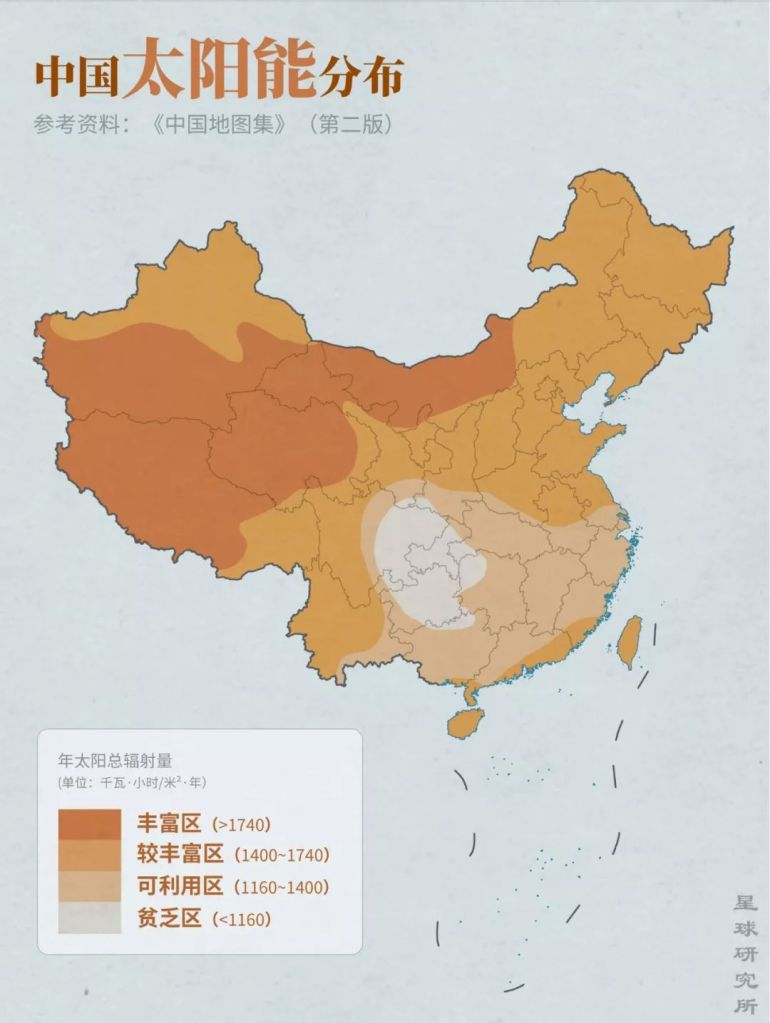
Annual solar radiation (年太阳总辐射量) measured in kWh/m2yr (千瓦·小时/米2·年)
Solar radiation-rich (丰富区) and poor areas (贫乏区)
Reference: Map of China, Second Edition
(diagram: 郑伯容 & 巩向杰, Institute for Planets)
In addition to the high abundance of wind and solar resource, the vast lands in the western and northwest regions of China are sparsely populated, providing plenty of choices for site selection. Combining technological advances and reducing cost, wind and solar power have been expanding rapidly there.
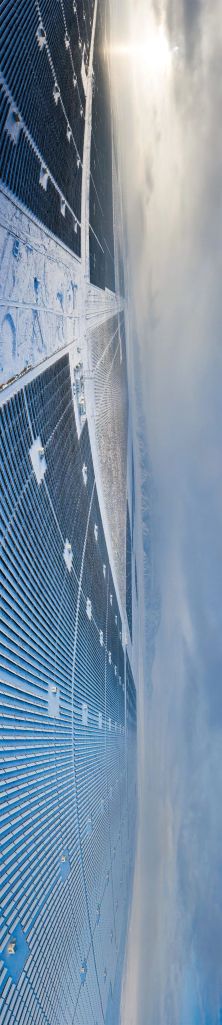
(photo: 刘忠文)
But then, a low population density will have relatively little demand for electric power. For instance, Gansu had a total installed capacity of 45.31 million kW in 2015, but was serving a small load centre with a maximum power load of only 13 million kW.
Likewise, Xinjiang had a power load of only 21 million kW, but an installed capacity of more than 50 million kW. There is bound to be substantial energy waste if the power generated were to be restricted to local consumption.
It is worth mentioning that thermal and hydropower are still far superior in providing stable heating as well as peak shaving for power management. They will remain irreplaceable in the foreseeable future, which is another a huge blow to the development in wind and solar power.
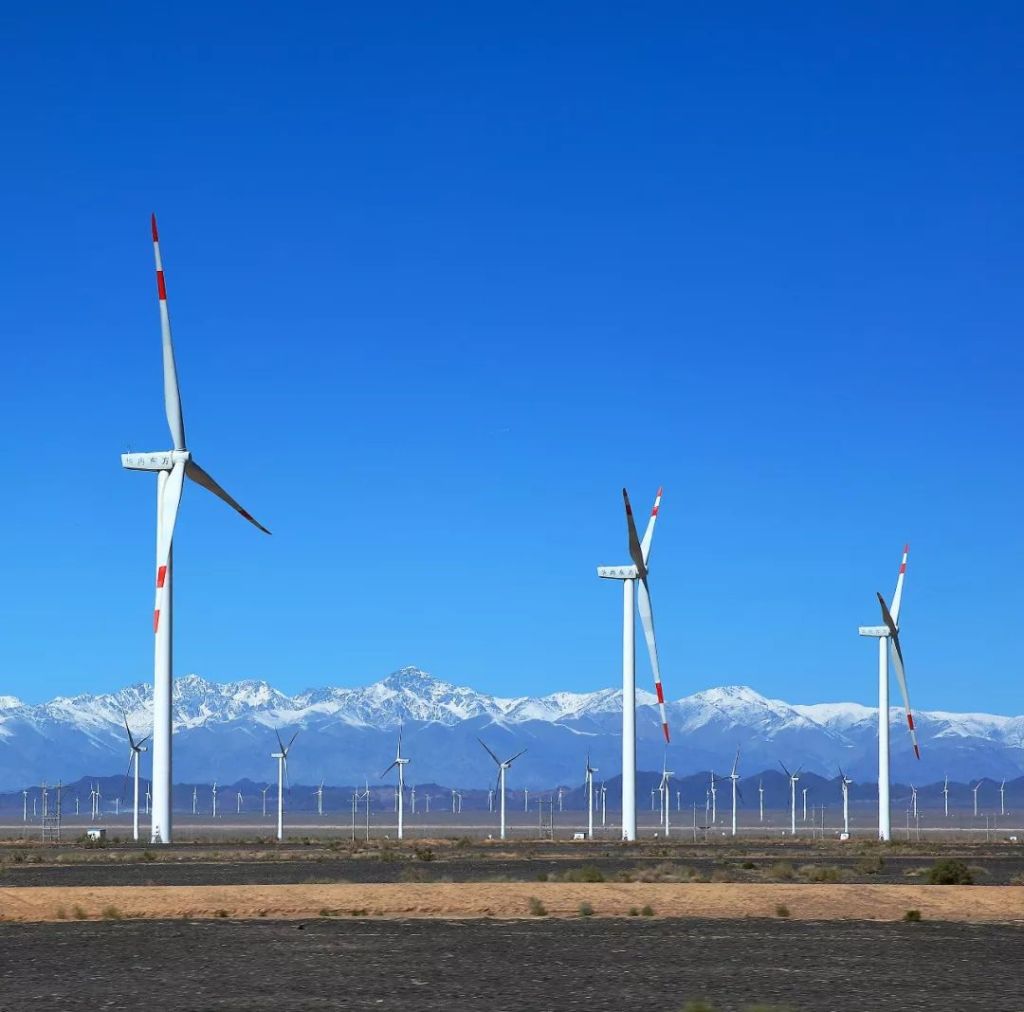
(photo: 常力)
All these issues resulted in a series of wind and solar resource abandonment in recent years. Even in 2017 when the problem was less severe, the wind and solar power abandonment rate in China was 12% and 6% respectively. It was much worse for Gansu and Xinjiang, which had a rate of 33% and 29% respectively.
With large amount of wasted energy in the northwest and an insatiable need for electric power along the coastal regions in the east, it is time for the cross-country power transmission lines to be back in business.
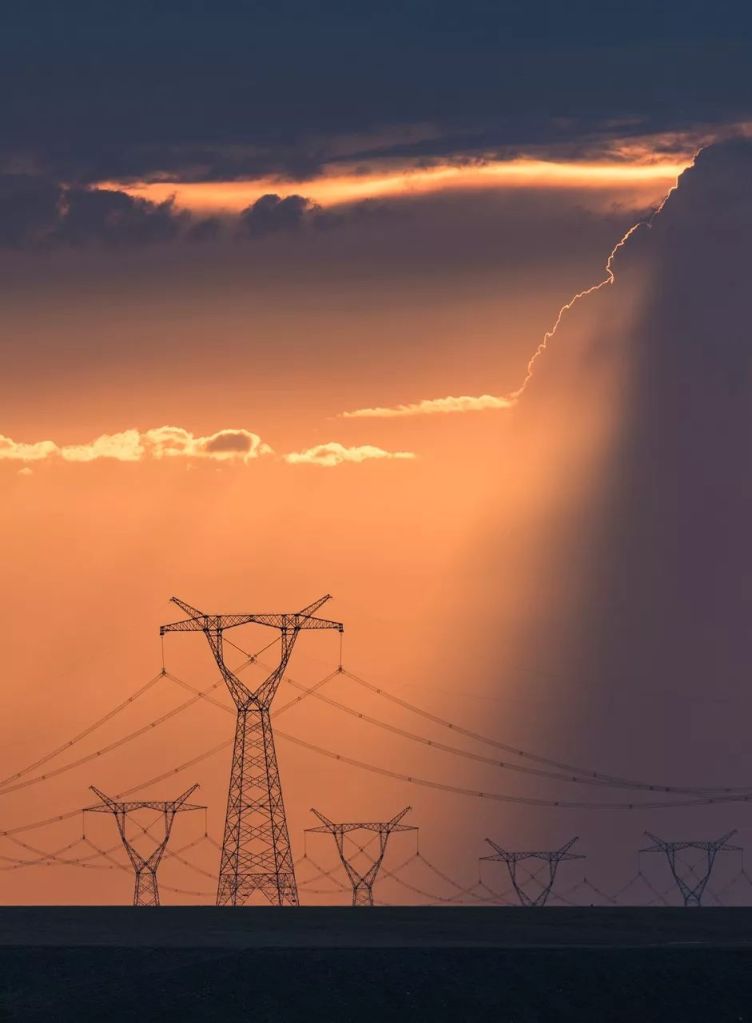
(photo: 刘文昱)
Two ±800 kV DC transmission lines radiating out from the northwest were completed in 2014 and 2017.
One sets off from Hami, Xinjiang and travels 2210 kilometres through 6 provinces to reach Zhengzhou, Henan. This transmission line is capable of delivering 37 billion kWh of electricity generated by Xinjiang’s thermal and wind power to the midlands of China every year.
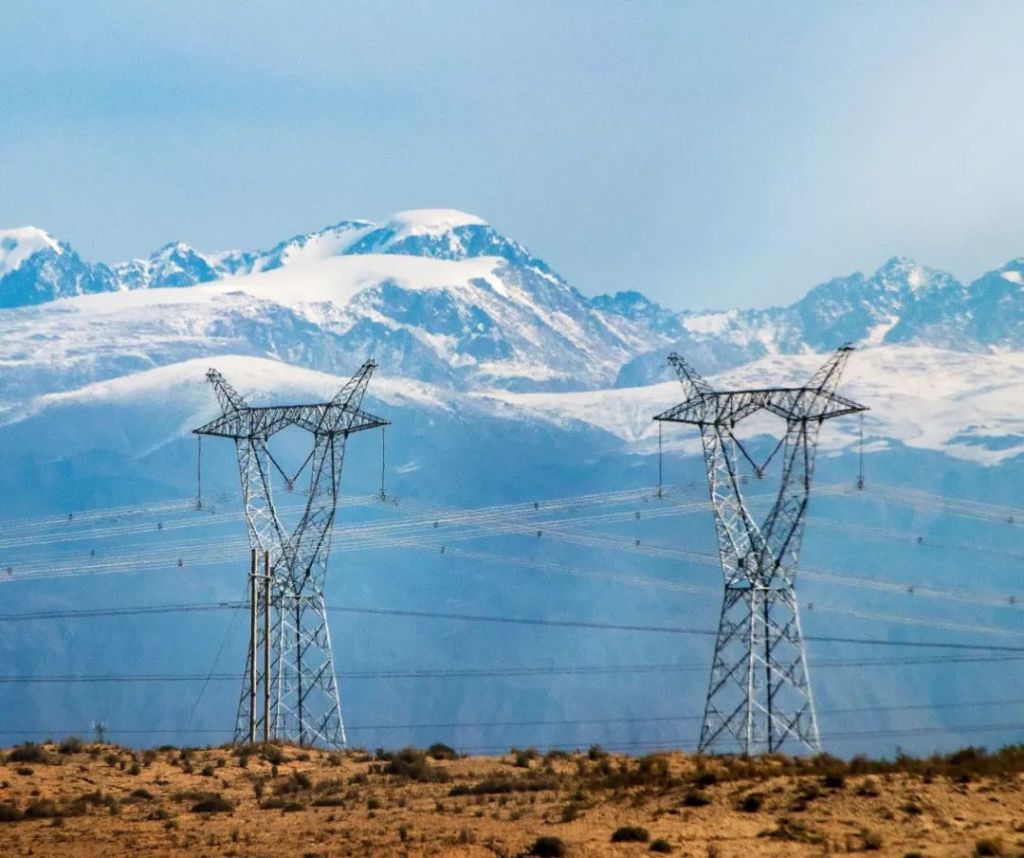
(photo: 周修建)
The second transmission line originates from Jiuquan, Gansu, and goes past 5 provinces before arriving in Xiangtan, Hunan, which is 2383 kilometres away. More than 40% of the 40 billion kWh electric power sent out via this transmission line comes from wind and solar power.
(photo: 陈剑峰)
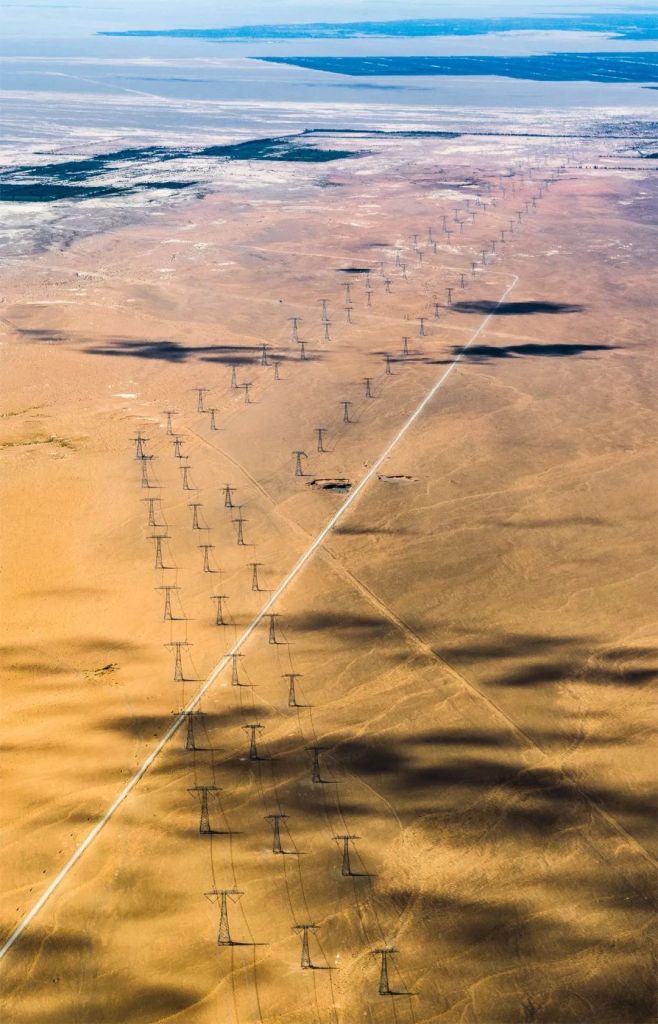
A DC transmission line completed in 2018 has an ultra-high voltage of ±1100 kV with an annual power transmission reaching 66 billion kWh. It can single-handedly fulfil the power demand of the entire Qinghai province for one whole year.
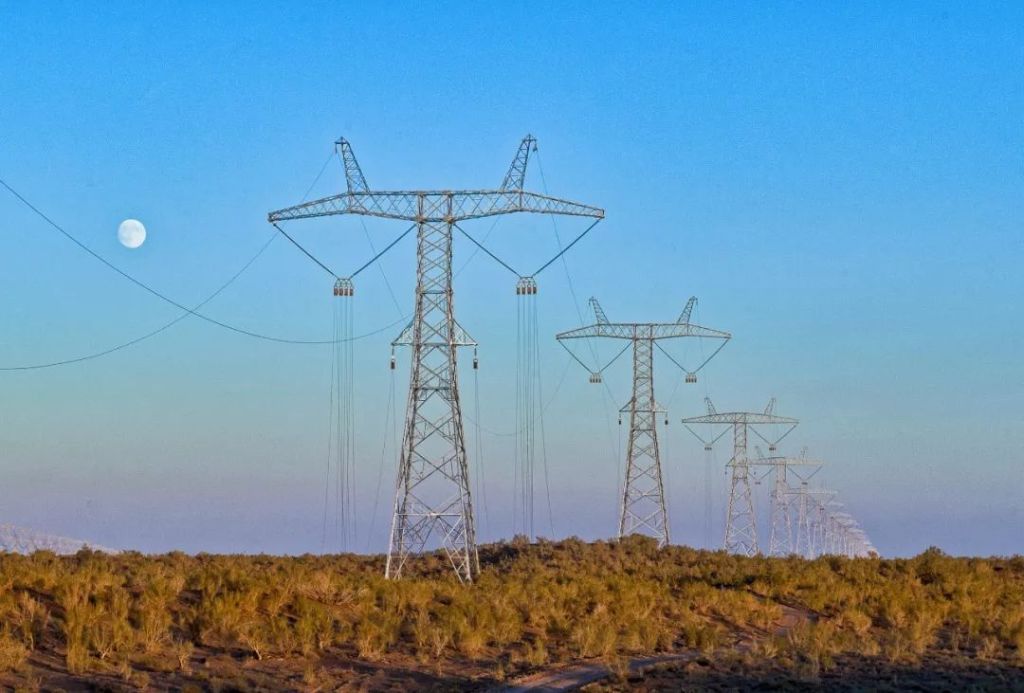
This is the famous Huaidong-Haonan Ultra-high Voltage Transmission Line, also known as the Changji-Guquan Ultra-high Voltage Transmission Project.
(photo: 宋鹏涛)
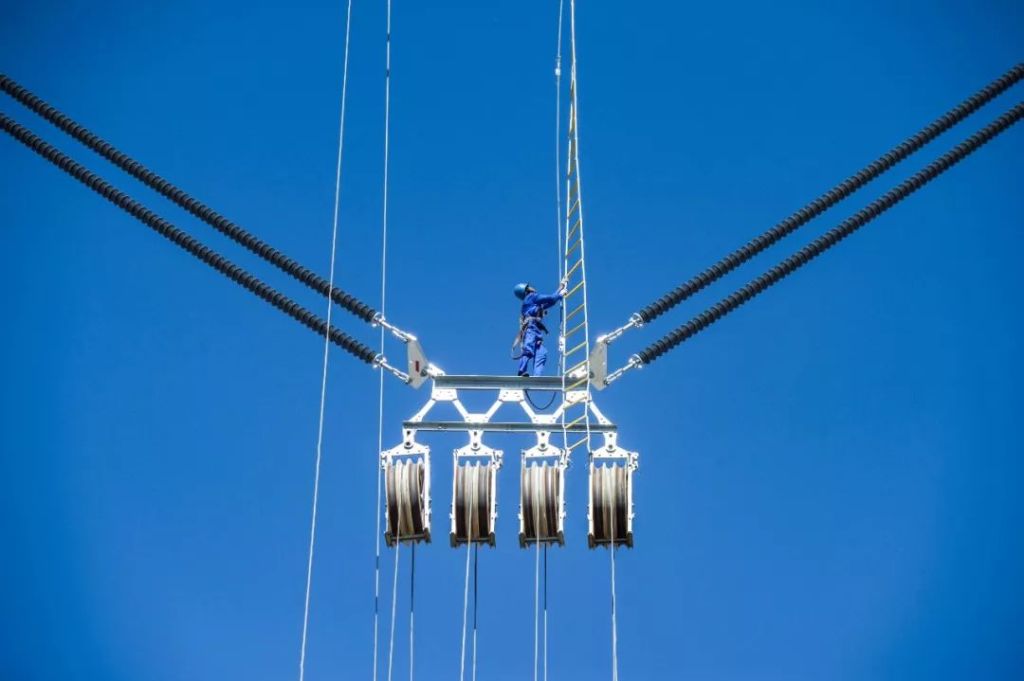
Starting from Changji, Xinjiang, this line spans 3324 kilometres using 6079 cable towers. It stretches across multiple provinces including Xinjiang, Gansu, Ningxia, Shaanxi, Henan and Anhui, overcomes the Qinling Mountains and Yangtze River, and finally finishes in Xuancheng, Anhui.
It totally deserves the ‘pioneering mega project’ title, as it sets astonishing records for transmission voltage, capacity and distance, which are all head and shoulders above other similar projects around the world.
Using this power transfer corridor, 5.2 million kW of wind power and 2.5 million kW of photovoltaic power generated in Xinjiang can now be delivered to the Yangtze Delta as a single package.
(photo: 宋鹏涛)
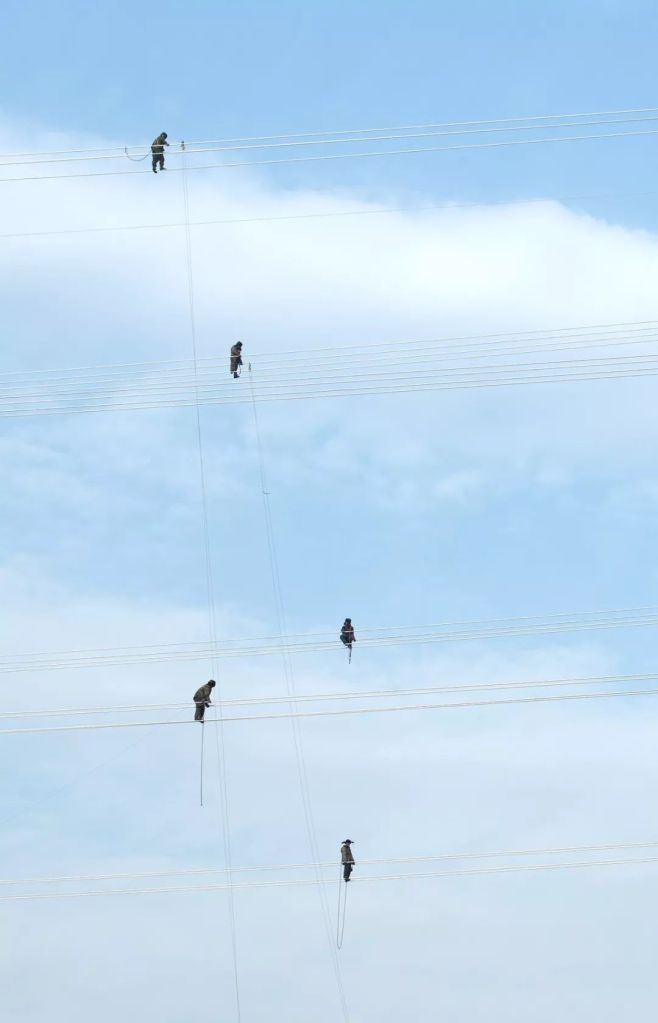
As one of the international standard setters in ultra-high voltage transmission, China is currently the only country capable of achieving ±1100 kV DC transmission.
For the Chinese, this is an unintended but inevitable consequence en route to national economic development. After all, using cheaper and cleaner energy is the collective wish of the people, as well as the ultimate goal of all the workers in the power industry.
(photo: 周治林)
4. 100%
The anchor leg after thermal, hydro, wind and solar power in the relay for 100% power coverage in China is nuclear power.
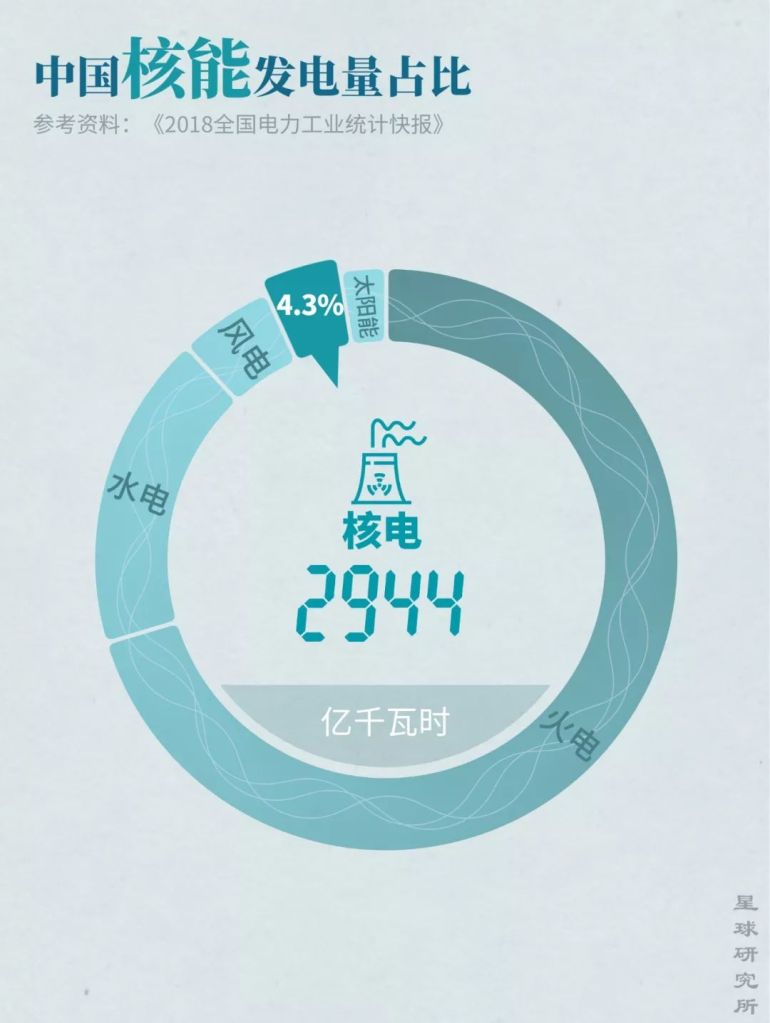
(diagram: 郑伯容, Institute for Planets)
Like thermal power, nuclear power runs on transportable fuel, has a pretty stable power output and is not affected by factors like climate and time.
The biggest difference lies in the efficiency.
To run a nuclear power plant with an installed capacity of 1 million kW, only about 25-30 tons of nuclear fuel is needed. This is 100,000 times less than what is needed of coal fuel for a thermal power plant with an equivalent capacity.

Modern commercial nuclear power plants mainly generate power through nuclear fission of uranium
(photo: 李亮杰)
With a much lower transportation cost for nuclear fuel, all the nuclear power plants in China are built along the coast close to the load centres, which are miles away from where the fuel is produced.
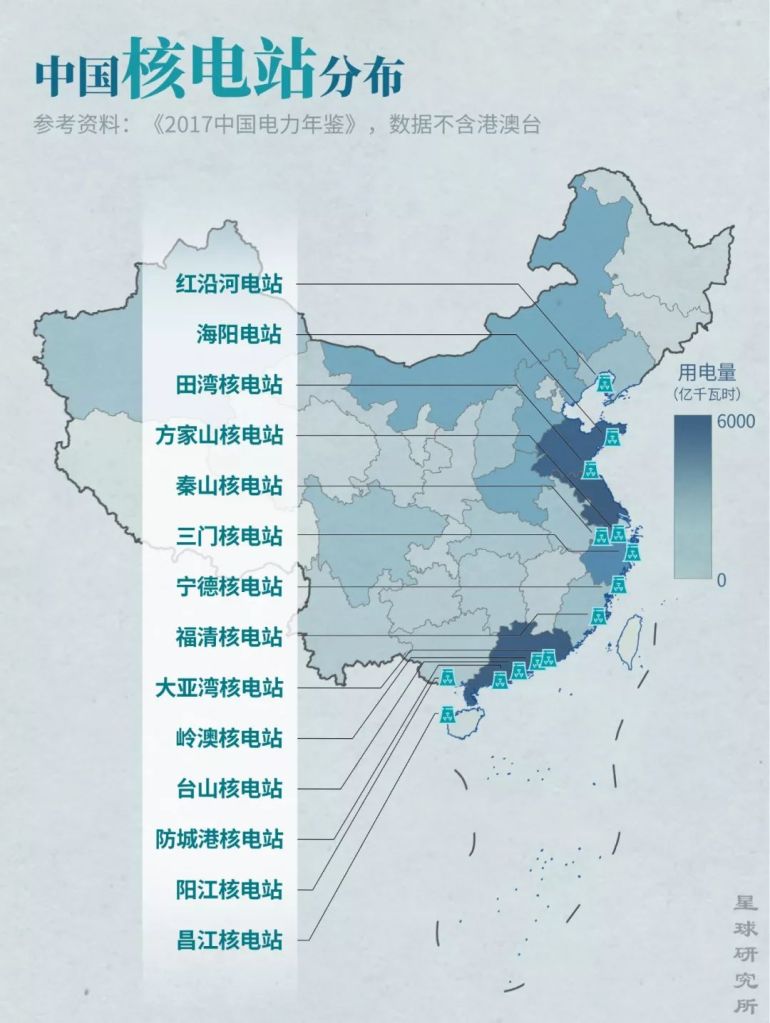
Electricity consumption (用电量) measured in 100 million kWh (亿千瓦时)
Nuclear power plants: Hongyan River Nuclear Power Plant (红沿河电站), Haiyang Nuclear Power Plant (海阳电站), Tianwan Nuclear Power Plant (田湾核电站), Fangjiashan Nuclear Power Plant (方家山核电站), Qinshan Nuclear Power Plant (秦山核电站), Sanmen Nuclear Power Plant (三门核电站), Ningde Nuclear Power Plant (宁德核电站), Fuqing Nuclear Power Plant (福清核电站), Daya Bay Nuclear Power Plant (大亚湾核电站), Lingao Nuclear Power Plant (岭澳核电站), Taishan Nuclear Power Plant (台山核电站), Fangchenggang Nuclear Power Plant (防城港核电站), Yangjiang Nuclear Power Plant (阳江核电站), Changjiang Nuclear Power Plant (昌江核电站)
Reference: China Electric Power Yearbook 2017, excluding data from Hong Kong, Macau and Taiwan
(diagram: 郑伯容 & 巩向杰, Institute for Planets)
China was slightly late to join the club of nuclear power.
By the time her first domestically designed and constructed Qinshan Nuclear Power Plant was completed in Zhejiang in 1991, there were already 420 nuclear power plants operating around the world accounting for 16% of all the electric power generated for mankind.
Building on imported technologies over the next 30 years, China’s domestic advancement in nuclear power gradually gained autonomy. The Taishan Nuclear Power Plant completed in 2018 was the first to adopt a Generation III reactor in China, and was also the first commercial nuclear power plant in the world to have one.
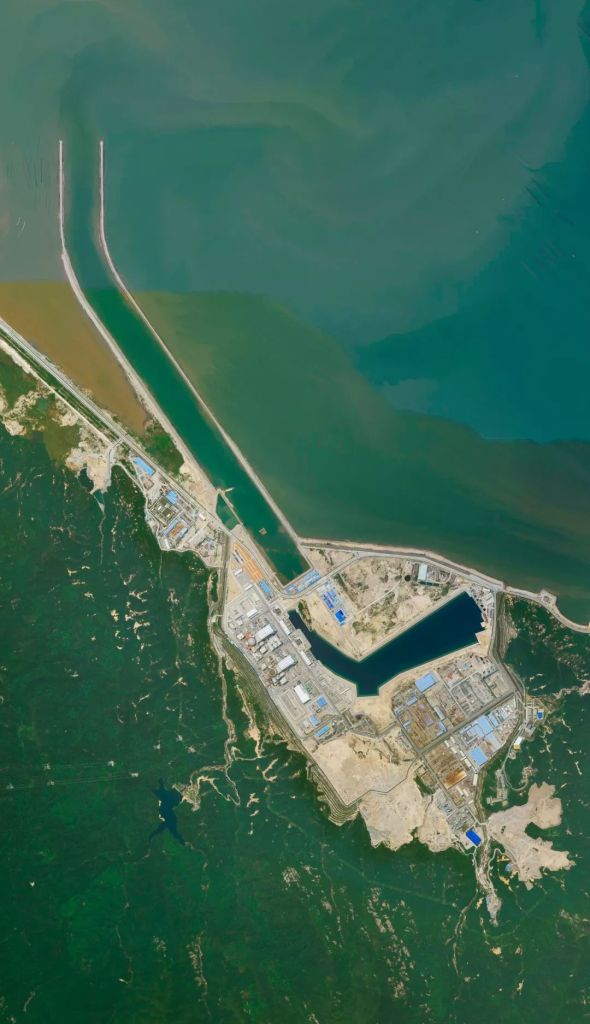
(photo: Esri Image Map)
The total installed capacity of nuclear power in China reached 44.66 million kW in 2018, and is expected to go up to 58 million kW by the end of 2020. It will replace 174 million tons of coal burning every year and reduce about 430 million tons of carbon dioxide emission.
The downside of nuclear power is that it requires highly sophisticated technologies and extremely stringent safety measures. Therefore, building a nuclear power plant could cost several times more than a thermal power plant.
Moreover, all the daunting nuclear accidents and incidents that occurred not long ago have once put nuclear power in the centre of the storm of controversy over its upscaling for commercial use.
But with the constant improvement in nuclear technologies and increasing social awareness, as well as latest breakthroughs in nuclear fusion, nuclear power will definitely play a critical role in the future energy industry.
The energy industry in China has come a long way.
Prior to the establishment of New China, the country’s total installed capacity for electric power was only 1.8486 million kW. It took 38 years of pioneering hardship before the capacity was eventually scaled up to 100 million kW.
The subsequent leaps from 100 million kW to 200 million kW and then to 300 million kW took only 8 and 5 years respectively. 2009 was the year when China finally overtook America and led the world in total installed capacity for electric power. Following this was a yearly increment of about 100 million kW on average, which is one of the most extraordinary achievements in the history of power generation.
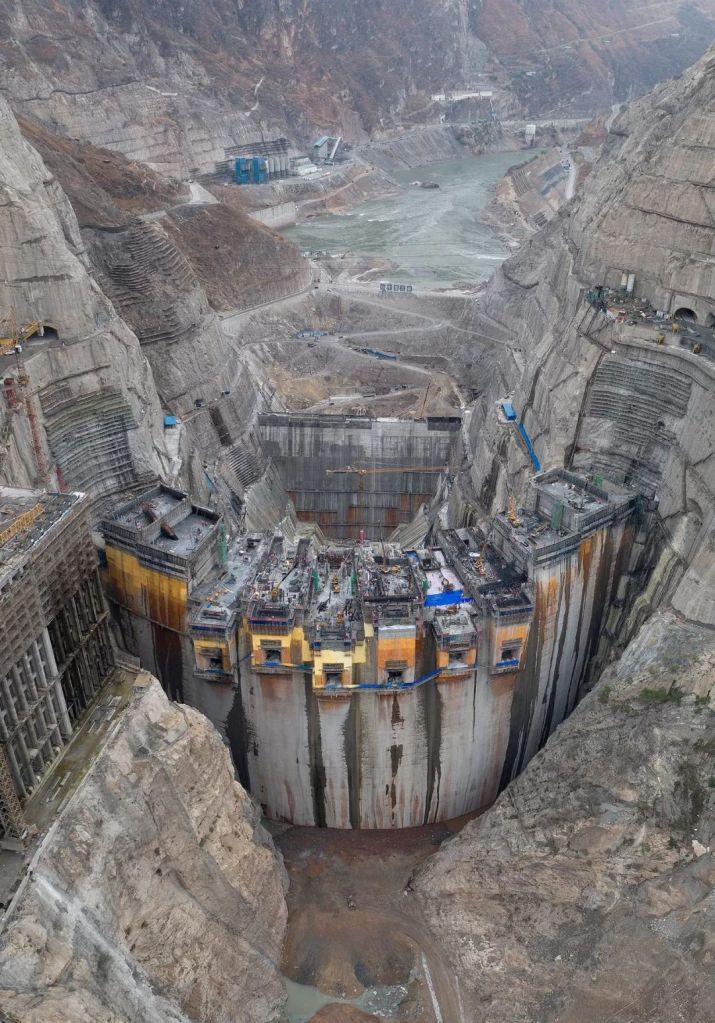
(photo: 李亚隆)
Adding to that are the electric power transmission lines with a voltage of >220 kV dangling all over the country. By 2018, the total length of all transmission routes summed up to 733,393 kilometres, which is enough to wrap around the equator 18 times.
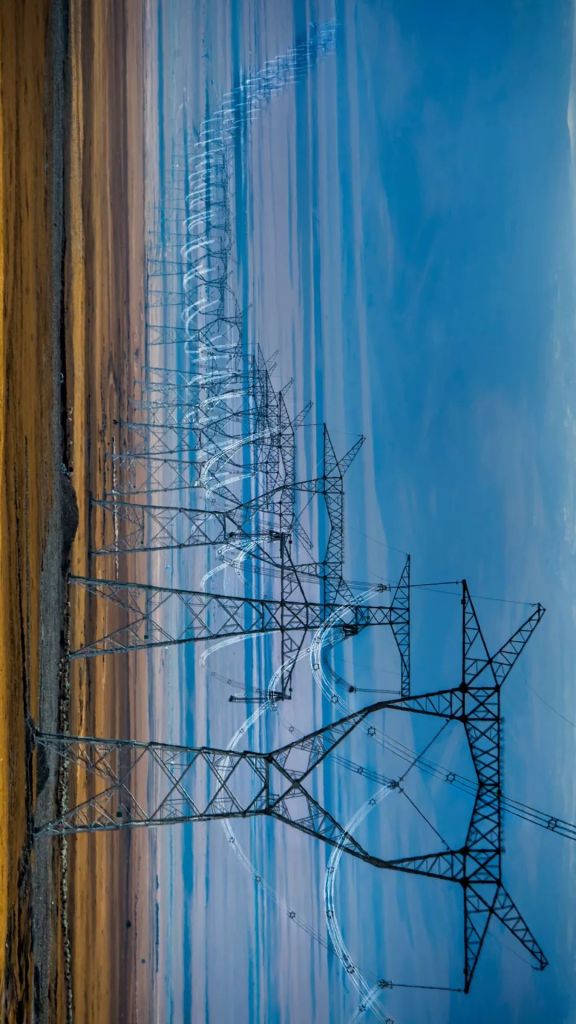
(photo: 宋鹏涛)
Among them are 21 ultra-high voltage transmission lines that link up the power-generating regions and the load centres like a gigantic spider web.
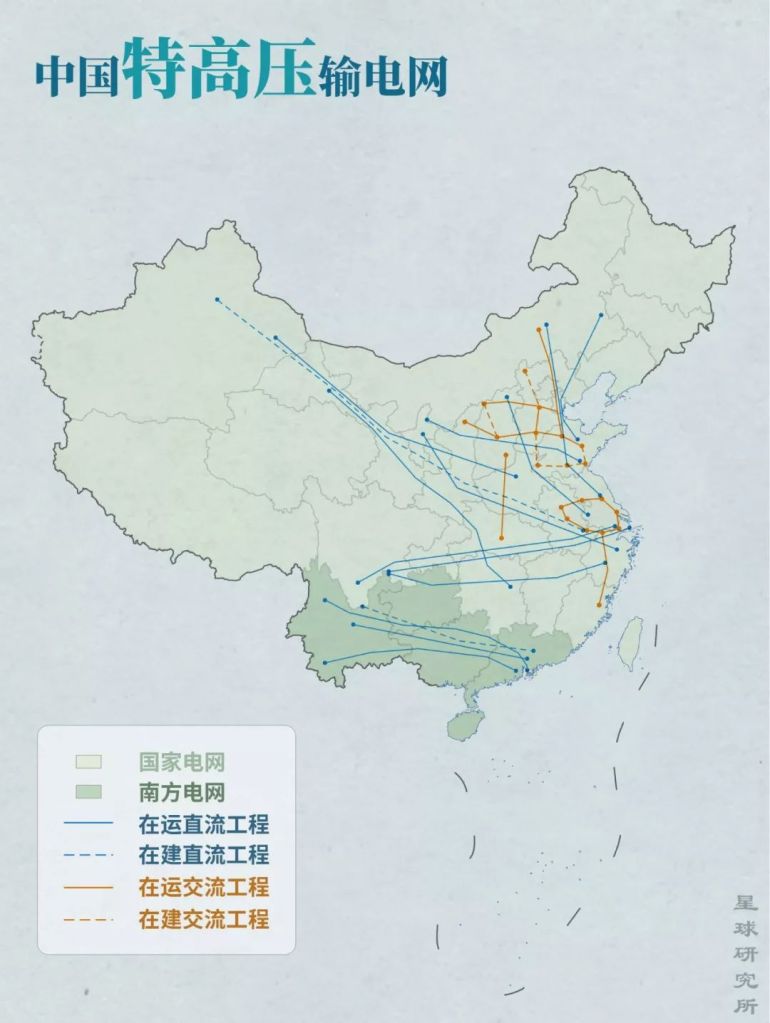
Light green: national grid; green: southern grid
Blue solid line: operating DC transmission; blue dotted line: DC transmission under construction
Orange solid line: operating AC transmission; orange dotted line: AC transmission under construction
(diagram: 郑伯容 & 巩向杰, Institute for Planets)
Today, with the exception of Northern and Eastern China which utilise local power, all regions are connected to the power grid through this inter-regional power transmission network.
To reach millions of households across the country, power transmission lines climb mountains.
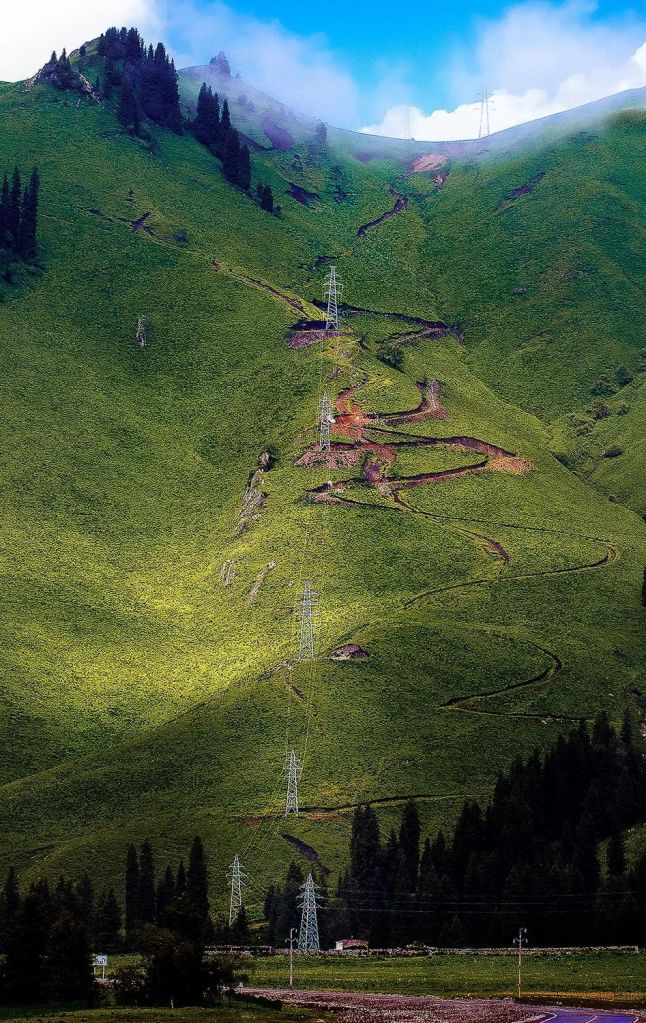
(photo: 刘辰)
Sail across waters.
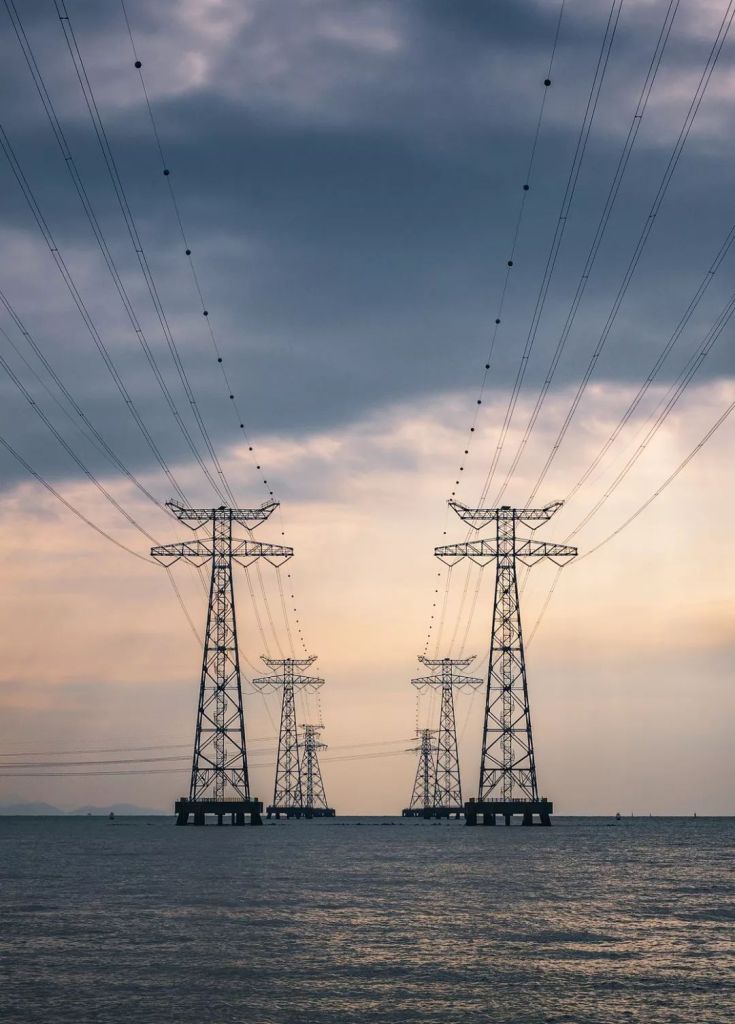
(photo: 董立春)
And hike the world’s highest ridge.
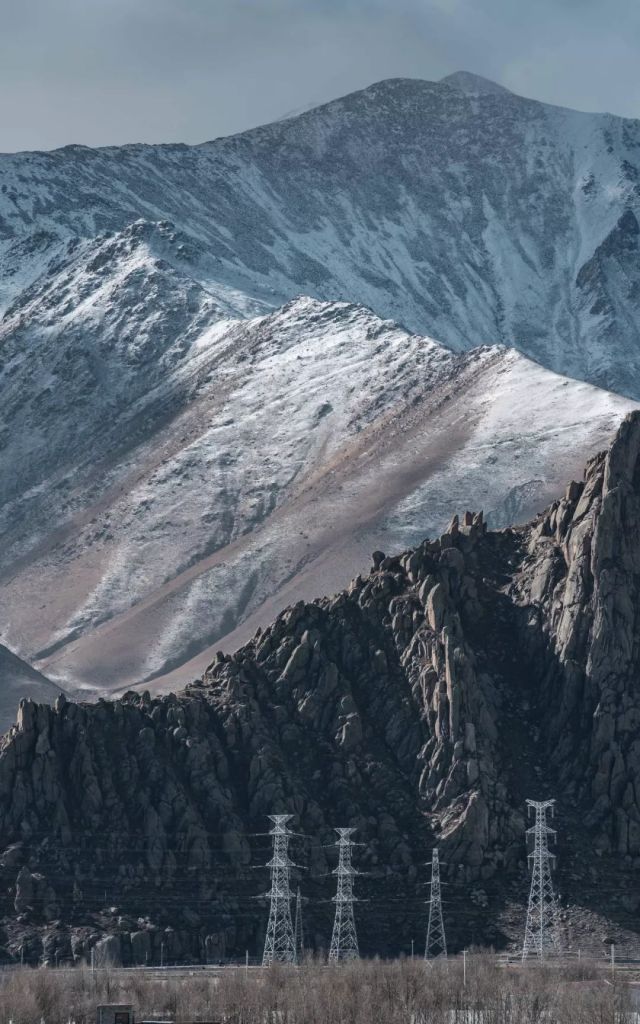
(photo: 李珩)
By 2020, up to 31% of the country’s electric power will be transmitted to their destinations via this enormous transmission network.
Nonetheless, there is still a long way to go.
Although China’s national grid finally reached the entire population in 2015, her electricity consumption per capita only ranked 63rd in the world.
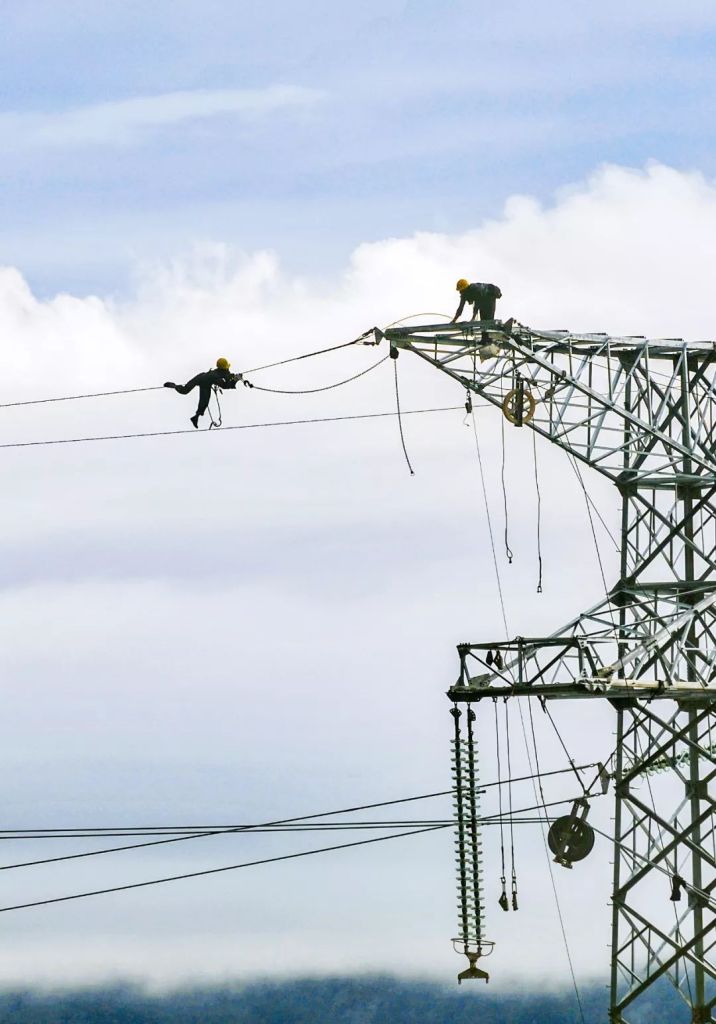
(photo: 李维)
But whenever I hear air conditioners and electric fans hissing on a blazing summer day, or walk through the busy night streets of a glowing city, I cannot help but think of the roaring motors in the restless power plants thousands of miles away.
Because that is the most magnificent echo of the dashing modernisation this country is undergoing every minute.
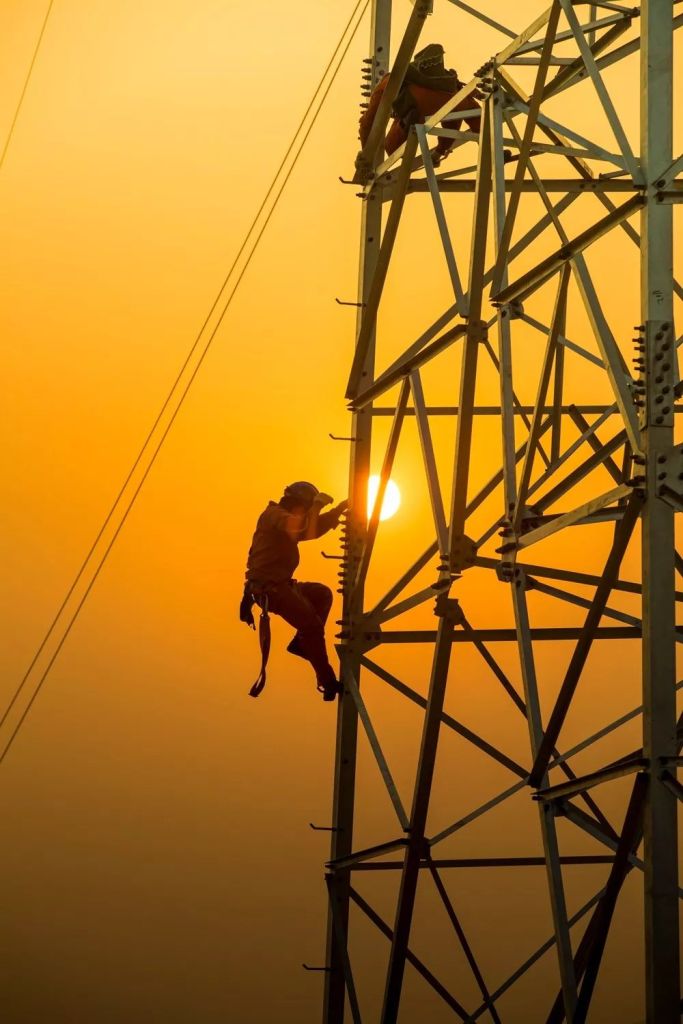
(photo taken on 28 April 2018, 高兴建)
Production team
Text: 桢公子
Editing: 王昆
Photos: 任炳旭 & 刘白
Design: 郑伯容
Maps: 巩向杰
Review: 云舞空城
References
1、黄晞等,《中国近现代电力技术发展史》,山东教育出版社,2006
2、《中国电力工业志》,当代中国出版社,1998
3、濮洪九等,《中国电力与煤炭》,煤炭工业出版社,2004
4、《中国水力发电史(1904-2000)》,中国电力出版社,2005
5、贡力等,《水利工程概论》,中国铁道出版社,2012
6、钱显毅等,《风能及太阳能发电技术》,北京交通大学出版社,2013
7、赵畹君等,《中国直流输电发展历程》,中国电力出版社,2017
8、《中国电力年鉴2018》,中国电力出版社
9、国家发改委,《电力发展“十三五”规划(2016-2020年)》
10、国家发改委,《煤炭物流发展规划》,2013
… The End …

星球研究所
一群国家地理控,专注于探索极致风光
 K in the clouds
ABSOLUTELY Brilliant Info. Shows the fantastic development for China.
LikeLiked by 1 person