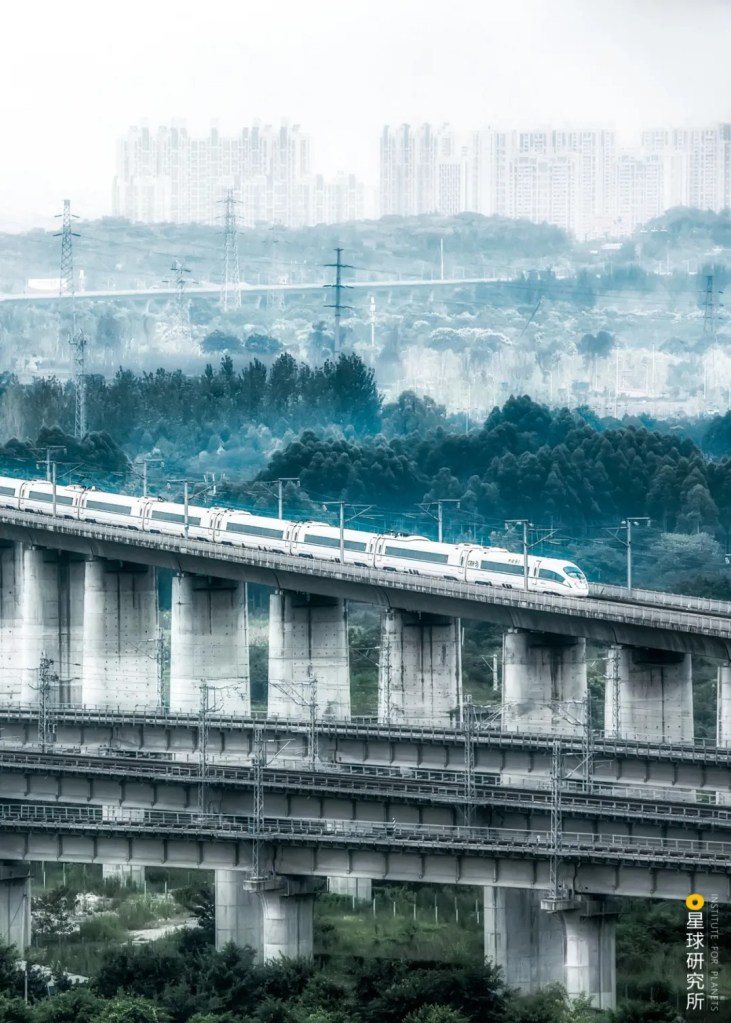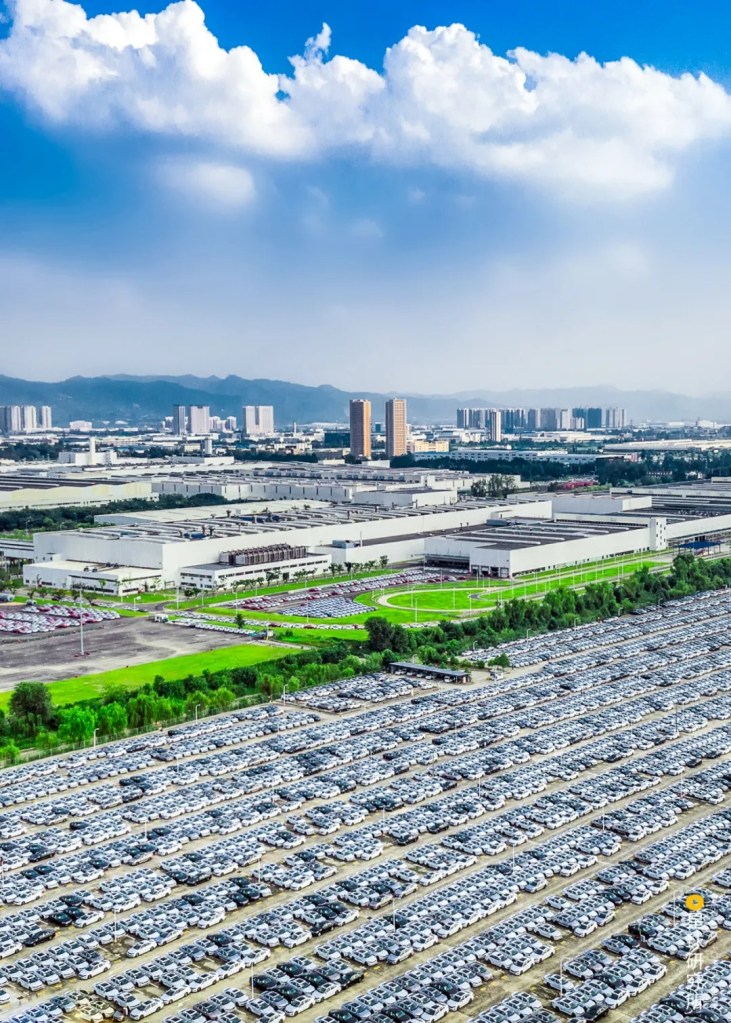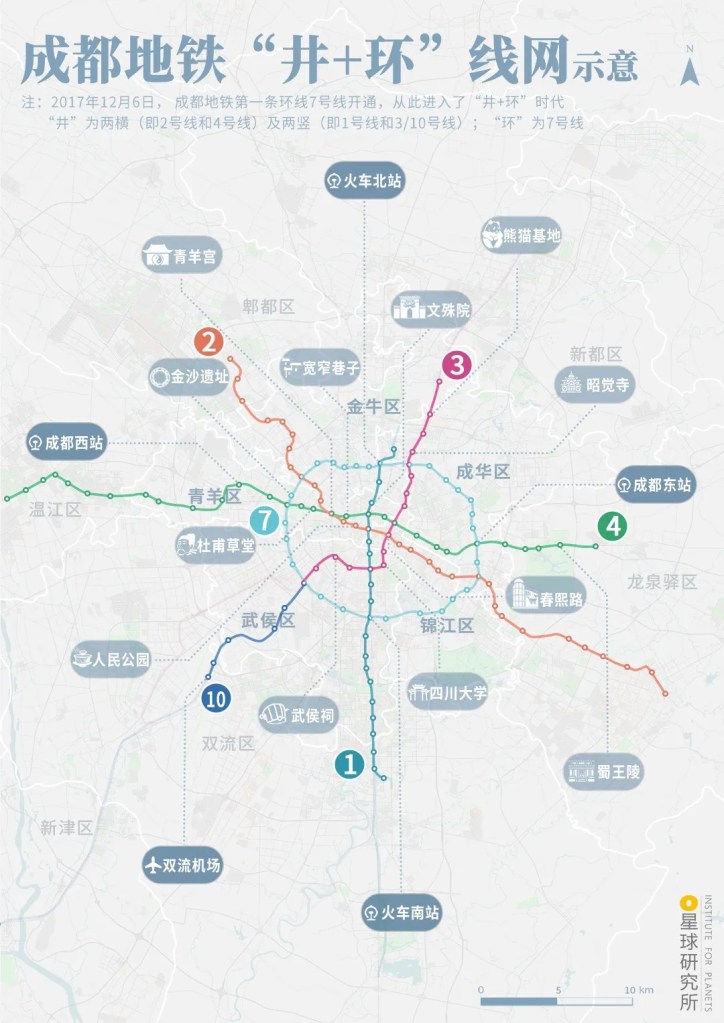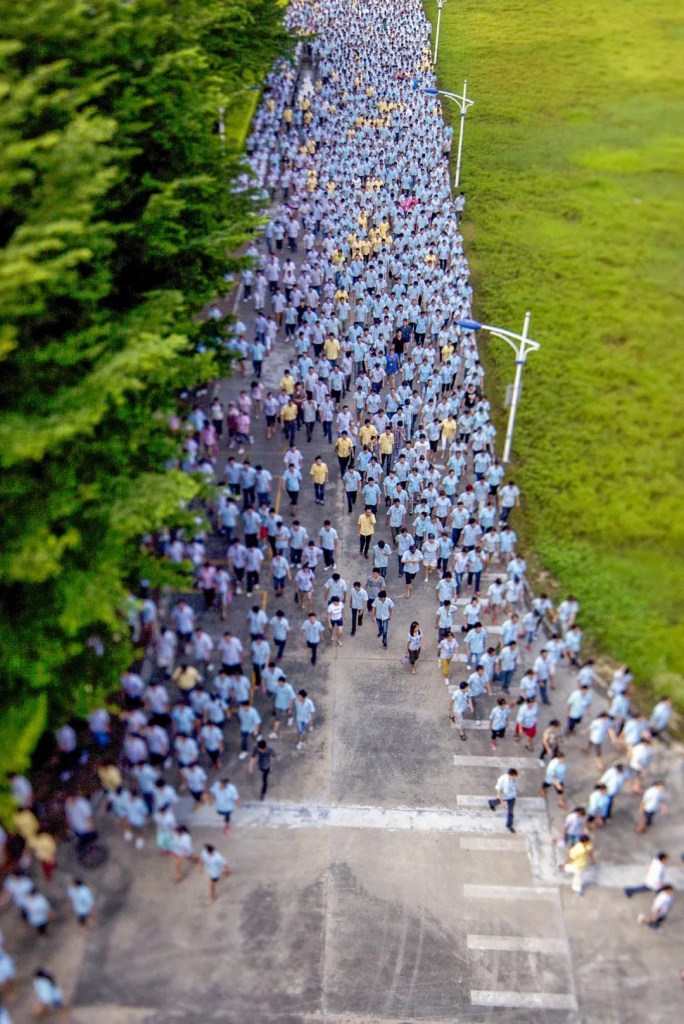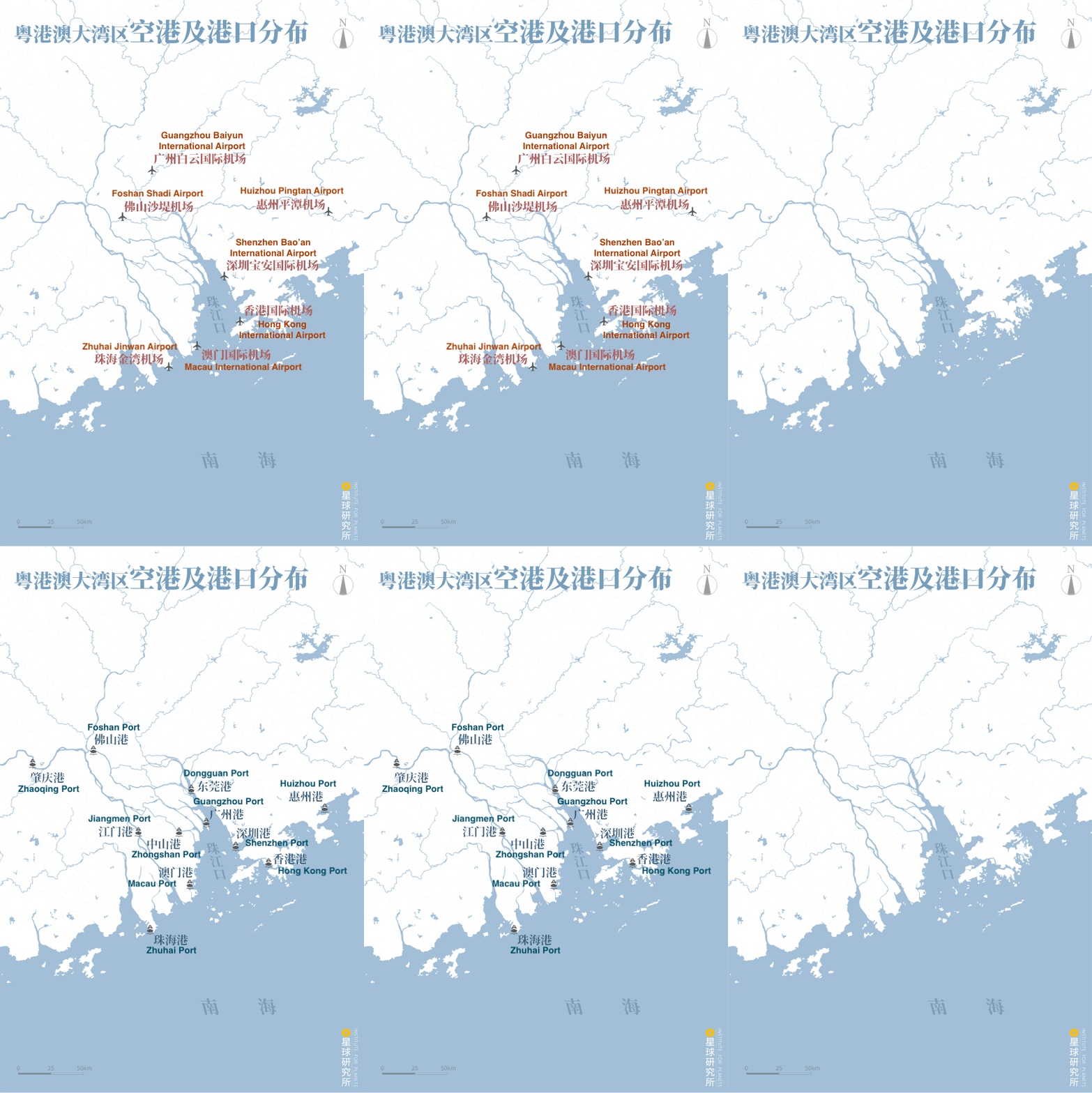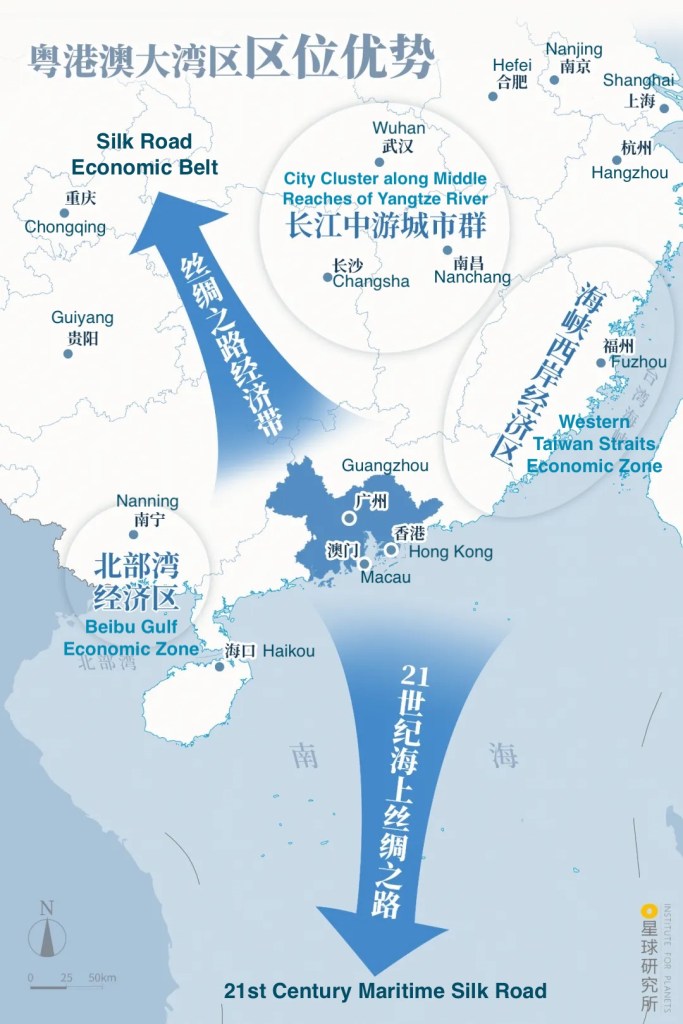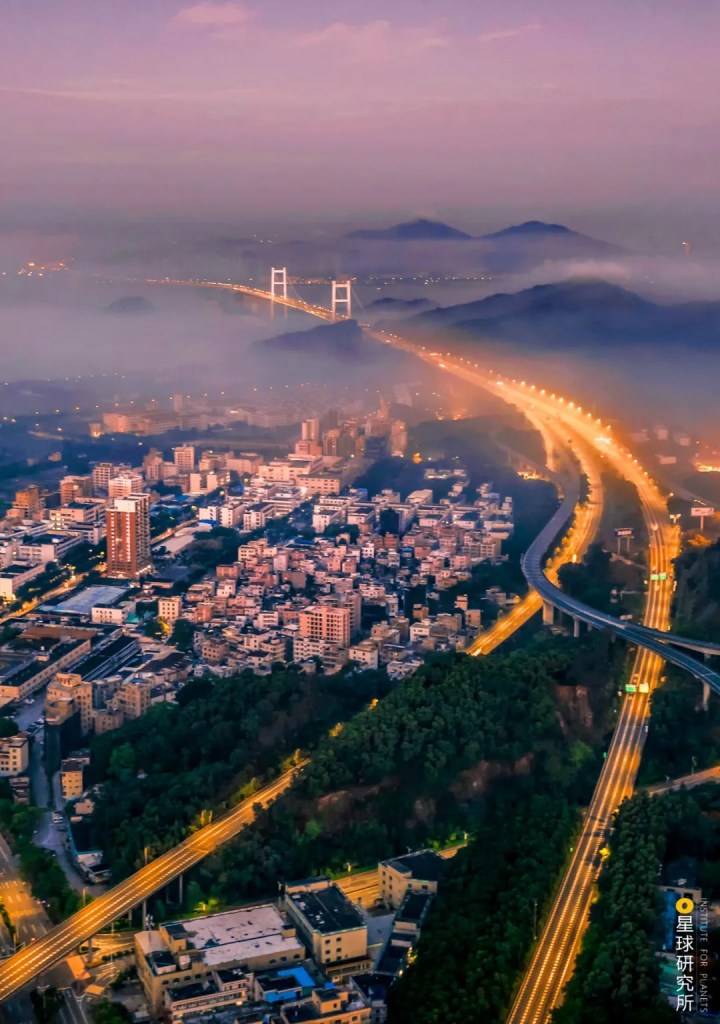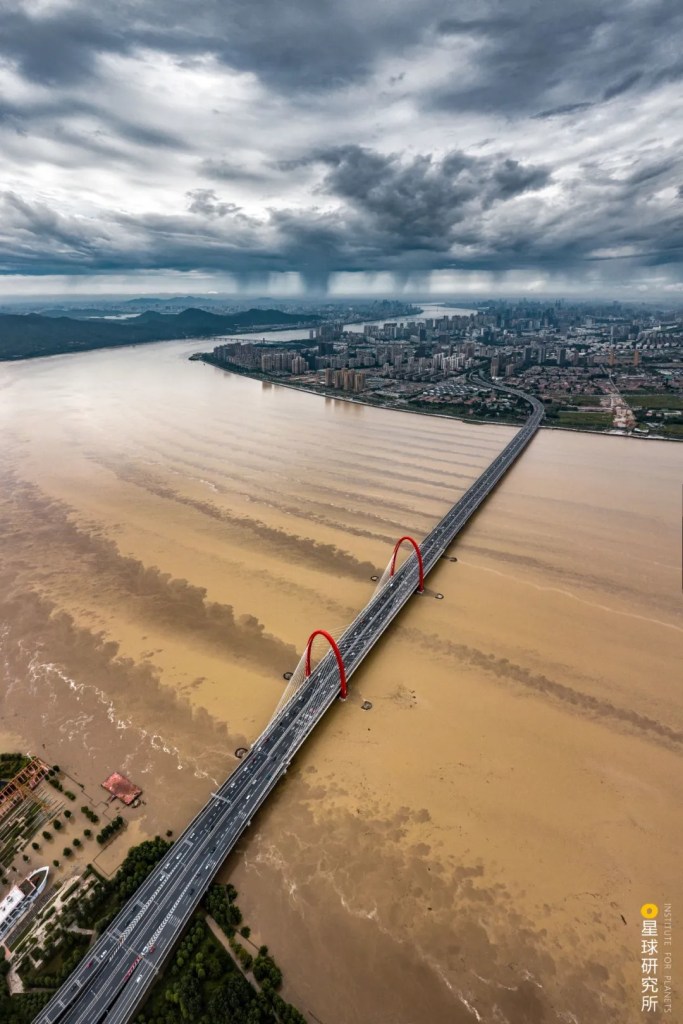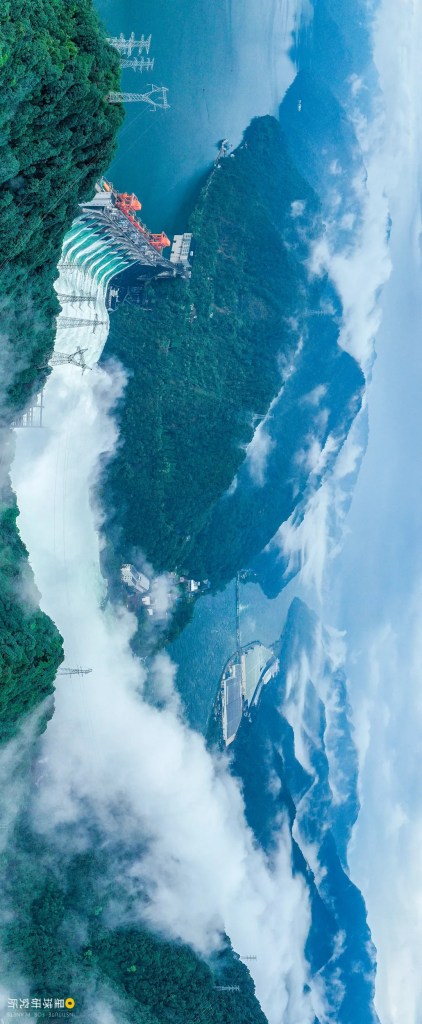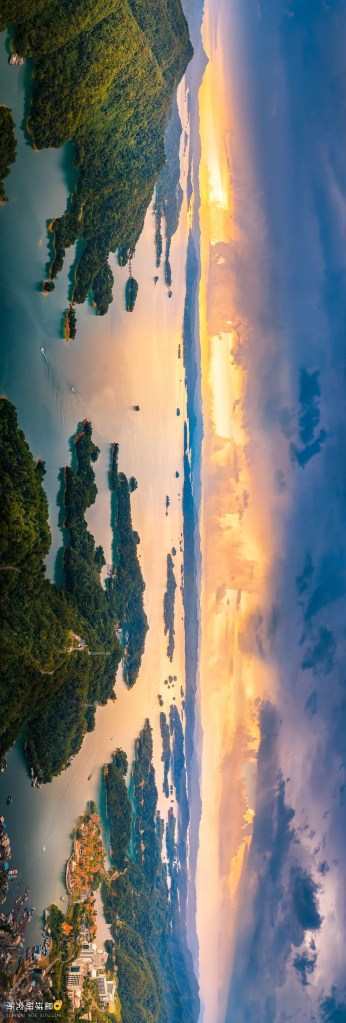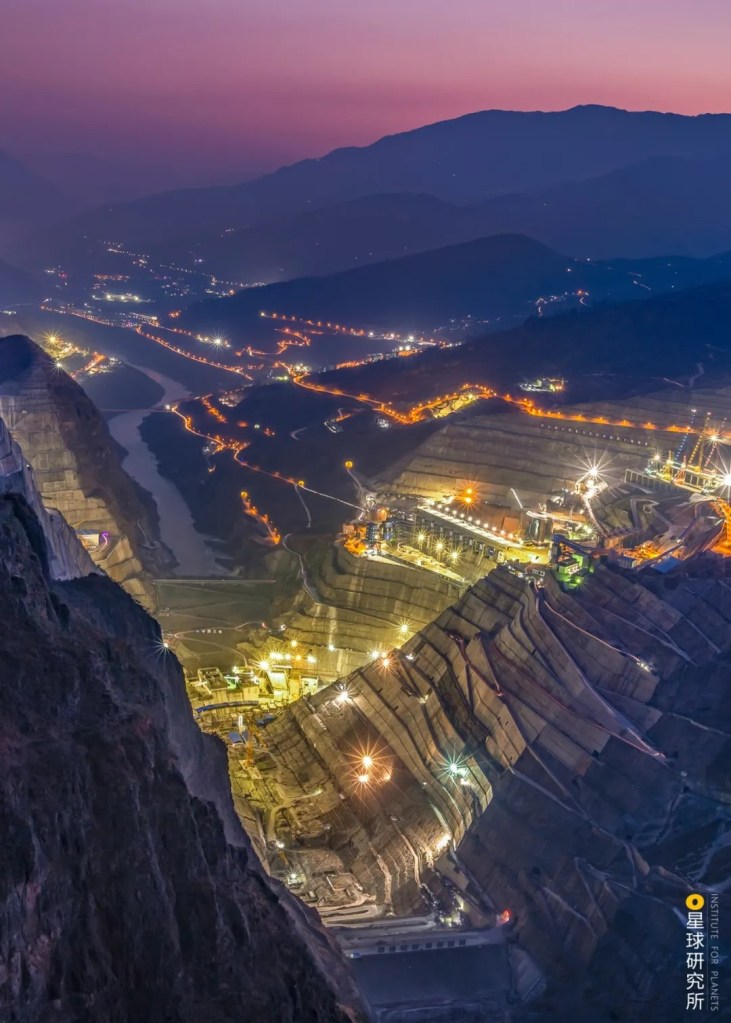
West-East Gas Pipeline: Journey to the East

Original piece: 西 气 如 何 东 输
Produced by Institute for Planets (星球研究所)
Written by 艾蓝星
Translated by Kelvin Kwok

Posted with permission from Institute for Planets
Moving the mountains

Natural gas is leaving its mark in China.

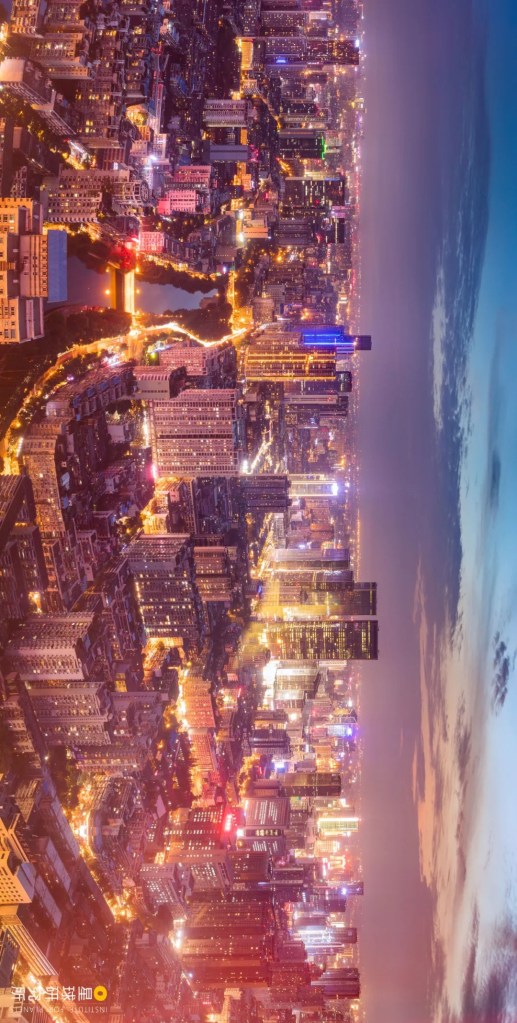
From somewhere off your radar, 400 million cubic metres of natural gas has to be transported to Guangzhou every year, so that the 2.58 million households may stay warm and be well-fed with cooked food; and 6.9 billion cubic metres of natural gas must be delivered to Shanghai every year, just to make sure the 130 thousand enterprises can run their factories and sustain the production lines.
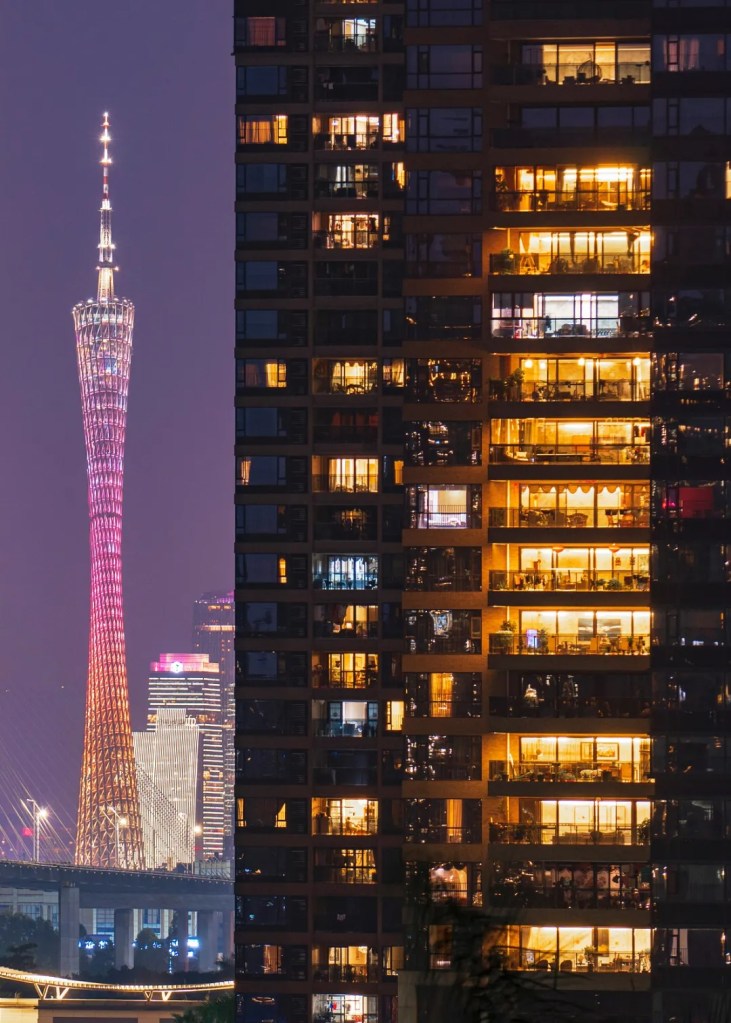
Evening lights of Guangzhou
(photo: 视觉中国)

This is happening not just to Guangzhou and Shanghai, but all over the country. Each year, hundreds of billions of cubic metres of natural gas is being transported, from locations you are probably unaware of, to every corner of the country through 87,000 kilometres of pipelines. It allows 96% of all cities in China to maintain normal production and 400 million Chinese people to go about their daily lives.

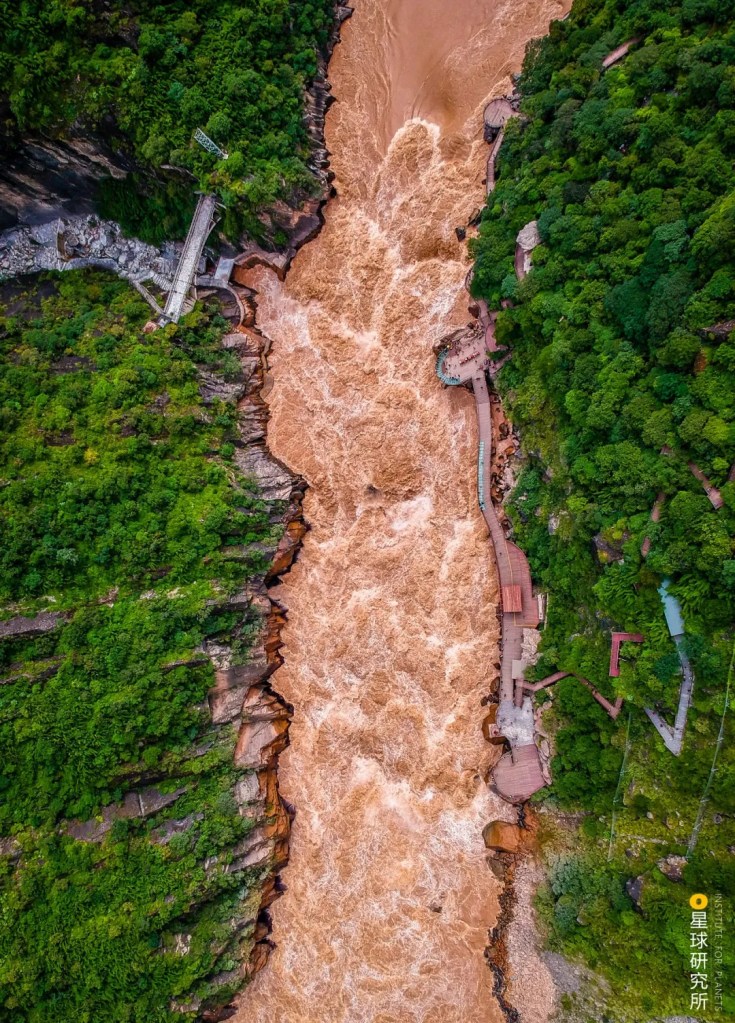
Sino-Myanmar Gas Pipeline crossing the Nu River on a 380-metre suspension bridge
(photo: 国家管网集团官方微信)

All this precious natural gas comes not from within Guangzhou or Shanghai, but from western China or the Gobi Desert further away in Central Asia…
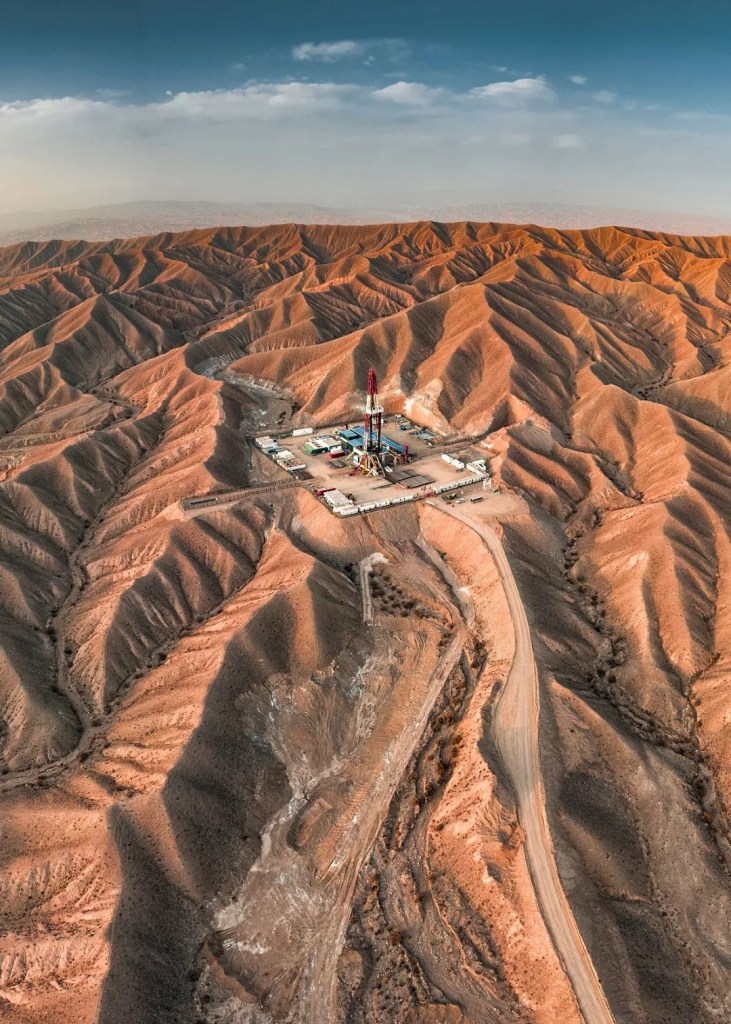
Drilling in a desert in Xinjiang
(photo: 视觉中国)

…the vast snowfields of Siberia…
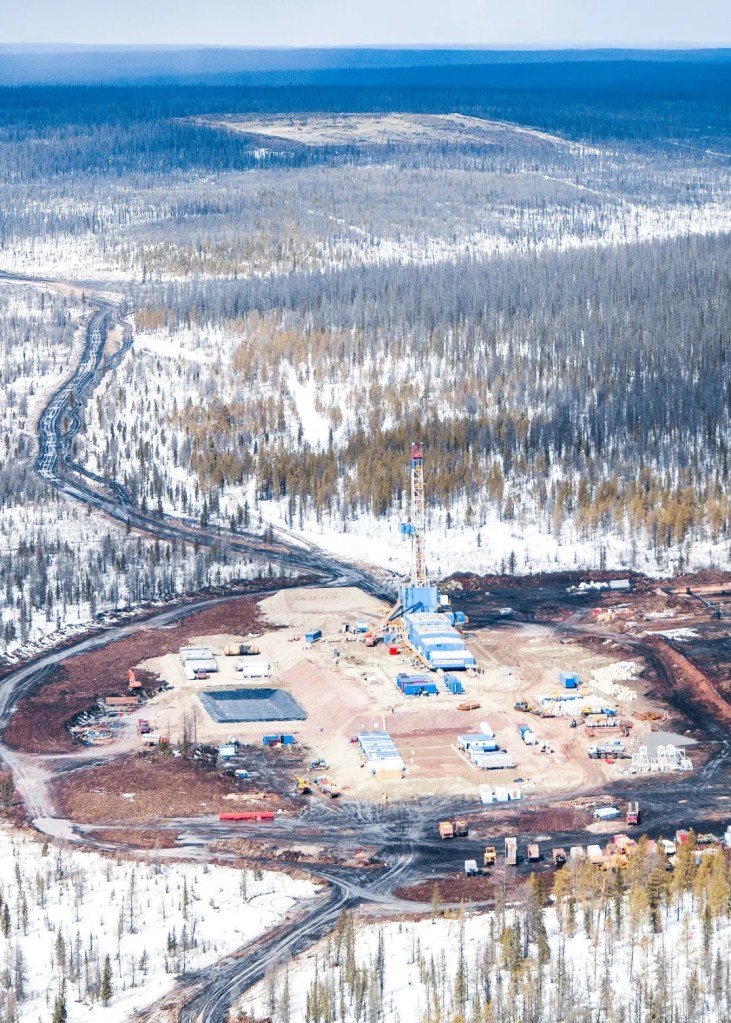
Drilling on a snowfield in Russia
(photo: 视觉中国)

…and even across the sea.
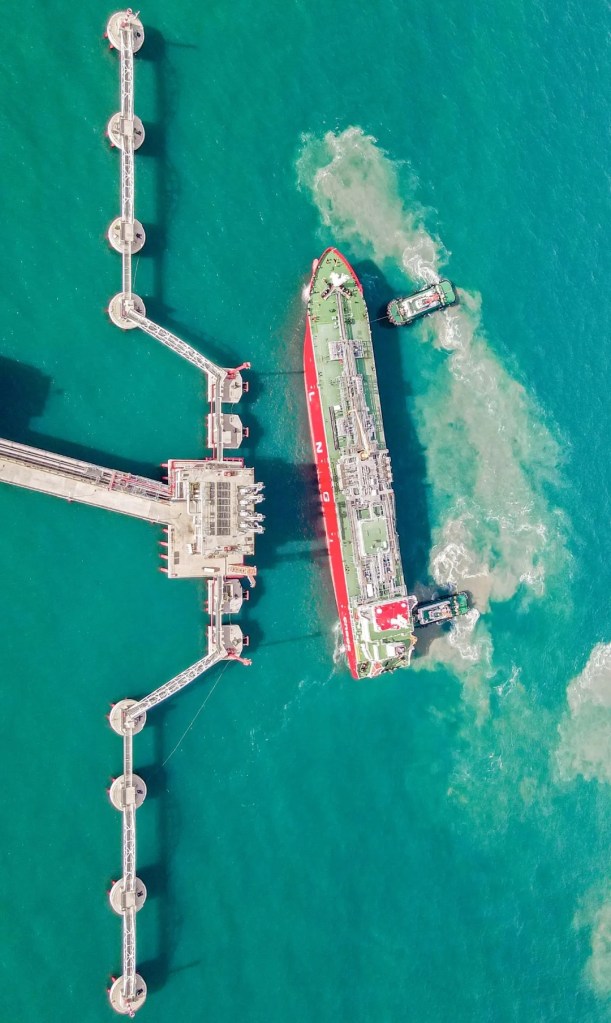
A liquefied natural gas (LNG) carrier near Yangpu Port, Hainan
(photo: 发菜发菜)

It climbs mountains, swims across the sea and travel tens of thousands of miles to enter every city and factories scattered all over China. The West-East Gas Pipeline, Sichuan-East China Gas Pipeline, Central Asia-China Gas Pipeline, Sino-Myanmar Pipeline and China-Russia Pipeline together constitute China’s natural gas transportation network.

This is a colossal scale reallocation of natural gas resources, an arduous task that is comparable to moving the mountains, or “shifting the Heaven and Earth (乾坤大挪移)” for the Chinese people.

But why are we building such an enormous network? And how did we achieve this?

1. Clean energy

Back in 1999 when the Asian financial crisis had barely died down, China’s GDP was soaring with a growth rate almost hitting 8%. To sustain the astonishing economic development within this one year, the entire country consumed 1.3 billion tonnes of coal in total, and at the same time emitted 11 million tonnes of soot, 18 million tonnes of sulphur oxides and 11 million tonnes of nitrogen oxides into the atmosphere.

A chimney-laden town in Xilinhot, Inner Mongolia
Photo was for illustration purpose and not taken in 1999
(photo: 邱会宁)

It was this year when more than 60% of all cities in China failed to meet the National Ambient Air Quality Class 2 Standard (GB3095-1996) because of overwhelming pollutants in the air.

Guanzhong Plain obscured by fog and haze
Photo was for illustration purpose and not taken in 1999
(photo: 李珩)

Almost 30% of the land in China was severely polluted by acid rain when emitted sulphur oxides and nitrogen oxides dissolved in the falling water. From vegetation to buildings, soil and water bodies, nothing on land was spared.
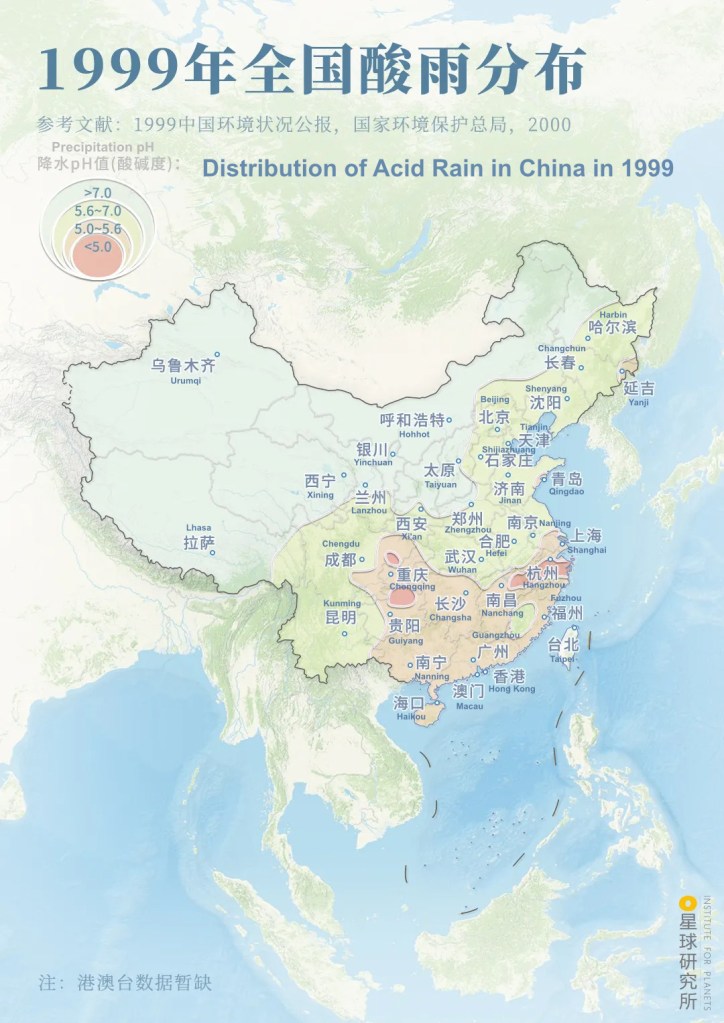
Distribution of acid rain in China in 1999
Atmospheric precipitation, including rain, snow, hail and dew, with a pH <5.6 are all categorised as acid rain. They are mainly caused by the conversion of sulphur dioxide and nitrogen oxides into sulphuric acid and nitric acid in the atmosphere or water droplets.
(diagram: 陈志浩, Institute for Planets)

This was not coincidental. In this major “country of coal”, coal plays an indispensable role in China’s primary energy* and still accounts for up to 60% of all the energy sources today. Prior to the widespread use of clean energy, the long-term extensive use of coal had been slowly degrading the fragile ecosystem.

*Primary energy refers to energy forms that are harvested directly from nature without undergoing artificial processing or conversion.

The rapidly developing China had never wanted an energy reform so badly. To that end, many research proposals on clean coal utilisation were put on the agenda, and immense effort was made to hunt for cleaner alternatives.

People began to set their eyes on natural gas. Composed of methane primarily, this gaseous fuel generates predominantly carbon dioxide and water during combustion, with almost no emission of sulphur oxides and soot.

Chemical equation for complete combustion of methane

Besides, for the same amount of heat produced, the carbon dioxide emission of methane combustion is merely 56% and 71% of that of coal and oil, respectively.
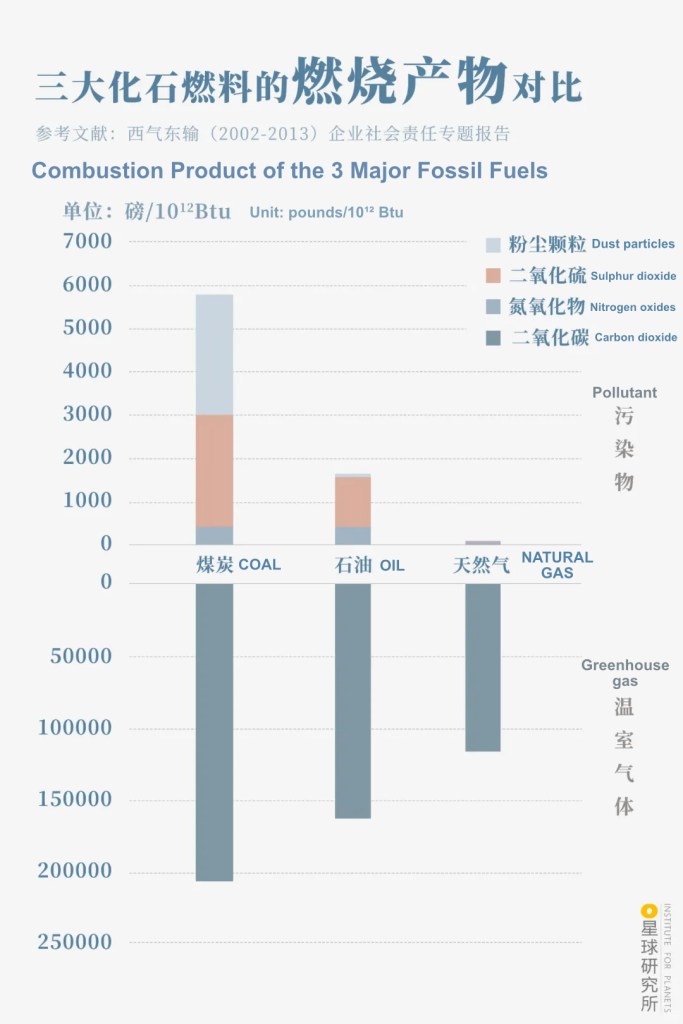
Combustion product of the 3 major fossil fuels
Data was empirically measured by the US Department of Energy
Both pounds and Btu are non-metric units, where 1 pounds is approximately 0.45 kg and 1 Btu is approximately 1055 joules
(diagram: 杨宁, Institute for Planets)

Since natural gas is much cleaner and emits much less carbon, it stands out from other fossil fuels and is utilised by countries around the world. It is becoming increasingly critical in the global energy structure.
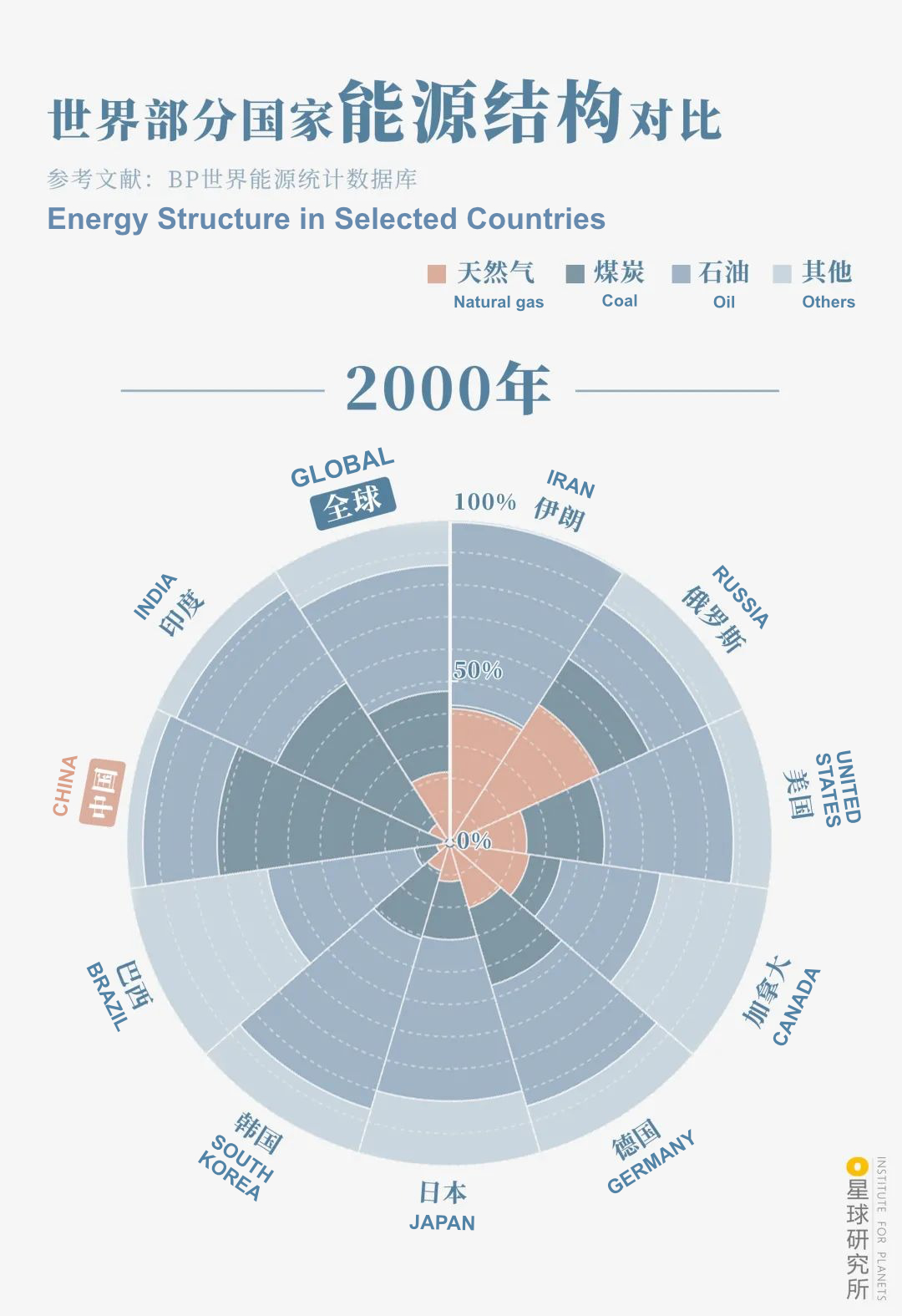
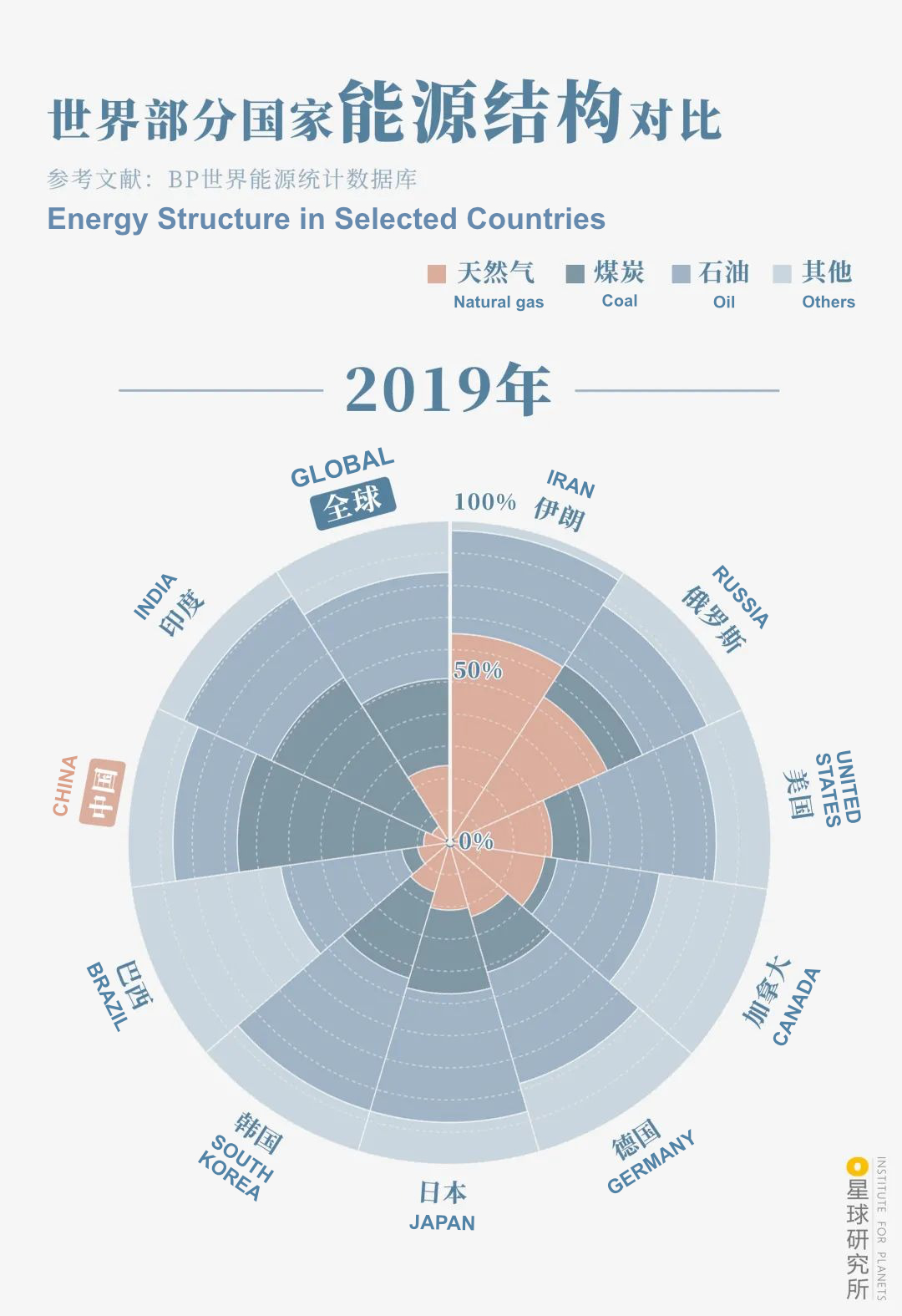
Energy structure in selected countries
(diagram: 杨宁, Institute for Planets)
TO COMPARE BETWEEN DATA IN 2000 AND 2019, PRESS AND SWIPE PHOTO LEFT AND RIGHT

Natural gas also gained a similar “fame” rapidly within China. After almost 20 years of development, it has now entered many sectors including industry, transportation and households. In 2020, the entire country consumed 325.9 billion cubic metres of natural gas, which is equivalent to the total volume of 58 Tai Lake combined.
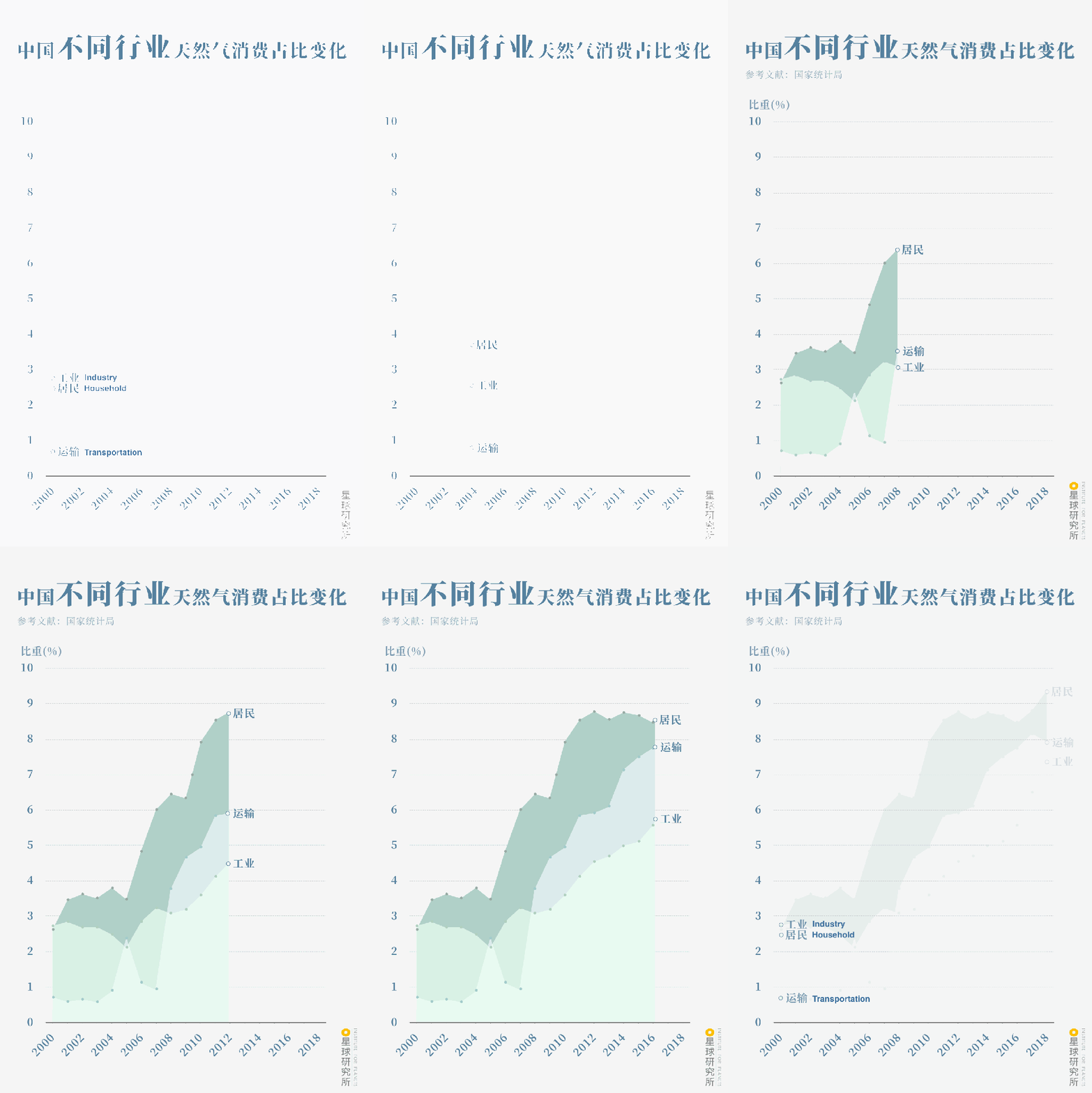
Changes in the proportion of natural gas consumption by sector
diagram: 杨宁, Institute for Planets)

Here comes the question —
Where does all this natural gas come from?

2. Where is the gas?

To answer this question, let us first shift our focus to the underground.

For billions of years, all kinds of organisms had continued to emerge on this blue planet. They grew, reproduced, died, and repeated this life cycle over and over. As land subsidence persisted, their remains were buried under layers of sediment, where they were converted into various forms of fossil fuels under the effects of high temperature and pressure as well as microbial activities. Among these, biological remains of higher plants were converted into coal, consolidated and sealed between strata.
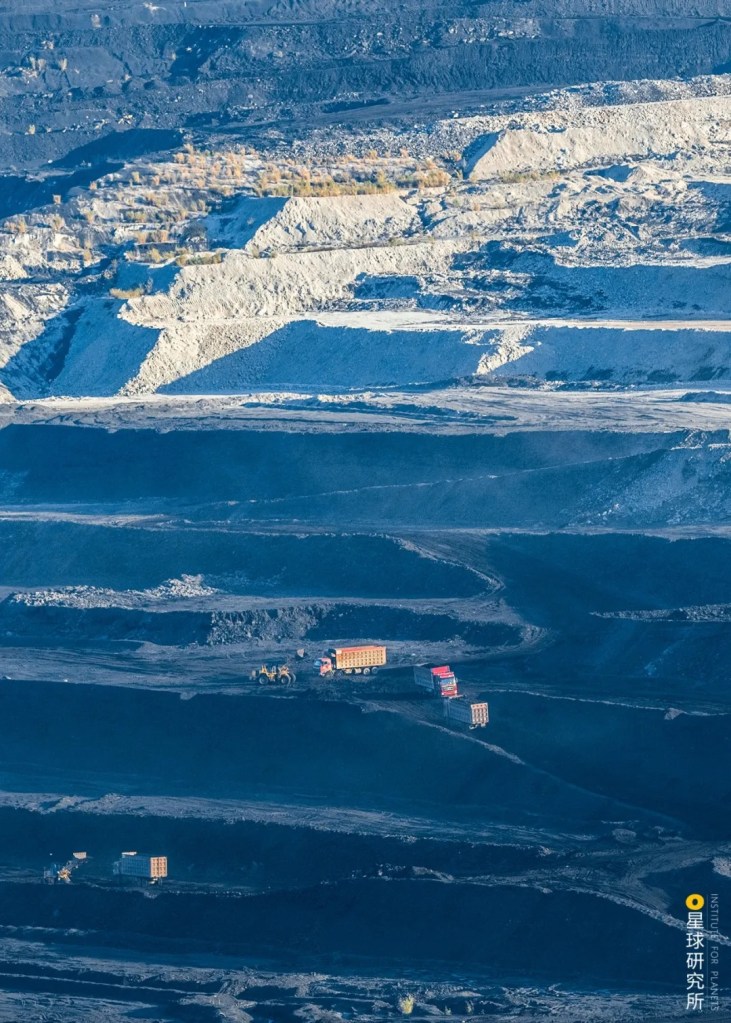
Xiaolongtan open-pit coal mine in Kaiyuan, Yunnan
The light-coloured zone is the overlaying stratum of the coal seam
(photo: 饶颖)

Biological remains of planktons, on the other hand, turned into oil and natural gas, which are the primary source of oil and gas fuel on Earth.
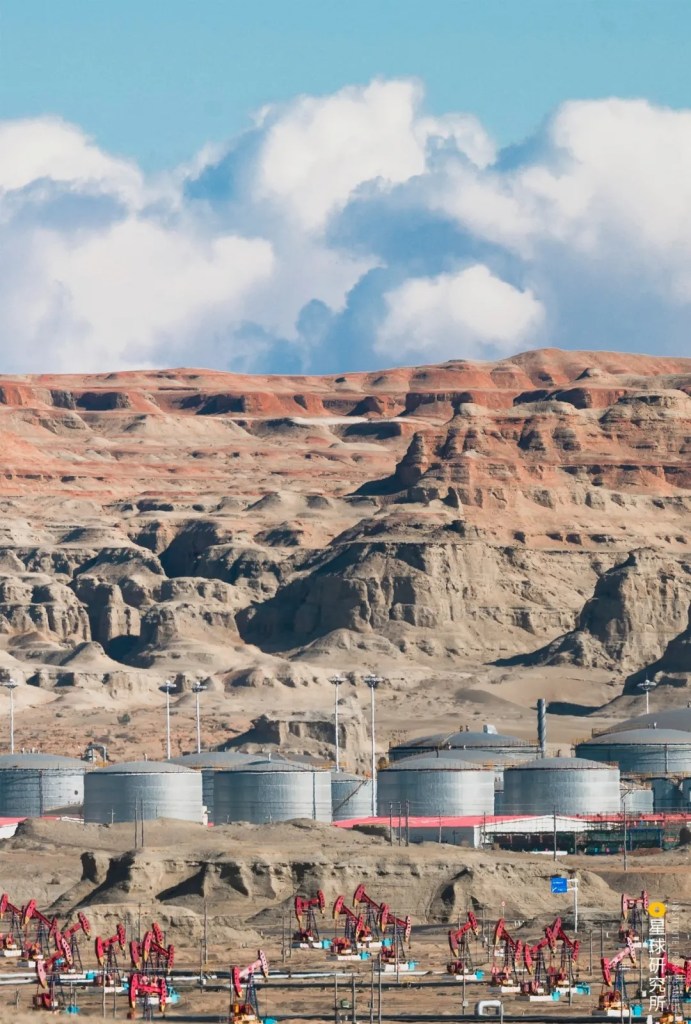
Oil extraction at Karamay Oil Field
There is also a type of inorganic gas fuel which forms naturally without the involvement of any organisms. It is formed from various elements through reactions like crustal movement, magmatism and metamorphism.
(photo: 咸鱼)

Liquid oil and gaseous natural gas are not always stable. Once formed, they may migrate and aggregate, sometimes occupying a large space together, other times existing alone elsewhere. Nonetheless, both have become the conventional oil and gas resources which are subject to extensive mining by humans. Conversely, oil and gas in some places may keep a low profile and stay where they are born. Since these resources are more difficult and costly to mine, they are known as the unconventional oil and gas resources.
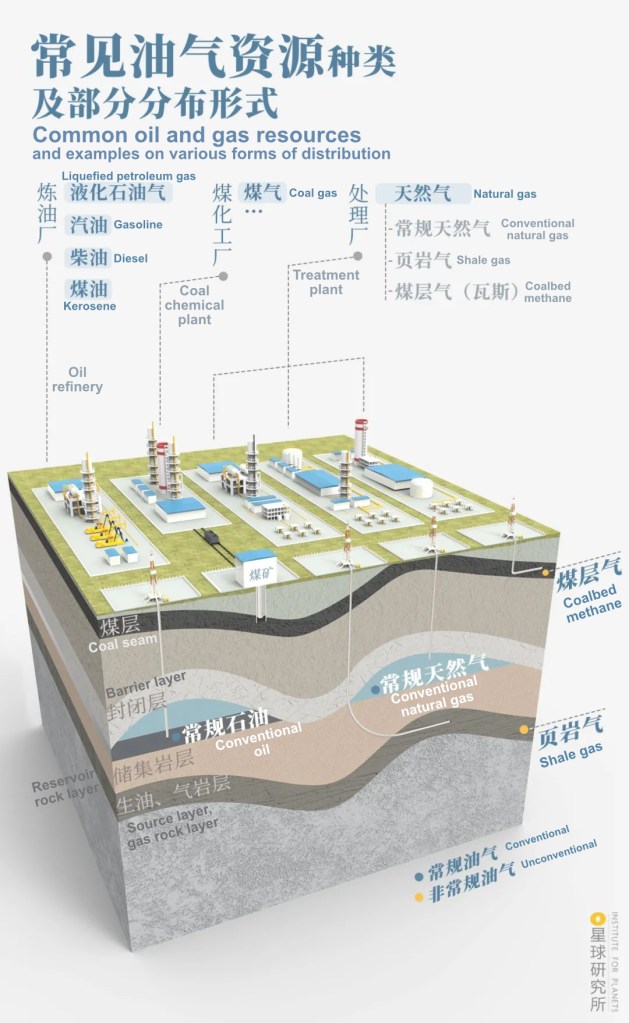
Common oil and gas resources and examples on various forms of distribution
This article will focus exclusively on conventional natural gas
(diagram: 罗梓涵)

At the beginning of the 21st century, the total proven reserves below the vast land of China reached 2 trillion cubic metres. But 71% of these reserves are concentrated in a large number of sedimentary basins in the western regions.
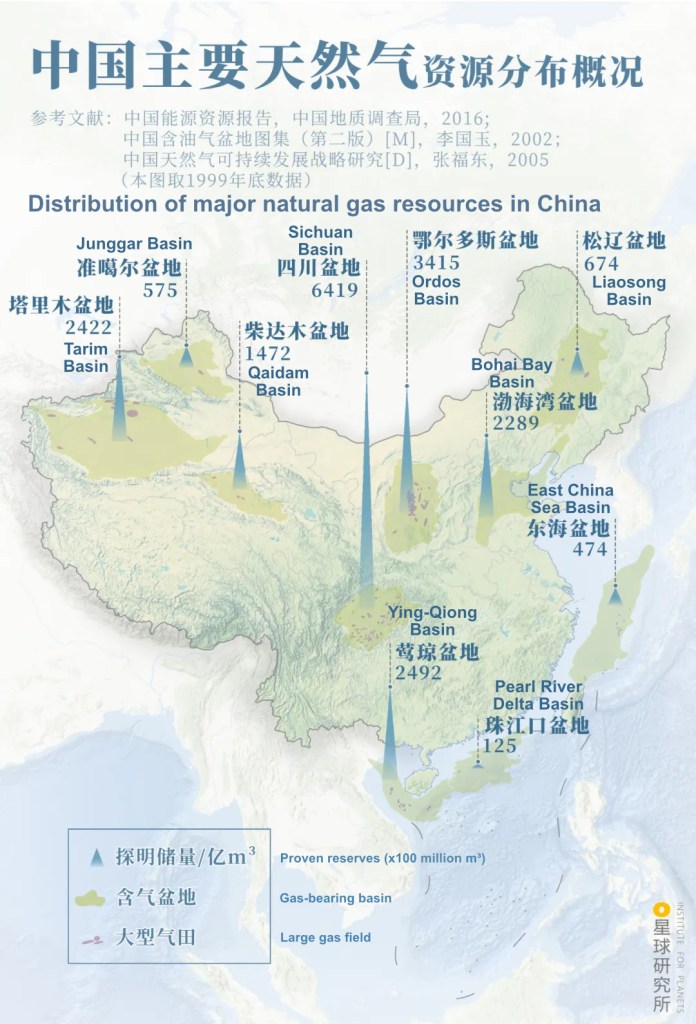
Distribution of major natural gas resources in China
(diagram: 陈志浩&杨宁, Institute for Planets)

The eastern regions are quite on the contrary, there is little natural gas reserve here. Despite so, these regions are densely populated and economically developed, they consume much more energy and hence have a far greater demand for clean energy.

Regional energy consumption and GDP in China during early 21st century
(diagram: 杨宁, Institute for Planets)

This results in a tough dilemma: resources are concentrated in the west and the demand is in the far east. To bridge the two, it is imperative to have in place an energy transportation system that can traverse across the large country.

3. West-East Gas Pipelines

The best way to transport gas is to use pipelines.

Unlike rail, highway or waterborne transport, once the pipelines are completed they can do the job nonstop all day and every day, with guaranteed efficiency and no concerns for the weather, hitting many birds with one stone.
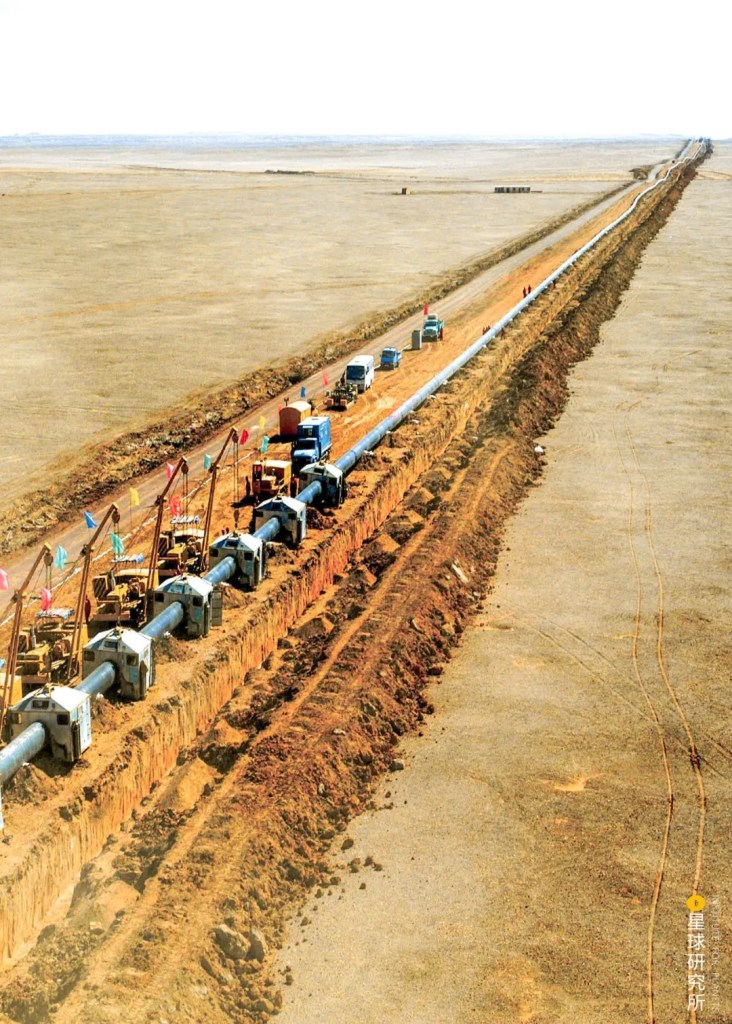
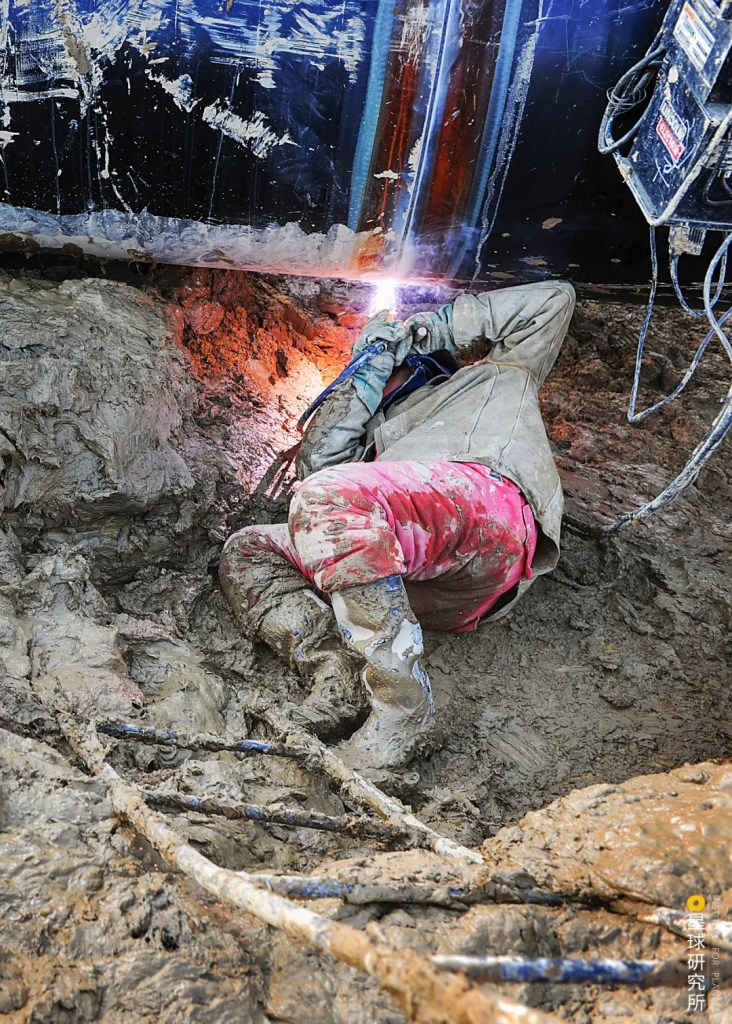
Workers laying gas pipelines
(photo: 国家管网集团西气东输公司)

But laying a pipeline that stretches more than 4000 kilometres is much harder than it sounds. Besides, this has to be an integrated project which entails production, transportation and consumption of the natural gas. The estimated budget exceeded 1.2 trillion yuan, which is equivalent to 3.6 times the cost for Qinghai-Tibet Railway. This implies that we must have a sufficiently large reserve of the gas resource to make the project cost-effective.

This is also the reason why countless geologists had to travel deep into the barren Tarim Basin to conduct tedious surveying and drilling more than a decade before the project was even approved. The project just did not have the slimmest chance to succeed, at least not before the eventual discovery of 22 gas fields with a total proven reserve of natural gas reaching almost 5 trillion cubic metres.
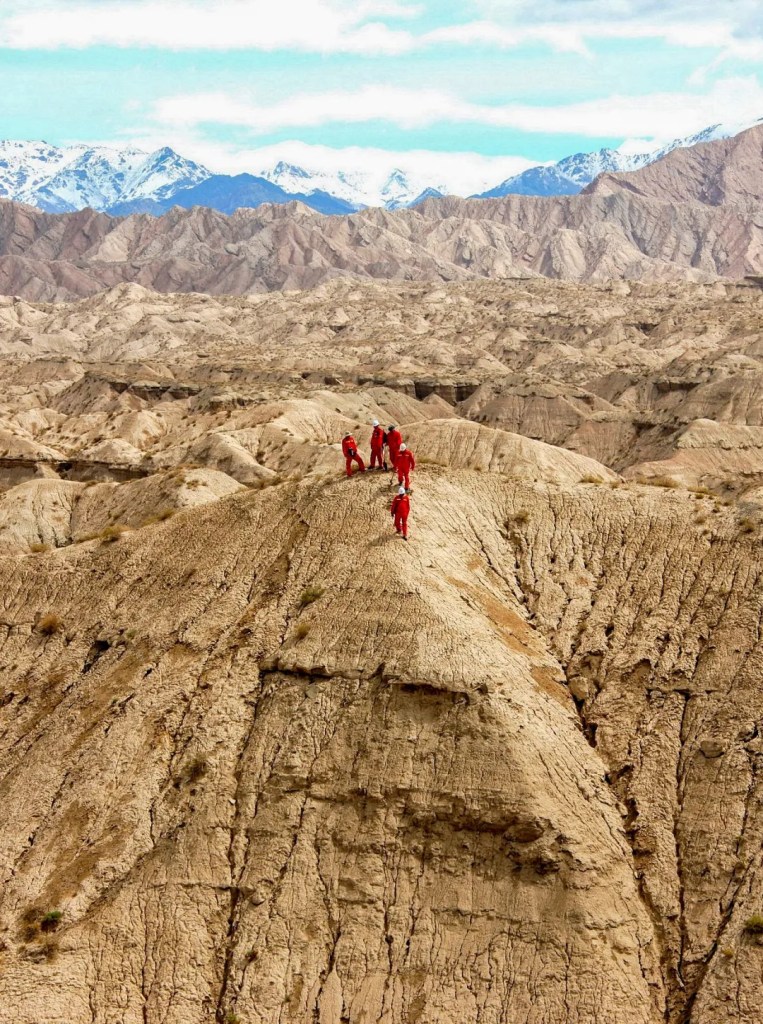
Geologists hiking the unforgiving mountains in search gas resource deposits
(photo: 视觉中国)

After the discovery was made, arrays of derricks were erected across the barren desert and numerous drill pipes sent deep underground. As the roaring rigs ground through the rocks above the gas-bearing layers, natural gas locked deeply underground began to rush towards the surface when squeezed by formation pressure or artificial water injection.
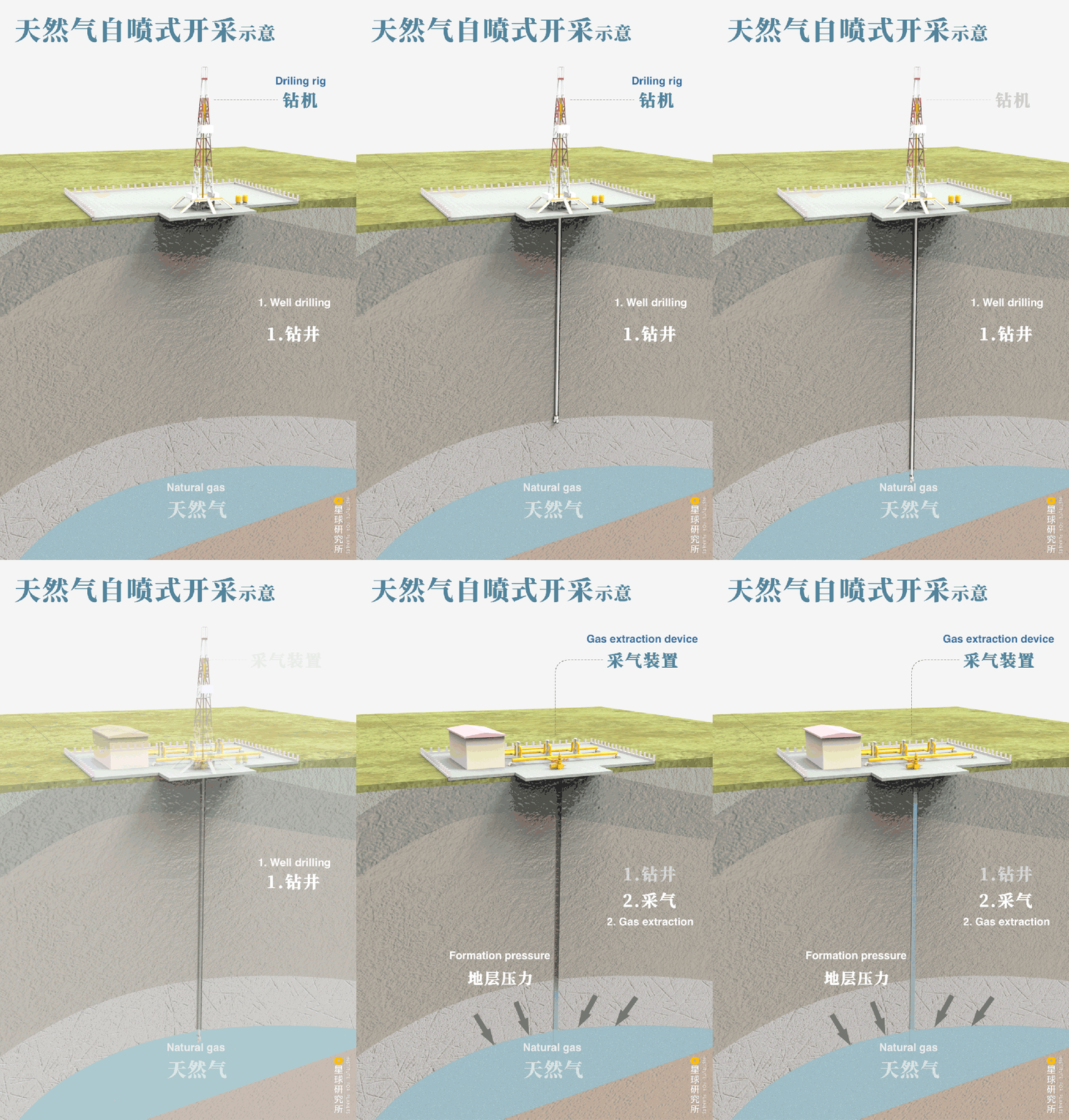
Natural gas extraction at a naturally flowing well
(diagram: 罗梓涵, Institute for Planets)

By 2005, there were enough gas fields operating in Tarim Basin to produce 12 billion cubic metres of natural gas a year, which accounted for 24% of the total production nationwide. But unearthing this enormous amount of natural gas leads to the next issue — transportation capacity. While natural gas flows out of the well naturally, it is far from realistic for the gas to rely on the momentum of this initial discharge to complete a several thousand kilometres journey. Therefore, engineers had to divide the pipelines into smaller segments and set up compressor stations at regular intervals to compress the gas and ensure a continuous movement.

A compressor station in Hexi Corridor
(photo: 刘忠文)

In the actual planning, the pressure allowed inside the transmission pipelines is up to 10 MPa, which is 100 times the atmospheric pressure. This posed a huge challenge on the design strength and toughness of the building materials. Not only must they be able to withstand high pressure, but also have the largest diameter possible to achieve a higher transmission efficiency. All these were setting the bar extremely high for the construction.

After repeated experimentation and comprehensive evaluation of all potential designs, engineers finally came up with a domestically designed and manufactured construction material for the pipelines. This steel pipe, commonly referred to as model X70, fulfils all construction requirements encompassing strength, toughness and welding performance, while having a diameter of 1.016 metres. It set a new record for China’s gas pipeline production.
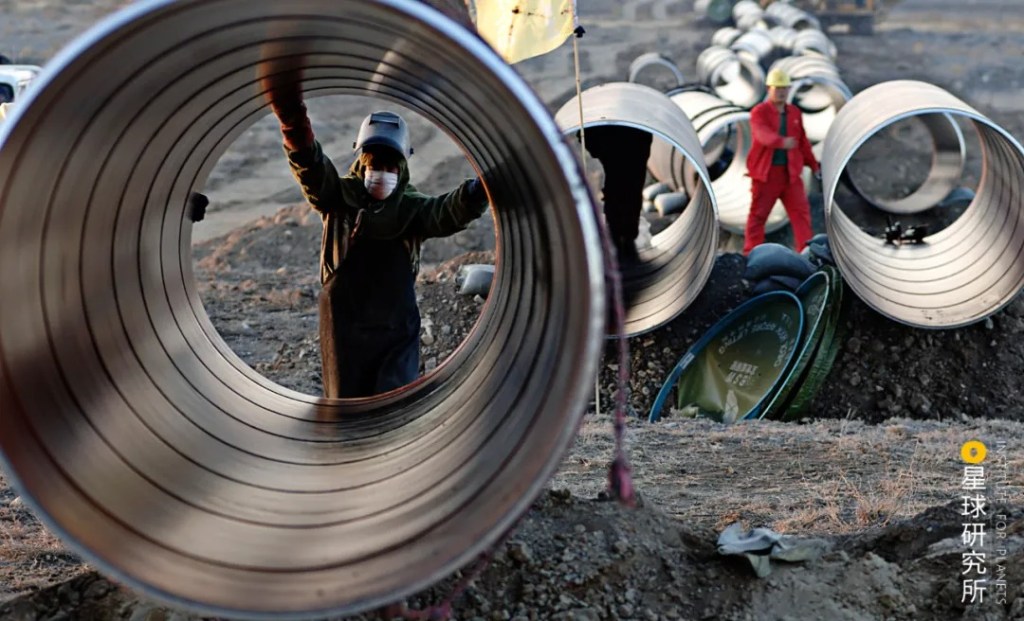
X80 steel pipe
The X70 steel pipe was later upgraded to X80 with a diameter of 1.219 metres
(photo: 余海)

But building a pipeline stretching more than 4000 kilometres requires more than 300,000 segments of such steel pipes connected head to tail. This scale of production was truly unprecedented.
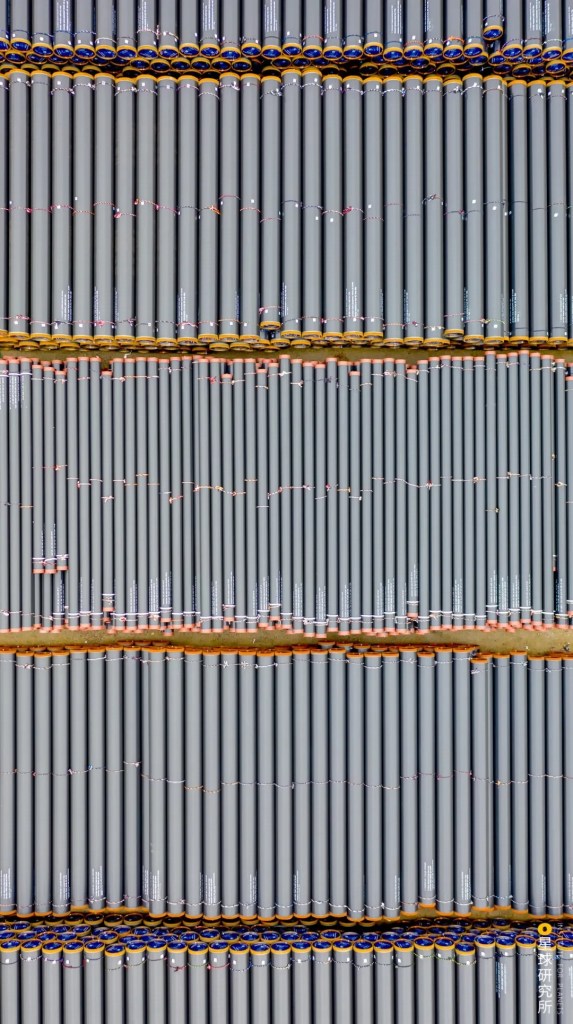
A mountain of piled up steel pipes
(photo: 吴胜波)

Furthermore, for this pipeline to travel across China it has to traverse mountains, plains, elaborate water networks, Gobi Desert and Loess Tableland. This means the builders must face extremely complex construction conditions.
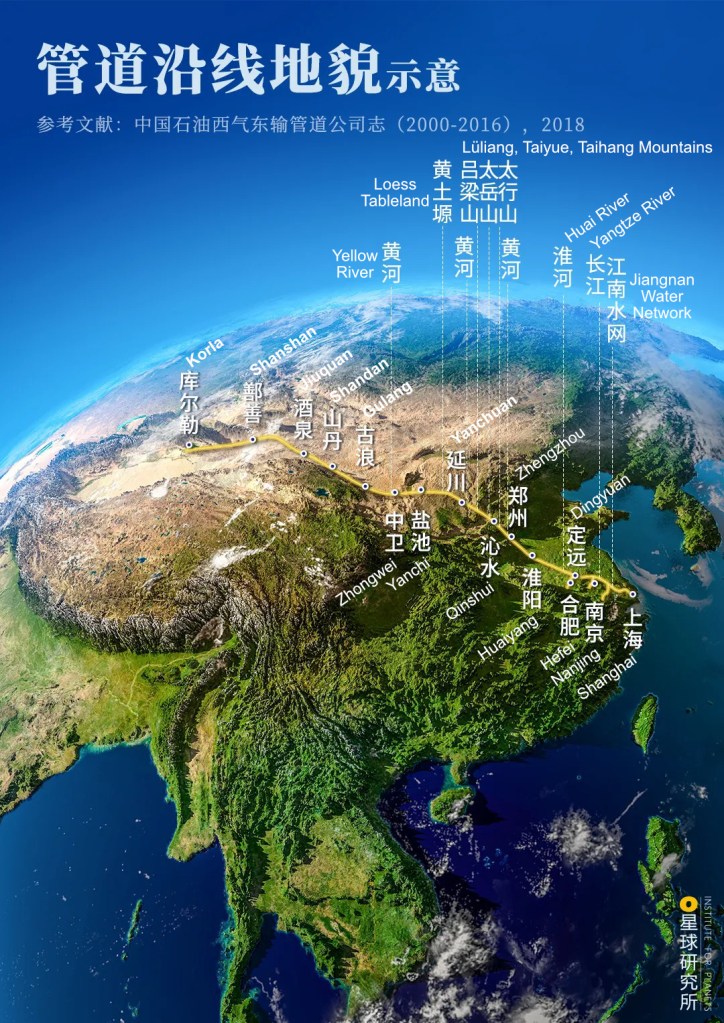
Topography along the pipeline
(diagram: 陈志浩, Institute for Planets)

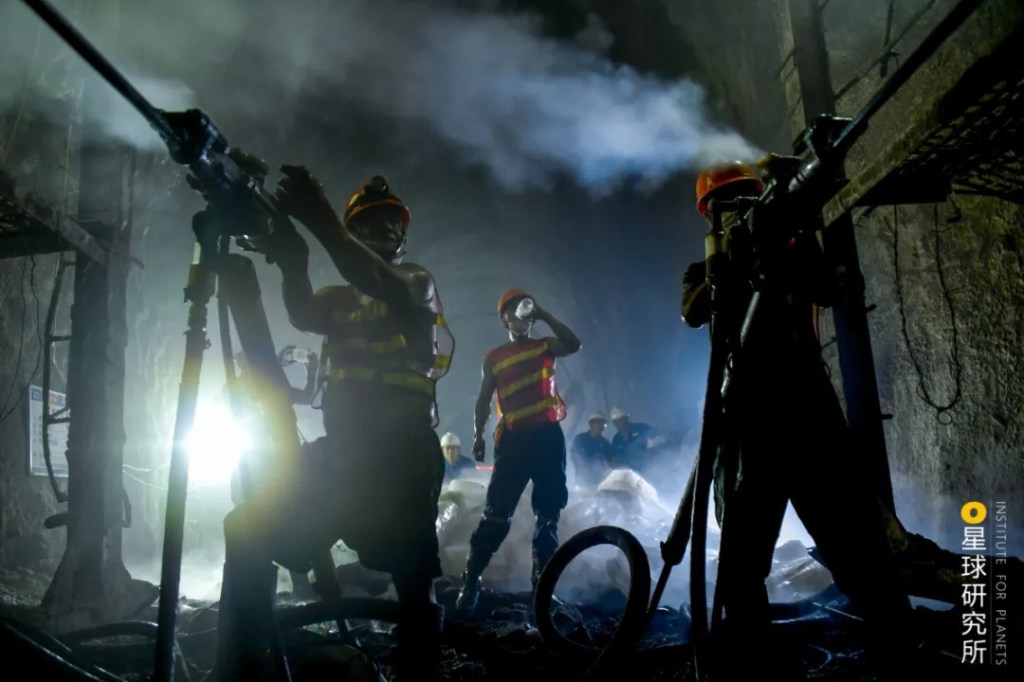
Construction work was especially challenging in mountainous terrains, deserts and water networks which were not even connected with roads yet, so engineers really had to scratch their heads to create channels for steel pipe delivery to these remote zones.
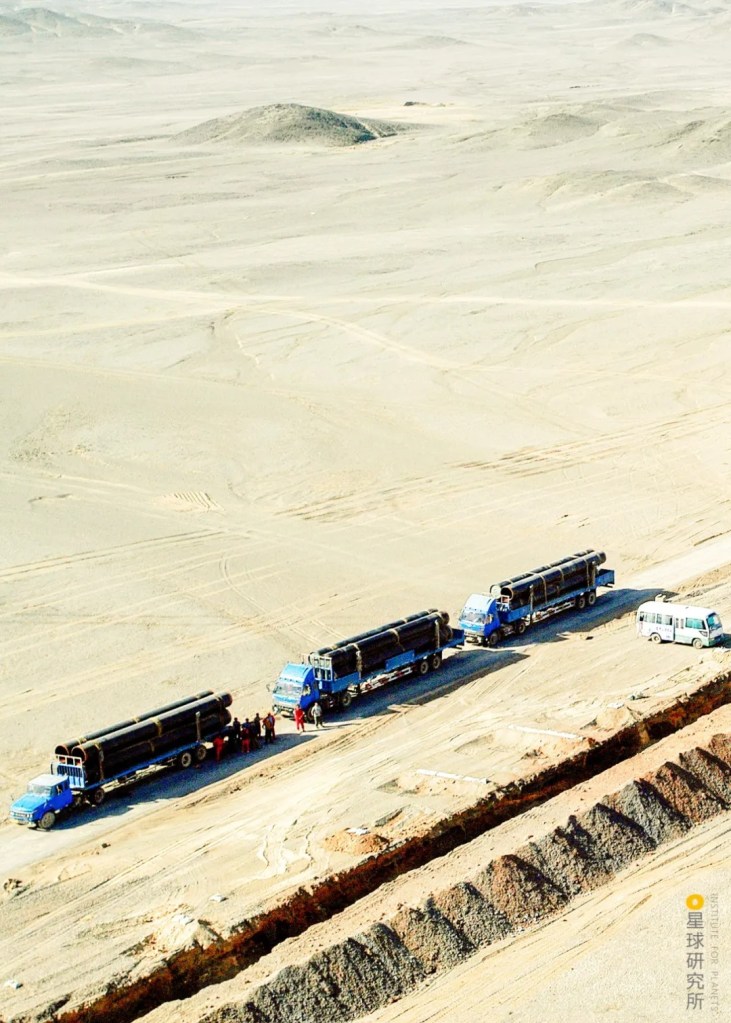
Steel pipe delivery through the Gobi Desert
(photo: 国家管网集团西气东输公司)

Once the steel pipes arrived at their destinations via those channels, they were assembled, welded together, patched and mended. Where necessary, they were even bent and adjusted to fit the local terrains.
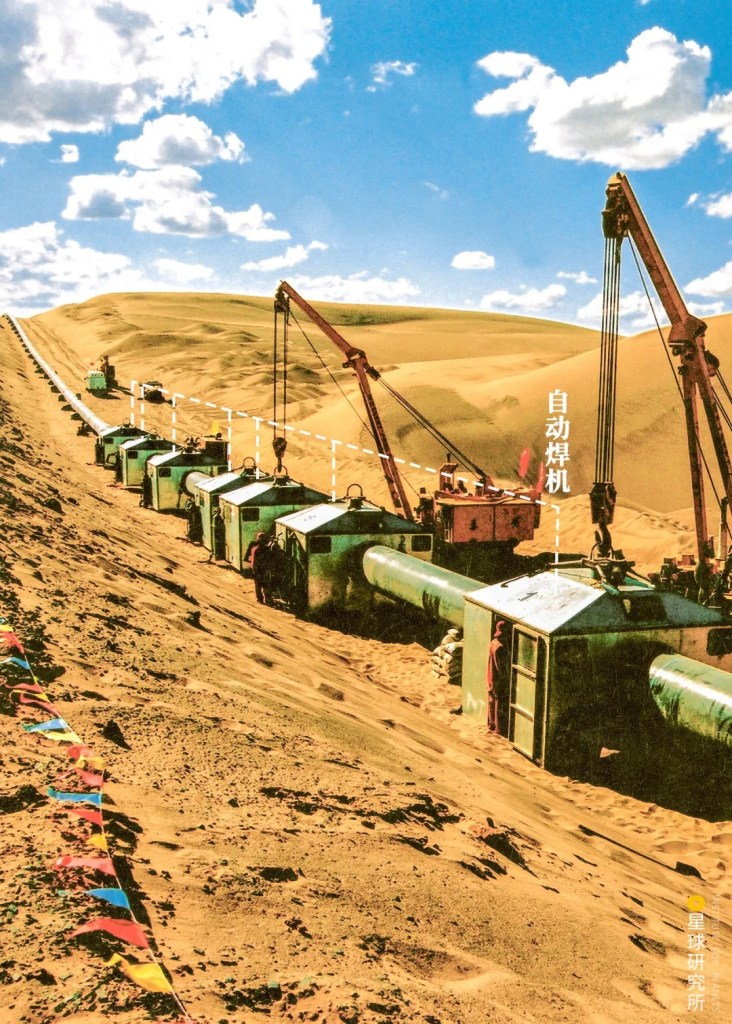
Automatic welding machineries (自动焊机) employed in relatively flat terrains in barren deserts
(photo: 国家管网集团西气东输公司)
Steel pipe welding in rough terrains of Jiangnan Water Network
(photo: 余海)

Following that, builders just needed to excavate pipe trenches, lay the pipes and backfill the trenches.
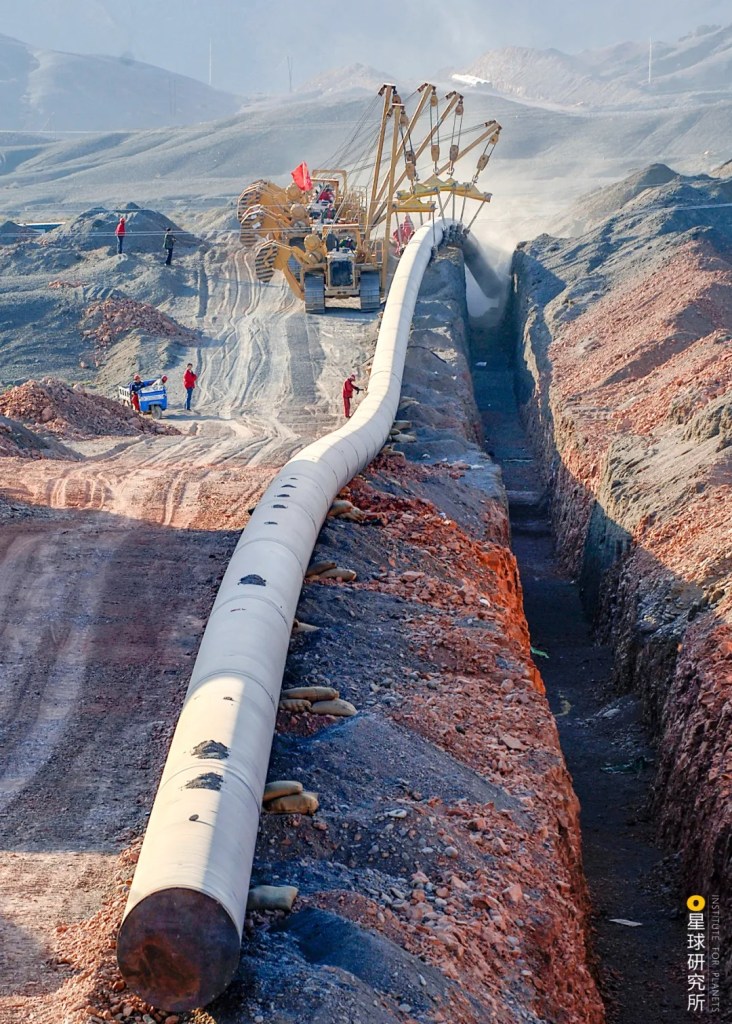
Laying the pipeline
(photo: 余海)

That sounds pretty straightforward. Conventional pipe laying methods would totally work if the builders were simply dealing with deserts, mountains and plains.
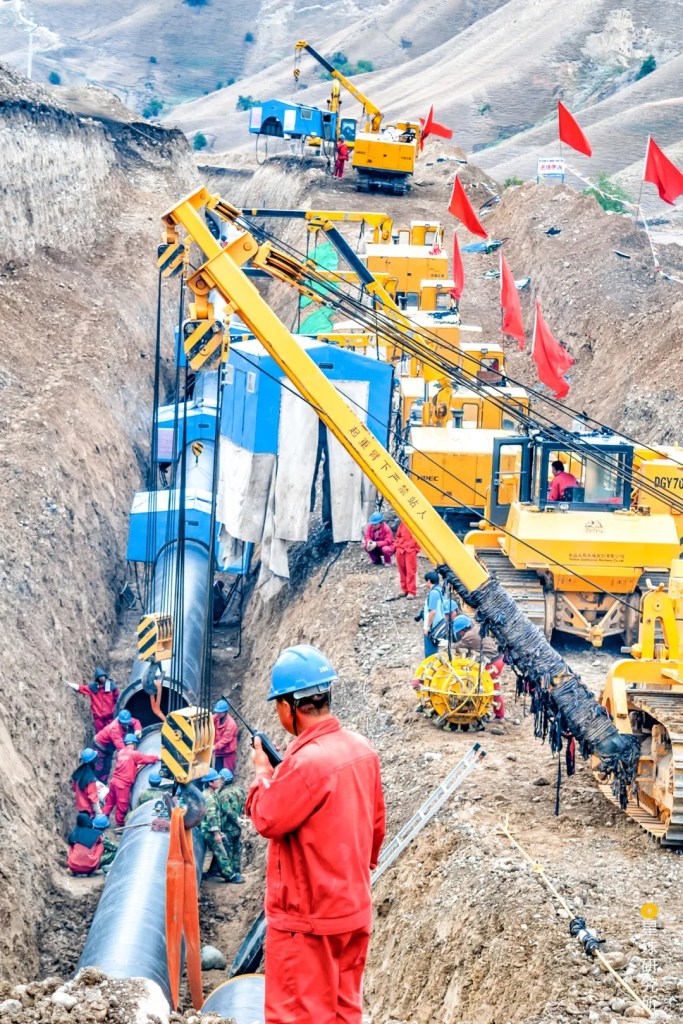
Pipeline laying through human-robot collaboration
(photo: 赖宇宁)

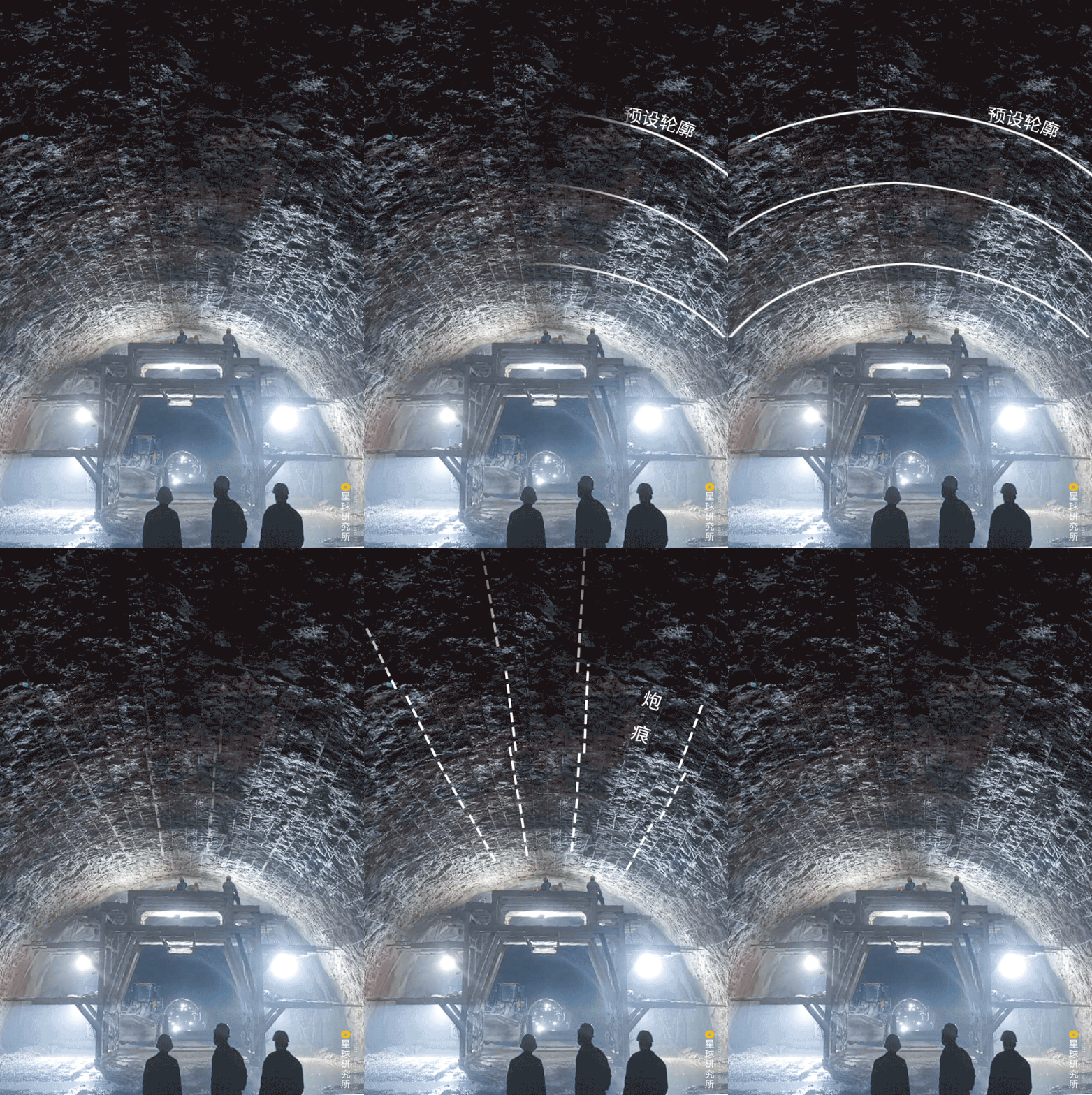
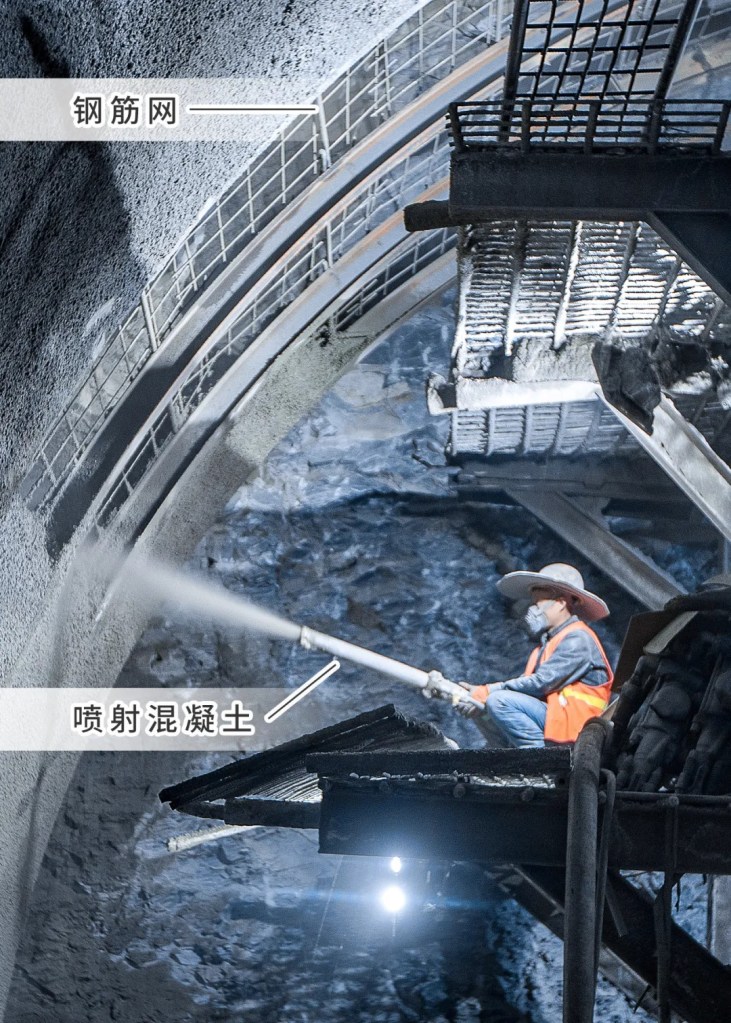
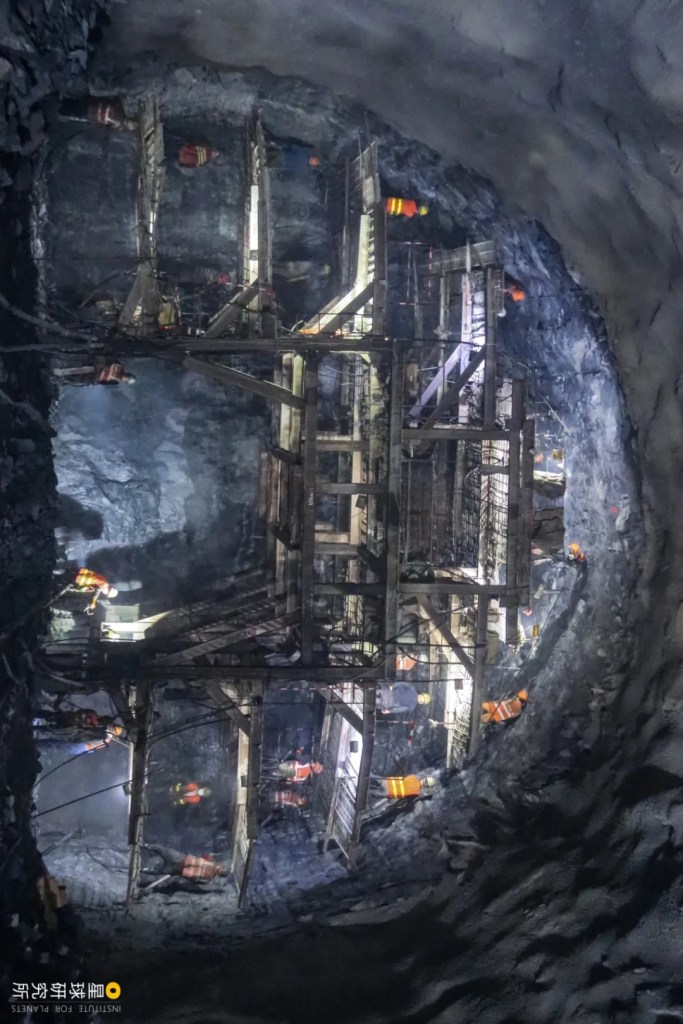
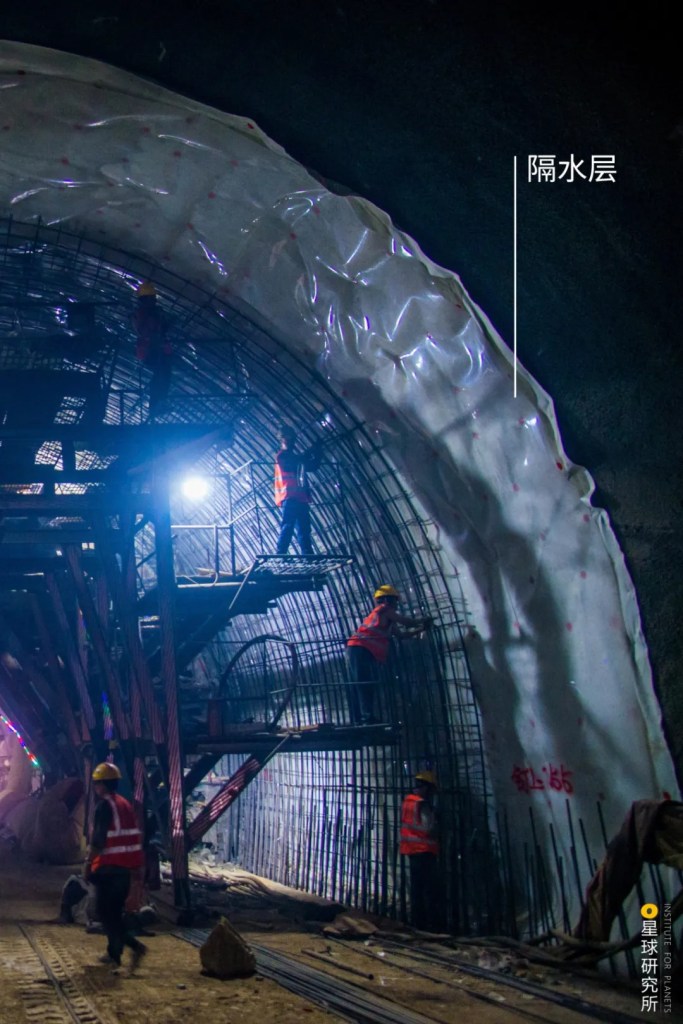
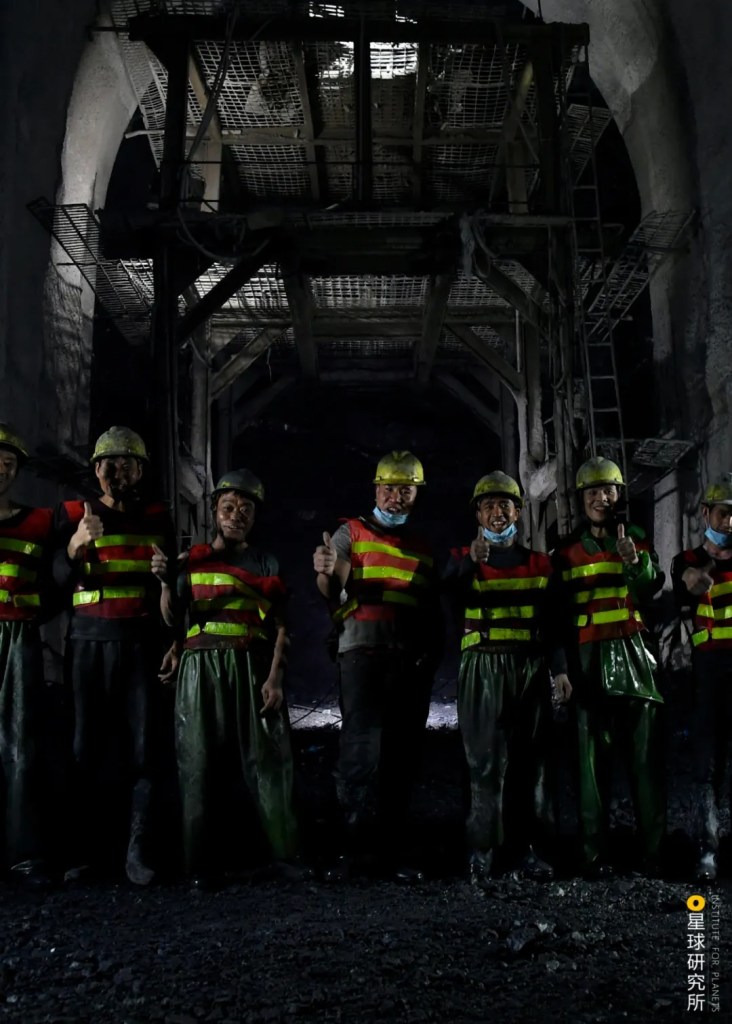
If only that were the case. In reality, the pipes have to travel across the Yellow River, Yangtze River and Huai River, as well as more than 1500 ditches and smaller rivers. The crude excavation approach was just not realistic, so the builders had to try something else. It could mean excavating a deeper tunnel beneath the rivers by the combined use of drilling and explosives…
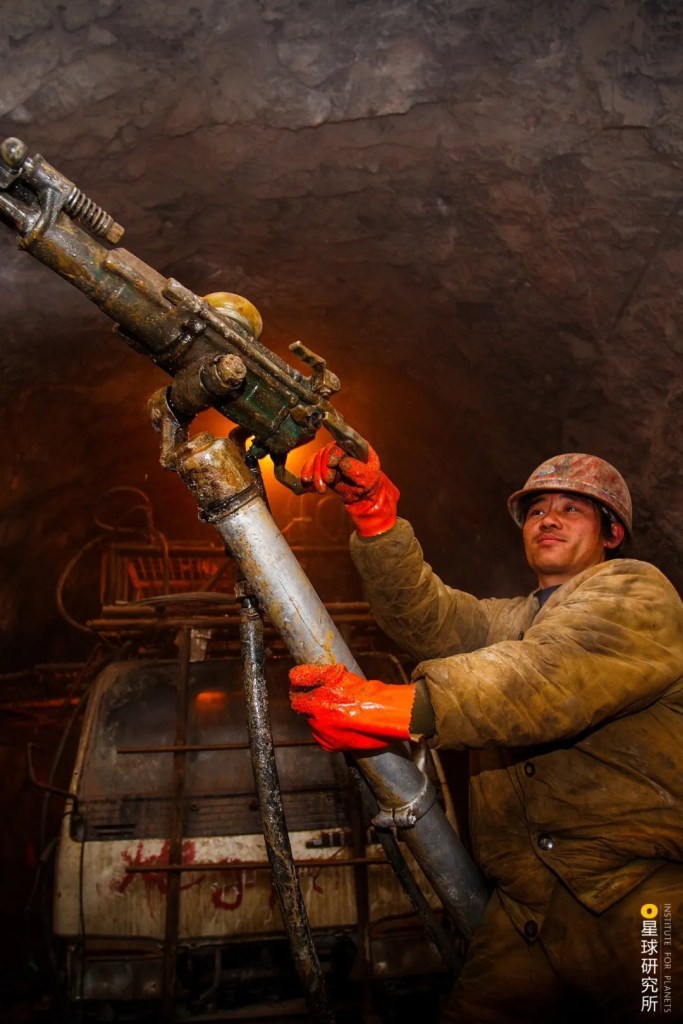
Tunnel excavation by drill and blast method
(photo: 鲁全国)

…or opening up a guide channel under the rivers with a pilot drill bit and dragging back a reamer and pipe from the other side through the same channel.
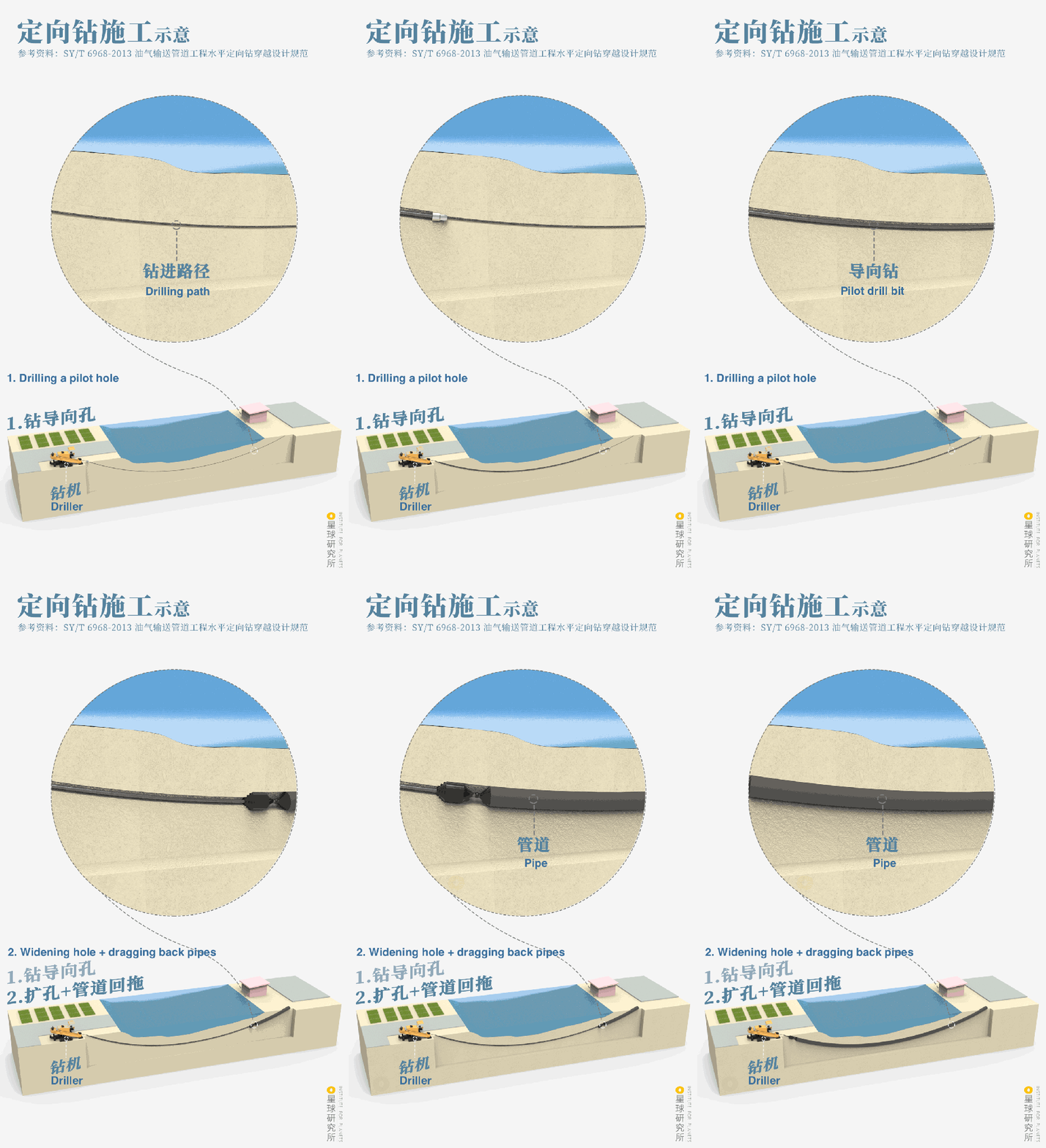
Directional drilling
(diagram: 罗梓涵, Institute for Planets)

Alternatively, one can use a hydraulic jack to stuff concrete pipes into the river bed segment by segment and then insert the gas pipelines through them…
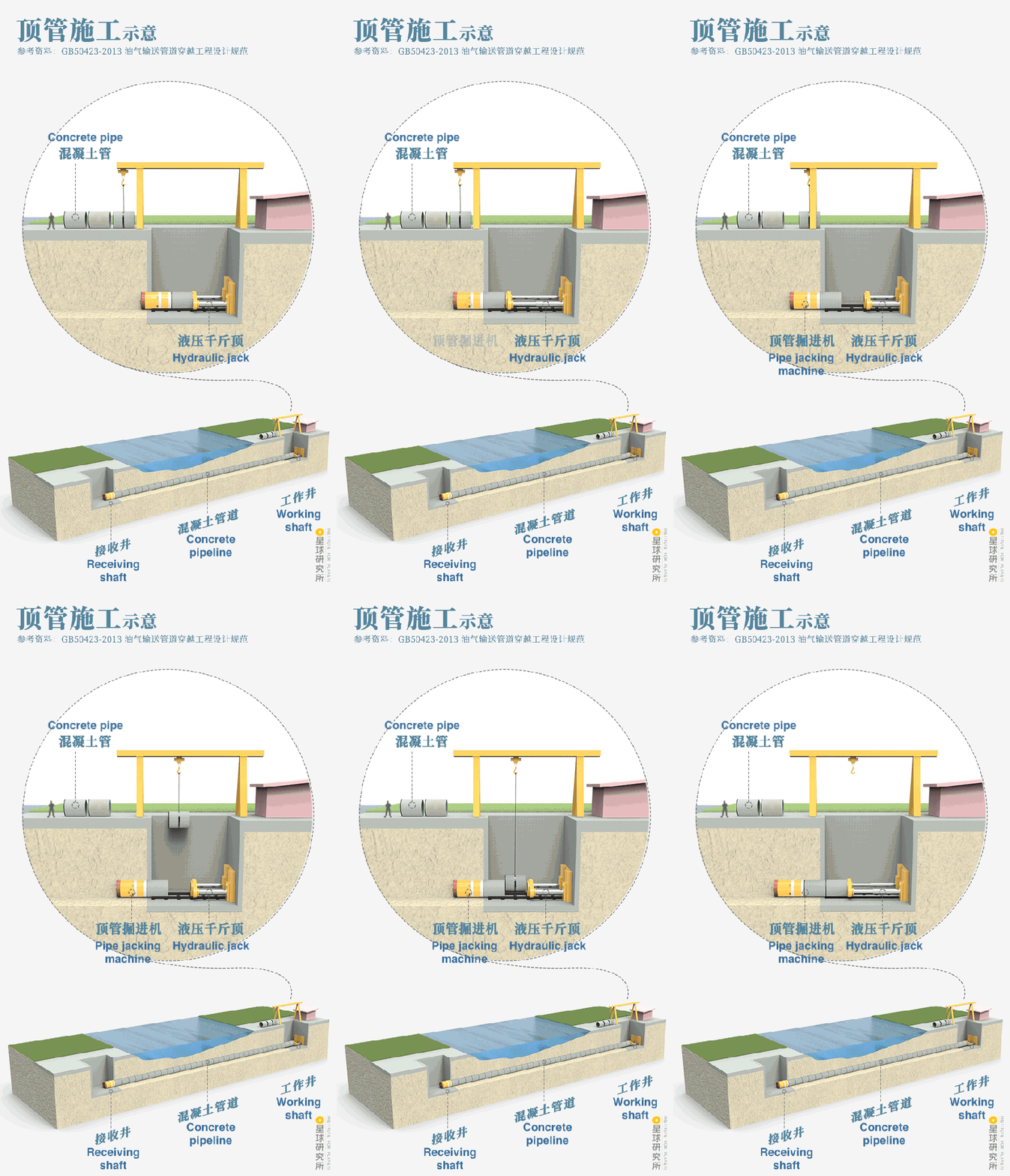
Pipe jacking
(diagram: 罗梓涵, Institute for Planets)

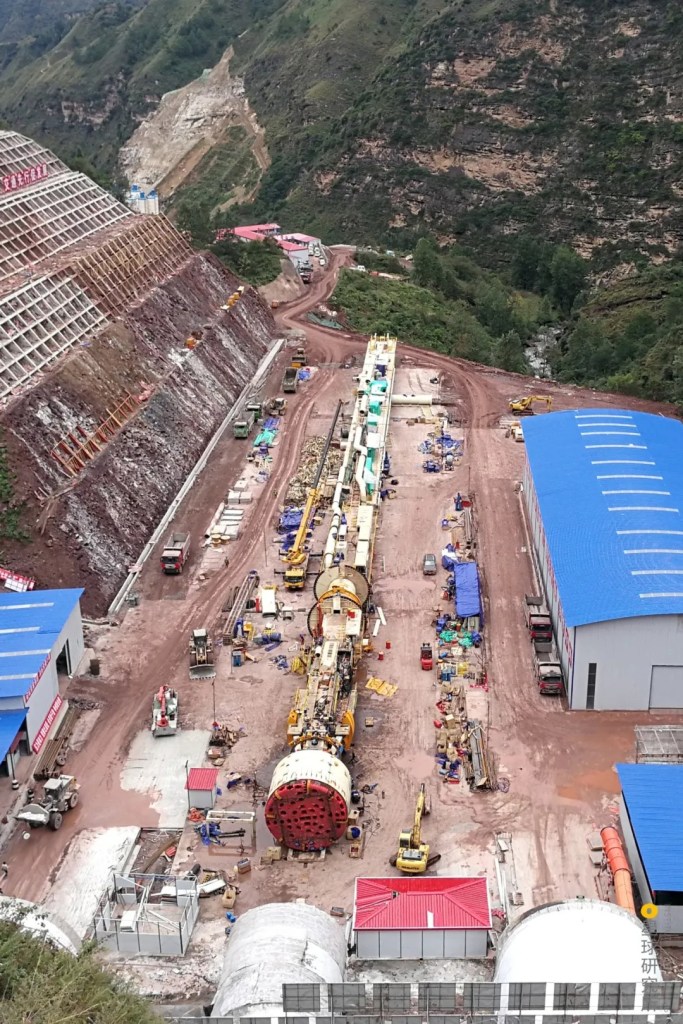
…or even excavate a proper tunnel 3.8 metres wide using a tunnel boring machine to make room for multiple pipelines.
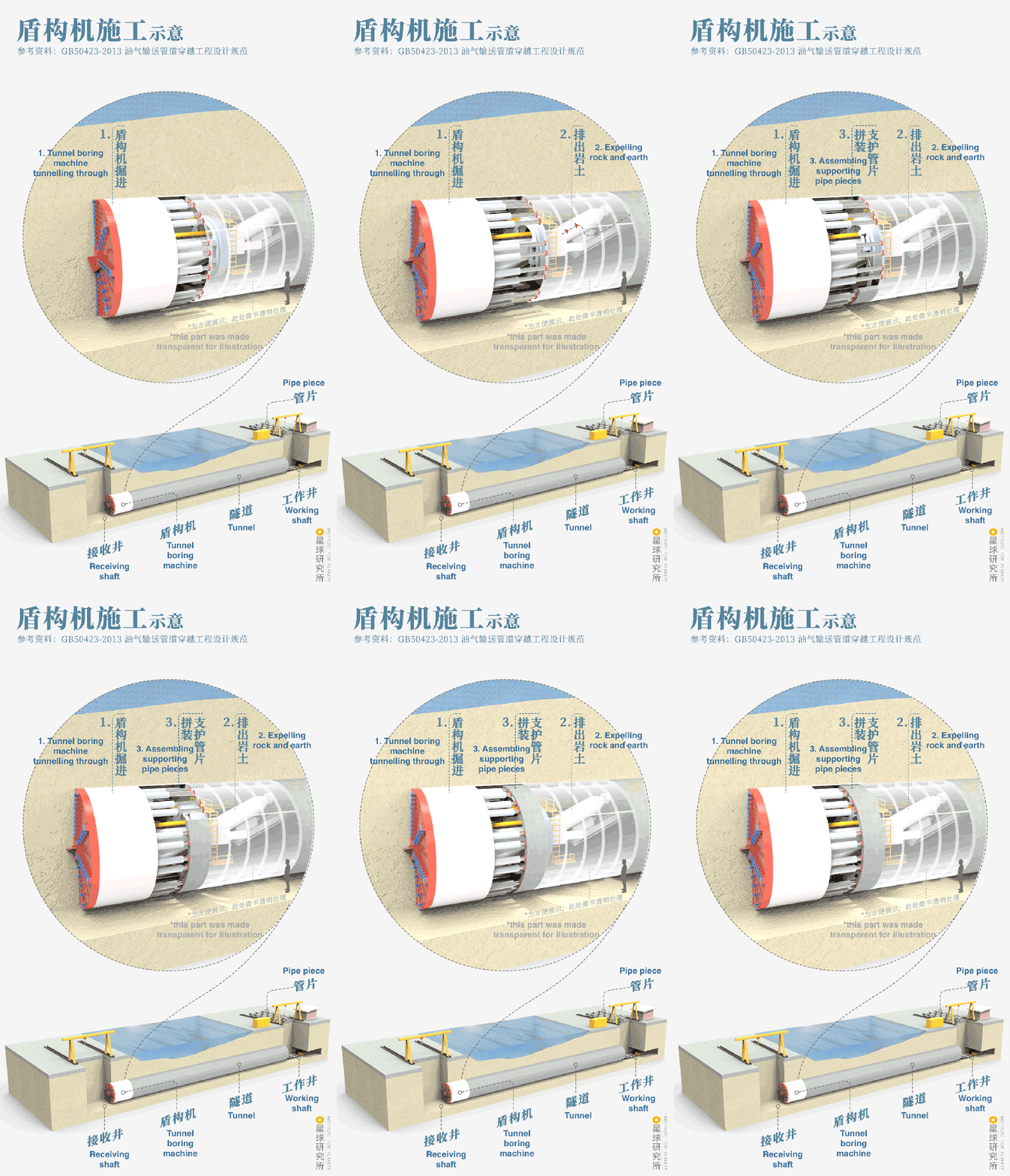
Excavation with tunnel boring machine
(diagram: 罗梓涵, Institute for Planets)

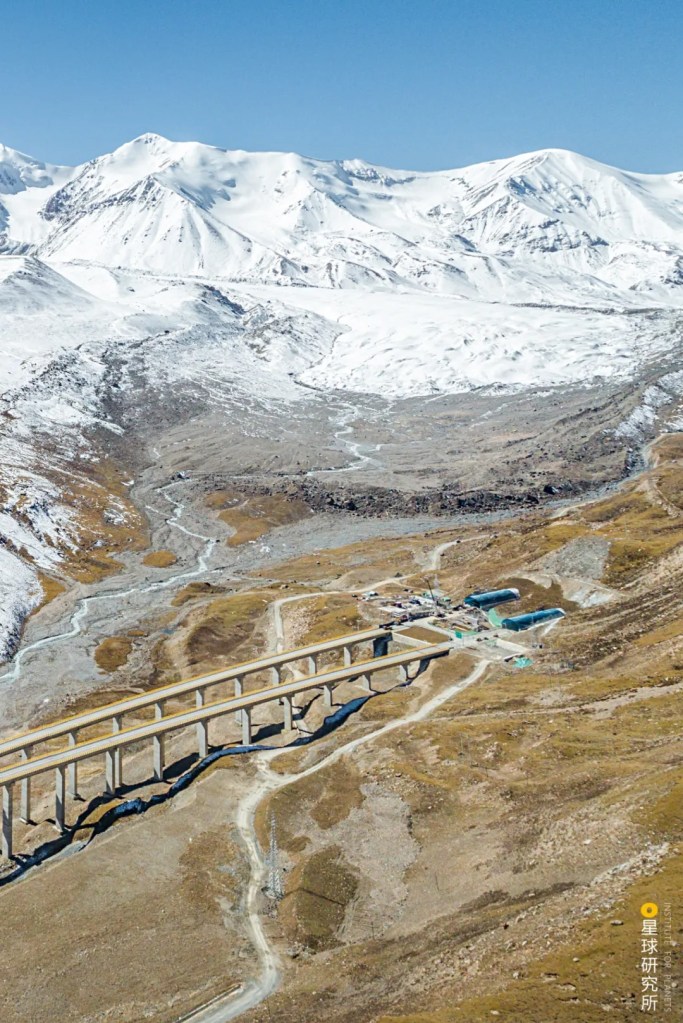
Where it is absolutely necessary to avoid a fault zone, engineers would simply give up on tunnels and let the pipelines fly across the river on a bridge.
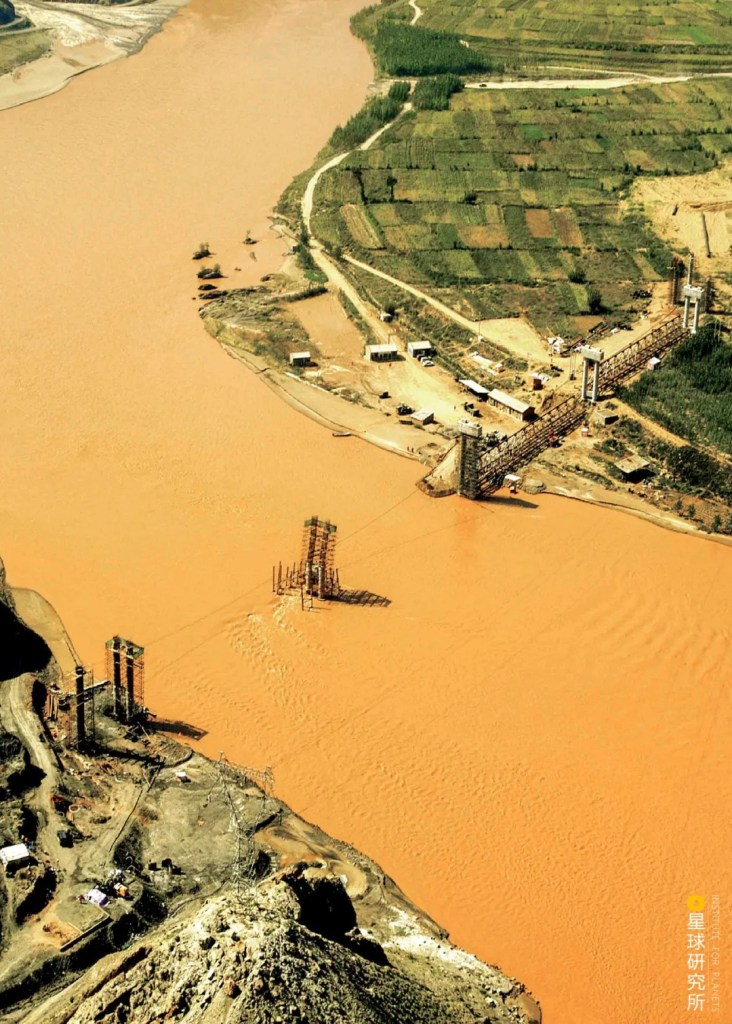
Pipelines flying across the Yellow River in Zhongwei, Ningxia
(photo: 国家管网集团西气东输公司)

But natural barriers were merely part of the game. In order to minimise the impact on the surrounding environment, the construction work must also protect ancient ruins along the pipeline…
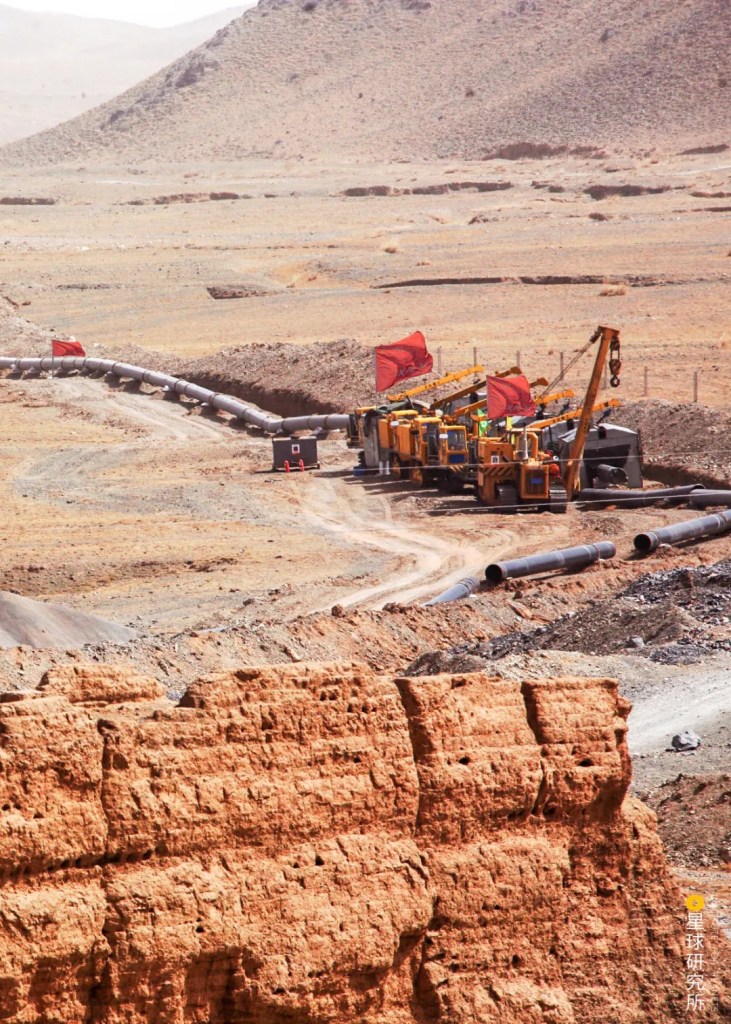
Ongoing construction next to ruins of the Great Wall
Pipe jacking method was used to traverse the Great Wall 12 times
(photo: 余海)

…and avoid conservation areas.
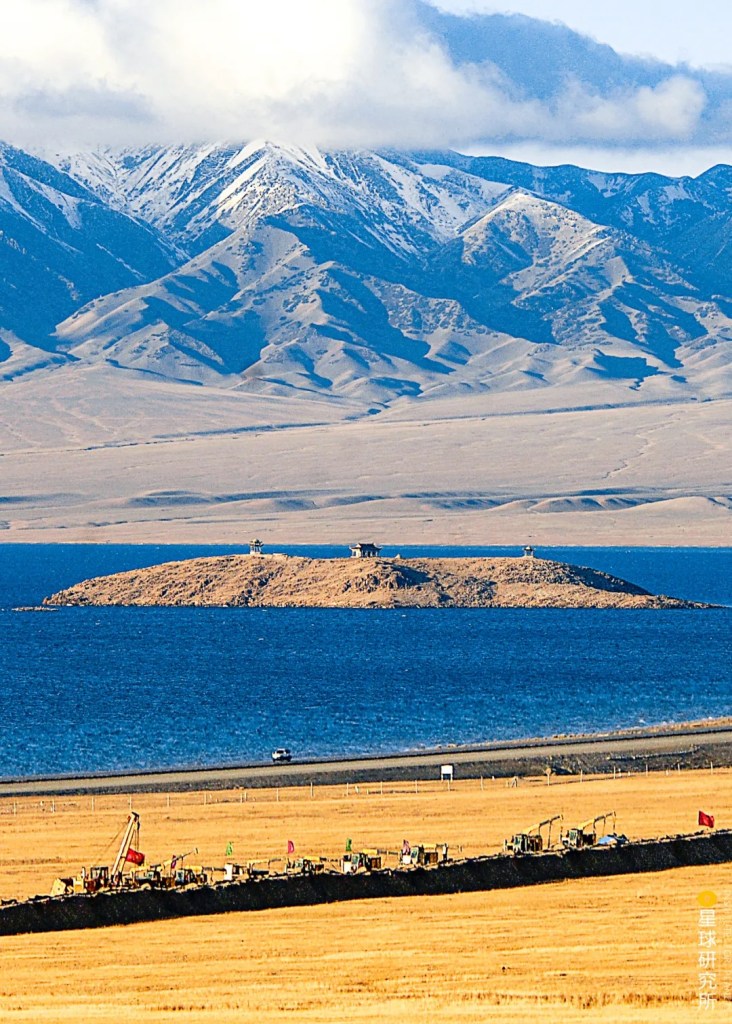
In this construction site next to a conservation area, the standardised 28-metre wide work zone was reduced to 20 metres across
The construction had to change course whenever it went past conservation areas. These include the Lop Nur Wild Camel National Nature Reserve, Taihang Mountain Macaque National Nature Reserve and Anxi Hyper-arid Desert. For instance, the pipelines were rerouted 200 kilometres north when approaching the Lop Nur Nature Reserve.
(photo: 余海)

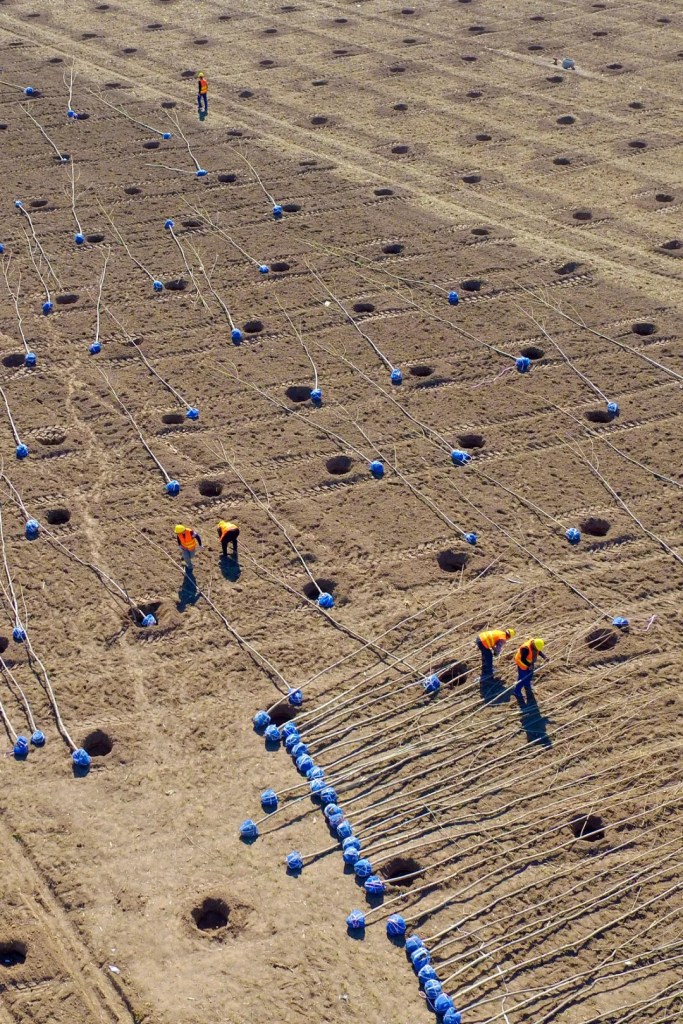
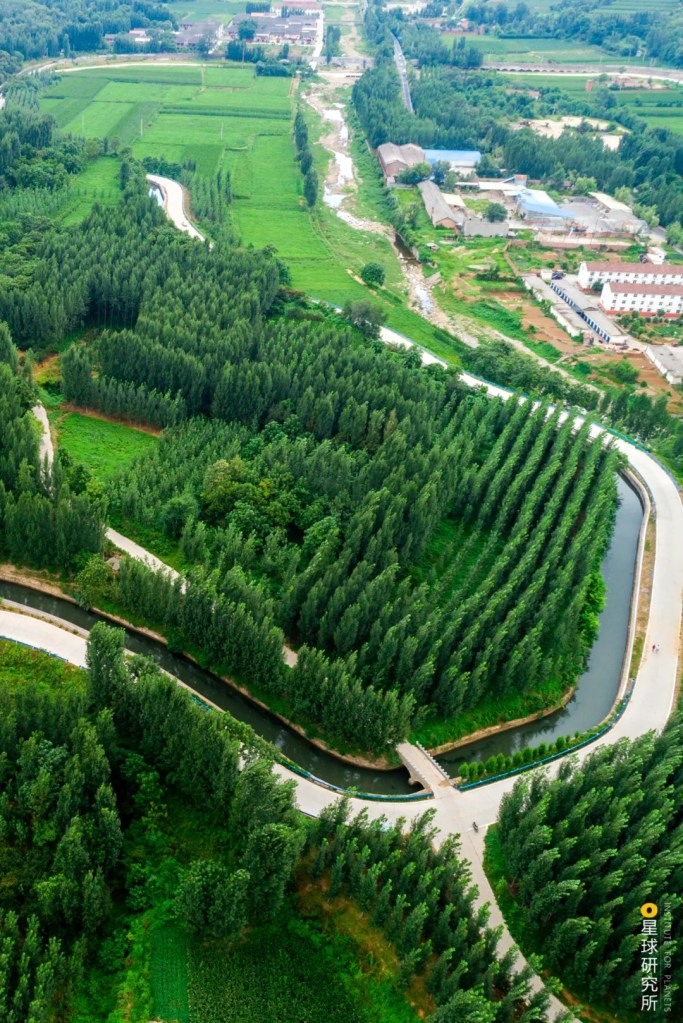
After passing through these ecologically fragile zones, the project still had to take care of the ecosystem by doing slope protection and even planting trees and grass.
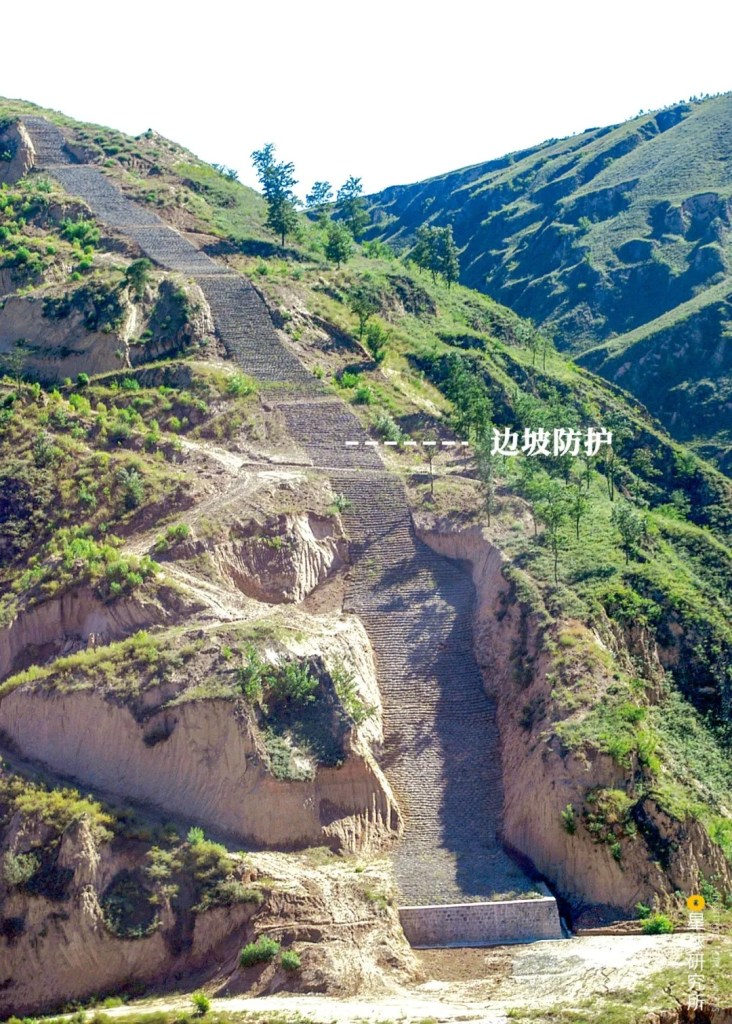
Slope protection on the Loess Plateau, under which lies the pipelines
(photo: 国家管网集团西气东输公司)

This is how the 4380-kilometres long natural gas pipeline — an energy artery that runs from the west end to the east end of China — was eventually completed. From then on, more than 12 billion cubic metres of natural gas flows out from the ancient strata underneath the deserts every year and embarks on a long journey via this giant artery.
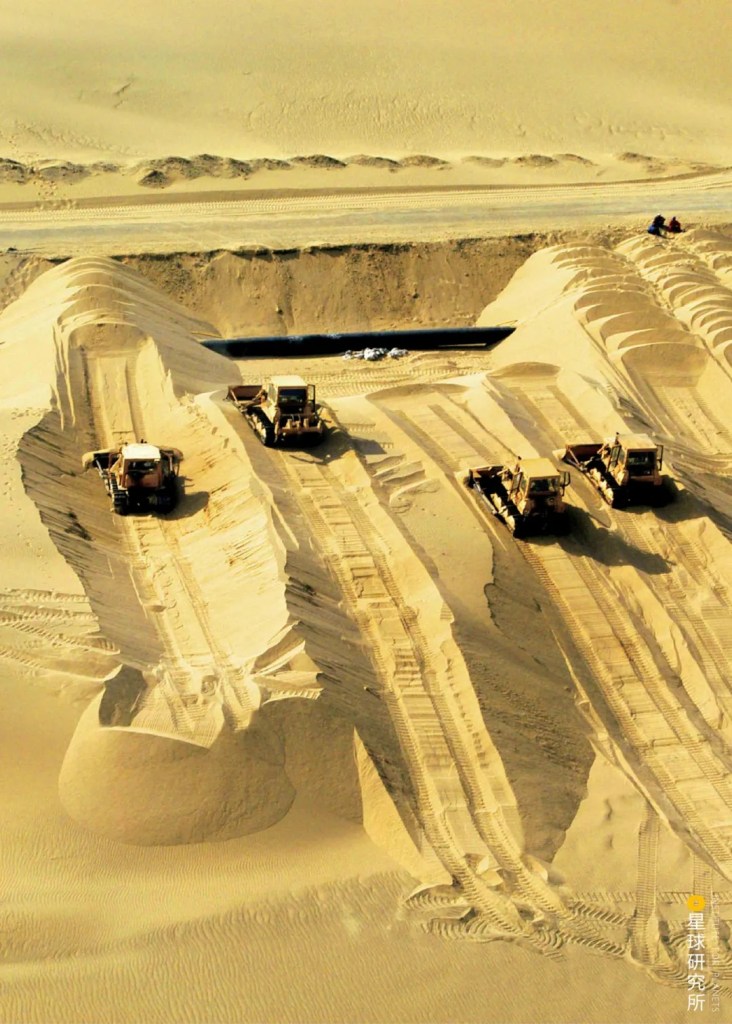
Pipeline construction in a desert
12 billion cubic metres was the annual gas transportation capacity between 2004-2006. Since 2007, the capacity was increased to 17 billion cubic metres per year.
(photo: 国家管网集团西气东输公司)

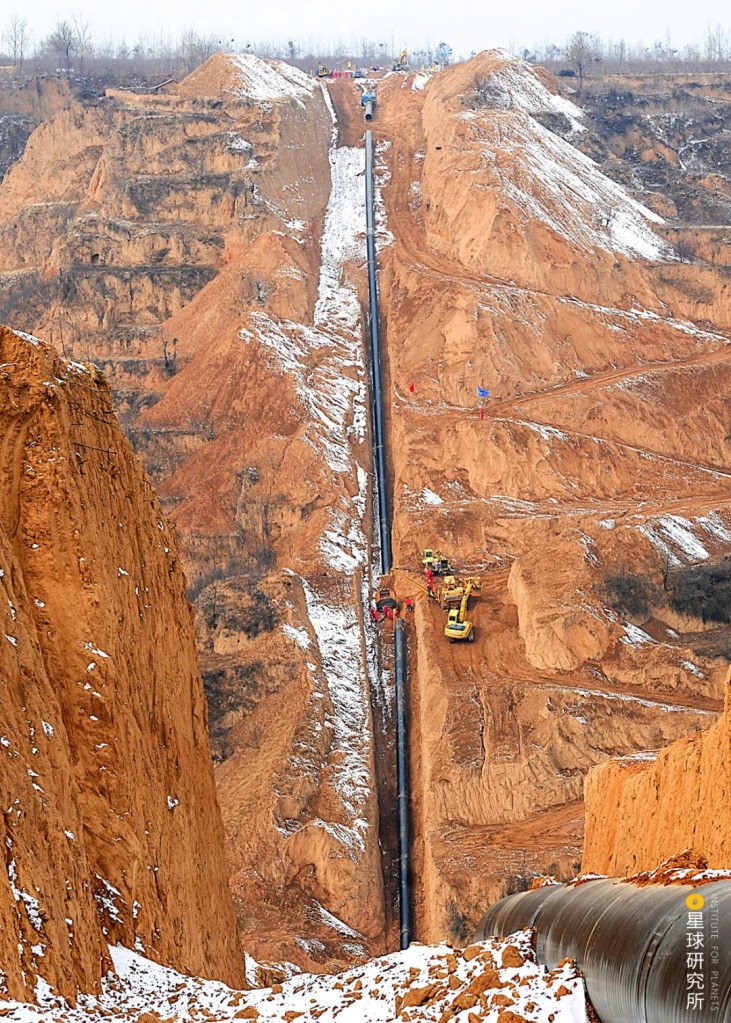
The natural gas climbs mountains…
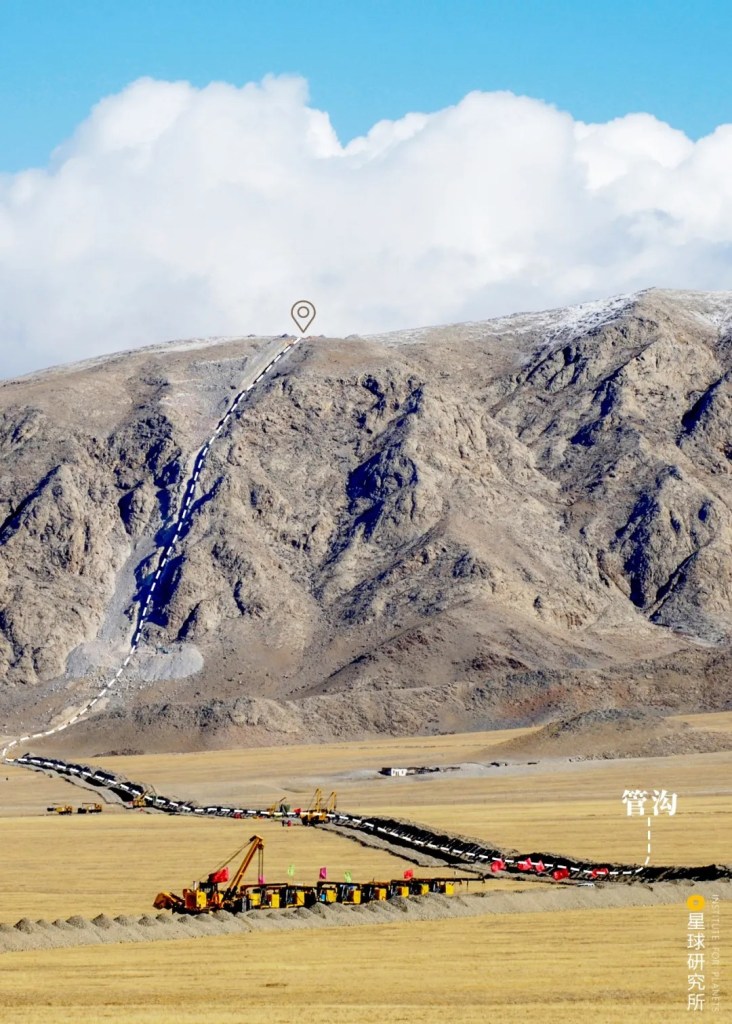
Pipelines climbing a mountain
(photo: 余海)

…crosses valleys…

Pipeline construction on Loess Plateau
(photo: 余海)

…and travels through plains.
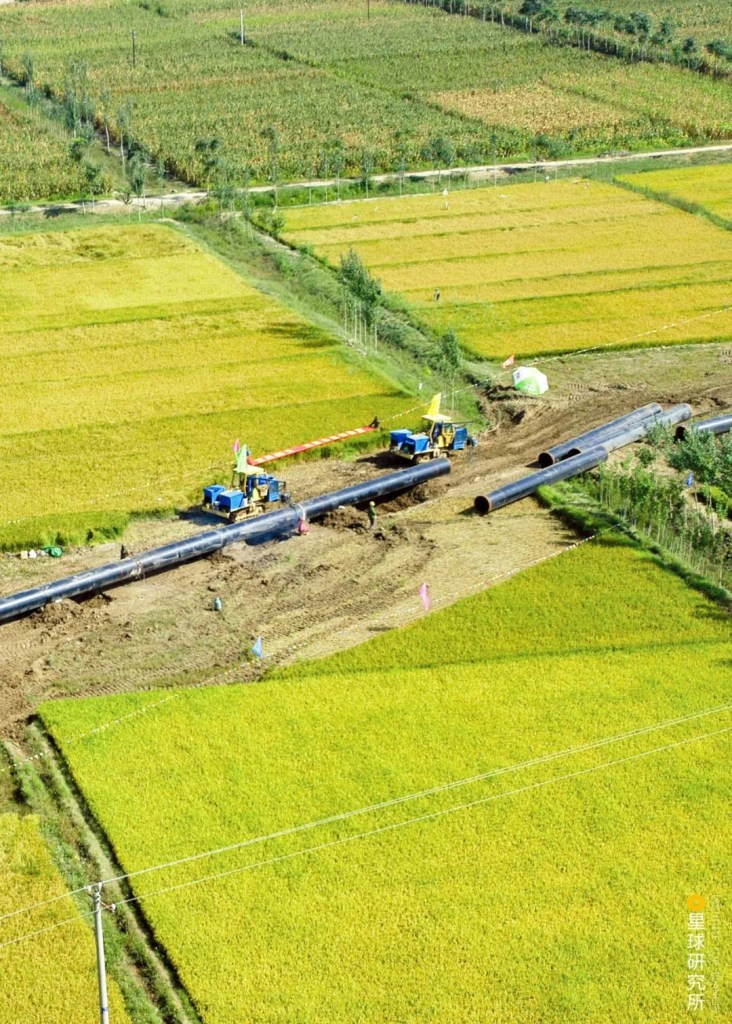
Pipeline construction on a plain
(photo: 国家管网集团西气东输公司)

It connects with additional gas fields along the way…
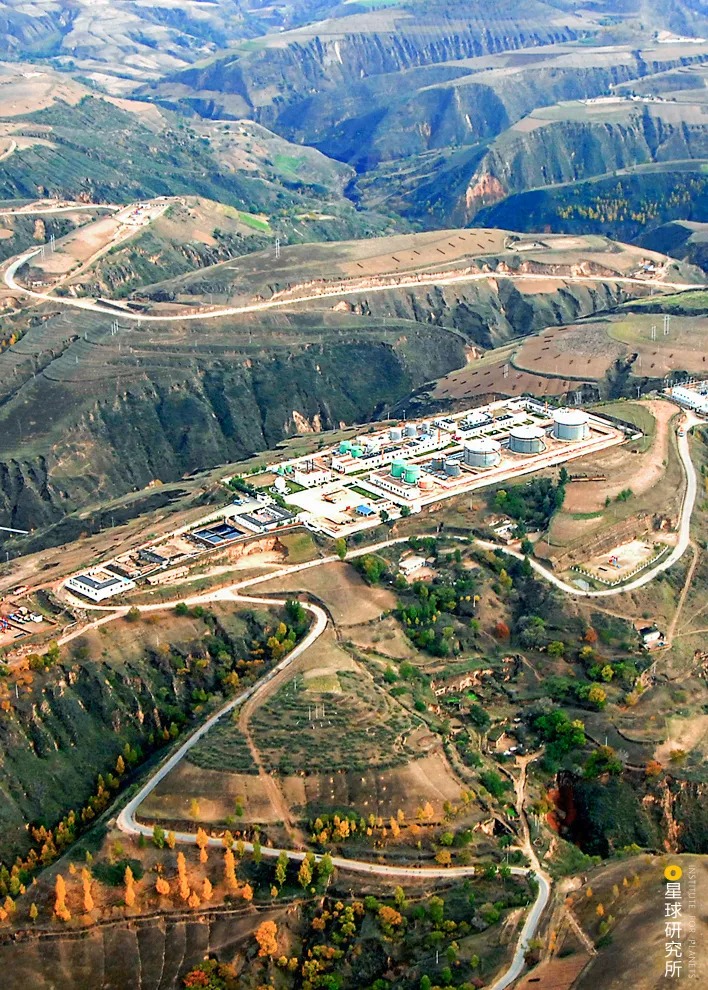
A gas field on Loess Plateau in Ordos Basin
(photo: 许兆超)

…and finally enters thousands of households.
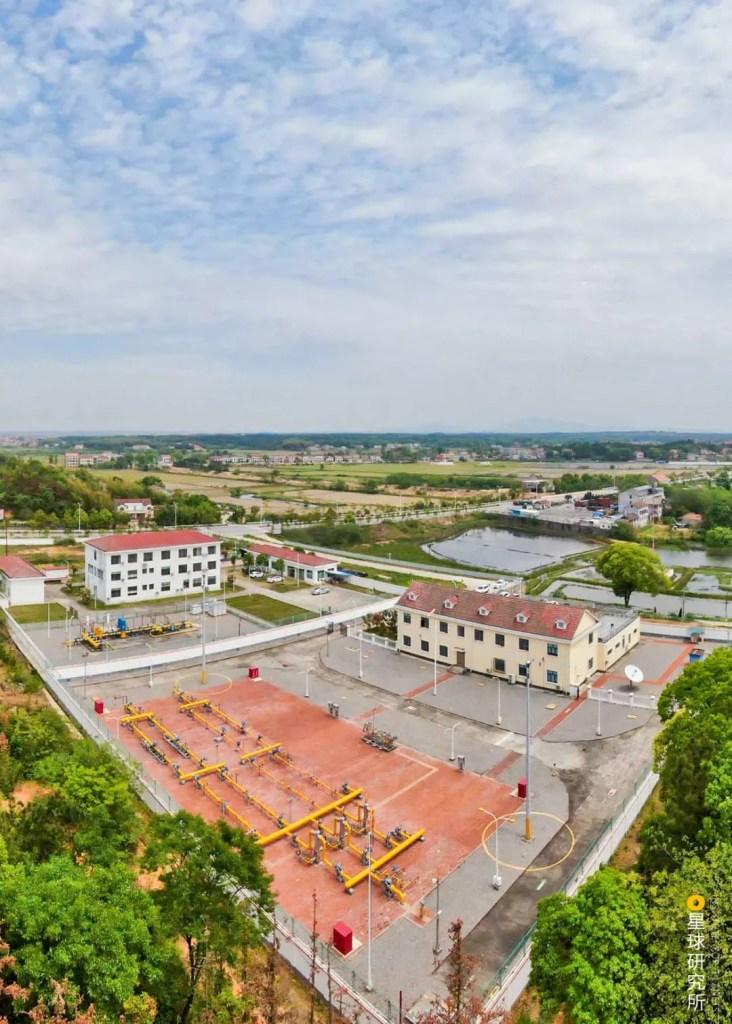
Natural gas distribution station, through which the natural gas gets distributed into the city
(photo: 国家管网集团西气东输公司)

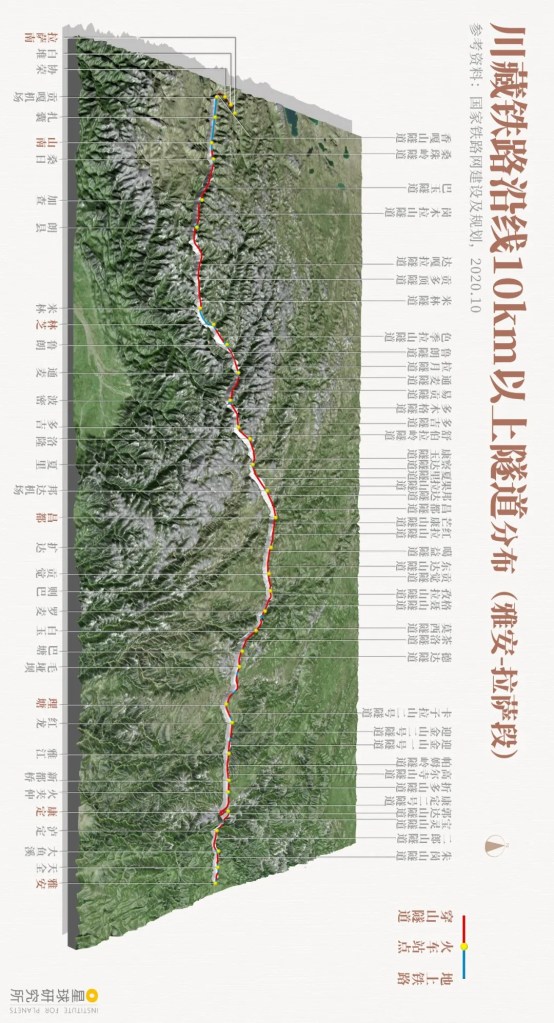
This is the West-East Gas Pipeline I, a mega project that encompasses gas hunting, production, transportation and utilisation. It starts from the Lunnan Gas Field in Xinjiang and finishes in Baihe Town in Shanghai, running through 7 provinces, 2 regions and 1 city across Gansu, Ningxia, Shaanxi, Shanxi, Henan, Anhui, Jiangsu and Zhejiang provinces. Upon completion, this project immediately became the longest gas pipeline in China with the largest pipe diameter, highest transmission pressure and a superior transportation capacity, in spite of the most complex construction conditions it faced.
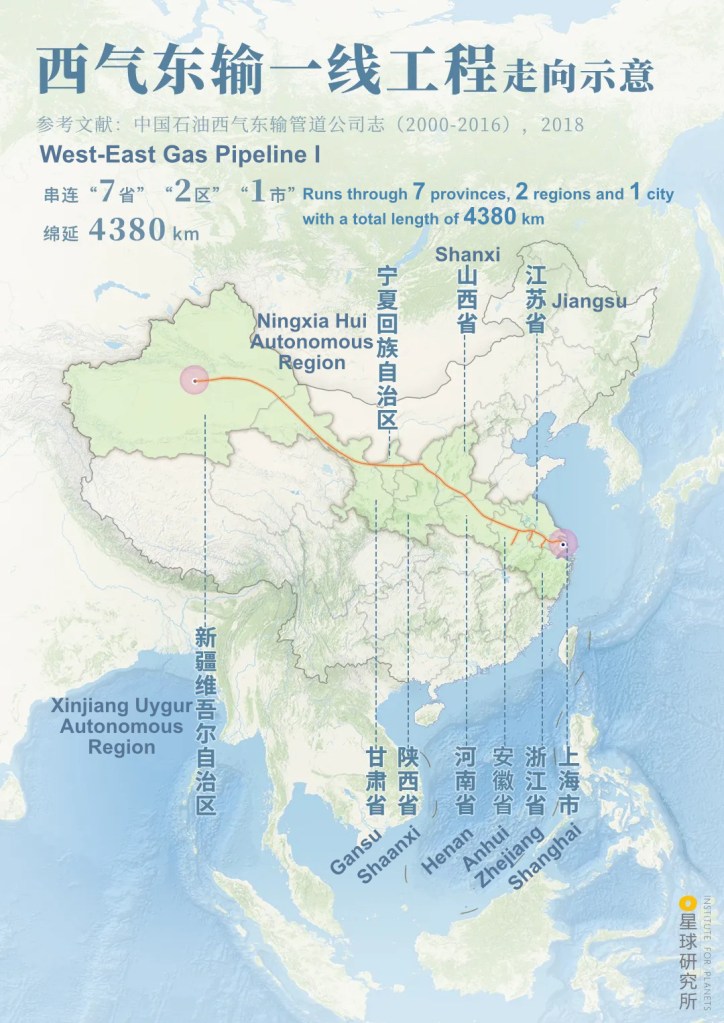
West-East Gas Pipeline I
(diagram: 陈志浩, Institute for Planets)

Despite the grand scale, this project is merely a drop in the ocean for the enormous demand for natural gas in China. We need more natural gas resource, and many more longer pipelines.

4. The mega network

Back in 1997, 5 years before the West-East Gas Pipeline I had commenced, the Shaanxi-Beijing Gas Pipeline connecting Ordos Basin and Beijing had already begun operation. Started off as a single pipeline, the project has since earned 3 more members and is now delivering cleaner energy to millions of households and enterprises via 4 different routes.
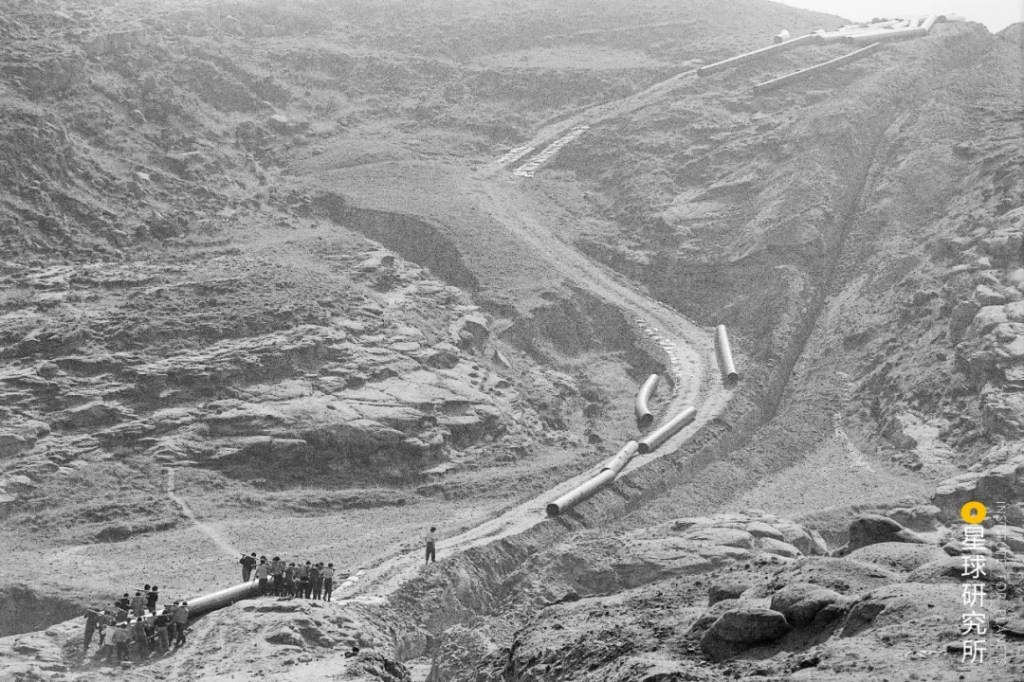
Builders of the Shaanxi-Beijing Gas Pipeline transporting pipe sections in the 1990s
(photo: 余海)

And even more gas pipelines were commissioned after the completion of the West-East Gas Pipeline I, including the Sebei-Xining-Lanzhou Gas Pipeline that runs from Qaidam Basin to Lanzhou…
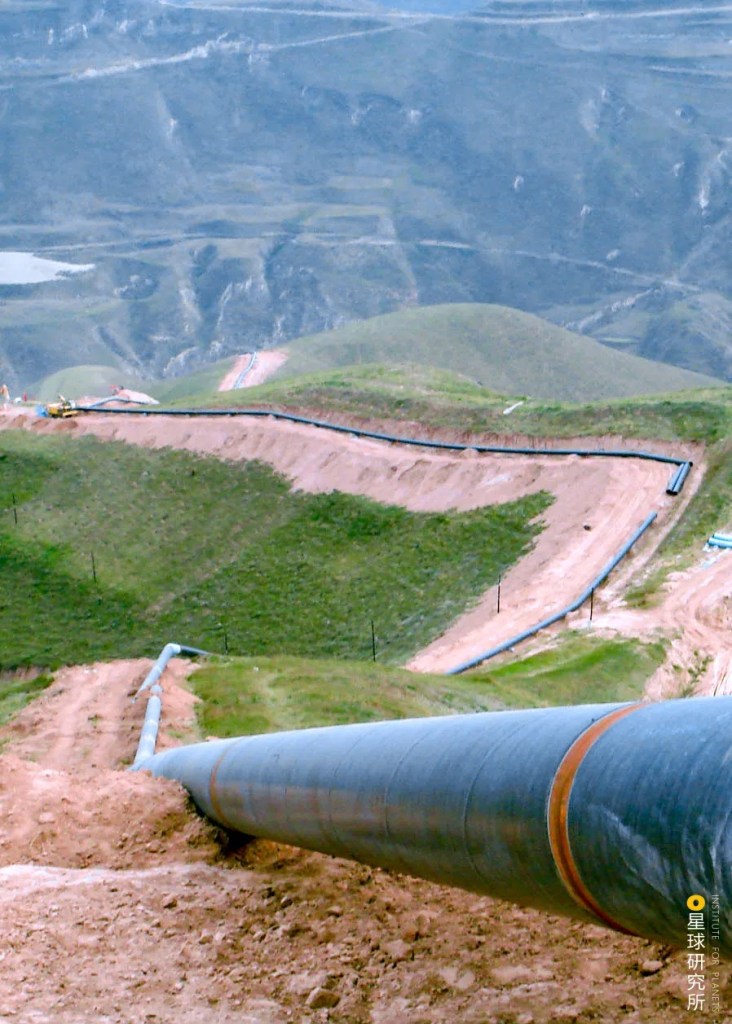
Sebei-Xining-Lanzhou Gas Pipeline travelling across the Laoya Gorge in Qinghai
(photo: 国家管网集团官方微信)

…the Zhong County-Wuhan Gas Pipeline and Sichuan-East China Gas Pipeline that connects the Sichuan Basin with Wuhan and Yangtze Delta, respectively…
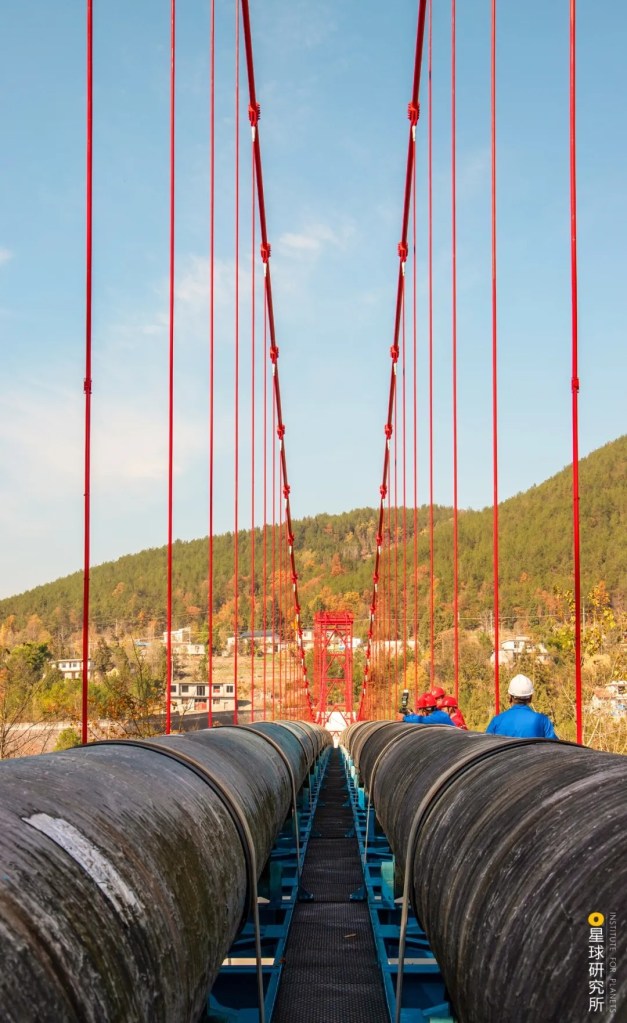
Sichuan-East China Gas Pipeline crossing the Yesan River with a span of 332 metres
Sichuan-East China Gas Pipeline travels from Dazhou in Sichuan to Shanghai
(photo: 史垒)

…and the Zhongwei-Guiyang Gas Pipeline which combines the Sichuan-Chongqing Gas Pipeline Network and West-East Gas Pipeline.

Zhongwei-Guiyang Gas Pipeline leaping across the Wu River
(photo: 国家管网集团官方微信)

Thanks to these projects, gas fields all over China are now linked up by interconnected pipelines, which tirelessly deliver natural gas from central and western China to the densely populated and highly industrialised regions, thereby contributing to a cleaner path towards development of the country.

Natural gas pipelines in China
(diagram: 陈志浩, Institute for Planets)

At the same time, the number of proven reserves and production are both increasing by the day. In particular, the extraction of unconventional natural gas is gaining a lot of traction. For instance, even though shale gas extraction was only commercialised in 2013 in China, the annual production by 2020 had already hit the 20 billion cubic metres mark, accounting for 10% of the total natural gas production in the entire country.
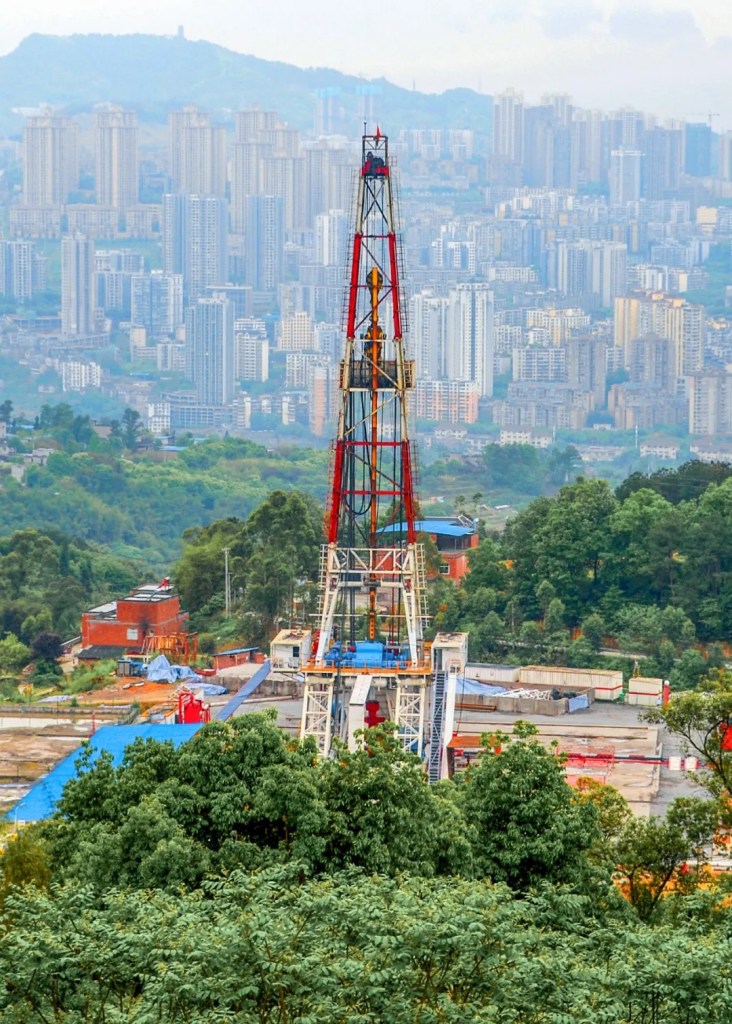
Shale gas drilling in Fuling, Chongqing
(photo: 视觉中国)

Meanwhile, the rapidly developing China kept on raising its demand for energy. A gap between the production and consumption of domestically produced natural gas first appeared in 2007 and had since continued to enlarge.
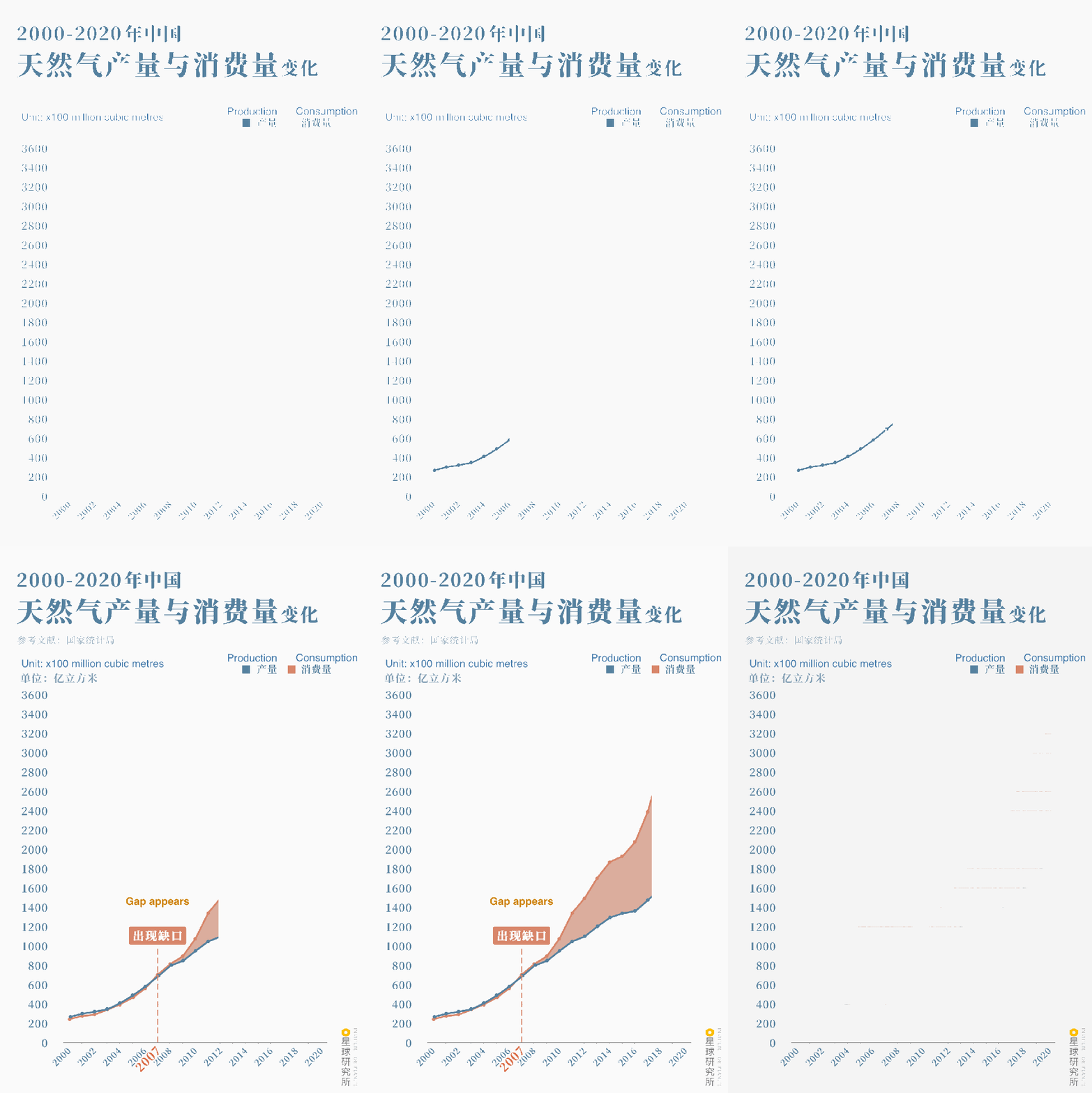
Changes in domestic production and consumption of natural gas in China between 2000-2020
(diagram: 杨宁, Institute for Planets)

In other words, China was unable to produce enough natural gas it needs, so it needed to look elsewhere abroad for more. Consequently, longer and larger gas pipelines began to appear across the vast Eurasian continent one after another, including the 7000-kilometres China-Central Asia Gas Pipeline which runs through Turkmenistan, Uzbekistan and Kazakhstan before entering China, after which it unites with the West-East Gas Pipeline II and III to deliver the natural gas from Central Asia all the way to eastern China. Its annual gas transportation volume is almost 5 times that of West-East Gas Pipeline I.
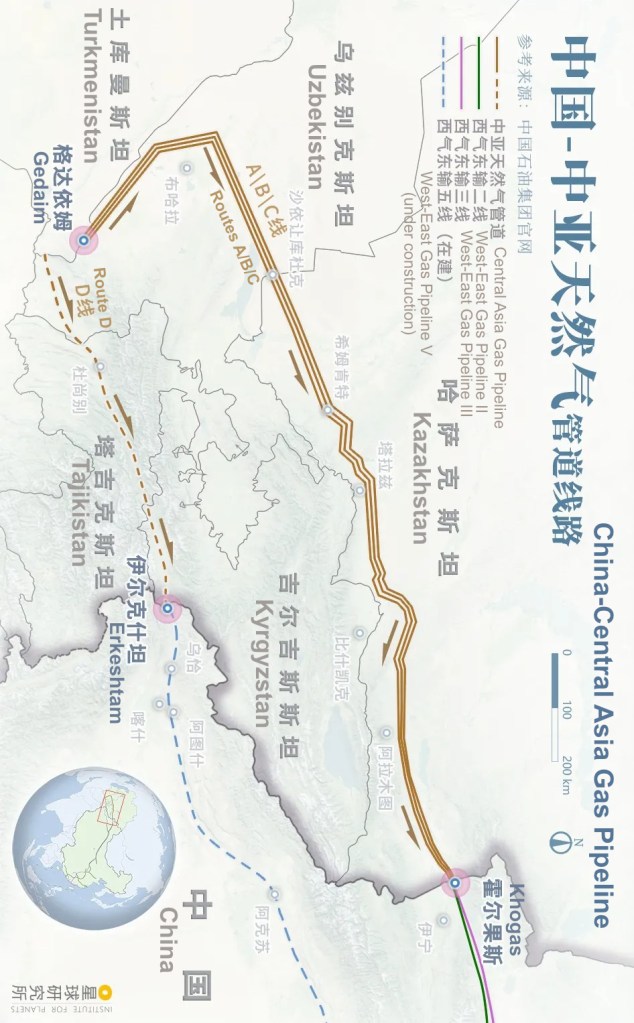
China-Central Asia Gas Pipeline
Routes A, B and C have been completed
(diagram: 陈志浩, Institute for Planets)

The 7600-kilometres Sino-Myanmar Gas Pipeline runs between Myanmar and China. Every year, it delivers 12 billion cubic metres of natural gas produced in the Bay of Bengal to southwestern provinces in China, including Yunnan, Guizhou and Guangxi, via a direct land route. This is equivalent to building an extra West-East Gas Pipeline I for the southwest region.
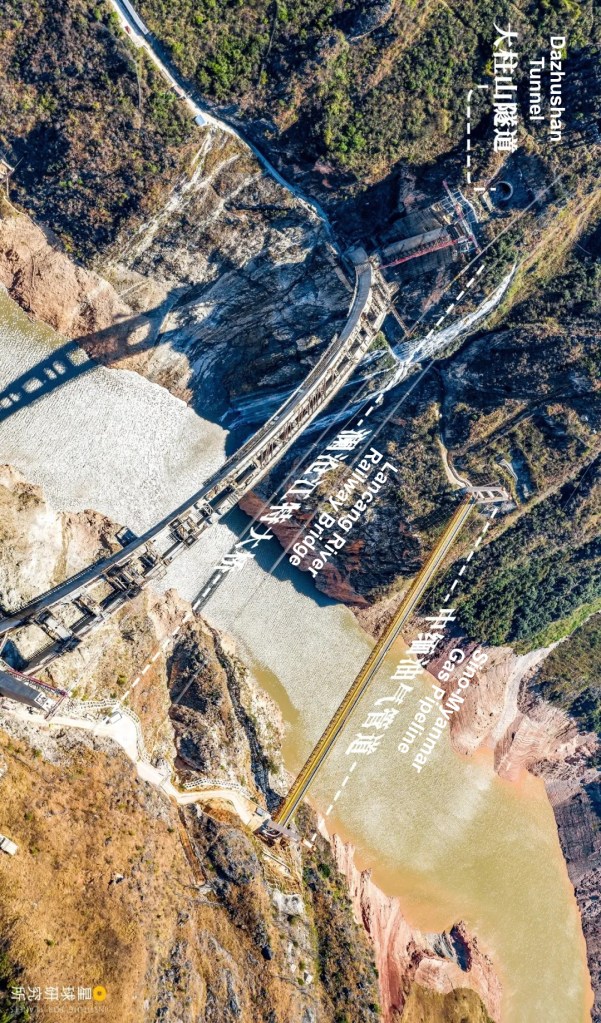
Sino-Myanmar Gas Pipeline, next to the Lancang River Railway Bridge under construction
The gas pipeline crosses the river on a suspension bridge with a span of 280 metres
(photo: 赵子忠)

There is also the China-Russia East Route Gas Pipeline measuring 8111 kilometres in total. This pipeline is currently the longest gas pipeline with the largest single-tube gas transmission volume. It begins in eastern Siberia and enters China through the Amur River, then runs south towards the Yangtze Delta. Once it is completed and becomes fully operational, the annual gas transportation volume will reach up to 3.2 times that of the West-East Gas Pipeline.
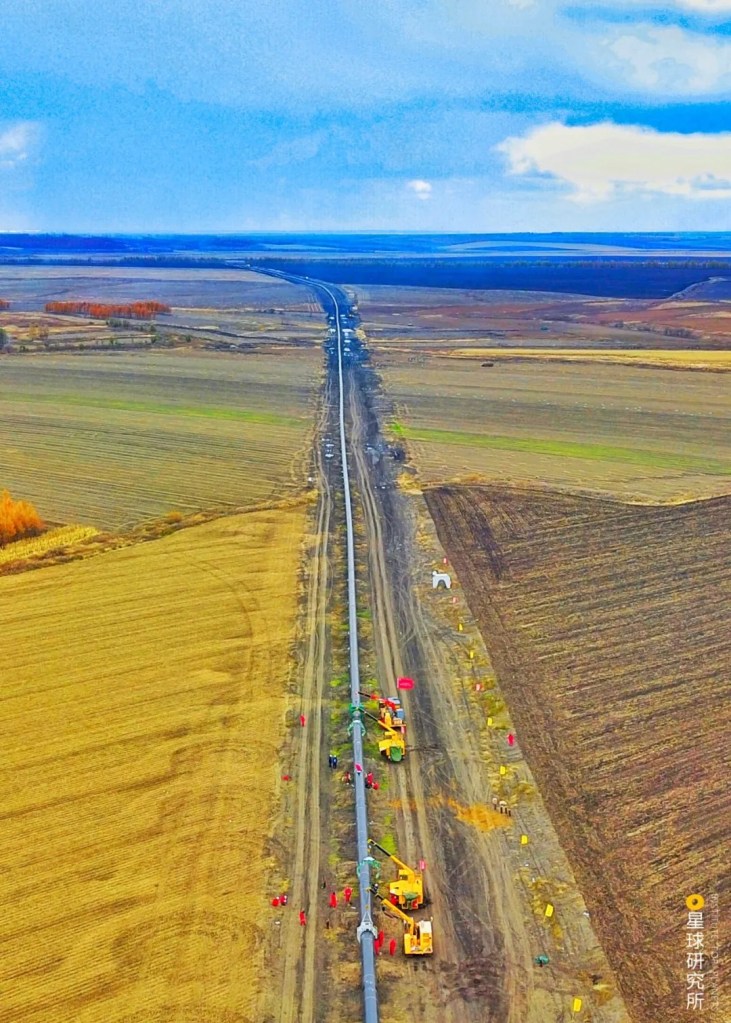
China-Russia East Route Gas Pipeline under construction
The section between Amur River in Heilongjiang and Yongqing in Hebei is now completed
(photo: 国家管网集团官方微信)

Nevertheless, even when all these multinational gas pipelines are completed, the natural gas coming through them will only account for 38% of China’s total import of natural gas. The bigger portion will come from across the ocean. Unlike pipeline gas, natural gas of this kind will be purified and condensed into liquefied natural gas (LNG) and be shipped from countries like Australia and Malaysia to China on specialised LNG carriers. It will then be unloaded at LNG receiving terminals, stored and regasified before being distributed into the pipeline network in China.
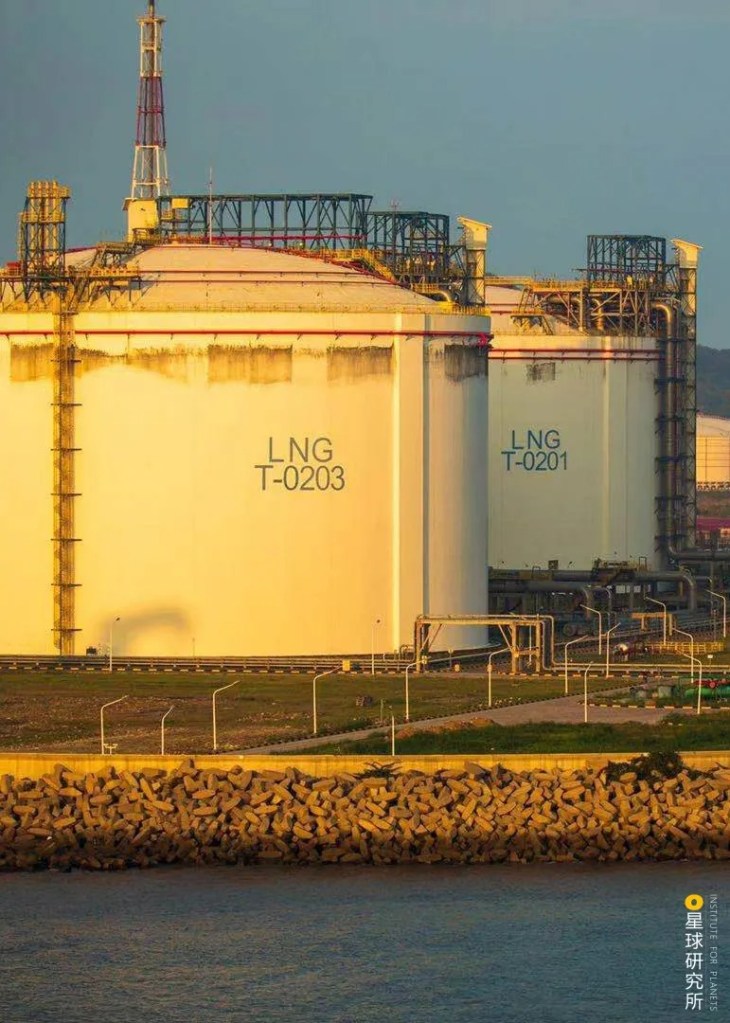
Yangshan LNG receiving terminal in Shanghai
(photo: 卢志峰)

Ever since the commission of the first LNG receiving terminal in Guangdong in 2006, there have been 22 other receiving terminals erected along the coastal line. The amount of natural gas received at these terminals every year is comparable to 7 years of consumption in Beijing.
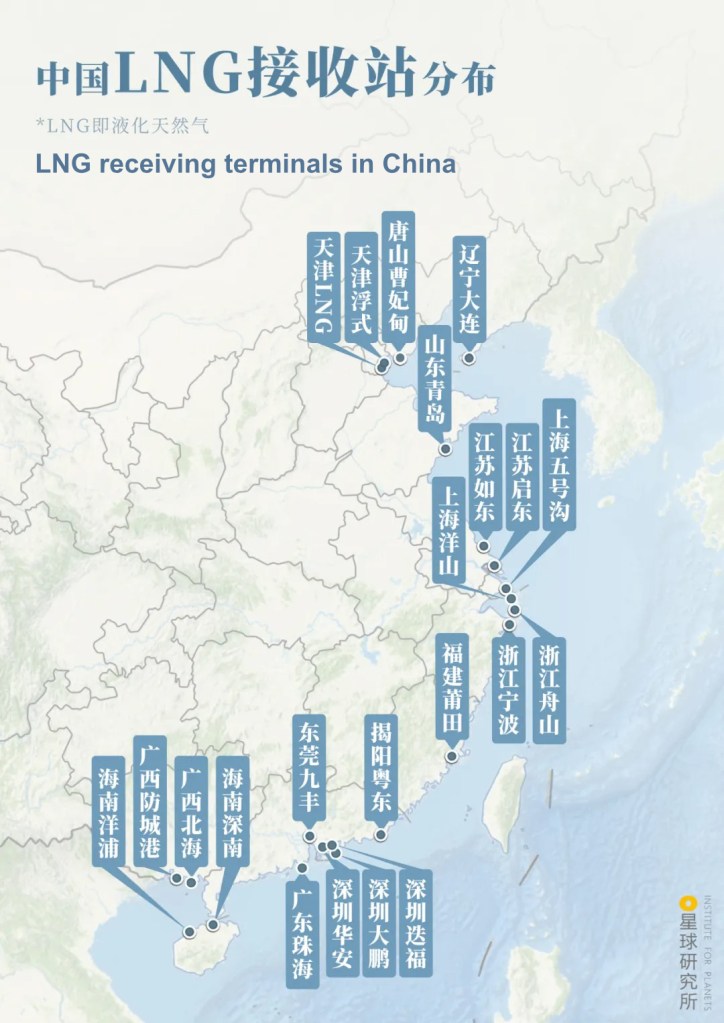
LNG receiving terminals in China
(diagram: 陈志浩&杨宁, Institute for Planets)

In addition, the natural space available within gas fields have been utilised to set up large-scale underground gas storages. During the off-season period (summer and autumn), surplus pipeline gas will be injected into these storages until the next peak season. In Beijing, for example, about 40-50% of winter gas usage comes from such storages.

Wen 23 Underground Gas Storage in Puyang, Henan
(photo: 国家管网集团西气东输公司)

As of today, there are as many as 27 underground gas storages in China which can together store more than 10 billion cubic metres of gas, enough to sustain 300 million people for one whole year.
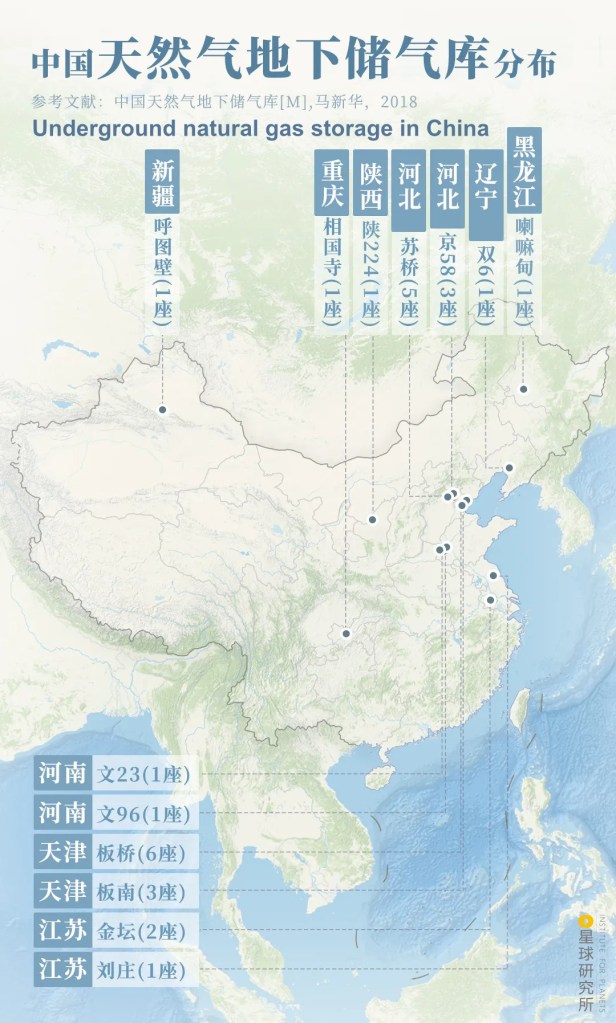
Underground natural gas storage in China
(diagram: 陈志浩&杨宁, Institute for Planets)

As such, this arduous project is no longer a solo play by the West-East Gas Pipeline, but a grand orchestra composed of 4 sizeable import channels taking care of business coming from all cardinal directions, as well as 87,000 kilometres of criss-crossing pipelines and 27 underground gas storage that are always on standby. This is truly a multinational and ever-improving mega gas network.

Now that this network is in place, in every year to come there will be on average more than 200 billion cubic metres of natural gas produced in various regions and gas fields and transported thousands of miles through all geographical barriers to reach millions of households and fuel the livelihood of 400 million Chinese people. It will be the indispensable leg for China to keep dashing forward.
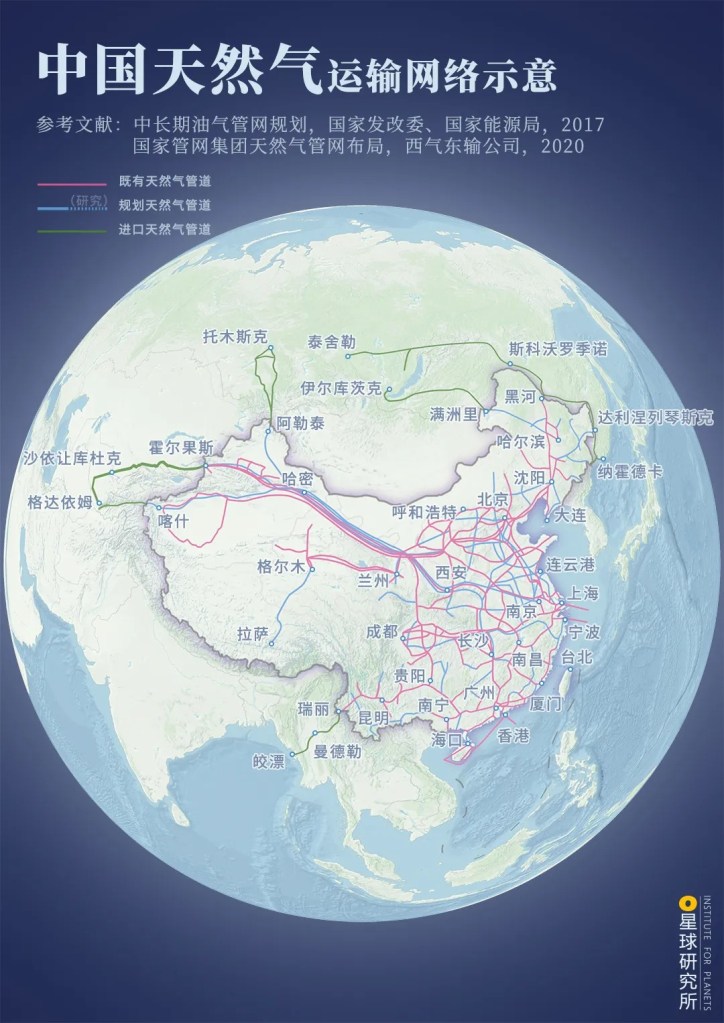
China’s natural gas transportation network
Red: operating pipelines
Blue: planned pipelines
Green: import pipelines
(diagram: 陈志浩, Institute for Planets)

But this by no means implies we can just sit back and relax. With the constantly rising import volume, China’s natural gas external dependency is already hitting 43%. Unknown factors like supply disruption and price fluctuations are but some of the significant risks we are facing.

Nonetheless, a reform in energy structure is a long and painful path that can never be finished within a day or two. There is no magic to it, nor can we just sit around and expect others to give a hand. The only way forward is to continue developing our own scientific knowledge and technologies, which has been instrumental in the recent discovery of the 21 hundred-billion-cubic-metre gas fields over the past decade.
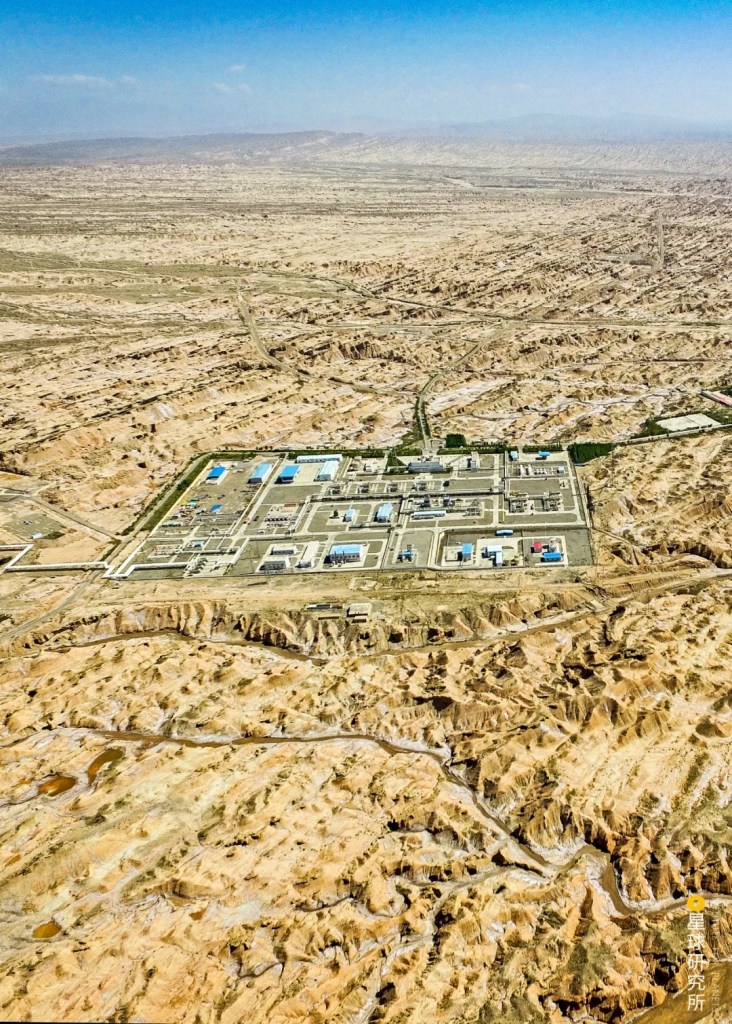
Natural gas field hidden deep in a barren desert
(photo: 余海)

Owing to technological advancement, our pipeline clusters are beginning to merge into a larger, interconnected one. From abroad to within China, from pipeline gas to LNG, our different natural gas resources are complementing each other. The “one-network-for-all” configuration is slowing taking shape.

Construction site of Pipeline Interconnection Project
(photo: 管道互联互通工程)

Also because of technological advancement, we are able to simultaneously develop other clean energies including hydro, wind, nuclear and solar power. Together with natural gas, they pushed the coal consumption proportion down from 68% in 2002 to 57% in 2019.
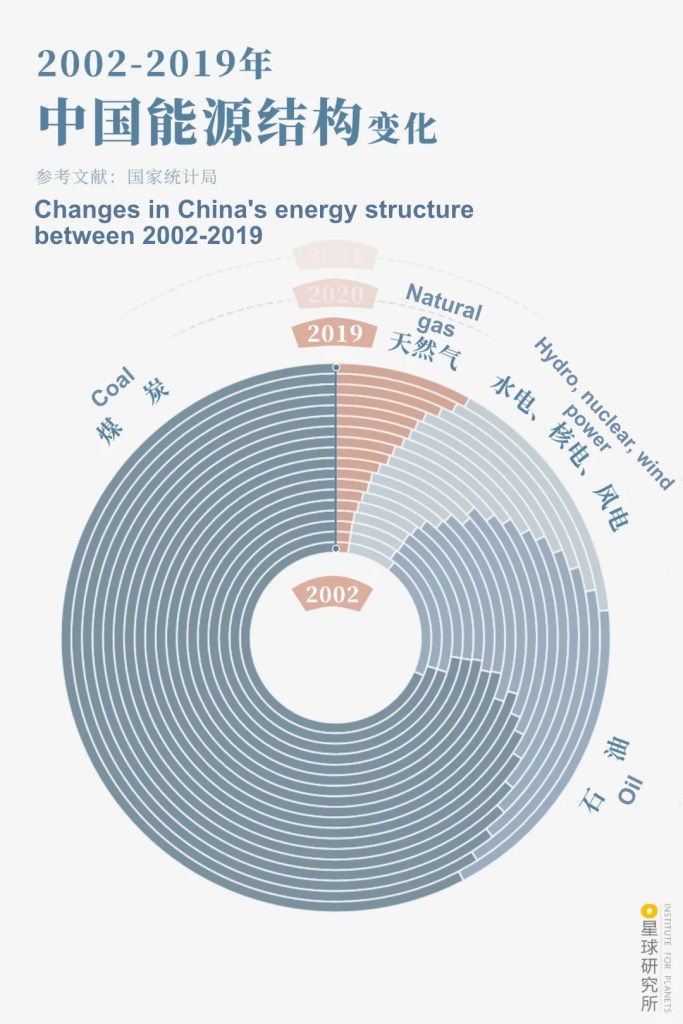
Changes in China’s energy structure between 2002-2019
(diagram: 杨宁, Institute for Planets)

The future may still be a bumpy ride for us, but we shall stay on and move on along this path until we can finally see the clean, sustainable tomorrow by our own eyes.
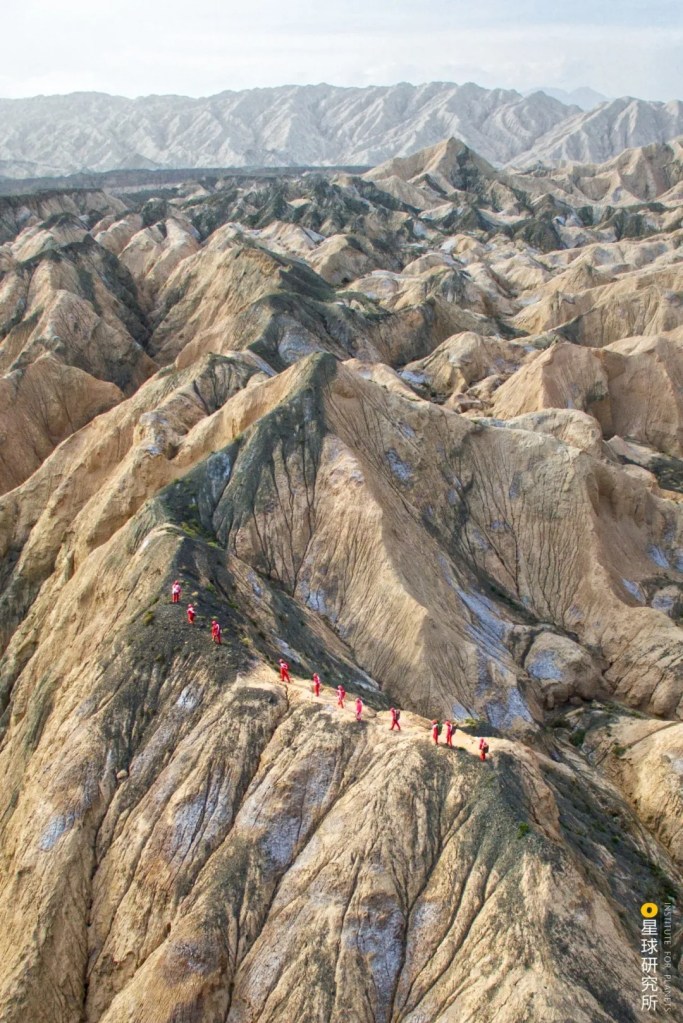
Geologists may look tiny in the mountains, but a journey of a thousand miles begins with a single step
(photo: 余海)

Production Team
Text: 艾蓝星
Editing: 桢公子
Photos: 昼眠
Maps: 陈志浩
Design: 罗梓涵&杨宁
Review: 张照&云舞空城&雪梨

Expert review
Hu Qihui, lecturer at China University of Petroleum (Huadong)

Acknowledgements
Special thanks to the National Pipeline Network Group West-East Gas Pipeline Company for providing photos and immense support for content review.

References
[1] 《西气东输工程志》编委会. 西气东输工程志[M]. 石油工业出版社, 2012.
[2] 何利民等. 油气储运工程施工[M]. 石油工业出版社, 2007.
[3] 西气东输(2002-2013)企业社会责任专题报告.
[4] 陈利顶等. 西气东输工程沿线生态系统评价与生态安全[M]. 科学出版社, 2006.
[5] 历年中国天然气发展报告.
[6] 历年中国环境状况公报.

… The End …

Institute for Planets
星球研究所
一群国家地理控,专注于探索极致风光
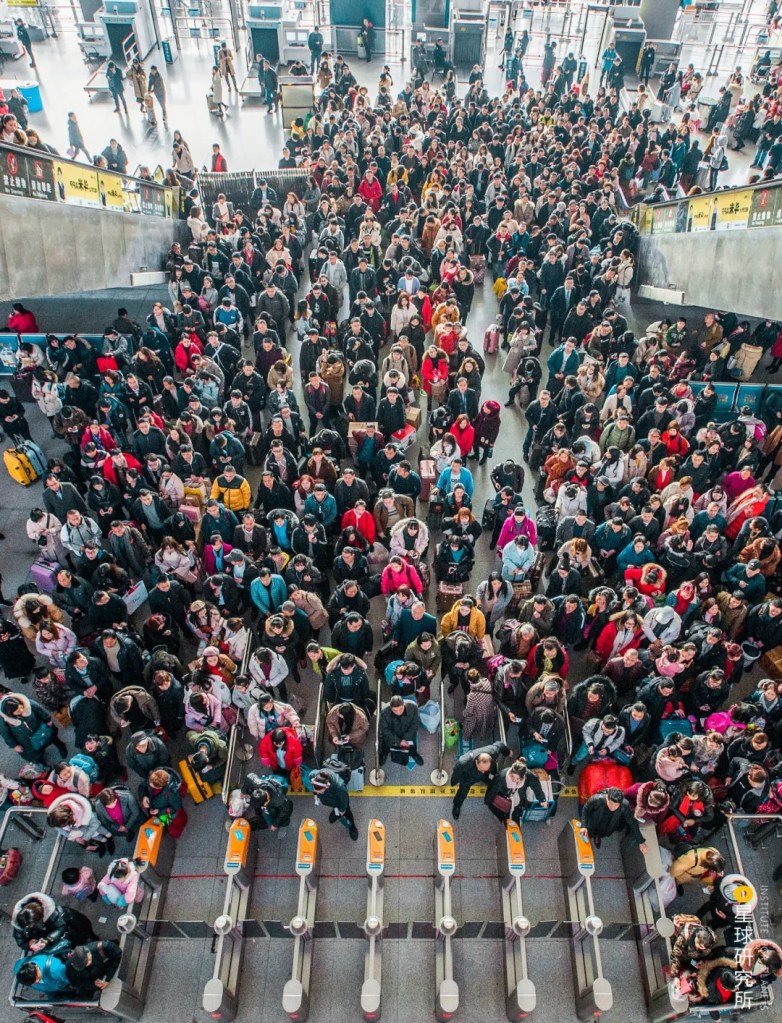


Chengdu: A Decade Marching On

Original piece: 成都,进击的十年!
Produced by Institute for Planets (星球研究所)
Written by Choco莉
Translated by Kelvin Kwok

Posted with permission from Institute for Planets

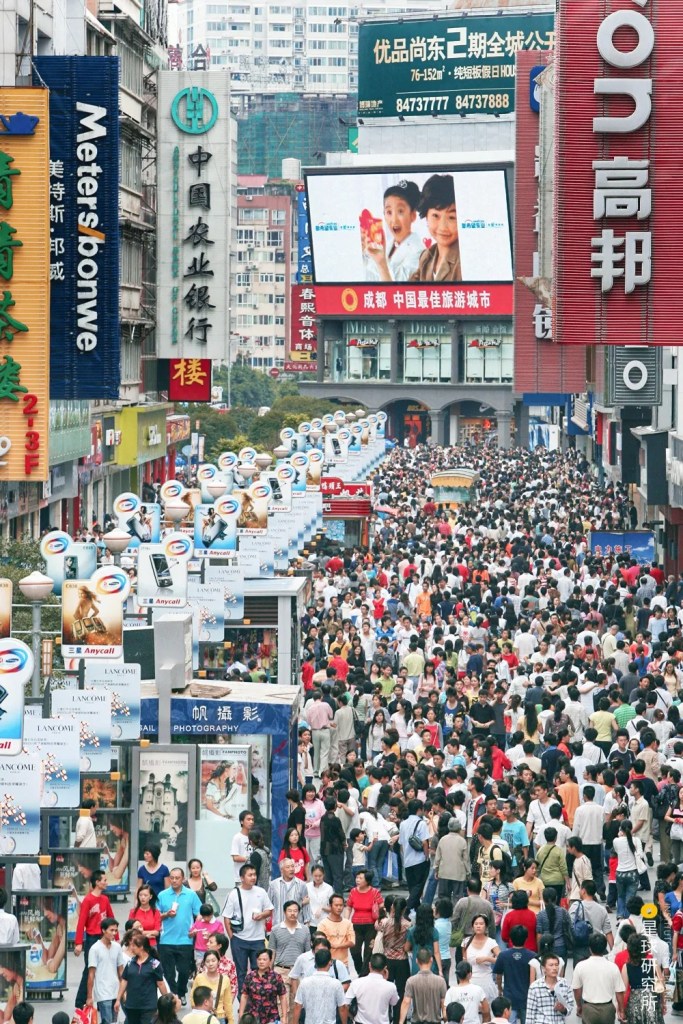
A multimorphic Chengdu

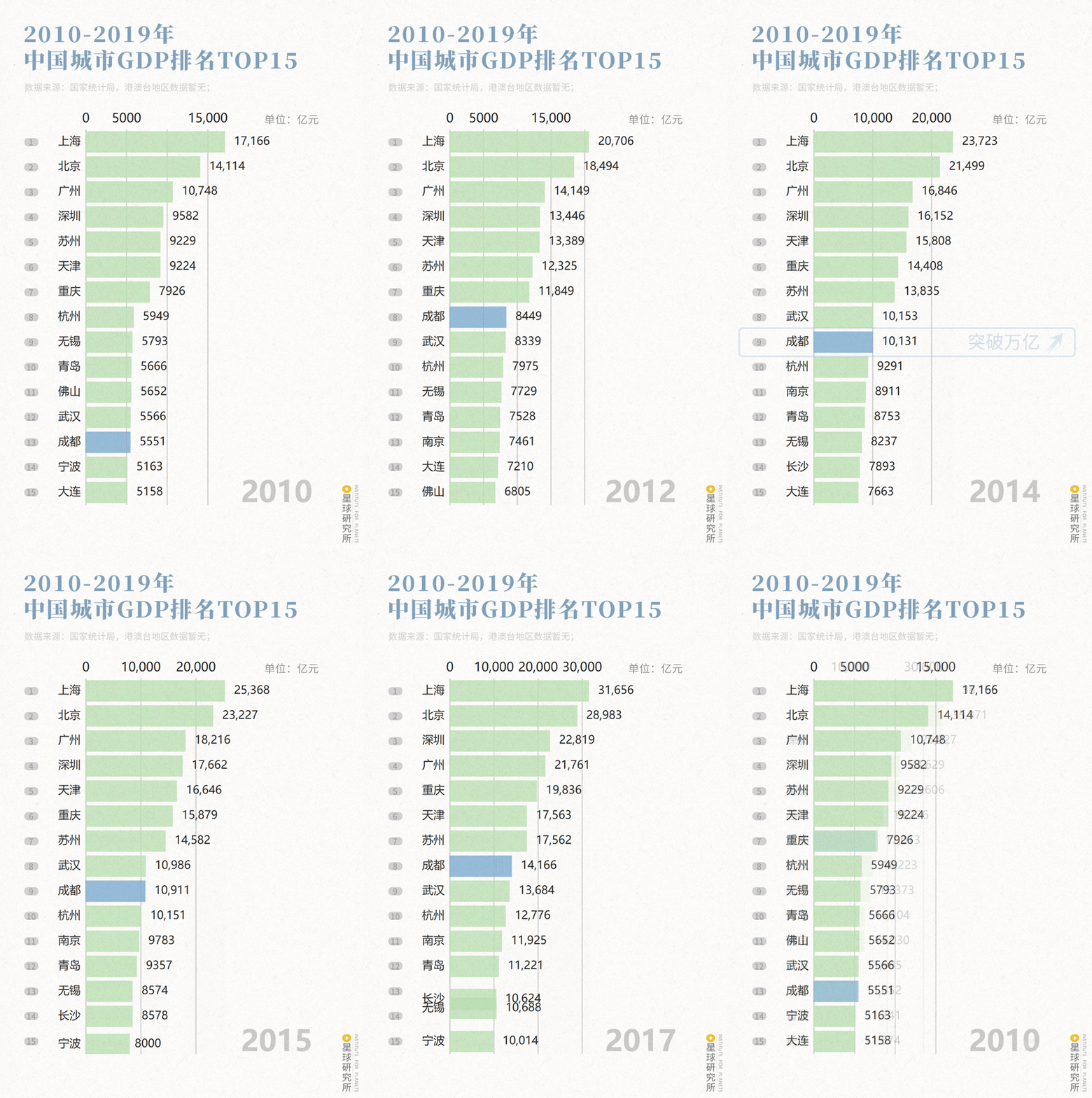
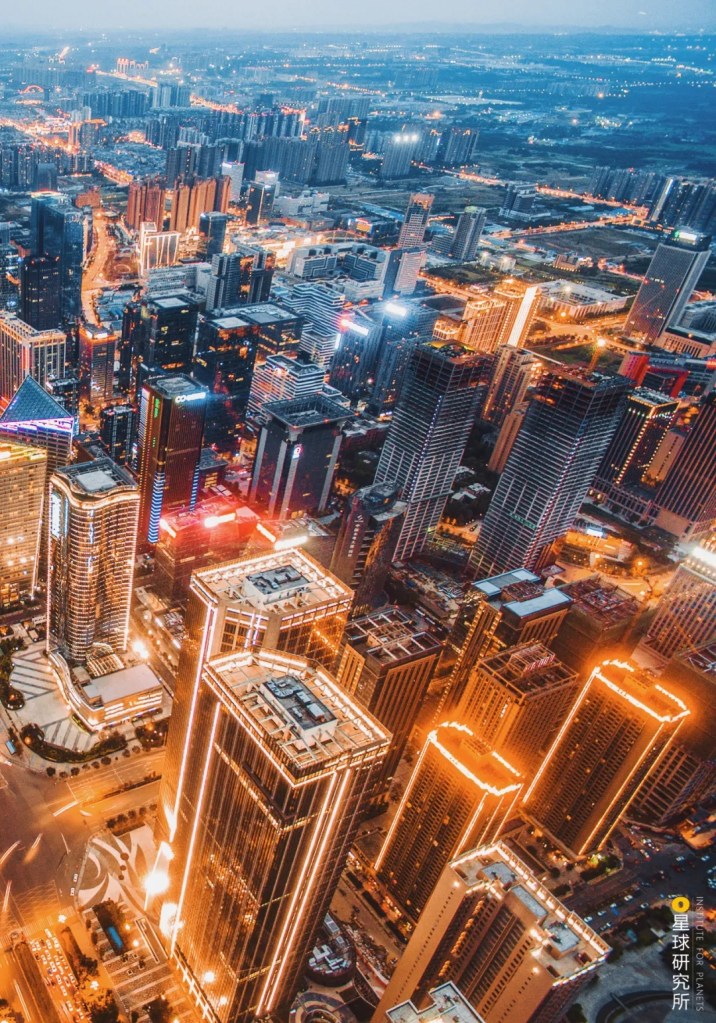
Chengdu, a city in the southwest heartland of China, went through an extraordinary economic boom between 2010 and 2020. Over these 10 years, its GDP leaped to the 7th place in the national city ranking by GDP from the 13th, with an economic aggregate now exceeding a trillion yuan.

National city ranking by GDP in China between 2010 and 2019
Blue bar indicates data for Chengdu (unit = 100 million yuan)
(diagram: 杨宁&陈志浩, Institute for Planets)

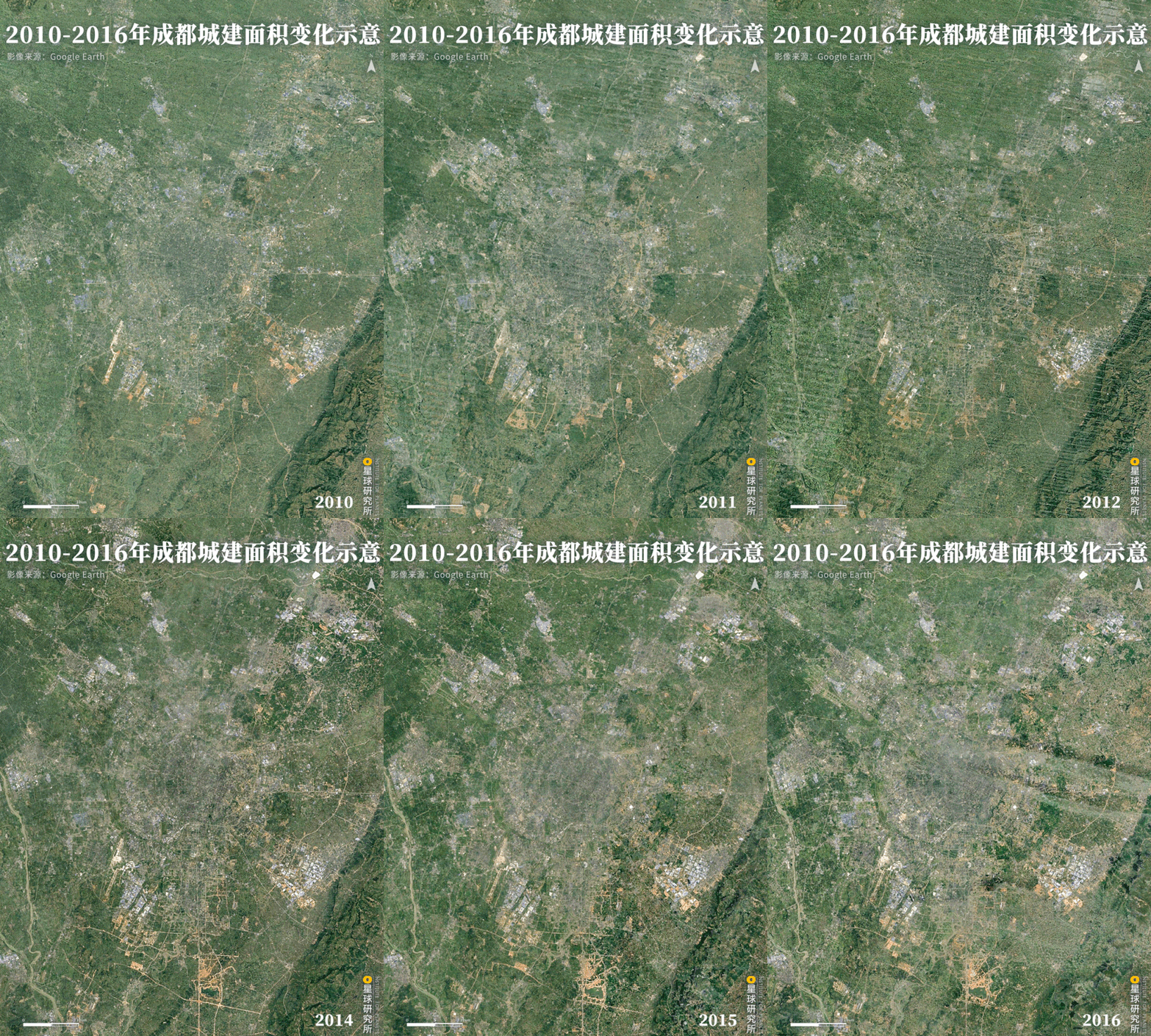
Within 10 years, Chengdu’s urban construction area has more than doubled, making it the second city in the whole country (after Beijing) to have 6 ring roads .

Changes in urban construction area between 2010-2016
(diagram: 陈志浩, Institute for Planets)

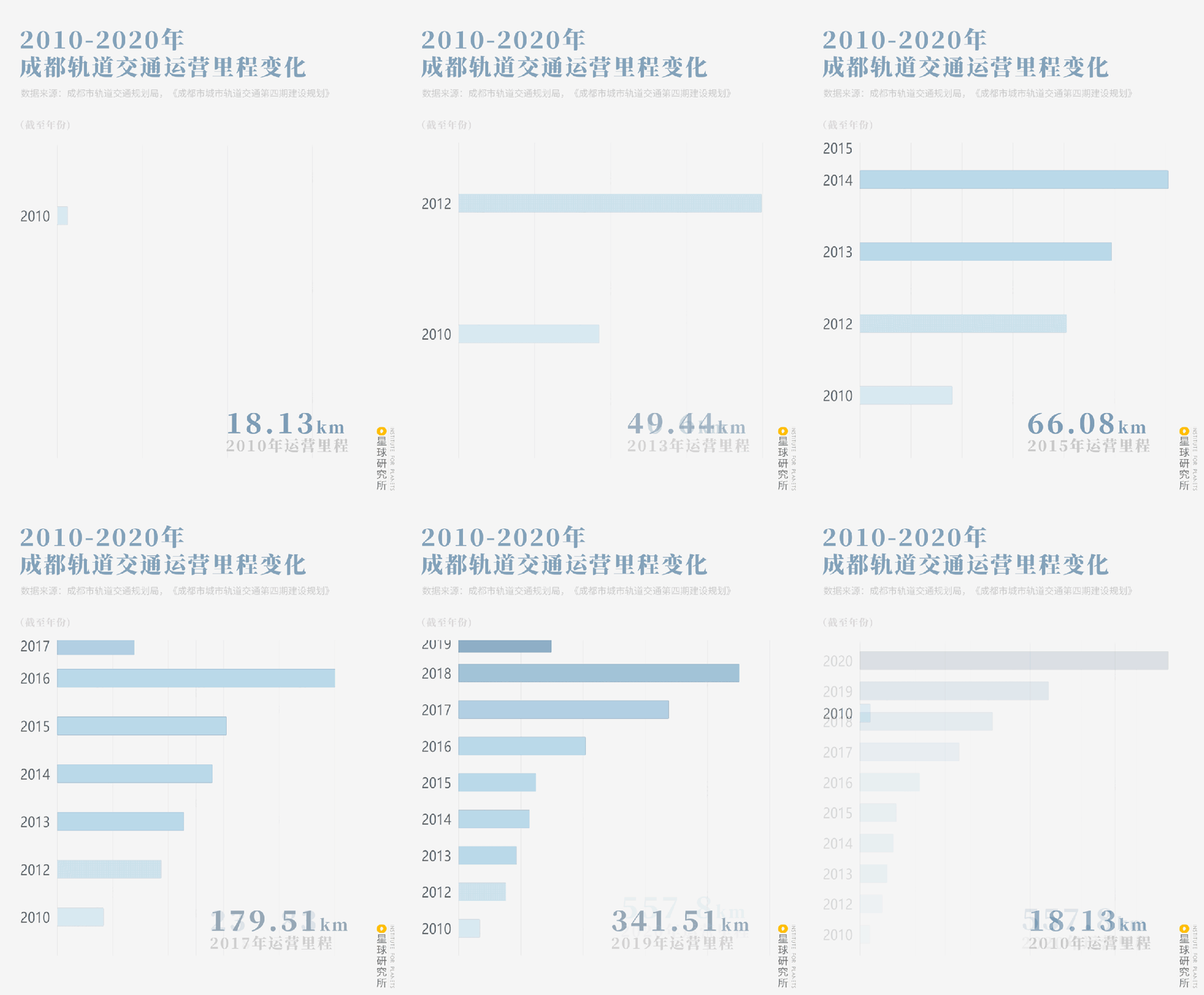
In just 10 years, Chengdu metro network grew at an explosive rate that tops the entire country.

Changes in Chengdu metro mileage between 2010 and 2020
(diagram: 杨宁&陈志浩, Institute of Planets)

Chengdu was bestowed endless titles throughout the past 10 years, including “Fashionpolis”, “City of Music”, “City of Gastronomy”, “Champion of New First Tier Cities” and the “Happiest City in China”, all of which became lasting online trends nationwide.

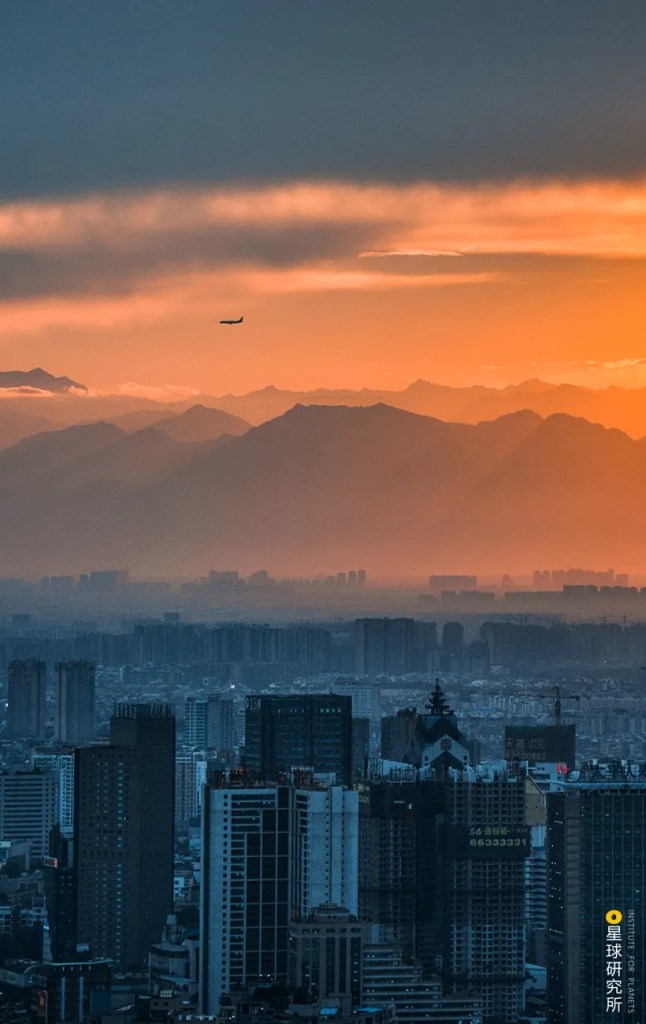
Snow-capped mountain above the city is one of Chengdu’s biggest tourist attractions
(photo: 嘉楠)

For those living in Chengdu, life can be a quiet stroll through the bamboo forests and historic architectures of temples and shrines* on one day, and some luxurious boutique hopping on the other.

*The Temple of Infinite Compassion (大慈寺), Temple of Marquis Wu (武侯祠) and the Temple of Mañjuśrī (文殊院) are some of the famous touristic spots in Chengdu.

The hundred-years-old Temple of Mañjuśrī next to the Chengdu CBD
(photo: 余书瀚)

One may choose to indulge in materialistic urban lifestyle, others simply enjoy the leisure of sipping covered-bowl tea, visiting the cute pandas and feasting on hotpot and the maocai stew, something the locals refer to as the bā sì (巴适)* routine.

*A popular slang in Sichuanese dialect describing the feeling of comfort and contentment.

Authentic Sichuanese “HOT”pot
(photo: 视觉中国)

The last decade has unveiled the multimorphic nature of Chengdu. How did a mere decade transform Chengdu, a city with more than 3000 years of history? And what do these changes mean to the city?

1. A new journey (2010-2013)

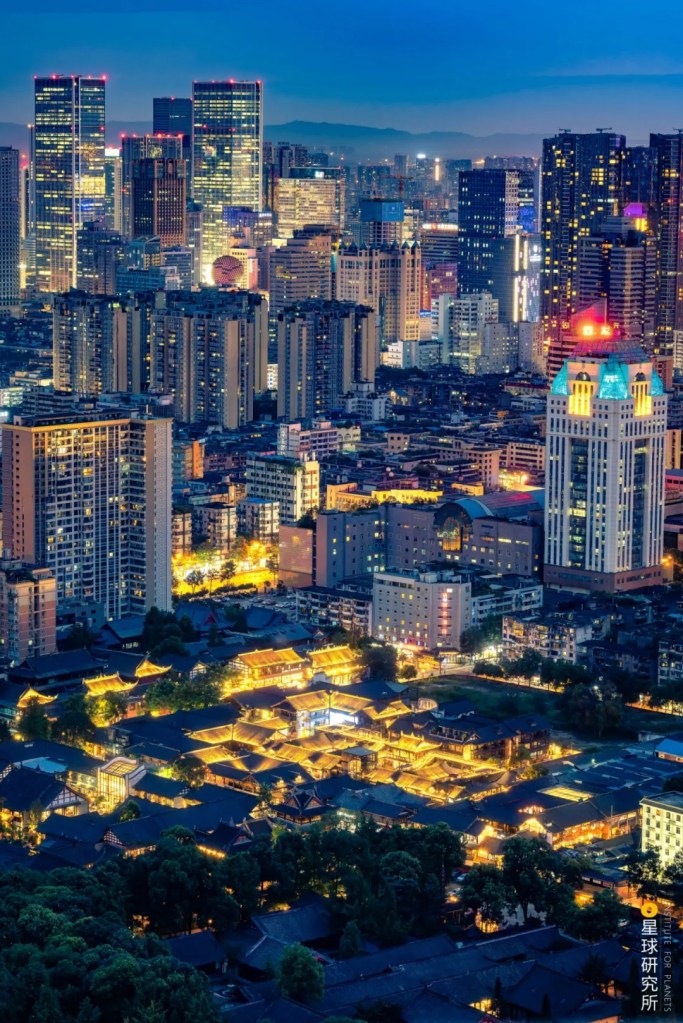
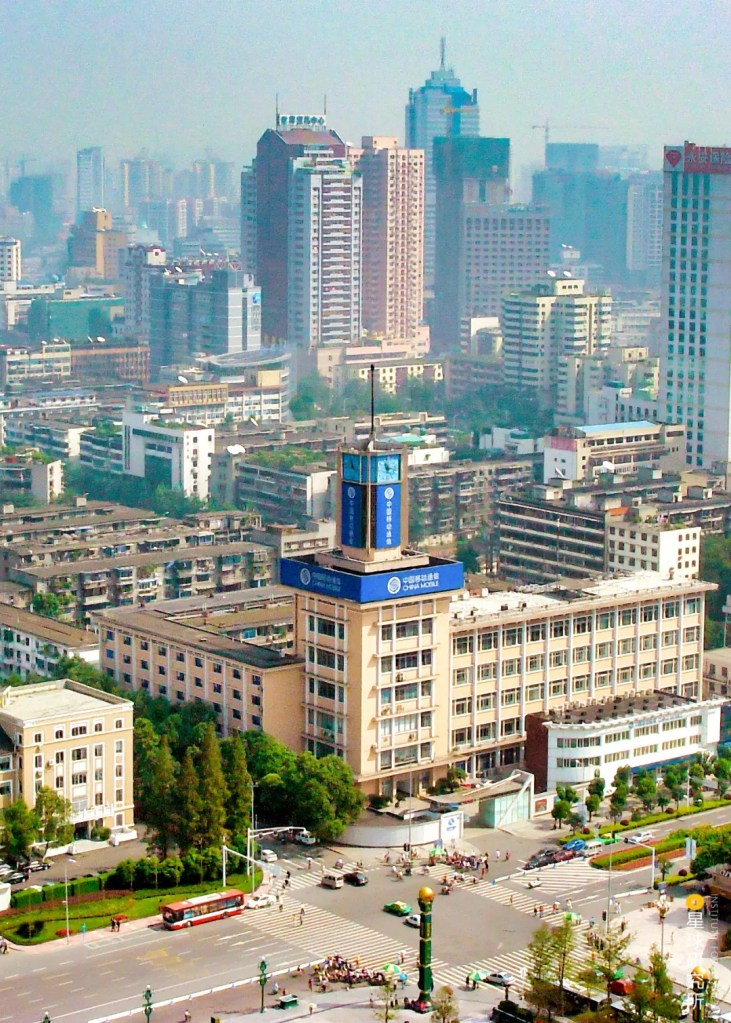
On 19 September 2010, the ‘Tianfu’s first clock’ within the Chengdu Telecom Hub Building was shut down shortly after its 30th birthday. This ‘old clock tower‘ had served as Chengdu’s landmark for much of the previous century, but eventually became history after the demolition of the building.

Chengdu old clock tower
(photo: 王毅)

A few days later, the first Chengdu metro line — Line 1 — finally came into service after 5 years of construction. Chengdu was the 7th city in China to have a metro line, and the first in western China to enter the ‘metro era‘. A metro line marks the modernisation of a city, as it not only interconnects the land and resources, but also creates a brand new way of living that gradually remoulds our impression of the city.

Passengers taking selfies on metro Line 1 on opening day
(photo: 成都地铁)

On 27 September 2010, excited passengers made a long queue at the metro station waiting to be ticketed and allowed in. Many of them really took the chance to shuttle between Shengxian Lake in the north and Century City in the south multiple times. Although this metro line is only 18.13 km long, it is one of the lifelines connecting the northern and southern districts of Chengdu.

Chengdu metro Line 1
(diagram: 陈志浩, Institute for Planets)

And at the southern end of this metro line, something bigger was coming up. On 1 September 2010, the Sichuan Provincial Committee of CPC and the Sichuan Provincial People’s Government jointly launched the Tianfu New Area (天府新区) project. At this stage, an ambitious project that is going to stun the world was just budding its first leaves in the vast rural fields.

Tianfu New Area project
(diagram: 陈志浩, Institute for Planets)

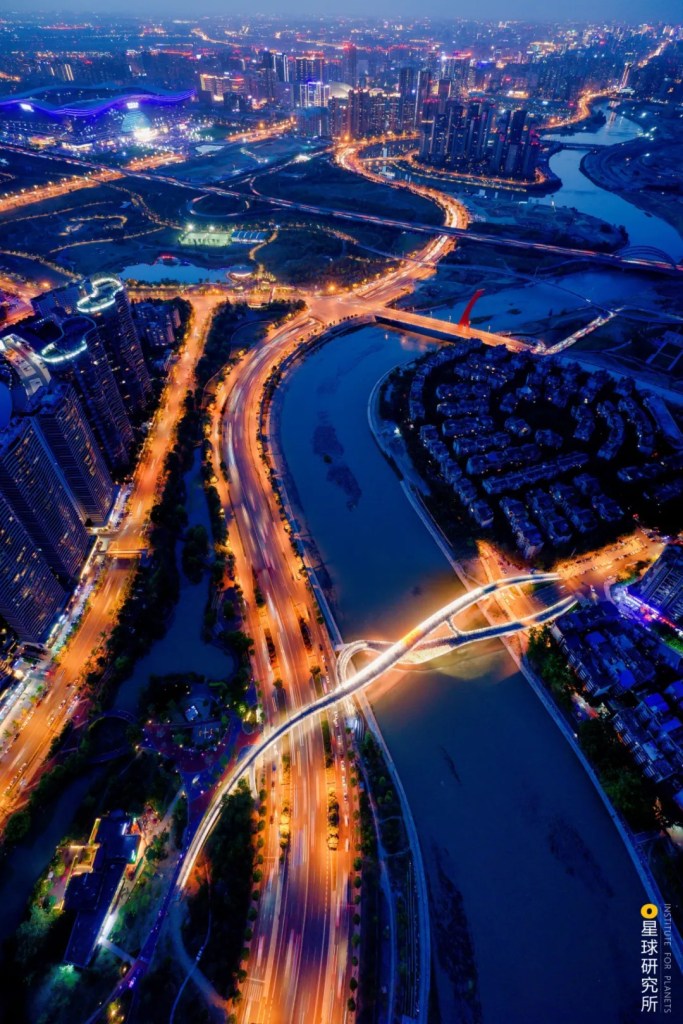
It was an arduous task to come up with such a grand project, but being one of the hub cities in the western regions, Chengdu was obliged to be a role model for the Great Western Development Strategy (21世纪西部大开发战略). Therefore, Chengdu placed enormous effort in developing the southern areas. Roads and bridges were laid across farms and villages, with sky-scraping buildings rising along them one after another.

The futuristic Wuchazi Bridge, with Tianfu Avenue glowing at the back
(photo: 王毅)

It would eventually take more than 10 years for the Tianfu New Area to start functioning in the southern bound of the old urban area.

Towards the end of 2011, the Tianfu New Area project officially moved on from planning phase into full-scale development phase with a planned population ranging between 5.8 and 6.3 million. This was equivalent to building a ‘new Chengdu‘ from scratch.

Tianfu New Area is now the second urban core of Chengdu
(photo: 姜曦)

In the same year, the K578 train running between Chengdu East and Changsha made its punctual debut. This was the first train departing from the Chengdu East Railway Station, the largest, most advanced and modernised passenger terminal equipped with the most comprehensive facilities in southwestern China.

A crowded Chengdu East Railway Station
(photo: 小艺)

Riding on this train, passengers from Chengdu can reach Chongqing within 1 hour, Lanzhou and Xi’an within 4 hours, Guangzhou and Beijing within 8 hours, and Shanghai within 12. This closely connects Chengdu with the rest of the country.

A train departing from Chengdu East Railway Station
(photo: 蒋小翼)

In addition, to ensure synergies between national railways and highways and the local urban railways, Chengdu set out to create an integrated transit system to meet the multilevel travel needs, with the metro system playing an incremental role.

In September 2012, Line 2 of Chengdu metro started operating between the northwest and southeast districts while running through the Chengdu East Station. These two intersecting lines opened the ‘X era’ for Chengdu metro.

Phase 1 of Lines 1 and 2
Changing at Line 2 allows passengers to switch to trains without leaving the metro station
(diagram: 陈志浩, Institute for Planets)

Nine months later in June 2013, the west extension section of Line 2 came into service and became the first metro line to connect the city centre and suburbs together. Thanks to this extension, people from Xipu (Pidu District) can arrive in the city centre within 30 minutes instead of 2 hours.

West extension section of Line 2
(photo: 尹攀)

As the saying goes, “gold comes with the metro”. The metro lines greatly expanded the urban area and restructured the entire urban configuration. This also led to soaring property prices and emergence of new business districts along the metro lines.

In just three years, massive ‘urban complexes’ that encompass commerce, administration and entertainment activities swiftly settled in. These complexes, including the Chengdu MixC, Jinniu Wanda Plaza and Raffles City, continued to impact neighbouring traditional business districts, such as Chunxi Road, Luomashi and Yanshikou districts.

Tianfu Avenue along the metro Line 1
Upgraded in 2012 with a total length of 150 km, it is the longest city central axis in the world
(photo: 蒋小翼)

Around the same time, two internationally recognised landmark buildings rose from the ground by the two metro lines. The one next to Line 2 is the tallest skyscraper in western China — Tianfu Panda Tower, and the one beside Line 1 is the Global Centre, the largest single building in the world. The latter occupies a total area of more than 1.7 million m2, which is equivalent to 7 Bird’s Nest in Beijing and 20 Sydney Opera House. Many have joked about how this “Global” Centre is going to become the “Galactic” Centre in the future.

Global Centre in Chengdu
(photo: 天空映像)

But it was the train departing from Chengdu on 26 April 2013 that truly reached the bigger world. This is the Chengdu-Eurasia Express, a branch line of the Trans-Eurasia Logistics and an indispensable land component of the Belt and Road Initiative.

Chengdu-Eurasia Express
As of 2019, the Chengdu-Eurasia Express has reached 24 cities abroad with 1591 trains in one year, the highest railway traffic volume in the world
(diagram: 陈志浩, Institute for Planets)

Travelling on this train allows the freight coming from near Chengdu and southwestern China to arrive in Germany within 11 days at the earliest, which is only about a third of the time required for conventional shipping but with only 25% of the cost for air freights. Since then, this international channel has been the major bridge between the vast western regions of China and the massive market of the Eurasian continent. By then, Chengdu was all set to play a significant role in the world’s city systems.

2. The explosion phase (2014-2017)

For businesses and property markets in the rapidly developing Chengdu, 2014 was a great year. The most prestigious mall in Chengdu, International Finance Square (IFS), was opened on the first day of the year. Numerous luxury brands including Prada and Dior opened a store here which greatly influenced Chengdu’s street fashion. And the gigantic panda ‘climbing up’ the IFS became a popular spot for tourists who are obsessed with having a photo with its ‘cute bum’ from below.

Chengdu International Finance Square (IFS)
(photo: 李毅恒)

Ten months later, the Sino-Ocean Taikoo Li was opened just one block away, where stationing brands like Hermès, Givenchy and Gucci keep the district busy as ever. With that, the Chunxi Road business district made an impressive come back and outperformed other emerging first-tier cities with a net worth hitting 10 billion RMB.

A night at the Sino-Ocean Taikoo Li
(photo: 视觉中国)

Supported by investments, consumption and foreign trade, Chengdu’s GDP crossed the trillion RMB mark for the first time in 2014. This was an outstanding achievement for a city in western China.

But the rise of a Chengdu is not just about success in commerce. Once infamously labelled as a “daunting route into Shu (Sichuan), 蜀道难”, the geographical barriers put a huge constraint on Chengdu’s development.

Towering mountains looming over Chengdu
(photo: 王钰权)

To travel beyond the barricading mountains, there is nothing more important than to develop the transportation system.

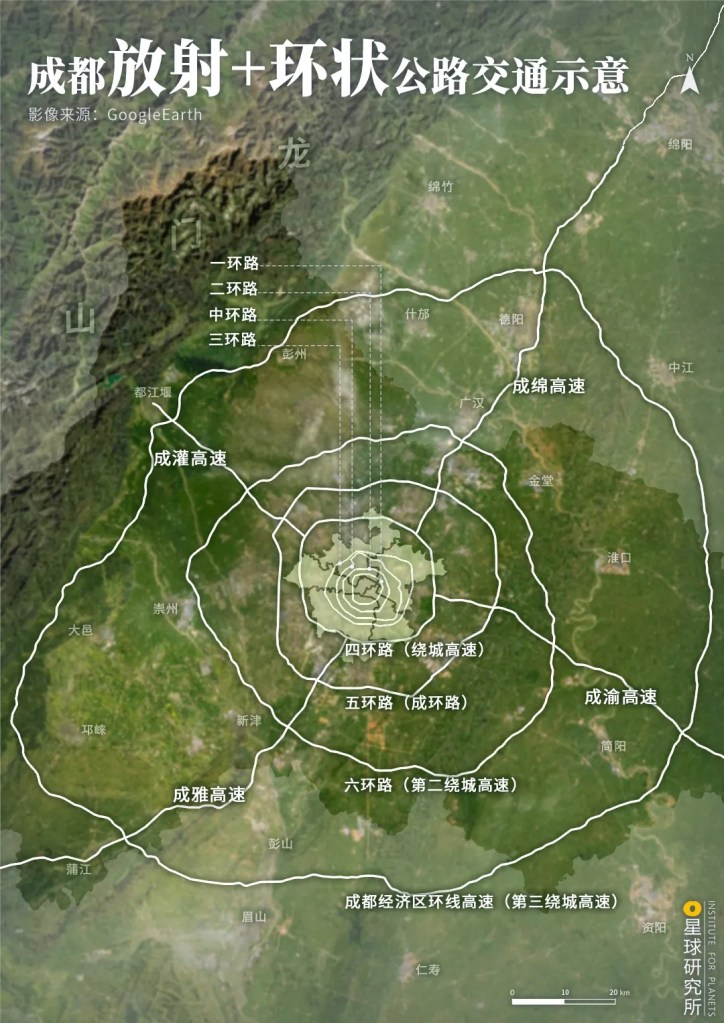
In 2015, with the completion of the second ring expressway, Chengdu was officially connected with 12 neighbouring districts and counties. People can now drive around the city once within 2 hours.

Radiating and ring configuration of Chengdu expressways
The second ring expressway was renamed the 6th Ring Road in 2017
(diagram: 陈志浩, Institute for Planets)

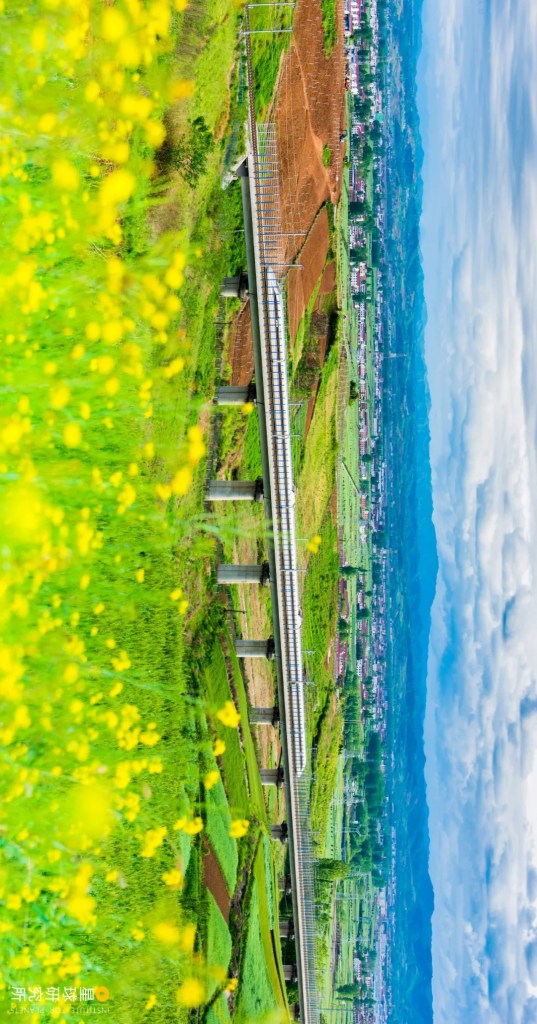
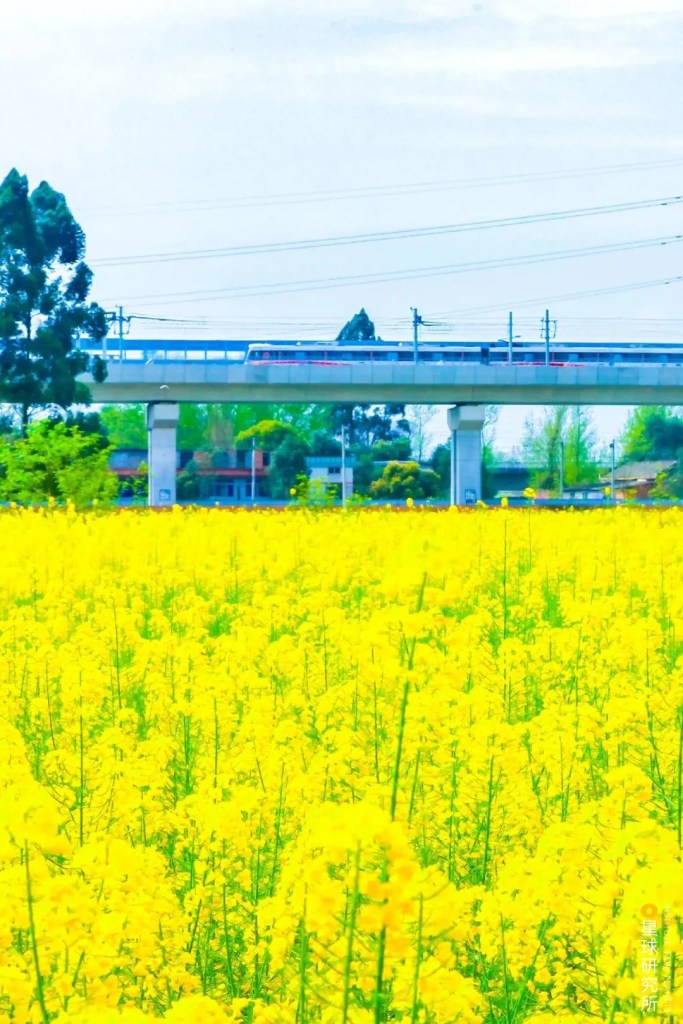
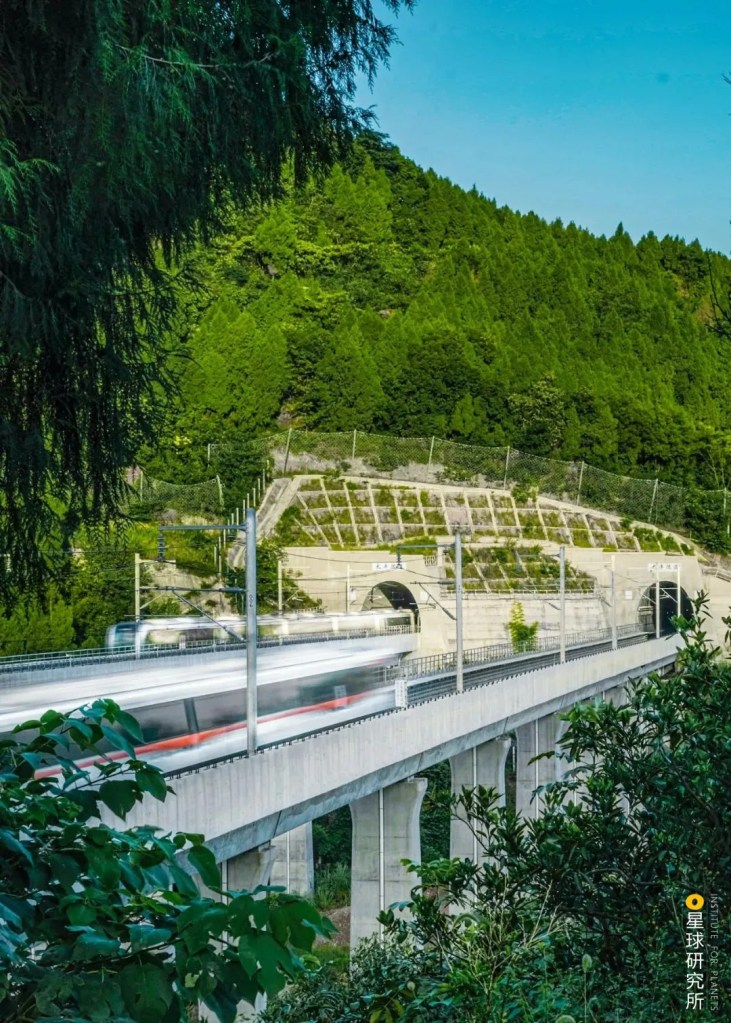
There was similar progress made for railroads too. The Xi’an-Chengdu High-speed Railway, China’s first railway to traverse the Qin Mountains, started operating in 2017. The 7 extra-long tunnels it runs through reduce the shortest travel time between Xi’an and Chengdu from 11 hours to just 3.5 hours.

Xi’an-Chengdu High-speed Railway passing through a rape field
(photo: 靳晰)

But what’s more gratifying was the opening of the Chengdu-Chongqing High-speed Railway in late 2015, the third railway to operate between the two cities. It was not only the first high-speed railway to travel out of Sichuan, but also an accelerator of communications between Chengdu and Chongqing and the development of the Chengdu-Chongqing Economic Circle.

Chengdu-Chongqing High-speed Railway
Chengdu and Chongqing are referred to as the “Gemini of southwestern China”
(photo: 蒋人可)

Aviation development was not left behind, as the design for a stylish new airport in Chengdu was finalised in the same year. On the other hand, the Shuangliu International Airport began launching a number of new direct flight routes to major cities like Los Angeles, New York and Auckland, gradually attaining an international status.

Upon completion of the Tianfu International Airport, Chengdu will become the 3rd city in China to have two international airports
(photo: 天空映像)

The Chengdu metro system was also developing at an equally fast pace during these 4 years. In 2014, the east extension section of Line 2 began its trial operation to connect between Longquan and Xipu, which were previously too far apart to have any efficient communication. Longquan’s automobile industry and Xipu’s electronics industry both benefited massively from the convenience brought about by the new metro line.

Automobile factory in Longquanyi
After decades of development, Longquanyi automobile industry is now famous around the world
(photo: 嘉楠)

The south extension section of Line 1 was opened in 2015, and became the new link between the central urban area and the Tianfu New Area. One year later, the phase 1 of Line 3 came into service, marking the true completion of a spider-web metro network the Chengdu residents have been longing for.

Panda Train of Chengdu metro Line 3
(photo: 两忘烟水里)

And just one year later, Line 10, the first route allowing direct transfer at the airport, and Line 7, the first ring metro line, were launched back to back. Chengdu’s metro system wasted no time in building thee “# and O network” era.

The “# and O” Chengdu metro network
The Taipingyuan Station on Line 10 is the first 5G metro station in China with full WiFi coverage
(diagram: 陈志浩, Institute for Planets)

This increasingly attractive city was the sixth to be official named a National Central City in 2016 as it gradually transitioned from an internationally connected regional centre into an international metropolis. To do so, Chengdu opened its arms even wider to welcome all sorts of talents.

Buslting Chunxi Road in Chengdu
(photo: 朱建国)

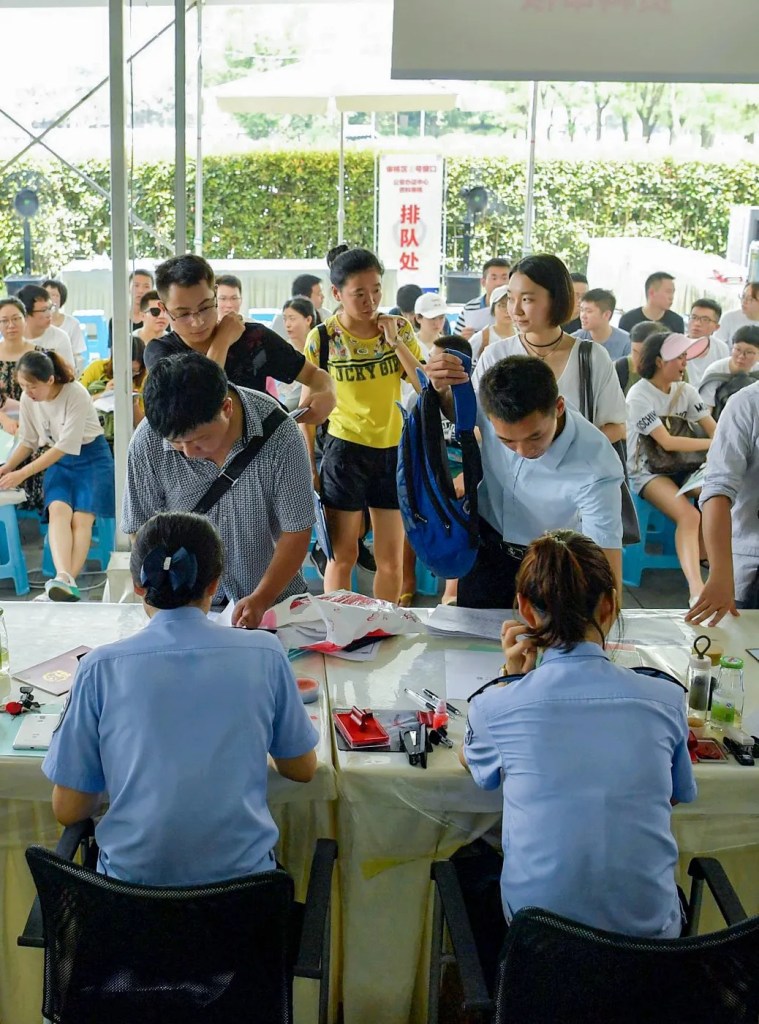
In 2017, the Chengdu government even issued the New Deals for Talents (人才新政), which stipulated that all non-local residents (or Chengdu expats, 蓉漂) with a bachelor degree or above may register for permanent residency in the city and apply for governmental subsidies for resettlement. This open and tolerant attitude truly unleashed the immense vigour of this ancient city.

Lines of graduates applying for permanent residency on 26 July 2017
Since the announcement of the New Deals for Talents, there have been more than 300,000 “Chengdu expats” choosing to stay
(photo: 视觉中国)

On 4 February 2017, Zhao Lei delivered a moving performance in the singing contest I Am a Singer with his Chengdu, a sentimental indie folk with simple yet sincere melody and lyrics.

Accompany me on the streets of Chengdu for a walk……
Even till all lights fade out we will not stop……

和我在成都的街头走一走……直到所有的灯都熄灭了也不停留……

Chengdu by Zhao Lei
Zhao Lei’s performance on I Am a Singer 2017
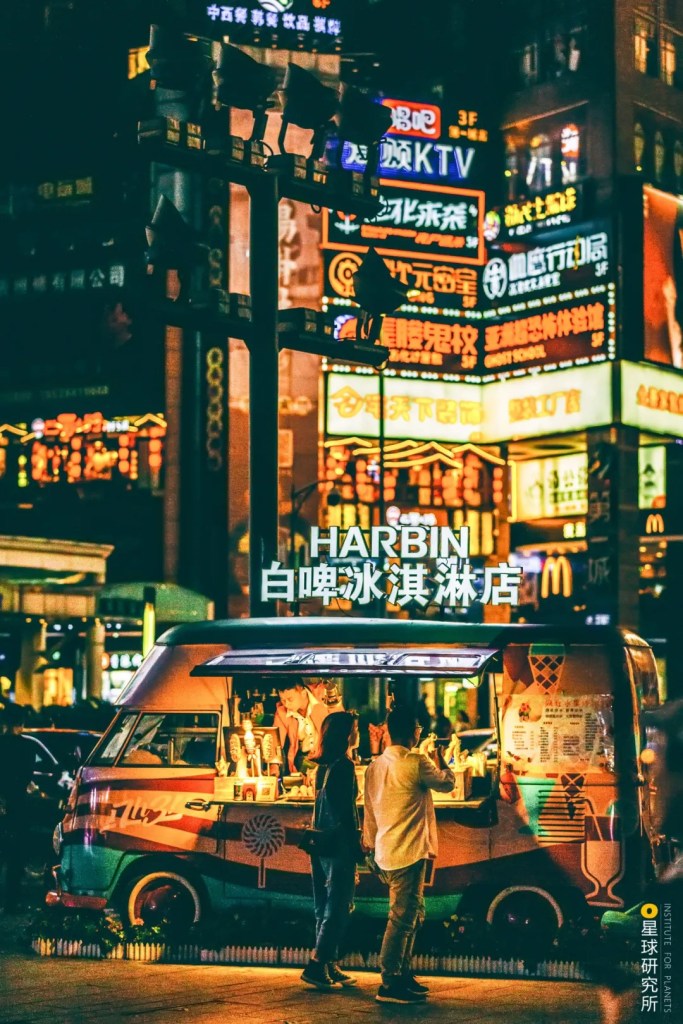
Nightlife on Chunxi Road
(photo: 张艳)

The song became a big hit on WeChat moments of countless netizens overnight, and many were determined to go on a spontaneous trip to Chengdu. The small bistro on the Yulin West Road mentioned in the lyrics also exists in reality, and is almost always packed to the doors every night, with a great atmosphere seasoned with melodious tunes that fill up the entire locale.

Live band show in a Chengdu bistro
(photo: 喜之狼)

Behind all this glamour, who would have expected that yet another even bigger reform was quietly brewing in Chengdu.

3. The big change (2018-2020)

The ever growing population and expanding industry in Chengdu come with a huge problem — land overload! This city had once blocked a gigantic flood with the Dujiangyan irrigation system 2000 years ago, but it seemed to have failed to tame the enormous human wave charging in.

A bird’s eye view of the Chengdu plain
The actual population of Chengdu had reached 21 million according some news report in 2019
(photo: 项玥)

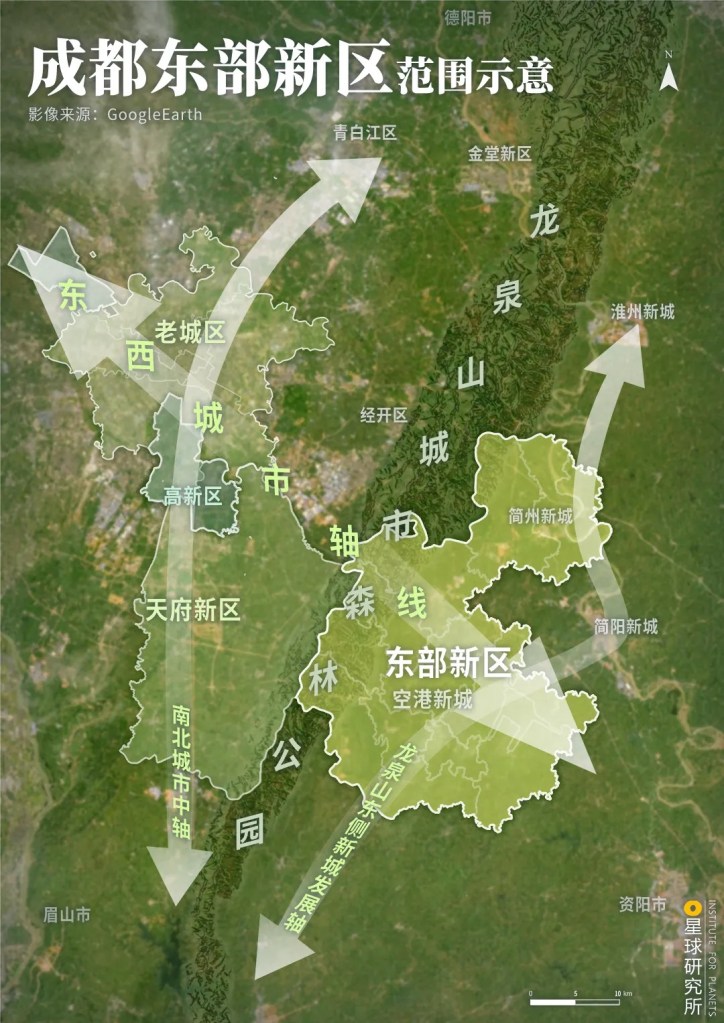
In March 2018, the draft of Comprehensive Urban Plan of Chengdu City (2016-2035) was made public. According to the plan, Chengdu’s urban development would shift eastwards and beyond the Longquan Mountain. This would completely overturn the “one city contained by two mountains” geographical outlook which have persisted for a millennium, and reshape it into a “two-winged city across a mountain“.

Chengdu East New Area project
(diagram: 陈志浩, Institute for Planets)

By gazing east, Chengdu acquired more space while moving closer to Chongqing, a move further boosting the potential of the economic circle. Chengdu has demonstrated extraordinary wisdom and courage by making such a groundbreaking ‘millennium change‘.

Longquan Mountain in the clouds
(photo: 嘉楠)

It was the same year when the city harvested even more reputation and attention together with its solid success in reform. In April 2018, Chengdu was reelected as the Champion of New First Tier Cities by the Chinese Business Network, and in October, it was crowned with the China’s Top Fashion City title, and was nicknamed Chaodu (潮都), or Fashionpolis.

A Doraemon event at the Chengdu IFS
(photo: 曹省利)

In November 2018, it was elected the happiest city in the country by the Forum of Happy Cities in China 2018. In addition, it was ranked right after Beijing, Shanghai, Guangzhou and Shenzhen in the Global City Ranking by the GaWC.

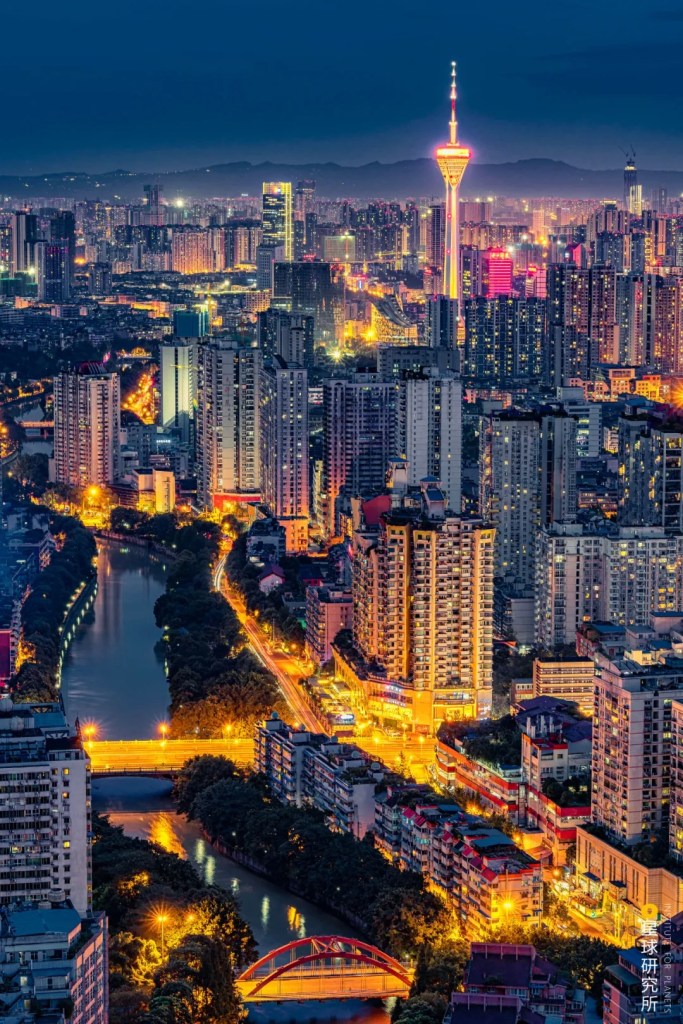
Chengdu’s night view
GaWC stands for Globalisation and World Cities Research Network, it is one of the widely recognised organisations for city classification and ranking worldwide
(photo: 余书瀚)

Chengdu enjoyed a reputation bumper year in 2018, earning more than 30 titles of all kind. But apart from titles, its cultural influence was also radiating intensely.

On 28 April 2018, three Chengdu expat-talents*-themed metro trains made their debut on Line 1, 7 and 10. All those captions printed on the train cabins, be they poetic or inspirational or even humorous, were well received by netizens nationwide and praised as the “most sentimental train theme”.

*Mainly refers to Chinese expats — Chinese nationals from around the country travelling or living in Chengdu

A guitarist performing on a Chengdu expat-talents theme train
(photo: 成都地铁)

But they were not the first theme trains in Chengdu. There were also the Panda Train, The-Most-Chengdu Train, Jinsha Train, Erudite Train and others, none of which failed to become a hot trend. As these creatively themed trains travelled to all corners in Chengdu, they resonated with the souls of all passengers coming from all over the city.

Passengers can enjoy a nice view of the rape fields on metro Line 10
(photo: 成都地铁)

During the Spring Festival in 2019, the “Evening Tour along the Jin River”-themed cruise made its first appearance, where it staged poetic performances of traditional culture on the banks of the river.

The blockbuster Wandering Earth (流浪地球) was also premiered around these festive moments and heralded a brand new era for China’s science fiction movies. Back in 1979, it was the Science Fiction World Magazine founded in Chengdu which uncovered the squad of renowned science fiction writers in China, namely Liu Cixin, Wang Jinkang and He Xi, among others. Liu Cixin‘s Wandering Earth was initially serialised in this very magazine.

Performance at the Chinese Nebular Awards 2016
The Chinese Nebular Awards and Masters of Future Sci-Fi Writing Contest were both established in Chengdu
(photo: 视觉中国)

And just 6 months after Wandering Earth came out on screen, another movie produced entirely by a Chengdu-based company again ignited the internet. This was a 3D animation film called Ne Zha (哪吒之魔童降世), the opening of which grossed more than 500 million yuan. It finished with almost 5 billion yuan in box office and became the second highest-grossing film of all time in China.

Action figure of Ne Zha
Other big anime hits including One Hundred Thousand Bad Jokes and Rakshasa Street were also produced by Chengdu-based companies
(Figure production: 末那工作室)

“Defying destiny”, the punch line in the animated film, very much describes what the box office had achieved. In addition, it set a new bar for anime production in China for the years to come. The anime industry has long been part of the steering force of Chengdu’s development, that netizens are referring to it as the ‘Capital of Anime‘. Having organised hundreds of anime conventions in recent years, this Capital of Anime surely has a bright future.

Bilibili World Chengdu, an offline event organised by Bilibili
(photo: 视觉中国)

Other cultural industries of Chengdu, such as cuisine, pop music and operas, have also been exerting their charm and contributing to the city’s soft power. With economic and cultural engines both driving at full force, Chengdu finally stepped into a new phase of development on 6 May 2020.

On this day, the Chengdu East New Area project officially commenced, and the “two-winged city across a mountain” initiative transitioned from planning phase to implementation phase. Four months later, Line 18 of the regional express railway came into service. As the first regional express railway in the whole country to extend into city centre area, it traverses the Longquan Mountain and connects the new airport to further accelerate the ‘eastward march’ of Chengdu’s development.

The operation speed of Line 18, which travels through the Longquan Mountain Tunnel, can reach up to 140 km/h.
It takes only 32 minutes to go from South Station to Tianfu International Airport.
In addition, it has a mixed-operation mode, where some trains stop at every station, some only at selected stations, and some are non-stop trains to the airport, thereby accommodating different travel needs.
(photo: 视觉中国)

On the morning of 3 November, a calibration aircraft named B-10VC successfully landed on the runway of Tianfu International Airport in Chengdu East New Area. This was the first landing for the much-anticipated new airport.

The “Tianfu’s first flight” in 2020
Tianfu International Airport was opened in June 2021
(photo: 岑崚玉)

While the year of 2020 was coming to an end, the changes happening in Chengdu certainly were not. As of 18 December, there were 5 Chengdu metro lines in operation. Among these, Line 6 has the longest mileage and most stations among all the rail-based transport system in the whole country to be built in one construction.

Chengdu metro Line 6 under construction in 2018
It runs past Chengdu West Expo City, one of the largest Expo exhibition centres in western China
(photo: 尹攀)

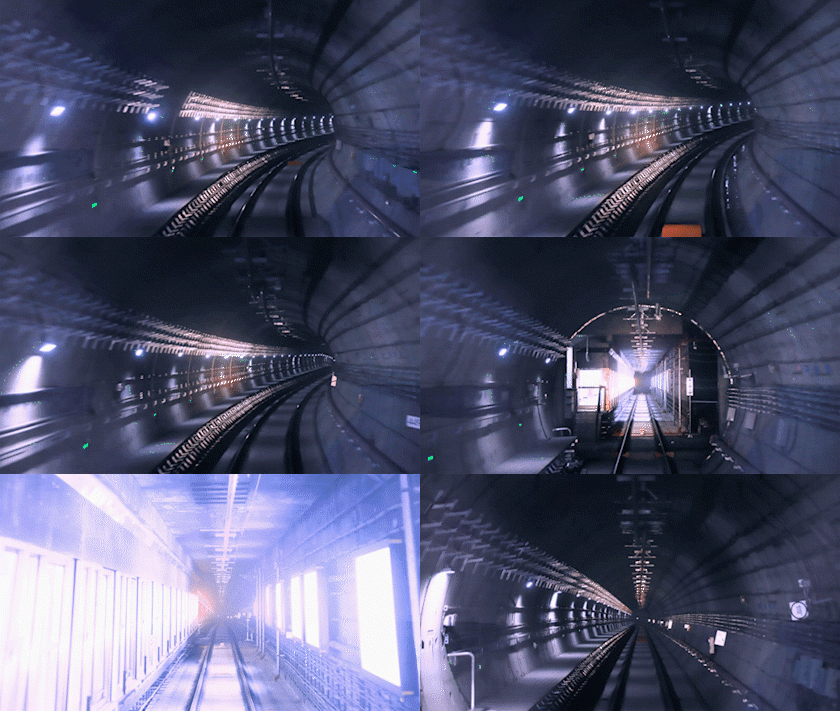
And the second ring railway of Chengdu metro, Line 9, is the very first fully automated metro line in the central and western regions of China. The vehicles of this metro line adopted the GoA4 automated operating system, currently the most advanced around the world. From departure, piloting and reverse to cabin cleaning, system wake-up and hibernation, it is capable of automating a wide range of operations.

Dazzling views from the cab of Line 9 train
There is no pilot cabin so that passengers can enjoy the cyber tunnel view
(photo: 成都地铁)

The Chengdu metro Line 8, on the other hand, connects the Chengdu University of Technology and the Sichuan University. Via this metro line, the young and energetic students can embark on a magical journey any time to the Eastern Suburb Memory (东郊记忆), a music-themed park where culture and art converge and spark new chemistry.

Eastern Suburb Memory is also known as “London’s West End in China”
It is an important base for China’s music industry
(photo: 蒋人可)

The elaborate Chengdu metro network has not only become the primary means of travel for the locals, but has also blurred the boundaries between the city centre and the suburbs. The “life in two cities” has finally become “life in one and only Chengdu”.

Metro Line 17 departing from Huangshi Station
This metro line links up the Chengdu city centre, Wenjiang District and Shuangliu District. It operates with a top speed of 140 km/h
(photo: 视觉中国)

Now with 5 operating metro lines, the metro mileage per ten thousand population of Chengdu is already quite close to that of Tokyo, the world leader in urban metro mileage. The total mileage of Chengdu metro has now exceeded 500 km, surpassing Shenzhen as the city with the 4th longest metro mileage in China.

Delightful staff of the metro Line 17
(photo: 成都地铁)

This is how far Chengdu has come during the past 10 years, the city has progressed almost as fast as time has raced past. The once sparsely populated Tianfu Avenue is now a picturesque central axis for the prosperous city’s economic and transportation activities.

Night view of the 3rd Ring Road of Chengdu
(photo: 朱骏杰)

The once rural fields in the suburbs do not look so different from the old urban area today. A land that did not have any underground infrastructure are now penetrated by a web of busy metro lines.

Chengdu metro Line 2 in evening lights
(photo: 嘉楠)

Previously a harsh container of the city’s development, the rolling mountains are now a “green bridge” between the two city wings.

Danjingshan scenary viewing platform in Longquanshan Urban Forest Park
Sometimes called the Chengdu’s green heart, the park is the largest urban forest park in the world
(photo: 王进)

Once locked within the inlands and lacked the openness of its coastal counterparts, Chengdu is now an indispensable inland port city in China. With almost 300 of the Fortune Global 500 settling in here, it is well known for its hospitality towards multinational corporations.

Today, the aged face of Chengdu slowly effuses its rich past with more than 200 historic buildings and remains, while the other face of it continues to shine with fast-paced modernity cultivated by internationalised business districts.

Night view of the quaint Jiuyan Bridge embedded in a prosperous district of Chengdu
(photo: 樊小喆)

The bā sì-styled leisure and keen sense of fashion displayed by Chengdu are what people around the country have been aspiring to, while the tolerant and open society here are really good at keeping expats. On the streets of Chengdu, you may find glamorous youngsters binging on hedonism, but you will nonetheless spot ambitious all-nighters striving for a better future in office towers on a quiet night.

A young couple posing for their wedding photo in front of Chengdu IFS
(photo: 王红强)

A decade flies by in the blink of an eye.

This is not just the Chengdu decade, but also the decade of all those who were part of this new era. As the winter night dissolves the last sun ray of the year, this ancient city shall welcome another brand new start.

A mesmerising night in Chengdu
(photo: 天空映像)

Production Team
Text: Choco莉
Photos: 潘晨霞
Design: 杨宁
Maps: 陈志浩
Review: 张照

References
[1]李霞等.改革开放40年成都经济发展道路[M].四川人民出版社,2018.
[2]成都市发展和改革委员会.成都市产业发展白皮书(2019),2019.
[3]成都市规划管理局.成都市城市总体规划(2016-2035年),2016.

… The End …

This image has an empty alt attribute; its file name is 75-2.jpg
Institute for Planets
星球研究所
一群国家地理控,专注于探索极致风光

Ancient bridges in China

Original piece: 《中国古桥,有多美?》
Produced by Institute for Planets (星球研究所)
Written by 李张子薇
Translated by Kelvin Kwok

Posted with permission from Institute for Planets

The beauty of ancient mechanics

What paints the familiar impression of an ancient China?
It is the blushing walls and ebony tiles,
the protruding cornices and curling eaves,
and the lady with an oil-paper umbrella strolling over a bendy bridge.

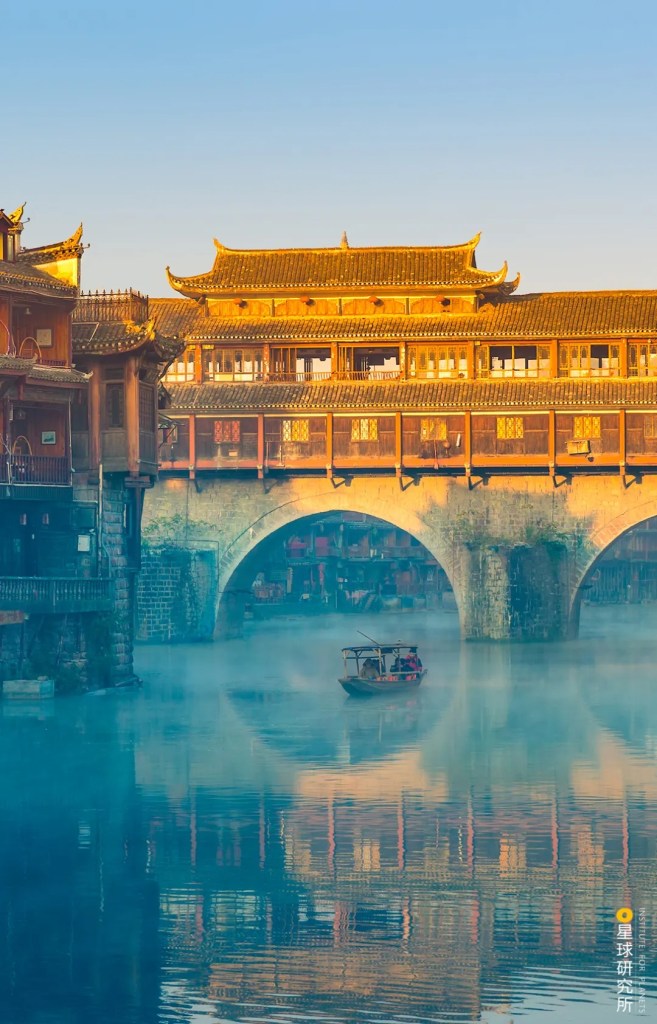
It may be the serene bridge leaning by the ripples with a watery makeup…

Pheonix Rainbow Bridge in Fenghuang Ancient City, Xiangxi Tujia and Miao Autonomous Prefecture, Hunan
(photo: 沈欣洪)

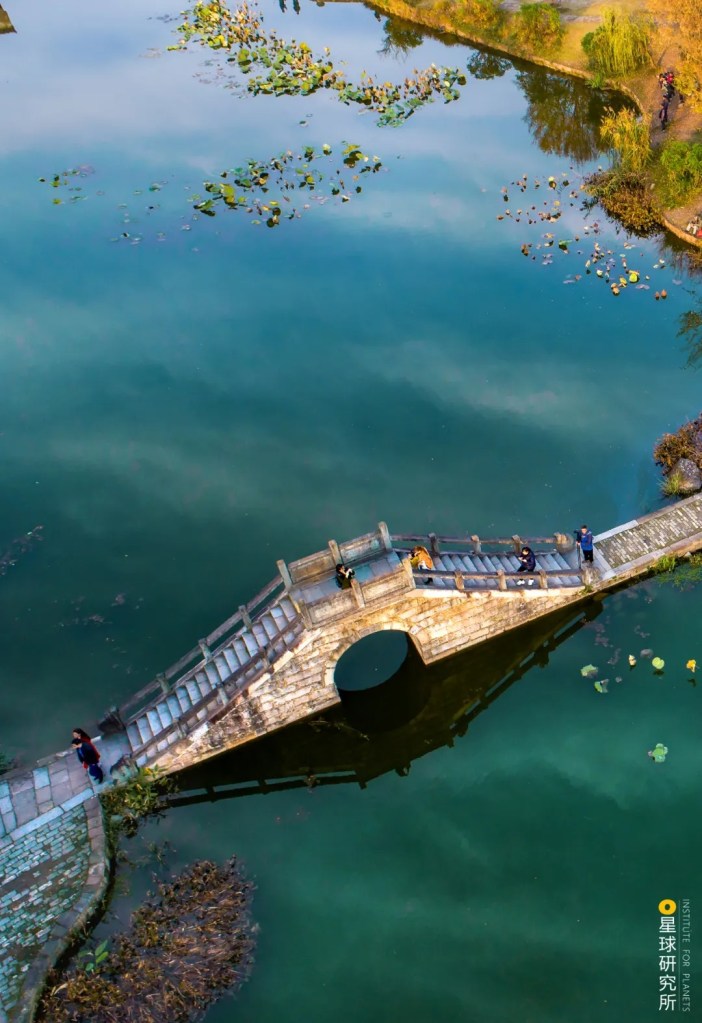
…or the enchanting rainbow brushing lips against the stream.

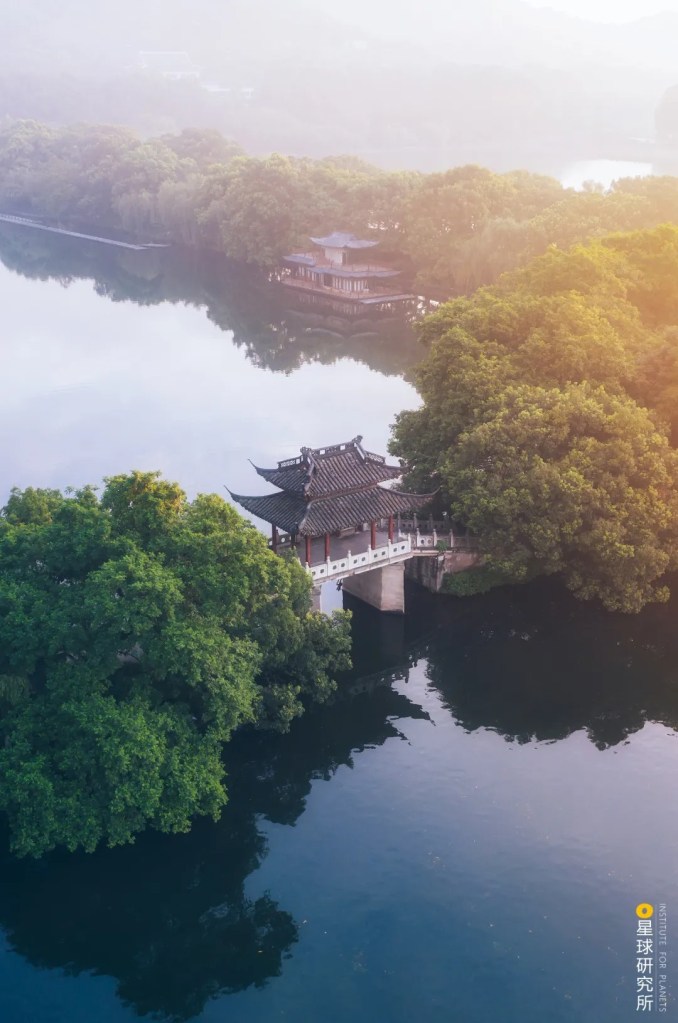
Brocade Belt Bridge on West Lake, Hangzhou
(photo: 胡寒)

On this aged yet vigorous land of China, ancient bridges continue to dance like “rainbows”, “jade belts” or the “crescent”, still striking the hearts of tens of thousands with their magical reflections in the glittering waters.

Distribution of China’s existing ancient bridges
(diagram: 陈志浩, Institute for Planets)

Bridges do not just exist to let us gather and communicate in the real world, they create a poetic realm that fascinates.

One may find in this realm a moment of reverie…

你站在桥上看风景,看风景的人在楼上看你

On the bridge you stand viewing the sight,
yourself beheld by a scenery admirer from height
.

卞之琳《断章》
Fragments by Bian Zhilin
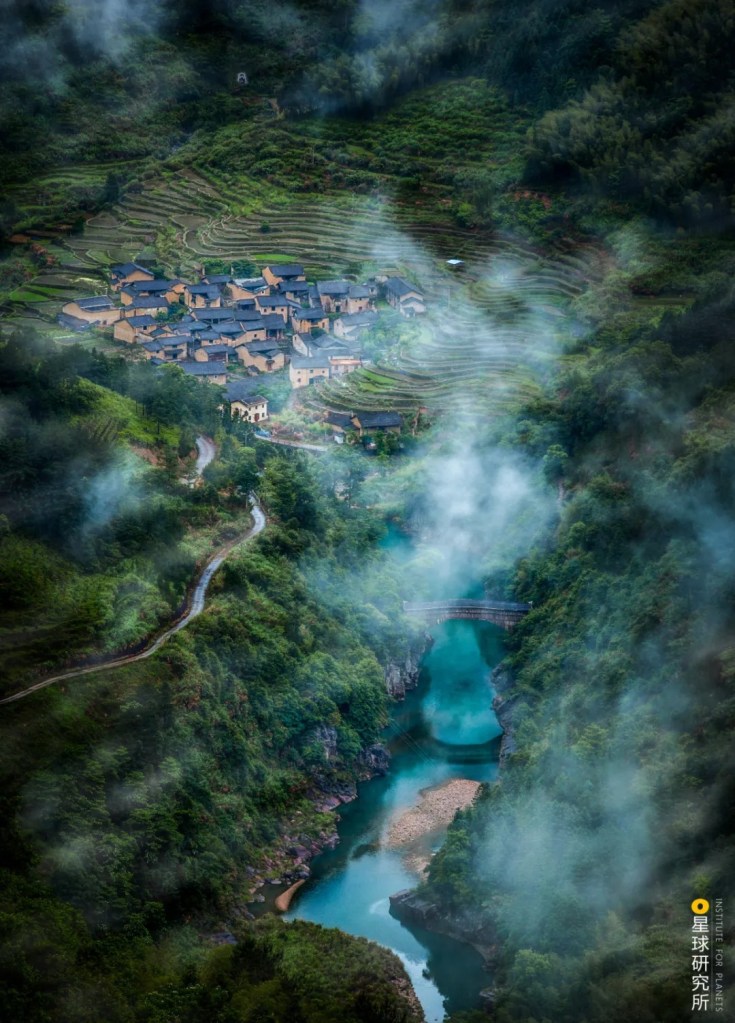
A stone bridge in Chengkan Town, Huizhou District, Huangshan City, Anhui
(photo: 王昆远)

…a state of melancholy…

枯藤老树昏鸦,小桥流水人家

Withered vine, gnarled trees, drowsy crows;
narrow bridges, quiet brooks, rustic cottages.

马致远《天净沙·秋思》
Heaven-pure Sand: Autumn Thoughts by Ma Zhiyuan
Yati Bridge on West Lake, Hangzhou
(photo: 非渔)

…and the scent of love.

柔情似水,佳期如梦,忍顾鹊桥归路

Love is tender as water but reunion is faraway like illusion, the farewell sight on Magpie Bridge is unbearable.

秦观《鹊桥仙·纤云弄巧》
Immortals of the Magpie Bridge: Intricate Forms of Clouds by Qin Guan
Jiangshi Bridge, Lijaing, Yunnan
(photo: 刘珠明)

This tenderness of ancient bridges in the southern misty rains has been nourishing the spiritual world of Chinese people, and we shall now unveil the magnificent beauty of Chinese ancient bridges.

1. Origination of ancient bridges

Bridges connect. Being a “path in the air”, all they have to do is to link up the two banks they stand on.

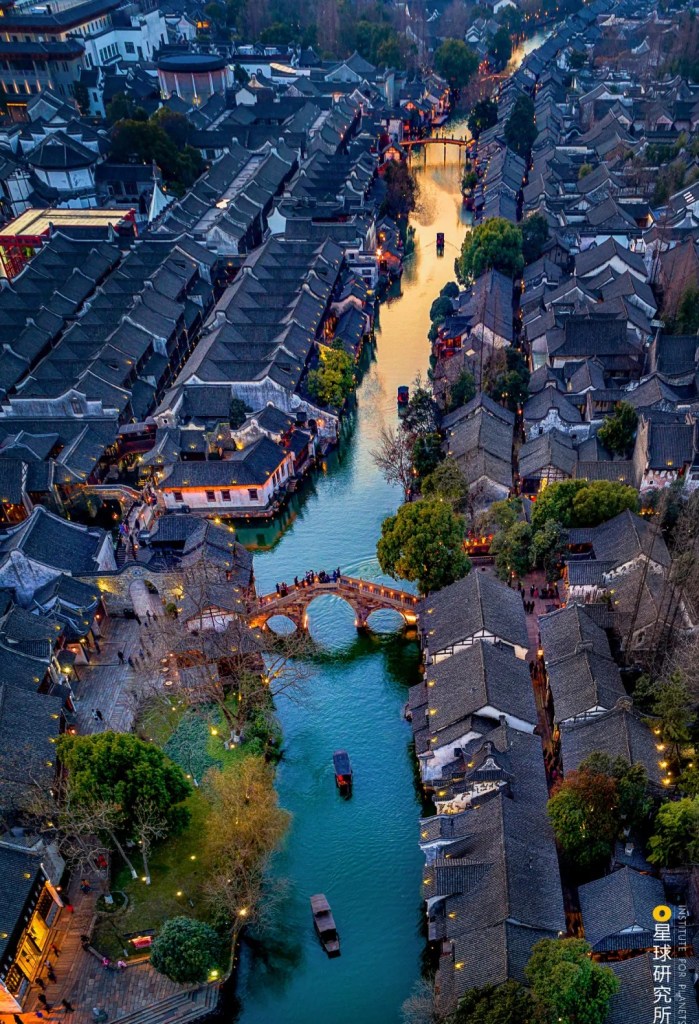
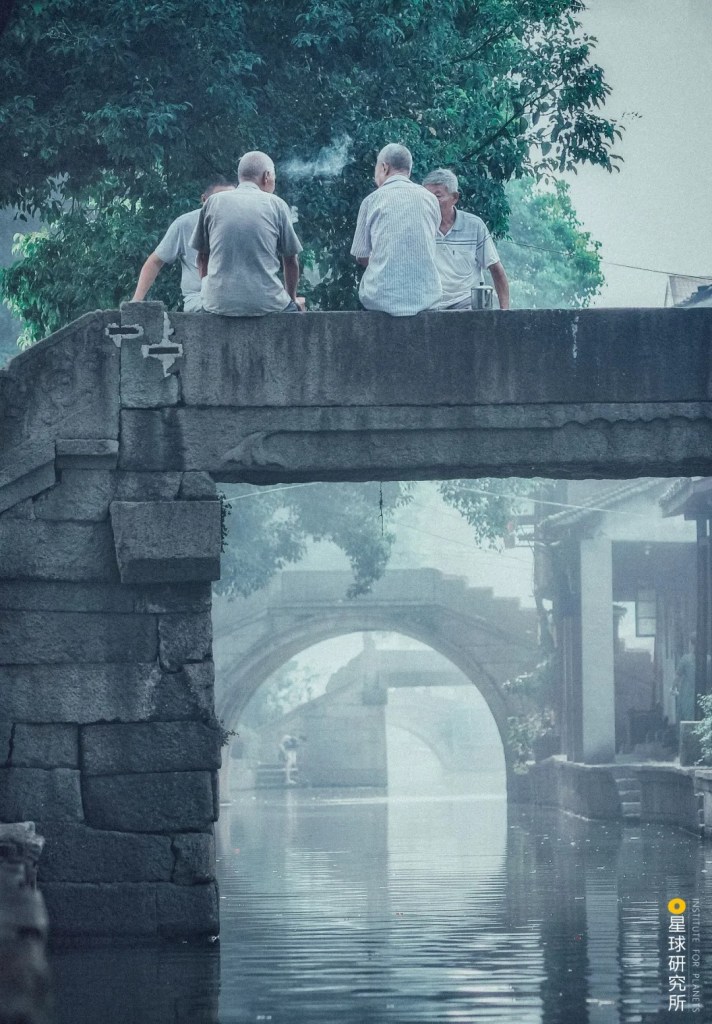
Ancient bridges in Wuzhen, Jiaxing, Zhejiang
(photo: 李力群)

For this purpose, bridges adopt diverse appearances in different natural environments.

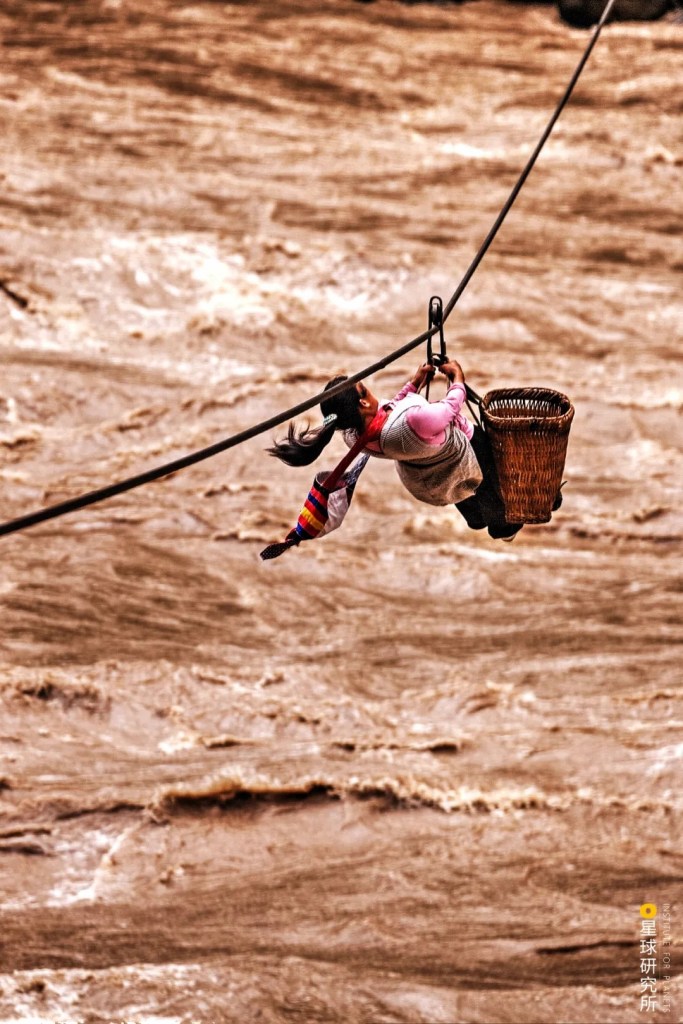
In southwest China, ropes or metal chains hanging across the deep valleys and raging torrents are the best tools to cross a river. To do so, one simply needs to cling onto the suspended cable and slide along it. This is the zip-wire bridge (索桥).

A single-pulley zip wire on Nu River near Liuku Village in Lushui County, Nujiang Lisu Autonomous Prefecture, Yunnan
(photo: 芮京)

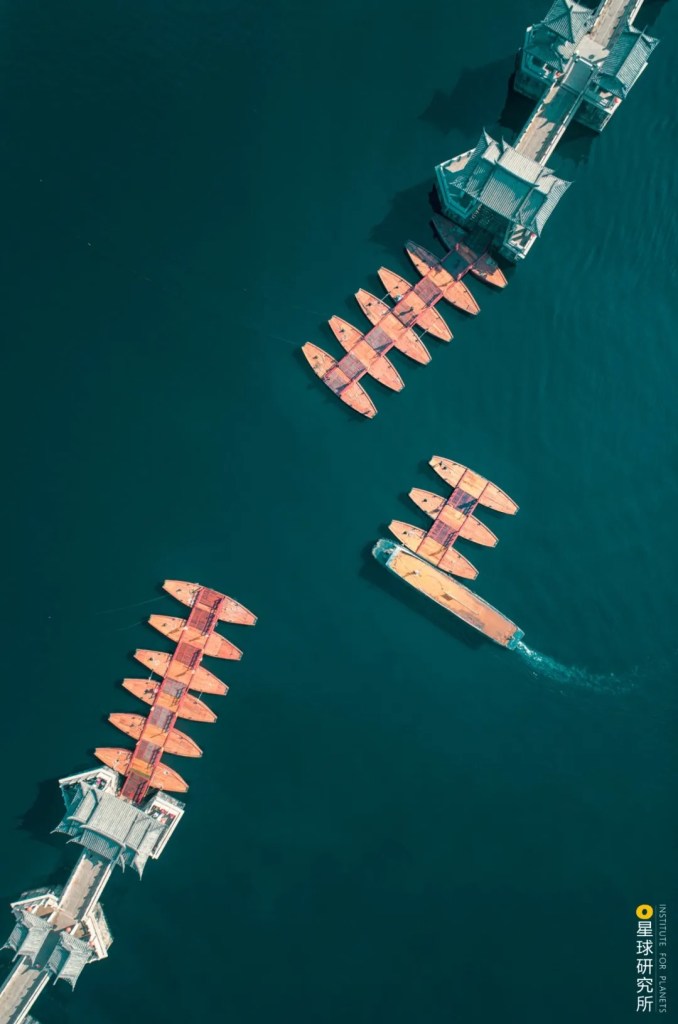
Where currents are more calm, people bundle up boats in a line to reach the opposite bank. These bridges supported by buoyancy are known as pontoons (浮桥).

Guangji Bridge in Chaozhou, Guangdong
This bridge was first built as a pontoon in 1171 during the Southern Song dynasty. Today it is a pontoon-beam bridge complex, where the pontoon section can be opened up to allow passage of large ships
(photo: 林宇先)

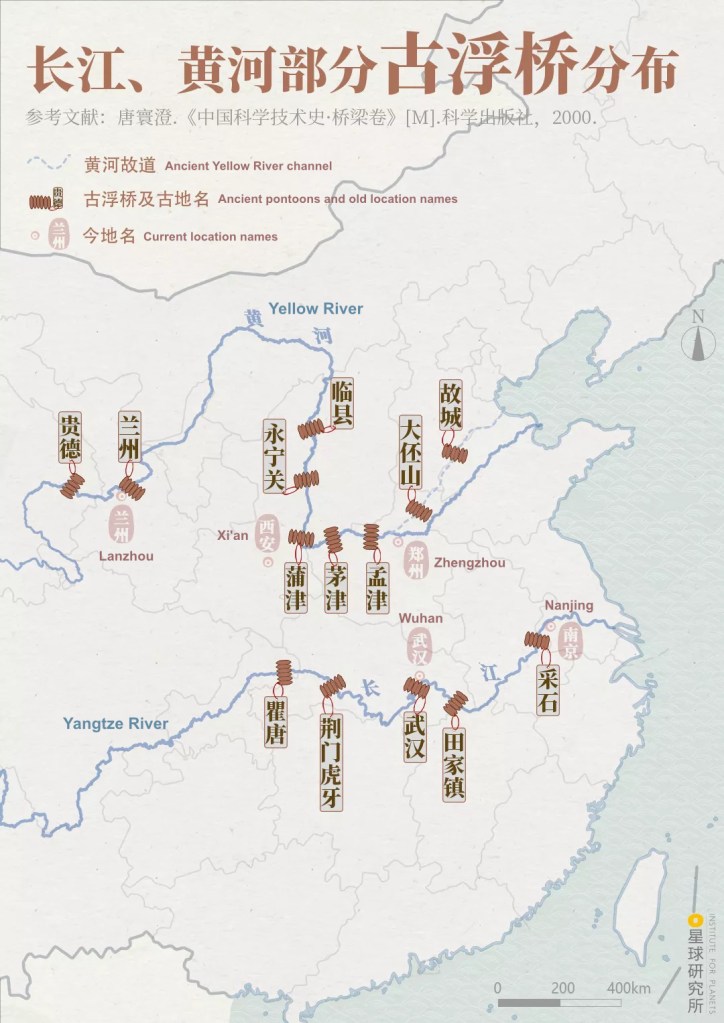
Even before the advent of steel and concrete, pontoons were capable of forging a path for pedestrians across the giant rivers in China including the Yangtze River and Yellow River.

Historical pontoons along the Yangtze and Yellow Rivers
These pontoons do not exist any more
(diagram: 陈志浩, Institute for Planets)

The forms of bridges also change accordingly as rivers with vast surface and deep channels constrict into rivulets and brooks. Instead of having pontoons and zip wires, beams are more popularly used as the major structural support for bridges here. Some make use of a log of wood, others lay down a piece of rock. These are the beam bridges (梁桥).

A rock bridge on Tianping Mountain, Suzhou
(photo: 赵永清)

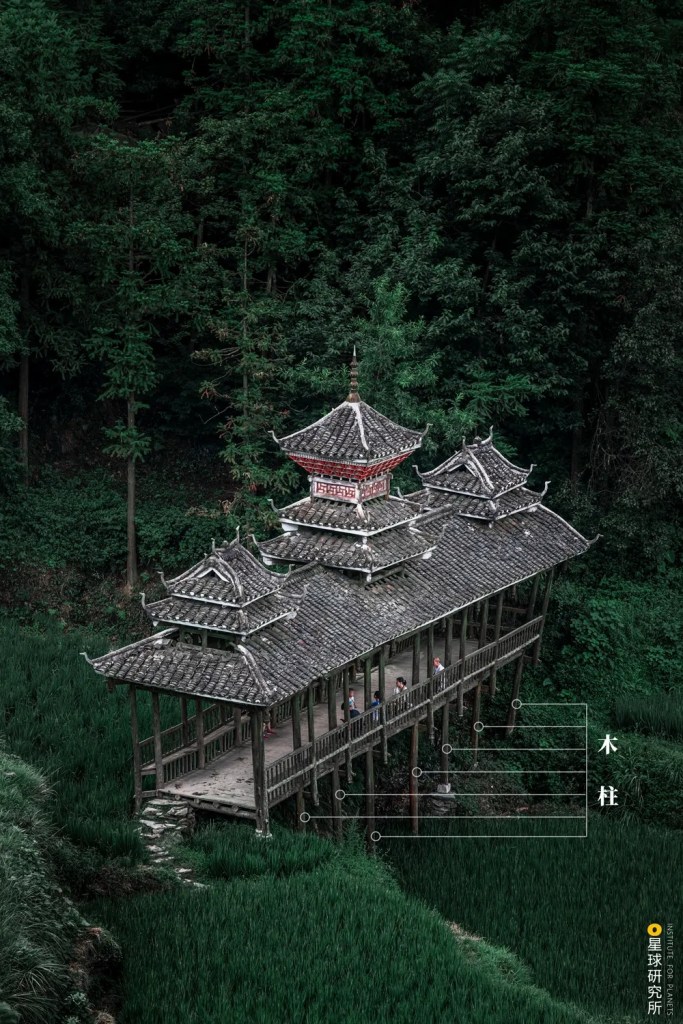
Compared to hard rocks, timber is easier to process and therefore became the most favourable construction material for bridges in ancient times. Our ancestors used mortise and tenon joints to assemble timber and construct wooden beam and pier bridges (木梁木柱桥).

Some of these bridges are supported by upright wooden pillars (木柱) as they take shelter in the thick woods.

Shouzhai Bridge in Tang’an Dong Village, Zhaoxing Township, Liping County, Guizhou
(photo: 陈俊宇)

Others stand on slanted wooden pillars while lighting up the tranquil village with flickering night lamps.

Hongji Bridge in Lishui, Zhejiang
Completed during the Ming dynasty, it is a classic slanted-pillar bridge
(photo: 卢文)

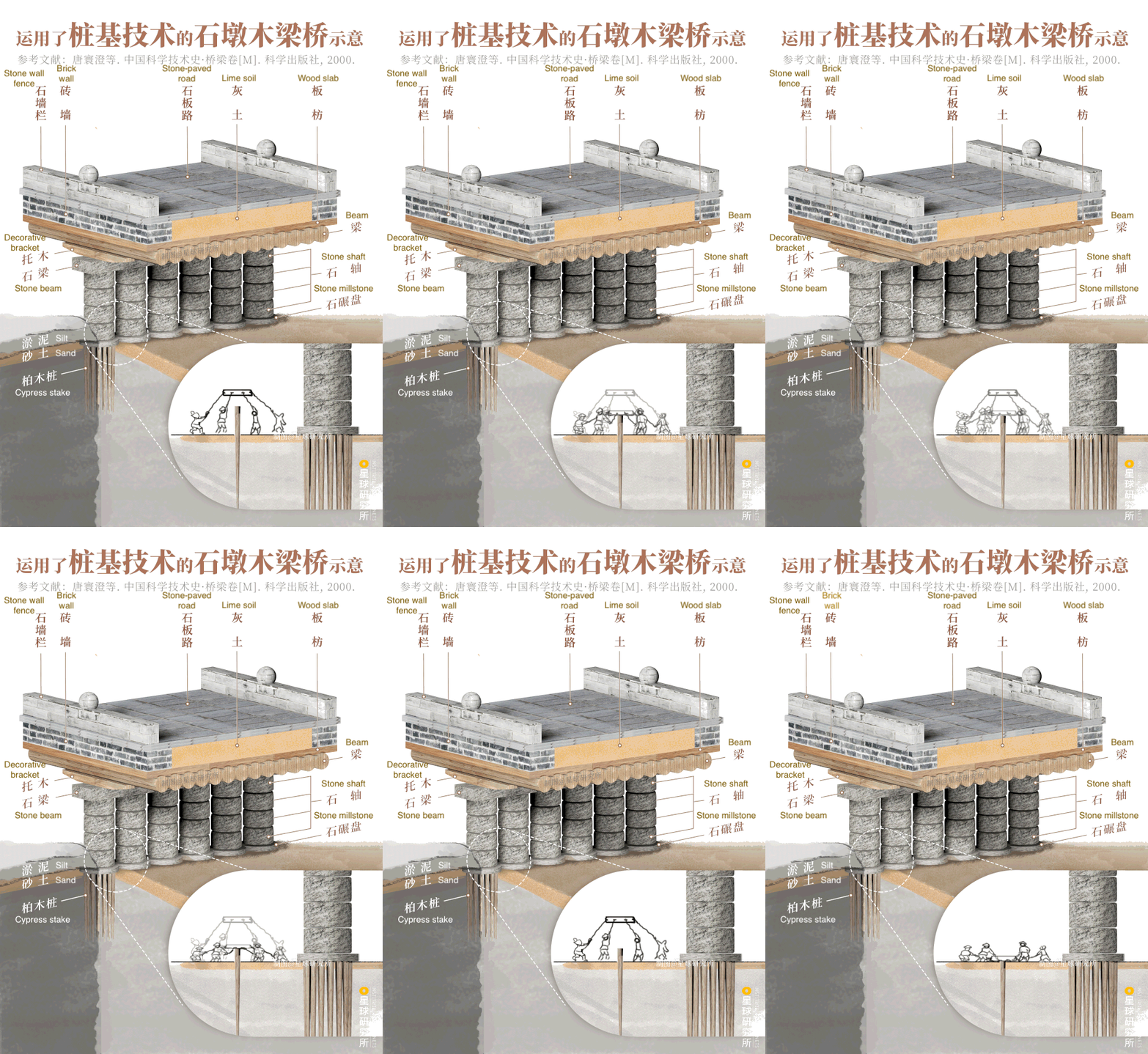
Wood, however, decays in water over time. Therefore, our ancestors switched to using stones to build more durable bridge pillars and created the stone pier-wooden beam bridges (石墩木梁桥). Since the Iron Age, they made remarkable breakthroughs in pile foundation technologies using ironware and stone in conjunction, which helped them nail the pillars firmly into the ground.

Construction of a “stone pier-wooden beam bridge” using pile foundation technology
(diagram: 王申雯, Institute for Planets)

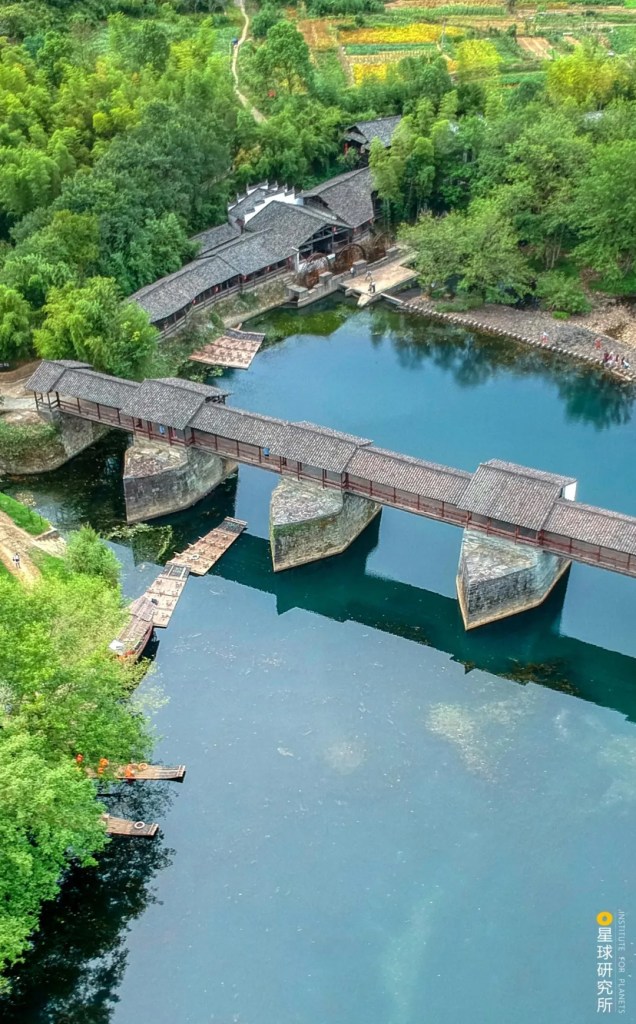
In order to stabilise these stone pier bridges in rivers, builders started constructing the piers with the shape of a boat, so that their pointy front can divert the impact of flowing water and strengthen the structure.

Rainbow Bridge in Wuyuan, Jiangxi
Built during Southern Song dynasty, the bridge was partially damaged by the flood this year
(photo: 王毅)

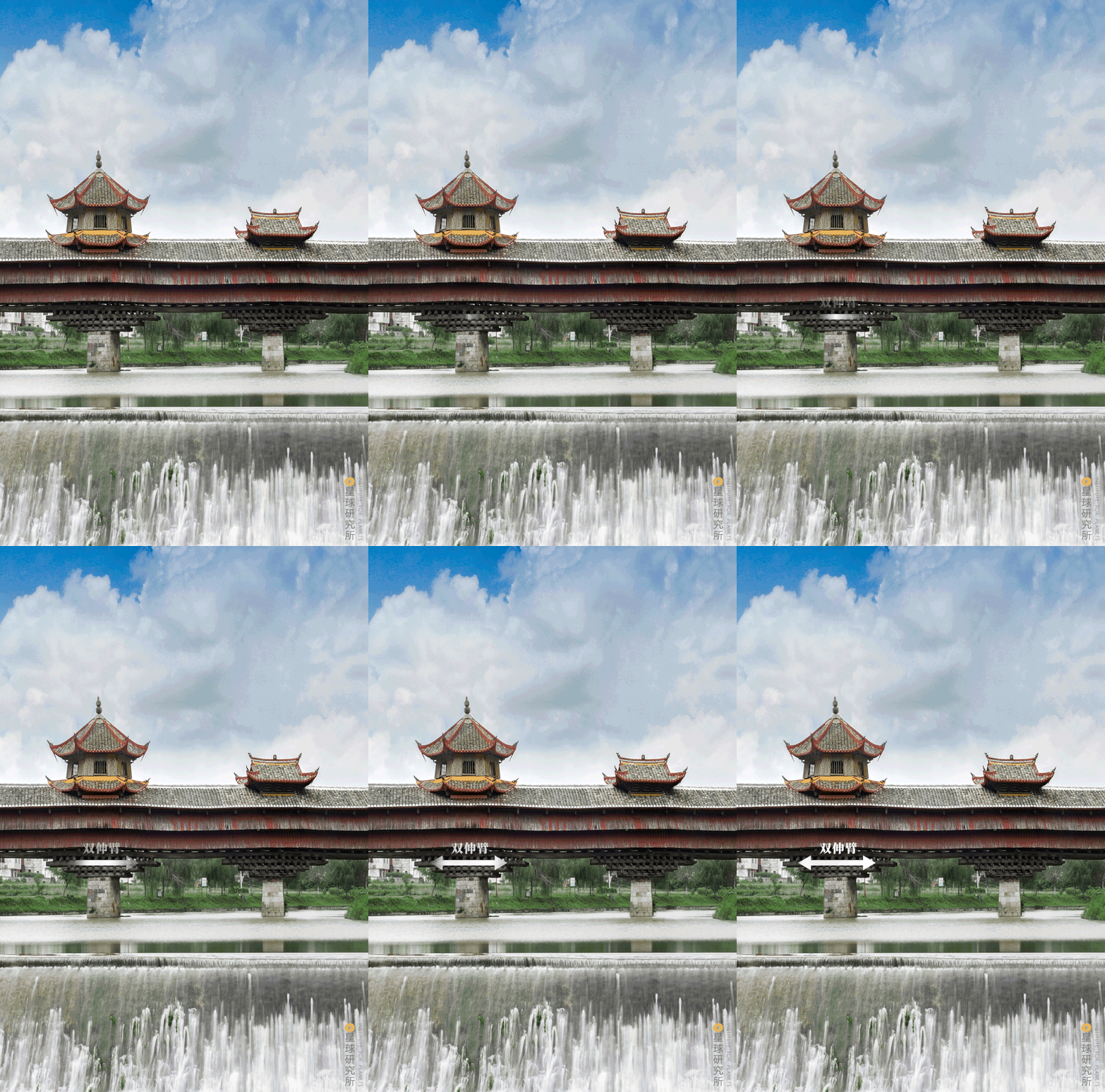
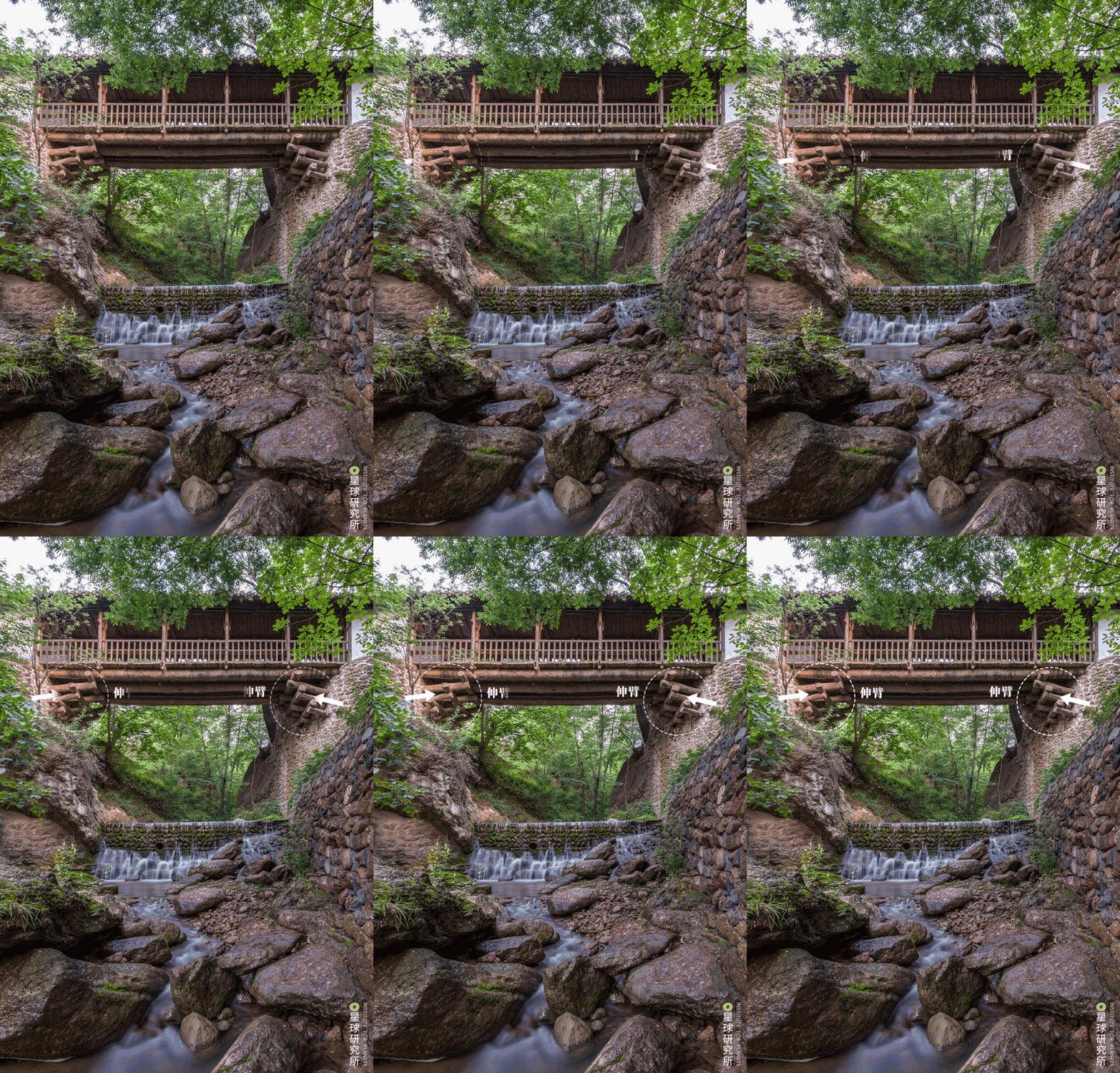
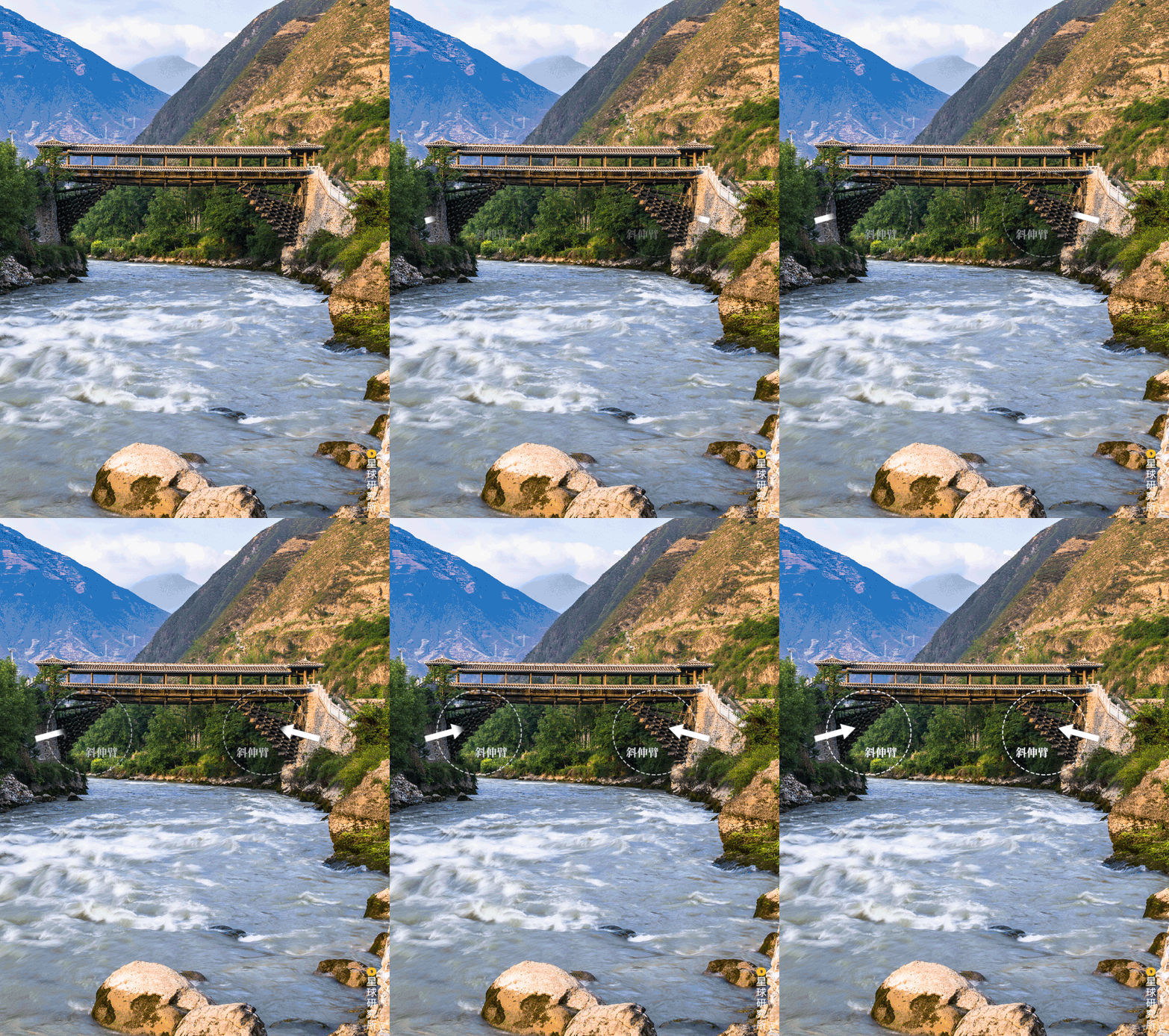
And to increase the span of wooden beam bridges on these stabilised stone piers, builders created stacked wooden structures that stick out like an arm with extended interdigitating members. These are called cantilever beam bridges (伸臂梁桥).

In longer bridges, one may see such cantilever arms sticking out from both sides of the piers like a giant dougong (斗拱, interlocking wooden block and bracket) to support the bridge beam.

Yunlong Bridge in Liancheng, Fujian
It was built during the Qing dynasty
(photo: 刘艳晖)

In shorter ones that do not need piers, these cantilevers “grow” out from the river banks, either horizontally…

Longfeng Bridge in Tuanzhuang Village, Pingluo Town, Kang County, Gansu
(photo: 吴卫平)

…or with an angle.

Hezuohua Bridge in Shifang Village, Wen County, Gansu
(photo: 吴卫平)

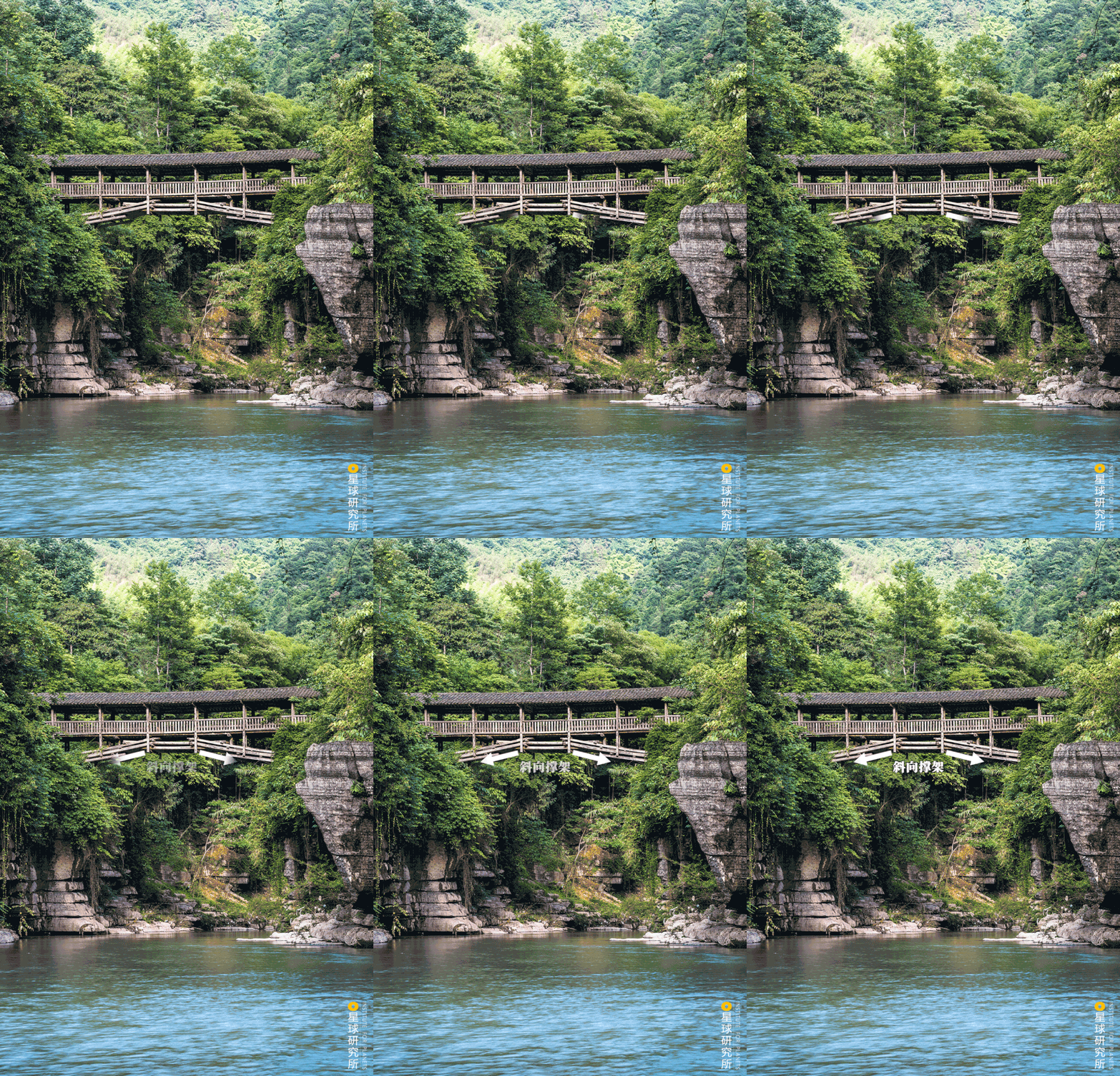
Apart from cantilevers, slanted supporting frames can also do the job.

Yongshun Bridge in Huaban Village, Maoba Township, Lichuan City, Hubei
(photo: 吴卫平)

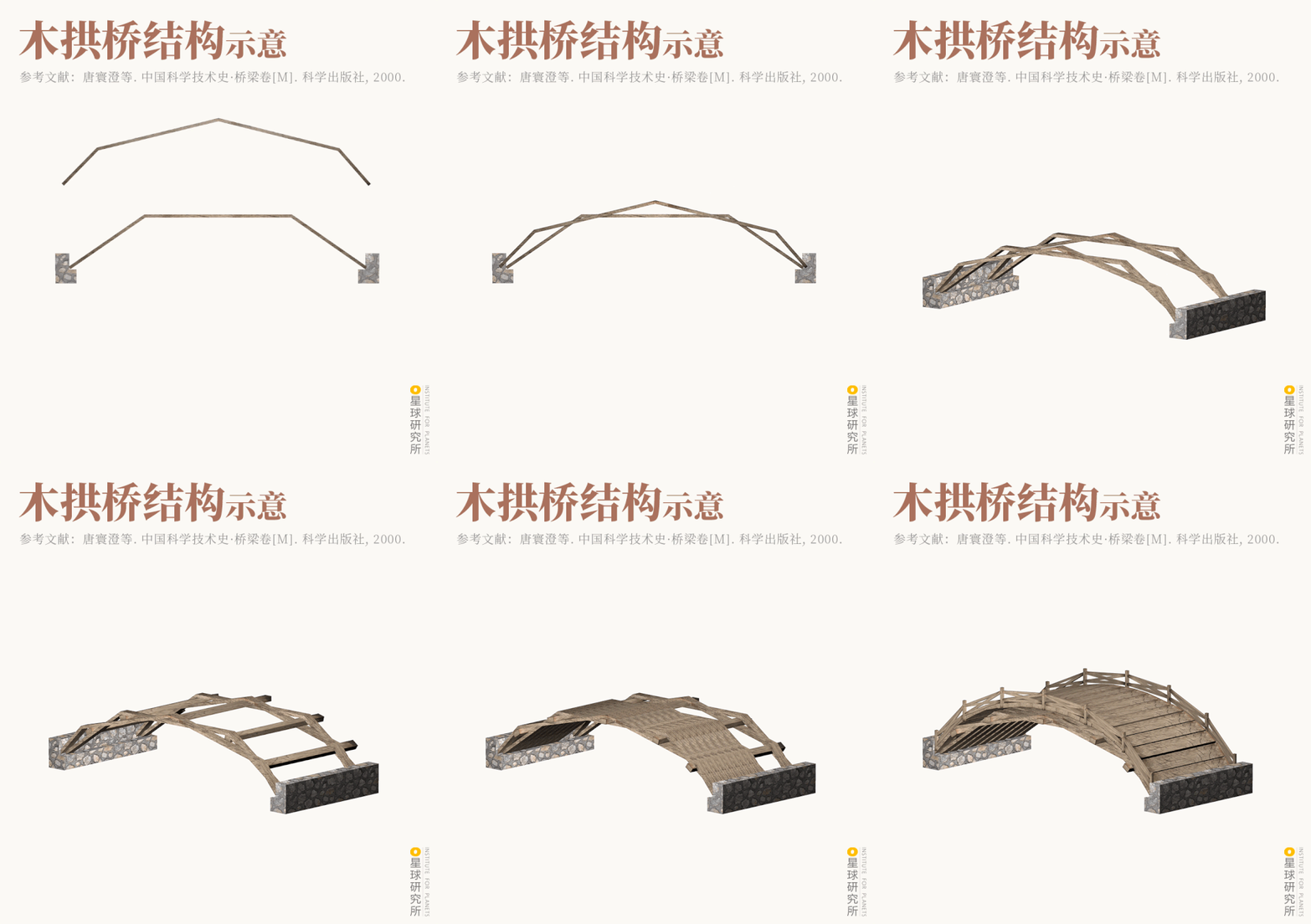
There is a unique member within the family of Chinese wooden bridges known as wooden arch bridge (木拱桥). It is tightly woven by multiple timber elements that are intersecting perpendicularly or in parallel.

Wooden arch bridge
(diagram: 王申雯, Institute for Planets)

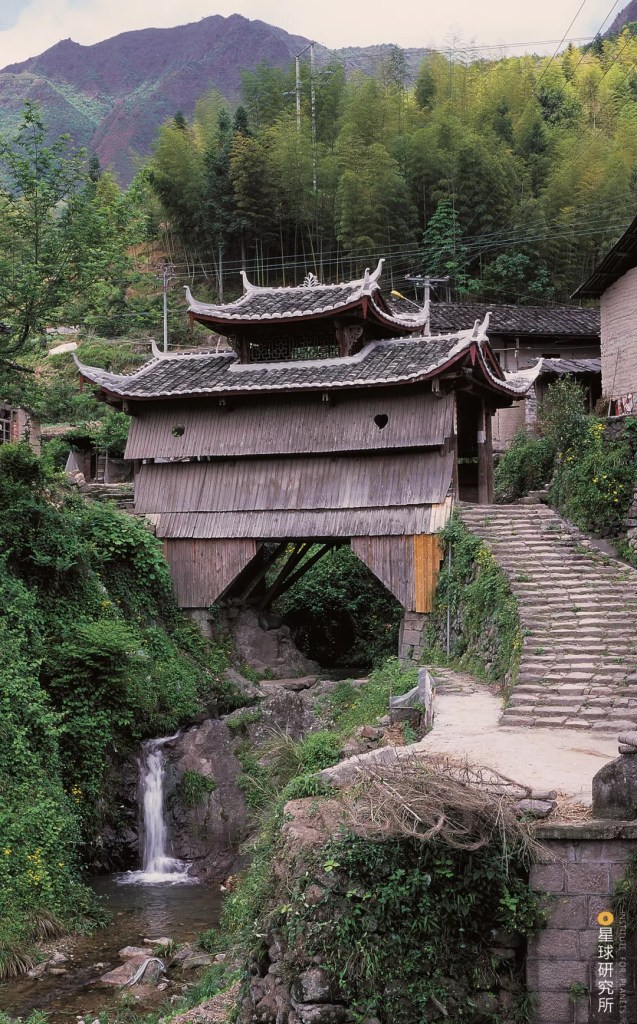
Until the 1970s it was still firmly believed that the technology for building such bridges had been lost and one could only reminisce about their elegance in the classic painting Along the River During Qingming Festival, but in fact, wooden arch bridges are pretty much alive and actively used across China.

Baiyun Bridge in Jushui Township, Qingyuan County, Lishui City, Zhejiang
It was built during the Ming dynasty
(photo: 吴卫平)

The Santiao Bridge in Taishun, Zhejiang, Gongxin Bridge in Gutian, Fujian, and Baling Bridge in Weiyuan, Gansu, are all famous members of the wooden arch bridge family.

An ancient wooden arch bridge in Houlong Village, Zhouning County, Ningde City, Fujian
(photo: 林祖贤)

The force structure and construction techniques of these bridges follow the same architectural style of the Bianshui Rainbow Bridge illustrated in Along the River During Qingming Festival.

Jielong Bridge in Laifeng County, Hubei
(photo: 吴卫平)

From wooden beam and pier bridges to stone pier-wooden beam bridges, and from cantilever bridges to wooden arch bridges, wooden bridges in ancient China had really explored every form possible. But due to the inherent characteristics of timber, their force structure was hitting a developmental ceiling and their diversity was plateauing off. Fortunately, this was around the same period when stone bridges began to emerge, which would then go hand in hand with wooden bridges to become the staple of Chinese bridges for the next thousands of years.

2. Stone bridges in the misty rains

As wooden bridges became widespread across ancient China, wooden beams on stone piers were gradually replaced with stone beams to build stone pier-stone beam bridges (石墩石梁桥). Stone beam bridges are usually straight as this makes them technically easier to build. They border the picturesque landscape and its mirror image almost like a dragon gliding on water.

A stone bridge in Jinyun County, Lishui City, Zhejiang
(photo: 赵永清)

There are nonetheless other forms of stone bridge that also make a perfect touristic landmark with multiple twists in the structure.

Nine-turn Bridge in the snow, Yu Garden, Shanghai
(photo: 石天金)

Where boats needed to pass through, builders would elevate the entire main span to make way.

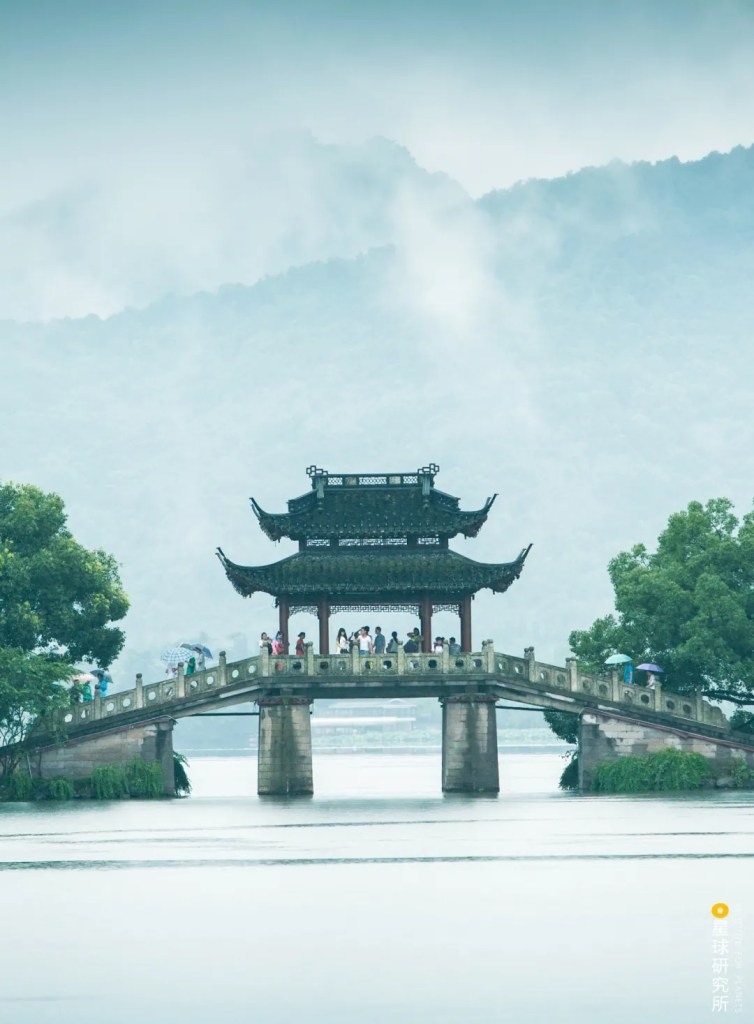
Jade Belt Bridge on the West Lake, Hangzhou
(photo: 胡寒)

Stone beam bridges display highly advanced construction technology and impressive spans never seen before their era, thanks to the exclusive use of stones guided by our ancestors’ wisdom and meticulous skills.

Luoyang Bridge, the oldest sea-crossing bridge in China, is also a stone beam bridge. It stands out because of the technology used to build it. When the bridge piers were completed, builders started to cultivate oysters around the foundation submerged in water. This allowed the colloidal body fluid secreted by the oysters to glue the stones together and stabilise the bridge foundation, a technique way ahead of its time around the globe.

Luoyang Bridge in Quanzhou, Fujian
It was completed in Northern Song dynasty
(photo: 雾雨川)

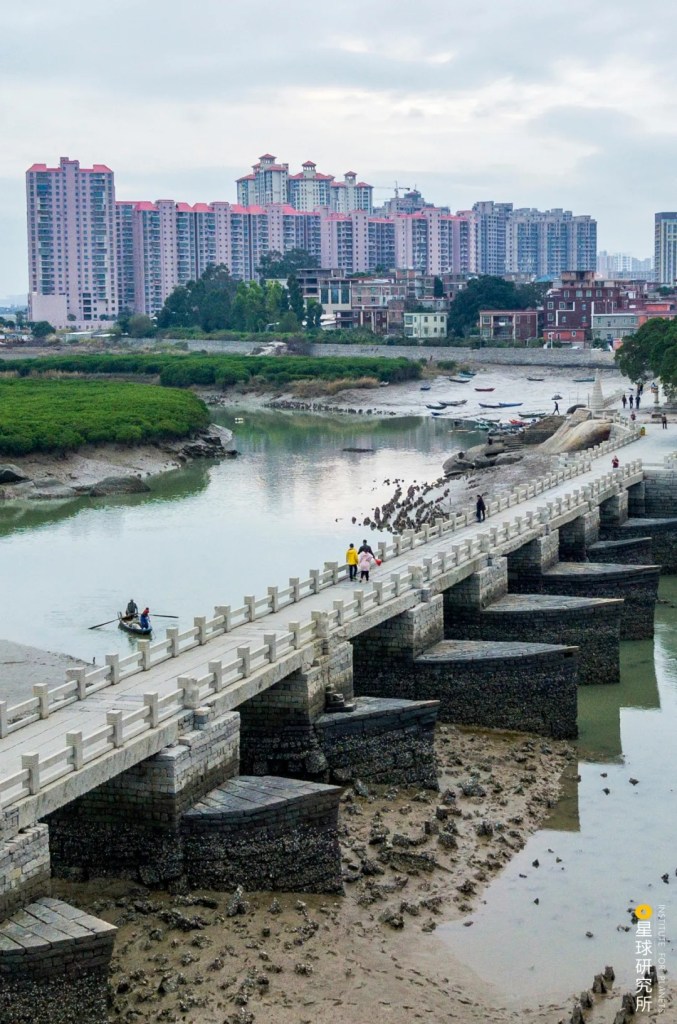
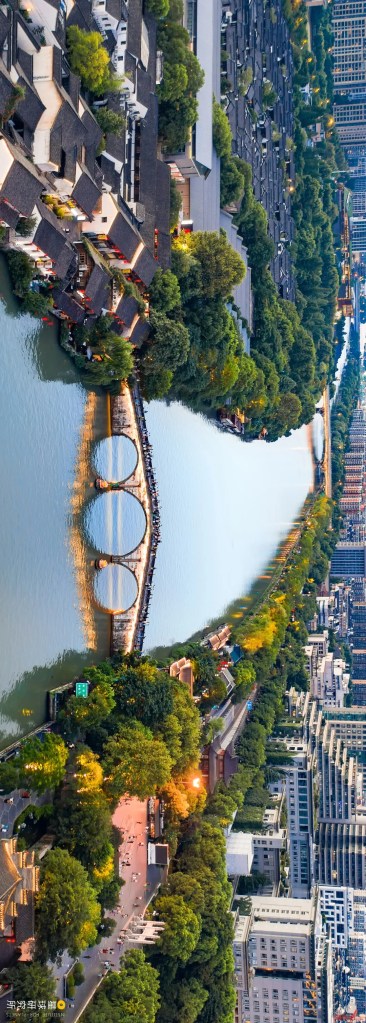
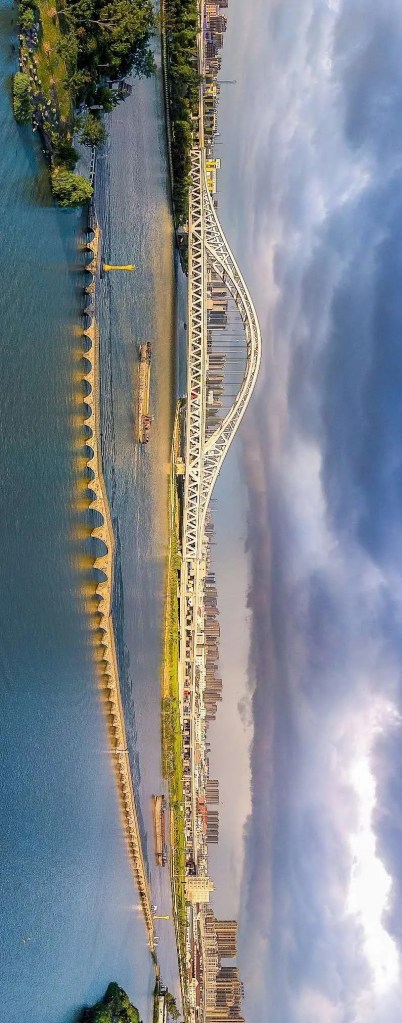
Anping Bridge, the longest existing ancient bridge in China, is also a stone beam bridge. Stretching 2255 metres across, it is 2.25 times as long as the Luoyang Bridge, and hence was praised as the “bridge with unmatched length under heaven (天下无桥长此桥)”. The bridge was so long that the builders actually built 5 pavilions along it so that pedestrians may take a rest from the lengthy walk. As a Qing poet had beautifully described,

白玉长堤路,乌篷小画船

A long embankment road of white jade,
a little sailing boat with black awning
.

Anping Bridge in Quanzhou, Fujian
It was completed in Southern Song dynasty
(photo: 姜青芳)

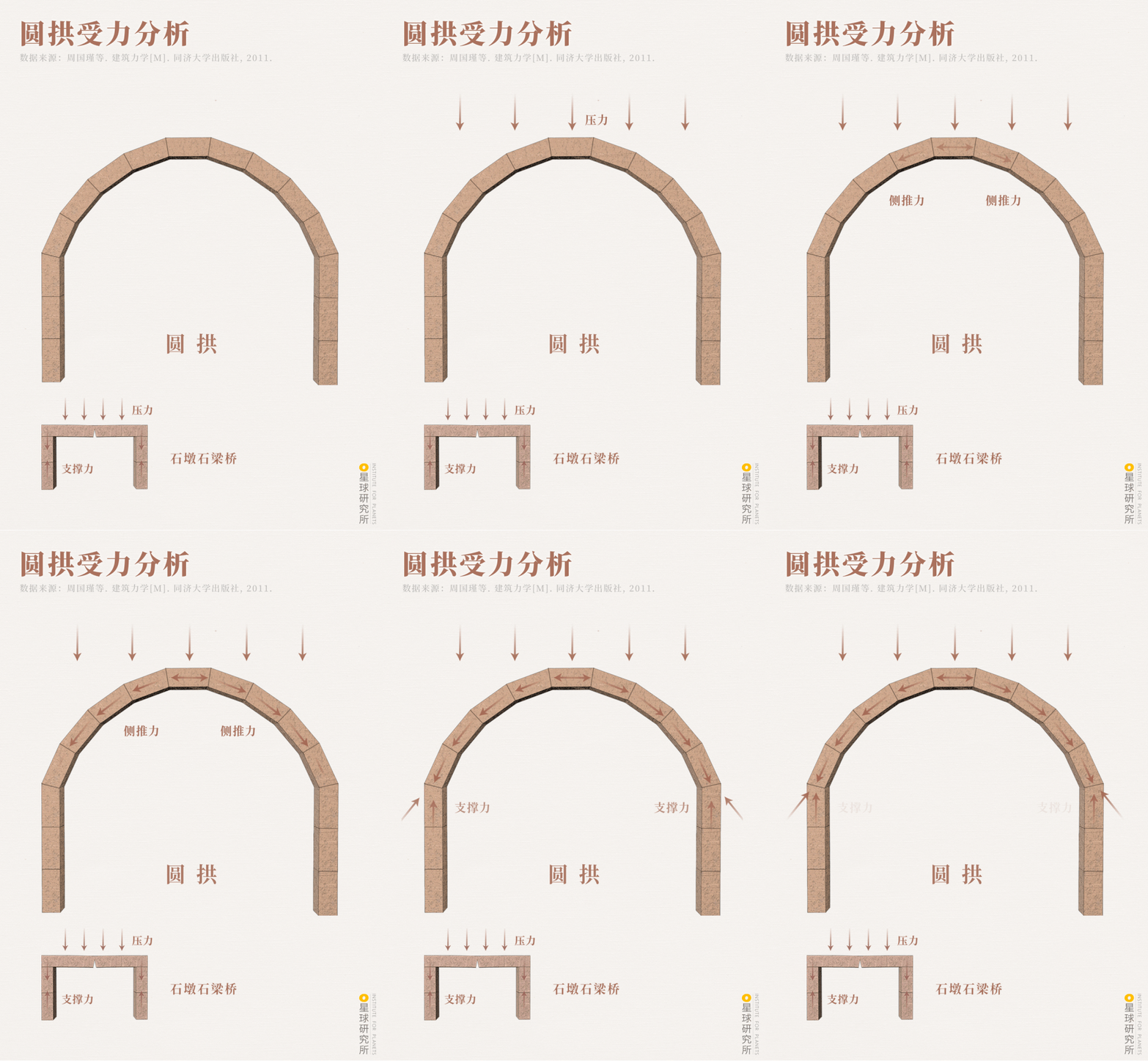
However, our ancestors gradually realised that straight and horizontal stone bridges struggled to stay strong over time, as the beams often started to fracture from the middle. They therefore replaced the stone beam with an arch to convert the vertical load into side thrust and avoid breakage of the beam. These are known as stone arch bridge (石拱桥).

Force analysis of an arch structure (圆拱)
(diagram: 陈随&王申雯, Institute for Planets)

Single-arch stone bridges are particularly common in the south. In the extremely elaborate canal system here, bridges are often interconnected or densely juxtaposed.

Bridges in Anchang Ancient Town in Zhaoqing, Zhejiang
(photo: 卢文)

Due to the immense shipping demand, arch bridges in the south are always built with a tall arch. It is always a delight to punt through the mottled stone bridges and be lost in the emerald nature of these canal towns.

Yong’an Bridge in Xikou Village, Ningde, Fujian
(photo: 林文强)

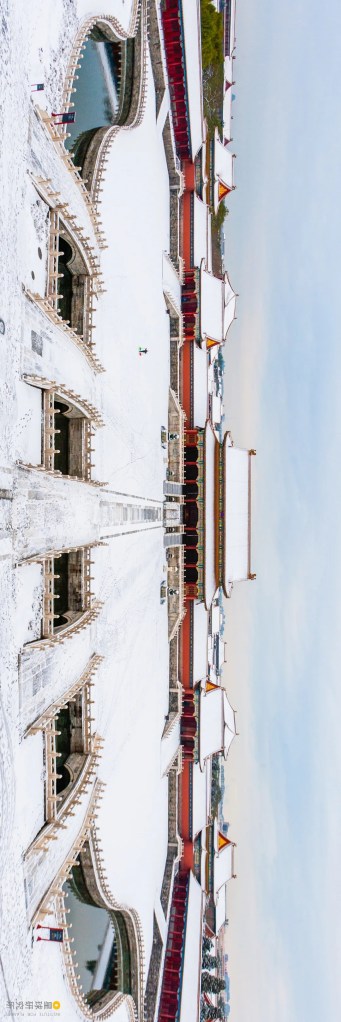
In contrast to the arch bridges in the south, those in the north are less tall and appear dull and weighty. The best example has to be the largest and grandest stone arch bridge set across the Inner Jinshui River within the Forbidden City in Beijing. If Inner Jinshui River were a full-drawn bow, the five parallel stone arch bridges crossing the river would be nocked arrows ready to strike. Plain and straight.

Inner Jinshui River Bridge in Forbidden City, Beijing
It was completed in Ming dynasty
(photo: 柳叶氘)

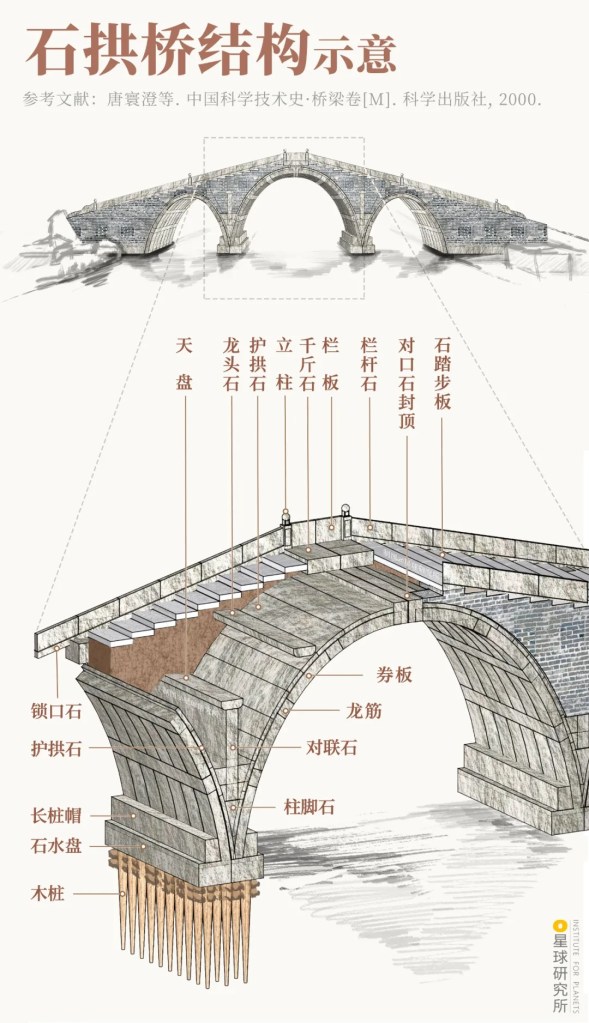
Although stone arch bridges appeared quite late, it immediately became a mainstream for bridge architecture and is still so among the currently existing ancient bridges. Thanks to the construction techniques inherited from stone beam bridges, the tool box for building a stone arch bridge was already quite comprehensive to begin with.

Intricate structure of a stone arch bridge
(diagram: 王申雯, Institute for Planets)

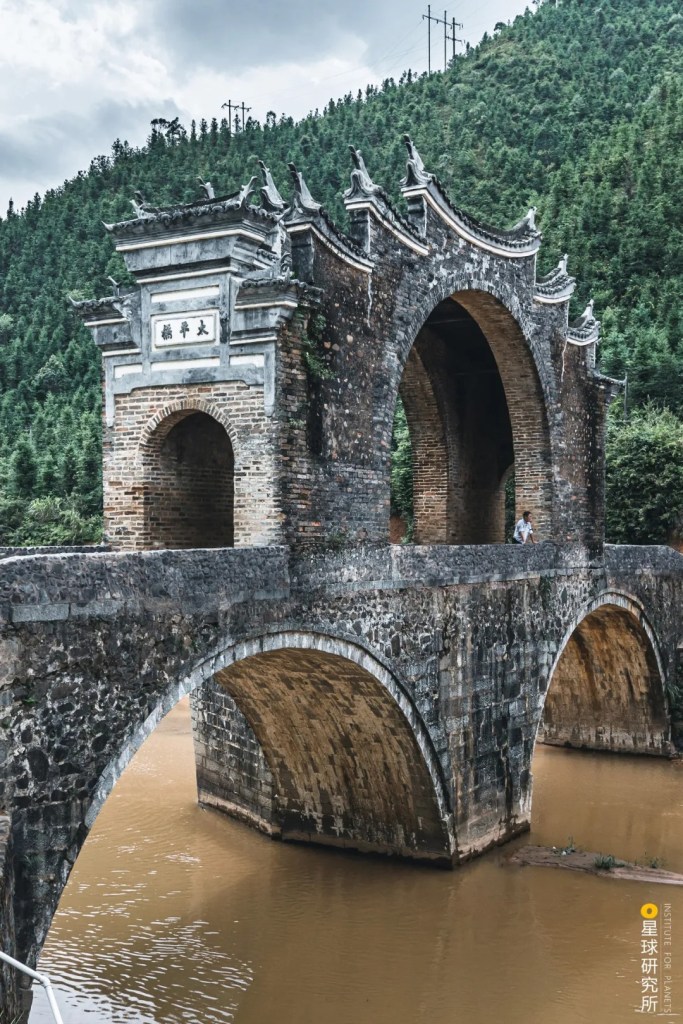
One can always add additional arches to the structure and make a multi-arch stone bridge (联拱石桥). A classic example of a double-arch stone bridge is the Taiping Bridge in Jiangxi, which has an extra arch on the bridge deck. The unique aesthetics of this bridge is further showcased by the layered roof tiles and ridges that curve upwards to the sky.

Taiping Bridge in Ganzhou, Jiangxi
It was built in late Ming dynasty
(photo: 米兰的视界)

There are also triple-arch stone bridges, including the Ying’en Bridge in Wudang Mountain, Hubei, and Gongchen Bridge in Hangzhou.

Gongchen Bridge in Hangzhou
(photo: 江南君)

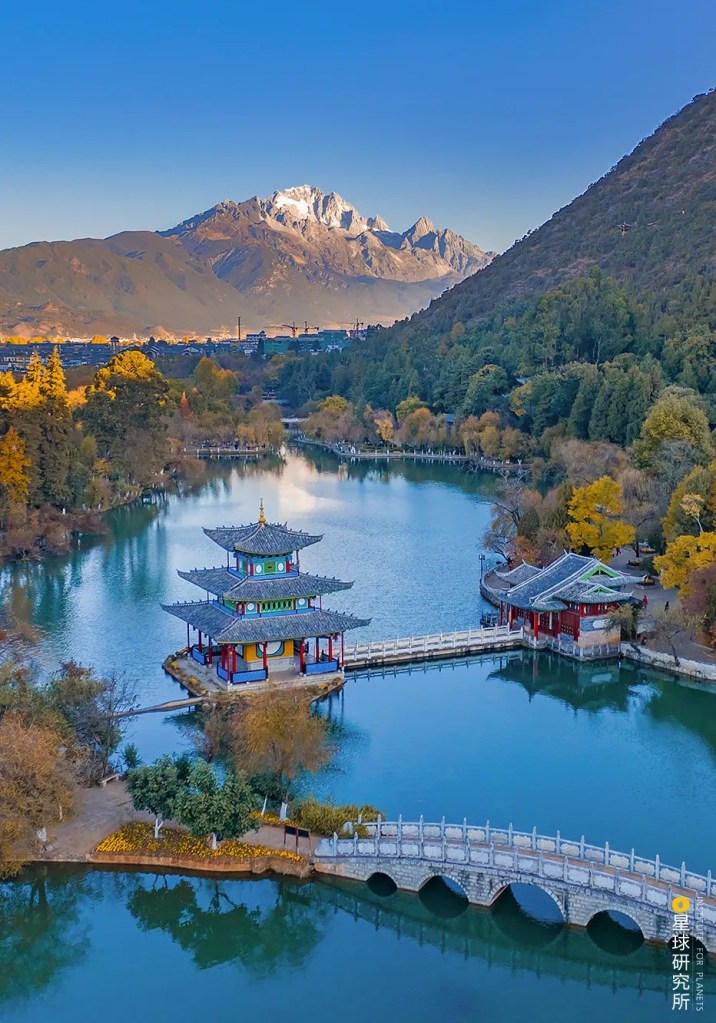
Some bridges have five arches connected together, such as the Jimin Bridge in Ru’ning, He’nan, the water gate of Huangya Pass of the Great Wall in Ji County, Tianjin, as well as the Five-hole Bridge on the Black Dragon Pool in Lijiang, Yunnan, which sits in front of the Jade Dragon Snow Mountain.

Five-hole Bridge on the Black Dragon Pool in Lijiang, Yunnan
(photo: 刘珠明)

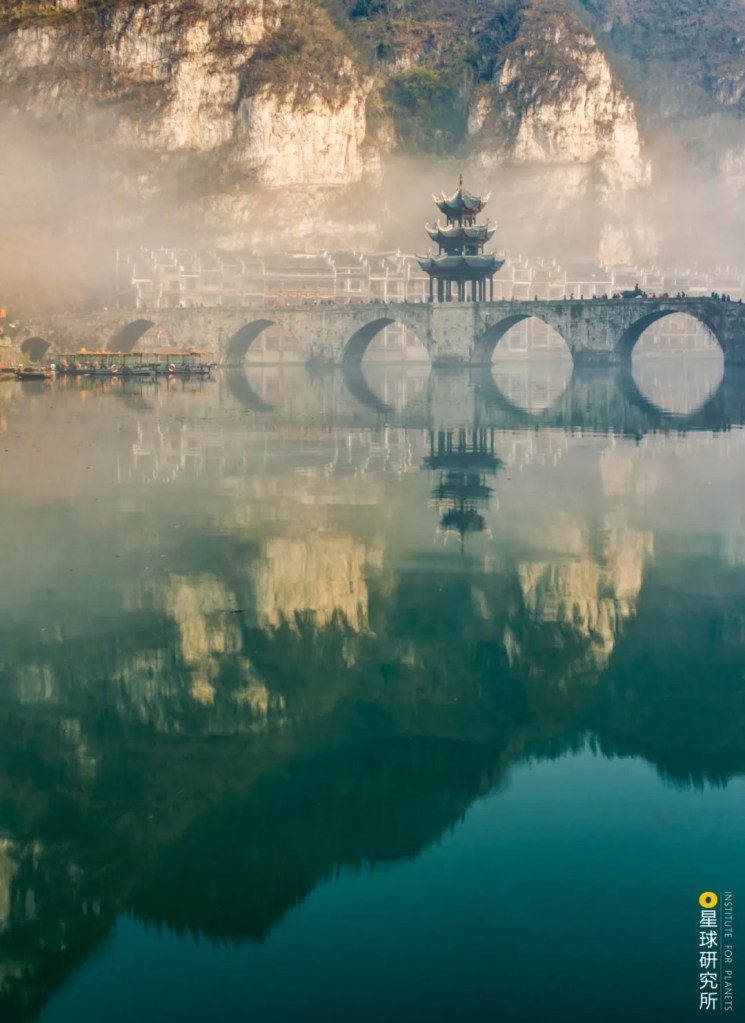
Others have six arches, like the Zhusheng Bridge that leans on karst landforms unique to Guizhou.

Zhusheng Bridge in Zhenyuan Ancient Town, Guizhou
It was completed in Ming dynasty
(photo: 李云鹏)

To go even further, the Lugou Bridge (also known as Marco Polo Bridge) has eleven arches, while the Seventeen-hole Bridge in the Summer Palace in Beijing and the Double Dragon Bridge in Jianshui, Yunnan, both have seventeen arches.

Seventeen-hole Bridge in the Summer Palace, Beijing
Completed during Qianlong’s rein in Qing dynasty, it is the largest stone bridge in the Summer Palace
(photo: 清心草)

And let us not forget the 53-arch Precious Belt Bridge in Suzhou.

Precious Belt Bridge in Suzhou, Jiangsu
Completed in Tang dynasty, the construction work was supervised by Wang Zhongshu, the then Suzhou governor; some say the bridge was named after Wang’s precious belt which he donated to make up for the construction cost, the other version of the story tells that bridge was named so because of its resembling appearance
(photo: VCG)

Stone arch structures can be further enhanced with additional arches on the shoulders of the main arch. We call these open-spandrel arch bridges (敞肩拱桥).

A modern bridge in the Tiger Leaping Gorge
Open-spandrel arch technologies are still widely used today for reinforced concrete bridges
(photo: wzkdream)

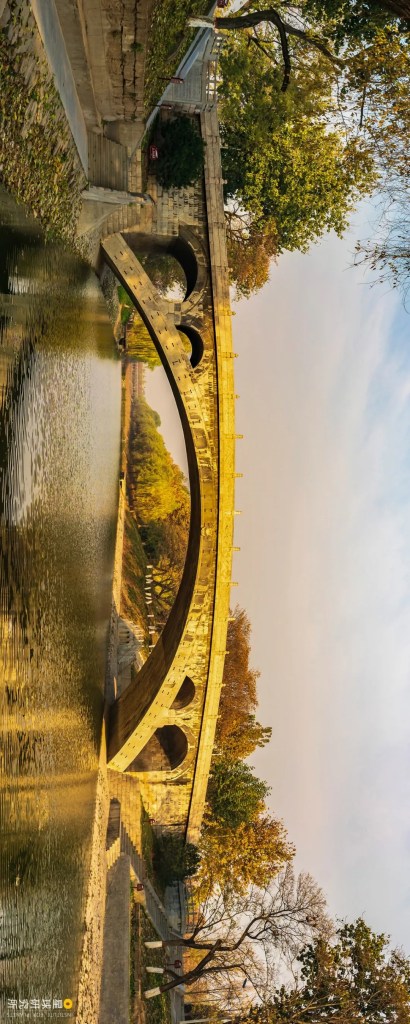
The open spandrel design not only saves construction material and reduces self weight, it also facilitates flood discharge through the bridge body and stabilises the structure. Anji Bridge, the oldest open-spandrel arch bridge in the world completed back in Sui dynasty (581-618 AD), is still standing intact today having survived 10 major floods, 8 wars and numerous earthquakes. It is truly an everlasting wonder in the history of Chinese bridges.

Anji Bridge, also known as Zhaozhou Bridge, in Zhao County, Shijiazhuang, Hebei
(photo: 石耀臣)

3. The fusion of mechanics and aesthetics

From wood to stone, and further on to open-spandrel designs, Chinese bridge builders in the old times had been progressively striving for perfection in their applied mechanics and skills. Constructing a bridge had also transitioned from a mere engineering project into landscape creation.

Indeed, the best known lake views in China are never short of adorning bridges.

泠泠寒水带霜风,更在天桥夜景中

The icy stream burbles in the frosty wind,
all dissolved in the scenery of the evening bridge.

杜牧《洛阳秋夕》
Autumn evening in Luoyang by Du Mu
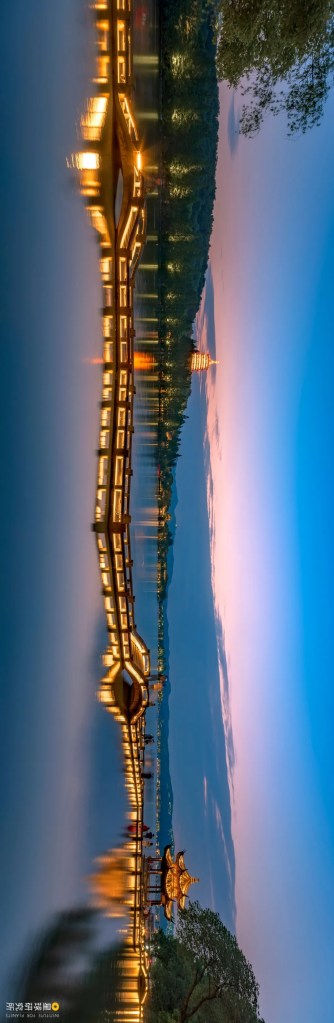
Long Bridge on West Lake, Hangzhou
(photo: 张圣东)

Even the most precipitous cliffs are accompanied by them.

千丈虹桥望入微,天光云影共楼飞

Atop the thousand-feet rainbow bridge every detail comes into view,
alongside the clouds the tower soars in the daylight hue.

苍岩山石刻
Stone inscription on Mount Cangyan
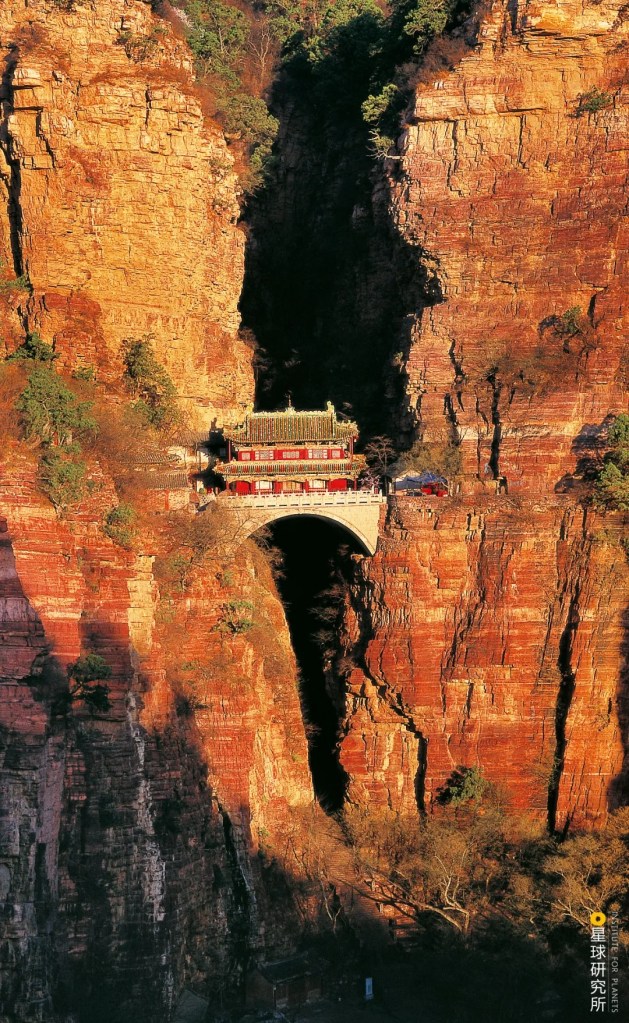
Bridge-tower Hall on Mount Cangyan in Jingxing County, Hebei
(photo: 吴卫平)

In the Jiangnan gardens, a strong and practical design was no longer the only pursuit of bridge builders. Instead, they sought to recreate the beauty of nature with stones.

虽由人作,宛如天开

A creation by hand, yet a gift from the heavens.

Wanlang Bridge in Yuantouzhu, Lake Tai, Jiangsu
Yuantouzhu is famous private garden, where Wanlang Bridge is the key decoration of Lake Tai
(photo: 朱金华)

All these sceneries have left visitors with fond memories, and poets were more than generous with their words of compliment.

Buying Bridge in Shanggantang Village, Jiangyong County, Hunan
It was completed in Ming dynasty
(photo: 邓飞)

The poetic phrase “narrow bridge and quiet brooks” has even become the symbol of Jiangnan landscape. Even the Tang poet Bai Juyi was struggling to forget the mesmerising sight in his dreams.

扬州驿里梦苏州,梦到花桥水阁头

In the Yangzhou station I dreamt about Suzhou,
about her Flower Bridge and her waterside pavilion.

白居易《梦苏州水阁 寄冯侍御》
Waterside Pavilion of Suzhou in the Dream – to Official Feng by Bai Juyi
Jade Belt Bridge on West Lake, Hangzhou
(photo: 朱露翔)

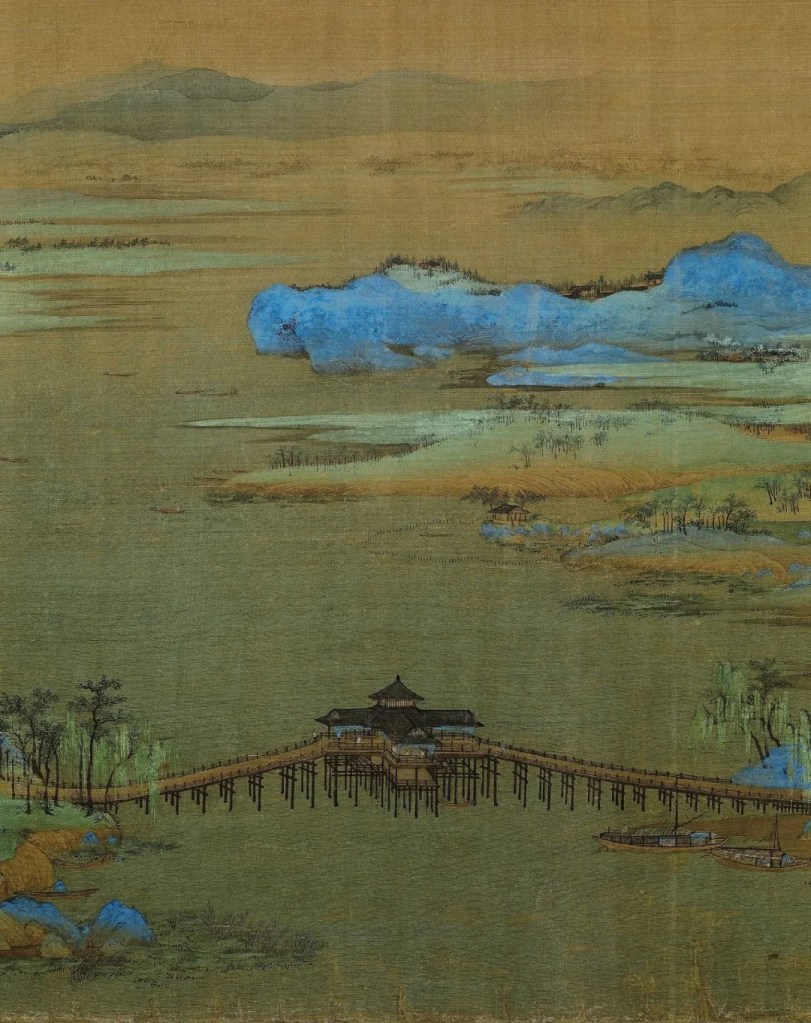
These sceneries were also depicted in classic landscape paintings, including the Pavilion of Prince Teng, A Thousand Li of Rivers and Mountains, Competition on the Jinming Pool, and many others. These paintings often come alive with the presence of an elegant ancient bridge.

A section of A Thousand Li of Rivers and Mountains
This work of court painter Wang Ximeng in Northern Song dynasty is now kept in Forbidden City Museum

But bridges are more than just a scenery, they are a witness of change. They had seen the countless heartbroken poets bidding farewell with dearest friends, they had heard the many tears shed and the saddening departures spoken of. No wonder the indelible lines of the famous poem Maple Bridge at Night are cherished by many till this day.

History has also left its heavy marks on bridges. The Lugou Bridge (Marco Polo Bridge) reminds of the outbreak of the Second Sino-Japanese War, whereas the Luding Bridge tells a thrilling story of the adventurous crossing by Red Army soldiers.

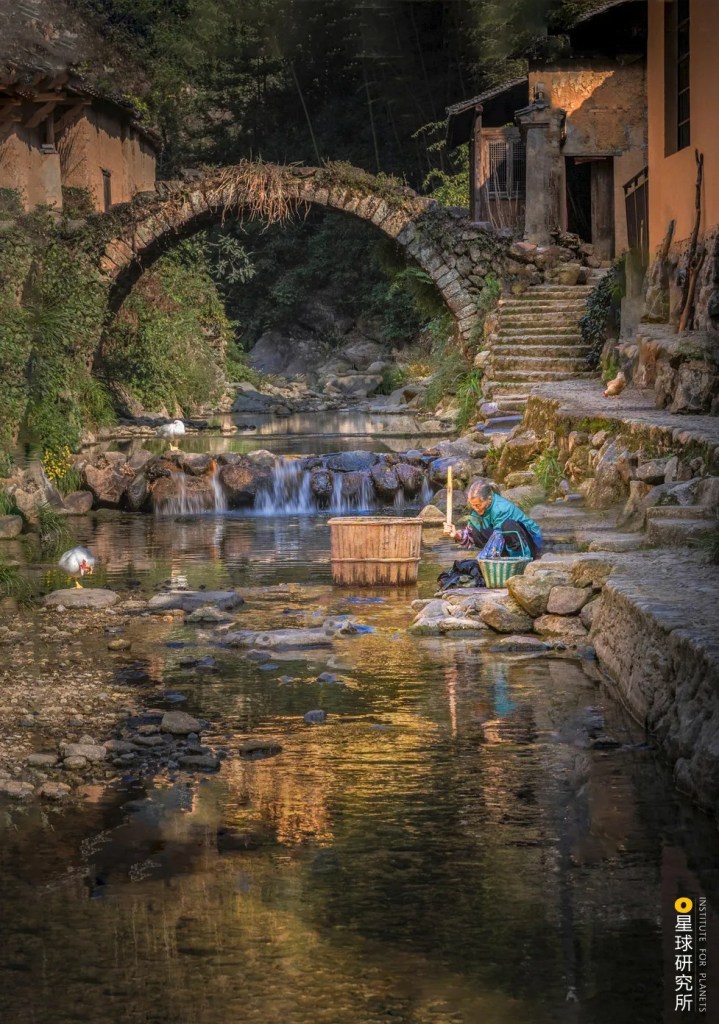
An ancient stone bridge in Songzhuang Village, Sandu Township, Songyang County, Lishui City, Zhejiang
(photo: 李伟林)

When recalled from mythic tales and folklores, ancient bridges are ever more charming. There is the Magpie Bridge where the Cowherd and Weaver Girl meet once a year, the Fallen Bridge where Xu Xian and Madame White Snake finally let go of each other, and the Bridge of Helplessness where the deceased are guided forth. There is also Weisheng the infatuated who was waiting to meet his lover on a bridge but eventually drowned in a flood just to keep his promise.

水来,我在水中等你;火来,我在灰烬中等你

When water comes, I will be there for you in the water;
when fire comes, I will be there for you in the ashes.

洛夫《爱的辩证》
Dialectic on Love by Luo Fu
A stone bridge on Slender West Lake in Yangzhou
(photo: 清溪)

Wipe away the vicissitudes one will sense deep affection in ancient bridges. This feeling sometimes pours out with great momentum…

长桥卧波,未云何龙?
复道行空,不霁何虹?

How can there be a hovering dragon in a cloudless sky? It is but a crouching bridge atop the tide.
How can there be an arching rainbow on a rainless day? It is but a dangling corridor between pavilions.

杜牧《阿房宫赋》
Rhapsody on the Efang Palace by Du Mu
Taiping Bridge in She County, Huangshan, Anhui
(photo: 堂少)

…other times it seeps out as troubled weeps.

细水涓涓似泪流,日西惆怅小桥头

A tiny brook flows by like a stream of tears,
the setting sun sighing over the end of bridge.

白居易《小桥柳》
Willow by the Small Bridge by Bai Juyi
Humble Administrator’s Garden in Suzhou, Jiangsu
(photo: 方托马斯)

It may be a grieve recollection…

伤心桥下春波绿,曾是惊鸿照影来

The green ripples below the mournful bridge
wavers a reflection of the beauty that once was.

陆游《沈园二首·其一》
Two Sets on Shen Garden: Set One by Lu You
Jindeng Bridge in Suzhou, Jiangsu
(photo: 赵永清)

…or a joyful outing.

水底远山云似雪,桥边平岸草如烟

Distant mountains in the water are surrounded by snowy clouds,
flat banks by the bridge are blanketed with foggy grass
.

刘禹锡《和牛相公游南庄醉后寓言戏赠乐天兼见示》
An optimistic fable and revelation while drunk during a trip to Nanzhuang with Niuxianggong by Liu Yuxi
A stone arch bridge in Qingshuitang Village, Gaoluo Township, Xuan’en County, Hubei
(photo: 文林)

It stages the reluctant partings…

从来只有情难尽,何事名为情尽桥

There have only been friendships that never end,
why should the bridge be named “friendship ends”.

雍陶《题情尽桥》
On the Bridge of Ending Friendship by Yong Tao
Sisters Bridge in Mianyang, Sichuan
(photo: 吴卫平)

…as well as the resolute journeys.

水从碧玉环中去,人在苍龙背上行

Water flows past through the jasper rings,
men move forward on the dragon’s back.

出自刘百熙的对联
A couplet by Liu Baixi
A farmer crossing an old bridge with an ox in Wang Village, Duanxin Township, Wuyuan County, Shangrao, Jiangxi
(photo: VCG)

It returns every spring…

春来无处不春风,偏在湖桥柳色中

Warm breeze brushes all in spring,
yet it stays with the willow by the bridges on lake.

陆游《柳》
Willow by Lu You
Stone Lake in Suzhou
(photo: 伍敏君)

…while lingering in the past.

二十四桥明月夜,玉人何处教吹箫

As the moon shines on the Twenty-fourth Bridge,
where are you to teach the ladies play flute?

杜牧《寄扬州韩绰判官》
To Yangzhou Magistrate Han Chuo by Du Mu
Yati Bridge in West Lake, Hangzhou
(photo: 非渔)

Chinese ancient bridges — an accomplishment in engineering and the pursuit of landscaping ideals, a witness of change and a totem for affection, and on top of all, the flawless fusion of mechanics and aesthetics.


Production Team
Text: 李张子薇
Photos: 余宽、谢禹涵
Design: 王申雯
Maps: 陈志浩
Review: 撸书猫、张靖
Cover photo: 清心草

Expert review (in alphabetical order)
Prof Chen Baochun – School of Civil Engineering, Fuzhou University
Prof Li Yadong – School of Civil Engineering, Southwest Jiaotong University
Mu Xiangchun (Professor-grade senior engineer) – Beijing Municipal Engineering Design and Research Institute Co., Ltd.

Special thanks
China Communications Publishing & Media Management Co., Ltd.

References
[1]唐寰澄等. 中国科学技术史·桥梁卷[M]. 科学出版社, 2000.
[2]王俊. 中国古代桥梁[M]. 中国商业出版社, 2015.
[3]茅以升等. 中国古桥技术史[M]. 北京出版社, 1986.
[4]肖东发等. 古桥天姿——千姿百态的古桥艺术[M]. 中国出版社, 2015.
[5]中国公路学会. 中国廊桥[M]. 人民交通出版社股份有限公司, 2019.

… The End …

Institute for Planets
星球研究所
一群国家地理控,专注于探索极致风光

The Guangdong-HongKong-Macau Greater Bay Area

Original piece: 《粤港澳:造一个大大大大大大湾区!》
Produced by Institute for Planets (星球研究所)
Sponsored by 万科南方区域
Written by 成冰纪
Translated by Kelvin Kwok

Posted with permission from Institute for Planets

With more openness comes greater power

A bay is by definition a body of water connected to the ocean on one side and surrounded by land on the remaining three sides.

Example of a bay
(diagram: 巩向杰&巧克莉, Institute for Planets)

And the term bay area is used to describe the cluster of neighbouring bays as well as the connected land and islands.

The New York Bay Area, San Francisco Bay Area, Tokyo Bay Area and the Guangdong-HongKong-Macau Greater Bay Area in China are together known as the Four Great Bay Areas. They are at the pinnacle of prosperity and technological innovation on this planet.

Major bay areas in the world
(diagram: 王申雯&巩向杰, Institute for Planets)

The Guangdong-HongKong-Macau Greater Bay Area (hereafter Greater Bay Area) consists of nine cities and two special administrative regions. Spanning 0.6% of China’s territory, this megalopolis is home to 5% of the entire Chinese population and contributes 12% of the country’s GDP.

Location and administrative division of the Guangdong-HongKong-Macau Greater Bay Area
(diagram: 巩向杰&王申雯, Institute for Planets)

Compared to other bay areas in the world, there is ample room for growth in the Greater Bay Area — a rising star on the world stage of bay area contest.

The picturesque scenery of Zhuhai Bay
(photo: 索以)

How can the Greater Bay Area make itself stand out?

From our point of view, over the past two thousand years, it is openness that has driven the sequential rise of cities including Guangzhou, Hong Kong and Shenzhen; it is openness that has shaped the economic strength and cultural heritage of the Greater Bay Area.

As the saying goes, with more openness comes greater power.

1. Formation of the bay

There is a colossal water basin lying between Eurasia, the largest continent on Earth, and the Pacific, the world’s largest and deepest ocean: the Pearl River Basin.

The great bend of Nanpan River, headwater segment of Pearl River’s major tributary Xi River
(photo: 视觉中国)

The Pearl River originates from the dense mountain ranges sitting in southern China, where its three major tributaries, Xi River, Bei River and Dong River, rush down the heights towards low-lying regions.

Among the three, Xi River makes the grandest voyage starting from the Wumeng Mountains thousands of miles away in Yunnan.

Wumeng Mountains in Zhaotong, Yunnan
Xi River originates from Maxiong Mountain of the mountain ranges
(photo: 柴峻峰)

Guided by the terrain, Xi River flows southeastward through the Shiwan Mountain, Jiuwan Mountain, Liuwan Mountain and Yunkai Mountain, carving out the Sanrong Gorge, Dading Gorge and Lingyang Gorge (Zhaoqing Gorge) along the way.

Maling River Gorge on the Nanpan River, Xi River’s headwater
(photo: 笑飞雪)

It finally enters the sea near today’s Zhuhai. Stretching 2214 kilometres, it is the fourth longest river in China after Yangtze River, Yellow River and Amur River (Heilong River).

Adding to each of the major tributaries are their own tributaries, including Beipan River, Liu River, Yu River, Zeng River, Lian River, Bin River, Sui River and Xizhi River. These waters combine to form the Pearl River Basin that spreads out across the land like a giant web.

Pearl River Basin
(diagram: 王申雯&巩向杰, 星球研究所)

Its average runoff volume per year can reach up to 330 billion cubic metres, which is seven times that of Yellow River. That the Pearl River Basin is still one of the most abundant water resources in China today really makes one wonder — what could this wild river have looked like far back in time when its scale was not confined by any human activities?

Network of river channels at the Pearl River Delta
(photo: 视觉中国)

But even this proud Pearl River is humbled by the vast South China Sea.

The estuary of the river is known as the Pearl River Delta. Due to its tropical location, it is regularly brushed by monsoons and frequently raged by typhoons. Lingdingyang, one of the estuarine channels of Pearl River, is never a calm place.

Panoramic view of Lingdingyang from Zhuhai
(photo: 吴亦丹)

This is exactly where the two giants, river and ocean, engage in the endless tug of war in geography terms.

About 7,500 years ago, the sea level raised to its highest point for the past 10,000 years, submerging the archaic estuary of Pearl River and reshaped the river delta. On the other hand, emerging human activities transformed the river basin and exacerbated sedimentation, turning the Pearl River Delta into what we see today.

Evolution of Pearl River Delta
(diagram: 王申雯&巩向杰, 星球研究所)

Morphed by a grand river and the ocean, this bay was all set for its journey to success.

2. The Guangzhou Era

The rich and fertile land of Guangzhou was once a paradise for any creature that roamed on it. Asian elephants, Sumatran rhinoceros, Javan rhinoceros and Malayan gharial were wandering through the forests, while hawksbill sea turtle, shelled mollusks, marine mammals and fish and shrimps were swimming in the South China Sea. There were treasures including gold, silver, copper, iron and jade hidden deep in the mountain ranges waiting to be found.

Golden seal of Emperor Wen of Western Han
It was the official seal for Nanyue King; now kept in the Museum of the Nanyue King of Western Han Dynasty
(photo: 柳叶氘)

In 221 BC, the rare products and vast land mass here lured the Qin empire into dispatching 500 thousand soldiers on multiple military and reclamation expeditions.

“Attracted by rhino horns, ivories, jade and pearl in the State of Yue, (Qin Shu Huang) ordered General Tu Sui to lead 5 divisions of 500,000 soldiers … to fight the Yue people.”

“(秦始皇)利越之犀角、象齿、翡翠、珠玑乃使尉屠睢发卒五十万,为五军……以与越人战 ”

Huainanzi: In the World of Men 《淮南子·人间训》

The Qin dynasty established the Nanhai Commandery and built the city of Panyu in the heartland of Lingnan region. It monitors western Guangdong and Guangxi on the west and controls eastern Guangdong on the east. This is the city that would later become Guangzhou.

The key to the rise of Guangzhou lies in its unique geographical location. It touches the Pearl River and has a vast bay. As early as in Qin and Han dynasties, people were already able to sails and travel on waters using the power of monsoons. But since shipbuilding and navigation technologies were still very primitive then, countless ships were sent to the bottom of South China Sea by typhoons and roaring waves.

Swirling clouds above Inner Lingding Island in Guangdong
(photo: 视觉中国)

Yet with constantly improving technologies, people could later build five-deck battleships that were more than a hundred feet tall in Sui dynasty, and eventually enormous merchant ships that can carry hundreds of passengers or even keep livestock pigs on board in Sung dynasty. As the people slowly learned how to tame the raging waves, they travelled farther and farther, gradually weaving the elaborate ocean trade network that reaches the Indo-Chinese Peninsula, India, Mesopotamia, Persian Gulf and the Red Sea.

Trade routes Guangzhou during Tang dynasty
(diagram: 巩向杰&王申雯, Institute for Planets)

Besides, Guangzhou sits right at the centre of Pearl River Delta where tens of thousands of drainage basins converge. Linked through the Bei River-Nanling-Gan River-Poyang Lake-Yangtze River corridor, the basin of Pearl River Delta had already become part of the national canal intermodal transport system back in Sui and Tang dynasties, clearly demonstrating the rather mature inland waterway technologies then. Construction and maintenance of the Dayuling Road also greatly enhanced the transportation capacity of this Northern Guangdong channel.

Northern Guangdong Channel and the ancient Dayuling Road
(diagram: 王申雯&巩向杰, Institute for Planets)

The internal shipping line travelling north and the external trading network extending south really opened up Guangzhou and turned it into a trading metropolis. Later on, during Qianlong period of Qing dynasty when the Canton System was implemented, Guangzhou even became the only Chinese port open to the world.

With prospering trade, Guangzhou’s economy grew rapidly and so did the city area. On top of that, Guangzhou was blessed with a temperate climate, beautiful landscape as well as abundant and diverse products, that the locals could not be more passionate about urban life so rich in exquisite necessities. This was what seasoned the vivid flavours of life in Guangzhou since then.

Shangxiajiu Pedestrian Street night market in Guangzhou
(photo: 二中兄)

Flower fairs have been extremely popular in and around Guangzhou since ancient times, and this heritage is still very much alive today in this ‘flower city’.

Bougainvillea hanging off an old residential building wall like a red ‘flowerfall’ in Guangzhou
(photo: 何易成)

The open and inclusive character of Guangzhou allows it to blend together many different cultures. Walking through the city, one will see traditional Chinese gardens…

Yuyin Ancestral Garden, which has a classic Lingnan-style dating back to Qing dynasty
(photo: 二中兄)

… and Nanyang-style arcades.

Arcade on the South Yuexiu Road with a long corridor underneath in Guangzhou
(photo: 张贤炜)

There are buddhist temples…

Flower Pagoda in Liurong Temple, the tallest ancient building in Guangzhou
(photo: 颜光辉)

… as well as mosques.

Lighthouse of Huaisheng Mosque, first built in Tang dynasty
(photo: 何易成)

From the Panyu city in Qin dynasty to Guangzhou metropolis during Ming and Qing, openness has continued to drive the rise of Guangzhou over the past 2000 years. No wonder this city can now stand out in the Greater Bay Area.

Guangzhou central axis
Landmarks from near to far: Tianhe Stadium, Haixinsha Island, Canton Tower
(photo: 静言)

But many things can happen over 2000 years. The stream of Pearl River flowing into the South China Sea has never stopped shaping the Greater Bay Area. The change might be too slow to be observable, but is absolutely drastic given enough time.

3. The Hong Kong Era

The ancient estuary of Pearl River once chewed into the land by as much as 150 kilometres, almost reaching today’s Zhaoqing. At that time, aquatic plants were abundant along the Pearl River Basin and the sand content in the river was relatively low, hence the delta was only growing very slowly.

“The Lingnan region used to be covered by sea in ancient times.”

“昔者五岭以南皆大海尔”

Shunde County Annals by Feng Fengchu (冯奉初《顺德县志》)

But since the Ming and Qing dynasties, there had been increasing activities of farming and development which gradually blocked the estuary, so the coast kept retreating southwards. Now that the situation was changing, regions further out at the sea took up the baton as the contact point for communication with the world.

Macau is located at the outmost point on the west bank of the Pearl River estuary, almost like a finger of the delta pointing at the Lingdingyang. Since all merchant ships arriving from the western oceans have to go past Macau before entering Guangzhou, Macau was once the exterior port for Guangzhou.

The Portuguese who came from the Atlantic Ocean had already started occupying since 1553 during Jiajing period of Ming dynasty.

Ruínas de São Paulo
These ruins of a Catholic church built by the Portuguese are a witness of Macau’s colonial history
(photo: 黄昆震)

Yet the empire ruling over Macau did not seem to be aware of the enormous change that was about to come. Indeed, it was already a totally different world by the time the First Opium War broke out in 1840, which led to the rise of another young city, Hong Kong.

Hong Kong has a hilly terrain, where the bedrock of mountains and islands extends deep into the sea. With little flat land available for development, it used to be populated only by farmers, fishermen and rock miners.

Craggy slopes of the Lion Rock, Hong Kong
(photo: 视觉中国)

But for the colonisers, this ‘disadvantage’ is instead an advantage. Bedrocks sitting deep in the South China Sea allow the formation of numerous bays with deep waters. Moreover, since Hong Kong is located on the east bank of Pearl River and far away from the main estuary, it experiences less sand and soil sedimentation caused by waves, tides and ocean currents. These create the necessary conditions for the birth of a super port.

Differences in sedimentation on the east and west bank of Pearl River
(diagram: 王申雯&巩向杰, Institute for Planets)

When the British initiated the grand scheme of development in Hong Kong, they first established the city as a free port, at which both Chinese and foreign merchant ships are exempt from customs duty. Second, they introduced the British political, military and legal systems to build an ordered business environment and crackdown on pirates. Third, they improved the infrastructure in Hong Kong, including the Queen’s Road, the first road to be built on Hong Kong Island, as well as the Nathan Road, which traverses the centre of Kowloon. By the end of 19th century, the total road mileage had exceeded 152 kilometres.

Tramway on the streets of Hong Kong Island, one of the oldest in the world
(photo: 静言)

Prior to British occupation, the heart of Hong Kong Island was situated in Stanley in the south, because the central regions were too steep and cramped that few people lived there. On the contrary, the northern part of the island and Kowloon across the harbour are surrounded by mountains and islands which provide shelter from typhoons. Hence they were the best places to build a city.

The first street lamps were lid in 1841, followed by provision of fresh water supply in 1846. In the same year, there were more than 1800 buildings standing in the city. This commercial city rapidly rising from the bare ground was named City of Victoria.

Victoria Harbour and the City of Victoria
(photo: Vanny)

Wanchai, Causeway Bay, Quarry Bay and Shau Kei Wan on Hong Kong Island, as well as Tsim Sha Tsui, Yaumatei, Mongkok and Kowloon City in Kowloon all became Hong Kong’s business district.

The busy night market in Temple Street in Yaumatei district, Hong Kong
(photo: 张登科)

The open policies, safe environment and comprehensive infrastructure attracted a lot of investments from Chinese and foreign businesses.

Arrays of neon light billboards are one of the most prominent features of Hong Kong
(photo: 视觉中国)

As the economy grew, Hong Kong became an international entrepot trade centre, and one of the population confluence centres for the Greater Bay Area and even the whole country.

During the 1850s, the South China region was in constant turmoil. The Taiping Heavenly Kingdom Movement led to enormous influx of fleeing refugees into Hong Kong and consequently the continuous population boom.

Hong Kong’s population growth between 1840 and 1949
Light colour bars: Chinese; dark colour bars: foreigners
(diagram: 王申雯, Institute for Planets)

The fierce collision between oriental traditions and Western culture in Hong Kong created a culture unique to the city.

The “Monster Building” in Hong Kong was one of the shooting locations for the movie Transformers: Age of Extinction
(photo: 陈金涛)

It was in such an environment that the Western science and technologies as well as new thoughts were able to enter the ancient China through Hong Kong, which prepared the Greater Bay Area for its alignment with international conventions.

This was destined to be the age of change,
when the new replaced the old, and the ocean conquered the land.
Oars were substituted by sails, which were in turn replaced by steam engines;
an agricultural empire was dealt a blow by a maritime empire;
and the reign of an age-old empire was succeeded by a new empire.

Flowing with the torrents of time, the Greater Bay Area will now turn a new page. But unlike the “forced opening” Hong Kong has previously experienced, this will be an active choice made for the pursuit of national rejuvenation.

4. The Shenzhen Era

When the new China was founded, the world was shrouded in the shadow of Cold War tensions. The Shenzhen River between the New Territories of Hong Kong and Bao’an County of Guangdong became the frontline of the confrontation between the two camps. Western countries imposed economic blockade that once shut off all communication between Guangdong and Hong Kong.

Shenzhen River, separating Hong Kong on the left and Shenzhen on the right
(photo: 打呼上山)

But the theme of the contemporary world was no longer wars and confrontation, but peace, openness, union and development. This led to the rise of another new city, Shenzhen. It neighbours Hong Kong and is backed by the Mainland in the north. Connected to the ocean through Dapeng Bay and Daya Bay on the east and Shenzhen Bay and Pearl River estuary on the west, it holds the key position in the city cluster of Greater Bay Area.

Topography of Shenzhen
(diagram: 王申雯&巩向杰, Institute for Planets)

With the advantage of being close to Hong Kong, Shenzhen was established as a special economic zone in 1980. However, this city, previously the Bao’an County, was but a blank canvas then, spanning only 3.5 square kilometres of land area with a population of 23,000 by 1979. It had a weak industrial foundation, and backward transportation, education and healthcare system.

To make the change, Shenzhen first needed to open its doors to the world and make use of its unique advantage. This includes exporting fresh agricultural products to Hong Kong and engaging in processing and assembly industries to attract foreign investment and technologies. While developing these industries, Shenzhen was simultaneously transformed into a base for foreign trade export.

Diligent staff working at Huawei’s new campus
Founded in Shenzhen, Huawei is now valued at more than a trillion yuan
(photo: 视觉中国)

To the west of Shenzhen, Nantou Peninsula is located across the sea from Hong Kong and Macau. It has multiple deep water harbours most suitable for developing industries and constructing ports. The Shekou Industrial Zone established in 1979 was the first Chinese industrial zone open to the world.

The busy Shekou Port
(photo: 潘锐之)

On top of industrial development, Shenzhen conducted urban development swiftly. Between 1980 and 1994, new town areas such as Luohu, Shangbu, Shekou and Overseas Chinese Town rose up from the ground one after another, where the city area expanded at 12 square kilometres on average every year. This was the Shenzhen speed that made “building one storey every three days” possible.

Cranes working in a concrete forest
(photo: 超哥)

Within a few years, Shenzhen completed the construction of roads, bridges, drainage, electricity and communication infrastructure.

Shenzhen can be likened to a futuristic city described in science fictions such as Cyberpunk
(photo: 蒙治光)

Shenzhen University, stadium, science and technology institutions, libraries, TV stations, museums, opera theatres, news agencies and airport. Everything was completed one by one.

In order to attract Hong Kong tourists, Shenzhen put great effort in maintaining tourist environment and the service industry. Shatoujiao, Yantian and Dameisha and Xiaomeisha beaches are scenic districts with mountain and sea views adorned by a vast coastline. They provide an excellent foundation for the development of tourism.

Exquisite view from the Dameisha beach
(photo: 龚强)

Shatoujiao town, in particular, was only 0.12 square kilometres in area with merely 800 residents. When the New Territories was forcibly leased to the British, the town was cut in half, together with a small street called Chung Ying Street (lit. China-Britain Street). Taking advantage of its role as the border with New Territories, Shatoujiao opened up to residents on both sides and became a duty free commercial street implementing “one street two systems”. There could be as many as 10,000 visitors shopping here every day.

Alarm Bell on Chung Ying Street in Shatoujiao, commemorating the history of cession and return of Hong Kong
(photo: 关灵)

What openness brought to Shenzhen was not only foreign investment and technologies, but also the courage to be the world’s pioneer and a far-sighted international vision.

Although the economic foundation of Shenzhen was laid through being an original equipment manufacturer for industries worldwide, this was clearly not sustainable. Therefore, technological innovation was regarded as the core of the city’s development ever since it was built. In the 1990s, Shenzhen again seized the opportunity to transform when electronic and information technology industries in the US, Europe, Japan and Korea underwent industrial transfer. This laid the cornerstone of its high-tech industries.

Nanshan High-tech Industrial Park on a misty day
(photo: 视觉中国)

Hong Kong has high capability in scientific research, whereas Shenzhen is able to turn research outcomes into marketable products. As the two joined forces, numerous high-tech enterprises specialising in communications, chips and biotechnologies were founded in Shenzhen. This was how Shenzhen achieved the brilliant transformation from the “world’s factory” into the “city of innovation”.

This ability to innovate has penetrated through every sector, including industries like finance, banking and insurance…

Ping An Finance Centre, Ping An Insurance and China Merchants Bank were all founded in Shenzhen
The tallest building in the photo is the Ping An Finance Centre
(photo: 谭皓)

…and the emerging trend of internet…

Tencent Binhai Mansion
(photo: 龚强)

…or even tourism. All these are displaying the city’s determination to continue embracing the world after having risen through its open policies.

Evening glow illuminating the lively Shenzhen
(photo: 龚强)

5. The Greater Bay Area Era

With the deepening of the reform and opening-up policy, the 9+2 city agglomeration constituted of Guangzhou, Shenzhen, Zhuhai, Foshan, Huizhou, Dongguan, Zhongshan, Jiangmen, Zhaoqing, Hong Kong and Macau has finally taken form.

Guangzhou, being the centre of the Greater Bay Area, undergoes comprehensive development. Its neighbour, Foshan, whose economy size is ranked third after Guangzhou and Shenzhen, has many industrial parks and specialty towns and hence is an important manufacturing base.

Foshan Ancestral Temple Central Business District (CBD)
(photo: 蒙治光)

In the northwest, Zhaoqing is not only rich in touristy resources, but is also competent in emerging industries such as biomedicine, electronic and information technology and automotive part manufacturing.

Xunfeng Pagoda in Zhaoqing
(photo: 李琼)

Hong Kong, the century-old free port, is still the Greater Bay Area’s international doorway and the super-connector between China and the world. Right next to it, Shenzhen is the national innovation base which attracts more and more young talents and entrepreneurs. Dongguan and Huizhou, owing to their geographical location beside Guangzhou and Hong Kong, have become the heart of manufacturing.

Dongguan International Trade Centre, the landmark building of the city
(photo: 欧迪鹏)

Macau acts as the cooperation platform between China and Portuguese-speaking countries in addition to its role as a tourist centre.

Grand Lisboa Macau
(photo: 黄昆震)

Zhuhai, another special economic zone, is involved in joint development with Macau while making remarkable progress in precision machinery manufacturing and other related industries.

Y-20, China’s domestically built large military transport aircraft, at the Zhuhai Air Show
The Red Falcon Aerobatic Team from the PLA Air Force Aviation University is performing in the air
(photo: 潘劲草)

Zhongshan and Jiangmen, both neighbour of Macau, are empowered by traditional industrial strength.

The Greater Bay Area today is much more than the geographical concept of a bay. It is an “economic bay” and an “open bay” that welcomes the world. It has a tremendously vast land mass supported by the entire pan Pearl River Delta region, which brings about a steady influx of population.

Staff going to work in the workshops after morning class in a Taiwan-owned factory in Chang’an, Dongguan
(photo: 视觉中国)

These eleven cities piece together a comprehensive ecosystem comprised of industry, service industry and high-tech industry that is brimming with productivity and creativity. Moreover, with 40 years, 200 years and even 2000 years of cultural heritage, the Greater Bay Area is one of the most marketised and internationalised regions in China.

An aircraft taking off at Shenzhen Bao’an International Airport
Shenzhen Bao’an International Airport is among the World’s Top 100 Airports
(photo: 谭皓)

Its dense clusters of airports and ports ensure it is closely connected with the world.

Distribution of airports and ports in the Greater Bay Area
(diagram: 王申雯&巩向杰, Institute for Planets)

Under China’s grand strategy of opening up, the Greater Bay Area, which liaises between multiple neighbouring economic zones and acts as the confluence point for the Belt and Road Initiative, has irreplaceable geographical advantages and hence an indispensable role in the region.

Geographical advantages of the Greater Bay Area
(diagram: 王申雯&巩向杰, Institute for Planets)

How can all these advantages be put to good use? The answer is simply full-scale integration.

The extent of development differs on the east and west banks of Pearl River estuary. Eastern regions developed faster owing to their proximity to Hong Kong. Just 4 decades after the introduction of reform and opening up policy, the GDP of Shenzhen and Dongguan on the east was already 3 times that of Zhuhai, Zhongshan and Jiangmen on the west. To tackle this, 4 bridges were built to span the bay and link up the east and west banks.

Bridges connecting the east and west banks of Pearl River estuary
(diagram: 王申雯&巩向杰, Institute for Planets)

The Humen Pearl River Bridge connects the two major industrial towns, namely Nansha and Humen. It was once the only channel that crosses the Pearl River estuary.

Humen Pearl River Bridge
(photo: 欧迪鹏)

But this posed a massive traffic burden on the bridge. In 2019, the Humen Second Bridge (also known as the Nansha Bridge) was commissioned. This 2-way bridge with 8 lanes can accommodate 100,000 vehicles every day and greatly alleviate the congestion issue.

Interesting fact: on every bridge connecting the east and west banks of the Pearl River estuary, one can often see all Guangdong vehicle plate labels ranging from 粤A to 粤Z (“Guangdong A – Z”; where each alphabet is assigned to a specific city or district in the province), which is indicative of the area’s strong connectivity
(photo: 郭昌城)

Whereas the Hong Kong-Zhuhai-Macau Bridge completed in 2018 greatly boosted the connection between Guangdong, Hong Kong and Macau. It starts from the Lantau Island in Hong Kong on the east and reaches Gongbei in Zhuhai and the Pearl in Macau on the west. The bridge is 55 kilometres long consisting of cable-stayed bridges, undersea tunnel and artificial islands, and is widely praised as the largest engineering wonder at the Pearl River estuary.

Hong Kong-Zhuhai-Macau Bridge
(photo: 黄昆震)

Modern transportation systems break through all natural barriers at the Pearl River delta and fused all components in the entire area into one. In recent years, the rapidly expanding high-speed railway network is forging a one-hour living circle within the Greater Bay Area.

One-hour living circle in the Greater Bay Area
The circle was made possible by the standard railways and high-speed railways connecting between major cities in the area
(diagram: 王申雯&巩向杰, Institute for Planets)

But the Greater Bay Area is not just about the 11 cities, it is also the home to 70 million residents. They come from all over the world, bringing in diverse languages, cultures and history, yet at the same time all blending in within the area.

While the entire area encompassing Guangdong, Hong Kong and Macau implements One Country, Two Systems and has three customs territories, it operates a streamlined border control and customs clearance. Policies concerning employment, housing, education, healthcare and social security are gradually integrated while cumbersome restrictions are progressively removed. In the future, everyone in the Greater Bay Area will enjoy a synchronised living circle.

Residents watching fireworks over the Victoria Harbour
(photo: 许玮泓)

All these bridges, whether tangible or not, have contributed much more than connectivity. Without them, there would not have been such an open, diverse and tolerant Greater Bay Area, nor a city agglomeration with such a colossal scale. Most importantly, they have created an attraction centre with a population exceeding tens of millions.


Initially, the Greater Bay Area was merely a geological product jointly created by the Pearl River and South China Sea. The climate was warm and humid, that the blue sky and clear waters became a paradise for both the blossoming greens and thriving wildlife.

Today, after striding past the Guangdong, Hong Kong, Macau and Shenzhen eras and the rise of each and every member city, the Greater Bay Area shall move on as a union and face the world with arms wide open.

Its history teaches one lesson: with more openness comes greater power.

In this turbulent world where trade protectionism is on the rise, the future of the Greater Bay Area is nonetheless crystal clear, that is to keep on opening its arms towards the world and strive for openness and tolerance.

Production Team
Text: 成冰纪
Editing: 巧克莉
Photos: 潘晨霞
Maps: 巩向杰
Design: 王申雯
Review: 撸书猫&风子&云舞空城
Cover photo: 龚强

References
[1] 赵焕庭. 珠江河口演变[M]. 海洋出版社, 1990.
[2] Chaoyu Wu. Long-term process-based morphodynamic modeling of the Pearl River Delta[J]. Ocean Dynamics, 2014.
[3] 潘安. 商都往事[M]. 中国建筑工业出版社, 2010.
[4] 阎根齐. 南海古代航海史[M]. 海洋出版社, 2016.
[5] 林广志. 澳门之魂[M]. 广东人民出版社, 2017.
[6] 张晓辉. 香港近代经济史1840-1949[M]. 广东人民出版社, 2001.
[7] 江潭瑜. 深圳改革开放史[M]. 北京人民出版社, 2010.
[8] 国世平. 粤港澳大湾区规划和全球定位[M]. 广东人民出版社, 2018.
[9] 赖梅东. 粤港澳大湾区生态资源与环境一体化建设[M]. 中国环境出版集团, 2019.
[10] 雷强 等. 粤港澳关系志[M]. 广东人民出版社, 2004.

… The End …

Institute for Planets
星球研究所
一群国家地理控,专注于探索极致风光

Building the Great Wall of China

Original piece: 《长城是如何建成的?》
Produced by 可视化星球 @ Institute for Planets (星球研究所)
Written by 张靖
Translated by Kelvin Kwok

Posted with permission from Institute for Planets

The Marvel of Ancient Architecture

In the northern parts of China, there stands a towering wall that stretches 21,196,180 metres1 across from head to tail.

This giant dips the sea in the far east…

“Old Dragon’s Head” at Shanhai Pass, Bohai Sea
(photo: 任世明)

and cuts through deserts in the deep west.

Tu’erdun Beacon in Badain Jaran Desert, Zhangye, Gansu
(photo: 吴玮)

It climbs mountains…

Simatai Great Wall
(photo: 周青阳)

…and strides past the plains.

Baopingbao section, Datong Great Wall
Geographically, this bolson plain is located at where the Loess Plateau and Mongolian Plateau meet
(photo: 张伟)

It squeezes through fertile farmlands and lush waters…

Yongchang section of the Great wall, Gansu
(photo: 刘忠文)

…and embraces villages and towns.

Shoukoubao Great Wall, Yanggao County, Datong, Shanxi
(photo: 吴祥鸿)

There is just no way to capture its whole structure by eyes. For centuries, the Chinese have called it the Ten-thousand-mile Rampart (万里长城). And to many Westerners, the enchanting existence of this wall cannot be attributed simply to its size, that they have decided to give it another name:

THE GREAT WALL OF CHINA

Badaling Great Wall, Beijing
(photo: VCG)

Crowned with such a supreme honour, the Great Wall obviously has far more to offer than its mere size. But how did it manage to live up to its name for the past thousands of years until today? Before answering this question, it is perhaps a good idea to first get a glimpse of how it was built.

1. The magnificent emergence

Looking at the map of East Asia, one will realise that this vast land can be divided into two parts painted with strikingly different colours. The part in green has a high vegetation coverage, whereas the other in yellow is relatively naked.

Distribution of vegetation areas in Asia
(diagram: 张靖, 可视化星球)

This makes a huge difference for those who live there. The land covered in green is fertile and suitable for farming, which catalysed early development of agriculture. In contrast, the areas in yellow are mostly barren land, so people living there could only engage in animal husbandry and become nomads. The intersection of these two regions forms a natural border known as the agro-pastoral zone.

Agro-pastoral zone (农牧交错带) in northern China
(diagram: 张靖, 可视化星球)

As far back as during the Spring and Autumn and Warring States periods (~771-221 BC), the concept of private ownership of land was already prevalent in farming areas to the south of the agro-pastoral zone. Feudal states were constantly waging wars to either acquire more land or protect theirs from other states. To get the upper hand, they all invested heavily on the development of a comprehensive defence system. This was when the Great Wall started to make its first appearance.

The Great Wall during Warring States period (战国长城) in ~300 BC
States: Qin (秦), Chu (楚), Qi (齐), Yan (燕), Zhao (赵), Zhongshan (中山), Han (韩), Wei (魏) Song (宋), Lu (鲁), Yi (夷)
(diagram: 张靖, 可视化星球)

At that time, life on one side of the agro-pastoral zone was vastly different from that on the other side. Agricultural societies in the south saw enormous growth in productivity, while nomadic people in the north led a homeless life. Whenever natural disasters hit, nomads would rush to the south and fight the locals for resources. These endless conflicts grew rapidly in scale, and eventually prompted the construction of blockade walls that meander tens of thousands of miles.

2. The rise of a great empire

In 221 BC, Qin Shi Huang (lit. ‘first emperor of Qin’) conquered the six other warring states and unified all of China. The unification greatly accelerated accumulation of wealth within the border, and Qin was in urgent need for an effective defence measure to protect everything the empire possessed.

Territory of the Qin (秦疆域)
Other states from right to left: Donghu (东胡), Xiongnu (匈奴), Yuezhi (月氏), Qiang (羌), Wusun (乌孙), Loulan (楼兰), other citadel states (成郭诸国)
(diagram: 张靖, 可视化星球)

To solve this issue, Qin emperor ordered General Meng Tian to gather 300,000 soldiers and restore and expand the Great Wall sections previous built by Yan, Zhao and Qin. This was the first large-scale construction of the Great Wall ever in Chinese history.

Artist’s impression of construction of Qin Great Wall
(diagram: 张靖, 可视化星球)

It took more than a decade for the builders to finish the task. Thereafter, the Qin Great Wall essentially guarded the entire northern frontier of the empire, from Min County (Lintao) in Gansu in the west all the way to Korean Peninsula (Liaodong) by the eastern coast. Since the total length of the wall literally exceeded 10,000 miles, it was given the name Ten-thousand-mile Rampart.

Qin Great Wall (秦长城) in 211 BC
Min County/Lintao (岷县/临洮), Liaodong (辽东)
(diagram: 张靖, 可视化星球)

Later in Han dynasty, the ambitious Emperor Wu began to set his eyes on the Western territories. After Huo Qubing, General of Agile Calvary then, conquered the Xiongnu people of Hexi, two passes and four prefectures (两关四郡) were built in the region.

To prevent further incursions of the Xiongnu from the north, Emperor Wu of Han started building the Great Wall again in large scale. The Han Great Wall was constructed with the same technologies used in the Qin dynasty, which was to insert layers of vegetation within the rammed earth for compaction of the wall body. Simple and efficient.

Artist’s impression of construction of Han Great Wall in Hexi
(diagram: 张靖, 可视化星球)

Years later, the completed Han Great Wall lined the entire northern border of Han, running between Quli (today’s Korla) in the west and Liaodong in the east. To defend against the valiant Xiongnu, two more parallel walls were built north of Yin Mountains in the Han dynasty.

Han Great Wall in 100 BC
Locations: Quli/Korla (渠犁库尔勒), Liaodong (辽东), Yin Mountains (阴山), Xiongnu (匈奴), Xianbei (鲜卑), Sushen (肃慎)
Symbols: Han Great Wall (汉长城), Han beacons (汉烽燧), Western Han territory (西汉疆域)
(diagram: 张靖, 可视化星球)

Owing to the enormous span of the Han Great Wall and the low population density in Hexi regions, much of the wall was stationed only with tiantian (天田, lit. heaven fields, patches of land covered with a layer of fine sand used to track footprints of potential offenders) and fengsui (烽燧, lit. beacon; also known as fenghuotai, 烽火台).

Layout of a fengsui (Great Wall beacon)
Fengsui (烽燧): smog produced in the daytime is known as ‘feng’, while firelight lid at night is ‘sui’
Suspended ladder (登燧悬梯), Wu (坞, lit. dock, used as storage for beacon fuel and a barrack)
(diagram: 张靖, 可视化星球)

Being the transmission tool for alarm signals, each fengsui had to be placed at a reasonable distance apart. As a rule of thumb, there should be a small station every 5 miles and a major station every 10 miles, so that when a war breaks out, the arrays of fengsui would be able to communicate important war intelligence to each military base quicker than on a horseback.

Fengsui and the Great Wall
(diagram: 张靖, 可视化星球)

The prospering Silk Road that emerged later was the best proof of the effectiveness of Han Great Wall in the Hexi regions.

Han Great Wall and the Silk Road
Blue dotted line: Silk Road (丝绸之路)
(diagram: 张靖, 可视化星球)

During the Tang dynasty, in order to ensure travellers’ safety along the Silk Road, the government built large numbers of fengsui around Tianshan Mountains. In other frontier regions, on the contrary, fanzhen (藩镇, lit. buffer towns) were used for security control, which had allowed further expansion of Tang’s territory. However, this seemingly wise border defence policy was directly responsible for the breakaway of and land occupation by fanzhens in late Tang dynasty, which eventually opened the chaotic era of Five Dynasties and Ten Kingdoms.

Territory of Tang Dynasty in 669 BC
Red dotted line: Silk Road (丝绸之路); Blue: Tang territory (唐疆域)
Chang’an (长安), Turpan (吐蕃), Persia (波斯), Tianzhu (天竺), Tianshan Mountains (天山)
(diagram: 张靖, 可视化星球)

From then on, construction and maintenance of the Great Wall had become an indispensable part of national defence measures in all succeeding Chinese dynasties. Even some of the ethnic minorities from the north who managed to overcome the Great Wall and seize the throne on the Central Plains decided to make good use of this wall against other nomadic tribes further north. The Jin dynasty founded by the Jurchen people extended the Great Wall deep into the heart of the northern grassland.

Jin Great Wall in 1203 AD
Unlike the Great Wall sections on the Central Plains, Jin Great Wall was mostly trenches and earth walls
Symbols: Jin Great Wall (金长城), Jin territory (金疆域)
Locations: Hulunbuir Grassland (呼伦贝尔草原), Korchin Grassland (科尔沁草原), Xilingol Grassland (锡林郭勒草原)
(diagram: 张靖, 可视化星球)

Contrary to previous dynasties, the Great Wall built in Jin dynasty had watchtowers rising from the wall body, as well as many similar standalone structures on the interior side. These structures offered the Great Wall an extra dimension of protection and strengthened the ability of defence in depth.

Jin Great Wall in Hexigten Banner
The structures protruding from the wall body were watchtowers
(photo: 方忠诚)

The scale of Jin Great Wall was much smaller than that of Qin or Han, but all these exploratory defence technologies provided valuable experience later for the construction of Ming Great Wall, another record-breaking mega project.

3. The majestic upgrade

After ruling China for almost a hundred years, the rulers of Yuan dynasty were driven out in 1368 AD and pushed north of the Great Wall by forces of Ming dynasty. To keep the Mongolians out for good, the Ming empire continued to upgrade the Great Wall throughout the entire dynasty.

Artist’s impression of the construction of Ming Great Wall
(diagram: 张靖, 可视化星球)

During the Ming dynasty, there were three occasions of extensive refurbishment and expansion of the Great Wall using techniques inherited from previous dynasties, with the last occasion being the largest in scale. Construction teams led by Tan Lun and Qi Jiguang successively improved the defence capabilities of the Great Wall. In particular, the hollow watchtowers constructed during Qi Jiguang’s time became the most representative icon of the Ming Great Wall.

Hollow watchtower of Ming Great Wall
(diagram: 张靖, 可视化星球)

Starting in Ming dynasty, rocks and bricks were used to face the Great Wall, making its structure even stronger and more durable. In addition, there were combat devices installed, including gun holes, crenellations, stacking platforms and stone missile channels.

Ming Great Wall in a battle
Gun hole (抢眼), crenellation (垛口), stacking platform (垛台), stone missile channel (礌石孔), breech-loading swivel gun (佛郎机), breech block (子炮)
(diagram: 张靖, 可视化星球)

In order to further strengthen the defence capability, the Ming Great Wall was armed with breech-loading swivel guns (also known as Frankish guns in China), a powerful artillery first developed by the Portuguese.

Breech-loading swivel gun (佛郎机)
Breech-loading swivel guns, or Frankish guns in Chinese, originated in Portugal and was adopted in China during Jiajing period of Ming dynasty. What distinguished the Frankish guns from contemporary cannons was the design of the breech block, which could be prepared for gunpowder filling in advance before insertion into the cannon. Without the need to clean the cannon after every firing, it was much more efficient and had a higher firing rate.
Structure: breech block (子炮), breech-loading cannon (母炮)
(diagram: 张靖, 可视化星球)

There were also numerous passes erected at the intersections of the Great Wall and major traffic arteries.

A pass (关隘) and border walls (边墙)
(diagram: 张靖, 可视化星球)

During wartime, passes became the military strongholds at the frontier and served as access control points for any personnel movement; whereas in times of peace, they facilitated trade and communication at the borders.

Jiayu Pass, Gansu
(photo: 杨东)

In addition to these passes, a string of military settlements were established along the Great Wall, known as the Nine Garrisons of the Ming Dynasty.

Distribution of Nine Garrison of Ming Dynasty
Left to right: Garrison of Gansu (甘肃镇), Garrison of Ningxia (宁夏镇), Garrison of Guyuan (固原镇), Garrison of Yulin (榆林镇), Garrison of Shanxi (山西镇), Garrison of Datong (大同镇), Garrison of Xuanfu (宣府镇), Garrison of Jizhou (蓟州镇), Garrison of Liaodong (辽东镇)
Other major locations: Jiayu Pass (嘉峪关), capital city (京师), Yalu River (鸭绿江)
(diagram: 张靖, 可视化星球)

Housing mainly the border soldiers and their families, these garrisons were a major component of the defence system known as Great Wall castles.

Great Wall castle (城堡)
(diagram: 张靖, 可视化星球)

Having castles along the Great Wall meant that the frontier was always stationed by a standing army, largely avoiding the significant cost for dispatching troops from the Central Plains during a war. Therefore, castles had to be better militarised and prepared for approaching enemies than a watchtower.

Great Wall castle
(diagram: 张靖, 可视化星球)

Castles with greater military significance were usually surrounded by a moat, which was crossed by a drawbridge.

Castle drawbridge
(diagram: 张靖, 可视化星球)

This drawbridge would be raised up during a war to stop the advancing enemies.

Raising the drawbridge
(diagram: 张靖, 可视化星球)

And inside the castle, there were horse trails and stairs for rapid combatant deployment onto the castle wall. For larger walls, chariots could directly go up on the wide horse trails.

Horse trail and stairs of the castle wall
(diagram: 张靖, 可视化星球)

On each side of the castle, defensive wall was always guarded by an enormous gate stacked upon by a gate tower or archery tower, from which arrows could rain down on charging enemies.

Defensive wall and archer tower
Gate tower (城楼), archer window (箭窗), gate (城门), gateway (门洞)
(diagram: 张靖, 可视化星球)

Major gates were often held by an additional outer gate, where the space between the two gates was called a barbican, or ‘urn city‘. If the enemy broke into the first gate, they would be surrounded within the barbican like a turtle in the urn waiting to be annihilated.

Barbican, commonly referred to as urn city (瓮城) in Chinese
There would be two to three layers of barbicans configured at the most important gateways
(diagram: 张靖, 可视化星球)

Construction work for the Ming Great Wall almost never stopped throughout the 270 years the dynasty lasted, as there were more than 20 recorded occasions of large-scale constructions. If all the natural barriers along the way were included, the Ming Great Wall would be travelling over 8800 kilometres in total.

Ming Great Wall in 1433 AD
Symbols: Ming Great Wall (明长城), Ming territory (明疆域)
(diagram: 张靖, 可视化星球)

As such, a comprehensive defence system composed of border walls, beacons, watchtowers, passes and castles had turned the empire’s entire frontier into single interconnected structure.

Hierarchical structure of the Ming Great Wall defence system
(diagram: 张靖, 可视化星球)

It meanders through the towering mountain ranges in northern China like a colossal dragon.

Jiankou section of the Great Wall
(photo: 杨东)

The construction time and scale of Ming Great Wall was unmatched by any other Great Walls ever built. It has the most exquisite appearance, the strongest structure, and the most diverse and comprehensive defence system. It is truly the classic of all Great Walls.

4. The grand tale

From its birth during the Warring States period to the fall of Ming dynasty more than 2000 years later, the Great Wall had grown beyond 20,000 kilometres and penetrated 15 provinces in today’s China.

Geographical distribution of the Great Wall of different dynasties
Proportion of Great Wall in each province/municipality (pie chart): Inner Mongolia (31.5%), Hebei (18.9%), Shanxi (9.7%), Gansu (8.8%), Liaoning (6.9%), Shaanxi (6.7%), Beijing (5.4%), Heilongjiang (4.6%), Ningxia (4.2%), Qinghai (0.9%), Tianjin & Shandong (0.6%), Xinjiang & Jilin (0.5%), Henan (0.3%)
Map: blue, Warring States; red, Qin; yellow, Han; green, Jin; purple, Ming
(diagram: 张靖, 可视化星球)

It created the Great Wall Zone2 in northern China, a vast stretch of land which had a long-lasting impact on the productivity and lifestyle in surrounding regions.

Great Wall Zone (长城地带)
(diagram: 张靖, 可视化星球)

On one hand, the Great Wall protected farmlands of the local people, and on the other, facilitated the formation of alliance and growth of nomadic tribes. The latter in turn deeply influenced the contemporary political landscape of Eurasia continent.

As historian L.S. Stavrianos had put it in his book:

A defeat before the Great Wall of China or a stumbling block such as the formation of an aggressive tribal confederacy in Mongolia, frequently turned the nomads westward. A series of invasions, like a train of shocks moving ever further west, ended finally in nomadic incursions across the Oxus or Danube or Rhine rivers.

The World to 1500: a Global History by Leften Stavros Stavrianos
Westward movement of nomadic tribes
(diagram: 张靖, 可视化星球)

Whereas within China, the cruel oppression on the ordinary civilians owing to the labour-intensive construction has made the Great Wall a synonym for horrible suffering. To ease people of this devastating memory, the Ten-thousand-mile Rampart was euphemistically renamed the Frontier Wall by the Ming government.

Nevertheless, the Great Wall has had more than just a few positive impacts on the thriving communities at the borders. In peaceful eras, it substantially facilitated economic exchange in border zones and promoted movement and development of population along its stretch.


Today, some sections of the Great Wall may have been engulfed by nature…

Jiankou Great Wall
(photo: 周青阳)

…or reduced to ruins.

Ming Great Wall in Yongchang County, Gansu
(photo: 刘忠文)

Others sections have become a farmyard…

Luoquanbao, Hequ County, Shanxi
(photo: 王牧)

…or are slowly being forgotten.

Yungang Castle of Ming Great Wall sitting on top of the Yungang Grottoes
(photo: 王牧)
Xiyoulou, Jiankou Great Wall, Beijing
(photo: 陈爱红)

Currently, there are still up to a hundred million people3 living in the Great Wall Zone. Their production and lifestyle will inevitably affect the preservation of the Great Wall, which is already facing challenges posed by natural weathering.

Yantoubao Great Wall, Huairen County, Shanxi
(photo: 王牧)

The time for the Great Wall being a military defence system is long gone, and much of the wall is not even at the frontier and have become inner walls. However, the Great Wall culture continues to influence all those who revolve around it.

Throughout the centuries, so many tragic tales were told right here, but all had faded away in the wind. Along the Great Wall they converge, weaved together into a stream of sorrow, sometimes tempestuous, sometimes tame.

… The End …

Production Team
Text: 张靖
Diagrams: 张靖
Photos: 谢禹涵、蒋哲睿
Review: 风子、撸书猫、陈思琦

Expert review
Tianjin University — Prof Zhang Yukun & Assoc Prof Li Zhe
Chinese Academy of Cultural Heritage — Zhang Yimeng
Beijing Institute of Cultural Heritage — Shang Hang

Footnotes
1. The Great Wall sections constructed in different dynasties are distributed across a relatively vast area and not a single intact wall. This figure is estimated based on the existing Great Wall structure and not the total length of all sections ever built.
2. This term was first coined by Owen Lattimore, an American sinologist, in his book Inner Asian Frontiers of China. He proposed that the Great Wall is not an absolute ‘line’ that marks the border, but a vast fringe territory substantiated by historical events. The concept of “Great Wall Zone” has been widely accepted by Chinese academics, and was adopted in Chronicles of the Great Wall of China written by the Great Wall Society of China.
3. According to the Regulation on the Protection of Great Wall released by the National Cultural Heritage Administration, existing sections of the Great Wall is currently distributed in 404 counties across 15 provinces, which together are home to more than 100 million people.

References
1:景爱|《中国长城史》,[M]上海人民出版社,2006年
2:汤羽扬|《中国长城志·建筑》,[M]江苏凤凰科学技术出版社,2016年
3:张玉坤|《中国长城志·边镇·堡寨·关隘》,[M]江苏凤凰科学技术出版社,2016年
4:董耀会、贾辉铭|《中国长城志·总述·大事记》,[M]江苏凤凰科学技术出版社,2016
5:李鸿宾、马保春|《中国长城志·环境·经济·民族》,[M]江苏凤凰科学技术出版社,2016年
6:张柏、黄景略、朱启新等|《中国长城志·遗址遗存》,[M]江苏凤凰科学技术出版社,2016年
7:孙志升|《中国长城》,[M]中国文史出版社,2005年
8:国家文物局|《长城保护总体规划》,[S]国家文物局,2019-2035年
9:肖鲁湘、张增祥|《农牧交错带边界判定方法的研究进展》,[J]地理科学进展,2008
10:刘军会、高吉喜、韩永伟、王小亭|《北方农牧交错带可持续发展战略与对策》,[J]中国发展,2008年
11:周锡保|《中国古代服饰史》,[M]中国戏剧出版社,1984年
12:欧文·拉铁摩尔|《中国的亚洲内陆边疆》,[M]江苏人民出版社,2005年
13:斯塔夫里阿诺斯|《全球通史》,[M]北京大学出版社,2005年
14:谭其骧|《中国历史地图集》,[M]中国地图出版社,1996年

How has afforestation transformed China?

Original piece: 《植树造林,如何改变中国?》
Produced by Institute for Planets (星球研究所)
Written by 成冰纪
Translated by Kelvin Kwok

Posted with permission from Institute for Planets

Ordinary lives. Extraordinary project.

In commemoration of China’s greening progress

There are countless mega projects being conducted in China, but one category stands out. Projects in this category do not have a fixed site. They can be seen everywhere from deserts deep in the northwest to the coastline the southeast.

Vineyards and forest nets in the Turpan Desert
(photo: 飞翔)

Instead of having steel as the basic ‘building block’, they use something far softer — grass and wood.

Birch forest on a slope next to the National Highway 332 that connects Gegen goul xota and Ergun in Inner Mongolia
(photo: 张德刚)

They have caused a lot of controversy, as they are far from perfect and are not even close to completion. In fact, there is no ‘completion date’ for them, but only endless cycles of exploration, implementation and improvement that take generations of effort.

Workers planting saxaul in Zhangye, Gansu, in March 2020
(photo: 视觉中国)

You may have heard of some of them, such as the Three-North Shelter Forest Programme (三北防护林工程) and the Natural Forest Protection Project (天然林保护工程). There are also the Beijing-Tianjian Sandstorm Source Control Project (京津风沙源治理工程), as well as the Returning Farmland to Forest Project (退耕还林工程), Returning Livestock Pastures to Natural Grasslands Project (退牧还草工程), and many more.

They are collectively known as the Land Greening (国土绿化) projects.

According to statistics back in 1949, the forest cover rate in China was estimated to be only around 8.6% – 12.5%. Yet by the end of 2018, this had already reached 22.96% according to data from the 9th National Forest Resources Inventory, which translates into 2.2 million square kilometres of forest area.

Over the past 70 years, the net growth of forest area in China is enough to cover the entire Xinjiang. The growth in China’s forest resources is also the largest and most rapid in the world during the same period.

Forest distribution in China in 2020
(diagram: 巩向杰, Institute for Planets)

In addition to afforestation, grasslands spanning hundreds of thousands of square kilometres undergo yearly maintenance including grass planting, enrichment and fencing. Every single tree and grass has helped paint the vast land of China green.

Grasslands regained through the Returning Livestock Pastures to Natural Grasslands Project by the Qilian Mountains, Qinghai
(photo: 沈龙泉)

That we can live in a China increasingly rich in vegetation is a direct consequence of the uninterrupted Land Greening projects.

At some point one needs to ask, what was the cause for all these changes? And how were they made?

1. The vast land

The continuous rising of Tibetan Plateau for tens of millions of years had transformed the landscape of the eastern regions of Asia. Due to the presence of this natural barrier, an arid zone appeared in the northwestern inland of China, which gradually turned into a large barren desert.

A desert composed of sand is known as sandy desert. In China, sandy deserts cover an area of 588,000 square kilometres, which accounts for 6.1% of the entire land area of country.

Kumtag Desert
(photo: 蒋涛)

Deserts with mostly stones and gravels are known as gobi. They always accompany sandy deserts and are distributed in their upstream. Gobi terrains span 928,000 square kilometres in China, occupying 9.6% of all land area.

Heishan Gobi
(photo: 刘白)

Over the past hundreds of thousands and up to millions of years, the global climate had gone through alternating dry and humid periods as well as temperature fluctuations. This catalysed the birth of Mu Us, Hunshandake, Khorchin and Hulunbuir, together known as China’s Four Sandy Lands, in the northern semi-arid and semi-humid regions.

Mu Us Sandland
(photo: 陈剑峰)

During the last one hundred thousand years, human activities in addition to climate fluctuations further accelerated and expanded the scale of land surface desertification.

Desertified meadows in Sayram Lake
(photo: 李滨)

In recent centuries, humans have done excessive reclamation, grazing and logging. This resulted in extensive deforestation and turned large amount of grasslands into farmlands.

Logging in Heilongjiang
(photo: 李贵云)

During the establishment of the New China, people in the older generations were faced with an exhausted land and a basket of ecological problems.

The first and foremost problem was desertification and sandification. According to the 5th National Desertification and Sandification Monitoring, desertified land covered an area of 2.61 million square kilometres, accounting for 27.2% of all land area in China. There was also 1.7212 million square kilometres of sandified land.

Distribution of deserts in China
Yellow: sandy lands (沙地)
Orange: gobi lands (戈壁)
Brown: saline-alkali lands (盐碱地)
(diagram: 巩向杰, Institute for Planets)

As the land degrades, soil turns into sand, which joins force with the wind to form sandstorms that corrode away more farmlands and pastures while burying railways and highways.

Sandstorm at the Taoer River Dam in Taonan, Jilin
(photo: 邱会宁)

The second problem was soil erosion, which is a consequence of wind and water eroding the land surfaces that lack vegetation. Based on the findings of dynamic monitoring of soil erosion, 2.7369 million square kilometres or 28.4% of land area was affected in China.

Distribution of land affected by soil erosion
Green: wind erosion (风力侵蚀)
Blue: water erosion (水力侵蚀)
Purple: freeze-thaw erosion (冻融侵蚀)
Darker colour indicates higher severity
(diagram: 巩向杰, Institute for Planets)

In the North China and northwest regions, barren slopes were scoured by seasonal concentrated precipitation, leaving behind precipitous valleys where vegetation cannot take root at all. This greatly impacted daily lives and travelling for the locals and severely hindered economic development in the region.

Landform of Loess Plateau caused by soil erosion
(photo: 任世明)

Sediment coming from the upstream of Yellow River led to siltation in the downstream and consequently devastating floods.

River bed sediment in the Jiyuan section of Yellow River
(photo: 邓国晖)

There were additional problems like soil salinisation, rocky desertification and sharp decline in biodiversity, among others. All of these presented an enormous challenge for human survival and development.

Xihaigu located within the mountains in southern Ningxia
(photo: 刘广辉)

In the face of dire ecological problems and absolute poverty affecting hundreds of millions, the Chinese government rolled out the one crucial policy — Land Greening.

And the very first battle in this grand war of motherland greening started right in the most destitute area.

2. Pioneers at the sea of sand

There exists a line, an invisible one, that sprouts from the northeast of China. Starting from Hulunbuir, it stretches southward along the Greater Khingan Range and winds past the Yan Mountains, Northern Shaanxi and southern parts of Gansu and Ningxia, all the way to and through the Tibetan Plateau. This line, known as the 400-millimetre isohyet, draws the border between the dry world and the wet world.

400-millimetre isohyet (400毫米等降水量线)
(diagram: 巩向杰. Institute for Planets)

Anywhere to the west and north of this line is all but arid and semi-arid zones where sandstorms rage on a regular basis. This front is where windbreak and sand fixation forests, the ‘first echelon’ of the Land Greening troops, are stationed.

Back in 1954, in order to connect the North China Plain and the northwest, engineers started planning a railway between Baotou in Inner Mongolia and Lanzhou in Gansu, later known as the Baotou-Lanzhou Railway. One issue they had was that this route has to pass through the Tengri Desert 6 times, meaning that more than 40 kilometres of rail would be completely exposed to the desert environment, plus there would be sand hills 10-30 metres high along the Shapotou section in Ningxia looming right above the slender rail.

Baotou-Lanzhou Railway
(photo: 刘伟钐)

Protecting the railway from sand erosion was thus of utmost importance. However, the forever moving sand dunes made it impossible to plant any vegetation.

Was there a way to fix the sand?

Soon after the founding of New China, the Chinese Academy of Sciences established a desert research station in the heartland of Shapotou. After several years of experimentation with the assistance from Soviet experts, researchers finally found the secret to sand fixation — grass grid.

Grass grids on the sides of a highway going through the Taklamakan-Daliyabuyi Desert
(photo: 小强先森)

To make a grass grid, one has to gather wheatgrass or the stem of other plants, fold and insert them half way into the sand. Keep on and make quadrats of 1 metre long and wide, then weave a net with arrays of grass quadrats.

Grass grid for sand control in Baijitan, Lingwu, Ningxia
(photo: 视觉中国)

Sand carried in the wind gets caught and stacks up within the grid network, which in turn slows down the movement of the entire sand dune.

Underlying principle of grass grid sand barrier (草方格沙障)
Since most of the sand particles carried in the wind move close to the land surface, the
(diagram: 罗梓涵, Institute for Planets)

Sand and water accumulate more readily within the grass grid. Through the actions of microorganisms, the surface of sand dunes slowly form a layer of crusty skin. This facilitates the transition of quicksand that lacks water and nutrients into a fixed structure. At the same time, sandy plants seeded in the grass grid together with grass seeds brought in by the wind start to germinate and grow.

Underlying principle of grass grid sand barrier 2
(diagram: 罗梓涵, Institute for Planets)

With that, sand is gradually fixated within the grass grid and greens start to emerge.

Late phase grass grid
(photo: 视觉中国)

Grass grid sand fixation technology was rapidly spread to the entire arid zone. From along the Qinghai-Tibet Railway to the entire stretch of Taklamakan Desert Highway, and from water channels to pipe networks, grass grids can be seen tenaciously holding the sandy land in place.

Grass grids on both sides of the Wuwei Highway
Running across Yuli County in Bayingolin, Xinjiang, this is the third desert highway in the province
(photo: 视觉中国)

Building grass grids, as well as soil grids and rock grids that serve similar purposes, is only the first step to windbreak and sand fixation. To get to the root of the problem and transform desertified and sandified terrains for good, we need to a specific type of plant.

Shrubs.

Sandy plants including the hyloxylon (saxaul), tamarisk (salt cedar), ceratoides, nitraria, hippophae (sea buckthorn), salix (sandy willow) and caragana (peashrub) never looked attractive on the ground. But below the ground surface they have extremely elaborate root systems that are resistant to drought, cold and saline conditions. They are really hardy and adaptive.

Saxaul trees in the Gurbantünggüt Desert
(photo: 吴静)

But how should these shrubs be planted on moving sand?

Sand layers that retain water are usually buried below the surface at a depth of dozens of centimetres or even more. Therefore, digging machines are needed to deep plant these shrubs. But the job is far from done after planting, because the trace water content in these sand layers is no where close to being sufficient for proper growth of these new seedlings.

To address this, workers came up with a new watering method, widely known as drip irrigation. This method directly delivers water and nutrients to the roots of these plants while minimising loss from evaporation and seeping.

Drip irrigation for desert vegetation in Qarqan County in Bayingolin, Xinjiang
(photo: 视觉中国)

Where water is relatively abundant, arbors can be planted instead. Mountain ranges like the Tianshan and Qilian hold great mass of glaciers and accumulated snow. When these melt, streams of water merge into inland rivers including the Tarim River and Etsin Gol (also known as Heihe or ‘Black River’). They flow through deserts and replenish oases.

White poplars and desert poplars are planted in dense patches along rivers and around lakes. These taller members of the arbor can act as a barrier to break winds and fix sand.

Desert poplar forests on both sides of a highway
(photo: 王毅)

Alternatively, flood channels are built so that seasonal floods can also be utilised for arbor irrigation in dry deserts.

Excavation of an ecological flood diversion canal in the Yuli section at the downstream of Tarim River in Bayingolin, Xinjiang
(photo: 视觉中国)

As arbors, shrubs and grass join forces, they form a comprehensive system with shelter forests being the core unit. Grass and shrubs form the first line of defence at the outermost zone, which is backed by the second defence line composed of shrubs and arbors. The core of an oasis is further safeguarded by a forest network. These three nested defence lines act as the guardian for farmlands, pastures, highways, villages and towns.

Shelter forest system
Left to right: farmland forest network (农田林网), shelter forest (防护林), sand barrier grass-nurturing belt (封沙育草带), natural desert vegetation (天然荒漠植被), desert (沙漠)
(diagram: 罗梓涵, Institute for Planets)

All kinds of windbreak and sand fixation forests have since sprung up everywhere in the arid and semi-arid zones in China, much like well-fenced green fortresses scattering across the barren land.

But the battle of wind and sand control does not just end here. The next frontline will be the juxtaposed regions along the 400-millimetre isohyet line, where shelter forests would be upgraded to an even large system.

3. The great green wall

The 400-millimetre isohyet line means much more than its name suggests. It insulates the arid zone and monsoon zone, separates forests and grasslands, defines the border for farming and nomadism, and draws the segregating line for population density.

Overlaying of 400-mm isohyet line and population density heatmap
Population density (人口密度), unit = person/sq km (人/平方公里)
(diagram: 巩向杰, Institute for Planets)

Farmlands and villages in the northeast, North China Plain and northwest are directly exposed to the Thousand-mile Sand and Storm Line. Hunshandake Sandland, situated to the north of North China Plain and just 180 kilometres from Beijing, is a giant sand source which continuously sends sand southward in the wind.

Hunshandake Sandland
(photo: 陈剑峰)

To tackle this, a state-owned forest farm named Saihanba Mechanical Forest Farm was set up at the border between Chengde in Hebei and Inner Mongolia.

Saihanba used to be home to a vast sea of woods during the early Ming and late Qing dynasties. But when forestry experts arrived in 1961 to do a survey, it was nothing more than a dusty barren land. After days of inspection, they finally spotted one and only one larch tree in the entire Hongsongwa district residing in the northeast reaches of Saihanba.

The larch tree found in Hongsongwa, Saihanba
(photo: 视觉中国)

This lonely larch might have been the solid proof of a degrading environment, yet it could also be seen as the hope to restore the ecosystem.

However, in order to plant trees here one had to first deal with the low temperature. The average annual temperature in Saihanba is only -1.2°C, and it can go down to -43.3°C during the coldest times.

Saihanba during winter
(photo: 叶家骐)

Because of the cold, windy and dry climate, only less than 8% of all the imported saplings survived after planting. The key to solving this problem lies in autonomous nursery of seedlings, a process which begins already before sprouting so to ensure a high quality plantation. Whenever the bitter winters approached, these seedlings were taken to where they were supposed to be planted and buried below the snow, once the spring seasons returned they were planted swiftly on the spot to strive for a higher survival.

Artificial planting at Saihanba Forest Farm
(photo: 王龙)

Workers also pioneered mechanical planting using tractors from Poland and tree planters provided by the Soviet Union, which greatly enhanced the efficiency of afforestation.

Mechanical tree planting at Saihanba Forest Farm
(photo: 王龙)

During the initial phase, tree planting was mainly done on relatively flat terrains. With technologies advancing by the day, workers began to set their eyes on rocky slopes. These slopes were not only steep and deep, but also lacked fertile soil. It took much more time and effort to do the same thing here.

Afforestation on rocky slopes in Saihanba Forest Farm
(photo: 王龙)

Planting started with one slope at a time, but gradually workers managed to tame these stubborn rocky slopes of Saihanba in larger patches.

Outcome of afforestation on rocky slopes in Saihanba
(photo: 王龙)

There are 1.12 million mou* of artificial forest in Saihanba today. Expansion of drifting sand is now effectively stopped by the dense woods, and the number of days with level 6 wind is substantially reduced.

* 1 mou = 0.165 acre, but may vary depending on the region

Sea of woods in Saihanba
(photo: 王龙)

In addition to the forest farm, all kinds of shelter forests have risen around farmlands, villages, towns and cities. One of these is the farmland shelterbelt.

Belts of trees are planted perpendicular to the major wind direction, or along the roads and water channels. They also crisscross with each other around farms to build up a shelterbelt network against wind and sand.

A farmland shelterbelt network around wheat producing areas in Jiyuan, Henan
(photo: 邓国晖)

These shelter networks lower wind speed and improve local temperature and humidity, thereby forming a microenvironment best suited for crop growth. The farmland shelterbelt network in the northeast, for instance, can increase the yield of corn by 10%.

Farmland shelterbelt in Ergun, Inner Mongolia
(photo: 视觉中国)

Somewhat similar to farmland shelterbelt is the grassland shelterbelt. Some of these shelterbelts are planted in specialised arrays, much like the shape of Chinese words “田” and “目”, which are designed to protect pastures and livestocks. Those that are planted as grove islands are known as ‘green islands’ or ‘tree umbrellas’.

White birches in the grassland shelterbelt in Wulanbutong, Inner Mongolia
(photo: 王宁)

Shelterbelts are also built within villages and towns, cities, as well as industrial and mining areas to improve the local environment. This is done on top of street trees as well as community greening areas and parks.

Tree planting during the spring in Xiong’an New Area, Hebei
(photo: 视觉中国)

All these shelterbelts are indispensable components of Taiheng Mountain Greening Project and Beijing-Tianjian Sandstorm Source Control Project, which aim to paint the Yan Mountains, Taiheng Mountains, Yin Mountains and Daqing Mountains green and improve the local ecosystems.

Artificial forests lining the Yugong Channel on both sides at the foot of Taiheng Mountain
(photo: 邓国晖)

However, the challenges of economic development which China is currently facing is nothing less than that of the ecological preservation. The shortages in wood materials, fuels and feeds have frequently resulted in excessive deforestation. Therefore, shelterbelts should also possess an economic function that complements the ecological one. This is where economic-ecological engineering comes on stage.

For instance, when saxaul forests in Badain Jaran Desert mature, cistanche can be planted to their root system. Commonly used as Chinese herbal medicine, this parasitic plant can bring about both economic and ecological benefits, and further ensures a promising outcome of the continuous development of shelterbelts.

Saxaul (梭梭) and cistanche (肉苁蓉)
Flower (花), bracts (苞片)
(diagram: 罗梓涵, Institute for Planets)

There are also specialised timber forests, firewood forests, and also economic forests that produce fruits, oils and medicinal herbs.

An artificial forest with integrated functionalities of ecological, economic and windbreak forests in Kekeya, Onsu County of Aksu Prefecture, Xinjiang
(photo: 视觉中国)

All these shelterbelts distributed across the northeast, North China Plain and northwest eventually merged into one comprehensive engineering programme in 1978, thereafter known as the Three-North Shelter Forest Programme.

From then on, the greening effort no longer comes from a single forest farm, but an entire system that covers an area of 4.06 million square kilometres spanning from Heilongjiang to Xinjiang. From snowy mountain peaks and glaciers to deserts and gobi lands, the programme covers all grasslands and farmlands alike be it at 100 metres or 5 kilometres above sea level. It also cultivates more than 3500 species of plants thriving in all sorts of climate and environment. It is without doubt a grand size mega project.

Three-North Shelter Forest (三北防护林) Programme
Major regions covered (left to right): Taklamakan Desert (塔克拉玛干沙漠), Gurbantünggüt Desert (古尔班通古特沙漠), Kumtag Desert (库木塔格沙漠), Qaidam Basin Desert (柴达木盆地沙漠), Badain Jaran Desert (巴丹吉林沙漠), Tengri Desert (腾格里沙漠), Xihaigu (西海固), Ulan Buh Desert (乌兰布和沙漠), Kubuqi Desert (库布齐沙漠), Mu Us Sandland (毛乌素沙地), Hunshansdake Sandland (浑善达克沙地), Hulunbuir Sandland (呼伦贝尔沙地), Saihanba (塞罕坝), Khorchin Sandland (科尔沁沙地)
(diagram: 巩向杰, Institute for Planets)

Between 1978 and 2017, the afforestation area of the Three-North Shelter Forest Programme totalled up to 460,000 square kilometres. Areas affected by soil erosion were reduced by 67% and the spreading of desertified land has been reversed. Compared to the year of 2000, the desertified area in 2017 was decreased by 18,000 square kilometres.

Baijitan National Nature Reserve in Lingwu, Ningxia
The sandland back then has now turned into an oasis
(photo: 魏蒙)

The Three-North Shelter Forest Programme is but a kickstart for the ecological engineering era in China. Many more ecological engineering projects are popping up everywhere in the country in hope to create even more green landscapes.

4. Rivers, lakes and the sea

So far we have been focusing mainly on the western and northern parts of China. Moving south and beyond the 400-millimetre isohyet, we will see a vast monsoon area with relatively abundant precipitation that is also facing its own unique predicament. There are many mountain ranges and rolling hills to the south of the isohyet, and such a terrain poses the first and foremost problem for afforestation. Before trees can even be planted, the steep slopes have to undergo large scale site preparation work known as slope engineering.

For slopes that are relatively gentle, levels of steps are excavated along the contour lines similar to how terraces are built. This process is called level-step site preparation.

Level step site preparation (水平阶整地)
(diagram: 罗梓涵, Institute for Planets)

Whereas for steep slopes, the steps have to tilt inwards so that the slope runoffs are guided towards the plant roots as much as possible. We call this reverse-slope terrace site preparation.

Reverse-slope terrace site preparation (反坡梯田整地)
(diagram: 罗梓涵, Institute for Planets)

Another way is to excavate semicircular tree pits on the slope surface that are arranged in a “品” pattern. Owing to its unique appearance, this process is known as fish-scale pit site preparation.

Fish-scale pit site preparation (鱼鳞坑整地)
(diagram: 罗梓涵, Institute for Planets)

Large scale site preparation has been instrumental in building numerous flights of green stairs, from mountain ranges in the north…

Liupan Mountains in Guyuan, Ningxia
It took six decades for forestry workers to dress up the mountains in vivid colours
(photo: 视觉中国)

…to the southern rolling hills…

Artificial eucalyptus forest in Shangsi County, Guangxi
(photo: 视觉中国)

…as well as reservoir districts and river banks.

Hill greening in Shangli County, Jiangxi
(photo: 胡寒)

The most representative of all are the soil and water conservation forests that populate the up- and midstream of various rivers. Vegetation coverage had risen rapidly on the Loess Plateau, from 32% in 1999 to 59% in 2013. The most prominent increase was seen in the Yan’an Prefecture, reaching 81% in 2017.

All these were accompanied by significant reduction in water and soil erosion. Annual sediment transport in the Yellow River has dropped from 1.3 billion tonnes in 1970s to not more than 300 million tonnes today.

Greening on Loess Plateau, Shaanxi
(photo: 射虎)

According to the results of 2nd and 3rd Rocky Desertification Monitoring, the area of rocky desertification in karst areas went down by 16% between 2011 and 2016. Guizhou, the province with largest rocky desert area in China, scored the best performance with an 18.3% reduction.

Greening of mountain highways in Dujiang Town in Sandu, Guizhou
(photo: 卢文)

Located at the headwaters of rivers are the water source conservation forests. They can be found encircling the major runoff areas of Yellow River, including the Qilian, Yin and Qinling Mountains, as well as far up in the northeast along the Khingan Mountains Ranges and Changbai Mountain.

Forests in the Greater Khingan Mountain
(photo: 郑斐元)

The largest of these forests are those lining the upstream and midstream sections of the Yangtze River, including Jinsha, Yalong, Min, Han, Jialing and Wu Rivers.

Tiger Leaping Gorge on the Jinsha River
(photo: 杜鹏飞)

The soil and water conservation forests and water source conservation forests cover a significant portion of the Yangtze River. Together they compose another enormous forestry engineering project known as the Upper and Middle Reaches of Yangtze River Shelter Forest Programme.

Upper and Middle Reaches of Yangtze River Shelter Forest Programme (长江中上游防护林体系工程)
In the north is the Three-North Shelter Forest Programme (三北防护林体系工程)
(diagram: 巩向杰, Institute for Planets)

Similar shelter forest programmes are now gradually being implemented in Pearl River, Huai River, Tai Lake and Liao River.

But as we go further south and closer to the sea, new issues pop up. Unlike the inland, the coast is susceptible to damages from storm surges, in addition to wind and sand hazards in sandy areas and erosion problems originating from the coastal mountains. This is where coastal shelter forests come in handy, and one classic example of them is the mangrove forests in the southern coast.

Mangrove is not a tree of any specific species, but a generic term for the range of vegetations that are able to withstand coastal salinisation and charging sea waves. The artificial mangrove forest in the southeast coast has become a barrier that effectively weakens the land erosion by wind and waves.

Coastal mangrove forest in Shuidong Town, Dianbai District, Maoming, Guandong
(photo: 卢文)

All these ecological programmes cast a giant protection net coloured in green over the large rivers, lakes and the coastline in China.

Distribution of forestry ecological programmes in China
Upper (left to right): Three-North Shelter Forest Programme (三北防护林体系工程), Middle Reaches of Yellow River Shelter Forest Programme (黄河中游防护林体系工程), Taihang Mountain Greening Project (太行山绿化工程), Liao River Basin Shelter Forest Programme (辽河流域防护林体系工程)
Lower (left to right): Upper and Middle Reaches of Yangtzei River Shelter Forest Programme (长江中上游防护林体系工程), Pearl River Basin Shelter Forest Programme (珠江流域防护林体系工程), Coastal Shelter Forest Programme (沿海防护林体系工程), Huai River-Tai Lake Basin Shelter Forest Programme (淮河太湖流域防护林体系工程)
(diagram: 巩向杰, Institute for Planets)

But as mentioned before, none of these ecological projects are perfect. In fact, they are facing a lot of problems in all aspects. How can we learn from mistakes in the past and lead a brighter future?

5. The past and the future

Controversies have never died down ever since the commencement of the Three-North Shelter Forest Programme in 1978. The upfront criticism points to the inappropriate afforestation in regions unfit for trees.

Much of the land to the west of the 400-millimetre isohyet is in fact not suitable for growing arbors, which were nevertheless planted in large quantities across the northwest in order to achieve wind breaking and sand control as swiftly as possible. While arbors grow quickly, they consume huge amounts of water. This overconsumption by arbors led to a drop in underground water level, which in turn cut off the water supply to themselves and devastated the forests.

Rows of poplars by the roads in Aksu Prefecture as part of the Kekeya Greening Project in Xinjiang today
(photo: 视觉中国)

Moreover, artificial forests in the early days often lacked sustained care after the initial plantation, or were composed of only a single planted species. All these problems resulted in low rate of forest preservation.

A degenerating artificial forest in Zhangbei County, Hebei
(photo: 丛日春)

But thanks to these experience, we are constantly improving such that our greening projects are supported by more rigorous science and the quality of afforestation is on the rise. For instance, we are now more focused on the biodiversity, which can be achieved through mixed planting of arbors, shrubs and grass, or combinations of tree species and a mixture of forest types.

In addition to afforestation, increasing attention is diverted to ecological restoration through programmes such as Natural Forest Protection Project, Returning Farmland to Forest Project and Returning Livestock Pastures to Natural Grasslands Project. These programmes relocate people who are stuck in inhabitable places of degrading land and scarce water source to areas with more fertile soil and relatively sufficient water supply. The idea of this ecological migration is to give the land a moment of respite to slowly restore the native ecosystem.

Relocation settlement for ecological migration in Gaofeng Village in Baisha, Hainan
(photo: 视觉中国)

Running in parallel is the establishment of nature reserves, forest parks, all sorts of nature parks and the more integrated national parks.

Huanghai National Forest Park, Jiangsu
(photo: 孙华金)

From grass grids in the northwest deserts to the green blanket covering much of the Chinese territory, we have come a long long way in the past 71 years and are finally seeing some results.

But admittedly, China is still one of the less green countries in the world. The forest coverage rate is still lower than the global average of 30.7%, and the per capita forest area is less than a third of the world’s average. The per capita forest stock is even lower at around a sixth of that around the world. And there are still vast stretches of drifting sand waiting to be dealt with.

In the 14th Five-Year Plan released recently, ecological engineering in China will be further upgraded. For this the entire Chinese territory will be divided into Three Zones and Four Belts (三区四带). Ecological compensation projects similar to Returning Farmland to Forest Project and Returning Livestock Pastures to Natural Grasslands Project will now replace afforestation and emerge to the foreground of the grand scheme.

Development scheme of Forestry and Ecological Engineering 2021-2035
Upper (left to right): Silk Road Ecological Shelter Belt (丝绸之路生态防护带), North Sand Belt (北方防沙带), Collaboration of Beijing-Tianjin-Hebei (Jing-Jin-Ji) Ecological Governance (京津冀生态协同圈), Northeast Ecological Conservation Zone (东北生态保育区)
Lower (left to right): Qinghai-Tibetan Ecological Barrier Zone (青藏生态屏障区), Loess Plateau-Sichuan-Yunnan Ecological Restoration Belt (黄土高原–川滇生态修复带), Yangtze River Ecological Conservation Belt (长江生态涵养带), South Operative Restoration Zone (南方经营修复区), Coastal Protection and Disaster Mitigation Belt (沿海防护减灾带)
(diagram: 巩向杰, Institute for Planets)

On the other hand, tools for afforestation are no longer limited to shovel, pickaxes and digging machines. New game players include big data, 5G facilities, drones, artificial intelligence and aerospace technologies. One thing for sure is that by the time we step into 2035, we will be embracing a much greener future.

Precision sowing by a drone at a difficult pilot afforestation site along the Fuxian Lake Basin in Yunnan
(photo: 视觉中国)

Last but not least, we would like to pay our most sincere respect to the countless individuals who have quietly made each and every one of these grandiose ecological projects possible.

They could be an ordinary couple who have tirelessly nurtured a forest farm for decades.

On 10 March 2018, Liu Jichuan (right) and his spouse planting trees in the contracted area on Maling Mountain in Linyi, Shandong
(photo: 视觉中国)

Or a three-generation family who have dedicated their entire lineage to sand control.

Group photo of the famous ‘Six Old Men’ family members spanning three generations
Photo was taken on 7 August 2019 in Babusha Forest Farm, Gulang County, Wuwei, Gansu
(photo: 视觉中国)

They could be migrants actively coming out from the mountains to help, or herders who offer to leave behind their pastures; they could be urban citizens who plant trees online via the Ant Forest, or forestry workers who actually carry tree seedlings up the hills. Every single and smallest act of theirs counted in the grand greening process of China.

Liu Kaitian, a farmer in his 60s living in Lüliang Village, Jiangsu, signed a 100-year contract with the government 30 years ago over the greening of Huang Mountain and Xu Mountain. Since then, he had been excavating tree pits, planting and managing trees with his son Liu Jizhong on these mountains.
(photo: 视觉中国)
On 11 August 2020, a professional tree planting team member carrying tree seedlings up the Qinglong Moutain in Qingzhou, Shandong
(photo: 视觉中国)
On 4 August 2018, farmers involved in afforestation carrying tree seedlings on their back and hiking up the mountains in Hongqigou Village, Zhangjiakou, Hebei
(photo: 视觉中国)

And finally, we want to express our gratitude to every grass, shrub and tree that has been planted. To the projects, they may only be some insignificant ‘building parts’, but to those who planted them by hand, they are precious life and not so different from ourselves. They have always gone side by side and hand in hand with mankind, and it is our genuine wish that they will continue to be with us in the future as we stride forward.

On 2 March 2016, Yi Houzhang carrying seedlings of liquidambar to be planted on the mountain in Taochang Town, Hanshan County, Anhui
Liquidambar does not catch fire easily and hence serves the purpose of a barrier
(photo: 视觉中国)

Production Team
Text: 成冰纪
Photos: 李嘉欣、余宽
Design: 罗梓涵
Maps: 巩向杰
Review: 王朝阳、云舞空城

Expert review (in alphabetical order)
Liu Bingru (刘秉儒), Researcher at Northern Nationalities University / Ningxia University
Lu Qi (卢琦), Researcher at Institute of Desertification, Chinese Academy of Forestry
Zhu Jiaojun (朱教君), Researcher at Shenyang Institute of Applied Ecology, Chinese Academy of Sciences

References
[1] 王治国 等. 林业生态工程学[M]. 中国林业出版社, 2000.
[2] 中华人民共和国生态环境部. 2019中国生态环境状况公报[R]. 2019.
[3] 国家林业局. 中国荒漠化和沙化简况[R]. 2015.
[4] 国家林业和草原局. 中国森林资源概况[R]. 2019.
[5] 国家林业局. 旱区造林绿化技术指南[Z]. 2016.
[6] 国家林业局. 旱区造林绿化技术模式选编[Z]. 2016.
[7] 朱教君,郑晓. 关于三北防护林体系建设的思考与展望——基于40年建设综合评估结果[J]. 生态学杂志. 2019.
[8] 颜长珍, 王建华 .中国1:10万沙漠(沙地)分布数据集,国家冰川冻土沙漠科学数据中心

… The End …

Institute for Planets
星球研究所
一群国家地理控,专注于探索极致风光
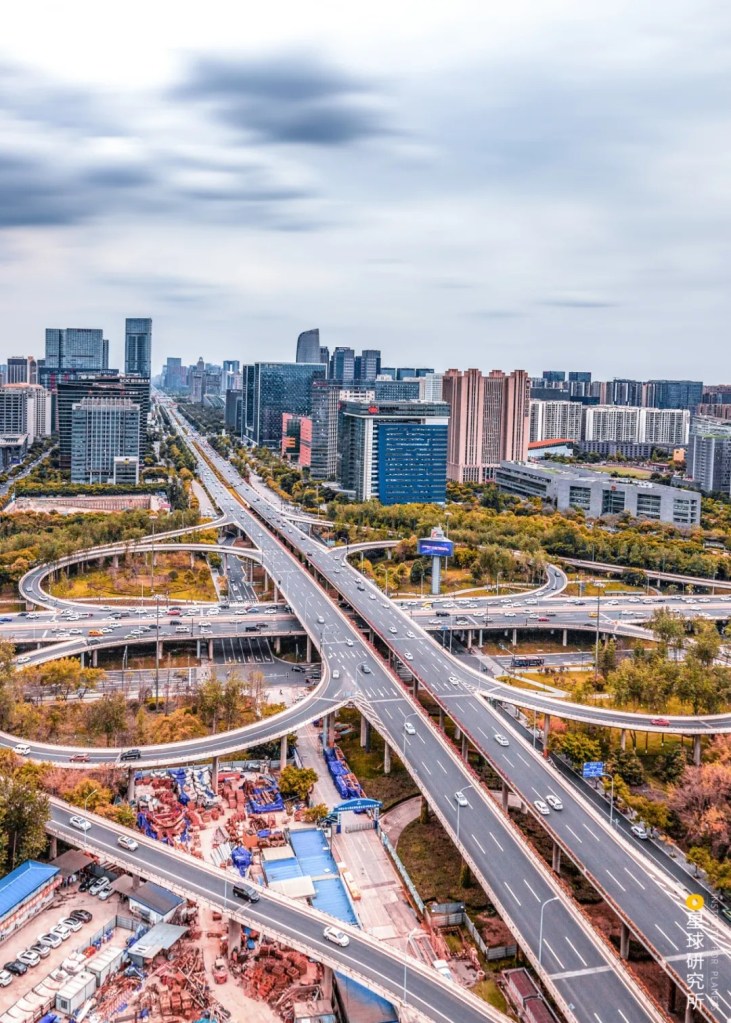
Chinese rockets: flying beyond

Original piece: 《火箭:我要飞……………………………得更高!》
Produced by Institute for Planets (星球研究所)
Written by 桢公子 & 艾蓝星
Translated by Kelvin Kwok

Posted with permission from Institute for Planets

50 years of defying gravity

*Dedicated to Space Day of China (24 April)

The road to space exploration has never been easy.

Loaded with high expectations from across the nation, ChangZheng-3B (CZ-3B, lit. ‘long march’) made her maiden launch on 15 February 1996, only to veer off course in less than 2 seconds after liftoff.

Launch vehicle veering off course during maiden launch of CZ-3B
(photo: Internet Archive)

And just 22 seconds later, the rocket blew up as it hit the ground with its head and turned into dust in the fierce blaze. This was the ninth failure for China’s launch vehicles.

CZ-3B exploding during the crash on a slope 1.85 kilometres away from the launch site
(photo: Internet Archive)

More than 20 years later, and even after 26 successful launches, CZ-3B experienced yet another fall and disintegration on 9 April 2020, due to a malfunction in the third stage engine. This was the 22nd failure* ever recorded throughout the history of Chinese space exploration.

Nevertheless, accompanying these were as many as 334 successful launches.

*Counted as of April 2020, ‘successful’ launches are defined as the delivery of spacecrafts into target orbits.

Inaugural flight of CZ-7 marks the 222nd successful launch for the Long March series
(photo: 苟秉宸)

Indeed, failures are painful, but one can never reach the heights in science without biting back tears.

The correct result is derived from a large number of mistakes.

Qian Xuesen, widely regarded as Father of Chinese Rocketry

And this is exactly how the Chinese made their way to space. The very first artificial satellite that China placed into orbit 50 years ago was a ‘tiny’ product that weighed only 0.178 tonne. Yet in the 50 years that followed, generations after generations of launch vehicles kept defying gravity, sending countless spacecrafts off into the galactic sea again and again.

These include satellite programmes*:

  • BeiDou (北斗, lit. ‘Northern Dipper’; navigation satellites)
  • FengYun (风云, lit. ‘wind cloud’; weather satellites)
  • GaoFen (高分, lit. ‘high resolution’, high-resolution imaging satellites)
  • QueQiao (鹊桥, lit. ‘magpie bridge’; relay satellite for the mission on moon’s far side)
  • JianBing (尖兵, lit. ‘point man’; military satellites)
  • ShiJian (实践, lit. ‘practice’; technology demonstration satellites)
  • ChangKong (长空, lit. ‘vast sky’; technology demonstration satellites)
  • FengHuo (烽火, lit. ‘beacon’; communications satellites)
  • HaiYang (海洋, lit. ‘ocean’; oceanography satellites)
  • ShenTong (神通, lit. ‘divine power’ or ‘divine connection’; military communication satellites)
  • TanCe (探测, lit. ‘explore’; magnetosphere investigation satellites)
  • QianShao (前哨, lit. ‘outpost’; space-based infra-red system defence satellites)
  • ZiYuan (资源, lit. ‘resource’; Earth resources satellites)
  • XinNuo (鑫诺, SinoSat Co. Ltd; telecommunications satellites)
  • TianLian (天链, lit. ‘heaven chain’; tracking and data relay satellites)
  • ZhongXing (中星, China Satcom Co. Ltd; communications satellites)
  • TianTuo (天拓, lit. ‘expanding the heaven’; experimental satellites)
  • TianHui (天绘, lit. ‘drawing the heaven’; survey and mapping satellites)
  • LuoJia (珞珈, nickname of Wuhan University, which is located on Luojia Mountain and contributed to the development of this satellite series; luminous remote sensing satellites)
  • YunHai (云海, lit. ‘cloud sea’; atmospheric science and oceanography satellites)

As well as space exploration missions*:

  • ShenZhou (神舟, lit. ‘divine ark’; crewed spacecraft)
  • TianZhou (天舟, lit. ‘heaven ark’; cargo spacecraft)
  • Chang’e (嫦娥, Chinese moon goddess; lunar exploration missions)
  • TianGong (天宫, lit. ‘heaven palace’; large modular space station)

*Translator’s comment: click here for stories behind some of the China’s spacecraft names

ChangZheng (CZ, lit. ‘long march’) Expendable Launch System Rockets (中国“长征”系列运载火箭)
Green: active (现役); red: retired (退役)
Adult male (成年男子) for scale on the left
(diagram: 陈随, Institute for Planets)

How did we come thus far? And where are we heading from here?

1. The birth of a small-lift launch vehicle

30 January 1970.
China successfully tested DongFeng-4 (DF-4), her first intermediate/long-range ballistic missile.

The takeoff thrust of DF-4 comes from the jet stream produced by combustion, and the propellant used here is a combination of a fuel and an oxidiser. This completely frees the combustion process from the reliance on oxygen, and allows the missile to fly freely even in space where oxygen is not present. Its rocket body is divided into two stages: the first stage at the bottom detaches at high altitudes after accomplishing its task, then the second stage fires and relays the propulsion.

This became the prototype of Chinese launch vehicles.

Detachment of first-stage rocket
The white exhaust track on the right is the second-stage rocket continuing the flight
Photo shows successful launching of Hyperbola-1 developed by a Chinese private aerospace enterprise
(photo: 余明)

But for a satellite to orbit around the Earth, it needs an altitude higher than 180 kilometres, and that requires an orbit entry speed reaching almost 7.9 km/s, otherwise the satellite will end up falling back to the atmosphere due to gravity and atmospheric friction.

First cosmic velocity (第一宇宙速度)
This is the 7.9 km/s mentioned above
(diagram: 陈思琦&陈随, Institute for Planets)

Unfortunately, both the required speed and altitude are utterly beyond of the reach of DF-4, so engineers added yet another stage to the vehicle to make a three-stage rocket. At the rocket nose, they replaced the missile warhead with a satellite, and shielded it from the impact of high-speed airflow with a fairing.

Fairing of CZ-7
Payload fairings on rockets are held together by an explosive bolt which, when fired, separates and releases the fairings
(photo: 王若维)

The first and second stages are connected by metal rods, where the point of contact adopts a hollowed-out design to facilitate efficient discharge of spraying flame during the firing of the second stage.

CZ-4C
Inclined metal rods connect the two stages with a hollowed-out structure
Fragments peeling off from the rocket are remainings of the foam insulation layer
(photo: 韩超)

After a series of optimisation, the DF-4 was transformed into ChangZheng-1 (CZ-1), China’s first launch vehicle.

Structure of CZ-1
Rocket total length (火箭总长): 29.86 m; payload diameter (芯级直径): 2.25 m
Left: payload fairing (整流罩), first stage (一子级), second stage (二子级), third stage (三子级)
Right: satellite (卫星), engine (发动机), fuel tank (燃料箱), oxidiser tank (氧化剂箱), rod system (杆系), fins (尾翼)
(diagram: 陈随, Institute for Planets)

With a diameter of 2.25 metres and a height of approximately 30 metres, it can deliver payloads of not more than 0.3 tonne to the Low Earth Orbit at about 440 kilometres above ground, including Dongfanghong-1, China’s first satellite. This made China the fifth country, after the Soviet Union, United States, France and Japan, to be able to independently send artificial satellites into space, and marked the beginning of a new era of Low Orbit satellites for the Chinese aerospace field.

Dongfanghong-1
(photo: Brücke-Osteuropa)

However, a load of 0.3 tonne can hardly fulfil the requirements of a satellite. The launch vehicle needed an upgrade.

For the propellant, engineers switched to a brand new combination of fuel and oxidiser, namely unsymmetrical dimethylhydrazine and dinitrogen tetraoxide, which are both in liquid form at room temperature. These new chemicals have a higher propulsion efficiency*, and since they combust instantly upon contact, ignition is simple and maintenance is convenient.

*Propulsion efficiency here refers to the specific thrust, which is defined as the thrust generated per unit propellant per unit combustion time, same below.

Dinitrogen tetraoxide decomposes into nitrogen dioxide, which is a reddish brown gas that can be seen during rocket takeoff
(photo: 阿毛)

Changes were made to the hardware too. The diameter was increased to 3.35 metres to match the size limit of rail transportation. Thanks to the larger diameter and stronger propellant, the payload can now enter orbit even with only a two-stage launch vehicle.

A train carrying rocket parts to Xichang Satellite Launching Centre
(photo: Donald)

One of the upgraded rockets was named FengBao-1. With its help, China was for the first time able to deliver satellites heavier than 1 tonne into orbit, as well as to ‘launch three satellites with one rocket (一箭三星)’.

A FengBao-1 model parked at Jiuquan Satellite Launching Centre
(photo: 苟秉宸)

Also in this upgrade batch is the CZ-2, which has a Low Earth Orbit* load of 1.8 tonnes. It successfully launched the first recoverable satellite, which was a major step forward for manned space exploration in China.

*Low Earth Orbit here refers to orbits with altitudes between 200-400 kilometres, same below unless otherwise stated.

JianBing-1, China’s first launched-and-recovered satellite
(photo: VCG)

But up to this point, the Low Earth Orbit load of Chinese launch vehicles had yet to exceed 2 tonnes, and thus were still categorised as small-lift launch vehicles. The dream of having bigger satellites and exploring deeper star sky, or the glorious missions to send astronauts to space and build a space station, will have to count on the next-generation rockets.

2. The mission of medium-lift launch vehicles

Medium-lift launch vehicles have a Low Earth Orbit load between 2 to 20 tonnes.

After making improvements based on the foundations of the CZ-2, the CZ-2C and CZ-2D are almost 10 metres taller than their mother rocket and can carry much more fuel with them. Built with better materials and equipped with more powerful engines, the Low Earth Orbit load now goes up to about 4 tonnes. That officially places them into the medium-lift launch vehicle family and among the major forces for launching recoverable satellites.

CZ-2D taking off
CZ-2D also incorporated technologies used in CZ-4
(photo: 曾诚宇)

This type of satellites usually orbits at an altitude of about several hundred kilometres. On the contrary, the orbit height of weather satellites and navigation satellites can reach up to 1,000 and 20,000 kilometres respectively.

One orbit has a plane that coincides with the equatorial plane. It is even further out at 36,000 kilometres, where satellites stay stationary above the same point on the ground. This is known as the geostationary orbit. Under ideal conditions, only three satellites are needed in this orbit to provide global coverage.

Spacecrafts at different orbit heights
Low Earth Orbit (近地轨道): Dongfanghong-1 (东方红一号), International Space Station (国际空间站), Hubble Space Telescope (哈勃空间望远镜), Shenzhou spacecraft (神舟飞船), FengYun-1 (风云一号)
Medium Earth Orbit (中地球轨道): GPS, BeiDou Medium Earth Orbit (北斗中地球轨道), Galileo Navigation System (伽利略定位系统), GLONASS (格洛纳斯系统)
Geostatoinary Orbit (地球静止轨道): Dongfanghong-2 (东方红二号), Dongfanghong-3 (东方红三号)
(diagram: 陈思琦&陈随, Institute for Planets)

But to arrive at the Geostationary Orbit is nothing like a mere walk in the park. To enter this orbit at a specified location, satellites have to do a multi-level jump, where they first enter a transitional orbit* with a speed of 10 km/s and then adjust course with high precision before sailing towards the target location. This means that we need a rocket that can fly farther, higher and with a better aim.

*Also known as the Geostationary Transfer Orbit.

Illustration of the launching process of Geostationary Orbit satellites
Geostationary Orbit (地球静止轨道): altitude 高度 = 35786 km, overlaps with equatorial plane (赤道平面)
Geostationary Transfer Orbit (地球同步转移轨道): perigee height (近地点高度) = 600 km, apogee height (远地点高度) = 35786 km, orbit inclination (轨道倾角) = 19°
(diagram: 陈思琦&陈随, Institute for Planets)

The first thing engineers went for was again additional vertical staging, but they were soon faced with a dilemma: either take a risky approach and develop a new system, or go for a higher chance of success building on conventional technologies.

In the risky approach, engineers would use the CZ-2C model as a reference, and replace standard ambient temperature fuels with a cryogenic propellant (liquid hydrogen + liquid oxygen) in the third stage of the rocket. While this new propellant further enhances propulsion efficiency, a cryogenic engine is a real challenge to develop. Moreover, the liquid hydrogen is highly inflammable and explosive, and has to be stored at temperatures below -253°C. Taking this approach would mean that engineers have to figure out everything, from cryogenic engine technology to fuel storage, transportation and refilling, completely from scratch.

Testing of CZ-3 series in an assembly plant
Photo shows disassembled fuel tanks
(photo: 宿东)

In the second and less risky approach, engineers would build on the foundations of the FengBao-1 model and use conventional ambient temperature propellant in the third stage, which was then a very mature technology.

A technological breakthrough or a risk-free mission?
The whole team of engineers went into an intense debate which seemed endless, until finally when Ren Xinmin, chief engineer of China’s communications satellites, stood out and said,

If China were to become a major aerospace power by the end of the century and be rid of the backward image, she must aim at the pinnacle of contemporary rocket engine technologies……

Aerospace industry is in itself a great risk, there is no point staying in this field if one is afraid of failures and risks!

— Ren Xinmin 《天穹神箭》(“Divine Arrow through the Heavens“), by China Academy of Launch Vehicle Technology

These determined and sound words made an enormous impact and essentially led the way for modern Chinese rocket technology thereafter. Engineers took none other than the first risky approach, and finally developed the third stage engine (liquid hydrogen + liquid oxygen) in what would become the mainstay launch vehicle for geostationary orbit satellites in the following decade or so — CZ-3.

Structures of CZ-2C (长征二号丙) and CZ-3 (长征三号)
Payload fairing (整流罩), first stage (一子级), second stage (二子级), third stage (三子级)
(diagram: 陈随, Institute for Planets)

The propellant tank in the third stage of CZ-3 is equipped with anti-freezing, anti-seepage, moisture-proof and heat-proof properties, whereas the engine there is capable of secondary ignition which allows the satellite to accelerate again to enter the transitional orbit.

And the CZ-3A, born after another round of upgrading, was the first to deliver Chinese satellites to the Lunar Transfer Orbit, which is the only way to the Moon. This marked the beginning of Chang’e era of the Chinese space programme.

Launching of Chang’e-1 on CZ-3A on 24 October 2007
(photo: 雨水)

But the other less risky approach was never forgotten and had made substantial progress simultaneously to create the CZ-4 series (CZ-4A, CZ-4B, CZ-4C). They are primarily responsible for launching Sun-synchronous Orbit satellites.

CZ-4B
(photo: 史悦)

This is yet another unusual orbit, where the orbit plane rotates around the Earth’s axis in a process known as precession which synchronises with Earth’s revolution around the Sun, such that the surface illumination conditions on Earth is always maintained the same whenever the satellite is overhead. It is most suitable for weather or ground observation.

But the inclination of this type of orbit is usually larger than 90°. This means that launch vehicles have to provide large amount of thrust for course adjustment of the satellite.

Sun-synchronous Orbit (太阳同步轨道), with FengYun-1 orbit (风云一号轨道) as illustration
Orbital plane (轨道平面), equatorial plane (赤道平面), orbital inclination (轨道倾角) = 99°
(diagram: 陈思琦&陈随, Institute for Planets)

This was why the launching of FengYun-1 weather satellite on CZ-4A on 7 September 1988 received so much attention both within and beyond China. FengYun-1 officially declared the end of China’s dependence on foreign weather satellite data when it successfully entered the Sun-synchronous Orbit, which has an inclination of 99° and at 900 kilometres above Earth.

Launching of China-Brazil Earth Resource Satellite (CERS) on CZ-4, which is targeted to the Sun-synchronous Orbit
(photo: 阿毛)

At this point, the Low Earth Orbit load of China’s medium-lift launch vehicles had already reached 6 tonnes.

But to realise the dream of manned space exploration, the load has to be at least about 8 tonnes, yet the lifting thrust of single-core rockets* has pretty much reached their upper limit. What next?

*Single-core rockets are those containing only one column of multistage engines, much like a divine pillar reaching for the sky (一柱擎天)

CZ-3A getting ready for a launch
(photo: VCG)

An easy answer to that is horizontal bundling.

Based on the CZ-2C model, engineers first elongated the rocket core vertically with additional staging to increase propellant reserves to appropriate levels, then bundled 4 smaller rockets to it on the side. Each of these additional modules, known as boosters, is 15.3 metres tall and 2.25 metres wide. It is always a magnificent sight to behold during takeoff when 8 engines (4 core and 4 booster) are ignited at the same time.

CZ-3B, an example of launch vehicles bundled with 4 boosters
(photo: 史悦)

This revised model became known as CZ-2E, the first strap-on rocket to come on stage in China. Its takeoff thrust is almost twice that of CZ-2C, and has a Low Earth Orbit load of approximately 9.5 tonnes. Impressively, it took only 18 months from development to the first launch.

Structures of CZ-2C (长征二号丙) and CZ.2E (长征二号捆)
Boosters ()
(diagram: 陈随, Institute for Planets)

But it was the famous CZ-2F which truly turned the dream of manned space exploration into reality.

CZ-2F on its way to the launch tower
It was assembled, tested and transported vertically
(photo: 孙海英)

Its appearance is very different from that of CZ-2E, owing to a pointy ‘hat’ installed at the top of the payload fairing which is know as the escape tower.

Structure of escape tower of CZ-2F
Left: upper payload fairing (上部整流罩), escape tower (逃逸塔)
Right: propulsion cabin (推进舱), escape separation surface (逃逸分离面), return cabin (返回舱), orbital module (轨道舱), escape tower separation surface (逃逸塔分离面)
(diagram: 陈随, Institute for Planets)

This is a safety device which can be promptly ignited upon any unexpected events that may occur (between the 15 minutes prior to takeoff and 120 seconds after) and be separated together with orbital module and return cabin from the rocket core, thereby bringing the astronauts out of any danger. It is also referred to as the ‘tower of life’.

Escape tower of CZ-2F
It will be launching the manned ShenZhou-7
(photo: VCG)

In addition to emergency systems including the escape tower, there are also a backup of the main control system as well as an automatic fault detection system installed on the CZ-2F. All these together raise its design reliability score to 0.97 from CZ-2E’s 0.91 (1.00 being the highest).

And it indeed kept its promise to send Yang Liwei, China’s first astronaut, safely into space on 15 October 2003, making China the third country in the world to launch a manned spacecraft.

Successful returning of ShenZhou-5 return cabin
(photo: 央视网)

CZ-2F continued to achieve throughout its 21 years of service. From ShenZhou-1 to 11, and TianGong-1 to 2, it had launched 5 unmanned missions, 6 manned spacecrafts and 2 space laboratories in total, with a staggering success rate of 100%. It surely is worthy of the title ‘divine arrow‘.

CZ-2F changing ‘hats’ and docking with TianGong-1
A portion of the ‘divine arrow (神箭)’ markings can be seen on the rocket
(photo: 宿东)

All the members in the CZ-2 family are two-stage rockets. To make a three-stage strap-on rocket, one simply needs to extend the core of CZ-3A and bundle it up with boosters. This is how CZ-3B and CZ-3C were born.

Structures of CZ-3A (长征三号甲), CZ-3B (长征三号乙) and CZ-3C (长征三号丙)
(diagram: 陈随, Institute for Planets)

CZ-3C, in particular, has been the top-notch launch vehicle in China for the past 20 years or so, and has pretty much single-handedly undertaken most if not all medium-to-high orbit launchings. As a three-stage strap-on rocket with 4 boosters, it was the first to have a Low Earth Orbit load that goes beyond the 10-tonne mark and reaching almost 11.5 tonnes.

CZ-3B loaded with the 47th and 48th BeiDou satellites, ready to deliver them into an orbit at around 20,000 km from Earth on 23 September 2019
(photo: 史悦)

After launching the Chang’e-3 and Chang’e-4 missions, it was branded with the name ‘heaven’s ladder to the Moon‘.

Launching of Chang’e-3, a lunar probe, on CZ-3B, which landed on the far side of the Moon on behalf of mankind
(photo: 蒋涛)

But as the saying goes,

“When China’s launch vehicles wake up from the euphoria of consecutive successes, they will be faced with 4 formidable opponents.”

Quoted from《神箭凌霄:长征系列火箭的发展历程》

At the turn of the 21st century, commercial large rockets developed by the United States, Europe and Russia made their appearance one after and other. Some not only have a load twice as that of CZ-3B, but are also more environmentally friendly and allow more rapid deployment with a lower cost. In comparison, China’s launch vehicles were lacking behind in virtually all aspects.

Comparison of CZ-3B and its foreign peers in the same period
Low Earth Orbit load (近地轨道运力)
(diagram: 陈随, Institute for Planets)

A comprehensive upgrade was urgently needed.

Firstly, the unsymmetrical dimethylhydrazine and dinitrogen tetraoxide fuel combination, which had been in use for almost 40 years, was gradually abandoned and replaced by the kerosene and liquid oxygen team. Not only does this new fuel combination cost vastly less, the carbon dioxide and water produced by its combustion is no longer toxic and much less polluting. Secondly, engines were also upgraded with 15% higher propulsion efficiency*. And lastly, the new boosters are now almost 27 metres tall, which is almost two times the height of any other boosters developed to date.

This rocket is now called the CZ-7.

*Propulsion efficiency here refers to sea level specific thrust.

Structures of CZ-3B and CZ-7 (长征七号)
(photo: 陈随, Institute for Planets)

It has a Low Earth Orbit load of approximately 14 tonnes, and hence is capable of launching the 13-tonne TianZhou-1 cargo spacecraft. As the crucial player in the upcoming Chinese space station era, it will slowly take over the tasks currently performed by CZ-2, CZ-3 and CZ-4 series and be responsible for about 80% of all launching missions to come.

CZ-7 in transit; humans and cars look extremely tiny standing by this giant
The design reliability score of CZ-7 is 0.98, which is even higher than that of CZ-2F
(photo: 宿东)

With that, the introduction of China’s medium-lift launch vehicles shall come to an end. To launch something with a Low Earth Orbit load of more than 20 tonnes, we have to look to the contenders in the next generation.

3. The great arena of heavy-lift launch vehicles

The Wenchang Satellite Launch Centre in Hainan was completed in October 2014.

With a lower latitude and being closer to the equator, the launch centre can fully utilise the Earth’s rotational force to enhance launching efficiency of rockets. Additionally, it can reduce course adjustment and flight distance when launching Geostationary Orbit satellites. Compared to the Jiuquan launch site, the quality of orbit entry for satellites launched here is 16.3% to 18.5% higher*.

*Data from《天穹神箭》(“Divine Arrow through the Heavens“) by China Academy of Launch Vehicle Technology.

Distribution of satellite launch sites in China
Jiuquan Satellite Launch Centre (酒泉卫星发射中心), Alxa, Inner Mongolia (completed in 1960)
Taiyuan Satellite Launch Centre (太原卫星发射中心), Xinzhou, Shanxi (completed in 1968)
Xichang Satellite Launch Centre (西昌卫星发射中心), Liangshan, Sichuan (completed in 1982)
Wenchang Satellite Launch Centre (文昌卫星发射中心), Wenchang, Hainan (completed in 2014)
(photo: 陈思琦&陈随, Institute for Planets)

Moreover, it is the first coastal launch site in China, with nothing but the vast sea within thousands of kilometres to the southeast. This ensues the safety from falling debris.

Wenchang launch site, Hainan
(photo: 陈肖)

But more importantly, rocket parts can now be shipped without the 3.35-metre diameter limit set by railways.

YuanWang-21 carrier ship loading the parts of CZ-5
(photo: 宿东)

With all these settled, China’s first heavy-lift launch vehicle, CZ-5, finally made its debut appearance.

Although being a two-stage rocket, it has an unusual height of about 57 metres, which is equivalent to a 20-storey building and on par with other three-stage rockets that are currently in service. Horizontally, the diameter of the core is enlarged from 3.35 metres to 5 metres, while that of the 4 boosters from 2.25 metres to 3.35 metres. No wonder this colossal monster is given the name ‘chubby-5 (胖五)‘.

Structures of CZ-7 (长征七号) and CZ-5 (长征五号)
CZ-5: rocket height (火箭总长) = 56,97 m; core diameter (芯级直径) = 5 m, booster diameter (助推器直径) = 3.35 m
First stage (一子级) & second stage (二子级): engine (发动机), kerosene tank (煤油箱), liquid hydrogen tank (液氢箱), liquid oxygen tank (液氧箱)
Payload fairing (整流罩): satellite (卫星)
(diagram: 陈随, Institute for Planets)

In contrast to CZ-7, the core of CZ-5 has completely switched to a cryogenic propellant using a combination of liquid hydrogen and liquid oxygen paired with a completely new engine design, and each booster has 8 engines which is twice as many as in CZ-7. During takeoff, a total of 10 engines will be ignited simultaneously which boosts the takeoff thrust by a further 50%. All these together contribute to the 25-tonne Low Earth Orbit load.

CZ-5 taking off
The exhaust flame appears blue due to the cryogenic propellant consisting of low-temperature hydrogen and oxygen used in the two-stage core; CZ-5 is also known as the ‘ice rocket’ because of this
(photo: 陈肖)

CZ-5 is to date China’s most powerful launch vehicle with the largest mass and widest diameter, scoring a second runner up in the world ranking of active rockets right after United States’ Falcon Heavy and Delta IV.

The gigantic CZ-5
(photo: 陈肖)

On 3 November 2016, the first CZ-5 made a successful maiden flight under all spotlights. This was also the first time for a launch vehicle to directly send a satellite into the Geostationary Orbit. But this is just the beginning of CZ-5’s adventures that will continue for the next three decades or more, as it go on to witness all the historical moments including exploration on the Moon and Mars, as well as other deep space missions including the solar orbiting space telescope project.

Maiden launch of CZ-5 at 20:43:13:998, 3 November 2016
(photo: CNAurora)

Nonetheless, the dream of super rockets does not just end here.

Looking around the world, the most powerful rocket ever built in terms of launching ability is the Saturn V developed by the US, which has a Low Earth Orbit load of 140 tonnes. It has been driving the Apollo project since 1967, a breathtaking record which is yet to be broken.

Saturn V which is now retired
It was first launched with Apollo 4 on 9 November 1967
(photo: NASA)

After decades of catching up, China’s own heavy-lift launching vehicles are finally expected to come on stage between 2028 and 2030. One of them will be the CZ-9, which has a total height exceeding 100 metres and core diameter almost hitting 10 metres (twice that of chubby-5). Its Low Earth Orbit load will go beyond 100 tonnes, which is absolutely staggering even just thinking about it. It will take on much more challenging missions such as manned landing on the Moon, Mars sample return, or even exoplanet exploration in the solar system.

4. The great voyage

China’s launch vehicle family has been growing non-stop over the past 50 years. While the team of large rockets is expanding by the day, smaller ones are also blooming like never before.

For instance, CZ-6 is capable of quick launching from the simplest launcher, and has once achieved ‘launching 20 satellites with one rocket (一箭20星)’.

CZ-6 successfully launched from a simplified launcher
(photo: 李岗)

CZ-11, with a height of not more than 20 metres and a diameter of only 2 metres, can be launched directly on offshore platforms.

Launching of CZ-11 on the sea
(photo: VCG)

KuaiZhou-1, an even smaller rocket with a diameter of only 1.4 metres, allows rapid response and flexible deployment. The shortest preparation time in between two launches is 6 hours.

KuaiZhou-1 shooting up into the sky
(photo: VCG)

Besides, numerous private launch vehicles are becoming technologically mature, and reusable rockets are also being developed.

Erecting of ShuangQuXian-1, one of China’s enterprise launch vehicle
(photo: 陈肖)

Today, led by the CZ series, China’s launch vehicles are becoming more and more comprehensive in terms of launching ability and orbit coverage. This makes journeys towards the Moon, Mars or space further out possible.


It is true that in every mission launch vehicles are only involved in the beginning of the journey, but never get to be part of the ending. A successful separation from the payload would mean their purpose fulfilled and hence a time to retire from the stage.

They either vanish in the atmosphere…

Booster of CZ-7 falling after separation
(photo: 陈肖)

…or fall into some wilderness or the vast sea…

The core of CZ-2 which fell onto a deserted plain
(photo: 在远方的阿伦)

…leaving behind the satellite or spacecraft which continues with the galactic journey.

As Li Bai, a renowned poet in the Tang Dynasty, had put it:

Be gone after accomplishing the quest, leaving behind nothing nor a name

事了拂衣去,深藏身与名

Li Bai, 《侠客行》(Ode to Gallantry)

Such is the inevitable destiny of launch vehicles. In the same way, generations of scientists have left behind their proud work for their successors, who continue the hike to new heights in science.

There will be a time when the BeiDou constellation is fully configured and the ShenZhou roaming freely across the sky; when Chang’e is flying to the Moon and Mars landed on; and when TianZhou is shuttling between Earth and Space and TianGong majestically completed.

This, will be the most glorious moment for our grand road to space exploration.

CZ-7 taking off and becoming the dazzling starlight that shines above the sea
(photo: 陈肖)

Production Team
Text: 桢公子,艾蓝星
Photos: 任炳旭
Design: 陈随
Maps: 陈思琦
Review: 张照,云舞空城

Expert review
Dr. Zhang Borong, Chinese Academy of Launch Vehicle Technology

Acknowledgements
We would like to express our gratitude to photographer 阿毛 for the immense support provided during the production of this piece.

References
[1]陈闽慷, 茹家欣. 神箭凌霄:长征系列火箭的发展历程[M]. 上海科技教育出版社, 2007.
[2]中国运载火箭技术研究院. 天穹神箭: 长征火箭开辟通天之路[M]. 中国宇航出版社, 2008.
[3]李成智. 中国航天技术发展史稿[M]. 辽宁教育出版社, 2006.
[4]《世界航天运载器大全》编委会. 世界航天运载器大全[M]. 中国宇航出版社, 1996.
[5]冉隆燧. 航天工程设计实践[M]. 中国宇航出版社, 2013.
[6]刘家騑, 李晓敏, 郭桂萍. 航天技术概论[M]. 北京航空航天大学出版社, 2014.

… The End …

Institute for Planets
星球研究所
一群国家地理控,专注于探索极致风光
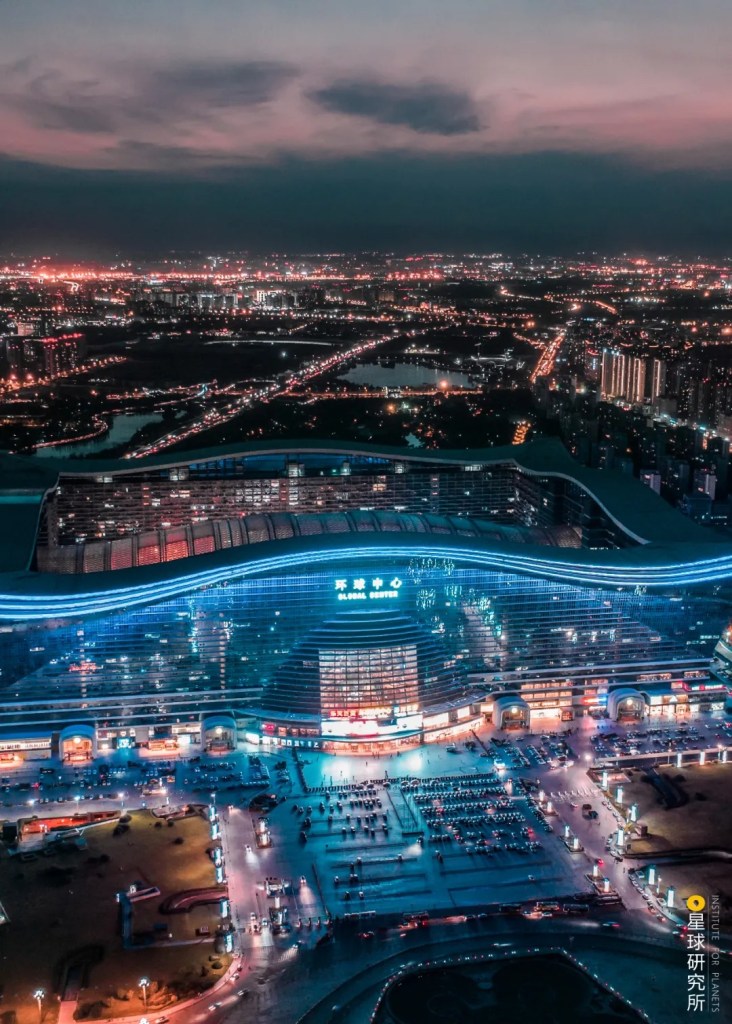
The rise of 100,000 Chinese dams

Original piece: 《10万座大坝的诞生!》
Produced by Institute for Planets (星球研究所)
Written by 艾蓝星
Translated by Kelvin Kwok

Posted with permission from Institute for Planets

China is one of the countries with most numbers of rivers. More than 45,000 rivers are flowing across this vast nation that spans 9.6 million square kilometres.

Distribution of major river systems in China
The number of rivers stated above only includes those with a drainage area of more than 50 square kilometres
(diagram: 郑艺, Institute for Planets)

China is also one of the countries most frequently hit by water-related disasters. The 1092 floods and 1056 droughts* recorded throughout Chinese history have turned the development of a civilisation into a chronicle of constant war against nature.

*Data as of 1949

The flooded Qiantang River
(photo: 肖奕叁)

On one hand, rivers nurture every life form they flow by, on the other, they often invite catastrophic events that ruin all livelihood. Faced with such unforgiving characteristics of one of the most elaborate water systems on Earth, China has become by far the most advanced country in large-scale water conservancy facilities in the world.

Among China’s water conservancy projects, the most prominent achievement has to be the 100,000 dams that are capable of retaining almost 900 billion cubic metres of water across the country.

Distribution of large dams (≥100 metres in height) in China
Large dams are defined by the International Commission on Large Dams as any dam above 15 metres in height, or any dam taller than 5 metres with a reservoir capacity of more than 3 million cubic metres
Colour: Dam height above X metres (坝高 X m 以上)
(diagram: 郑艺, Institute for Planets)

They act as a gate to block flood peaks…

Flood discharge at Xin’anjiang Reservoir in July 2020
(photo: 吕杰琛)

…or a reservoir to provide water supply or irrigation.

Xinfenjiang Reservoir
It is one of the crucial drinking water sources for cities including Hong Kong and Shenzhen
(photo: 剑胆琴心)

They can also facilitate hydropower generation and streamline shipping channels by raising the water level.

A busy night at the Baihetan Hydropower Station
Once completed, it will be the second largest hydropower station in the world after Three Gorges Dam
(photo: 柴峻峰)

A huge demand is why China has the largest number of dams in the world today.

Distribution of large dams (≥30 metres) in major countries
According to Design Specification for Rolled Earth-Rock Dams (2001), dam bodies can be categorised into low (<30 metres), medium (30-70 metres) and high (>70 metres)
China (中国), United States (美国), Japan (日本), India (印度), Spain (西班牙), Turkey (土耳其), Italy (意大利), Brazil (巴西), South Korea (韩国), Mexico (墨西哥)
(diagram: 郑艺, Institute for Planets)

Ever wonder how were all these dams built?

1. Countering water with earth

To build a dam, one simply needs to excavate earth nearby, pile it up in compact layers and widen the base to trap water coming from upstream. This oldest type of artificial dam is known as earth-filled dams.

Homogeneous earth-filled dam (均质土坝)
This is one of the many types of earth-filled dams
(diagram: 罗梓涵, Institute for Planets)

The soil particles after compaction are densely crushed within the dam. This stabilises the dam body and at the same time minimises pore sizes between soil particles to limit water seepage. Simple as it may seem, these dams do a good job in achieving what we call “defending assault with soldiers, countering water with earth (兵来将挡,水来土掩)

Anti-seepage (防渗) ability before (压实前) and after compaction (压实后) of earth material
(diagram: 罗梓涵, Institute for Planets)

Given the right conditions, a stable earth dam can be built without any mechanical compaction by merely resting on its own weight*.

*This is known as the filling-soil-into-water method (水中填土法)

Fen River Reservoir Dam standing on the Loess Plateau in Taiyuan, Shanxi
This is the first large dam built by filling-soil-into-water method in the world
(photo: 王蒙)

Apart from earth, we can of course use pebbles, sand and artificially mined rocks to build a rock-filled dam. But in contrast to fine earth, rocky materials are rough and hard, making it prone to seepage even with the help from mechanical compaction.

Seepage in rockfill dams (堆石坝)
(diagram: 罗梓涵, Institute for Planets)

Engineers therefore combine rock with earth, or erect an earth wall at the centre of a rock-filled dam to stop the seepage. The latter is called earth-core rock-filled dams.

Structure of an earth-core rock-filled dam (心墙堆石坝)
(diagram: 罗梓涵, Institute for Planets)
Bikou Reservoir Dam in Wen County, Gansu
A classic example of earth-core rock-filled dams; photo shows water coming out through the hydropower station
(photo: 视觉中国)

Or adjust the position to make an inclined core rock-filled dam.

Structure of a rock-filled dam with inclined core (斜墙堆石坝)
Inclined core (斜墙)
(diagram: 罗梓涵, Institute for Planets)

The famous 160-metre Xiaolangdi Dam is the tallest inclined core rock-filled dam in China.

Xiaolangdi Dam sitting in the midstream of Yellow River
The dam embankment is 1667 metres long and 15 metres wide
(photo: 林治坤)

Thanks to this enormous dam, Xiaolangdi Reservoir has a water storage capacity of 12.65 billion cubic metres, which is twice that of Tai Lake. And because of this, the flood control standard in the downstream of Yellow River has now risen to 1000-year floods*, protecting up to 100 million civilians from the lingering menace of floods.

* The term “1000-year flood” means that, based on previous observed data, a flood of this particular magnitude or greater has a 0.1% (1/1000) chance of happening in any given year.

Flood discharge at Xiaolangdi Dam
Tai Lake has a storage capacity of 5.6 billion cubic metres
(photo: 张子玉)

Earth is not the only material that can prevent seepage. Concrete can do the same job if not better owing to the even smaller pores. However, compared to the relatively soft and loose earth in rock-filled dams – which might experience mild deformation when compressed by water, concrete is much harder and stronger. This difference in deformation extent limits their ability to ‘cooperate’.

It was not until the 1980s when China finally introduced the vibratory roller, a leading-edge equipment then which was capable of performing enhanced compaction. Much like a giant road roller, it densifies rocky material much more efficiently, hence making the strength and hardness comparable to that of concrete.

A rock-filled dam under construction
(photo: 视觉中国)

Some rock-filled dams also enjoy a concrete buff, which takes only a single layer of concrete panel covering the dam’s upstream face. This is the panel rock-filled dam.

Structure of a panel rock-filled dam (面板堆石坝)
Concrete panel (混凝土面板)
(diagram: 罗梓涵, Institute for Planets)

This type of low-cost and easy-to-construct dams was a big hit since its introduction in China. The Shuibuya Dam, which is 233 metres tall, seized the throne of the world’s tallest panel rock-filled dam upon completion.

Shuibuya Dam sitting on Qing River
The zigzag track leaning on the dam body is used for drainage, maintenance and transportation
(photo: 李云飞)

The variety of dams mentioned above are collectively known as embankment dams. They are extensively used because of high availability of building materials, simplistic structures and ease of construction. More than 95% of all the 100,000 dams in China are embankment dams. They are literally everywhere.

Dongzhen Reservoir Dam in Putian, Fujian
A classic example of embankment dam without an earth core
(photo: DJY俊逸)

Nevertheless, earth and gravel are after all naturally loose particles, and that sets a glass ceiling for embankment dams.

One one hand, pores exist no matter how strong the compaction process is. Seepage is just a matter of time. On the other, the loose surface of earth and rock materials are unable to withstand the brute force of gushing flood peaks. Therefore, dam overflow has to be avoided at all costs, and a special discharge channel away from the dam body must be installed.

Shuibuya Dam and the discharge channel on the right
Scroll down to get a feel of a flood discharge at the dam
(photo: 李顺武)
Flood discharge at Shuibuya Dam
(photo: 谭江弘)

Is it possible to build an even stronger dam?

2. Lone warrior guarding the pass

Imagine placing a rock in the middle of a water stream. The bigger the rock, the heavier it is, and the larger the friction produced between it and the stream bed. Once heavy enough, the friction will be sufficient to nail the rock in the flowing water.

Similarly, if we can manufacture such an enormous rock and throw it in a river, it should be able to hold up the entire river on its own given it is heavy enough. Such a dam is known as gravity dam, which serves like a “lone warrior guarding the final pass where even thousands of enemies are no match for him (一夫当关,万夫莫开)“.

Gravity dam (重力坝)
(diagram: 罗梓涵, Institute for Planets)

To that end, strong and dense concrete has returned to the construction menu. Concrete gravity dams can certainly block rivers, but what makes them special is that, due to their superior strength, discharge channels can be installed on the dam body, and in some cases an overflow section can be configured.

Flood discharge at Danjiangkou Dam in Hubei
Prior to concrete gravity dams, gravity dams were mostly built with lime slurry cemented with stones
(photo: 白䒕帆)

Particularly during flood periods, each of these concrete gravity dams scattered along large rivers becomes a “divine pillar (定水神针)” that serves as the mainstay of flood control measures.

These include the Xiangjiaba Dam which looks after the Jinsha River…

Xiangjiaba Dam in Shuifu, Yunnan
Flood discharge section (泄洪坝段), hydropower station (电站厂房), ship lift (升船机)
(photo: 柴峻峰)

…the Sanmenxia Dam stationed on the Yellow River…

Sanmenxia Dam in Sanmenxia, Henan
Hydropower station (电站厂房), overflow section (溢流坝), flood and sand discharge channel (泄洪排沙隧道)
(photo: 黄雪峰)

…as well as the Three Gorges Dam that guards the Yangtze River.

With a height of 181 metres and length of 2309 metres, this giant was constructed with more than 16 million cubic metres of concrete. It has a storage capacity of 22.15 billion cubic metres, which is equivalent to 4 Tai Lake combined.

Three Gorges Dam in Yichang, Hubei
Flood discharge section (泄洪坝段), hydropower station (电站厂房), ship lift (升船机)
(photo: 李心宽)

Since its completion, the Three Gorges Dam has successfully reduced major flood peaks by about 40% during the Yangtze River floods that happened in 2010, 2012 and 2020. This significantly alleviated the burden on the mid- and downstream flood control.

Flood discharge at Three Gorges Dam in 2020 summer
(photo: 李心宽)

But even concrete gravity dams have their own Achilles’ heel – an ‘invisible enemy’ known as uplift pressure. It is comprised of two components: osmotic pressure coming from seepage in the dam body and at the base, as well as the buoyancy experienced by the submerged structures. For a dam, there is nothing worse than being ‘lifted up’ from the base by the uplift pressure.

Uplift pressure acting on a gravity dam
Water pressure (水体压力), uplift pressure (扬压力)
(diagram: 罗梓涵, Institute for Planets)

To overcome this issue, engineers have been trying all sorts of methods to strike a balance between stabilising the dam and minimising contact surface between the dam body and the base, for example, by partitioning the dam body into trimmed segments and carving a series of internal cavities. This is known as wide-slit gravity dam.

Structure of wide-slit gravity dam (宽缝重力坝)
(diagram: 罗梓涵, Institute for Planets)
Xin’anjiang Dam
It is the first wide-slit gravity dam in China
(photo: 方建飞)

Or simply scoop out the middle section of the dam base to create a hollow gravity dam.

Structure of hollow gravity dam (空腹重力坝)
(diagram: 罗梓涵, Institue for Planets)
Niululing Reservoir Dam in Qionghai, Hainan, is a hollow gravity dam
The first hollow gravity dam completed in China is the Shangyoujiang Reservoir Dam in Ganzhou, Jiangxi
(photo: 视觉中国)

Yet even with that settled, there is always something else to worry about. Regardless of the design, the sheer size of a gravity dam will always present a huge challenge to builders, especially for temperature control and construction sequence during concrete pouring.

Three Gorges Dam under construction
(photo: 视觉中国)

Rather than backing down from the challenge, engineers came up with a new idea, which is to replace concrete with a special variant that contains fly ash, while incorporating the rolling approach applied in embankment dam compaction to make up for the softer structure. This type of dam is widely known as roller-compacted concrete gravity dams.

This not only reduces concrete usage but also simplifies construction sequence. Furthermore, it makes things more convenient for mechanical construction on a larger scale, and shortens the building time and lowers the cost. This dam type hits multiple birds with one stone.

Kengkou Reservoir Dam in Sanming, Fujian
Completed in 1986, it is the first roller-compacted concrete dam in China
(photo: 三明市大田县融媒体中心)

From then on, more and more grand dams kept rising from the ground, including the Shuikou Dam with a height of 101 metres…

Shuikou Dam on Min River in Fuzhou, Fujian
(photo: 视觉中国)

…and the 200.5-metre tall Guangzhao Dam

Guangzhao Dam, Shanghai-Kunming High-speed Railway and Beipanjiang Grand Bridge in Qianxi’nan, Guizhou
A stunning view capturing three mega-projects in one frame
(photo: 王璐)

…as well as the Longtan Dam, currently the tallest roller-compacted concrete gravity dam in the world. Reaching almost 216.5 metres, it is head and shoulders above the Three Gorges Dam, the tallest conventional concrete gravity dam in China.

Longtan Dam on Hongshui River in Hechi, Guangxi
(photo: 姚王度)

One might wonder, though, if it is possible to achieve even a taller dam height while keeping the building material and costs at acceptable levels. Could there be yet more intricate design for dams?

3. Leveraging the force of nature

On the northern mountains of Guangdong, a thin dam stands majestically in one of the valleys where it curves elegantly upstream in plan. The dam body is so slim that the width-height ratio is only 0.11. This is the well known Quanshui Dam. Located in Shaoguan, Guangdong, it is the thinnest arch dam in China.

Quanshui Dam on one of the tributaries of Nanshui River
(photo: 视觉中国)

The delicacy of the design resides in its ability to utilise the arched structure, in addition to self weight, for dam stabilisation. In an arch dam, most of the pressure exerted by the water body is passed on to the rigid anchors on the mountain, and the reaction force that pushes back is leveraged to maintain the dam’s stability against the water thrust (借力打力).

Arch dam (拱坝)
Water pressure (水体推力), reaction force from bed rock (基岩反作用力)
(diagram: 罗梓涵, Institute for Planets)

With the mountain sharing the load, arch dams are usually 30-60% smaller in volume than gravity dams of the same height, making them prettier and more economical.

Dongjiang Dam on Lei River in Zixing, Hunan
The thinnest section of this lightweight dam is only 7 metres wide
(photo: 姚王度)

More impressively, a functional arch dam maintains a sophisticated balance among multiple factors including self weight, water pressure, bed rock support and temperature changes. If any one of these conditions should fail in the face of unpredictable events, the remaining can still guarantee an intact dam. Such a reliable product is referred to as a statically indeterminate structure.

Arch dams are therefore far superior than other dam types in terms of safety, and their overload capacity can be as high as 10 times the expected performance. For instance, the Shapai Arch Dam in Wenchuan was pretty much unaffected by the deadly 2008 Sichuan earthquake although it was just 36 kilometres away from the epicentre and with a fully loaded reservoir.

Shapai Arch Dam on a tributary of Min River in Wenchuan, Sichuan
(photo: 余振威&刘文君)

While arch dams are beautiful, economical and safe, it is impossible to build one, however, unless all the extremely harsh requirements for topological and geological conditions are met.

Not only do the bed rocks on both banks have to be hard and intact, the river channel must also be symmetrical and contracting in the downstream. All these conditions are absolutely crucial to clip the dam tightly in the valley.

Wudongde Dam under construction on Jinsha River at the border of Kunming, Yunnan, and Liangshan, Sichuan
Hydropower station water intake channel (电站厂房进水口), flood discharge channel (泄水孔)
(photo: 卢思璇)

Fortunately, with rapid advancement in construction, building material and simulation technology, the adaptability of arch dams are improving at great speed.

Engineers have successfully built a number of large dams on geologically complex Karst terrains, including the famous Wujiangdu and Goupitan Dams.

Goupitan Arch Dam on Wu River in Zunyi, Guizhou
(photo: 秦军, 水电八局)

The appearance of arch dams are becoming more diverse too. For example, the Shangli Reservoir Arch Dam in Xiamen Island has a regular arc plane shape.

Shangli Reservoir Dam in Xiamen Island, Fujian
Plane shape (平面形状)
(photo: 视觉中国)

Whereas the Dongfeng Arch Dam on Wu River has a hyperbolic curve.

Dongfeng Arch Dam on Wu River in Qingzhen, Guizhou
(photo: 李贵云)

The upstream face of an arch dam can either be vertical, known as single-curved arch dam.

Structure of single-curved arch dam (单曲拱坝)
Vertical upstream face (剖面呈竖直), curved plane (平面呈拱形)
(diagram: , Institute for Planets)

Or curving upstream, known as double-curved arch dam.

Structure of double-curved arch dam (双曲拱坝)
Curved upstream face (剖面呈拱形), curved plane (平面呈拱形)
(diagram: , Institute for Planets)

Furthermore, new arch dams are growing taller and taller. The 240-metre Ertan Arch Dam, completed in 2000, was the first to exceed the 200-metre mark in China.

Ertan Arch Dam at the confluence of Jinsha River and Nyag Qu in Panzhihua, Sichuan
(photo: 石磊)

The tallest point of Laxiwa Arch Dam, completed in 2010, is above 250 metres.

Laxiwa Arch Dam on Yellow River in Hainan, Qinghai
(photo: 李俊博)

And the Xiluodu Dam, which came into service in 2014, is 285.5 metres tall.

Xiluodu Dam on Jinsha River at the border of Liangshan, Sichuan, and Zhaotong, Yunnan
(photo: 柴峻峰)

Among the 76 large dams that are taller than 200 metres around the globe, 38 were arch dams. They are undeniably the champion of dams. But the 200-metre mark is not even close to their limit.

The Xiaowan Arch Dam on Lancang River is just 5.5 metres away from reaching the 300-metre mark.

Xiaowan Arch Dam at the border of Dali and Lincang in Yunnan
Hydropower station water intake channel (电站厂房进水口), flood overflow channel (溢洪道), discharge channel (泄水孔)
(photo: 陈畅)

But the title of world’s tallest dam has to go to Jinping-I Arch Dam sitting on Nyag Qu, which is 305 metres tall.

There are increasing number of towering arch dams rising in the mountainous terrains in western China, where they leverage forces of the nature to store water and mitigate floods, and at the same time generate limitless energy to be delivered to the rest of the country to light up the dark nights.

Longyangxia Hydropower Station in Hainan, Qinghai
(photo: 李俊博)

4. One hundred thousand

Across the vast land of China, there are embankment dams that counter water with earth. There are also gravity dams that guard the pass like a lone warrior. And let us not forget the arch dams that leverage the forces of nature. They certainly deserve the spotlight on the great arena, but the big family of Chinese dams is much more than that.

Other outstanding family members include the buttress dams, which has a very minimalistic structure consisting only a set of buttresses and watertight plates…

Foziling Reservoir Dam in Liuan, Anhui
This is one of the only two multiple-arch buttress dams in China
Buttress (支墩), watertight plate (挡水盖板)
(photo: 视觉中国)

…as well as inflatable rubber dams that can be conveniently summoned to anchor at river channels.

Xiaobudong Rubber Dam on Yi River in Linyi, Shandong
This 1135 metres long rubber dam is the longest of its kind in the world
(photo: 视觉中国)

With current technologies, even the most traditional embankment dams are aiming for new heights. The Nuozhadu Dam, one of such dams completed in 2014, has made it to the 261.5-metre mark…

Nuozhadu Dam and its flood discharge channel on the right
It is located on Lancang River in Pu’er, Yunnan
(photo: 潘泉)

…while the Shuangjiangkou Dam project, commenced just one year later, intends to redefine the world’s dam height limit with its 314-metre target.

Shuangjiangkou Dam under construction on Dadu River in Aba, Sichuan
(photo: 杨虎)

One dam at a time, this is how the Chinese have built almost 100,000 of them across the vast territory. They sit in mountains and gate the rivers, courageously guarding all farmlands, villages and cities and every inch of the 9.6 million square kilometres of land.

Huairou Reservoir and Huairou District in Beijing
(photo: 陈剑峰)

Nevertheless, building dams are just the tip of the iceberg of any colossal water conservancy engineering project.

Take the grandiose Three Gorges Dam project, it took more than 40 years of planning and repeated experimentation before the construction could even start. It was not until another 6 years after dam completion when the world’s largest hydropower station could come into service, and 3 more years were needed for the largest ship lift in the world to become ready for use.

Three Gorges Shiplift was the final ‘accessory’ for the Three Gorges Dam project
(photo: 视觉中国)

The entire Three Gorges Dam project was only fully completed last year in 2020. Now it can finally begin to fulfil its initial purpose as an enormous reservoir, a powerful generator and a grand canal for shipping.

The Three Gorges Dam megaproject
(photo: 黄正平)

This is pretty much the case for every water conservancy project in China, and behind each one of them are the selfless contribution and wisdom of countless engineers and builders, without which the engineering wonder of Chinese dams could not have been created.

Gyaca Hydropower Station on Yarlung Zangbo hidden deep in the mountains
(photo: 行影不离)

Production Team
Text: 艾蓝星
Photos: 散夏
Design: 罗梓涵
Maps: 郑艺
Review: 桢公子,黄超

Acknowledgements
We would like to express our gratitude to Sinohydro Engineering Bureau 8 Corp Ltd for their immense support with graphical content, as well as Prof Ma Jiming (School of Civil Engineering, Tsinghua University) and Dr Zhang Lei (Institute of Geology and Geophysics, Chinese Academy of Sciences) for their intellectual contribution.

References
[1] 王瑞芳. 当代中国水利史[M]. 中国社会科学出版社, 2014.
[2] 郭秦渭. 水工建筑物[M]. 重庆大学出版社, 2014.
[3] 潘家铮. 千秋功罪话水坝[M]. 清华大学出版社, 2000.
[4] 贾金生. 中国大坝建设60年[M]. 中国水利水电出版社, 2013.
[5] 水利部建设与管理司. 中国高坝大库TOP100[M]. 中国水利水电出版社, 2012.
[6] 水利部. 2018年全国水利发展统计公报.
[7] 水利部. 2013年第一次全国水利普查公报.

… The End …

Institute for Planets
星球研究所
一群国家地理控,专注于探索极致风光
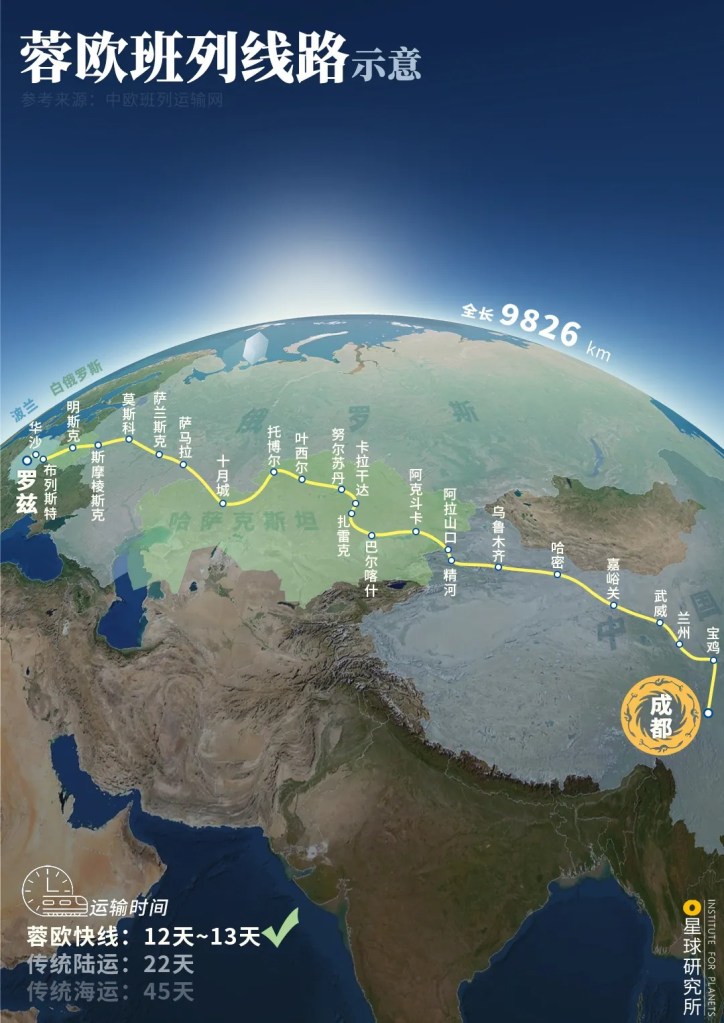
Highway interchanges in China

Original piece: 《立交桥交立交桥交立交桥交立交桥》
Produced by Institute for Planets (星球研究所) & 东风风神奕炫
Written by 桢公子
Translated by Kelvin Kwok

Posted with permission from Institute for Planets

Aesthetics of Geometry

One does not need to observe too hard to realise that modern cities today have completely transitioned into the vertical space. This applies not only to the sky-scraping towers that cluster like a thick steel jungle…

Hong Kong, China
(photo: 静言)

…but also to the roads that are abandoning the ground. They too are spreading out vertically while stacking on and weaving around one another.

Six-way Xinzhuang Elevated Interchange in Shanghai
Only 5 ways are shown in the photo
(photo: 蔡震宇)

Orienteering within the vertical space has long become a daily routine for us. But if we change perspective and take another look at our city again from above, we will see something entirely different — an intricate yet mesmerising world of geometry.

So why did such complex structures emerge? And how were they built?

Shunde Interchange, Foshan, Guangdong
(photo: 梁文生)

Long-awaited solution to the ultimate problem

At a conventional four-leg intersection, there are 12 traffic movements possible, including 4 through and 8 turn manoeuvres. Here, diverging, merging and crossing give rise to 32 potential conflict points which, in case of increased traffic flow, are likely to cause jams or accidents.

Potential conflict points (潜在冲突点) at a four-leg intersection
Diverging (离开运行), merging (汇合运行) and crossing manoeuvres (相交运行)
(diagram: 郑伯容&赵榜, Institute for Planets)

To minimise potential conflicts, intersections are signalised and ring roads are introduced, both of which serve to improve traffic flow and connectivity among each intersection leg. But these offer little help in the face of constantly increasing traffic volume, especially when it is accompanied by rapid development of highways and urban expressways. As the flow capacity of intersections approaches saturation, there is a pressing need for an innovative traffic configuration.

Peak hour congestion at the intersection of Liede Avenue and Huacheng Avenue in Guangzhou
(photo: VCG)

So, crisscrossing roads on the ground are raised up into the air and segregated vertically. Intersections constituting roads running at separated grades are known as interchanges.

Nanpu Bridge Approach Bridge Interchange, Shanghai
(photo: 东风风神奕炫)

At an interchange, lanes bifurcating from the positive line and designated for one-way turns are known as slip roads*

*Also known as ramps, depending on region

Structure of an interchange (立交桥)
Positive line (正线), right-turning (右转匝道) and left-turning slip roads (左转匝道)
(diagram: 郑伯容, Institute for Planets)

For right-hand traffic, configuring the right-turning slip roads has always been straightforward and flexible, the real challenge is how to design an efficient left turn. That is the million-dollar question for interchange architects and builders.

Huangmugang Interchange, Shenzhen
The two highest lanes crossing over the positive line are left-turning slip roads
(photo: 陈炜坚)

Back in the 1920s, Western countries started building loop slip roads at intersections, where vehicles have to exit on the right into a 270° loop to make a left turn. To allow movements in all directions, four loop and four right-turning slip roads are combined with two grade-separated positive lines (crossing highways) to form a unique four-way interchange commonly known as cloverleaf interchange.

Cloverleaf interchange (苜蓿叶式立交)
Through (直行车), left-turning (左转车) and right-turning vehicles (右转车)
(diagram: 郑伯容&陈思琦, Institute for Planets)

Since these perfectly symmetrical interchanges are free of intertwined roads and require only one bridge, building one is relatively simple and economical. They are widely used in the world and also within China, despite only being introduced almost half a century later in the latter.

Meizi Interchange in Wuhan sitting on water
(photo: 高照)

But this design is still far from perfect, and one of the biggest problems is the weaving issue. It happens when vehicles merging into the positive line want to keep to the left while those veering out are trying to keep to the right, which forces them to cross path within a short distance and greatly impacts on traffic movement and safety on the positive line.

Weaving section (交织路段)
(diagram: 郑伯容&陈思琦, Institute for Planets)

In order to solve this, engineers designed the collector-distributor lane which separates the weaving section from the positive line and ensures a smooth traffic flow for through vehicles.

Collector-distributor lanes (集散道)
(diagram: 郑伯容&陈思琦, Institute for Planets)

To maintain traffic speed and safety at a cloverleaf interchange, the loop slip roads need a radius large enough so that the turns are not too sharp. This implies substantial land use, and adding collector-distributor lanes will surely complicates things.

Usually, a cloverleaf interchange takes up about 70,000 to 90,000 square metres of space, which is about the size of 10 standard football fields combined. But in a densely populated city where every inch of land matters, land use for interchanges have to be minimised, for example by compressing the loop slip roads and making them longer and thinner.

World Trade Centre Interchange, Beijing
Flattened cloverleaf interchanges are very common in crowded cities
(photo: 李子韬)

Conversely, the loops can be replaced by another left-turning model, such as that in a diamond interchange. This relatively crude model completely abandons all loop slip roads, and lets the minor line at the junction manage all left turns.

Diamond interchange (菱形立交)
Regarded as an incomplete interchange, it is predominantly used for mixed intersections, e.g. intersection of an urban expressway and an ordinary main road
(diagram: 郑伯容&陈思琦, Institute for Planets)

Since only the right-turning slip roads are configured, diamond interchanges can adopt more flexible forms. They mostly occupy only about a third of the area required for cloverleaf interchanges.

Though cloverleaf and diamond interchanges both seem to provide a feasible solution to the left-turn conundrum, neither of them can avoid weaving completely. Further improvement in interchange traffic efficiency will require a design upgrade, and this shall be achieved through various permutations of slip road models.

Power of permutations

In practice, there are 10 available choices for left-turning slip roads (#1-10), including the two types introduced above. Given standard interchanges contain four slip roads, that gives us as many as 104 permutations of interchange configuration. Even when some permutations are stringently eliminated owing to impractical appearance, there are still 172 of them to choose from.

Common left-turning slip roads (左转匝道)
In reality, feasible permutations are much fewer than 172
#1 is direct slip road, #2-9 are semi-direct slip road, #10 is indirect slip road
Exit-left-enter-left (左出左进), exit-left-enter-right (左出右进), exit-right-enter-left (右出右进), exit-right-enter-right (右出左进)
(diagram: 郑伯容, Institute for Planets)

Compared to the oblique route of #10, which takes a 270° right to achieve a left turn, #1-9 are relatively straight to the point. When cooperating in various permutations, they create a rich assortment of interchange forms.

For example, when four #6 come together, they form the so-called X-interchange.

X-interchange (X形立交)
(diagram: 郑伯容&陈思琦, Institute for Planets)

All left-turning slip roads now break off from the positive line on the right and merge with the perpendicular positive line from the right. This makes driving much smoother and safer.

Shuangqiaomen Interchange, Nanjing
An example of X-interchange
(photo: 方飞)

But a major drawback of X-interchanges is that the slip roads have to cross over two positive lines within a short distance. This requires multiple grades and long bridges, and hence high costs to build. One way is to cut down the bridge span, all the way until the intersection point of the four slip roads is overlapping with that of the two positive lines, thereby forming a four-point star interchange.

Four-point star interchange (四星式立交)
(diagram: 郑伯容&陈思琦, Institute for Planets)

The structure of this interchange is particularly regular and symmetrical. It allows smoother turns without frequent deceleration and further boosts traffic efficiency.

East Yan’an Road Interchange, Shanghai
An example of four-point star interchange
This is where Yan-an Elevated Road and North-South Elevated Road intersect
(photo: 吕威)

But due to drivers’ insatiable desire for even higher speed, builders have to come up with something better still. By putting four #7 slip roads together, they expand the length of the loops to create the turbine interchange.

Turbine interchange (涡轮式立交)
(diagram: 郑伯容&陈思琦, Institute for Planets)

It has a grand appearance and gradual climbs for safe and high speed traffic.

Spaceflight Interchange, Chengdu
An example of turbine interchange
(photo: 蒋小翼)

But these come with considerable downsides. The enhanced traffic efficiency is achieved at the expense of construction complexity and cost. On these interchanges, positive lines and slip roads crisscross with and stack over one another.

Yingmenkou Interchange, Chengdu
Roads are vertically separated into four grades
(photo: 唐侨)

The East Yan’an Road Interchange, for instance, are separated into a total of 5 grades in the vertical space. The massive bridge pier standing at the centre is 5 metres wide and 32 metres tall. Decorated with a golden dragon coiling around its body, the pier looks like a divine pillar holding up the sky (一柱擎天).

East Yan’an Road Interchange
The tallest pier in the centre is the coiling dragon pillar that supports the South-North Elevated Road
(photo: 尼古拉斯张)

While turbine interchanges maintain a high traffic speed, the longer travel on the loop slip roads is almost like a detour for vehicles, and at least five bridges are needed to support all components, which are expensive to build.

Shide Interchange, Hangzhou
An example for turbine interchange
(photo: 张力)

Worry not. The geometric world created by different permutations of slip road design is much more exuberant than those listed above. Even just copying and pasting the same slip road type is sufficient to yield many more regular and symmetrical structures, including three-way interchanges, as exemplified by full and semi-Y-interchanges.

Xinguan Elevated Road-Hang’an Elevated Road Interchange
An example of full Y-interchange consisting of two #2 slip roads; semi-Y-interchanges on the other hand consist of two #1 slip roads
(photo: wenidon)

Different slip road types can also team up. When elegantly put together by skilful engineers, the resulting interchanges are always the most striking beauty in town.

Caihong Interchange, Hangzhou
It is comprised of two #6 and two #7 slip roads
(photo: 张力)

Unfortunately, no matter how efficient and pretty these interchanges are, their construction will always be limited by land use and costs. Engineers therefore have to make tough decisions and realistic compromises based on available choices, much like a dancer performing the best moves possible with cuffed legs.

Dancing with cuffed legs

Because of that, in reality, it is not uncommon to see inconsistent configuration of left-turning slip roads within one interchange, in other words a combination of loop and other slip road types. In some cases, one of the loop slip roads in a cloverleaf interchange is replaced by direct or semi-direct slip road.

Intersection of Guobo Avenue and Maying Road, Wuhan
An example of cloverleaf interchange where one of the slip roads is replaced by a #7 type, imitating the classic alien face
(photo: wenidon)

Some take the opposite approach, that is to replace one of the direct or semi-direct slip roads with a cloverleaf.

Middle Ring Road-Gonghexin Road Interchange, Shanghai
An example of turbine interchange where one slip road is replaced with a loop
(photo: 吕威)

Others may even give up on one of the less demanded traffic movements and be content with a semi-interchange.

West Yan’an Road Interchange, Shanghai
There is no turning left from the top-right positive line to the bottom-right positive line
(photo: 高照)

If these interchanges look slightly incomplete to perfectionists, then the semi-cloverleaf interchanges which retain two leaflets may be considered to make up for the missing symmetry.

Hongmiao Interchange, Wuhan
It consists of two loop and two #7 slip roads
(photo: wenidon)

When the construction space is limited to one side of the positive line by river channels, railways or residential areas, two of the loop slip roads can be juxtaposed on the same side as a pair.

Tuhua Interchange, Guangzhou
Tollbooths are the major limiting factor in this case
This interchange type can also be used if each direction has different demand for traffic efficiency
(photo: 梁文生)

Similar to cloverleaf interchanges, pairing up two loop slip roads may lead to weaving, and hence requires collector-distributor lanes. On the contrary, placing them diagonally not only avoids weaving, but also preserves symmetry. More importantly, the flattened design is more suited for narrow space.

Guangzhou Airport Interchange ‘striving through the gaps’
(photo: Patrick wong)

For example, combining #6 slip roads with two diagonally placed leaflets will create a sandglass-like interchange with a slim waist.

Shiqiao Interchange, Hangzhou
The two leaves are accompanied by two #6 slip roads on each side
(photo: 张力)

And when they team up with #7 slip roads, the beauty of geometry will be further unleashed. Depending on the way they loop around, the interchanges sometimes look like a fish couple swirling in a yin and yang formation…

Guian Interchange, Guizhou
Left-turning slip roads are composed of two loop and two #7 type
(photo: 天祺)

Or a pair of piercing eyes staring into the universe.

Zhongshiyou Bridge, Tianjin
Left-turning slip roads are composed of two loop and two #7 type
(photo: 李源)

Though there are many practical challenges in building interchanges, nothing can stop engineers from being creative.

Just take a look at the intersection of two urban expressways squeezed in the choking gap between Sichuan-Guizhou Railway and Qianling Mountain. Too crowded for a four-way interchange? How about splitting it into two three-way interchanges to fit?

Qianchun Interchange, Guiyang
The two positive lines at the bottom are fully connected by a trumpet interchange on the left and a full Y-interchange on the right
(photo: 李源)

Yet it is still not as innovative as the Egongyan Interchange in Chongqing, in which the ahead-of-time configuration of left-turning slip roads allows them to simultaneously handle the right turns.

Egongyan Interchange (鹅公岩立交), Chonqing
(diagram: 郑伯容&陈思琦, Institute for Planets)

The splendid curves of this interchange is a classic representation of artistic engineering.

Ergongyan Interchange, Chongqing
Connected to the Ergongyan Yantze River Bridge, the slip roads are 58 metres above ground
The bridge under construction on the right is for the Eogongyan Railway
(photo: 李昌华)

Thanks to these creative engineers, interchanges are doing a graceful dance even with cuffed legs, and their true potential is still far from exhaustion.

Always striving for perfection

In a busy city, urban road networks have to handle not only three- or four-leg intersections, but also five-leg or even more complicated intersections. The simplest and prettiest solution would be to use roundabouts.

Zijingshan Interchange, Zhengzhou
The roundabout is connected to five traffic directions
(photo: 焦潇翔)

Roundabouts are most commonly used when intersecting roads are classified into major and minor lines. While all traffic movements for minor lines are handled by the roundabout, major lines can simply fly over it or traverse underneath. This separation ensures uninterrupted through traffic.

Fushan Interchange, Nanchang
(photo: 廖昊)

But the disadvantages of roundabouts are also obvious. First, they are huge, with diameters easily reaching several dozen metres. Second, weaving of vehicles from all directions severely hampers the traffic flow. During peak hours, entrances and exits are easily blocked, which turns the entire roundabout into a deadlock.

Houweizhai Interchange, Xi’an
Congested roundabout during peak hour
(photo: 风逸)

A combination approach was introduced to upgrade the roundabout system, where lines with higher traffic flow are supplemented with additional slip roads.

Luban Road Interchange, Shanghai
Vehicles coming down from the top lane turn left through a #7 slip road instead of the roundabout
(photo: 张扬的小强)

As traffic flow increases, more slip roads are added to promptly release pressure on the roundabout. In some cases, an additional full interchange is stacked on top of the roundabout to guarantee a smooth ride through the intersection.

Saihong Bridge Interchange, Nanjing
This intersection consists of a multi-leg roundabout and a four-way interchange comprised of four #1 slip roads
(photo: 方飞)

On the other hand, if all intersection lines have the same priority for traffic flow, struggling roundabouts will have to be completely replaced by slip roads. However, relying only on slip roads while promising full connection among multiple directions is impractical owing to the huge cost, which rapidly rises with structural complexity. The majority of existing interchanges, specifically semi-interchanges, are therefore products of tough decisions and even reluctant compromises.

Guangqing Interchange, Guangzhou
An example of semi-interchange
(photo: Patrick wong)

Nonetheless, the dazzling charm radiating from their majestic appearances and intricate structures deserves as much admiration as for their flawlessly symmetrical relatives.

Jinshui Road Interchange, Zhengzhou
This enormous interchange occupies a total area of 280,000 square metres
(photo: 李源)

In 2017, the Huangjuewan Interchange in Chongqing was finally completed after 8 years of construction and retrofitting. Interconnecting 5 directions with 15 slip roads and separating the intertwining lanes into 5 grades, this famous hub-style interchange links up four major economic regions, namely the Monument to People’s Liberation, Jiangbeizui, Tanzishi and Jiangnan New Town.

Huangjuewan Interchange, Chongqing
It has an intricate design despite being a semi-interchange
(photo: 杨大川)

The price for such impressive interconnectivity is the colossal scale of land use. Despite the careful optimisation for each of the entrance and exit, the dauntingly complex structure is still intimidating to visiting drivers.

Huangjuewan Interchange, Chongqing
(photo: 东风风神奕炫)

Like all other interchanges presented above, the Huangjuewan Interchange is not without flaws, but it indispensable role in running the vibrant city is unquestionable.

Today, interchanges are everywhere in China. The total number of operating interchanges has now reached above 5000. In Beijing alone, there are more than 400 of them scattered across the city, serving the travel needs of tens of millions of passengers at critical junctions.

Distribution of major interchanges (主要立交桥) along the six ring roads and in the periphery of Beijing (北京)
2nd (二环), 3rd (三环), 4th (四环), 5th (五环) and 6th Ring Road (六环)
(diagram: 陈思琦&郑伯容, Institute for Planets)

Interchanges to modern cities is almost like breathing air to us. They seem to be everywhere, and we can hardly live without them. They have also introduced a whole new perspective of urban aesthetics.

Zhongshiyou Interchange, Tianjin
(photo: 祝昭飞 (Feizz))

Throughout the history of interchanges, engineers have painted numerous vivid worlds of geometry using their boundless creativity. It is a great pity that practical considerations including traffic efficiency, construction cost, minimalistic architecture and land use are holding their hands back. Perhaps it will take generations before interchanges can attain perfection, assuming there is such.

But looking at these ‘imperfect’ creations does make one think again. Do such constraints and regrets not illustrate exactly the irresistible charm of engineering?

(photo: Jeff Ren)

Production Team
Text: 桢公子
Editing: 王昆
Photos: 余宽&刘白
Design: 郑伯容&赵榜
Maps: 陈思琦
Review: 王朝阳

References
[1]刘旭吾. 互通式立交线形设计与施工[M]. 人民交通出版社, 1997.
[2]王伯惠. 道路立交工程[M]. 人民交通出版社, 1992.
[3]贺栓海. 道路立交的规划与设计[M]. 人民交通出版社, 1994.
[4]万明坤等. 桥梁漫笔[M]. 中国铁道出版社, 2015.
[5]邵春福. 城市交通设计[M]. 北京交通大学出版社, 2016
[6]高速公路丛书编委会. 高速公路立交工程[M]. 人民交通出版社, 2001.
[7]乔翔等. 公路立交规划与设计实务[M]. 人民交通出版社, 2001.
[8]李海泉. 北京立交桥[M]. 北京出版社, 1996.

… The End …

Institute for Planets
星球研究所
一群国家地理控,专注于探索极致风光

Tunnels in China

Original piece: 《30000座隧道的诞生!》
Produced by Institute for Planets (星球研究所)
Written by 艾蓝星
Translated by Kelvin Kwok

Posted with permission from Institute for Planets

Punching through the mountains

If you hike the Qin Mountains, you would be standing above 7 enormous tunnels, each stretching more than 10 kilometres through the rolling peaks. The longest among them is a 18-kilometre highway tunnel, which takes 15 minutes to drive through at the 70 km/h speed limit.

Tunnel cluster in the Qin Mountains
Xi’an-Ankang Railway Qinling Tunnel (西康铁路秦岭隧道), 18456 m
Qinling-Zhongnanshan Highway Tunnel (秦岭终南山公路隧道), 18020 m
Qianyou-Shibianyu Water Transfer Tunnel (引乾济石调水隧洞), 18040 m
(photo: 魏炜)

Go to Guizhou and you would be stepping on more than 1400 tunnels, which have pretty much turned the underground of the entire province into a beehive. The Guiyang-Guangzhou High-speed Railway, which has a total length of 857 kilometres, spends more than half of its travel underground. It is more like an inter-provincial metro line than a conventional railway.

Guiyang-Guangzhou High-speed Railway
(photo: 刘慎库)

And don’t even bother to visualise what lies beneath the entire country. Under the vast Chinese territory spanning 9.6 million square kilometres, there is a massive transportation network comprised of more than 35,000 tunnels that are operating round the clock for passengers and freight travelling all over the country. This tunnel network, totalling up to approximately 37,000 kilometres in length, is almost capable of running around the equator once. It is by far the longest tunnel network in the world and, impressively, the majority of it was completed within the 4 decades following the reform and opening up policy.

Density heatmap showing all highway tunnels in China
This piece focuses only on railway and highway tunnels in mountain areas, excluding city and underwater tunnels
(diagram: 陈志浩&王申雯, Institute for Planets)

From Loess Plateau to Taiheng Mountains…

A freight train entering the Shidu Second Tunnel of Beijing-Yuanping Railway
(photo: 王伟光)

…and from Tibetan Plateau to Tengri Tagh…

Haxilegen Tunnel (哈希勒根隧道) of Duku Highway
(photo: 沈龙泉)

…tunnels have been gradually transforming this mountainous country.

How did the Chinese manage to build each and every one of these tunnels?

1. The birth of a tunnel

There are countless types of tunnels in China. Some run along the mountainside, and are covered by artificial ceilings throughout the way. These are known as shed tunnels or open-cut tunnels.

A shed tunnel (棚洞) of the Chengdu-Kunming Railway
(photo: 张普超)

Others hang by the cliffs where tunnel windows are carved out from the rocks. These are the cliff-hanging highways.

Guoliang Cliff-hanging Highway, South Taiheng
(photo: 石耀臣)

They can also be part of a highway that spirals around the slopes, going in and out of the hills and forming a terrace-like landscape.

Diecai Tunnel in Yuntai Mountain, Jiaozuo, Henan
Quiz: how many tunnel entrances are there?
(photo: 沈龙泉)

But tunnels are more often hidden in the deep mountains, exposing only the narrow tunnel portal. Usually, tunnel portals have upright walls with a crude design.

Tunnels along the Chengdu-Kunming Railway
Tunnel portals with an upright wall structure is called end wall tunnel portals, which are the most common design
(photo: 李昌华)

Sometimes they are decorated with pillars on the sides, making them prettier and more stable.

Pillar tunnel portal of Badaling Tunnel
(photo: 赵斌)

Those that merge into the surroundings best are the bamboo-truncating tunnel portal. As its name suggests, it looks like a bamboo neatly cut open along the mountain slope.

Sayram Lake Highway Tunnel, Xinjiang
(photo: 沈龙泉)

Another type of tunnel portal with a special appearance is mostly used for high-speed railway tunnels, where it exhibits a bell-mouth shape facing out. When a train passes through a tunnel portal at high speed, the compressed airflow will produce strong shock pressure, which generates loud noise or causes discomfort in passengers. A bell-mouth tunnel portal buffers such disturbances much better than others.

High-speed railway tunnels traversing the Taiheng Mountains
(photo: 田卓然)

Once through the portal, one will be travelling along an unobstructed passage in the tunnel, either in total darkness…

Train travelling through tunnels
(photo: 李昌华)

Or in a brightly lit interior.

Vehicle travelling through tunnels
(photo: 沈噌噌)

But before tunnels can become a smooth ride, they have to undergo several transformations.

First of all, builders have to drill, blast and excavate a way out of the mountain body. Rock drilling rigs are used to drill into the rocks at the initial construction site. Multiple holes are drilled at carefully determined depth and position, so that precise amount of explosives can be placed appropriately for controlled detonation.

Two rock drilling rigs equipped with three drilling arms (钻臂) operating in Luojiashan Tunnel of Zhengzhou-Wanzhou High-speed Railway
Blasting is currently the most commonly used and most mature approach for mountain tunnels
(photo: 视觉中国)

Blasting with high precision makes it possible to excavate a desired tunnel contour while leaving behind a rather smooth rock wall.

Smooth roof and side walls after blasting
Blast marks (炮痕) and desired tunnel contour (预设轮廓)
(photo: 李锦勇)

Second, to prevent the tunnel from collapsing after the blast, engineers have to set up a structure support. In the past, this was done using wood or steel, and now, they have come up with a better idea*: anchor rods are first inserted into the rock walls, then a ring of steel mesh is overlaid on top, followed by concrete spraying to fix the structure and avoid deformation of the rock wall.

*This method was first proposed by Ladislaus von Rabcewicz, an Austrian engineer and university professor, and was later given an official recognition at the International Conference on Soil Mechanics as the New Austrian Tunnelling Method, or NATM.

Builders spraying concrete onto the rock wall
Steel mesh (钢筋网), shotcrete (喷射混凝土)
(photo: 视觉中国)

It has been extensively applied since its introduction in China in the 1970s.

Ladder-type drilling rig operating in Bailuoshan Tunnel
Quiz: how many builders are there?
(photo: 牛荣健)

Apart from stabilising the tunnel structure, a waterproof layer is added to the tunnel interior to prevent seeping.

Tunnel waterproofing for Yinchuan-Baise High-speed Railway in Ning County, Qingyang
Waterproof seal (隔水层)
(photo: 靳晰)

The third transformation requires a formwork trolley, where concrete is used to fill up the space between the formwork and the waterproof wall. This further consolidates the tunnel and prettifies the interior with a neat and smooth surface, known as the second lining of the tunnel.

Formwork trolley (模版台车) and the completed second lining (二次衬砌) of Luojiashan Tunnel of Zhengzhou-Wanzhou High-speed Railway
(photo: 视觉中国)

Following the installation of ventilation and lightings, a brand new tunnel is finally completed.

Celebration of completion of Qixingfeng Tunnel of Mudanjiang-Jiamusi Passenger Dedicated Line
(photo: 王利)

Tunnels facilitate communication between those separated by natural barriers. This is best exemplified by Baoji-Chengdu Railway completed in the 1950s, which was the first railway ever to bridge between northwest and southwest regions of China. About 80% of the entire route is embedded in towering mountain ranges, but traversing these Qin Mountains was made possible by building a total of 304 tunnels. The ‘unforgiving journey into Sichuan (蜀道难)’ has since become history.

Train travelling through a tunnel on the Baoji-Chengdu Railway
(photo: 武嘉旭)

However, owing to technical limitations then, most tunnels along the Baoji-Chengdu Railway were not longer than 1000 metres, and the longest one stretched only about 2300 metres. While the tunnel cluster forms a breathtaking scenery not seen elsewhere, trains climb extremely slowly through them, despite getting extra help from spirals*. The operating speed and freight capacity of this railway is far from satisfactory.

Therefore, we need longer tunnels, much longer ones.

*For a train to reach a given elevation, the railway will have to be elongated for a gradually climb, these are called spirals.

Tunnels and spirals of Baoji-Chengdu Railway across Mount Guanyin of the Qin Mountains
Terminal stations: Guangyuan (广元), Baoji (宝鸡)
Stations: Qinling Station (秦岭站), Qinling Tunnel (秦岭隧道), Qingshiya Station (青石崖站), Guanyinshan Station (观音山站), Yangjiawan Station (杨家湾站)
Yellow: spiral rail (盘山铁路); shade: tunnel (穿山隧道)
(diagram: 陈志浩, Institute for Planets)

2. Make it longer!

The longest railway tunnel in China back in the 1950s was the 4270-metre Liangfengya Railway Tunnel.

Liangfengya (凉风垭) Railway Tunnel of Chongqin-Guiyang Railway in Tongzi County, Guizhou
(photo: 张普超)

Then by 1960s, the Yimaling Tunnel first exceeded 7000 metres. Two decades later, the 14,295-metre Dayaoshan Tunnel opened in 1988 became the first tunnel to cross the 10,000 metres mark, and was once the longest two-way electrified railway tunnel.

Yimaling Tunnel is part of the railway between Beijing and Yuanping, while Dayaoshan Tunnel is located in the Hengyang-Guangzhou section of Beijing-Guangzhou Railway
(photo: 管俊鸿)

The next milestone was the 20,000-metre Wushaoling Tunnel completed shortly after the arrival of the 21st century.

Wushaoling Tunnel with a total length of 20,050 metres
The tunnel is part of the Lanzhou-Wuwei Railway, which is an indispensable component of the New Eurasian Continental Bridge of the eight-vertical-eight-horizontal railway network. It is a key route linking the western regions (e.g. Xinjiang) to the rest of China
(photo: 张一飞)

As of 2019, there were 16,084 railway tunnels in China, totalling more than 18,041 kilometres in length. Among them, the longest one has already exceeded 32,000 metres.

Distribution of ≥20 km tunnels currently operating in China
According to Code for Design of Railway Tunnel 2016, railway tunnels are categorised, based on length, into short (≤500 m), medium (500-3000 m), long (3000-10000 m) and extra long (>10000 m) tunnels
1. New Guanjiao Tunnel (32690 m, 新关角隧道), 2. West Qinling Tunnel (28236 m, 西秦岭隧道), 3. Taihangshan Tunnel (27839 m, 太行山隧道), 4. South Lüliangshan Tunnel (23443 m, 南吕梁山隧道), 5. Xiaoshan Tunnel (22751 m, 崤山隧道), 6. Middle Tianshan Tunnel (22449 m, 中天山隧道), 7. Qingyunshan Tunnel (22175 m, 青云山隧道), 8. Yanshan Tunnel (21153 m, 燕山隧道), 9. Lüliangshan Tunnel (20785 m, 吕梁山隧道), 10. Dangjinshan Tunnel (20100 m, 当金山隧道), 11. Wushaoling Tunnel (20050 m, 乌鞘岭隧道)
(diagram: 陈志浩&王申雯, Institute for Planets)

And for highway tunnels, there were already 19,067 of them with a total mileage of 18,966 kilometres. The 18,020-metre Qinling-Zhongnanshan Tunnel is currently the champion of all highway tunnels in China.

Qinling-Zhongnanshan Tunnel
According to Technical Standard for Highway Engineering 2014, highway tunnels are categorised into short (≤500 m), intermediate (500-1000 m), long (1000-3000 m) and extra long (>3000 m) tunnels
(photo: 魏炜)

With long and extra long tunnels coming into service, all those curly and winding mountain roads can finally be straightened and shortened. Painful spirals are replaced by a tunnel running through the mountain base.

Take the Qinghai-Tibet Railway completed in the 1970s, to go past the Guanjiao Mountain, trains had to first climb 600 metres on a spiral track before reaching the 4200-metre Old Guanjiao Tunnel, and then come out and slowing spiral down the mountain on the other side. That alone used to take 2 hours.

The massive Guanjiao Spiral
(photo: 王璐)

In 2014, a 32-kilometre extra long tunnel found its way through the Guanjiao Mountain. The same journey now takes only about 20 minutes, more importantly, it avoids potential snow storms or other terrible weathers on the mountain.

Comparison between Old (老关角隧道) and New Guanjiao Tunnel (新关角隧道) of the Qinghai-Tibet Railway (青藏铁路)
Guanjaio Mountain (关角山), Guanjiao Spiral — 2-hour spiral railway (关角展线–2小时半山铁路)
Destinations: Golmud (格尔木), Xining (西宁)
Stations or towns: Chahannuo Station (察罕诺站), Guanjiao Village (关角乡), Tianjun County (天峻县), Tianpeng Station (天棚站)
(diagram: 陈志浩, Institute for Planets)

So, how are these convenient long and extra long tunnels built?

Usually, shorter tunnels are excavated from both ends. But this obviously will be extremely inefficient for long ones.

Construction site of Longlingong Tunnel of Yichang-Wanzhou Railway
(photo: 文林)

Instead, builders partition long tunnels into shorter segments and work on multiple segments simultaneously, an approach commonly known as sectioned construction. They first identify a spot on the ground surface that is relatively close to the tunnel to be built, and drill a channel from there towards the tunnel. This cross channel allows builders and equipments to enter from the side and start construction at the segment.

Cross channel (横洞)
Main tunnel (主洞)
(diagram: 王申雯, Institute for Planets)

If the tunnel is embedded too deep into the mountain body, a shaft can be drilled from above where the ground layer is relatively thin. These shafts can be vertical or slanted.

Shafts (竖井)
(diagram: Institute for Planets)

Once cross channels and shafts are in place, construction efficiency will be greatly improved with simultaneous construction fronts. But when faced with complex situations in the mountains, parallel heading is still the best approach. In this case, a channel in parallel to the main tunnel is built as a primer for geological assessment, at the same time cross channels can reach out to the main tunnel from the parallel heading to create yet another two construction fronts, further maximising the construction efficiency.

Parallel heading (平行导坑)
(diagram: 王申雯, Institute for Planets)

Occasionally, parallel headings are converted into a functional tunnel after expansion and with proper lining, just like the Qinling Second Tunnel of the Xi’an-Ankang Railway.

Chola Mountain Tunnel
(photo: 熊可)

All these technologies lay the foundation for the construction of tens of thousands of tunnels. However, building tunnels is still not straight forward given the immense diversity in geological conditions across China, as well as the complicated underground working environment. Builders have no choice but to work smart.

3. Challenges

8 August 2008.

Beijing was enjoying all the attention from the entire world for the Olympic opening ceremony. Few knew that thousands of miles away beside the Lancang River, the construction of Dazhushan Tunnel quietly commenced on the same day.

It is a 14.5-kilometre tunnel that is part of the Dali-Ruili Railway. It was expected to be completed within 5.5 years, but the construction difficulty far exceeded expectation, resulting in repeated delays. The excavation was at long last finished on 28 April 2020.

Dazhushan Tunnel was finally excavated after 12 years of commitment
(photo: 牛荣健)

Why did it take 12 whole years to excavate just one tunnel?

The key to answering this question lies in the complex topography and geology of China. In fact, building tunnels here is anything but easy.

Topographic map of China
(diagram: Institute for Planets)

In the northwest, the land surface of Loess Plateau is shabby and extremely wrinkly with interlaced valleys and gorges. Loess soil is soft and prone to collapse, hence sinking is not uncommon on a wet day.

Wrinkles of Loess Plateau
(photo: 李楷行)

The Zhengzhou-Xi’an High-speed Railway, launched in 2005, travels through exactly these terrains, and not just once but multiple times. The 8483-metre Zhangmao Tunnel located at the Sanmen Gorge in Henan is the longest tunnel in the entire route. With a planned excavation section of more than 160 square metres, it is the widest loess tunnel in the world.

A Lanzhou-Xinjiang Railway tunnel travelling through loess layers
(photo: 张一飞)

When doing work within the soft loess layers, it is crucial to minimise even the tiniest disturbances to prevent the sizeable tunnel from collapsing. Builders therefore pioneered a unique method known as the three-bench seven-step excavation method, where the excavation section is partitioned vertically into three benches and further compartmentalised into seven subsections for steady excavation.

Three-bench seven-step excavation method (三台阶七部开挖发)
(diagram: 王申雯, Institute for Planets)

The karst regions in the south are predominantly overlain by carbonate rock layers which, after persistent dissolution, have become utterly fragmented.

Karst terrains in Guilin, Guangxi
(photo: 黄一骏)

And below the undulating landscape are extensive networks of sinkholes and underground rivers. Though magnificent, these sceneries pose great challenges to tunnel construction.

Stunning views in Shuanghe Cave, Guizhou
(photo: 无影)

Builders quite often drill into one of those, which greets them with gushes of water or mud. For instance, Nanling Tunnel in Chenzhou, Hunan, runs right through a dense network of sinkholes. During construction, a total of 24 incidents of water inrush and mud gushing were recorded, and one of the mud gushes exceeded 8000 cubic metres in volume, which blocked 117 metres of the tunnel.

Water inrush in tunnel
(photo: 史飞龙)

At other times, builders encounter enormous sinkholes, so deep that they need to bridge the tunnel across. A classic example is the Xiazihe Tunnel of Sichuan-Guizhou Railway, which needed a 27.7-metre bridge to span such a sinkhole. Before this, building bridges in a cave was simply beyond imagination.

A sinkhole-spanning tunnel
(photo: 视觉中国)

On the icy Tibetan Plateau where the average elevation is above 4000 metres, air is scarce and the climate is brutal.

Tibetan Plateau covered in snow
(photo: 刘珠明)

Here, water that seeps into cracks on the ground freezes and expands as temperature drops, and melts when it becomes warmer, thereby causing collapse of the ground layer. A repeating freeze-thaw cycle greatly increases risks of cracking in the tunnel structure.

Freeze-thaw cycle in the ground
(diagram: 王申雯, Institute for Planets)

A reliable waterproof design is therefore indispensable to minimise the effects of ambient temperature on the tunnel structure. In addition, insulating layers are added to maintain a stable temperature inside the tunnel.

One of these tunnels is the Kunlun Mountain Tunnel of Qinghai-Tibet Railway opened in 2002. It took one whole year of non-stop experiments and testing before this rather short (1686 metres) yet cold-resistant tunnel was able to travel through the permafrost sitting at 4600 metres above sea level.

Kunlun Mountain Tunnel
(photo: 视觉中国)

Not to mention that all builders needed extra oxygen supply for working at high altitudes.

Builders of Chola Mountain Tunnel breathing oxygen
(photo: 牛荣健)

But when it comes to construction difficulties, even the loess surface, rock dissolution and permafrost are nothing compared to faults of all sizes. The worst faults are those with abundant underground water, because the fragmented and inrush-prone ground layers are almost impossible to work in. They are the infamous ‘rotten caves’.

The Dazhushan Tunnel, for example, traverses 6 major faults. It took almost 26 months to make it through one of the high-pressure faults that spans 156 metres, that is a 20-centimetre excavation per day.

Water inrush in Dazhushan Tunnel
(photo: 史飞龙)

Builders spent more time pumping out water than actually building the tunnel. The constant outflow of water from the cave mouth created an artificial waterfall.

Waterfall coming out of the Dazhushan Mountain
Main tunnel (主洞), parallel heading (平行导坑)
(photo: 赵子忠)

Concerns for complex geological conditions are not just about technical challenges, but also terrible working environment that haunts every builder. That is why when working in gas-bearing strata, including coal seams and oil shale, tunnels have to be well ventilated to dilute the toxic gas constantly building up.

Ventilation management in Xinping Tunnel
(photo: 陈畅)

Apart from gas, dust produced during construction and transportation is another major pollutant in tunnels that warrants more efficient ventilation systems, especially when the excavation is going deeper and open space is reducing rapidly.

Appalling air quality in Xinping Tunnel
(photo: 陈畅)

Moreover, in the Sangzhuling Tunnel of Sichuan-Tibet Railway, tunnel temperatures can shoot up to 89.3°C. Builders must cool themselves down using giant ice cubes.

Giant ice cubes in tunnels
(photo: 牛荣健)

All these scenarios are just tip of the iceberg for what tunnel builders in China face every day. Nevertheless, they are determined to overcome any barrier at all costs.

Smiling faces of tunnel builders
(photo: 牛荣健)

Engineers are also a major driving force in breaking these barriers, as they continuously innovate new technologies and develop novel tools. One of these is of course the tunnel boring machine. These giant monsters can be several hundred metres across, so big that they can hardly be fit in a standard football pitch. Currently the most advanced tunnel excavating tool, tunnel boring machines possess powerful claws (rotating cutterheads) that fracture and chip away rocks in front of them much more efficiently compared to any other mechanical system.

China has to date autonomously developed the Yuecheng-Liangshan and Caiyun models, among other tunnel boring machine models, and everyday there are more autonomous equipments joining in the mechanised tunnel excavation.

Yuecheng-Liangshan tunnel boring machine
(photo: 贺锐)

The Chinese could not have punched through the mountains without the wisdom and concerted efforts of numerous hardworking engineers and builders.

Tunnels are by the minute breaking all geographical barriers and connecting every corner in China together, be it on the Tibetan Plateau…

Amne Machin Highway Tunnel
(photo: 在远方的阿伦)

Or the Yunnan-Guizhou Plateau…

Chaodongyan Tunnel of National Highway 318
(photo: 谭江弘)

They assimilate into the Taiheng landscape…

Houma-Yueshan Railway traversing Taiheng Mountains
(photo: 邓国晖)

Side with rivers…

Tunnels next to Daduhe Grand Bridge
(photo: 姜曦)

And dance with the Great Wall.

Tunnels along the Beijing-Zhangjiakou Railway
(photo: 姚金辉)

In 2010, a tunnel made it through the Galongla Snow Mountain, and was followed by the completion of Motuo Highway in just three years. Motuo county, the very last and only county long forgotten by China’s highway network, finally joined the club.

Galongla Tunnel (嘎隆拉隧道)
(photo: 李贞泰)

The Gaoligong Mountain Tunnel, longest in Asia (34.5 kilometres) and still under construction, will reduce the travel time between Dali and Ruili by at least half.

Gaoligong Mountain Tunnel (高黎贡山隧道)
City: Dali (大理), Ruili (瑞丽)
Station: Nu River Station (怒江车站), Longling Station (龙陵车站)
(diagram: 王申雯, Institute for Planets)

The route planning for the entire Sichuan-Tibet Railway was approved towards the end of September, 2020. There will be 21 tunnels sitting at 4000 metres above sea level, and 72 more scattered along the Ya’an-Nyingchi section, totalling 838 kilometres and 83% of the entire route. Almost like a metro line running through the Hengduan Mountains and Tibetan Plateau, the Sichuan-Tibet Railway will be the second heaven’s road into Tibet (进藏天路) after the Qinghai-Tibet Railway.

≥10 km tunnels along the Ya’an-Lhasa section (雅安-拉萨段) of Sichuan-Tibet Railway (川藏铁路)
Route colour: red, tunnels (穿山隧道); yellow, train stations (火车站点); blue, aboveground railway (地上铁路)
Stations (below): Lhasa South (拉萨南), Baidui (白堆), Xêrong (协荣), Gonggar Airport (贡嘎机场), Chanang (扎囊), Shannan (山南), Sangri (桑日), Gyaca (加查), Nang County (朗县), Mainling (米林), Nyingchi (林芝), Lulang (鲁朗), Tongmai (通麦), Bomê (波密), Dojie (多吉), Lhorong (洛隆), Gyari (夏里), Bamda Airport (邦达机场), Chamdo (昌都), Korra (扩达), Gonjo (贡觉), Zêba (则巴), Langmai (罗麦), Baiyu (白玉), Batang (巴塘), Maoyaba (毛垭坝), Honglong (红龙), Yajiang (雅江), Xinduqiao (新都桥), Huojiazhong (火夹仲), Kangding (康定), Luding (泸定), Dayuxi (大鱼溪), Tianquan (天全), Ya’an (雅安)
Tunnels (above): Sianggashan Tunnel (香嘎山隧道), Sangzhuling Tunnel (桑珠岭隧道), Bayu Tunnel (巴玉隧道), Gangmula Mountain Tunnel (岗木拉山隧道), Dagala Tunnel (达嘎啦隧道), Gongduoding Tunnel (贡多顶隧道), Mainling Tunnel (米林隧道), Shergyla Mountain Tunnel (色季拉山隧道), Lulang Tunnel (鲁朗隧道), Layue Tunnel (拉月隧道), Tongmai Tunnel (通麦隧道), Yigong Tunnel (易贡隧道), Duomuge Tunnel (多木格隧道), Dojie Tunnel (多吉隧道), Baxoi La Mountain Tunnel (伯舒拉岭隧道), Kangyu Tunnel (康玉隧道), Chada Tunnel (察达隧道), Gyari Tunnel (夏里隧道), Guolashan Tunnel (郭拉山隧道), Bamda Tunnel (邦达隧道), Chamdo Tunnel (昌都隧道), Mangkangshan Tunnel (芒康山隧道), Honglashan Tunnel (红拉山隧道), Gayi Tunnel (噶益隧道), Dongdashan Tunnel (东达山隧道), Gonjo Tunnel (贡觉隧道), Zilashan Tunnel (孜拉山隧道), Genyen Tunnel (格聂山隧道), Moxi Tunnel (莫西隧道), Chaluo Tunnel (茶洛隧道), Deda Tunnel (德达隧道), Kazila Mountain Second Tunnel (卡子拉山隧道), Yingjin Mountain Second Tunnel (迎金山二号隧道) and First Tunnel (迎金山一号隧道), Pamuling Tunnel (帕姆岭隧道), Gao‘ersishan Tunnel (高尔寺山隧道), Zheduoshan Tunnel (折多山隧道), Kangding Second Tunnel (康定二号隧道), Guodashan Tunnel (郭达山隧道), Baolingshan Tunnel (宝灵山隧道), Erlangshan Tunnel (二郎山隧道), Zhugangshan Tunnel (朱岗山隧道)
(diagram: 陈志浩&王申雯, Institute for Planets)

As such, more than 37,000 kilometres of tunnels are boring through this land, and the network will only keep growing. Within the window of several decades, an entire country home to 1.4 billion people has become interconnected, and fully ready to stride into the future.

Years may rush by, but this part of history will always be the golden age of Chinese railway never to be forgotten.

Production Team
Text: 艾蓝星
Photos: 隧觉觉
Design: 王申雯
Maps: 陈志浩
Review: 黄超、云舞空城、王长春

Expert review
Prof. Wang Shuying, School of Civil Engineering, Central South University (王树英 教授, 中南大学土木工程学院)
Dr. Zhou Xiaohan, School of Civil Engineering, Chongqing University (周小涵 博士, 重庆大学土木工程学院)

Acknowledgements
We would like to express our gratitude to China Railway First Group Co. Ltd. and CINCT (基建通) for their immense support.

References
[1] 《中国铁路隧道史》编纂委员会. 中国铁路隧道史[M]. 中国铁道出版社, 2004.
[2] 吕康成. 特殊隧道工程[M]. 人民交通出版社, 2013.
[3] 朱永全. 隧道工程[M]. 中国铁道出版社, 2015.
[4] 2019年交通运输行业发展统计公报.
[5] 田四明. 截至2019年底中国铁路隧道情况统计[J]. 隧道建设, 2020.
[6] 《中国公路学报》编辑部. 中国隧道工程学术研究综述[J]. 中国公路学报, 2015.

… The End …

Institute for Planets
星球研究所
一群国家地理控,专注于探索极致风光

Design a site like this with WordPress.com
Get started