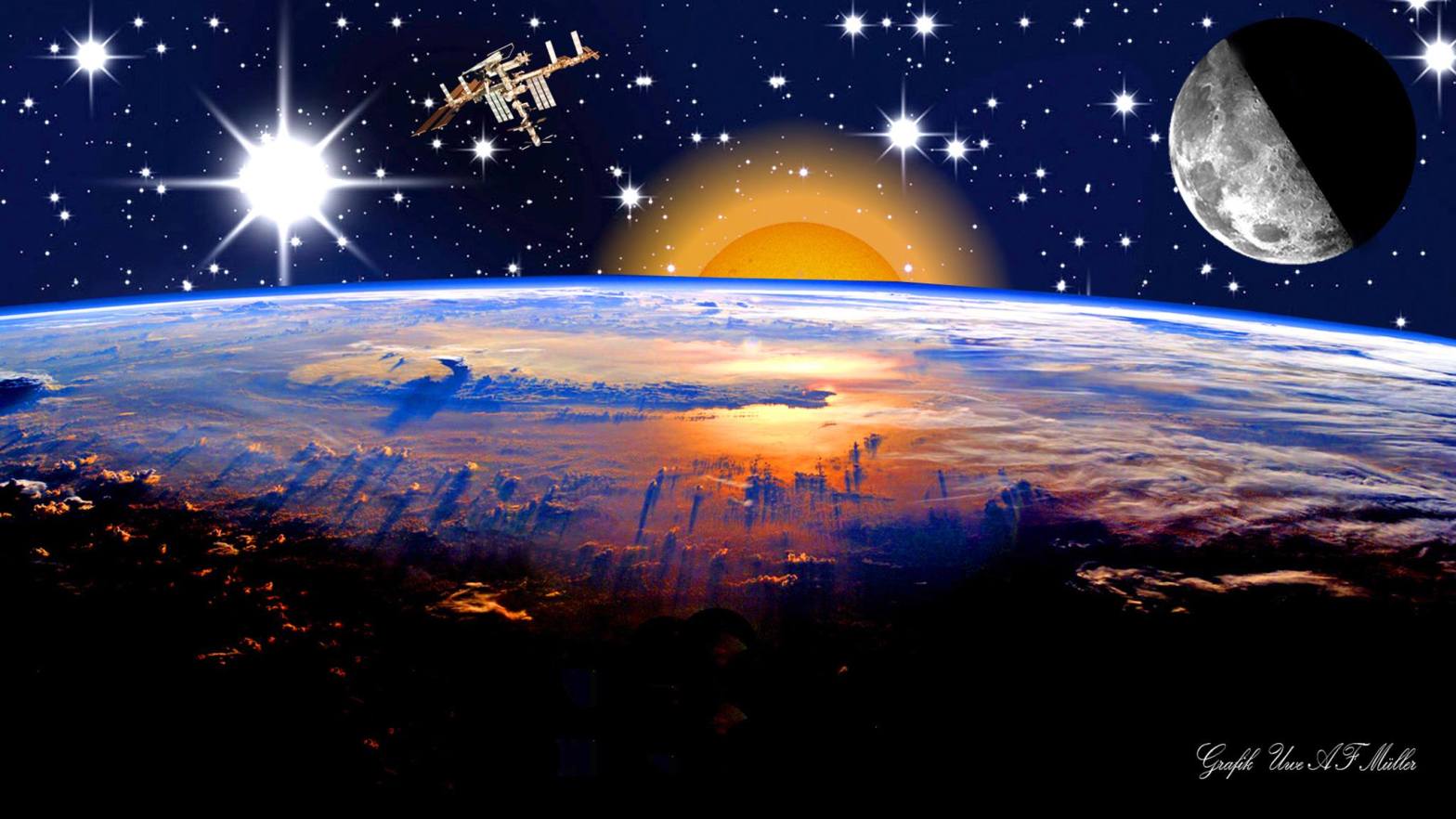
What a year 2020 has been.
Nevertheless, China still managed to complete the BeiDou navigation system, and successfully launched two ambitious space projects aiming at Mars and the Moon, among others. Some say all these are part of the space race. For Chinese, who have been staring into the heavens and contemplating the boundless void for thousands of years, these are just the beginning of their ‘quest for the ocean of stars (我们的征途是星辰大海)’.

Chinese astronomers are a romantic bunch, they are real dreamers. Just take a look at their choice of names. Reading through the list of China’s space exploration programmes is like revisiting all the Chinese classics and celestial mythologies. Today, I am going to share some of them with you.
Are you ready?
1. Lunar exploration – Chang’e (嫦娥) Project
This multi-phase programme is a series of Moon missions that include lunar orbiting, landing and stationing on the Moon.
Chang’e, after whom the lunar exploration programme was named, is a moon goddess. According to Chinese folklore, Chang’e took the elixir granted to her husband by the Taoist goddess Queen Mother of the West (西王母). She then became an immortal and flew to the moon, where she is said to be accompanied by a moon rabbit, or jade rabbit (玉兔). The earliest record of Chang’e can be found in Guicang (literally Return to the Hidden, 归藏), which dates all the way back to Shang Dynasty (~1600-1046 BC). Flying to the moon (奔月) has since been the dream of the Chinese.
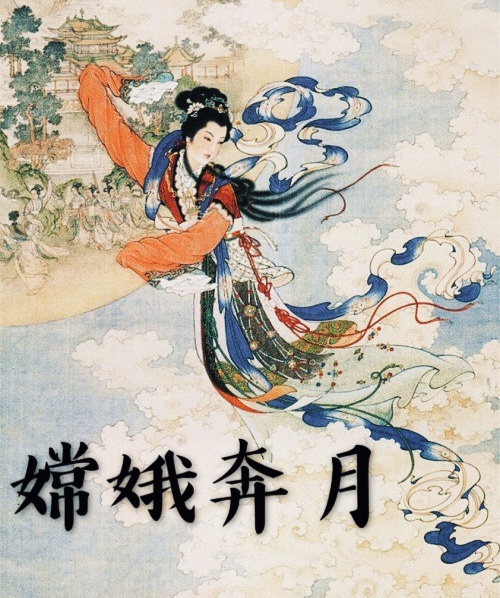
The Chang’e-5 Sample-return Mission, the latest and currently ongoing lunar exploration project, aims to bring back some moon rock sample.
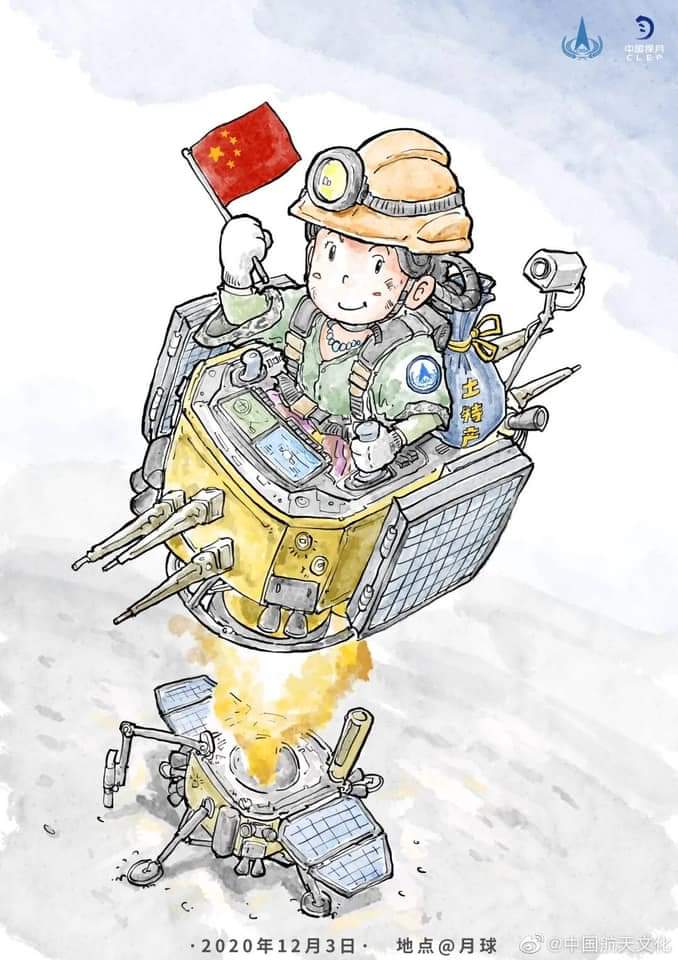
Lunar landrover – Yutu (jade rabbit, 玉兔)
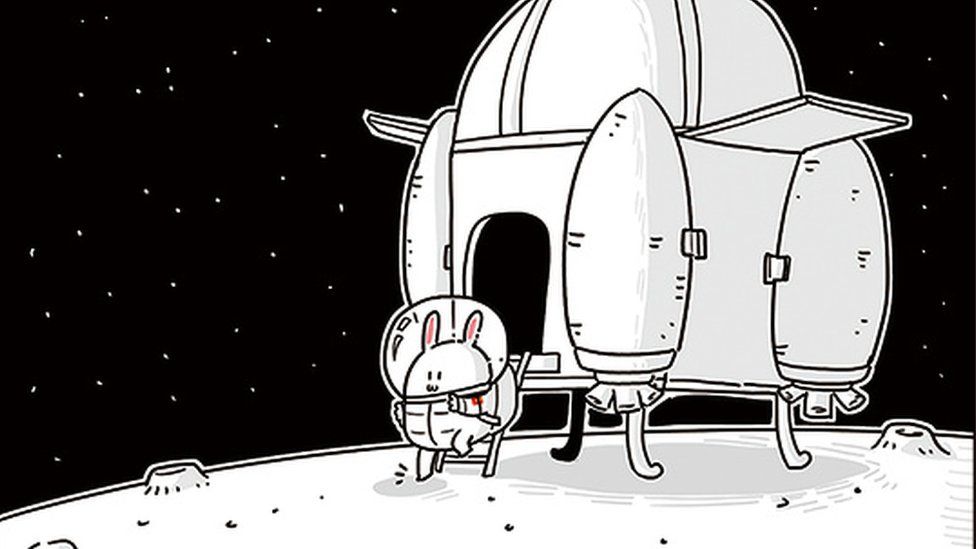
As mentioned above, the jade rabbit is Chang’e’s companion on the Moon.
Landed in January 2019, Yutu-2 is currently operating on the far side of the Moon. Whenever it exits hibernation and resumes work after a long lunar night, the Chinese netizens will greet it intimately, saying ‘awww, the bunny wakes up again!’
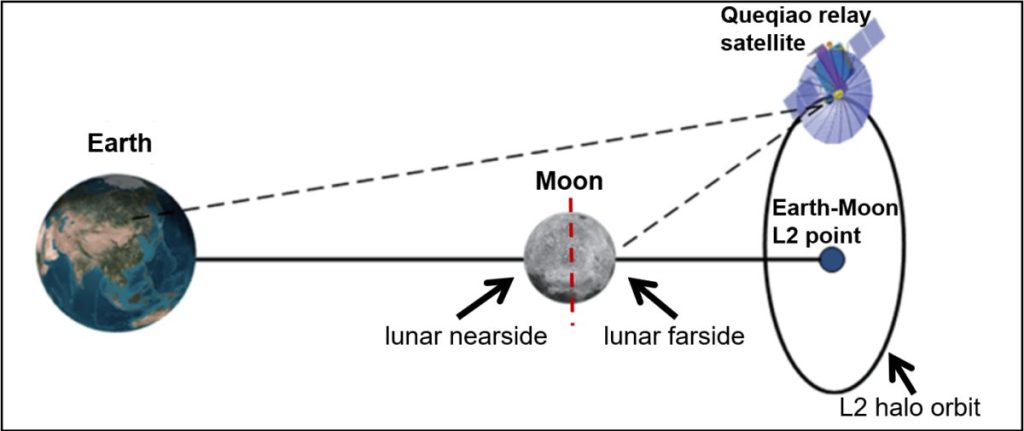
Relay satellite – Queqiao (Magpie Bridge, 鹊桥)
The Magpie Bridge has its origin in an ancient romance tale known as the Cowherd and the Weaver Girl. The love between the cowherd (牛郎, symbolising the Altair star) and weaver girl (织女, symbolising the Vega star) was forbidden, and they both were banished to the two ends of the Silver River, or Heavenly River (银河, symbolising Milky Way). Only on the 7th day of the 7th lunar month (七夕) are they allowed to be reunited on the bridge formed by a flock of magpie.
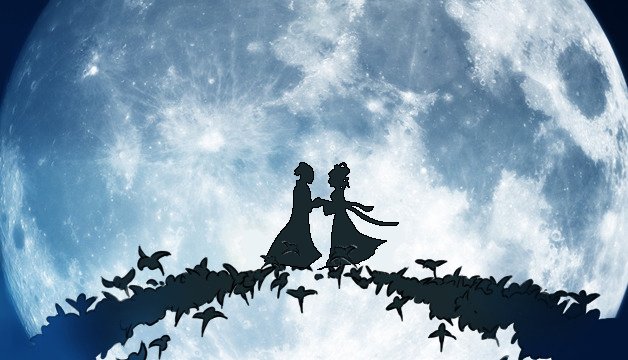
In January 2019, this bridge led Chinese astronomers to the far side of the moon during the Chang’e 4 lunar mission.
2. Manned space programme
Space station – Tiangong (Heaven Palace, 天宫)
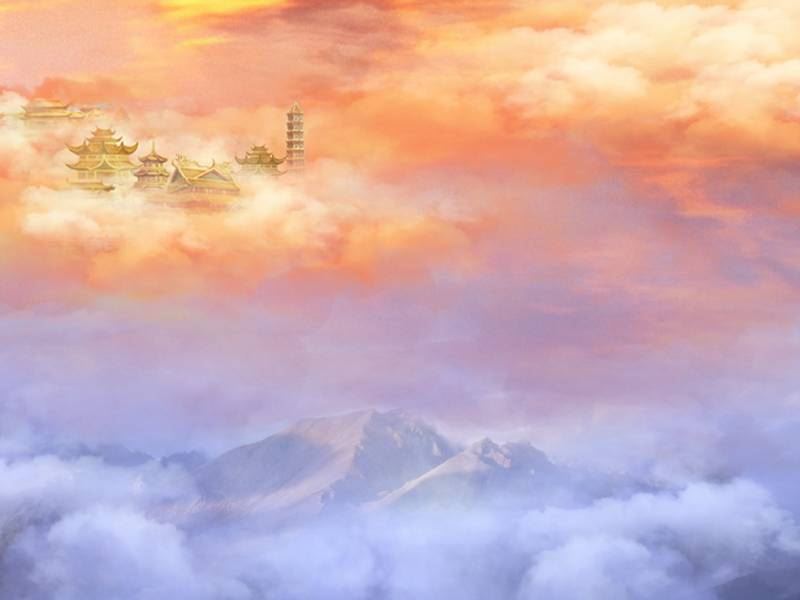
According to Taosim, the Heaven Palace, or Ziwei Palace (紫微宫), is where the Supreme Deity (or ‘Emperor’) lives. It also appears in numerous classics work from ancient times, all of which shaped the modern Chinese mythology.
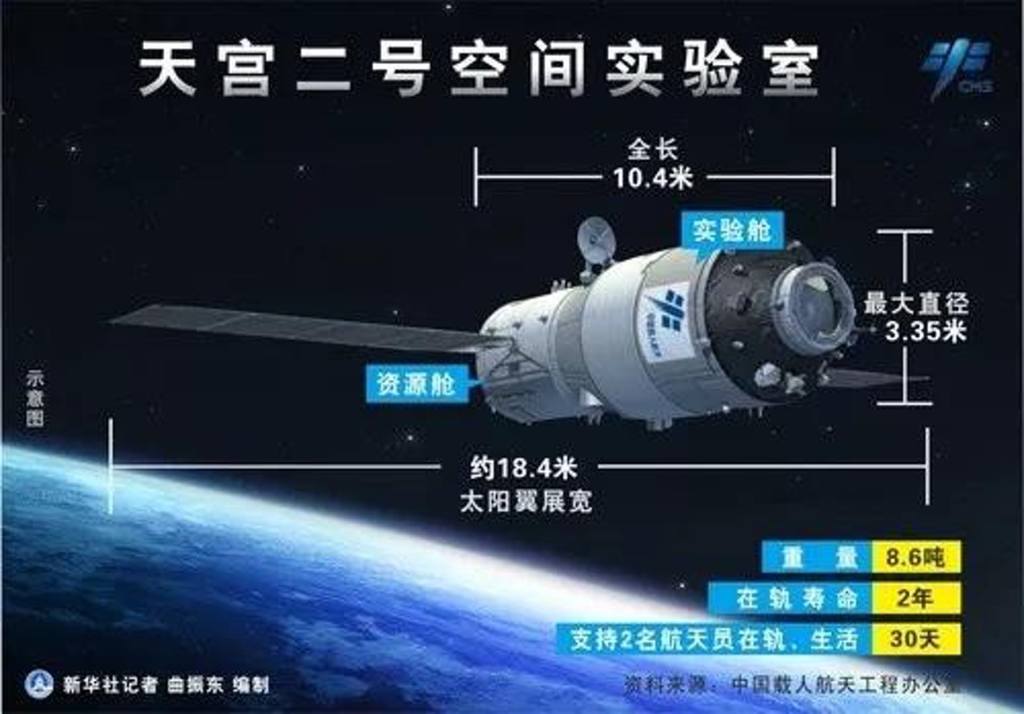
Other spacecrafts and modules in the programme are named as follows:
- Crewed spacecraft – Shenzhou (Divine ark, 神舟)
- Cargo spacecraft – Tianzhou (Heaven ark, 天舟)
- Core station module – Tianhe (Harmony of the Heavens, 天和)
- Experiment module I – Wentian (Quest for the Heavens, 问天)
- Experiment module II – Mengtian (Dreaming of the Heavens, 梦天)
- Telescope module – Xuntian (Touring the Heavens, 巡天)
3. Interplanetary mission to Mars – Tianwen (Quest for Heavenly Truth, 天问)
This adventurous mission is named after a long poem dating back to the Warring States Period (475-221 BC). Comprised of 172 questions written in short verses, this piece by Qu Yuan (屈原) is most famous for its immense curiosity towards natural phenomena and mythical believes, as well as the daring scrutiny of history and philosophy. It is regarded as the most valuable treasure in Chinese mythology.

Today, Tianwen ‘represents the Chinese people’s relentless pursuit of truth, the country’s cultural inheritance of its understanding of nature and universe, as well as the unending explorations in science and technology’, as stated by China’s space agency.
4. Expendable launch system – Changzheng (Long March,长征)
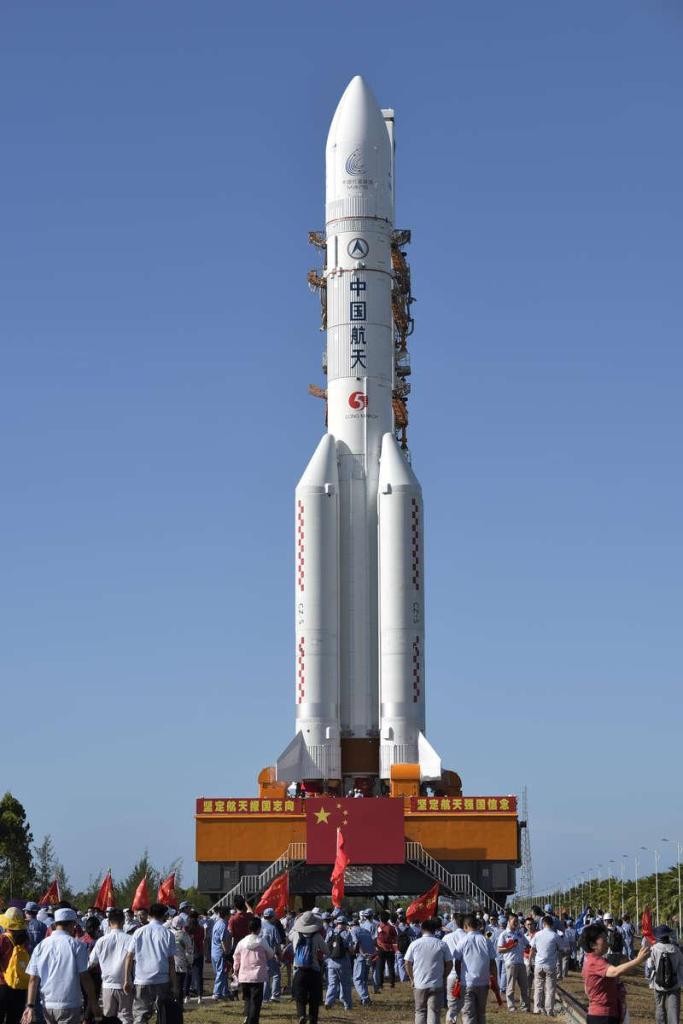
The Long March series are heavy-lift launch vehicles necessary for the placement of large satellites and space station modules into orbits. Long March-5, often referred to as the Chubby-5 (胖五) by Chinese netizens due to its appearance, succeeded in delivering the experimental satellite Shijian-20 (Practice, 实践) into space towards the end of 2019 after two rather unsatisfactory attempts. This made way for the successful launches of the Tianwen-1 Mars Mission and Chang’e-5 Sample-return Mission, as well as upcoming launches for the Tiangong modules.
5. Global navigation system – BeiDou (Northern Dipper, 北斗)
The navigation system completed this year is named after the Northern Dipper (seven brightest stars of the Ursa Major Constellation), which has been used as a guide for navigation in ancient China. Read more about the navigation system here.
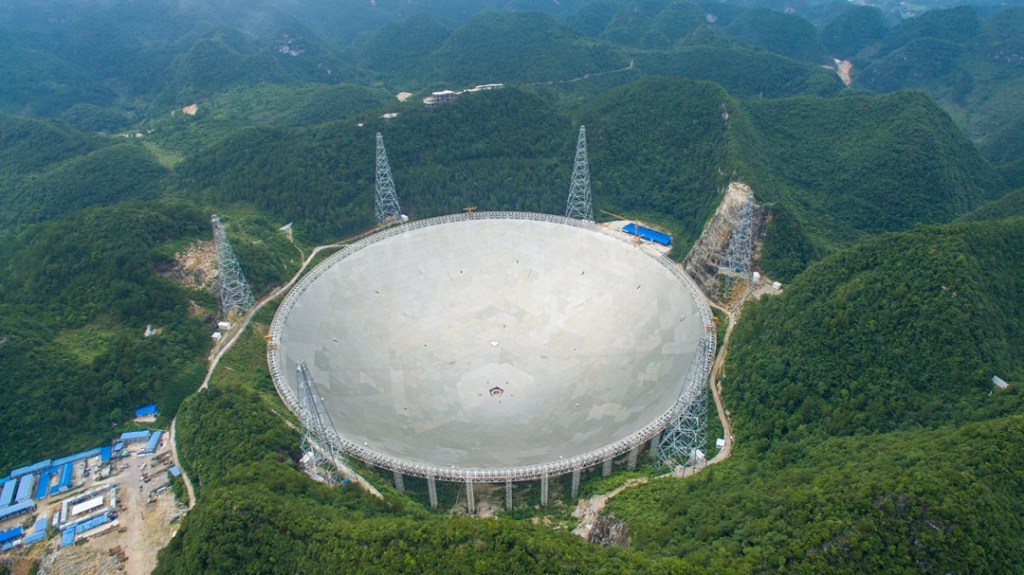
6. Five-hundred-meter Aperture Spherical Telescope (FAST) – Tianyan (Heaven Eye, 天眼)
This enormous radio telescope is capable of the capturing the weakest electromagnetic waves emitted by distant pulsars. It took almost 9 years since the construction started before the FAST became fully operational in early 2020. Capable of looking into the deep space with unprecedented power, let us hope the Heaven Eye lives up to its name in the years to come.
7. Solar observatory – KuaFu (夸父)
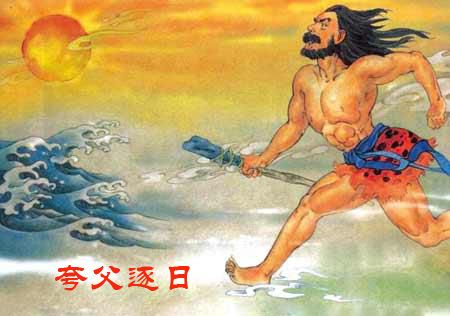
The KuaFu project is a joint Sino-Canadian-European mission dedicated to study space weather through observing the solar atmosphere and activity. It’s namesake is the famous Chinese mythological giant, KuaFu, who wanted to capture the sun. He kept chasing the running sun from East to West, and drank water from the Yellow River and Wei River on the way to quench his thirst. In the end, even after draining the two large rivers, he failed to reach the sun and finally died of exhaustion. This might not be the most auspicious name, but it reminds us of ancient Chinese’ desire to conquer the sun.
8. Quantum experiments at space scale (QUESS) – Mozi (Micius, 墨子)
The QUESS is a joint Sino-Austrian satellite mission designed to facilitate long-distance (over thousands of kilometres) quantum optics experiments. The first of its kind, it will promote the development of quantum encryption and teleportation technologies.
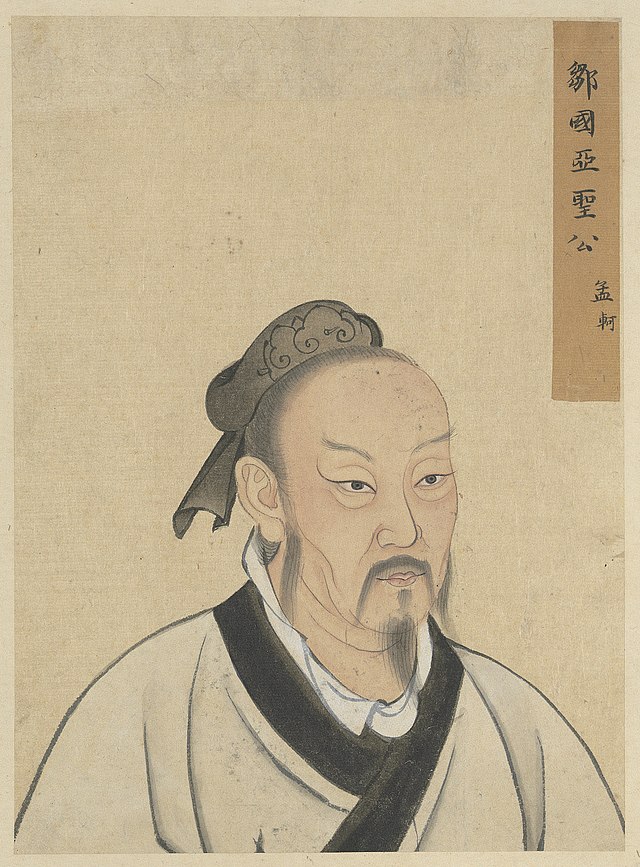
It is named after the Chinese philosopher Mozi, who lived between 470-391 BC. As the founder of the school of Mohism, he was a pioneer of the principles of logic, and the first to emphasise meritocracy, introspection and authenticity as opposed to the doctrines proposed by Confucianism. In terms of his ahead-of-time scientific contribution, Mozi is believed to be the first person to realise light travels in straight lines, and to develop the precursor idea of Newton’s first law of motion.
Now, the Mozi satellite opens a new way towards deciphering the mysterious properties of quantum physics.
9. Dark matter particle explorer – Wukong (Awakening to Emptiness, 悟空)
This satellite is designed to detect the indirect decay signals of weakly interacting massive particles (WIMPs), one of the hypothetical candidates for dark matter.
The namesake of this project is the famous Monkey King from the Journey to the West (西游记). In Chinese, Wukong literally means awakening to Emptiness in the Buddhist context. The Wukong satellite, on the other hand, is expected to comprehend the nature of dark matter lurking in the empty void.
10. Constellation communications system – Hongyan (Swan goose, 鸿雁)
Compared to those listed above, the Hongyan constellation is probably a less known, but equally ambitious, space programme. It is a satellite constellation that will contain more than 300 satellite members. When completed, this system will replace all ground-based networks and allow mobile phones or other communication devices to be connected regardless of their location on Earth, be it in a remote desert or centre of Pacific Ocean. In other words, all the ground stations will be sent up into the sky, thereby truly achieving global coverage. This project is not without potential competitors, as the Starlink proposed by SpaceX is also boosting its gears.
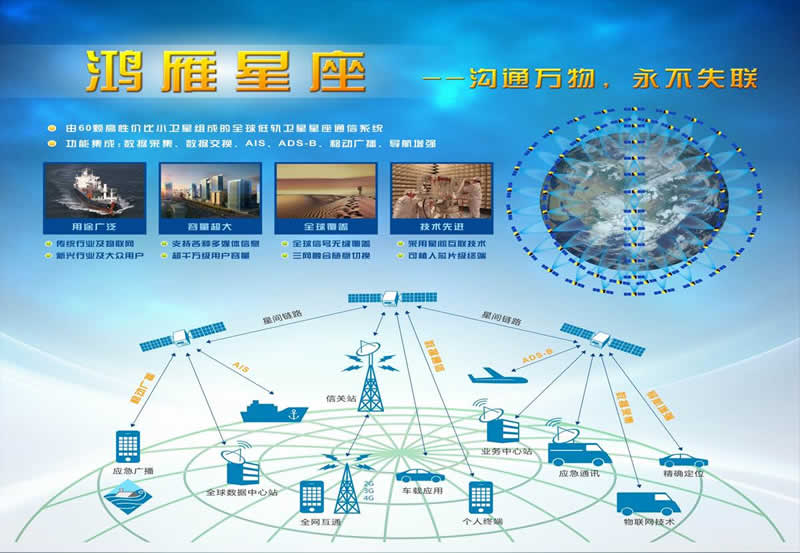
Why is it called the swan goose, or Hongyan in Chinese? This can probably be traced back to the ancient Chinese custom of using geese to deliver posts. Hence, the Hongyan constellation represents a promise to always deliver important messages in a timely manner no matter where you are on Earth.
And that concludes our quick overview of the major space exploration programmes in China, and the fascinating origins of their names.
The Chinese never stopped gazing upon the sky over the last 5 millennia, and their aspiration to embark on a galactic journey has never changed. With the current explosive development in modern technologies, they are finally making a start.
*All photos/pictures are from internet
 K in the clouds
One thought on “China’s Space Odyssey”