
Original piece: 《坐着高铁看中国!》
Produced by Institute for Planets (星球研究所)
Written by 星球研究所 所长
Translated by Kelvin Kwok
Posted with permission from Institute for Planets

Different parts of China are being connected together in a way never seen before.
From snowy mountain tops…
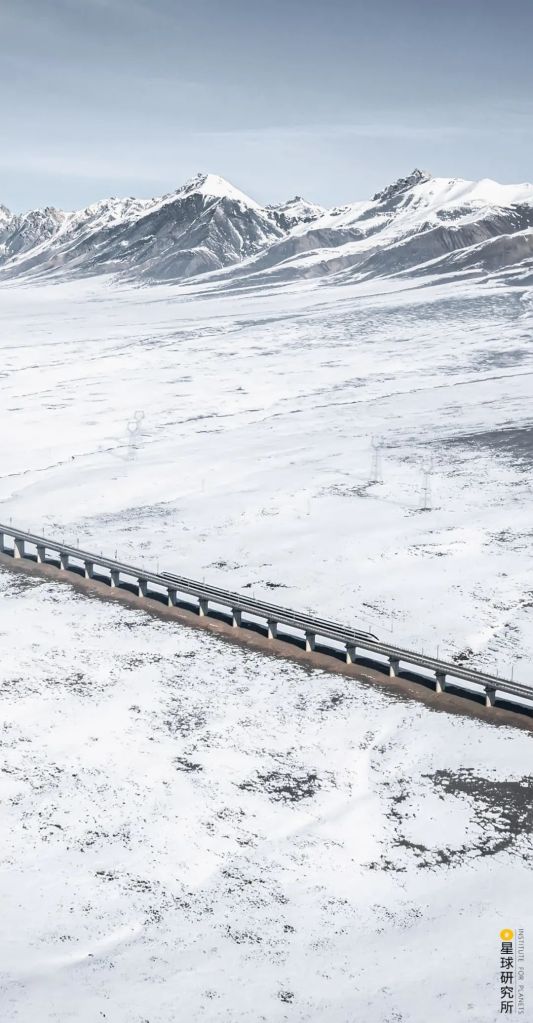
(photo: 章力凡)
To blooming flower fields…
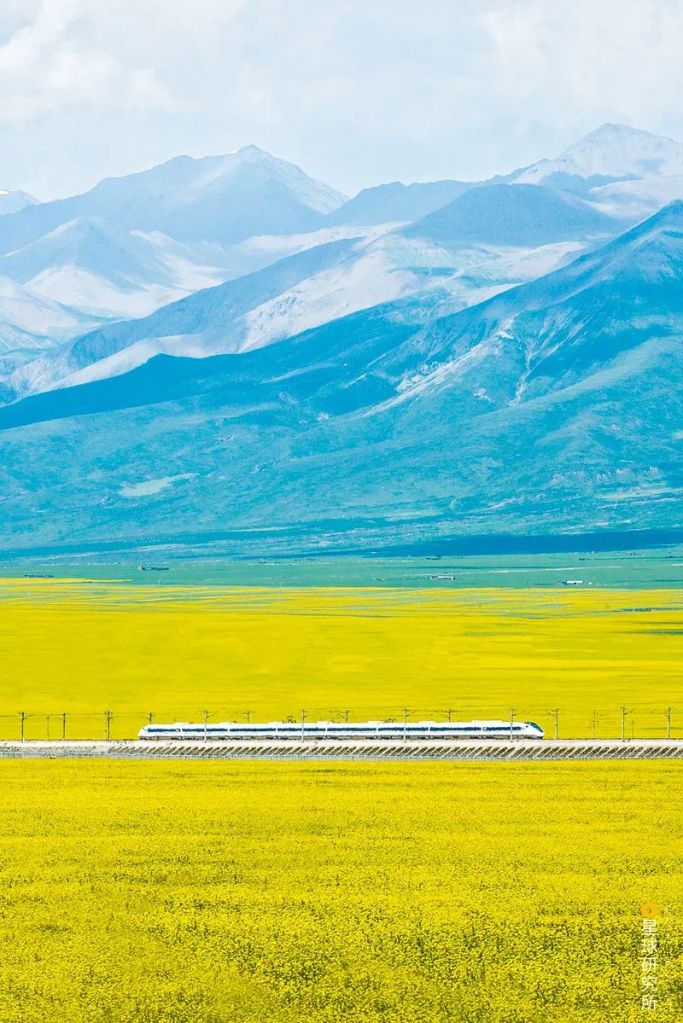
(photo: 杨诚)
And all the way to tropical oceans.
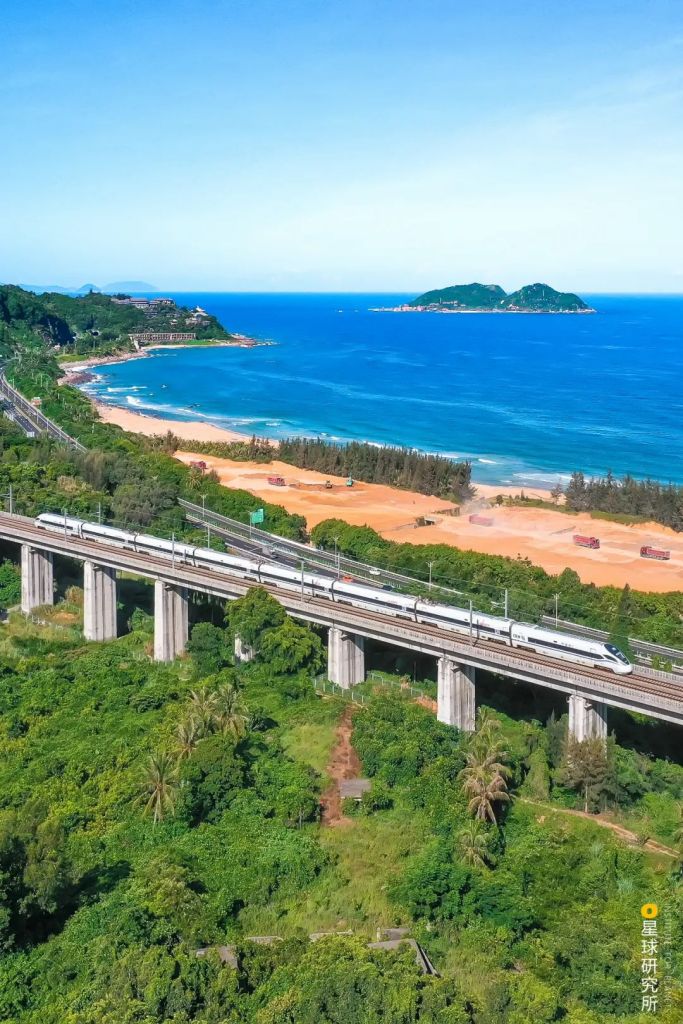
(photo: 吴坤锦)
Striding towards completion by the day is the world’s largest high-speed railway network. It stretches out from the ‘eight vertical and eight horizontal‘ framework, and is complemented by regional connections and inter-city railways.
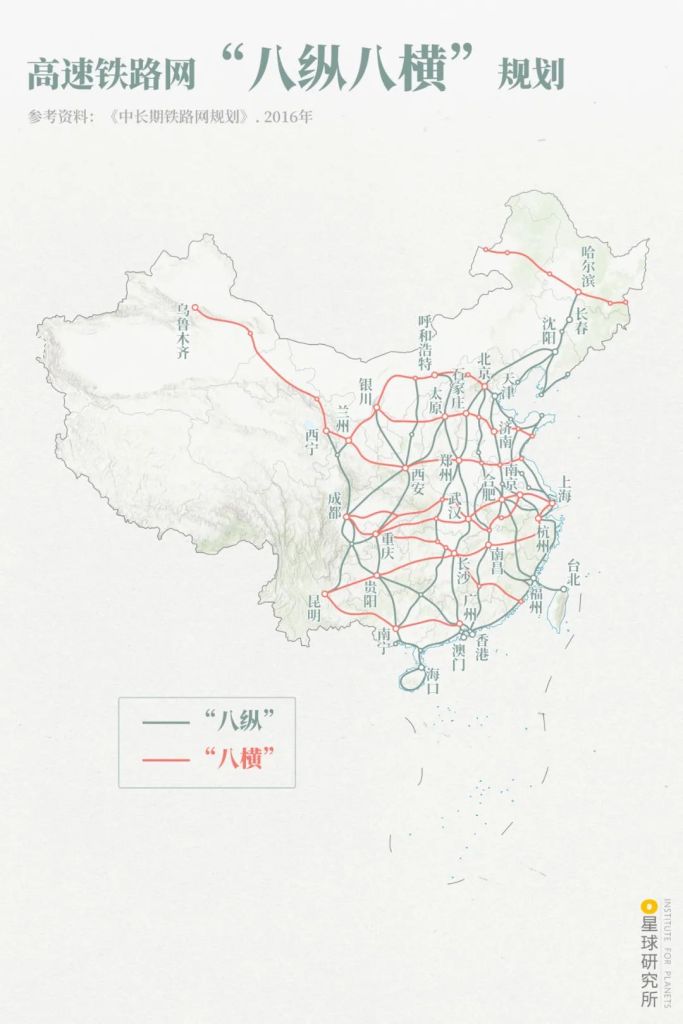
Eight vertical (八纵), eight horizontal (八横)
(diagram: 巩向杰, Institute for Planets)
This grandeur project is currently 70% complete, totalling 36,000 kilometres of high-speed railway mileage. More than 3600 multiple-unit trains form an enormous ‘battle group’ that dashes across the nation in all directions.

(photo: 林颖轩)
It competes with expressways.
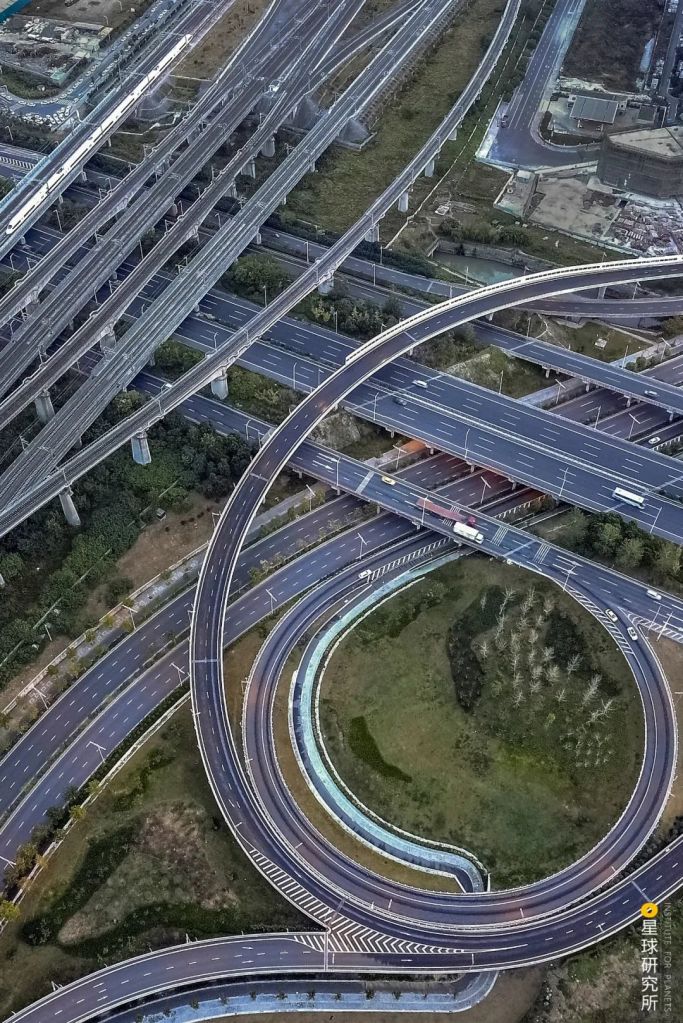
(photo: 刘慎库)
And races with airlines.
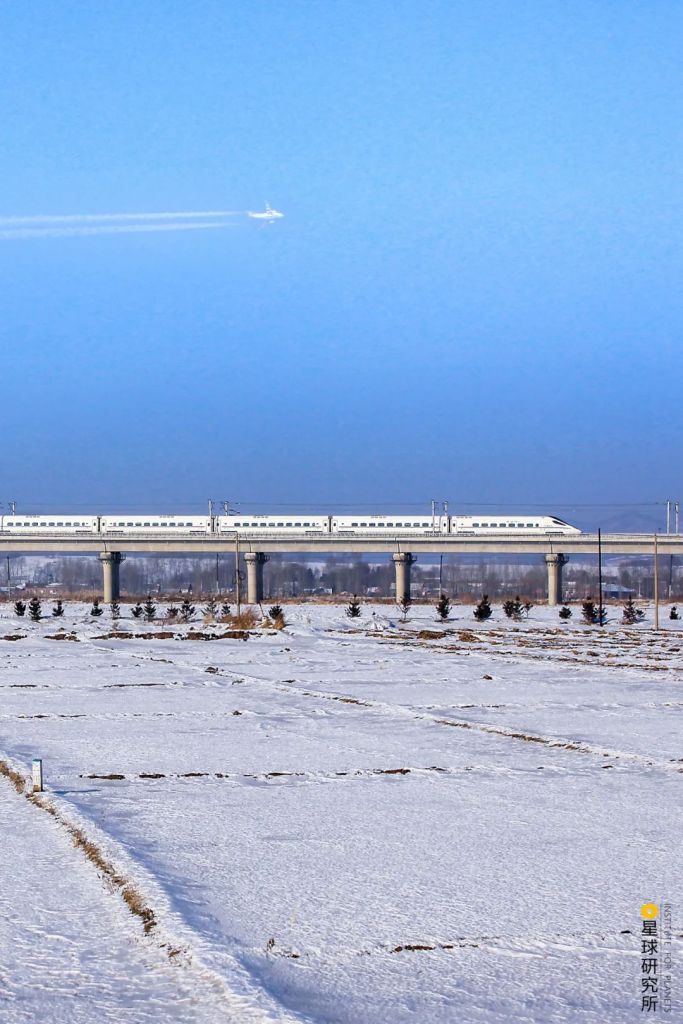
(photo: 刘慎库)
Today, may we enjoy a brief but fascinating tour on a high-speed train, and discover the China that is interconnected by the ‘eight vertical and eight horizontal’ network.
Bon voyage!
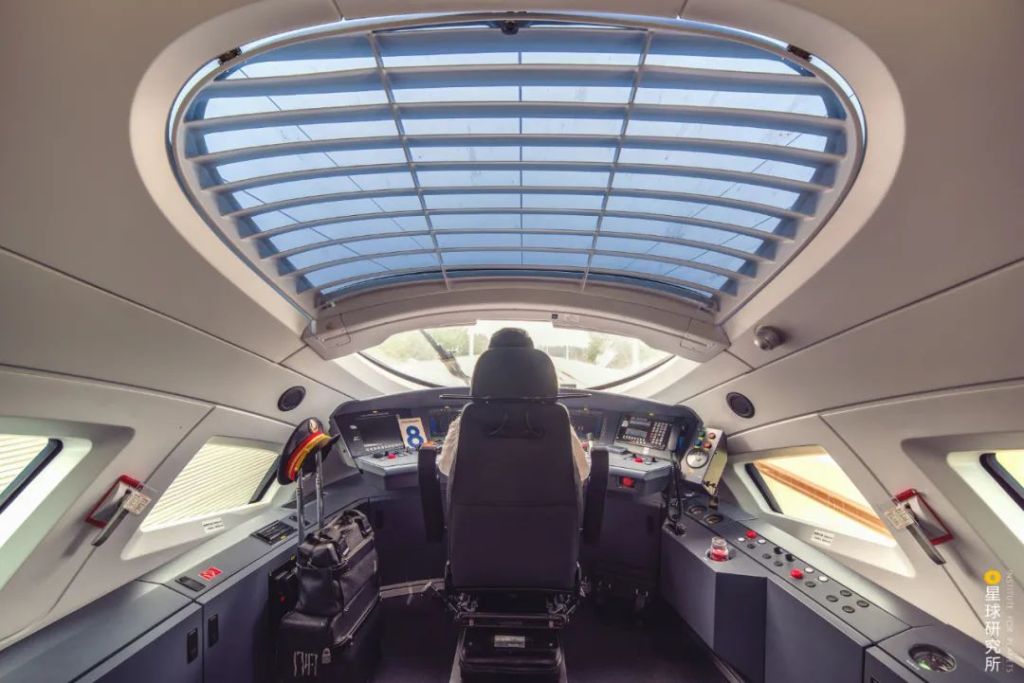
(photo: 焦潇翔)
1. Eight Verticals
Our journey starts with the eight vertical railways.

1) Coastal passageway (沿海通道)
2) Beijing-Shanghai passageway (京沪通道)
3) Beijing-Hongkong (Taiwan) passageway (京港[台]通道)
4) Beijing-Harbin & Beijing-Hongkong-Macau passageway (京哈-京港澳通道)
5) Hohhot-Nanning passageway (呼南通道)
6) Beijing-Kunming passageway (京昆通道)
7) Baotou (Yinchuan)-Haikou passageway (包[银]海通道)
8) Lanzhou (Xining)-Guangzhou passageway (兰[西]广通道)
(diagram: 巩向杰, Institute for Planets)
The 1st vertical – Coastal passageway
This is the eastmost line among the eight verticals, and is the longest of all. It sets off from Liaoning, Tianjin and Shandong, running mostly by the sea on its way south. After passing by Jiangsu, Shanghai, Zhejiang and Fujian, the line finishes at Guangdong and Guangxi.
Along the way, numerous eastbound rivers widen up as they debouch into the sea. These railway routes therefore have to frequently rely on bridges to cross the vast waters.
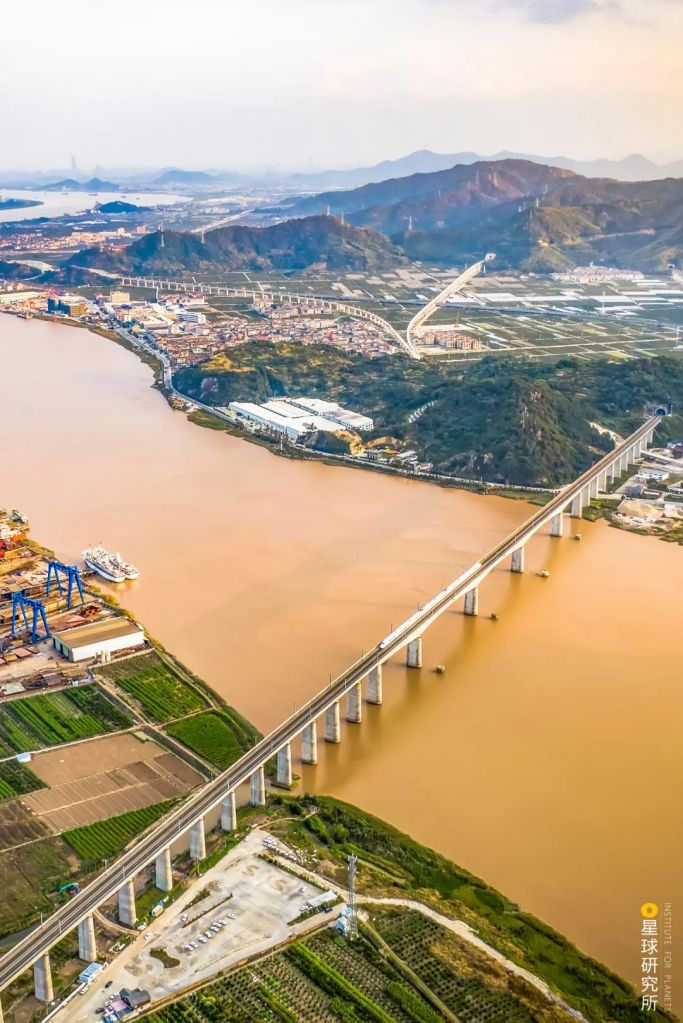
(photo: 傅鼎)
The most impressive bridges are those that span the sea. The Ningde Grand Bridge in Ningde, Fujian, crosses the Ningde Bay with its 8.1-kilometre span.
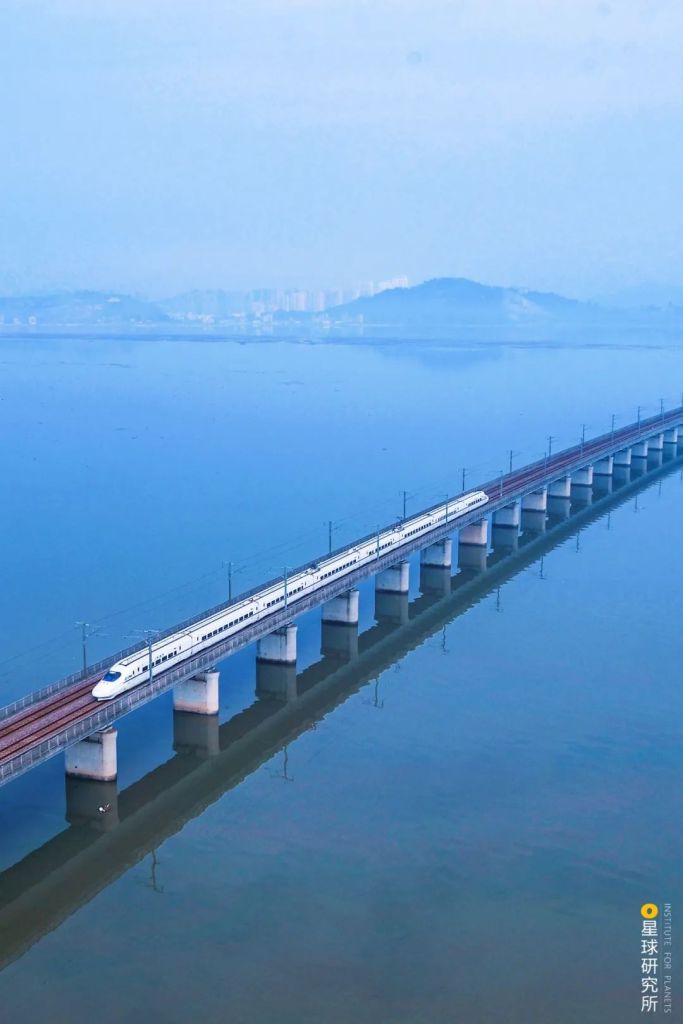
(photo: 王璐)
And the Quanzhou Bay Grand Bridge of the Fuzhou-Xiamen High-speed Railway, which is still under construction, leaps across the Quanzhou Bay with a total span of 20.29 kilometres. When completed, this bridge will allow high-speed trains to speed at 350 km/h above the sea. It will score the highest speed limit on a sea-spanning bridge in the world.
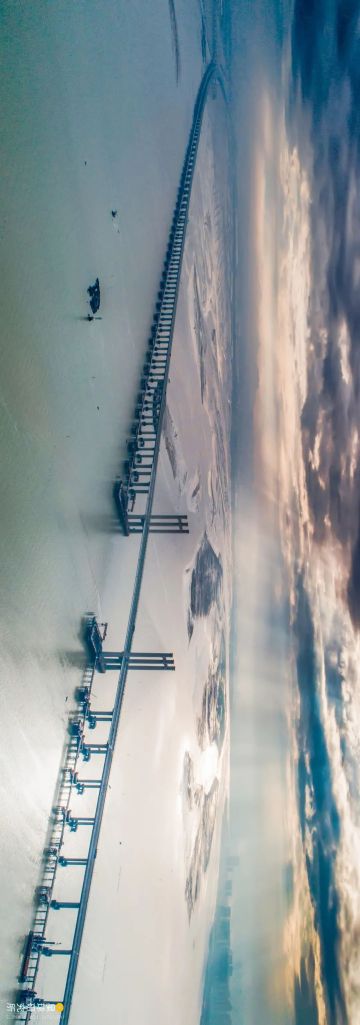
(photo: 靳晰)
The 2nd vertical – Beijing-Shanghai passageway
This passageway incorporates the current Beijing-Shanghai High-speed Railway and its proposed second route, which together connect the Jing-Jin-Ji Metropolitan Region with the Yangtze Delta. These city clusters are densely populated and have a prospering economy.

(photo: 李晓琪)
The passageway has therefore become the busiest high-speed railway in the country.
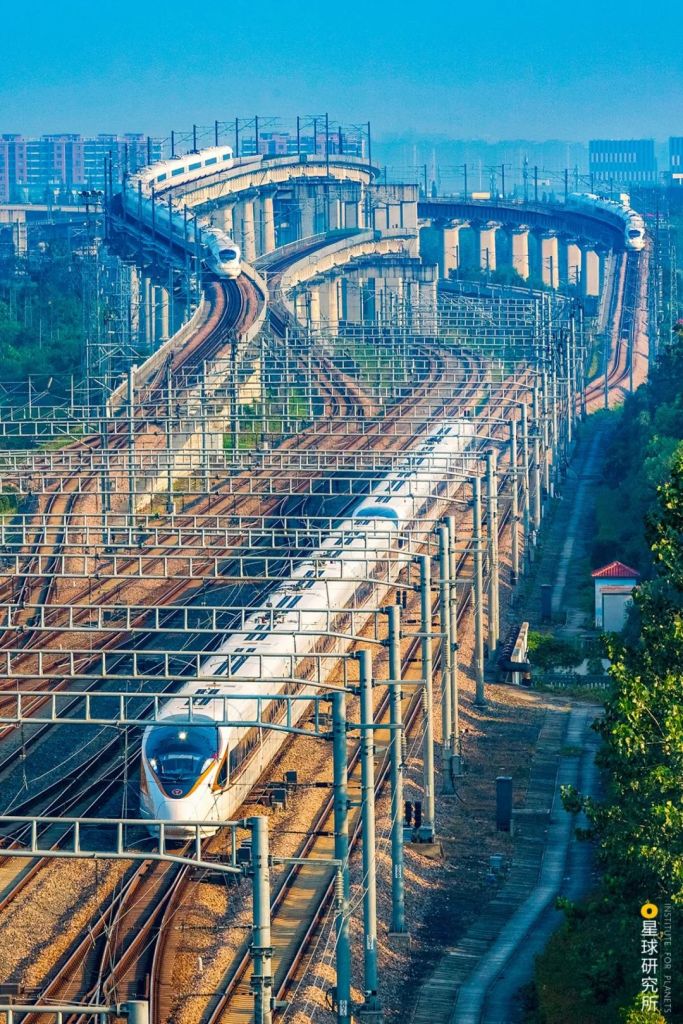
(photo: 刘慎库)
In order to minimise land use for high-speed railway construction, the Beijing-Shanghai High-speed Railway is extensively built on bridges. This also allows the railway to cope better on the soft soil, rivers and lakes across the alluvial plains at the Yangtze Delta.
The Danyang-Kunshan Grand Bridge in this passageway has a total length of 164.851 kilometres. It has held the title of world’s longest bridge since its completion in 2010, and remains unchallenged till this day.
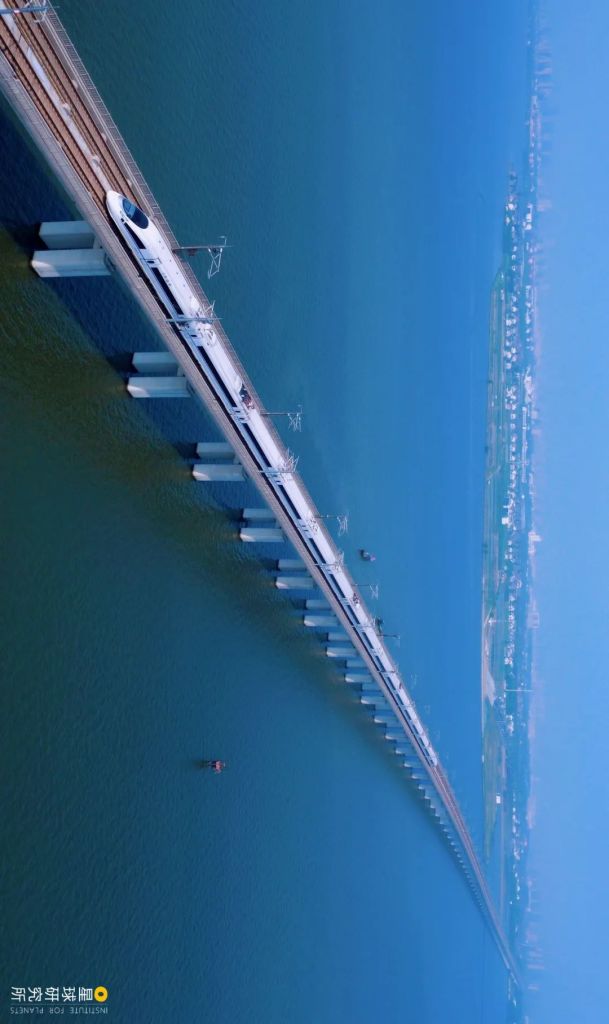
The bridge crosses the Yangcheng Lake, which is famous for its Chinese mitten crabs
(photo: 王璐)
The 3rd vertical – Beijing-Hongkong (Taiwan) passageway
This passageway travels down from Beijing and branches out in the southern section; one branch arrives in Hong Kong in the far south, the other traverses the strait to reach Taipei. In between, the Hefei-Fuzhou section links up several scenic regions, including the Yellow Mountain, Wuyuan and Wuyi Mountain.
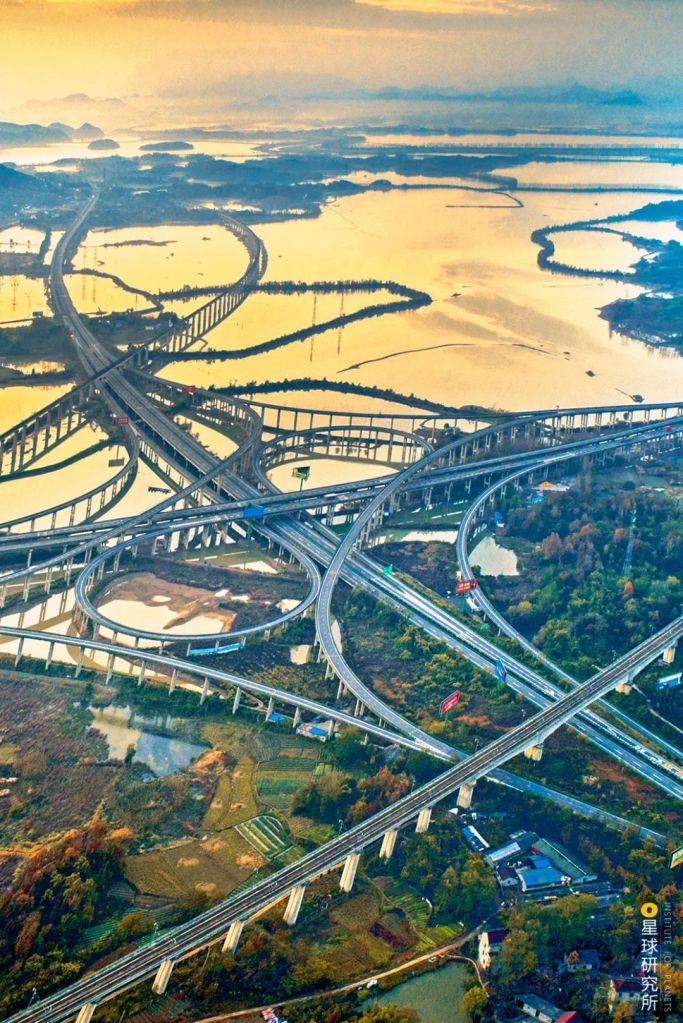
(photo: 苗地)
It is a most enjoyable ride among the stunning greens.
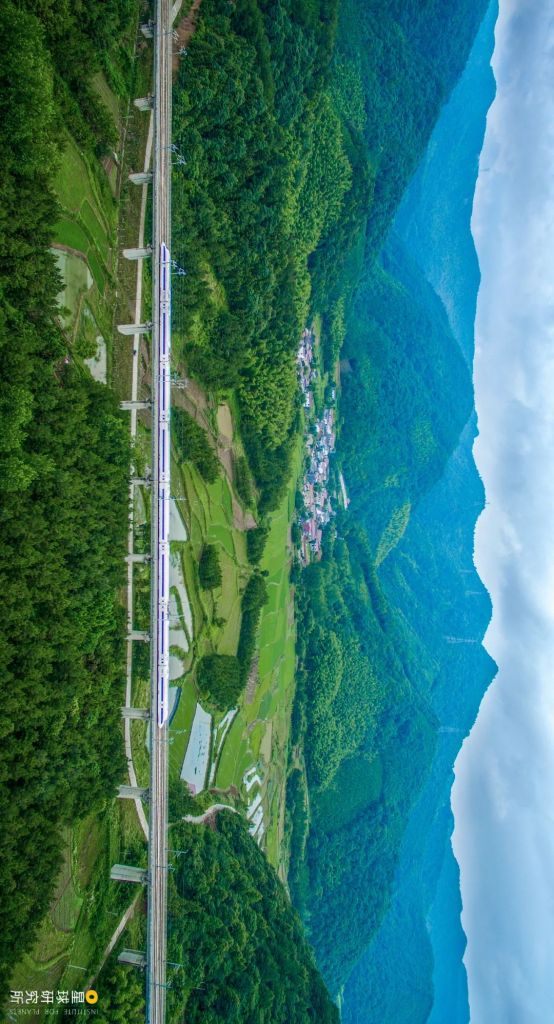
(photo: 杨诚)
And the golden harvest.
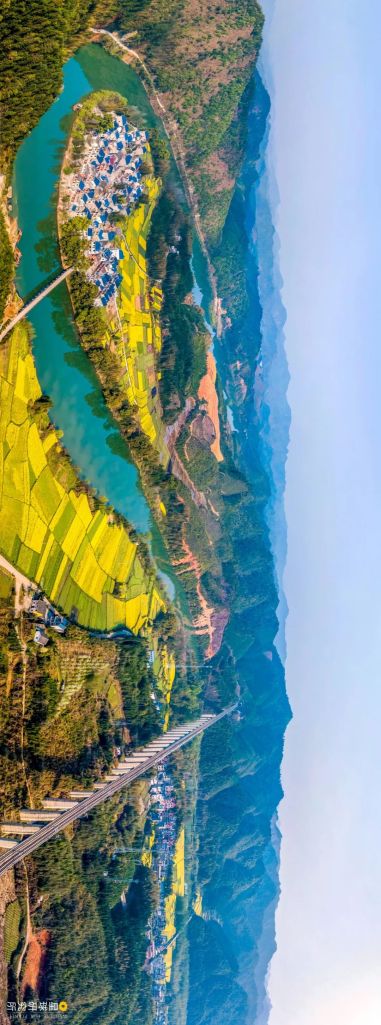
(photo: 刘慎库)
The Pingtan Strait Road-Rail Bridge that connects Fuzhou and Pingtan Island is almost ready to be open to public. In the near future, trains will be able to continue from Pingtan and arrive in Taipei on the other side of the Strait.
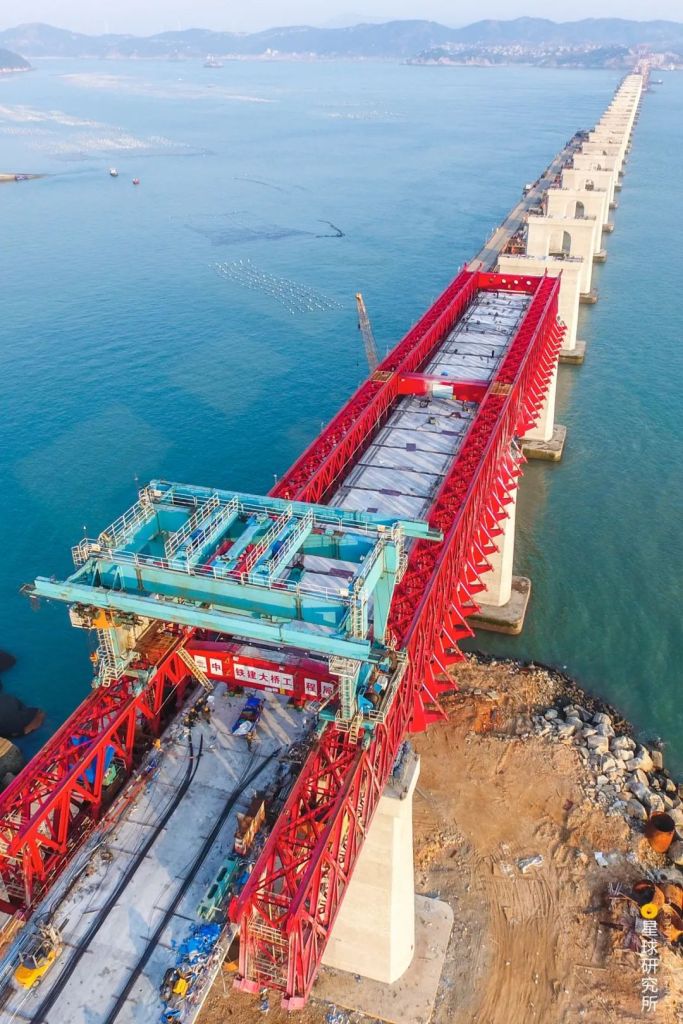
(photo: 李冰, China Railway Construction Corporation)
The 4th vertical – Beijing-Harbin & Beijing-Hongkong-Macau passageway
Travelling from Harbin to Beijing, and then through Zhengzhou and Wuhan, the 4th passageway finally arrives in Pearl River Delta. This vertical route has the largest latitude span among all others.
As the blizzards hit in the northeast…
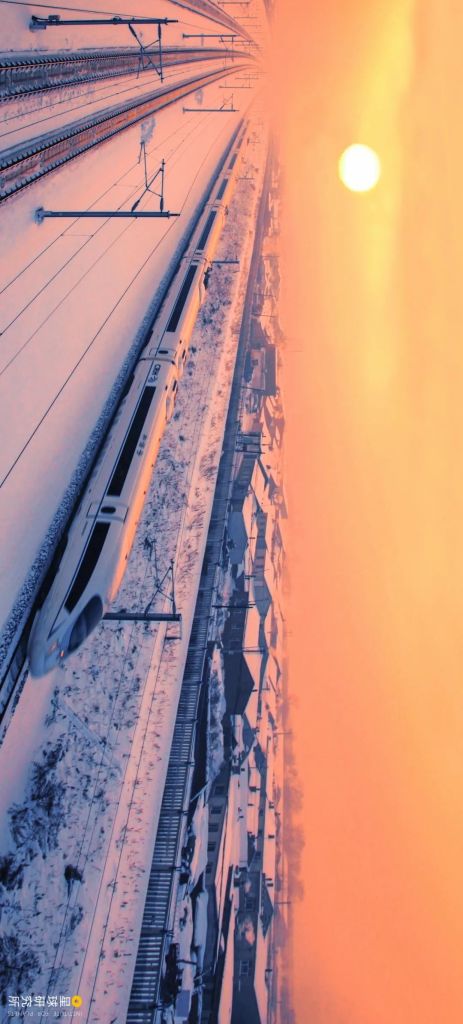
(photo: 霍春光)
Hunan might still be immersed in the autumn colours…
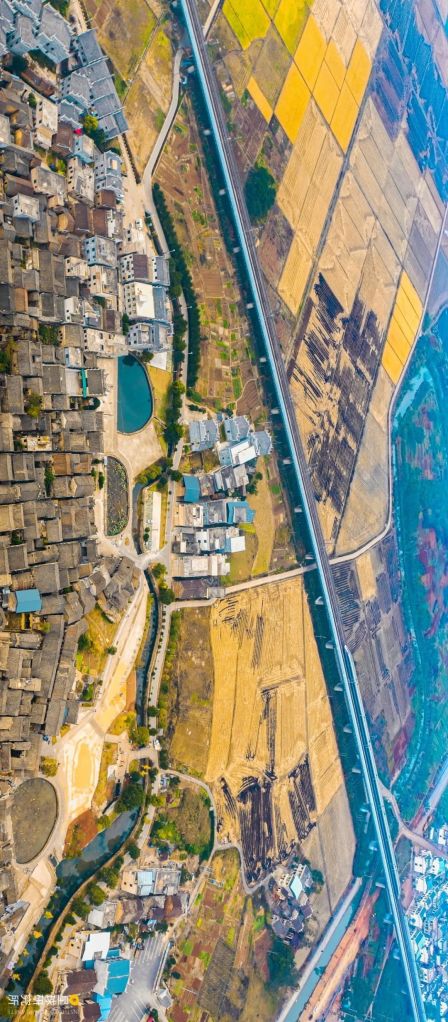
(photo: 高兴建)
While Guangdong is probably as verdant as ever.
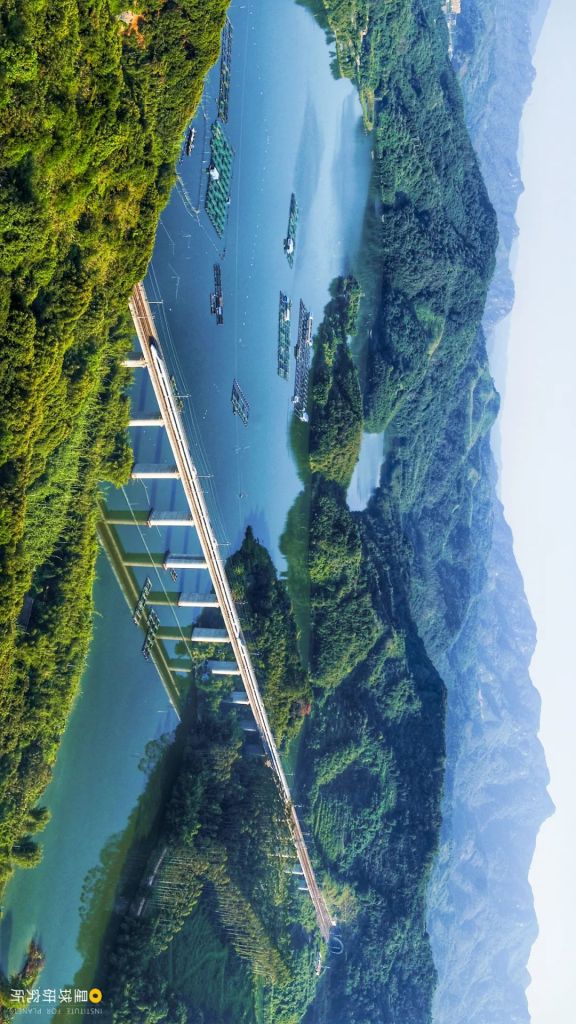
(photo: 王璐)
The 5th vertical – Hohhot-Nanning passageway
Starting from Hohhot on the Inner Mongolian Plateau, this passageway runs through Taiyuan, Zhengzhou, Xiangyang and Changde, as well as karst landforms in the south including Guilin and Nanning.
Apart from various smaller sections, the passageway is largely under construction or still in the planning phase. It will take some time before it is fully completed.
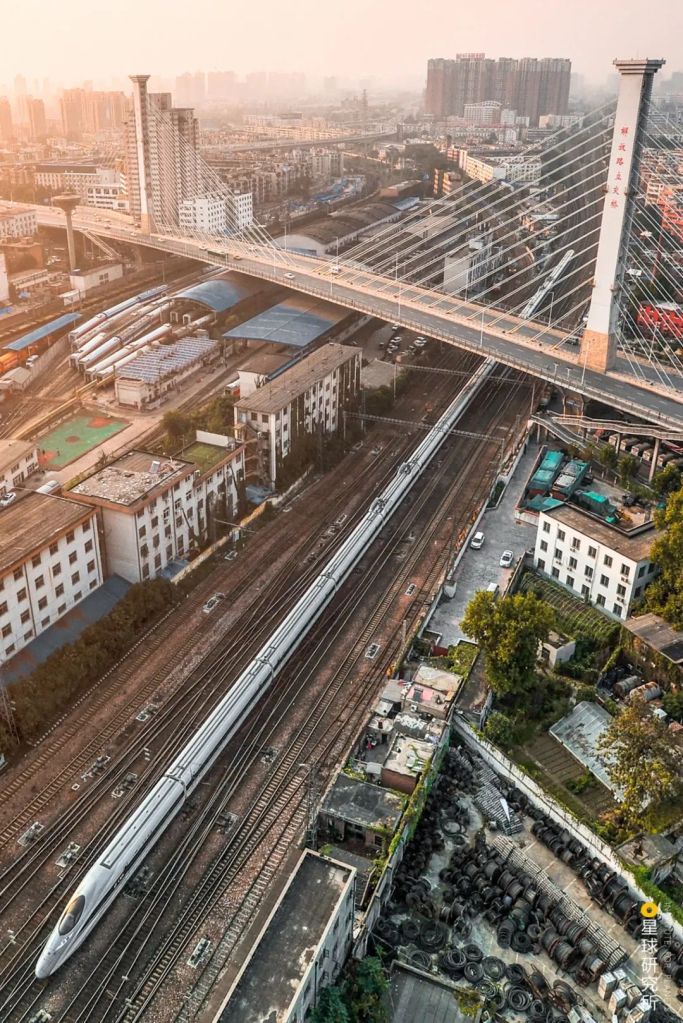
(photo: 焦潇翔)
The 6th vertical – Beijing-Kunming passageway
Trains travel southwest on this passageway. From Beijing, they run past Taiyuan and Xi’an and arrive in Chengdu and Kunming. There are also branching routes at both northern and southern terminals that link up Zhangjiakou, Datong and Chongqing.
Among them is the famous Beijing-Zhangjiakou Railway which, thanks to Zhan Tianyou’s (詹天佑) clever design, managed to travel through the mountainous terrains more than 100 years ago. Today, the Beijing-Zhangjiakou High-speed Railway is able to overcome all these barriers at 350 km/h. Such changes are astounding.
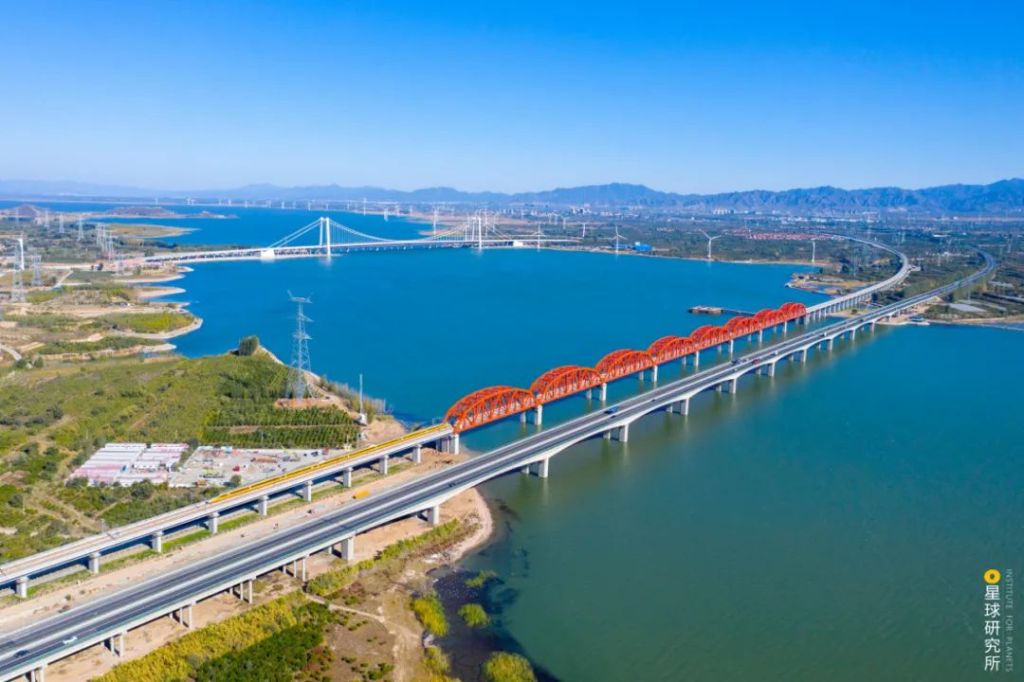
(photo: 赵斌)
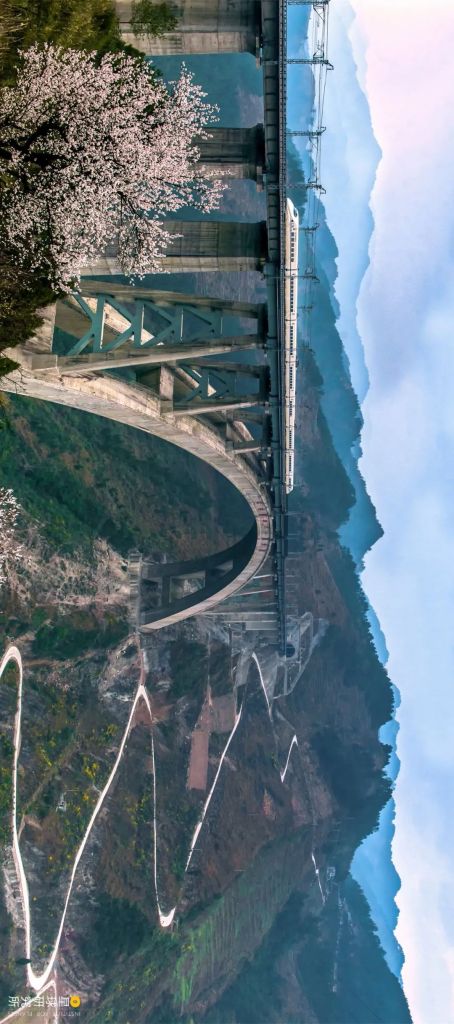
Another railway experiencing similarly astonishing advancement is the Xi’an-Chengdu High-speed Railway. Coming from the north, it punches through the Qinling and Daba Mountains and opens up a new path into the Sichuan basin. The straight railway is in stark contrast with the meandering expressways in these regions.
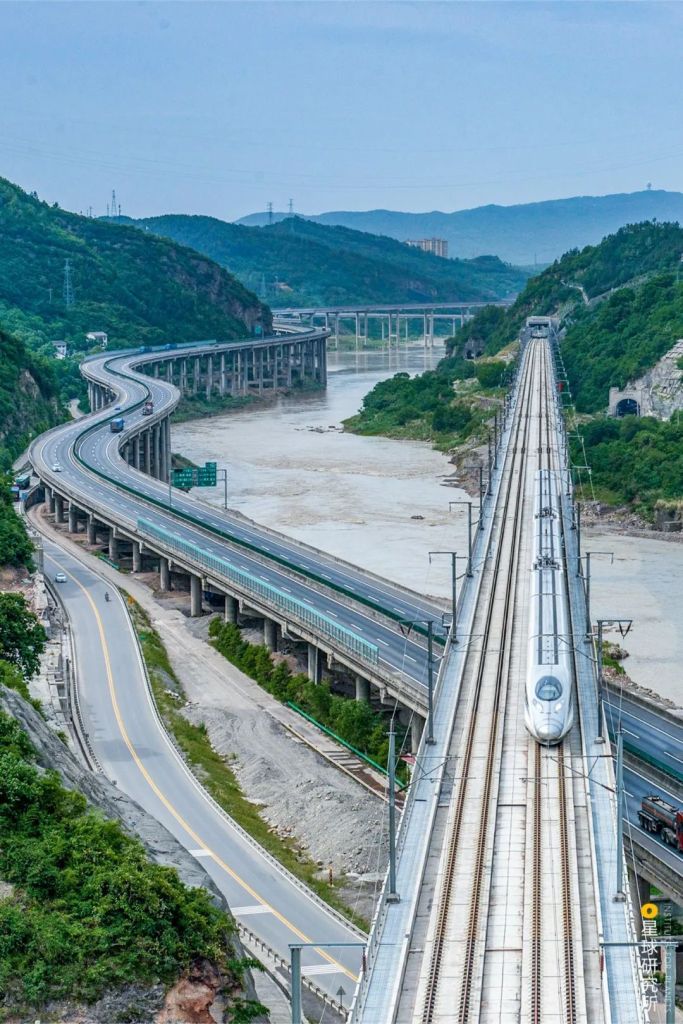
This is the first bridge of Xi’an-Chengdu High-speed Railway to enter Sichuan
Below the bridge is Beijing-Kunming Expressway and National Highway 108; tunnel on the right is the Baoji-Chengdu Railway which started operating in 1958
(photo: 刘建镍)
Since then, the journey into Sichuan was no longer impossible.
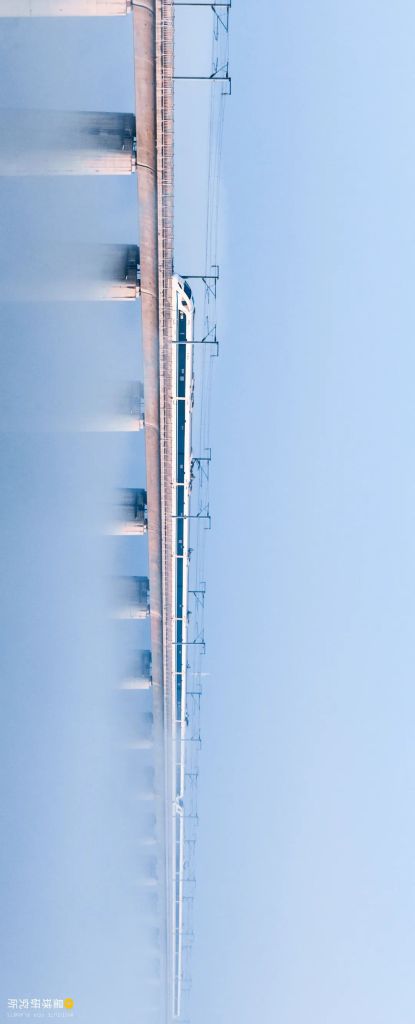
(photo: 谭本建)
The 7th vertical – Baotou (Yinchuan)-Haikou passageway
This passageway runs south from Baotao (inner Mongolia) and Yinchuan (Ningxia). Before reaching Leizhou Peninsula, the southmost part of the Mainland, it traverses the Loess Plateau and goes past Chongqing, Guiyang and Nanning. Once there, it merges with the Hainan Ring High-speed Railway.
Notably, the Yinchuan-Xi’an section, which is about to come into service, will be brushing the edge of the Mu Us Desert and crossing the Dongzhi loess tableland, which is the world’s largest loess landform.
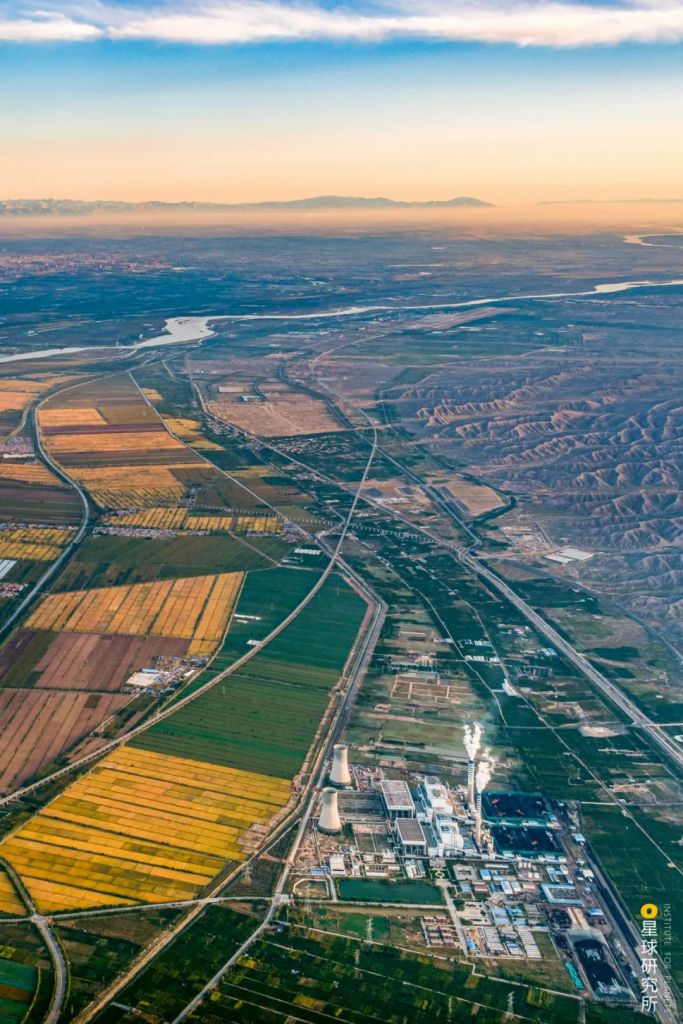
(photo: 陈剑峰)
Whereas the Hainan Ring High-speed Railway, a 653 kilometres route opened in 2015, is the world’s first circular railway along a tropical coast.
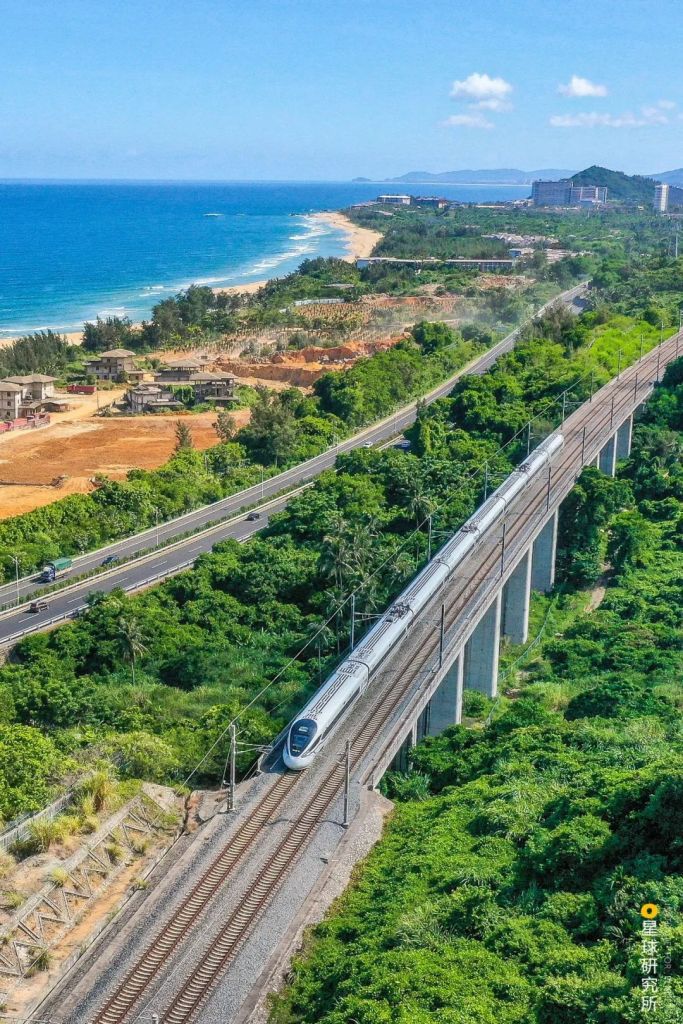
(photo: 吴坤锦)
Looking out from the large window panes on the high-speed train, one will be immediately absorbed in the soothing views of the southern paradise.
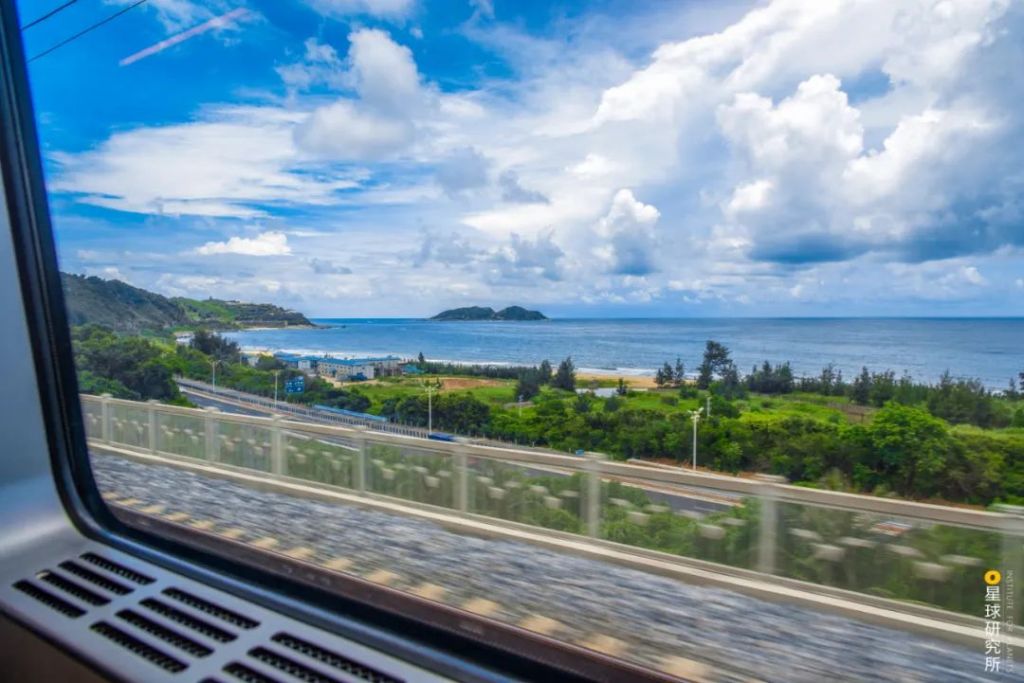
Xiangshui Bay, Lingshui
(photo 靳晰)
The 8th vertical – Lanzhou (Xining)-Guangzhou passageway
The last vertical passageway starts from Xining and Nanzhou, but this time travelling southeast. It travels through Chengdu, Chongqing and Guiyang before reaching Guangzhou at the terminus.
The Guiyang-Guangzhou High-speed Railway is one of the routes currently open to public. As the first high-speed railway to operate in Guizhou, it completely transformed the city’s transportation predicament that was historically described as ‘never more than three miles of flat land (地无三里平)’.
This railway is technically not a high-speed railway, but is included here as a reference for Guiyang’s geography
(photo: 刘建镍)
As a typical mountain railway, more than half of the 857 kilometres long Guiyang-Guangzhou High-speed Railway runs underground. But when the train comes out of the tunnels, passengers will find themselves surrounded by exquisite karst landforms…
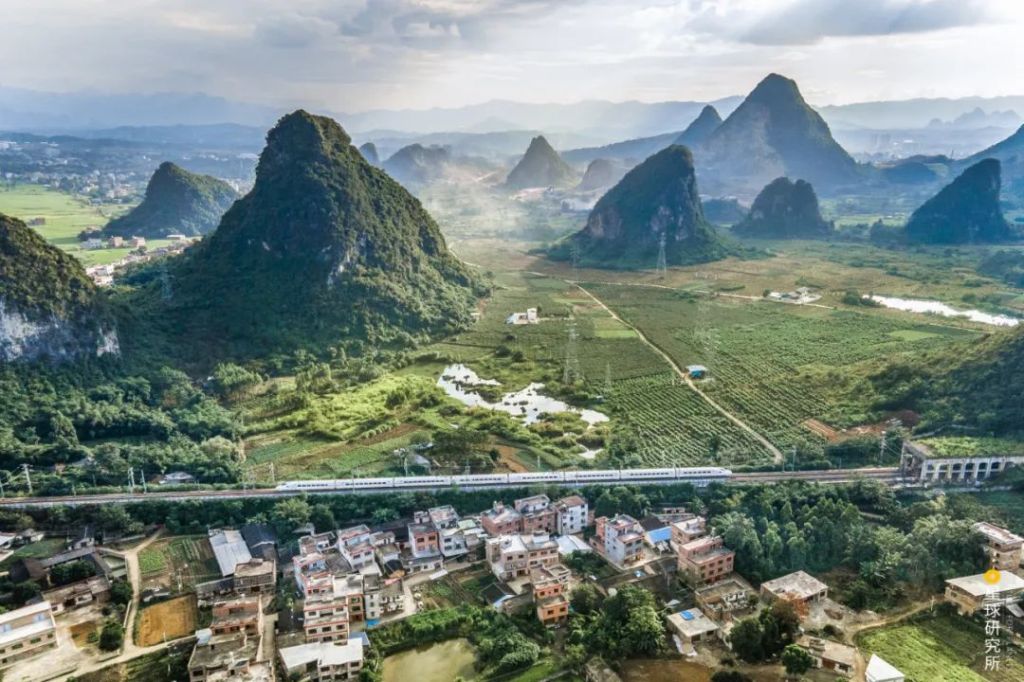
(photo: 冯嘉希)
…where layers of mountains fuse with tranquil waters.
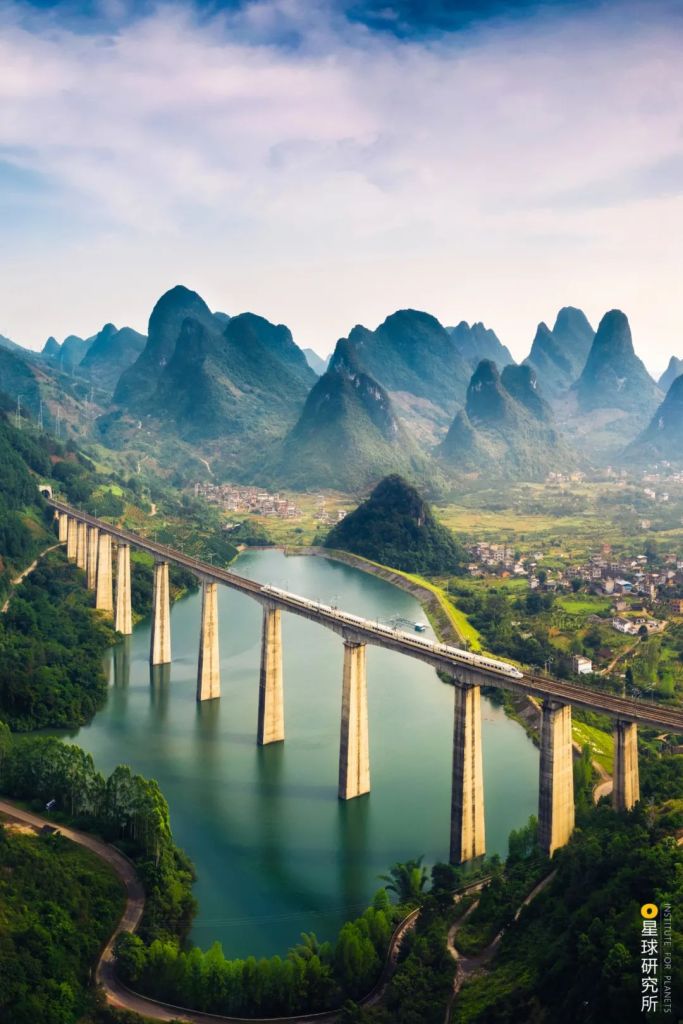
Xingping section of the Guiyang-Guangzhou High-speed Railway in Yangsuo, Guilin
(photo: 黄一骏)
This is definitely a journey through the dreamland.
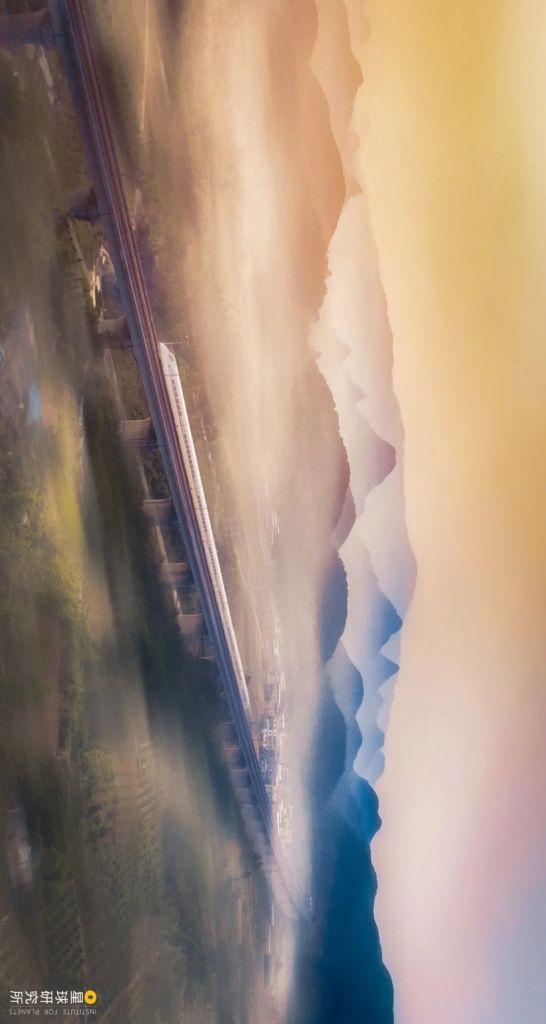
(photo: 黄一骏)
2. Eight horizontals
We shall now continue our tour with the eight horizontal railways.
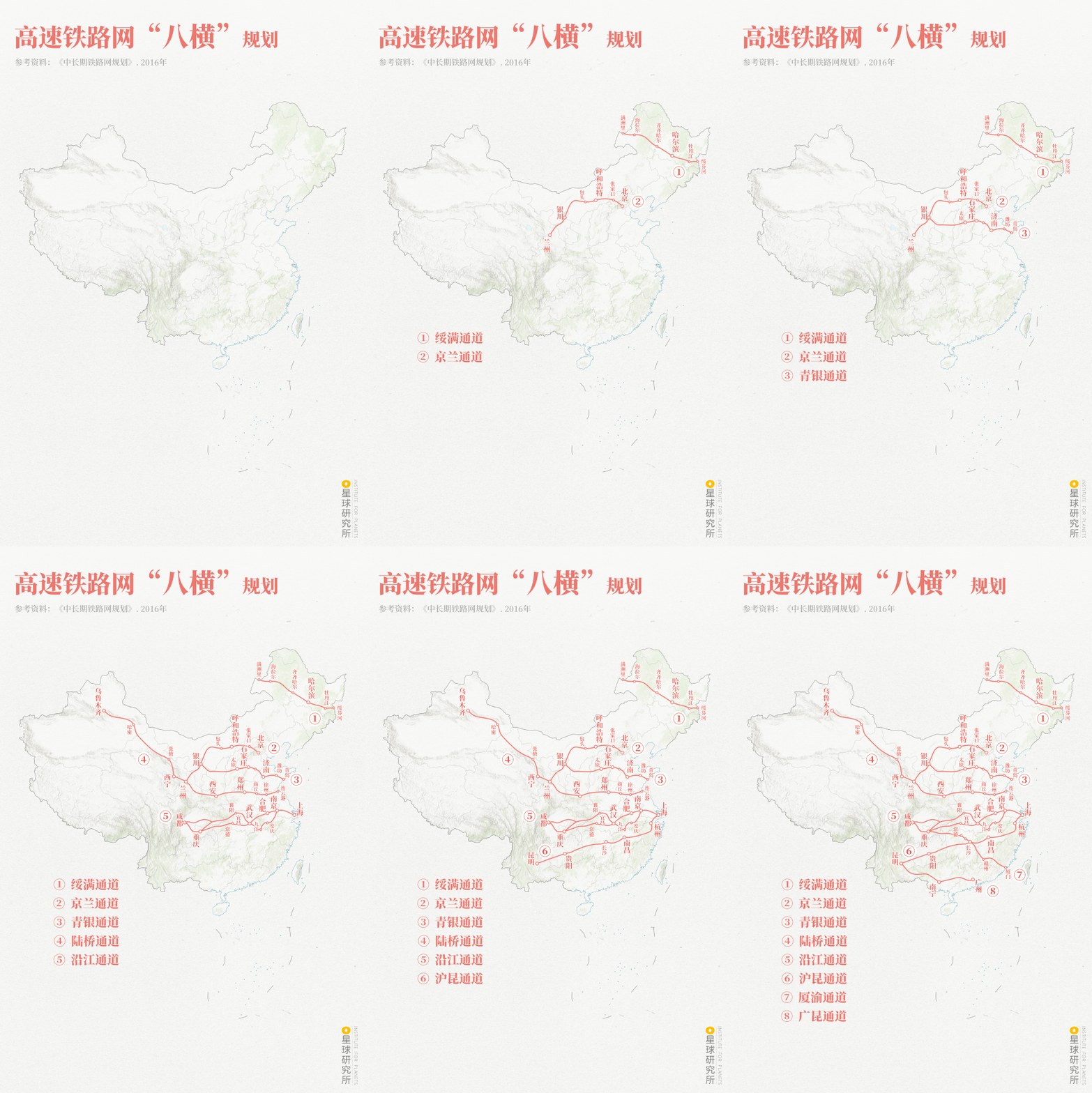
1) Suifenhe-Manzhouli passageway (绥满通道)
2) Beijing-Lanzhou passageway (京兰通道)
3) Qingdao-Yinchuan passageway (青银通道)
4) Eurasia Continental Bridge passageway (陆桥通道)
5) Yangtze River passageway (沿江通道)
6) Shanghai-Kunming passageway (沪昆通道)
7) Xiamen-Chongqing passageway (厦渝通道)
8) Guangzhou-Kunming passageway (广昆通道)
(diagram: 巩向杰, Institute for Planets)
The 1st horizontal – Suifenhe-Manzhouli passageway
The Suifenhe-Manzhouli passageway is located in the far north. It links up Suifenhe in Heilongjiang and Manzhouli in Inner Mongolia, and is the northmost high-cold high-speed railway in China. The steel rail here has to endure a temperature difference of 100°C between winter and summer.
Major northeastern cities including Mudanjiang, Harbin, Daqing and Qiqihar are connected together by this passageway.
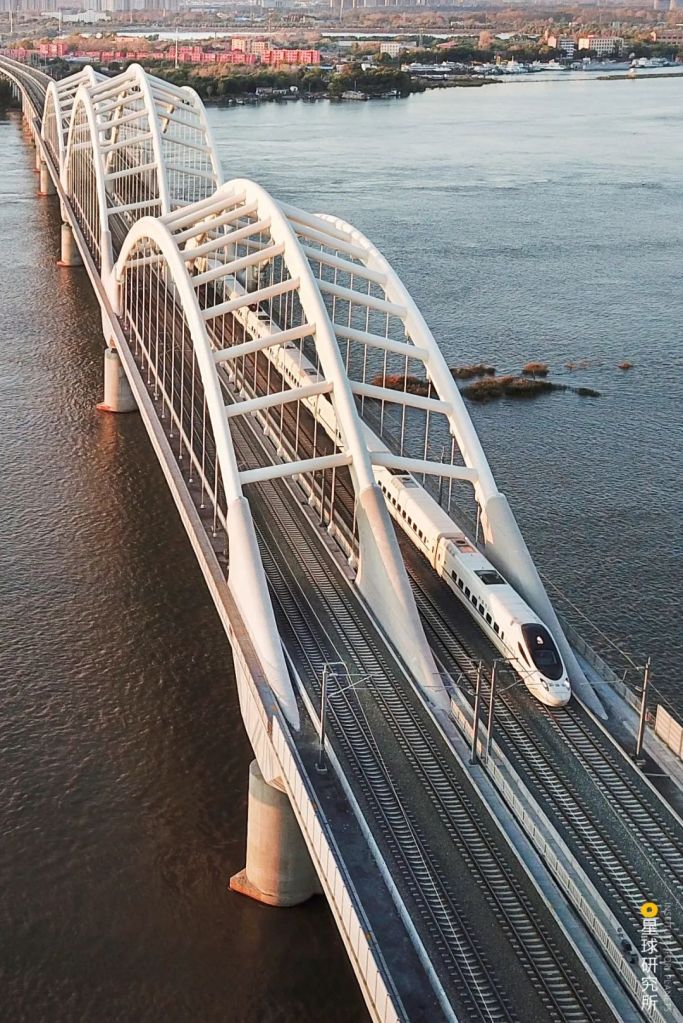
(photo: 刘慎库)
It is the backbone for transportation in the northeast, and also the major force behind the revitalisation of the region.
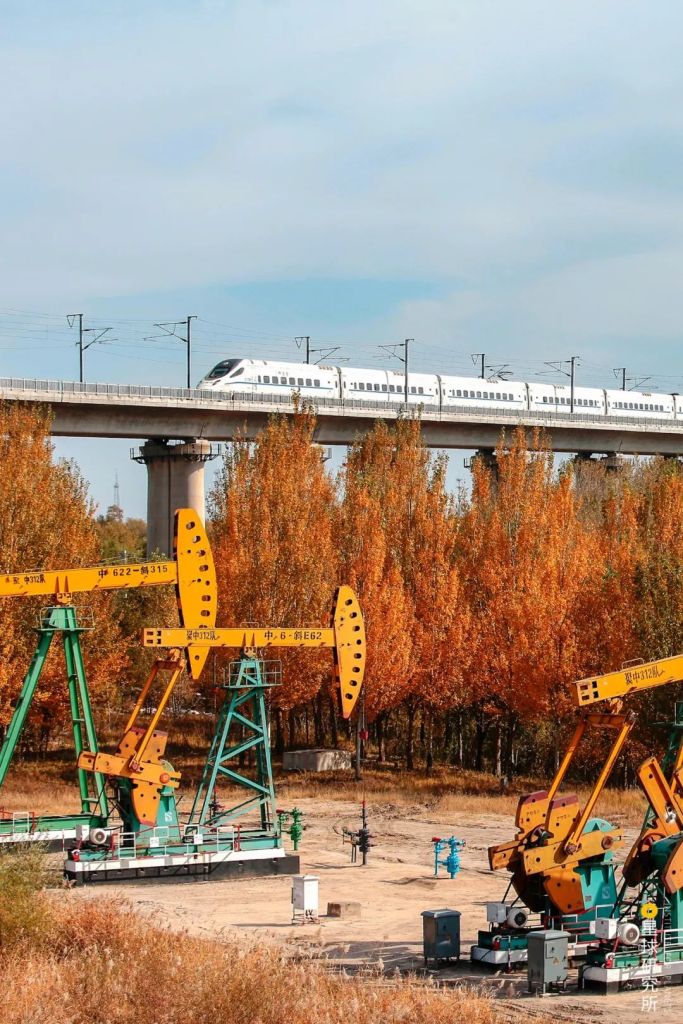
(photo: 刘慎库)
The 2nd horizontal – Beijing-Lanzhou passageway
The second passageway joins Beijing and Lanzhou together, with Hohhot and Yinchuan in between.
Zhangjiakou-Hohhot High-speed Railway, one of the routes in the passageway, came into service at the end of 2019. For the first time, an Inner Mongolia city in the centre of the province is included in the high-speed railway network.
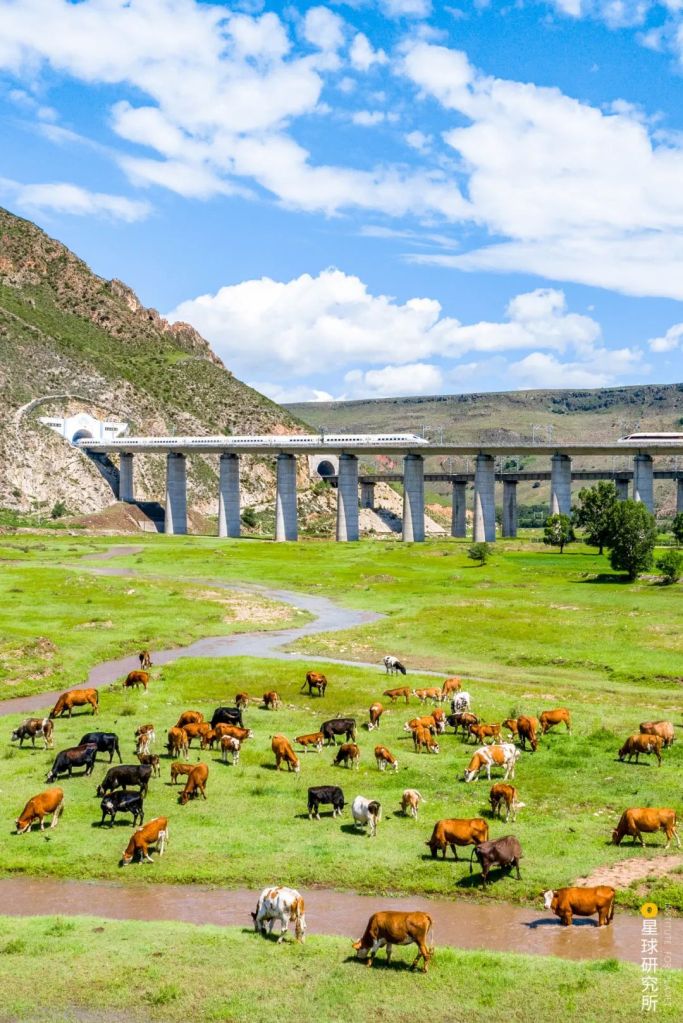
(photo: 魏方合)
The Yinchuan-Lanzhou High-speed Railway, on the other hand, is also the first high-speed railway in Ningxia. Currently, the Yinchuan-Zhongwei section is already open to public, whereas the remaining parts connecting Lanzohu is still under construction.
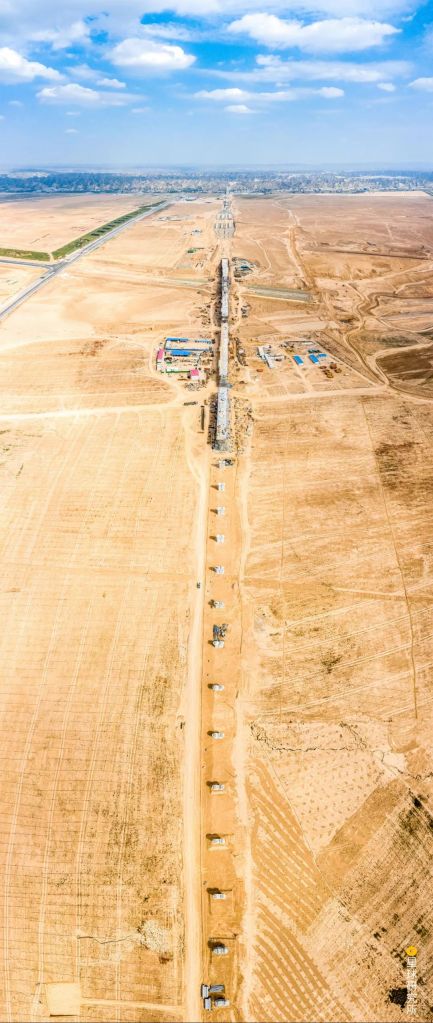
(photo: 无来)
The 3rd horizontal – Qingdao-Yinchuan passageway
This passageway bridges between Qingdao in Shandong and Yinchuan in Ningxia. The entire route begins at the coast of Yellow Sea.
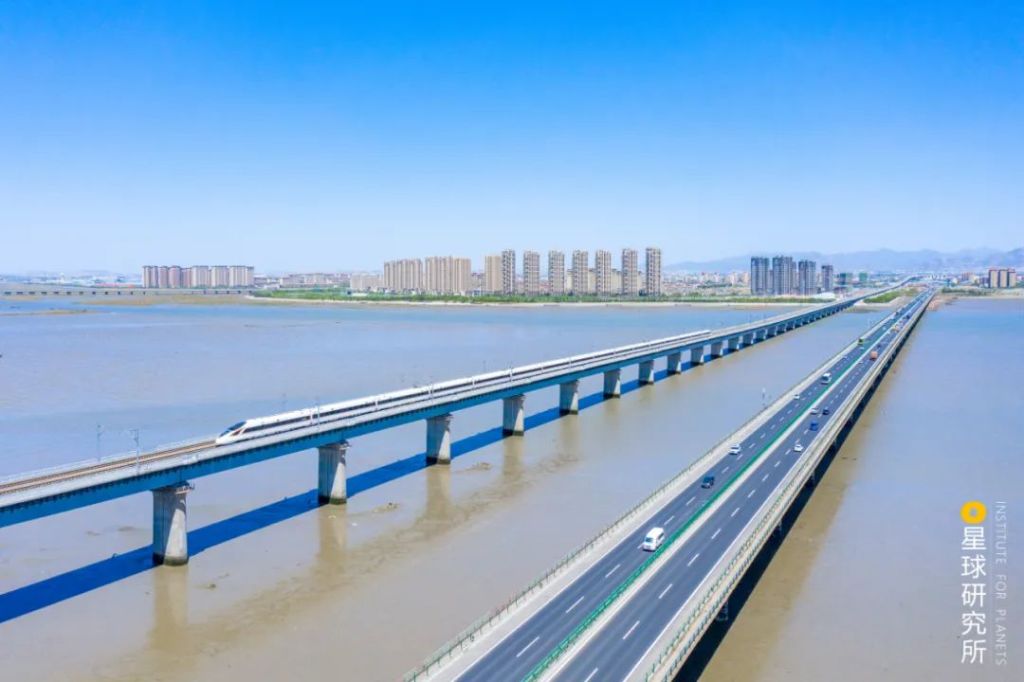
Next to the railway is the G22 Qingdao-Lanzhou Expressway
(photo: 赵斌)
It runs through Shandong…
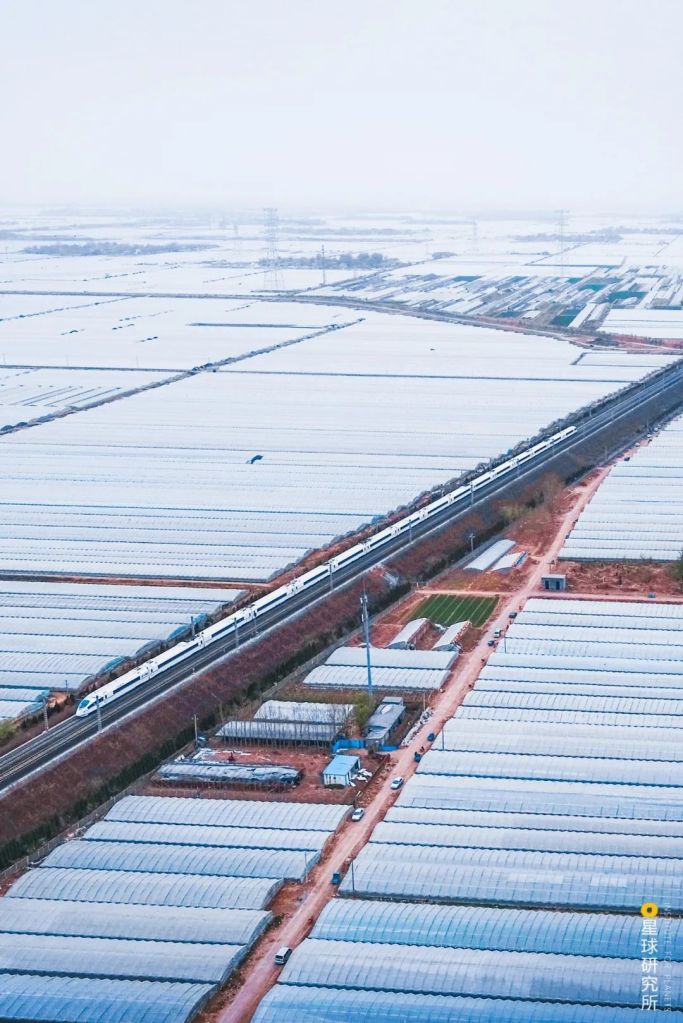
(photo: 王璐)
Tunnels through Taihang Mountain…
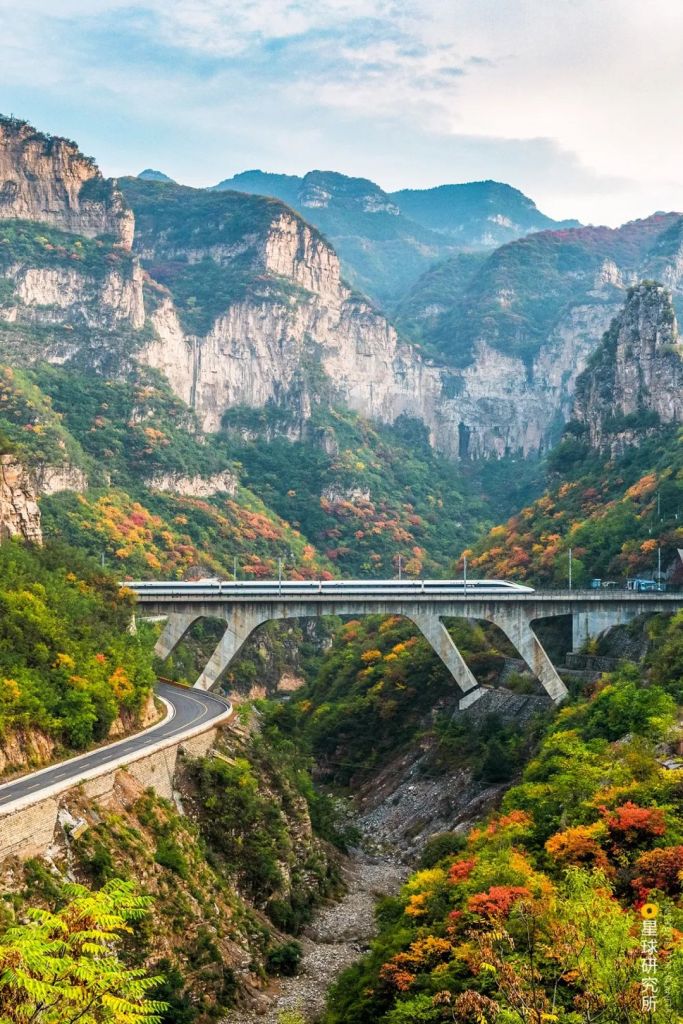
(photo: 张普超)
And travels deep into the arid regions of the inland.
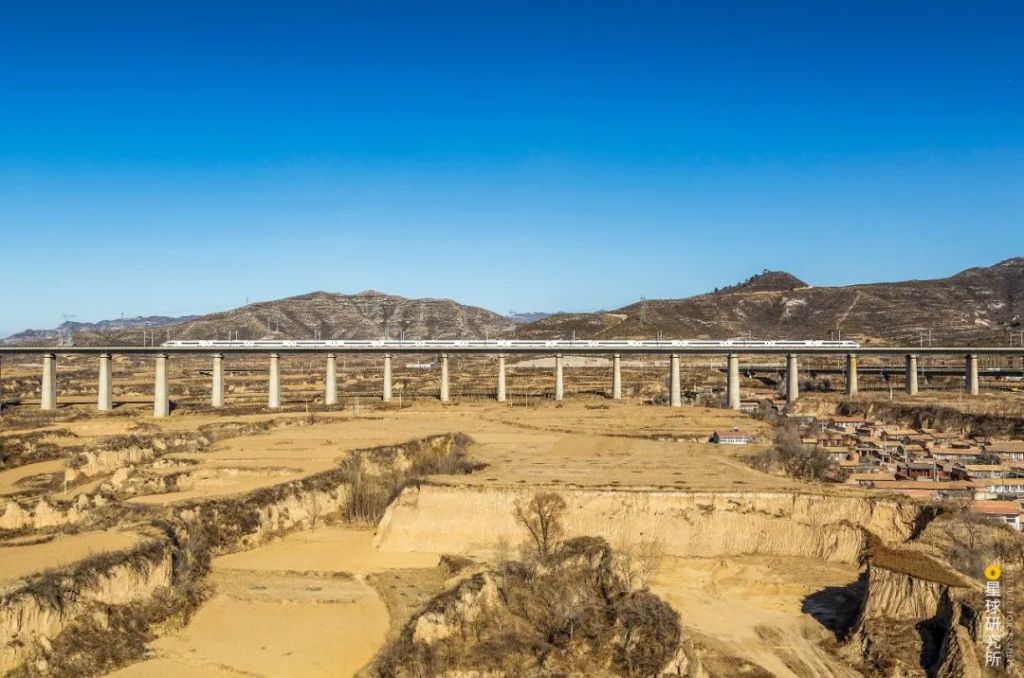
(photo: 张普超)
However, the scale of the next passageway, which also connects the sea and inland, will be on a whole new level.
The 4th horizontal – Eurasia Continental Bridge passageway
Starting from Lianyungang in Jiangsu, this passageway travels through Xuzhou, Zhengzhou, Xi’an, Lanzhou, Xining and reaches Urumqi in Xinjiang. The entire route has now been completed except for the Liangyungang-Xuzhou section.
The Lanzhou-Xinjiang High-speed Railway, which is 1786 kilometres long, is the world’s longest high-speed railway to be completed at once.
Accompanying this long journey are mountains covered with snow…
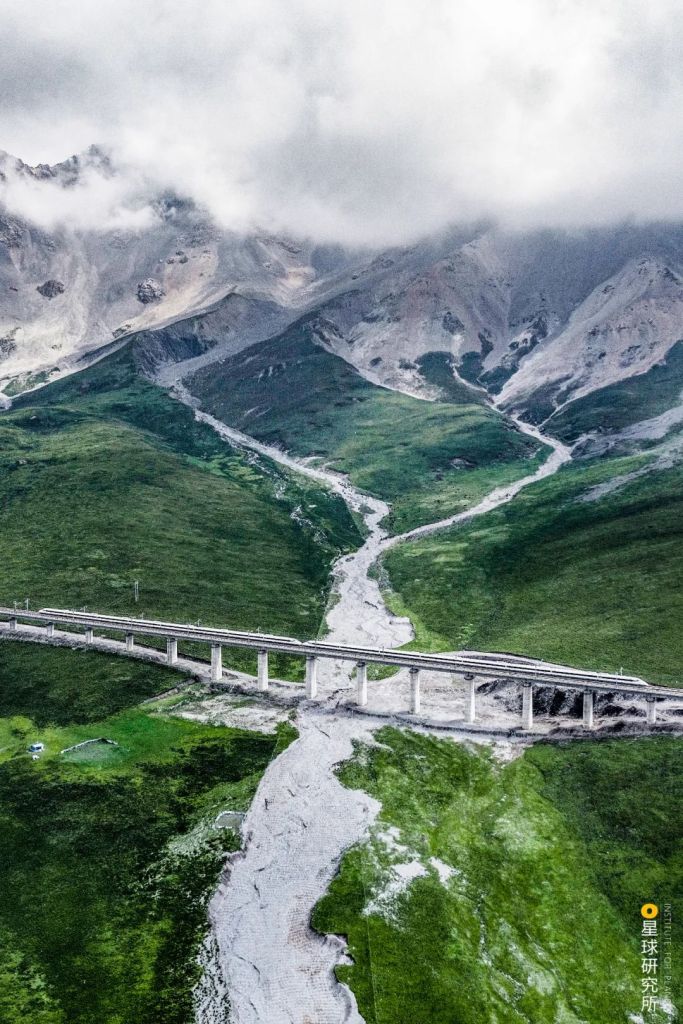
(photo: 章力凡)
And the harsh Gobi Desert…

(photo: 魏方合)
As well as rapeseed flowers that adorn the fields and hills.
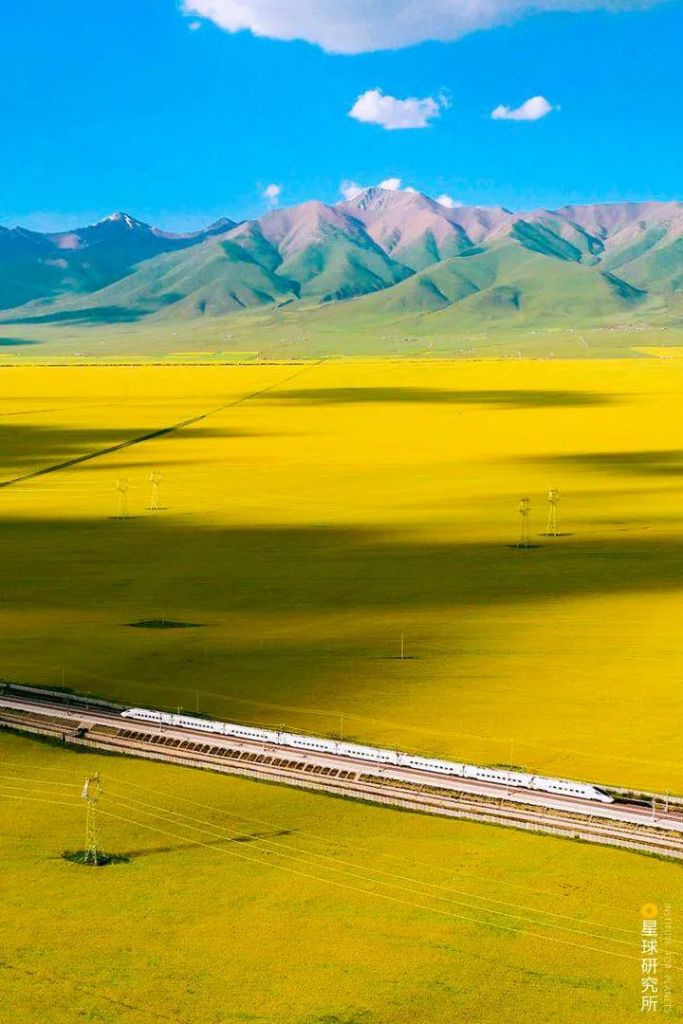
(photo: 王璐)
The 5th horizontal – Yangtze River passageway
As its name suggests, this passageway runs in close parallel with the Yangtze River. Like a massive artery, it connects all major cities along the Yangtze River Economic Belt, including Shanghai, Nanjoing, Hefei, Wuhan, Chongqing and Chengdu. The entire passageway has already been completed.
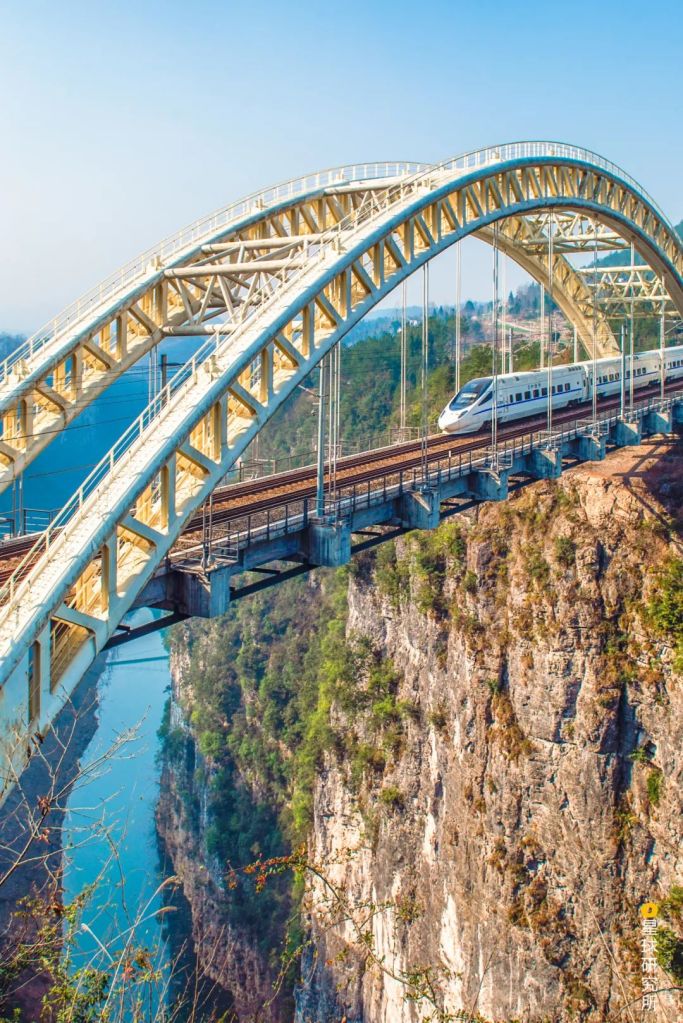
(photo: 文林)
In addition, new railways with a standard speed of 350 km/h are being built in segments or planned.
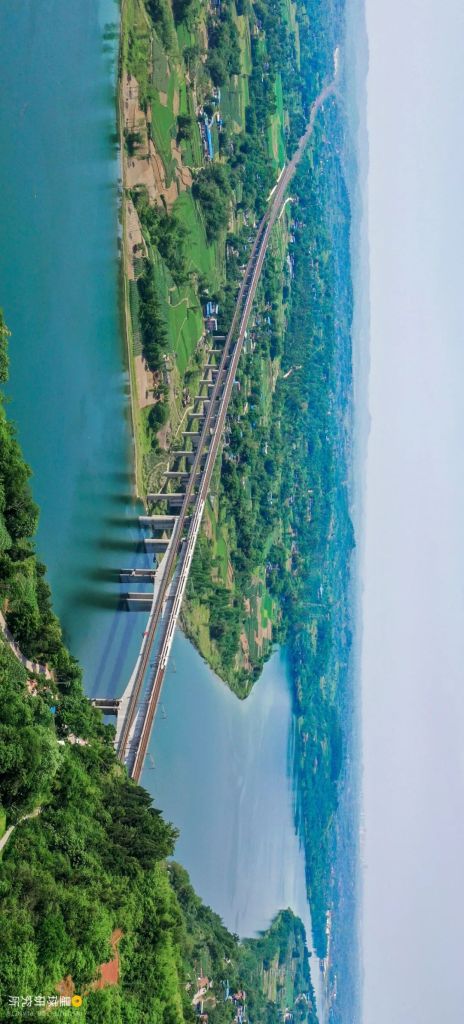
(photo: 张国鸿)
The 6th horizontal – Shanghai-Kunming passageway
Completed towards the end of 2016, this is a 2252 kilometres long passageway that links up Shanghai and Kunming, with Hangzhou, Nanchang, Changsha and Guiyang in between.
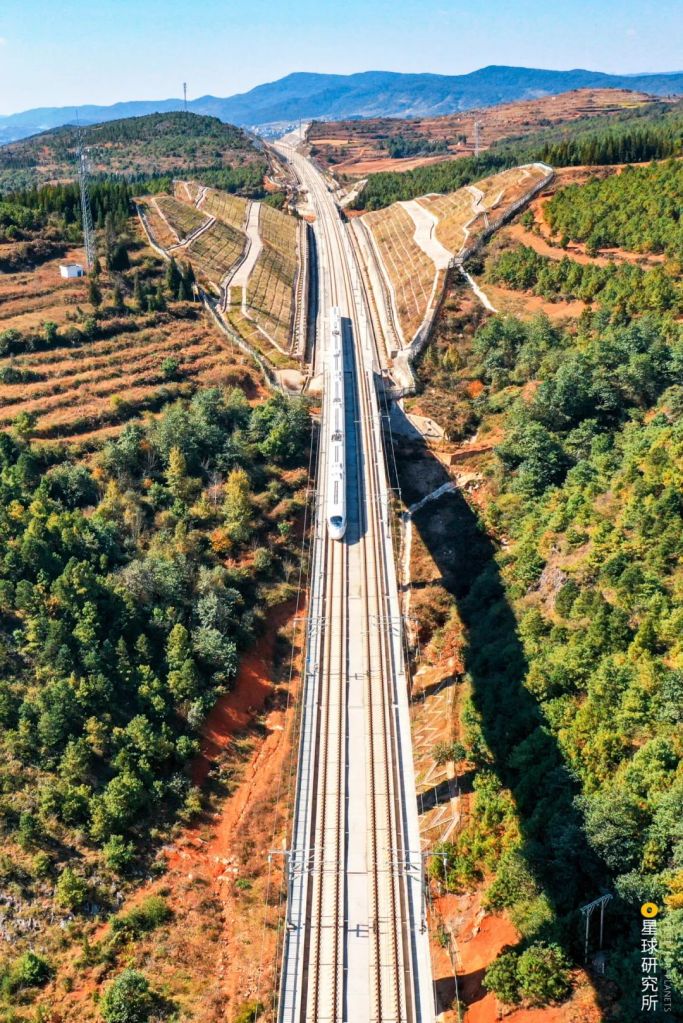
(photo: 高坤煜)
This passageway deals with complex geological terrains and traverses numerous valleys. The most challenging task in this project was the construction of Beipan River Grand Bridge in Guizhou, which is 721 metres long with a deck that is 300 metres above the river.
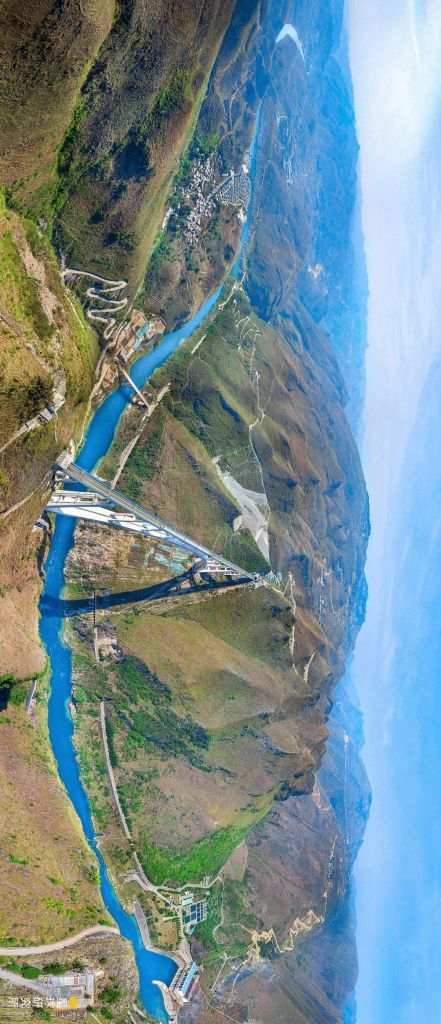
(photo: 刘慎库)
The 7th horizontal – Xiamen-Chongqing passageway
Still under segmental construction, this passageway runs from Xianmen to Chongqing through Changsha.
From Xiamen, the ‘Garden of the Sea’…
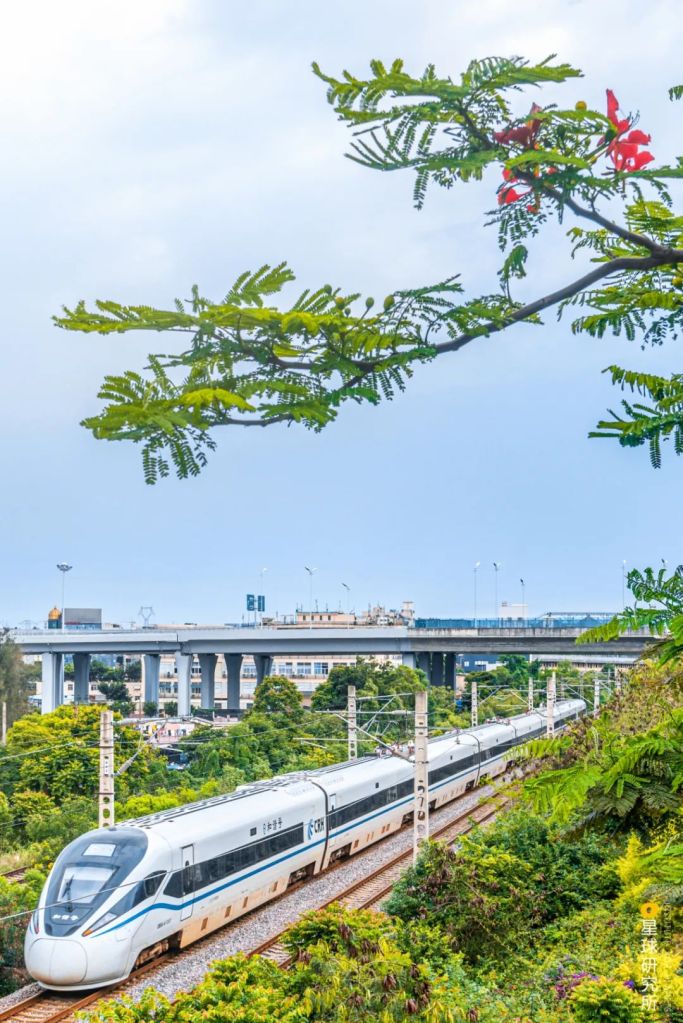
Photo also shows a plantation of flame of the forest, the city tree of Xiamen
(photo: 章荣贵)
To Chongqing, the ‘fiery mountain city’, this journey offers captivating experience of diversity.
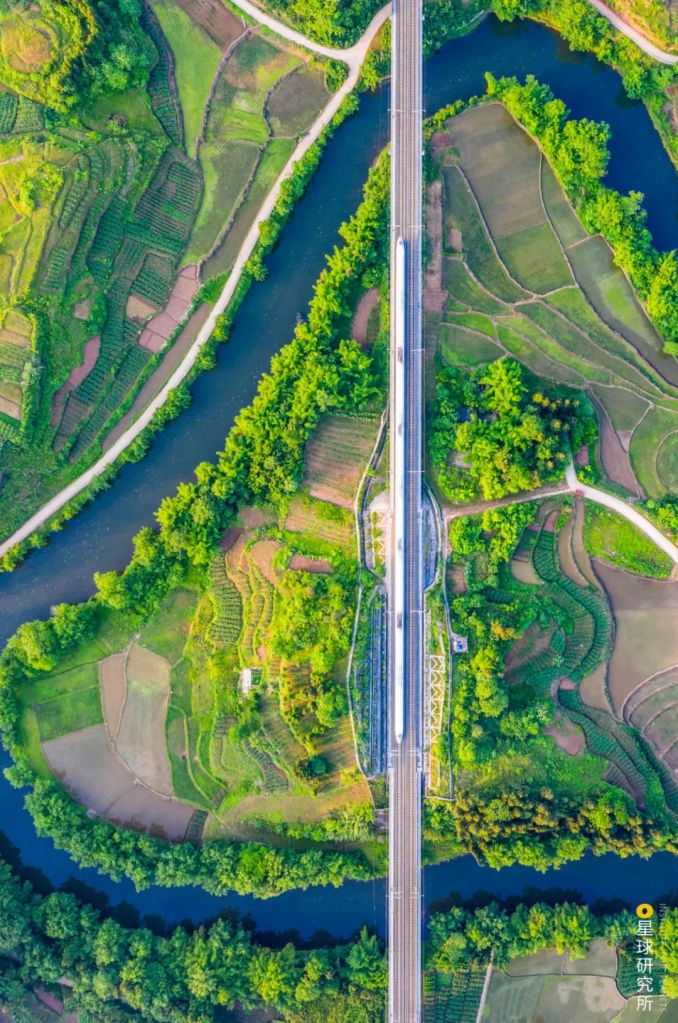
(photo: 胡兴波)
The 8th horizontal – Guangzhou-Kunming passageway
The last passageway of the eight horizontals has been fully completed in 2016. It starts from Guangzhou, passes by Nanning and finishes in Kunming.
The Binyang section is located in the flat plains of Guangxi. Travelling on this passageway during harvest seasons is like entering vast fields of gold.
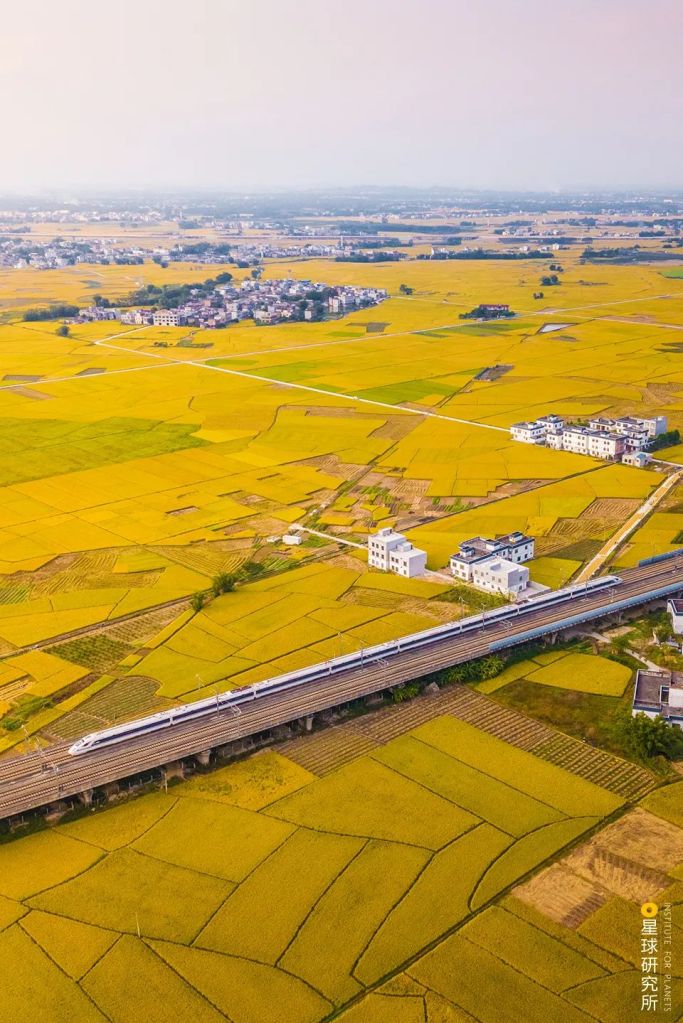
(photo: 老麦客)
There is also the 852 metres long Nanpan River Grand Bridge in Yunnan, which allows the Nanning-Kunming High-speed Railway to cross the border between Honghezhou and Wenshanzhou in the air.
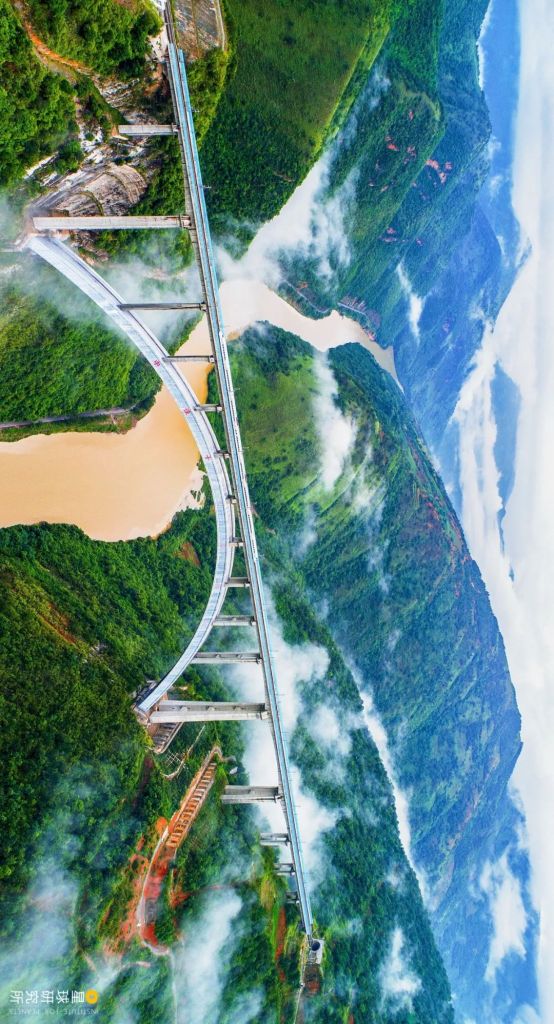
(photo: 潘泉)
On a misty day, this trip becomes a heavenly ride.
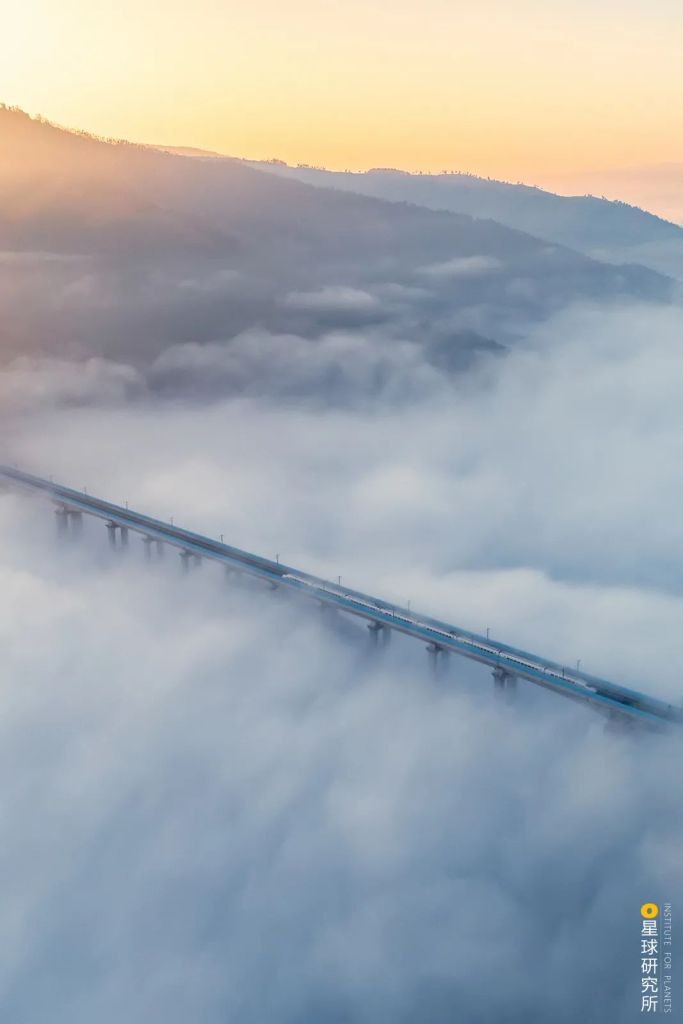
(photo: 饶颖)
3. China’s High-speed Railway
That concludes our brief journey on China’s ‘eight vertical eight horizontal’ high-speed railway network.
When China started to build her own railway for the first time more than one century ago, the world’s total railway mileage had already exceeded 200,000 kilometres. The catching up was a long and painful struggle for China.
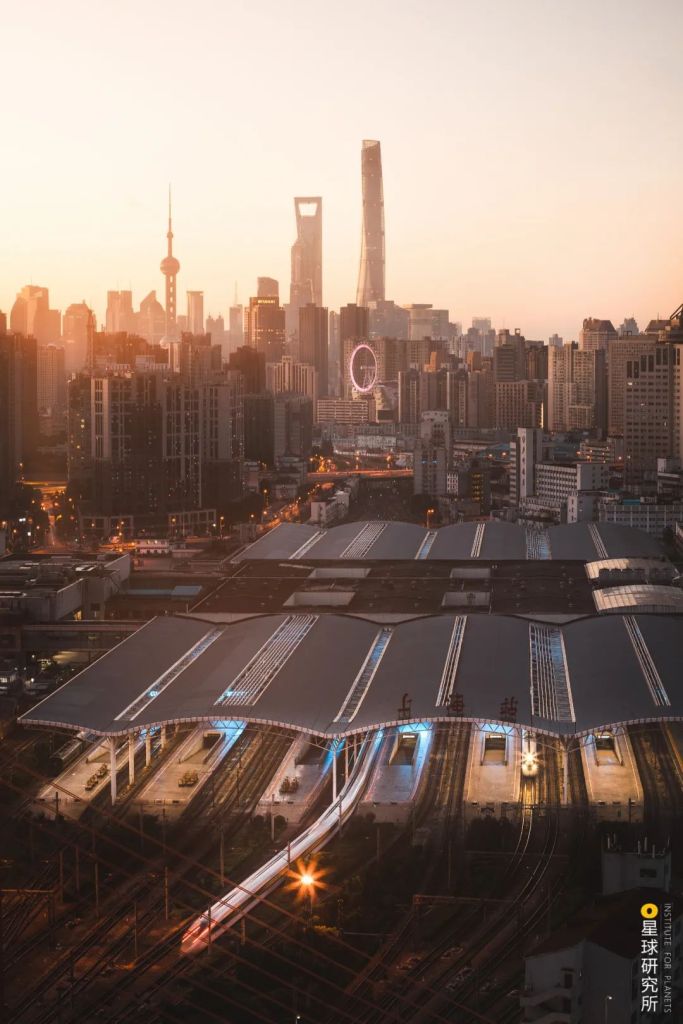
(photo: 常念祖)
100 years have since passed by like a blink of the eye.
In 2004, the Chinese government released the first Mid- and Long-term Railway Network Plan, in which the ‘four vertical and four horizontal’ plan was proposed for the first time.
Just 12 years later in 2016, the ambitious vision of ‘eight vertical and eight horizontal’ was included in the revised Railway Network Plan.
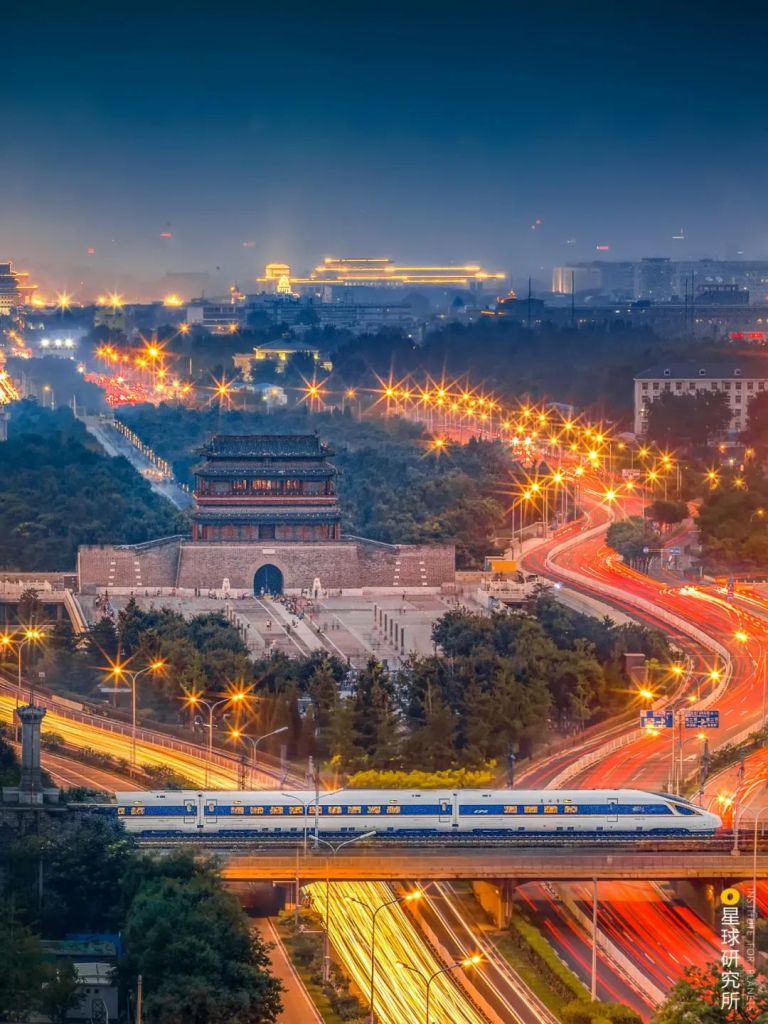
(photo: 黄登一)
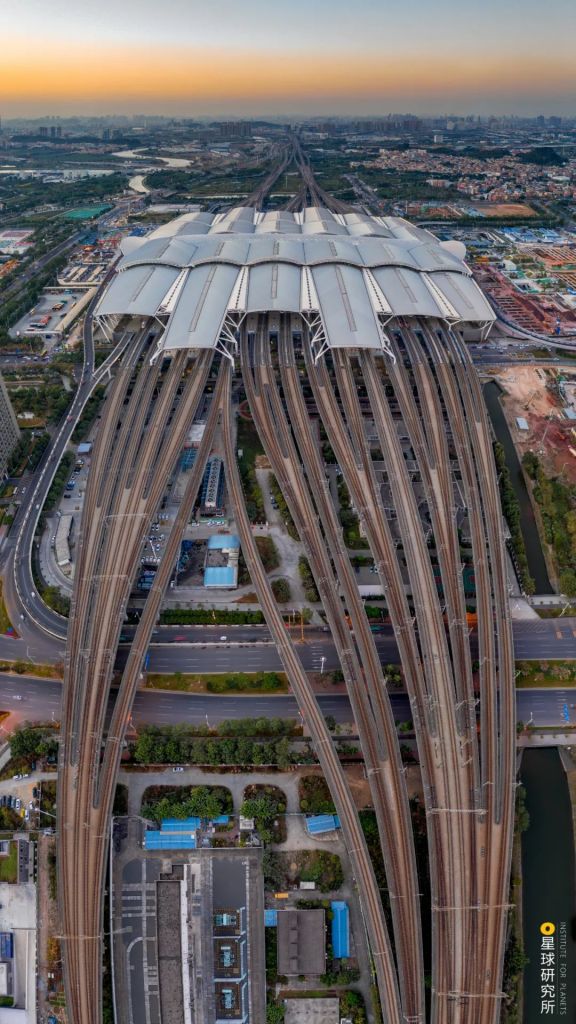
As of 2019, with the exception of Lhasa, every provincial capital of China has been connected to the high-speed railway network; 88% of cities with a population of more than 500,000 have access to high-speed trains.
(photo: 酷鸟魏建)
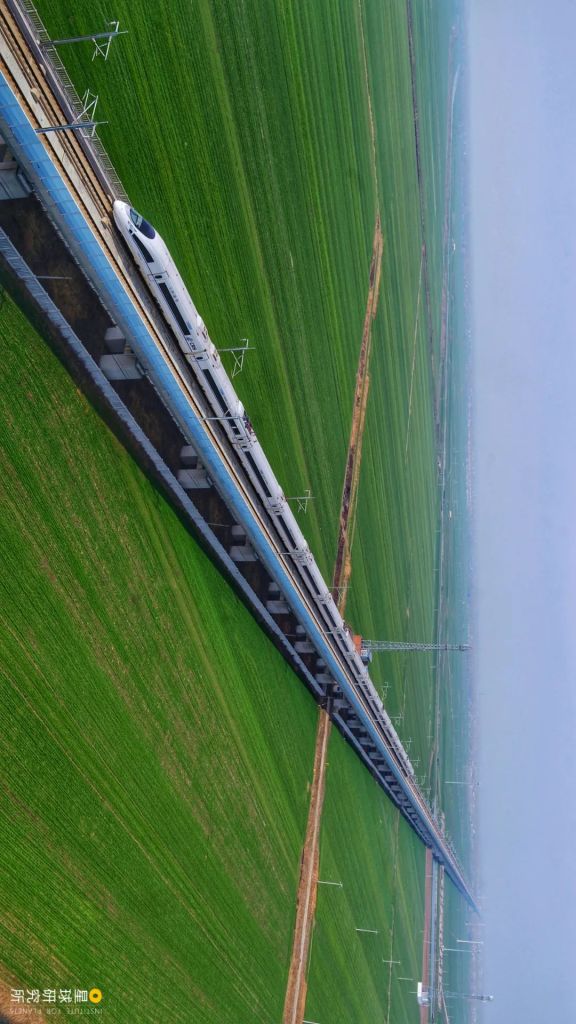
Today, China not only has the longest high-speed railway in the world, but also the largest national construction scale, biggest fleet of high-speed trains, highest commercial travel speed and the most comprehensive technology system in high-speed railway. She is also the most experienced in high-speed railway management and diverse operational scenarios.
We have indeed surpassed the others in these regards.
(photo: 王璐)
But waiting for us in the future is something even more magnificent.
This is not merely an intangible projection, but a substantiated plan high on the agenda of the government.
According to the latest Programme of Building National Strength in Transportation and Prioritising Railway Development released by China Railway, the country’s high-speed railway mileage will total up to 70,000 kilometres, which is twice as long as the current railway network.
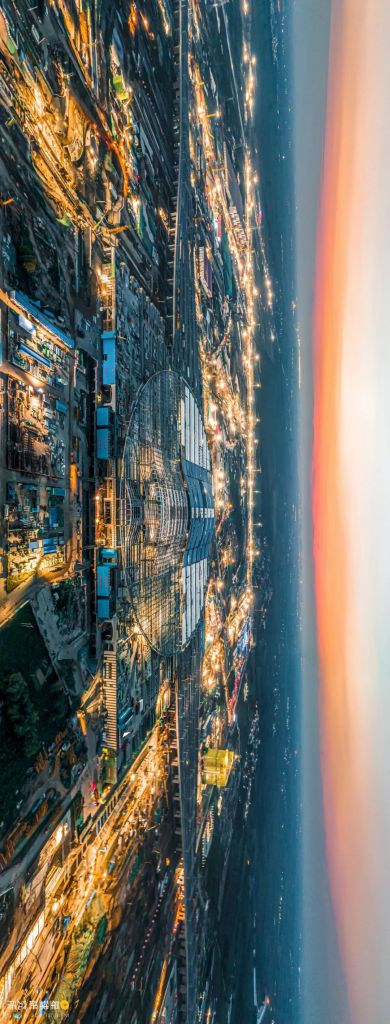
We have great expectation on such a high-speed railway network in China, one that keeps on striding ahead.
(photo: 周昫光)
Production Team
Text: 所长
Photos: 谢禹涵
Maps: 巩向杰
Design: 郑伯容
Review: 王昆
Feature photo: RoyChen, mirror image of trains in Guangzhou EMU Depot
…The End…

星球研究所
一群国家地理控,专注于探索极致风光
 K in the clouds