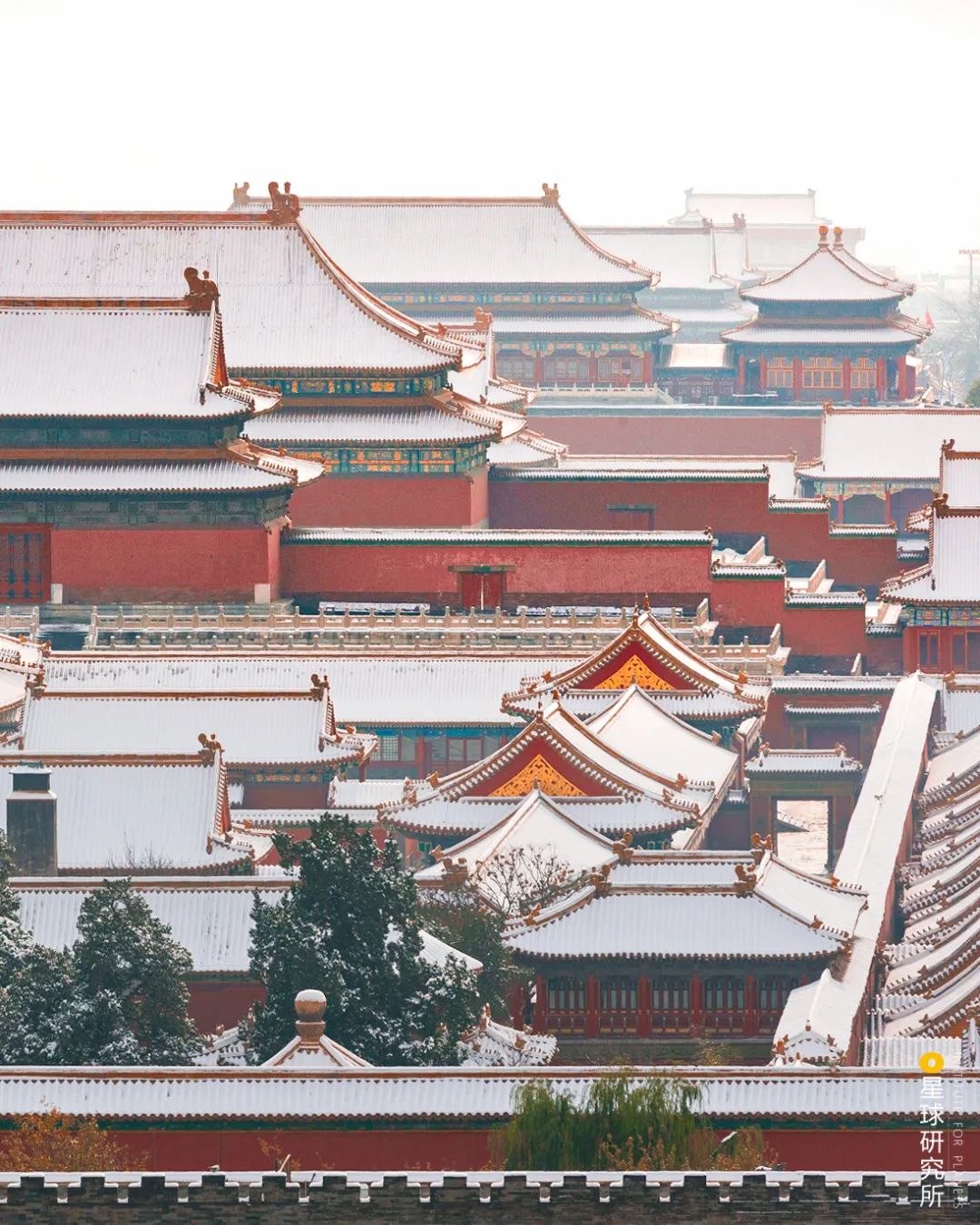
Original piece: 《600岁的故宫,有什么?》
Co-produced by Institute for Planets (星球研究所) & Tencent
Written by 李张子薇
Translated by Kelvin Kwok
Posted with permission from Institute for Planets
The Forbidden City celebrates its 600th anniversary in 2020.
Over thousands of years, the Chinese civilisation witnessed the rise and fall of a total of 63 dynasties, and was under the successive reigns of 446 sovereigns and emperors. Ruling all under heaven, they had all built numerous palaces to signify their arrival at the pinnacle of power and supremacy above all.
*The above data is based on Encyclopaedia of Chinese History (中国历史大辞典) published by Shanghai Lexicographical Publishing House.
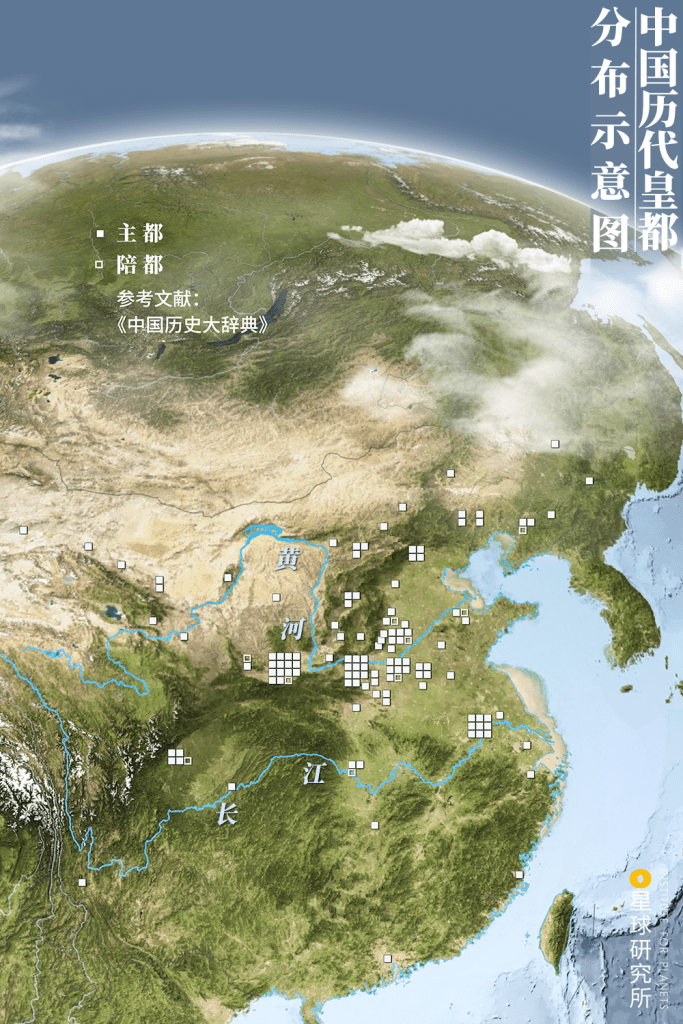
Filled boxes: main capital (主都); open boxes: auxiliary capital (陪都)
Yellow River (黄河), Yangtze River (长江)
(diagram: 陈志浩&张靖, Institute for Planets)
The vast majority of these palaces are no longer standing today. Some collapsed gradually over centuries, others came down together with the falling dynasty in a great fire.
But there are always exceptions.
In Beijing, a grand palace complex still remains intact today, despite having gone through two dynasties of great unity and 600 years of ageing.
It is known as the Forbidden City, or commonly referred to as the ‘Former Palace (故宫)’ in Chinese.
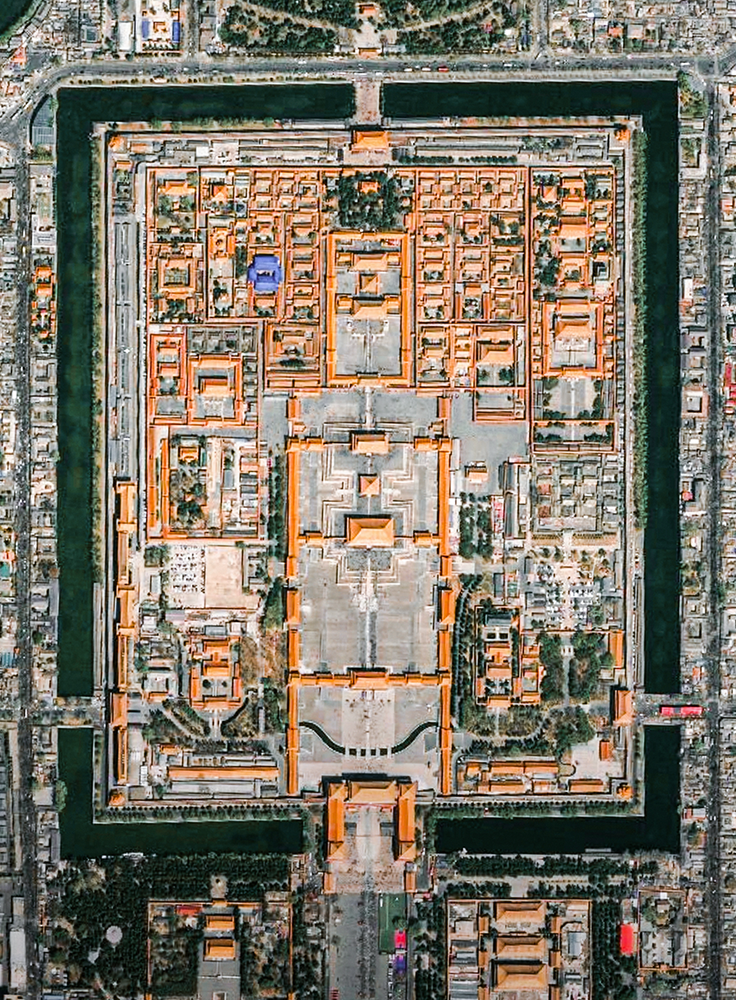
(photo: Esri)
What is it like inside the Forbidden City?
1. The Origin
1402 AD, Nanjing.
A fierce fight for the throne to rule over China came to an end. After 4 years of bloodshed, Zhu Di, originally enfeoffed as the Prince of Yan, finally captured the capital city of Ming Dynasty and seized power from his nephew to become the emperor himself. This royal conflict was later remembered as the Jingnan Campaign.
However, this game of thrones did not end with the battles. In order to get rid of the old and opposing factions in Nanjing, as well as to resist against the Northern Yuan regime, Zhu Di decided to relocate the capital city to Beijing*.
*Translator’s comment:
Jing (京) is translated as capital in Chinese, whereas nan (南) and bei (北) means south and north respectively. Hence, Nanjing and Beijing literally mean southern capital and northern capital.
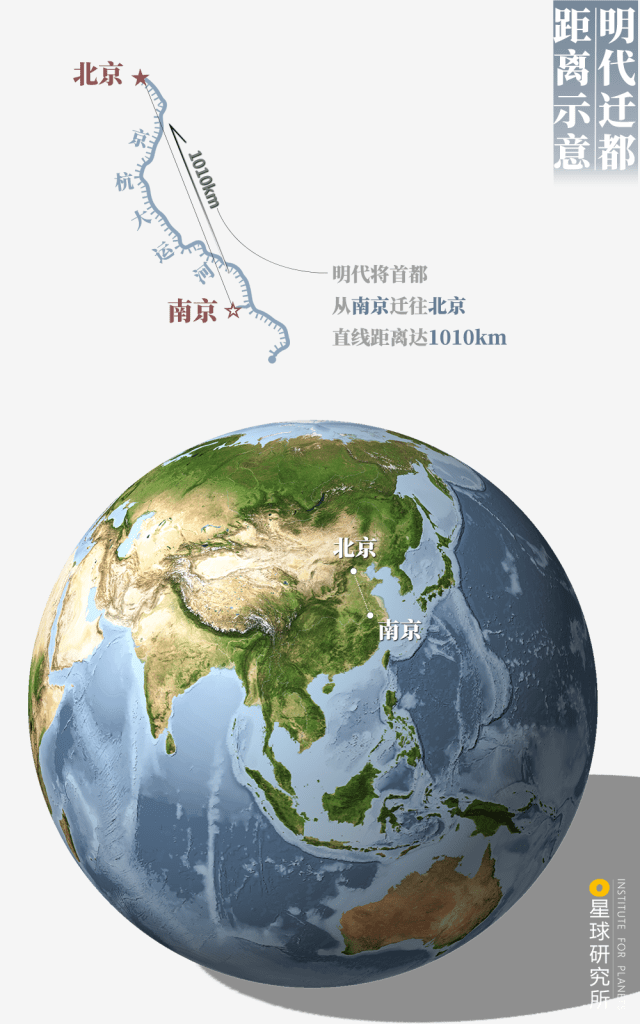
Beijing (北京), Nanjing (南京), Beijing-Hangzhou Grand Canal (京杭大运河)
Straight line distance (直线距离)
(diagram: 张靖, Institute for Planets)
But to establish a capital city and build from scratch a new palace within it was not an easy task. This was bound to be a national movement involving extensive mobilisation of the population.
Indeed, tens of thousands of lumberjacks in various provinces including Sichuan and Zhejiang were ordered to harvest and transport trees from deep mountains and thick forests. Many of them lost their lives working in dangerous terrains. As the ancient Sichuanese saying goes, ‘for every thousand men, only five hundred came back (入山一千,出山五百)’. The wood harvested at the cost of countless lives were then delivered to Beijing via the Yangtze River and the Beijing-Hangzhou Grand Canal. This journey alone took up to 3 or 4 years.
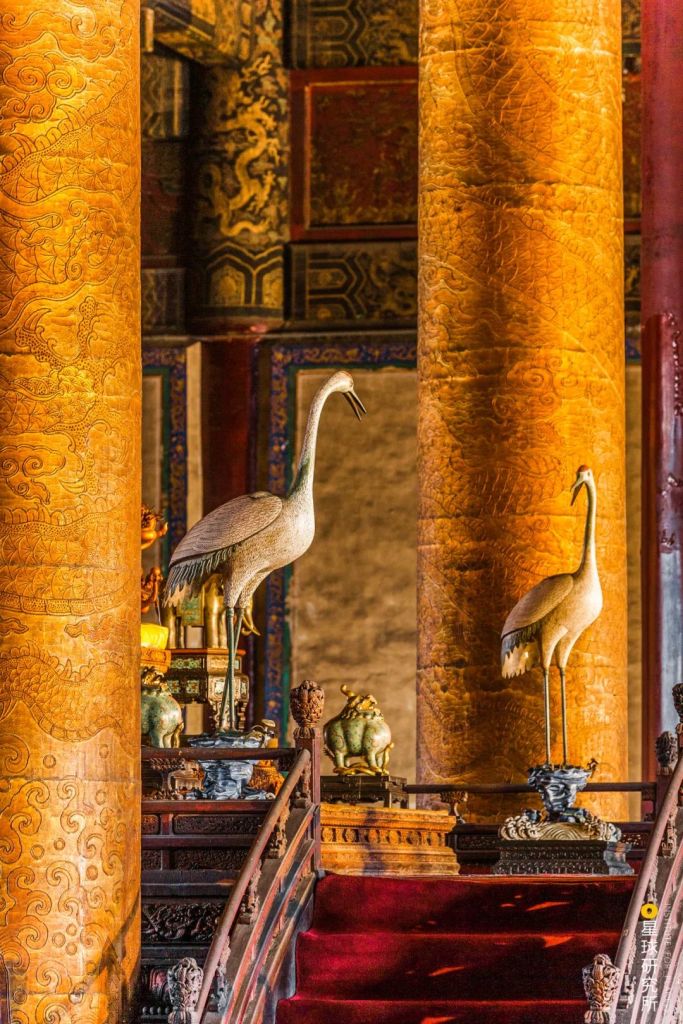
Pillars were initially built with Phoebe zhennan wood, but was replaced with pine wood during renovation in Qing Dynasty due to the scarcity of the former
(photo: 柳叶氘)
As many as several hundred millions of bricks for palace floorings and walls were produced in centralised brick kilns of various scales in Linqing, Shandong. To transport all these to Beijing, the government even stipulated that grain ships passing by were only allowed to continue sailing north if they agreed to load a specified amount of bricks on board.
Some bricks were more precious than the rest, particularly those to be used in important locations for solemn events. Mostly manufactured in Suzhou and Songjiang among others, they were praised as the ‘golden bricks’ for the metallic sound produced when hitting them, as well as for the high production costs. The firing technique is preserved till this day, which is now listed as one of China’s intangible cultural heritage.
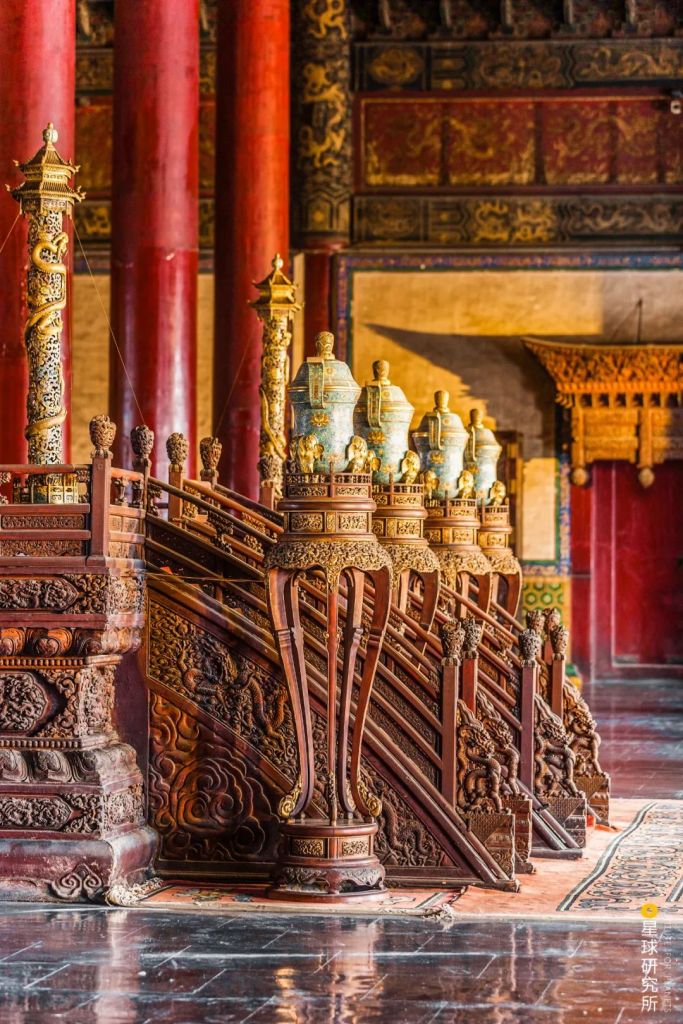
The reflective flooring were paved with ‘golden bricks’
(photo: 柳叶氘)
In addition, haematite produced in Lushan, Shandong, was used to chalk the palace walls in red. Gold leaves for gilding both the exterior and interior of majestic halls were processed in the Jiangnan region.
The list goes on and on.
In the hands of more than hundreds of thousands of craftsmen and millions of workers, all these superlative construction materials were transformed into the magnificent city of Beijing, which resides on the alluvial plain created by multiple rivers including the Yongding River.
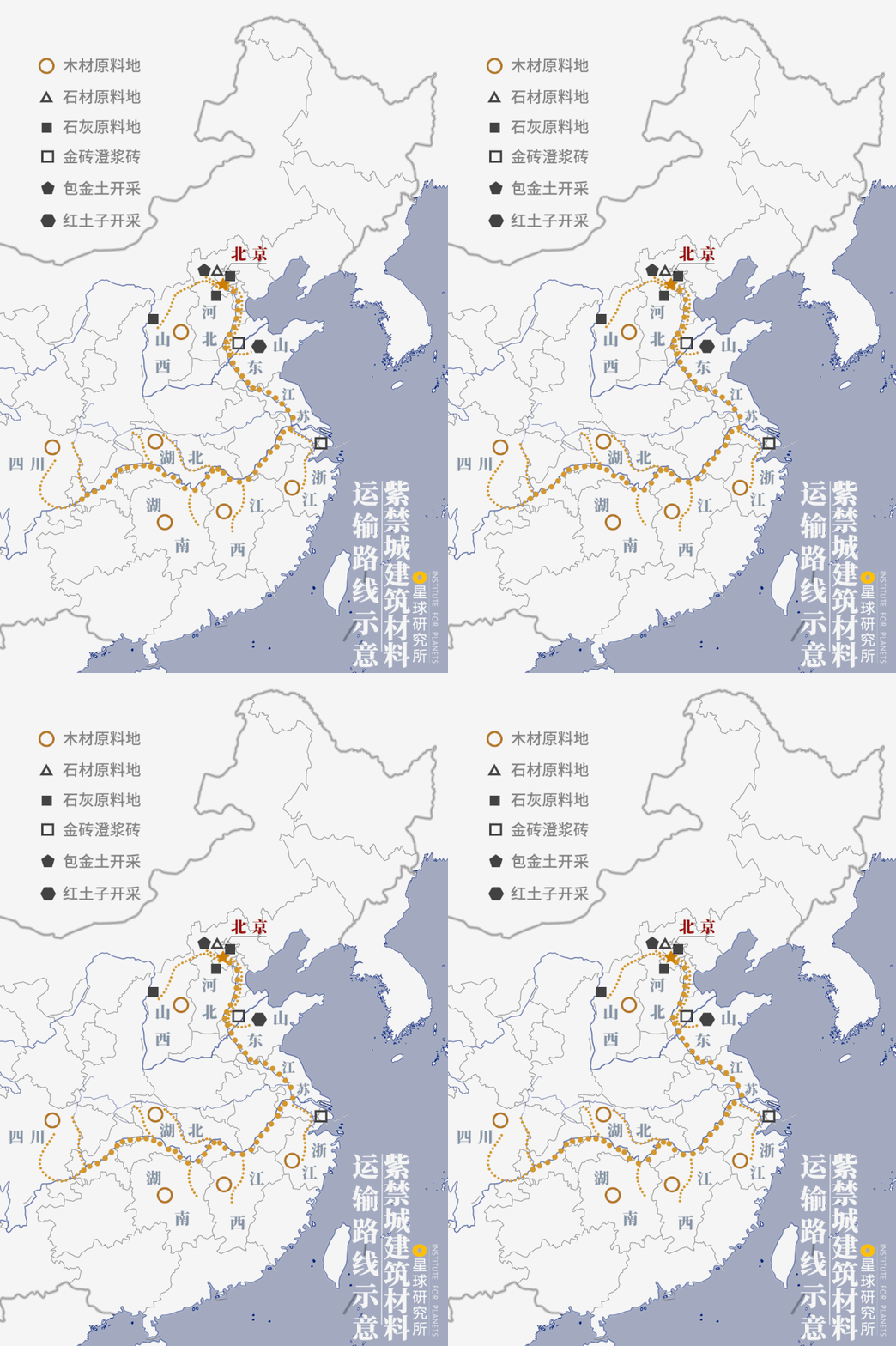
Circle: wood (木材); triangle: stone (石材); filled square: lime (石灰); open square: mortar for golden bricks (金砖澄浆砖); pentagon: gold clad soil (包金土); hexagon: haematite (红土子/赤铁矿)
Beijing (北京), Hebei (河北), Shandong (山东), Shanxi (山西), Jiangsu (江苏), Zhejiang (浙江), Jiangxi (江西), Hubei (湖北), Hunan (湖南), Sichuan (四川)
(diagram: 张靖, Institute for Planets)
From above, the Beijing City looks like a nested city within a larger fortification.
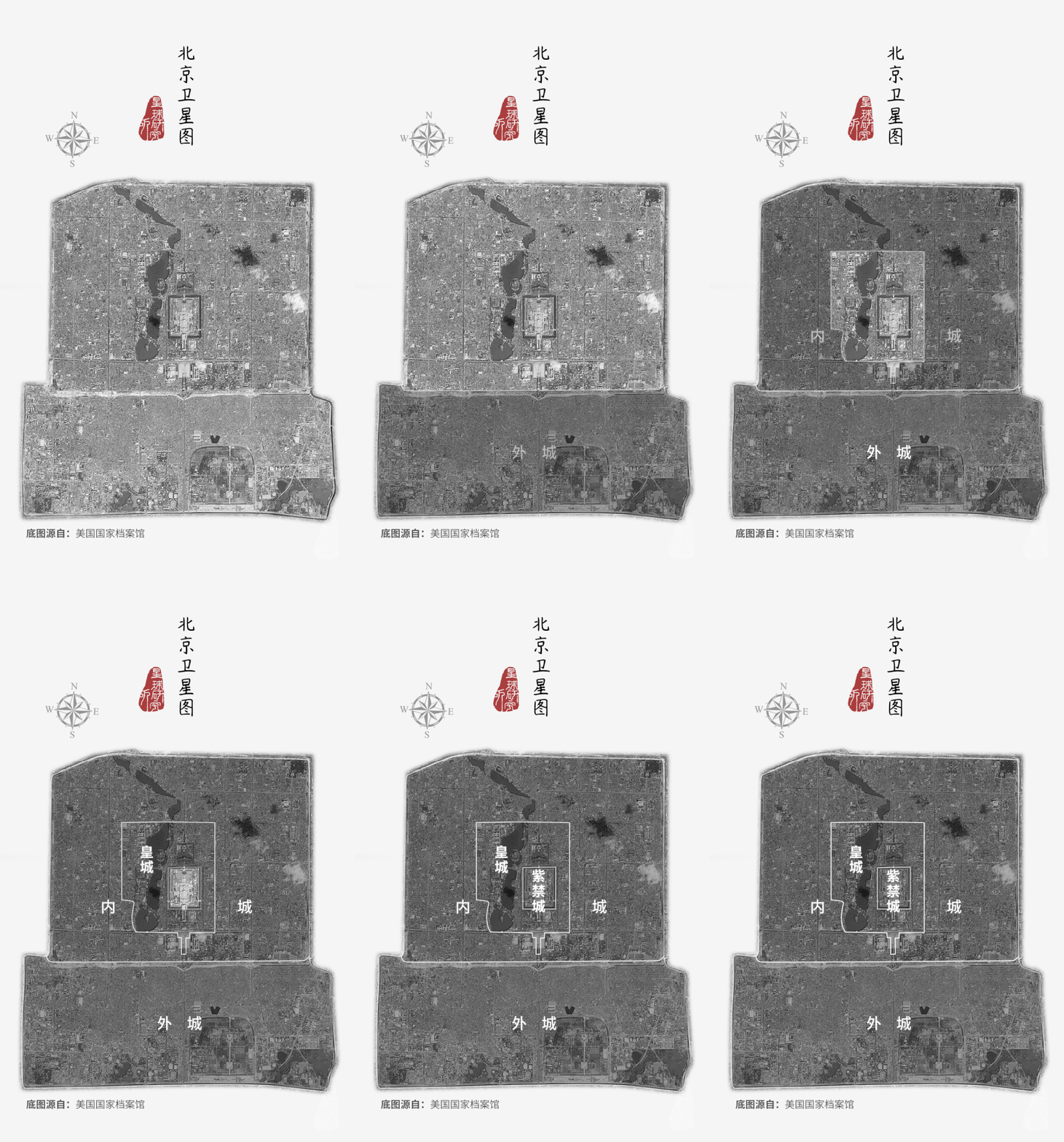
Satellite image of Beijing taken on 21 September 1966
Forbidden City (紫禁城), Imperial City (皇城), Inner City (内城), Outer City (外城)
(base photo: National Archives of the United States; diagram: 张靖, Institute for Planets)
The Outer City, built during the mid-Ming period, was inhabited mostly by ordinary civilians. Due to the enormous scale and construction cost, only the southern site was completed. The upper class and governmental officials, on the contrary, had the privilege to live in the Inner City. The urban planning of the Inner City was based on the ideal citadel model dating all the way back to Zhou Dynasty (roughly 1046-256 BC), which emphasises on square geometry and orderly arrangements.
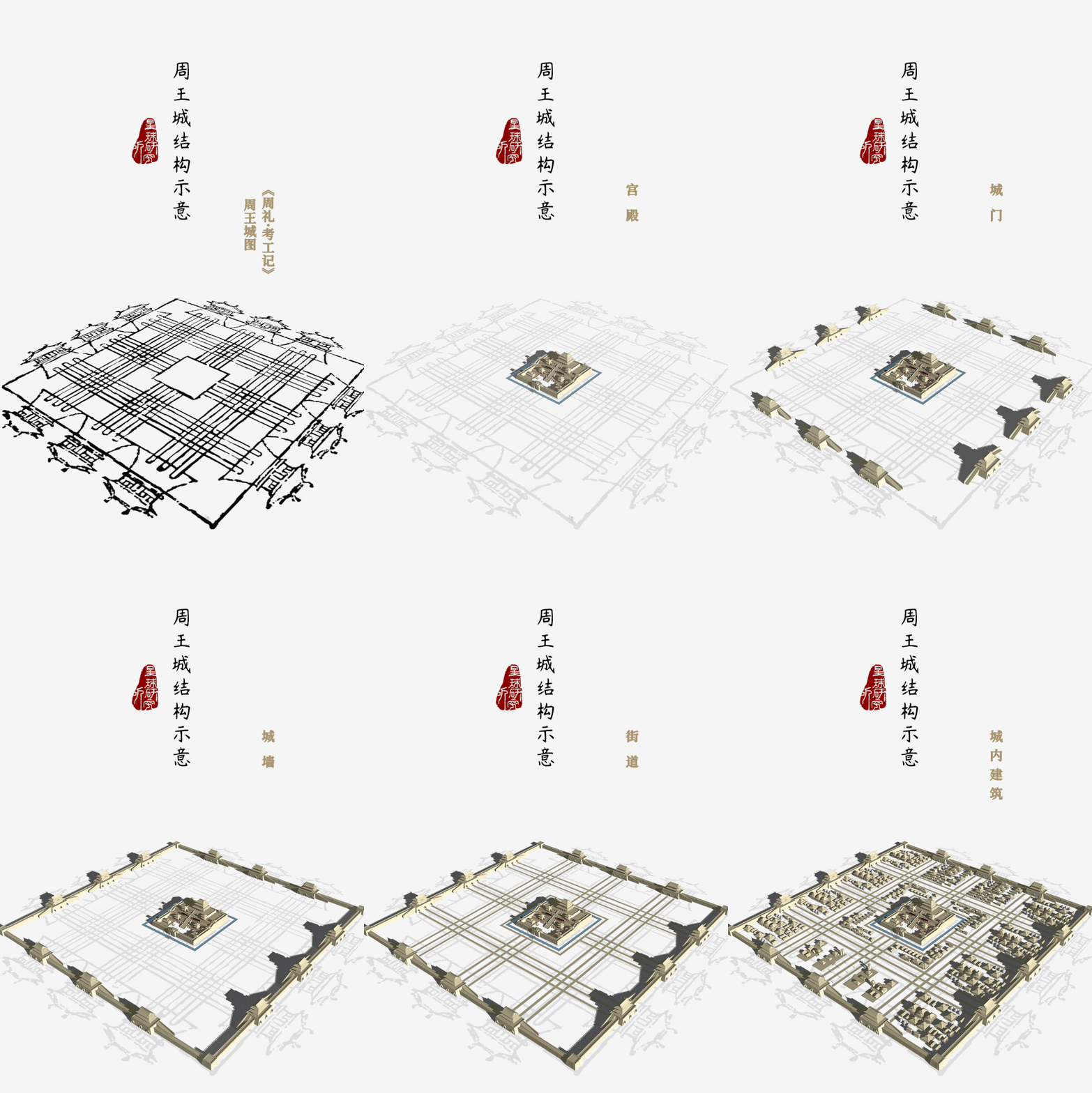
Based on records from Kaogong Ji (Records of Examination of Craftsmen) of the Rites of Zhou (《周礼·考工记》)
Palace (宫殿), city gates (城门), city walls (城墙), streets (街道), buildings in city (城内建筑)
(diagram: 张靖, Institute for Planets)
Embedded in the centre of Inner City is the Imperial City, which accommodates Central Government offices, Imperial Ancestral Temple, Altar of Earth and Harvests, and the Imperial Garden. This area was almost exclusive to the royal families and servants. Back in the Ming Dynasty, any trespassing civilians would be sentenced to 100 strokes of caning.
Finally, the palace complex sitting at the very core of the Imperial City is none other than the Forbidden City.
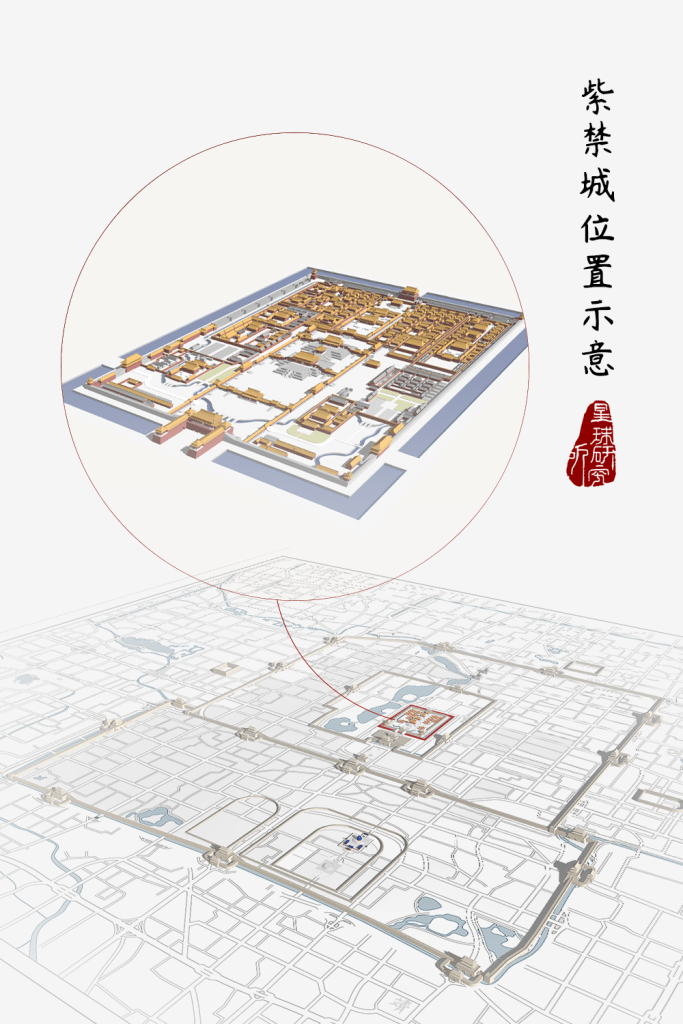
(diagram: 张靖, Institute for Planets)
Consisting of 8728 buildings that occupy an area of approximately 720,000 square metres, it is sometimes called the ‘Sea of Palaces’. If one considers only the construction area of Forbidden Palace, it is twice as big as Moscow Kremlin and three times larger than Tokyo Imperial Palace. It is also large enough to fit 4 Louvre, 6 Kyoto Imperial Palace, 9 Winter Palace or 10 Buckingham Palace. Forbidden City’s grandeur is truly unmatched in the world.
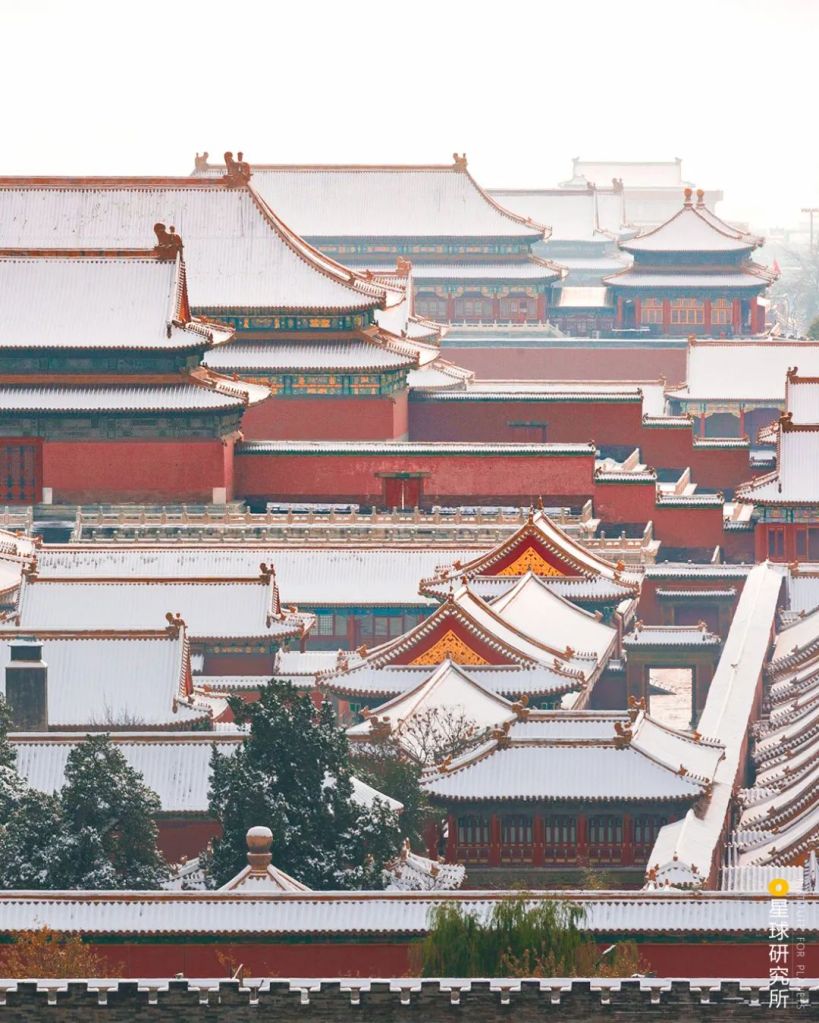
A characteristic feature of ancient Chinese architecture is the ‘jian (间)’, which refers to the space created by the supporting pillars around it
(photo: 柳叶氘)
Gazing across the endless sea of palaces, one can easily be immersed in the dramatic scenes of labouring lumberjacks harvesting trees deep in the thick mountain forests or boat trackers shouting thundering commands while transporting wood along the river.
The Forbidden City is like a long scroll of lively painting, in which everyone and everything ever related to it has been engraved, patiently waiting to be awaken, and to be seen.
Let us now slowly unroll the painting and stroll through the grand heritage.
2. Front Court
In line with the concept of ‘reception at the front, living at the back (前朝后寝)’ implemented in the ancient capital of Zhou, the Forbidden City can be divided into the Front Court (前朝) and the Back Palace (后宫).

(diagram: 张靖, Institute for Planets)
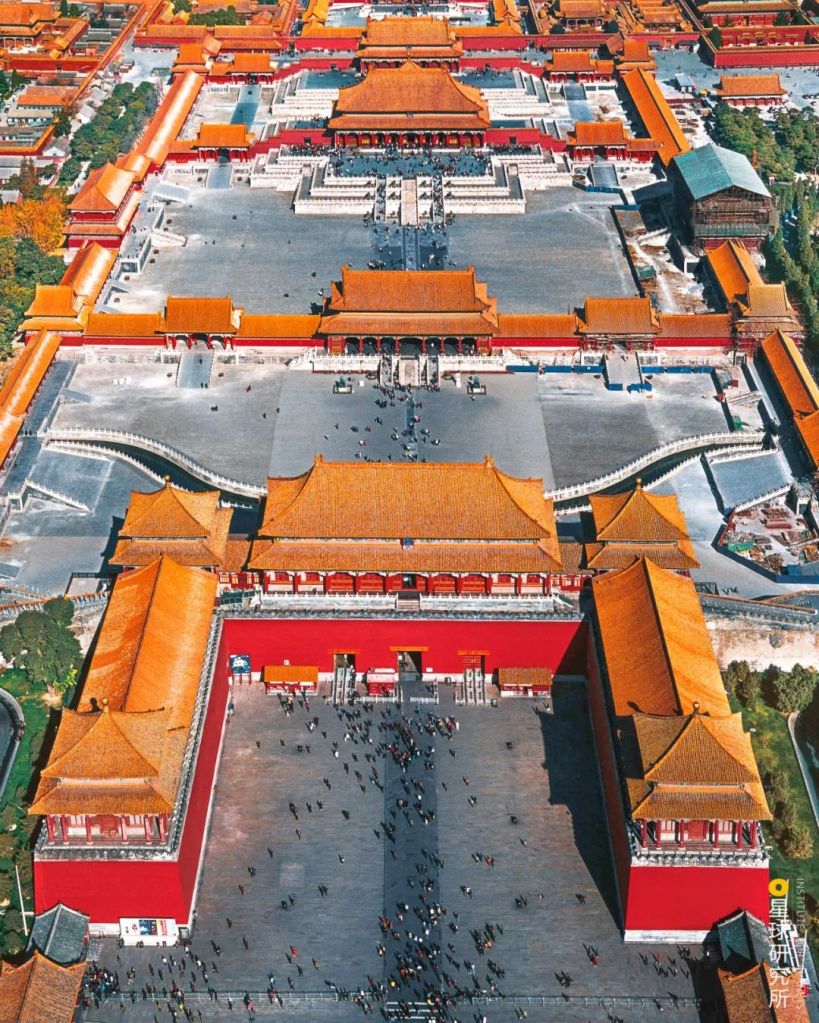
Our tour starts at the main entrance of the Forbidden City, the Meridian Gate (午门).
With two protruding arms on either side, the Meridian Gate forms a unique ‘U’ shape designed to maintain an unequivocal hierarchy among those passing through. The centre arch in the main section was reserved exclusively for the emperor, whereas the two adjacent side arches on either side were open to the royal family. All other government officials could only enter through the two flanking arches located in the protruding sections.

Centre arch (正门), side arch (侧门), flanking arch (掖门)
(diagram: 张靖, Institute for Planets)
As the tallest and most austere gateway in Forbidden City, the Meridian Gate was where triumphant armies presented war trophies after returning from decisive victories. And if the emperor became furious, it was also the site where officials faced corporal punishment. Throughout Ming Dynasty, there had been no fewer than 500 incidents of ‘tingzhang (廷杖, literally caning in court)’ executed on various officials. Among them, Yang Shen (杨慎), a famous poet and a Ming official, wrote the everlasting rhyme for the cipai Linjiangxian (临江仙, literally Immortals by the River) after multiple rounds of tingzhang and his eventual exile from the capital city:
Success or failure, right or wrong, all turn out vein;
Only the green mountains still remain
To see the setting sun’s departing ray是非成败转头空,青山依旧在,几度夕阳红
Immortals by the River by Yang Shen
《临江仙》杨慎
— English translation by Mr Xu Yuanchong (许渊冲)
(photo: 马文晓)
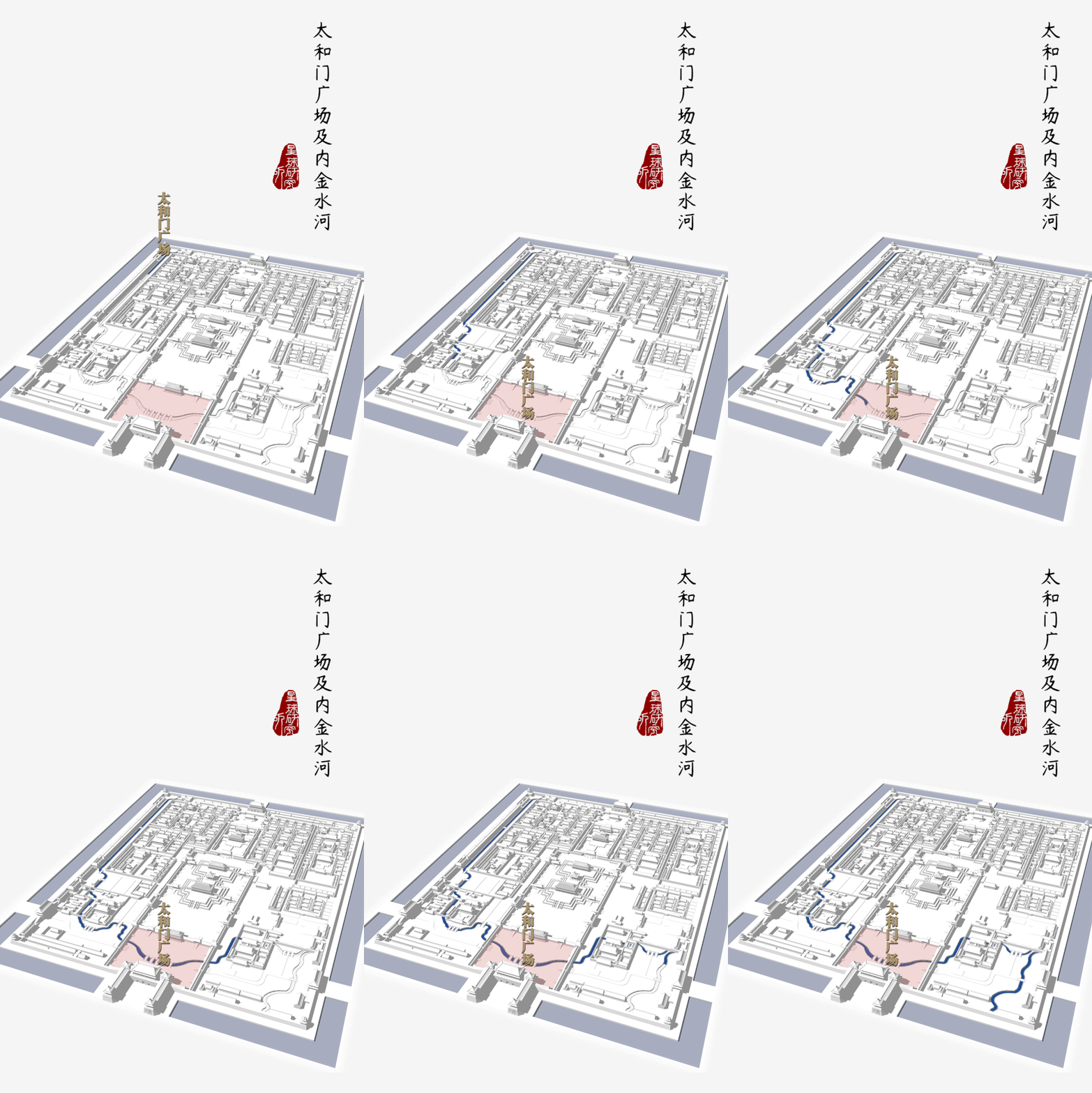
Right behind the Meridian Gate is the Gate of Supreme Harmony Square (太和门广场). A stream flows down from the Jade Spring Hill located in west Beijing City, across the Kunming Lake and Zhongnanhai, and becomes the Inner Jinshui River (内金水河, or literally Inner Golden Water River) that meanders through the square.
(diagram: 张靖, Institute for Planets)
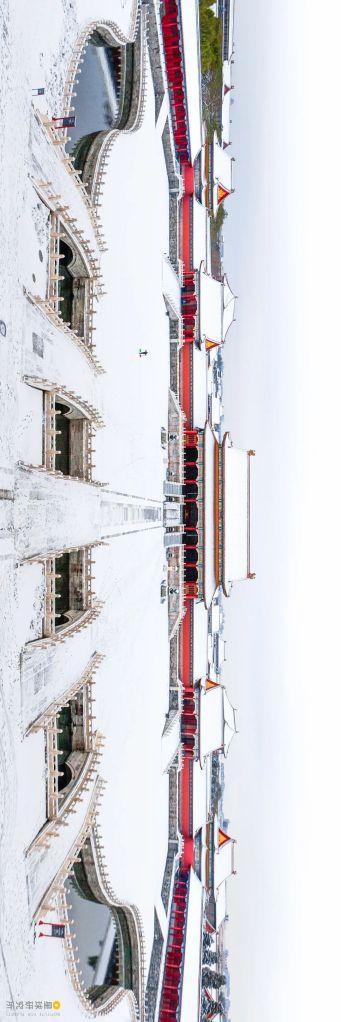
The river channel runs like a full-drawn bow that guides guests inwards to the Gate of Supreme Harmony with an inexplicable charm.
(photo: 柳叶氘)
Following the direction of the bow and arrow, guests are led straight into the heart of Forbidden City, where the three main halls reside. Most respected among all buildings in the palace complex, they are called the Hall of Supreme Harmony (太和殿), Hall of Central Harmony (中和殿) and Hall of Preserving Harmony (保和殿).
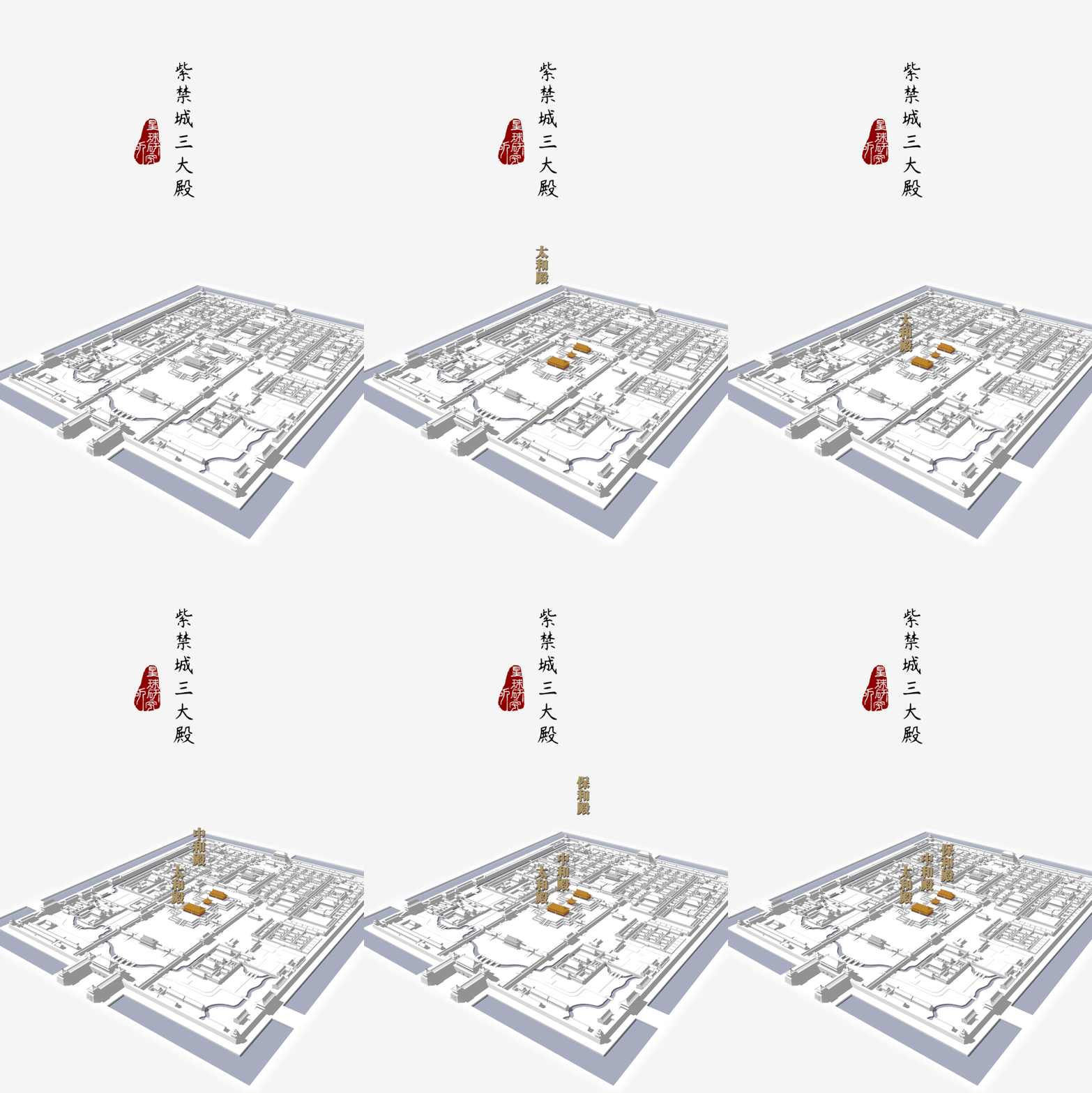
Hall of Supreme Harmony (太和殿), Hall of Central Harmony (中和殿), Hall of Preserving Harmony (保和殿)
(diagram: 张靖, Institute for Planets)
Viewing from above, the marble stone base supporting the three main halls exhibits a ‘土 (land)’ shape*. Sitting at the centre of the entire Forbidden City, it symbolises the believe of ‘imperial land residing in the nation’s heart (王土居中)’, which upholds the sovereign’s supremacy and the granted mandate to rule all under heaven.
*Translator’s comment:
All architectural ideals of the Forbidden City were meticulously implemented from the emperor’s perspective, i.e. facing south (or the Meridian Gate) from the main halls. These encompass concepts of front and back, as well as right hand and left hand. Here, in the eyes of the emperor, the stone base has an upright ‘土’ shape.
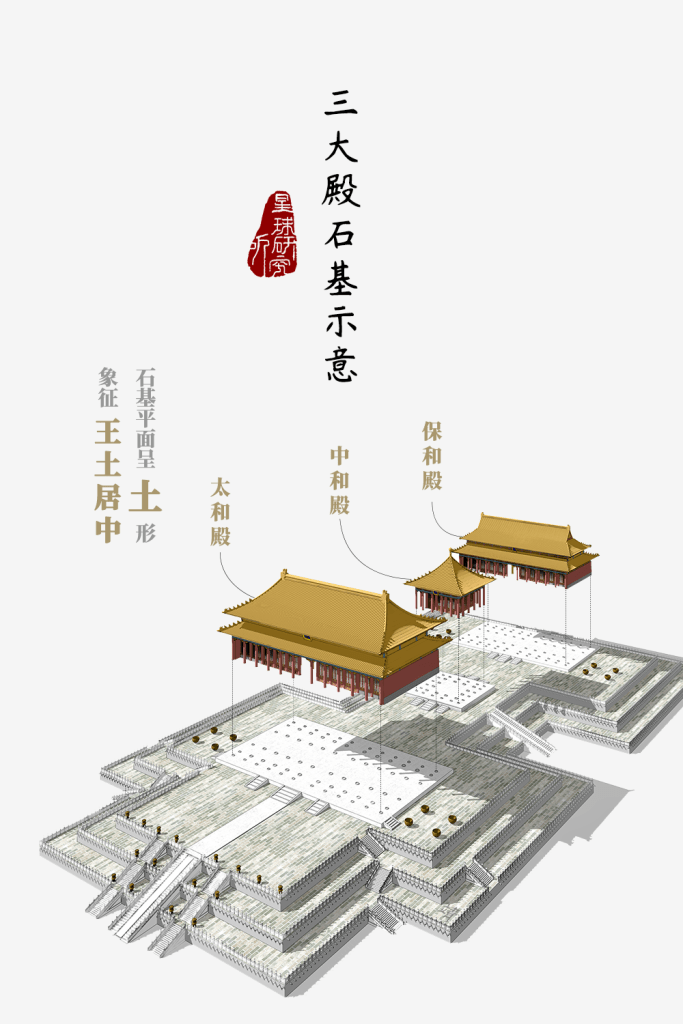
Hall of Supreme Harmony (太和殿), Hall of Central Harmony (中和殿), Hall of Preserving Harmony (保和殿)
(diagram: 张靖, Institute for Planets)
The stone base also has an intricate engineering design. Around it are up to a thousand dragon head stone sculptures, and each of these hollow structures is connected to a centralised drainage system. Whenever it rains, water pours out of all the dragon heads on the three-level stone base to perform a spectacular scene of ‘thousand dragon spouting water (千龙吐水)‘.
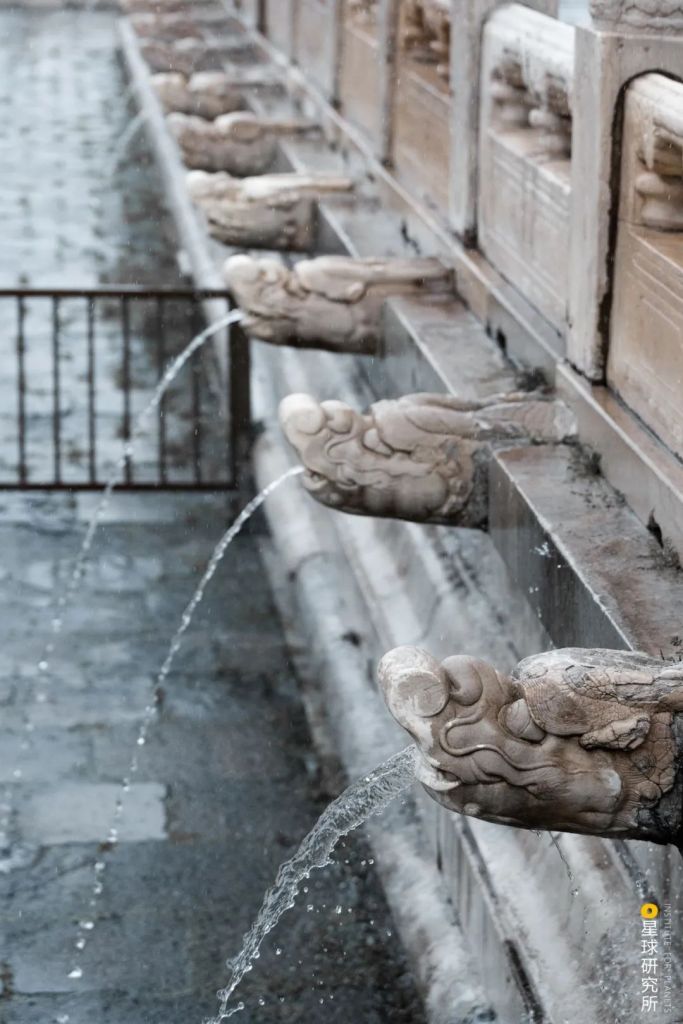
(photo: 柳叶氘)
The Hall of Supreme Harmony at the front is the largest and tallest building in the Forbidden City. It is about 35.05 metres high, which is equivalent to a 12-storey building.
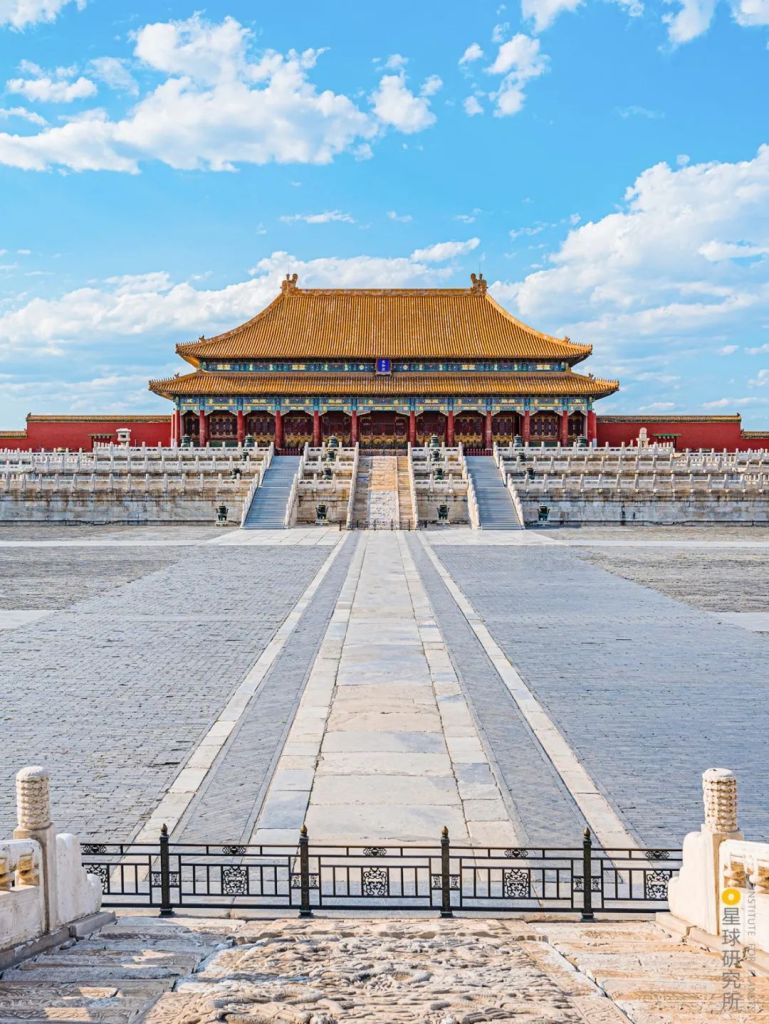
(photo: 李睿)
It is constructed with superlative configurations from head to toe. From the double-eave hip roof (重檐庑殿顶) to golden frame windows with matching golden locks (金扉金锁窗), floorings paved with golden bricks (金砖) and white marble sumeru pedestals decorating all three levels of the stone base (三层汉白玉须弥座), every piece of material used to build the solemn hall is radiating with imperial elegance and sumptuousness.
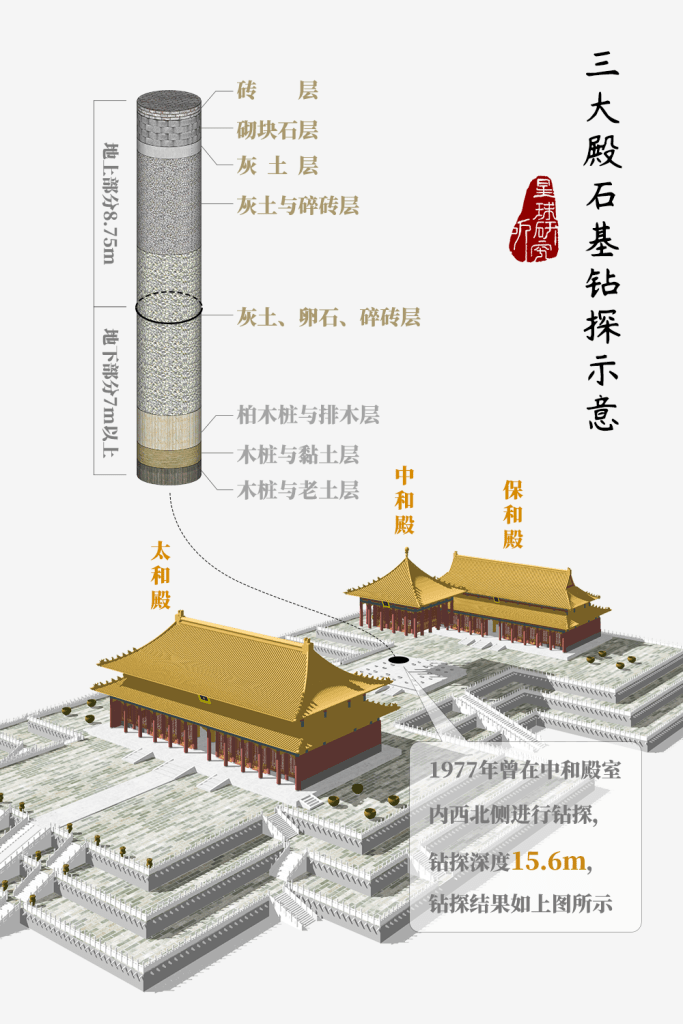
Prospective drilling was performed in 1977 within the Hall of Central Harmony; drilling depth was 15.6 metres
Above-ground portion (地上部分), underground portion (地下部分)
Brick layer (砖层), brick and stone layer (砖块石层), lime soil layer (灰土层), lime soil and brick pieces layer (灰土与碎砖层), lime soil, pebble and brick pieces layer (灰土、卵石、碎砖层)
Cypress pile and timber layer (柏木桩与排木层), stake and clay layer (木桩与黏土层), stake and old soil layer (木桩与老土层)
(diagram: 张靖, Institute for Planets)
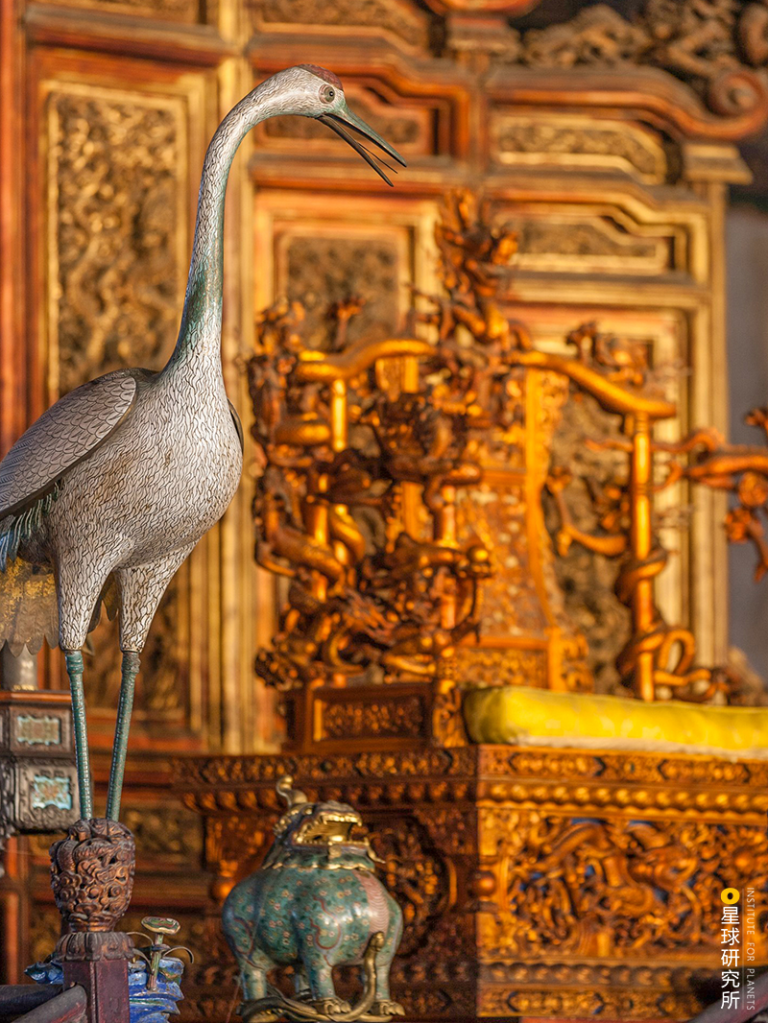
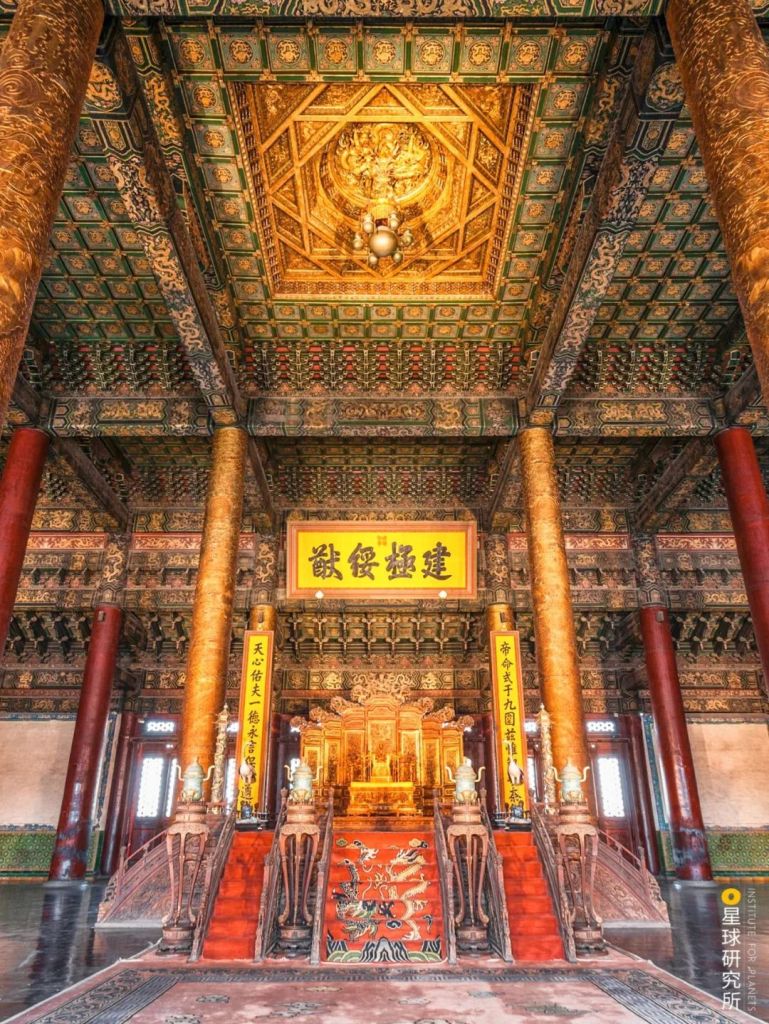
Interior decorations are equally extravagant. Crossbeams are adorned with hexi caihua (和玺彩画, also known as imperial-styled decorative painting) of golden dragons, and from the caisson right above the throne dangles a coiled dragon that shines in gold lacquer while holding pearls in its claws. Next to the throne are six dragons twining up the golden pillars and pointing their heads at the emperor’s seat.
(photo: 柳叶氘)
Dragons were regarded as the symbol of imperial power in ancient China. There are a total of 13433 dragons in the Hall of Supreme Harmony, all with the sole intention to project the indisputable authority of the emperor sitting on the throne – the one and only descendent of the dragon who rules with heaven’s mandate (真龙天子).
*The above data is based on《大紫禁城——王者的轴线》by 赵广超
(photo: 柳叶氘)
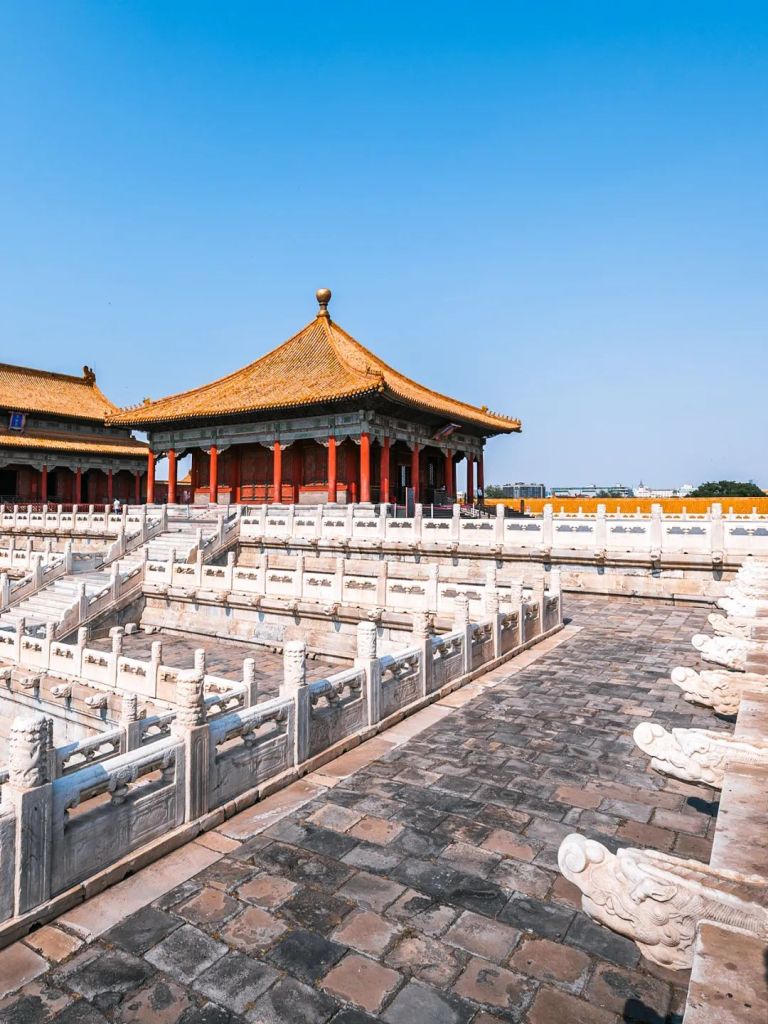
The Hall of Central Harmony, second of the three main halls, distinguishes itself with the square planar structure. It fulfils the purpose of a transitional structure between the Halls of Supreme Harmony and Preserving Harmony while avoiding repetition in architectural design.
(photo: 视觉中国)
Although the Hall of Preserving Harmony, last of the three main halls, also has a rectangular structure like the Hall of Supreme Harmony, its interior is much more spacious than the latter due to the omission of six pillars.
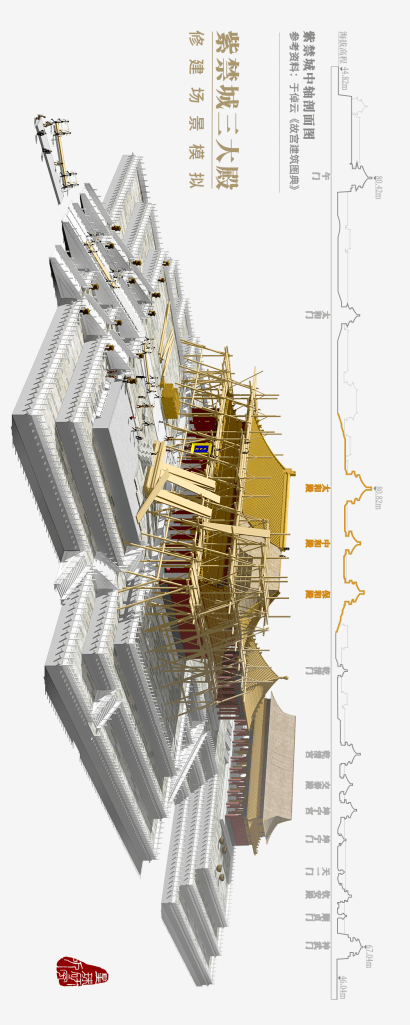
Artist’s impression of the construction site for the complex
Elevation (海拔高度)
(diagram: 张靖, Institute for Planets)
Adjacent to the three main halls are the Hall of Literary Brilliance (文华殿) and Hall of Martial Valour (武英殿). Sitting to the left and right of the three main halls respectively (左文右武), they signify the literacy and martial ethics equally cherished by the emperor.
The Hall of Literary Brilliance was used as a study room for the crown prince and a reception for scholars during the Ming Dynasty. Later on in Qing Dynasty, the Belvedere of Literary Profundity (文渊阁) was completed as an extension of the hall, in which the the Complete Library of Four Branches of Literature (四库全书) would be kept.
The Hall of Martial Valour was once an esteemed cultural workshop for compiling and printing literature.
Both of these halls have only single-eave roofs, which are designed to flatter the majestic status of the three main halls in the centre.
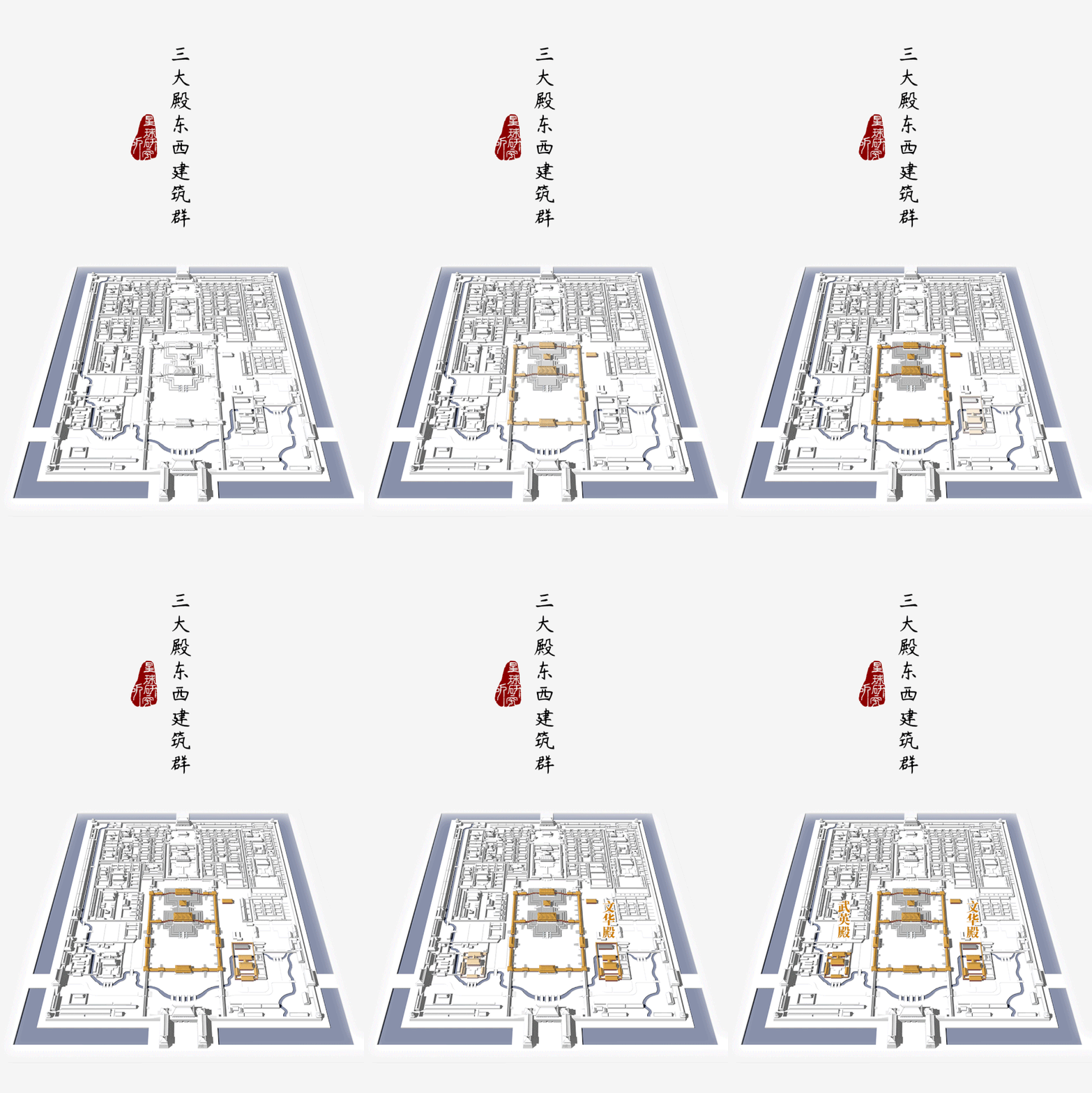
Hall of Literary Brilliance (文华殿), Hall of Martial Valour (武英殿)
(diagram: 张靖, Institute for Planets)
Standing behind the three main halls is the Gate of Heavenly Purity (乾清门), which marks the border between the Front Court and the Back Palace.
Are you ready for a tour in the Back Palace and a sneak peek into the private lives of Chinese emperors?
3. Back Palace
The core of the Back Palace is located behind the glass spirit screen (八字琉璃影壁) of the Gate of Heavenly Purity. It consists of the Palace of Heavenly Purity (乾清宫), Hall of Union and Peace (交泰殿) and Palace of Earthly Tranquility (坤宁宫). Collectively named the Back Three Palaces (后三宫), they are the corresponding architectural structures for the three main halls in the Front Court.
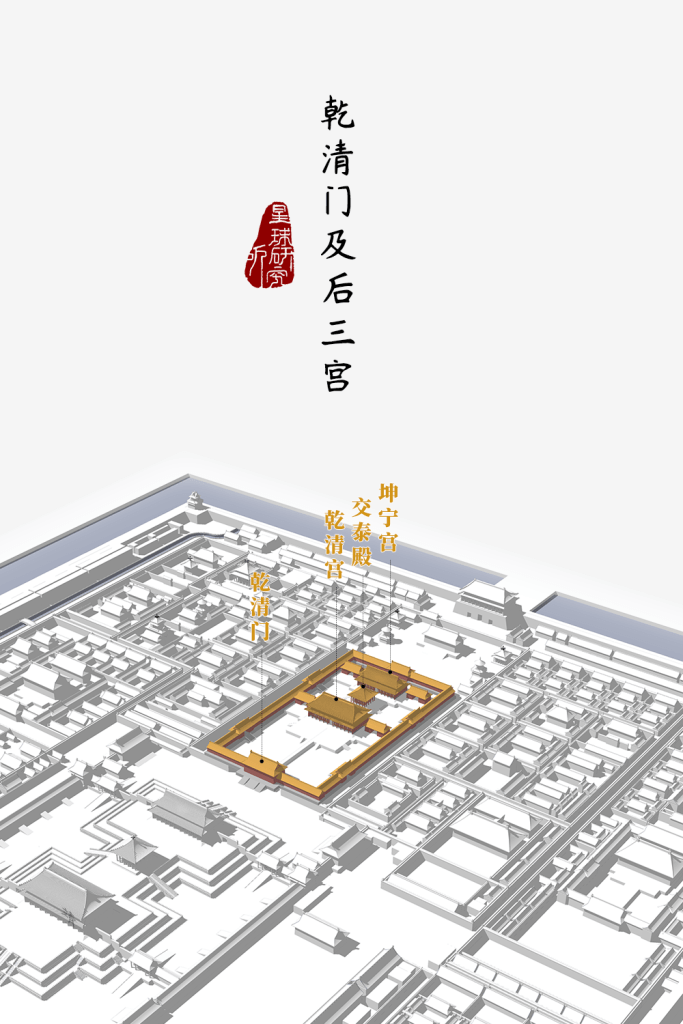
Palace of Heavenly Purity (乾清宫), Hall of Union and Peace (交泰殿), Palace of Earthly Tranquility (坤宁宫)
(diagram: 张靖, Institute for Planets)
The Palace of Heavenly Purity (Qianqing) and the Palace of Earthly Tranquility (Kunning) were the residence for the emperor and empress respectively. In ancient Chinese philosophy, ‘qian (乾)’ represents Yang and the Heaven, whereas ‘kun (坤)’ represents Yin and the Earth. The names of the three palaces imply the harmonious union between Yin and Yang, Heaven and Earth, as well as emperor and empress.
Apart from being a residence, the Palace of Heavenly Purity was also used as a temporary shelter for the bodies of deceased emperors prior to their burial. In addition, it was the arena of power handover, as emperors reigning after Emperor Kangxi followed the tradition of placing the name of the desired successor behind the plaque that reads ‘Be open and above board (正大光明)’ in the main hall of the palace.
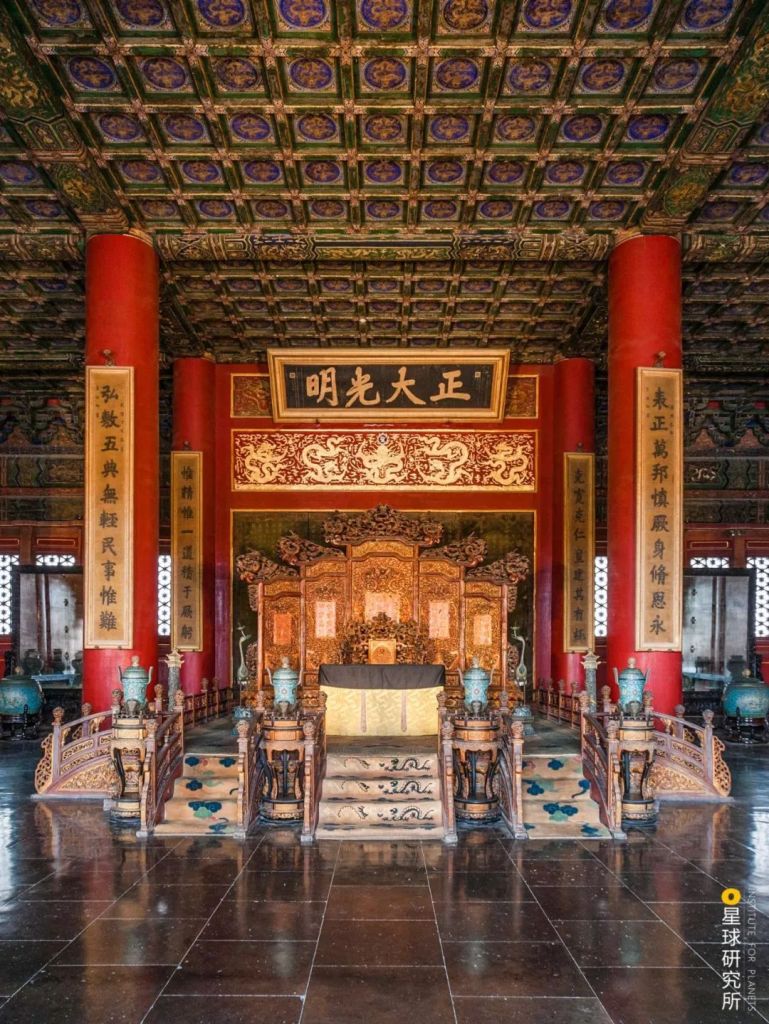
The plaque in the centre reads ‘Be open and above board (正大光明)’
(photo: 柳叶氘)
The Hall of Union and Peace behind it was where the emperor’s imperial jade seal was kept. Emperor Qianlong, who was very fond of seals, had a private collection of more than 1000 of them. The side chambers are now used to store timing and timekeeping instruments. These include the 6 metres tall Great Chiming Clock (大自鸣钟), the largest ancient clock in China.
The Palace of Earthly Tranquility was not only the empress’s bedroom suite during Ming Dynasty, but also the wedding chamber for emperors in Qing Dynasty. Emperors Kangxi, Tongzhi and Guanxu were all married here.
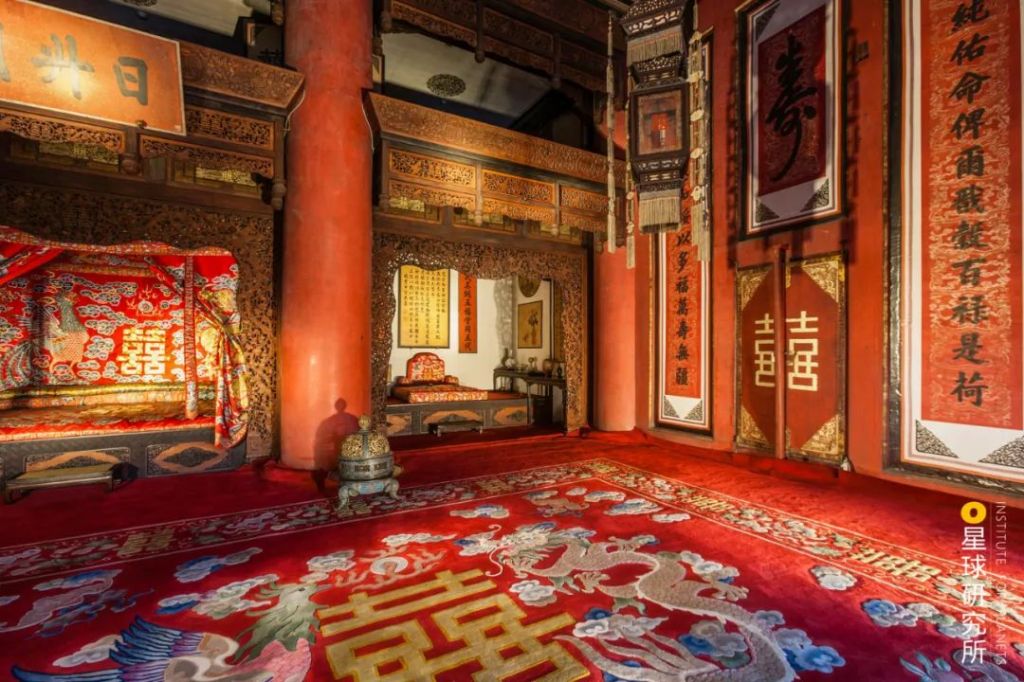
(photo: 柳叶氘)
It had also been repurposed for Shamanist ritual practices.
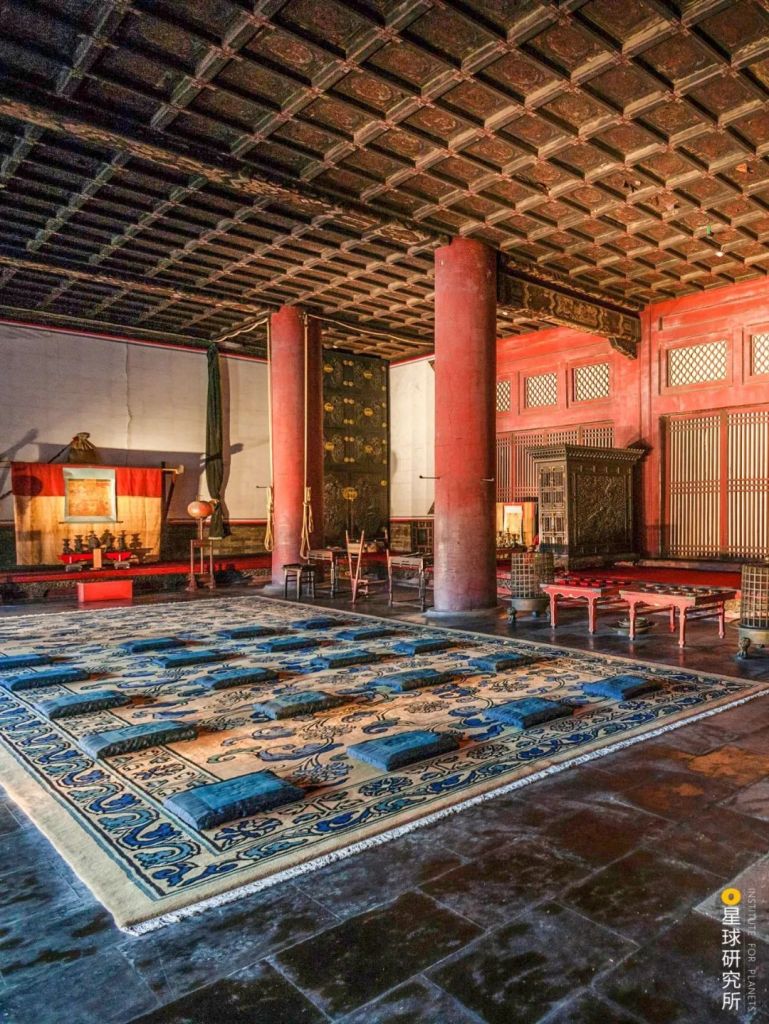
(photo: 柳叶氘)
Encircling the Back Three Palaces in a rectangular quad are more than 40 peripheral rooms, including Hall of Consolidating Dignity (端凝殿) and Hall of Merit and Diligence (懋勤殿), which served as the emperor’s cloak room and study room respectively. There are also study room for princes (the Study, 上书房), office for chief eunuch (Office for Internal Affairs, 敬事房), Imperial Teahouse (御茶坊) which provided timely refreshments, and Imperial Pharmacy (御药房) where imperial physicians were stationed at all times.
Emperor Kangxi also established the Southern Study (南书房), where he would consult and discuss all matters with informed scholars on duty.

Palace of Heavenly Purity (乾清宫), Hall of Union and Peace (交泰殿), Palace of Earthly Tranquility (坤宁宫)
Gate of Heavenly Purity (乾清门), Gate of Earthly Tranquility (坤宁门)
The Study (上书房), Southern Study (南书房), Office for Internal Affairs (敬事房), Hall of Merit and Diligence (懋勤殿), Imperial Teahouse (御茶坊), Imperial Kitchen (御膳房), Imperial Pharmacy (御药房)
Chiming clocks (自鸣钟)
(diagram: 张靖, Institute for Planets)
This also provided precious opportunities for these scholars to make great leaps in their careers by impressing the emperor with their erudite talents. Renowned ministers and courtiers of Qing Dynasty, including Zhang Tingyu, Liu Tongxun and Liu Yong, were once officials working in the Study or the Southern Study.
Accompanying the Back Three Palaces on both sides are the Eastern (东六宫) and Western Six Palaces (西六宫) where the emperor’s concubines lived. Starting with a rather standardised configuration of gateways and front, peripheral and residence halls, builders basically copied and pasted this architectural unit 12 times to construct these palaces.
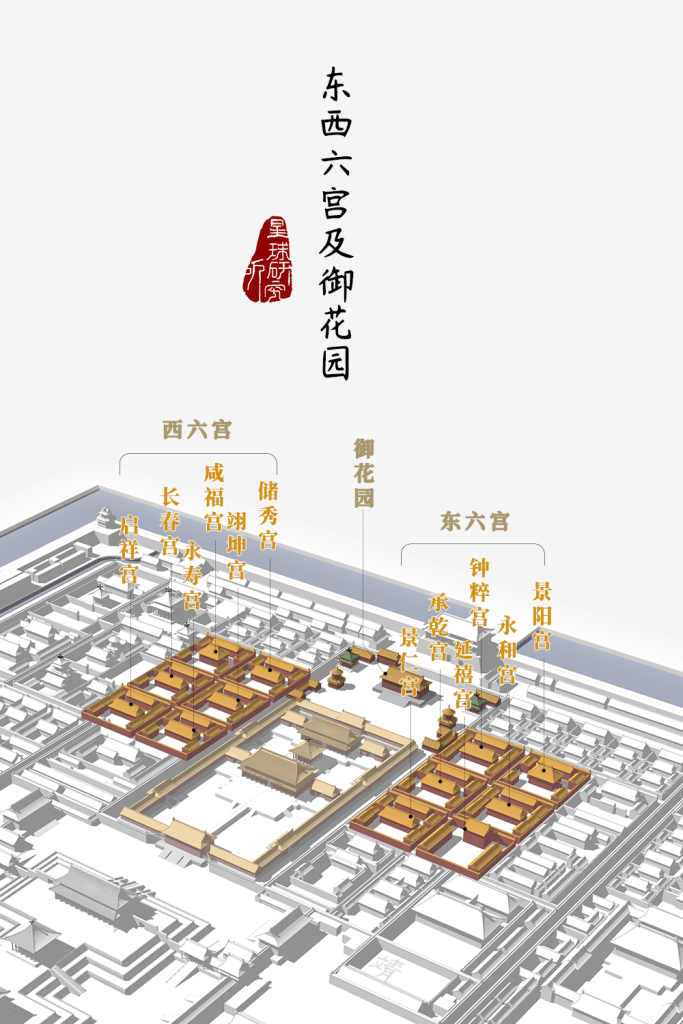
Eastern Six Palaces: Palace of Prolonging Happiness (延禧宫), Palace of Great Benevolence (景仁宫), Palace of Eternal Harmony (永和宫), Palace of Celestial Favour (承乾宫), Palace of Great Brilliance (景阳宫), Palace of Accumulated Purity (钟粹宫)
Western Six Palaces: Palace of Beginning Auspiciousness (启祥宫), Palace of Eternal Longevity (永寿宫), Palace of Eternal Spring (长春宫), Palace of Earthly Honour (翊坤宫), Palace of Universal Happiness (咸福宫), Palace of Gathered Elegance (储秀宫)
(diagram: 张靖, Institute for Planets)
Princes on the other hand lived in the Five Residences of Eastern (乾东五所) and Western Heaven (乾西五所). These palaces and residences were constructed in a way such that all of them revolve closely around the Palace of Heavenly Purity, with the sole purpose of revering the majesty’s ultimate supremacy.
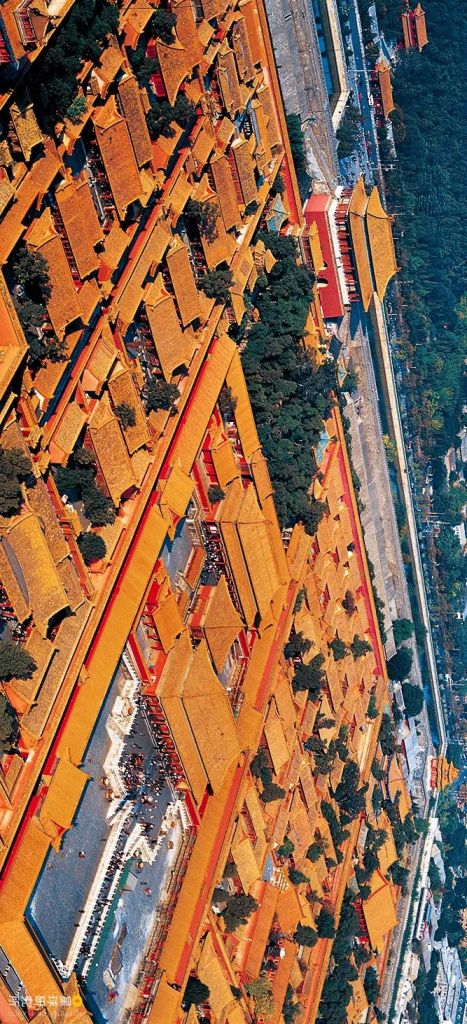
(photo: 马文晓)
While formalities and rules were strictly implemented in the Front Court, the emperor or any de facto ruler enjoyed much more freedom in the Back Palace. This was in part reflected by the constant changes in the buildings here, which were made based on personal preferences of those in power.
For instance, the religious Emperor Yongle of Ming instructed the construction of the Hall of Imperial Peace (钦安殿) in the Imperial Garden to enshrine the Emperor Zhenwu (真武大帝), a deity in Taoism.
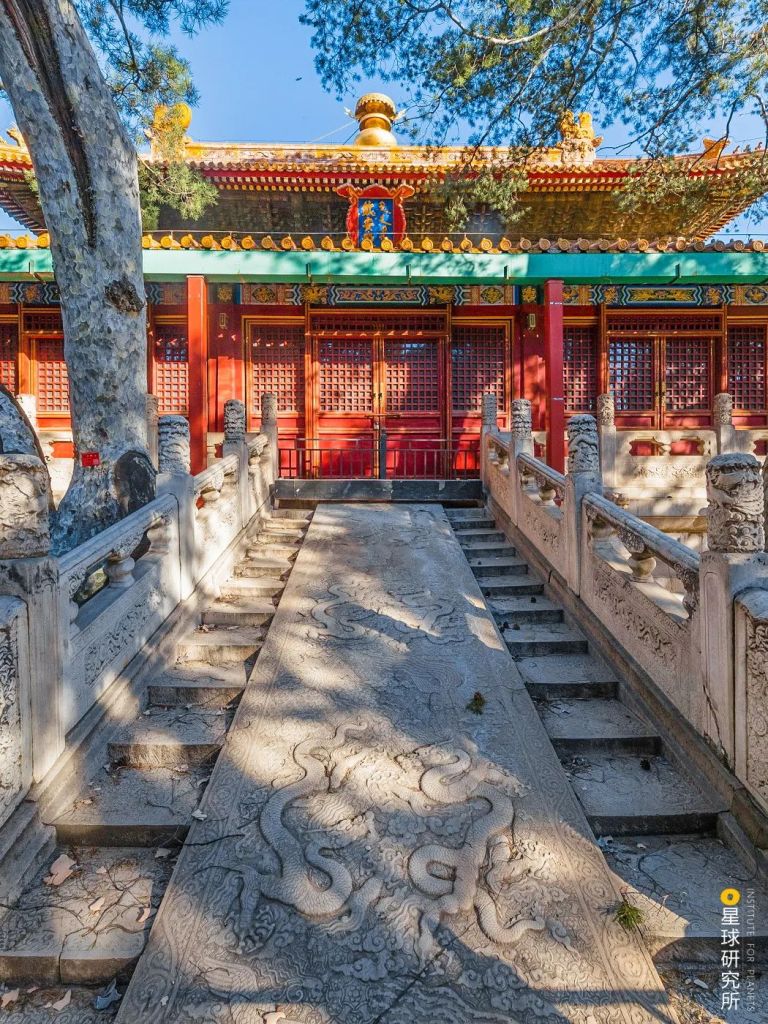
(photo: 柳叶氘)
At the same time, he built the Wudang Mountain Taoist Temple. Construction parts of the temple’s Golden Hall were manufactured in Beijing and assembled on the mountain. The two Taoist buildings more than 1000 kilometres apart could form close ties thereafter simply because of the religion of one emperor.
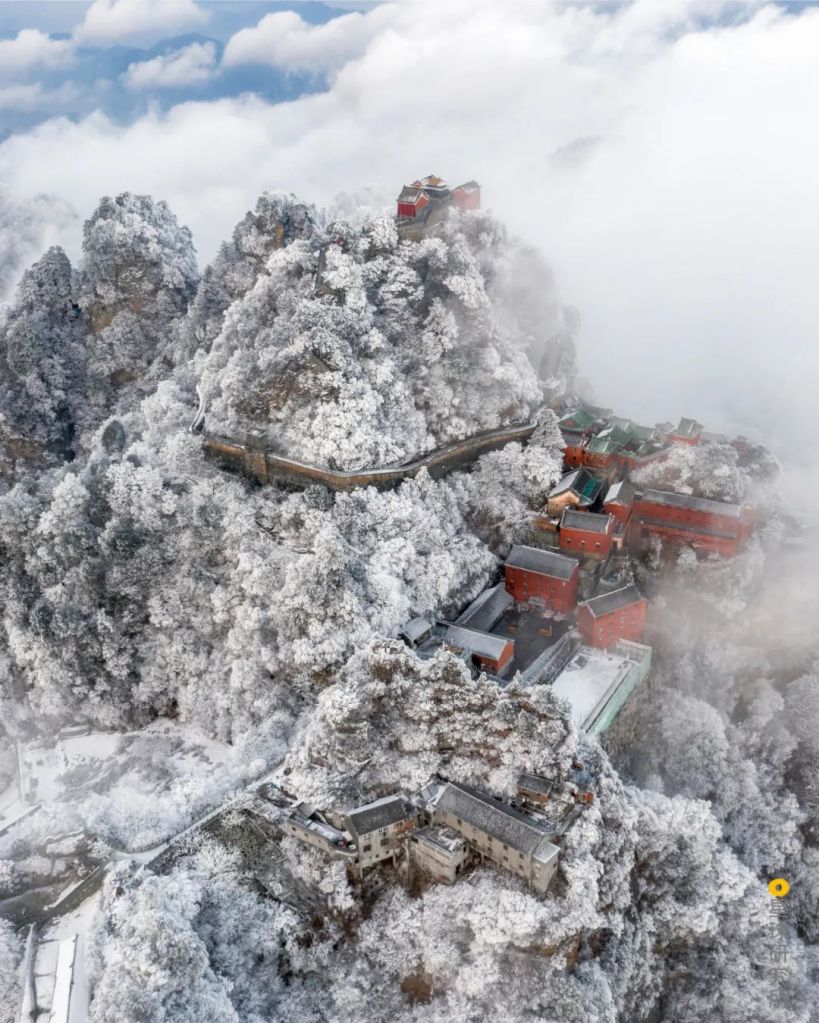
(photo: 程境)
When Emperor Yongzheng of Qing grew tired of living in Palace of Heavenly Purity, he decided to move to the Hall of Mental Cultivation (养心殿) next to it. The front hall served as the emperor’s office while the back hall was where he slept. Hall of Mental Cultivation hence became an integrated residence consisting of both accommodation and office units.
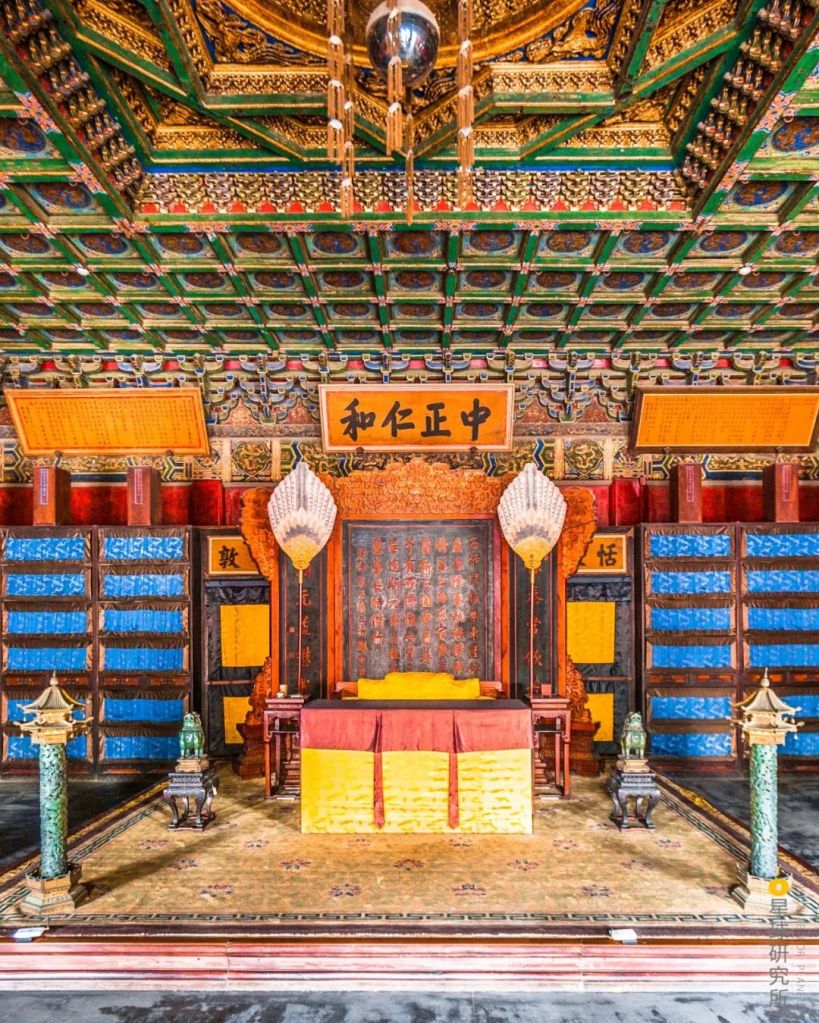
(photo: 柳叶氘)
Necessary imperial services and facilities certainly had to be arranged accordingly and relocated around it. These include the peripheral suites where the empress and concubines would serve the emperor in bed, Grand Council for handling political affairs as well as the Imperial Buttery for serving meals.
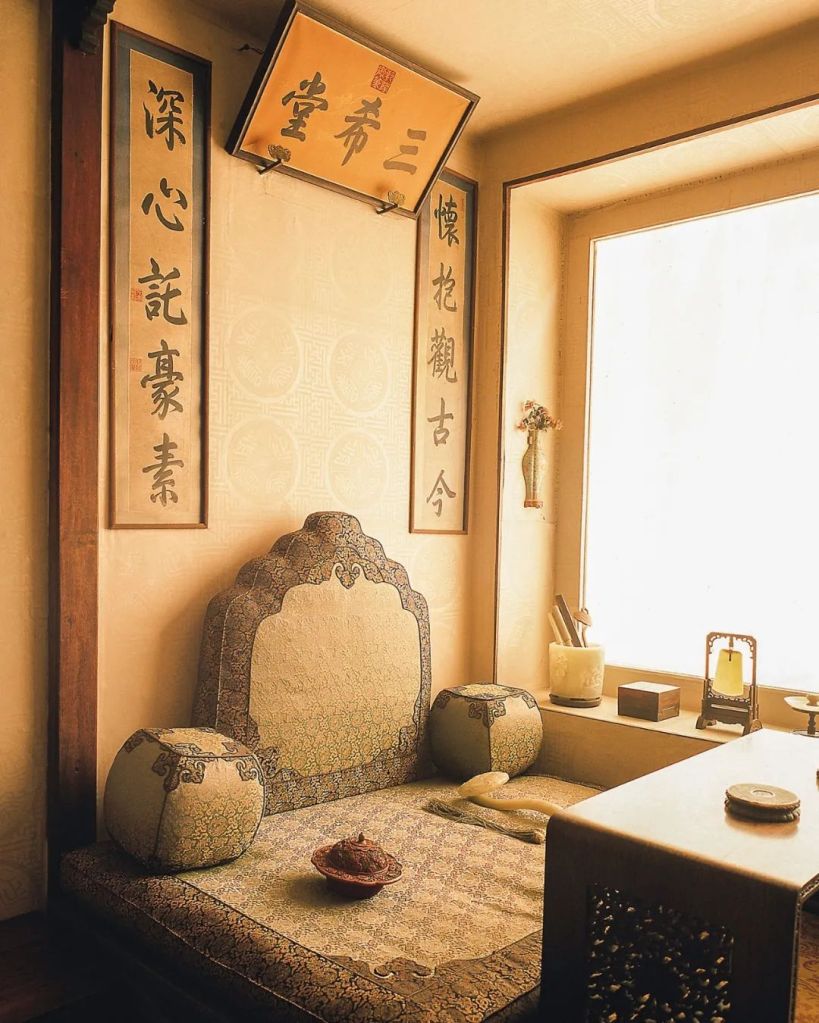
Emperor Qianlong’s private study
(photo: 视觉中国)
Emperor Qianlong of Qing was a particularly active builder in the Back Palace. To enjoy a more fulfilling life after ‘retirement’, he built a series of Retired Emperor’s Palaces (太上皇宫殿) in the eastern partition of the Back Palace, including the Hall of Imperial Supremacy (皇极殿), Palace of Tranquil Longevity (宁寿宫) and Qianlong Garden (乾隆花园).
The palace series also houses the Pavilion of Flowing Sound (畅音阁). It was the most advanced theatre at the time, capable of delivering stunning special effects such as having an actor descending from above to imitate an ‘arrival from heaven’ entry, or emerging from underground or a pool of water to dramatise the appearance of the character.
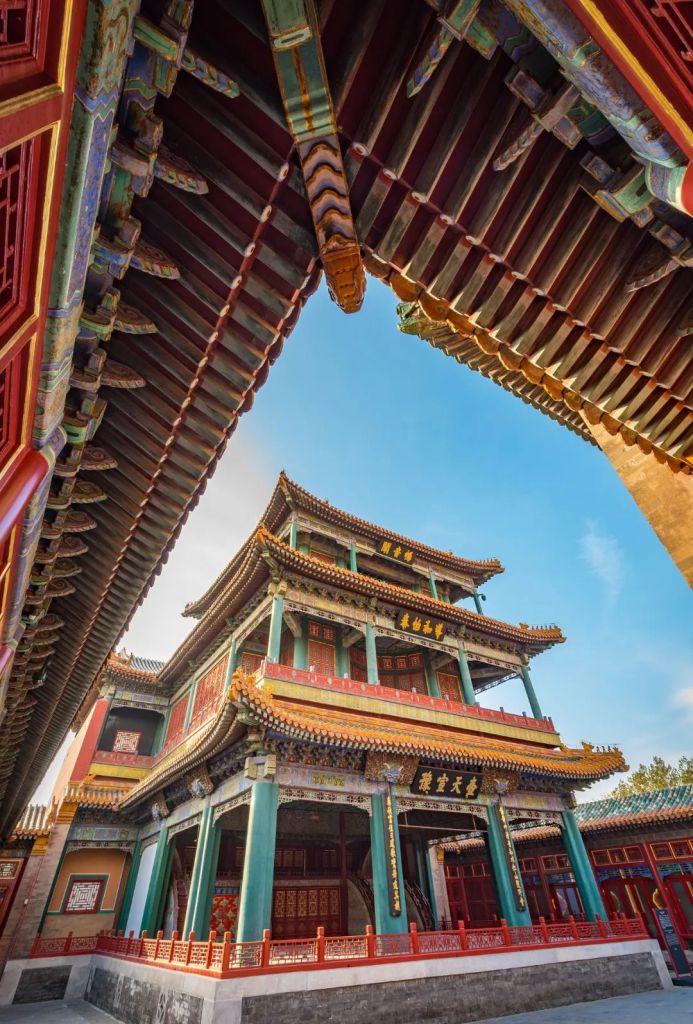
(photo: 视觉中国)
There is also the Pavilion for Appreciating the Spring Lustration (禊赏亭), where both elegant and popular literature were studied. The Spring Lustration Ceremony (修禊事也) mentioned in the Preface to the Poems Collected from the Orchid Pavilion (《兰亭集序》) was adapted into a winding stream party (流觞曲水) in this pavilion, where noble and scholarly participants drank and composed poems around the winding stream.
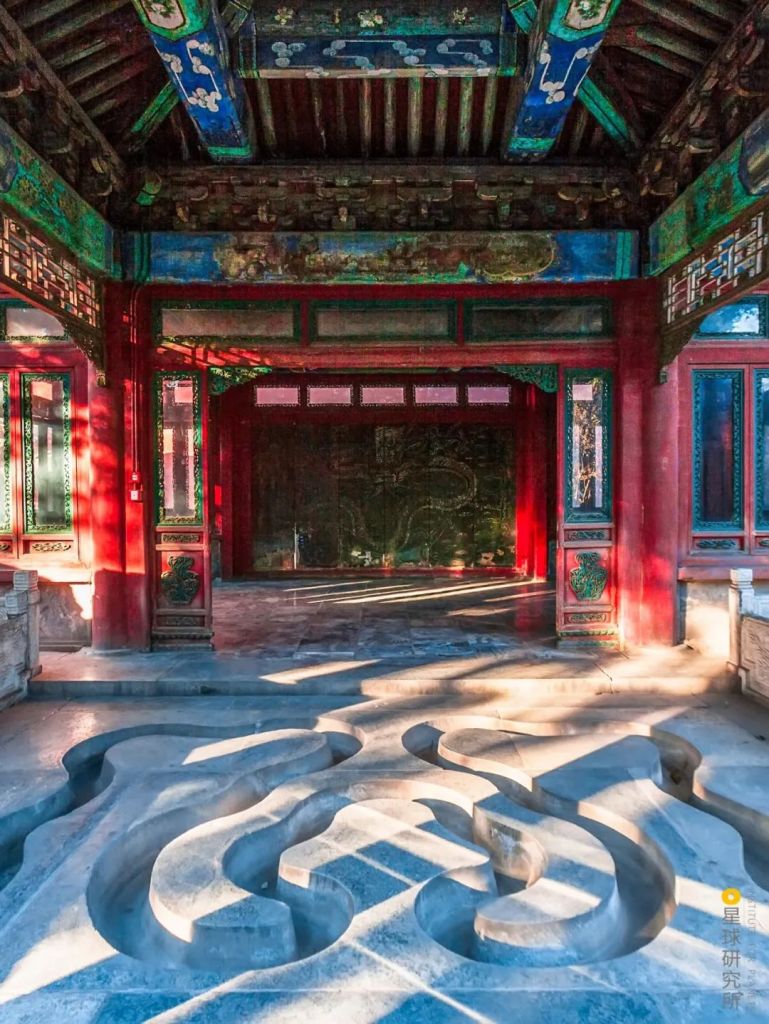
(photo: 柳叶氘)
Empress Dowager Cixi also left her mark here in the Forbidden City. To expand the Palace of Eternal Spring (长春宫) and Palace of Gathered Elegance (储秀宫), where she was living at the time and previously as a concubine respectively, she ordered builders to dismantle the Gate of Eternal Spring and Gate of Gathered Elegance and reconstruct them into Hall of Manifest Origin (体元殿) and Hall of Manifest Harmony (体和殿).
The relatively tolerant rules in the Back Palace were the main reason for the much richer and more diverse architectural styles here compared to those in the Front Court.
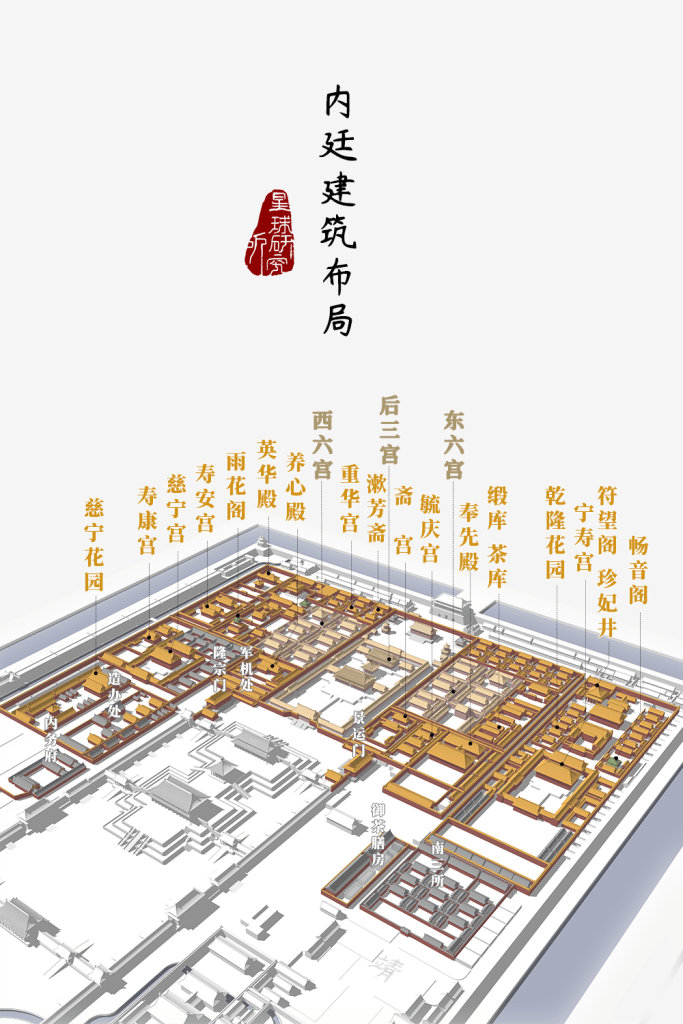
Back Three Palaces (后三宫), Eastern Six Palaces (东六宫), Western Six Palaces (西六宫)
Garden of Tranquil Longevity (慈宁花园), Palace of Longevity and Health (寿康宫), Palace of Tranquil Longevity (慈宁宫), Palace of Peaceful Longevity (寿安宫), Pavilion of Raining Flowers (雨花阁), Hall of Exuberance (英华殿), Hall of Mental Cultivation (养心殿) Palace of Double Brilliance (重华宫), Pavilion of Propitious Clarity (漱芳斋), Hall of Abstinence (斋宫), Palace of Nurturing Joy (毓庆宫), Hall of Ancestral Worship (奉先殿), satin (缎库) and tea storages (茶库), Qianlong Garden (乾隆花园), Palace of Tranquil Longevity (宁寿宫), Well of Concubine Zhen (珍妃井) in View of Achievement Belvedere (符望阁), Pavilion of Flowing Sound (畅音阁)
Imperial Household Department (内务府), Office of Manufacture (造办处), Gate of Thriving Imperial Clan (隆宗门), Grand Council (军机处), Gate of Pleasant Fortune (景运门), Imperial Buttery (御茶膳房), Southern Three Residences (南三所)
(diagram: 张靖, Institute for Planets)
Together, the Front Court and Back Palace make up the two major partitions of the Forbidden City, which are surrounded by towering red walls. This city wall opens at four gateways, namely the Gates of Eastern Brilliance (东华门) and Western Brilliance (西华门), Meridian Gate (午门) and Gate of Divine Prowess (神武门). Corner towers are erected at the four corners of the city wall, where the roofs on all sides overlay on each other in a unique style that is rarely preserved today.
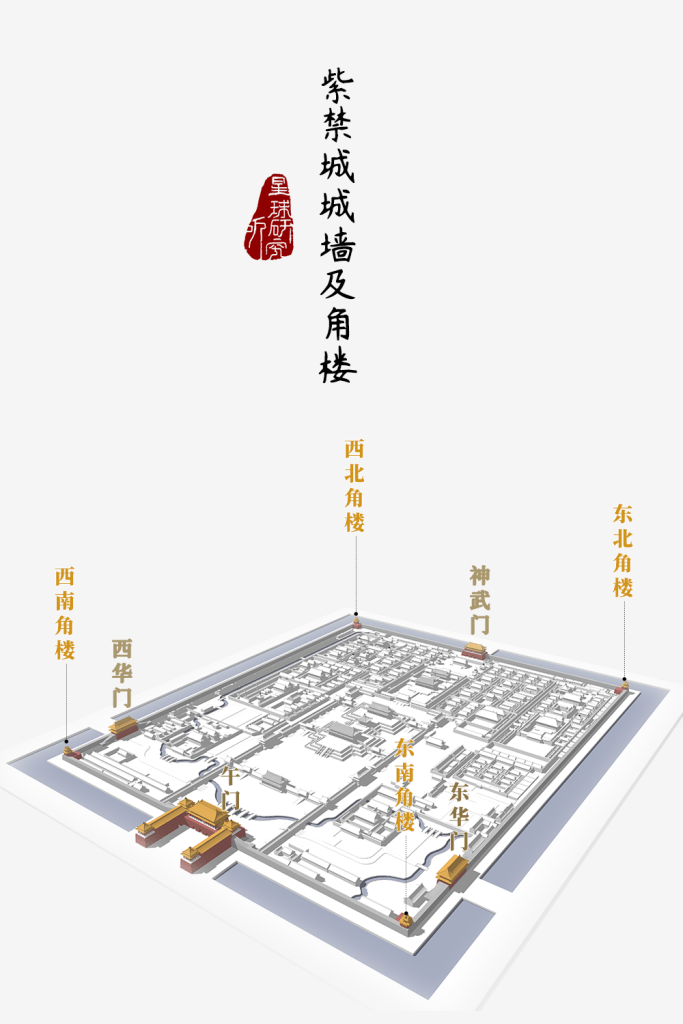
Meridian Gate (午门), Gate of Divine Prowess (神武门), Gate of Eastern (东华门) and Western Brilliance (西华门)
Southeast (东南角楼), Southwest (西南角楼), Northwest (西北角楼) and Northeast corner towers (东北角楼)
(diagram: 张靖, Institute for Planets)
Protecting the city wall is a 52 metres wide moat. The sand and earth dug out during the construction were piled up behind the Forbidden City which, after a series of restructuring, became the Hill of Scenic Beauty Park, also known as the Jingshan Park.
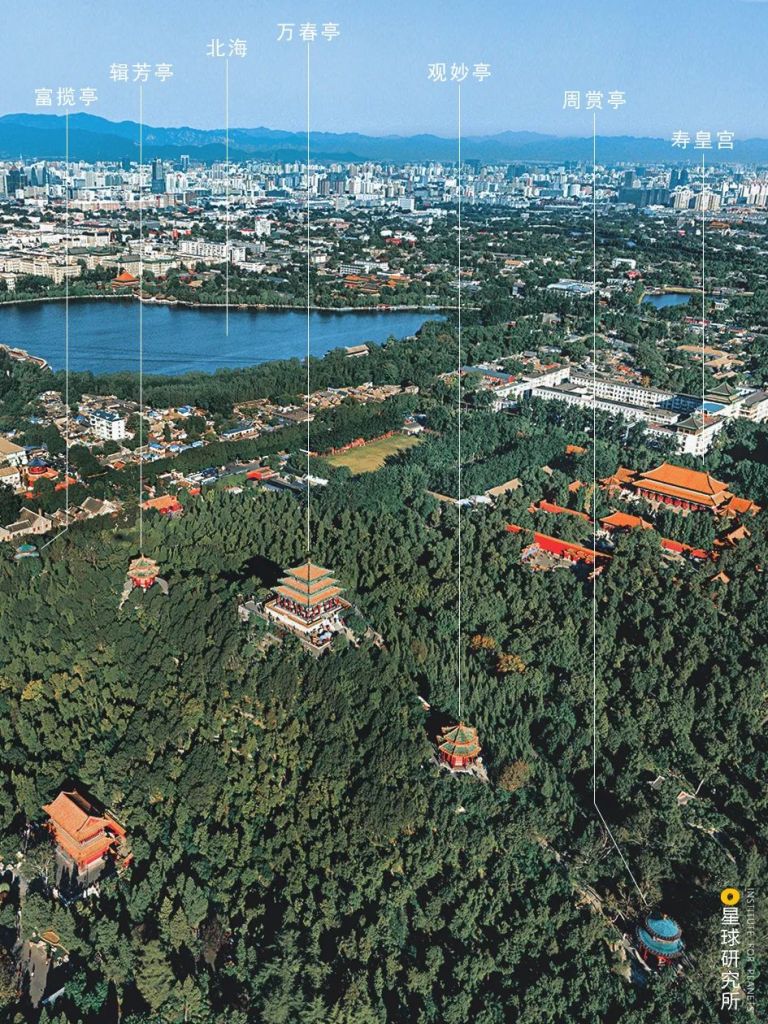
Pavilion of Embracing Prosperity (富揽亭), Pavilion of Collected Fragrance (辑芳亭), Beihai (literally Northern Sea, 北海), Pavilion of Ten Thousand Springs (万春亭), Pavilion of Wondrous View (观妙亭), Pavilion of Delightful Surroundings (周赏亭), Palace of Imperial Longevity (寿皇宫)
(photo: 马文晓)
When hiking the Hill of Scenic Beauty, one will always be stunned by the unique skyline looking at the Forbidden City — layers and layers of buildings covered in golden bricks, crimson wall paints, white marble stairs and glazed roof tiles, all seeping with imperial elegance. The Sea of Palaces really lives up to its name.
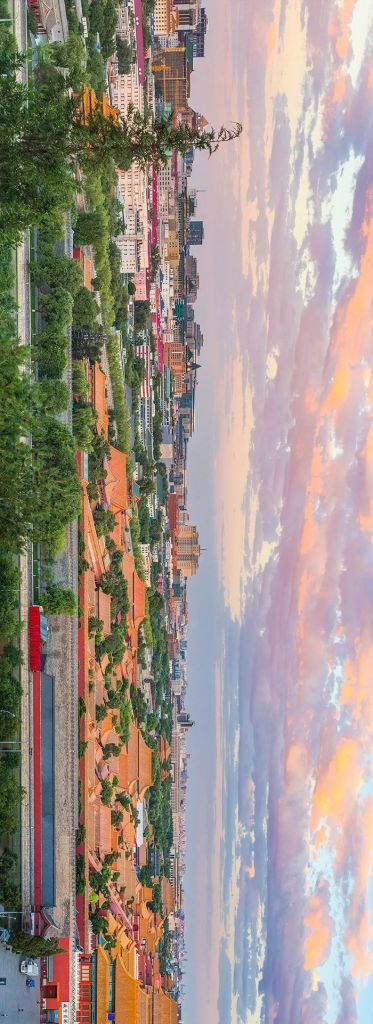
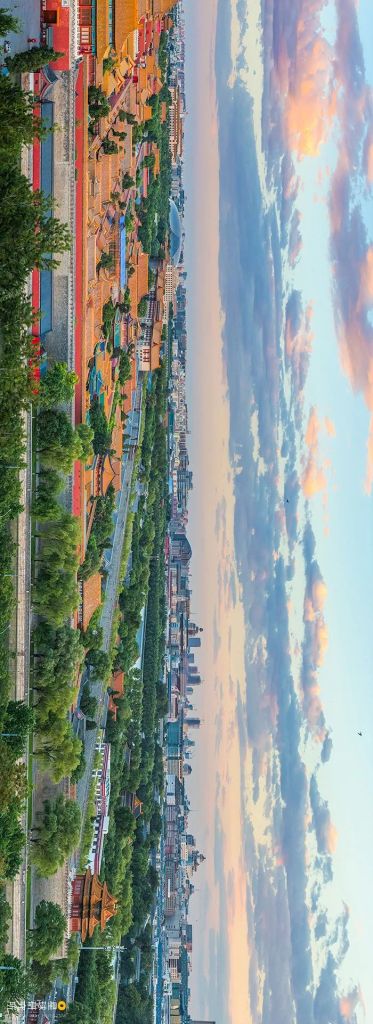
(photo: 柳叶氘)
4. Conclusion
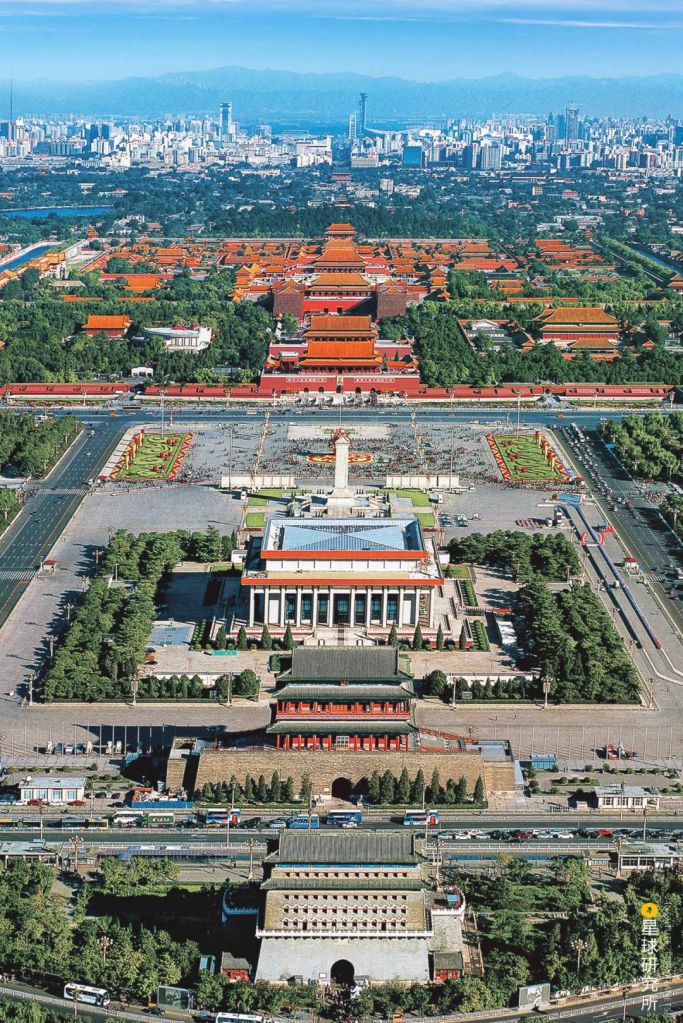
From the Front Court to the Back Palace, the Forbidden Palace is split into two perfectly symmetrical partitions by a central axis that stretches a great distance.
(photo: 马文晓)
It penetrates the Hall of Supreme Harmony, Hall of Central Harmony, Hall of Preserving Harmony, Palace of Heavenly Purity, Palace of Earthly Tranquility, Hall of Union and Peace, Hall of Imperial Peace and Drum Tower.
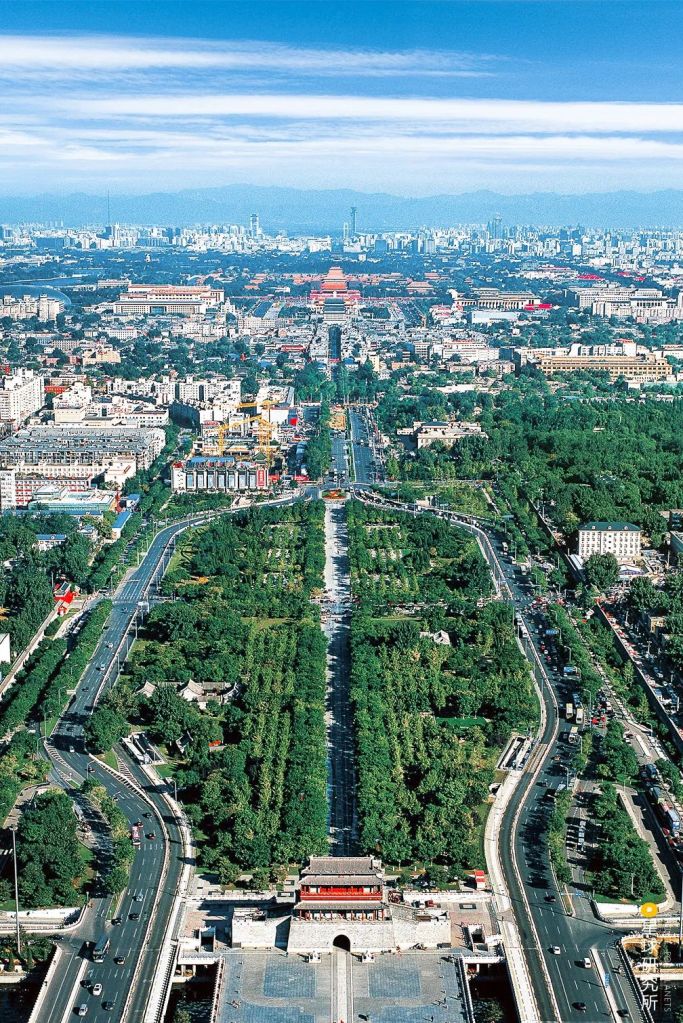
It passes through the gates of Yongdingmen, Damingmen (renamed Daqingmen during Qing Dynasty), Chengtianmen (today’s Tiananmen), Duanmen, Wumen (Meridian Gate), Taihemen (Gate of Supreme Harmony), Qianqingmen (Gate of Heavenly Purity), Shenwumen (Gate of Divine Prowess) and Dianmen.
It runs through the Outer City, Inner City, Imperial City and the Forbidden City.
(photo: 马文晓)
From city planning to positioning of the emperor’s throne, every single building block in Beijing largely aligns to this central axis. This invisible line of symmetry is the backbone of China’s capital and the spiritual sustenance of the people living in it.
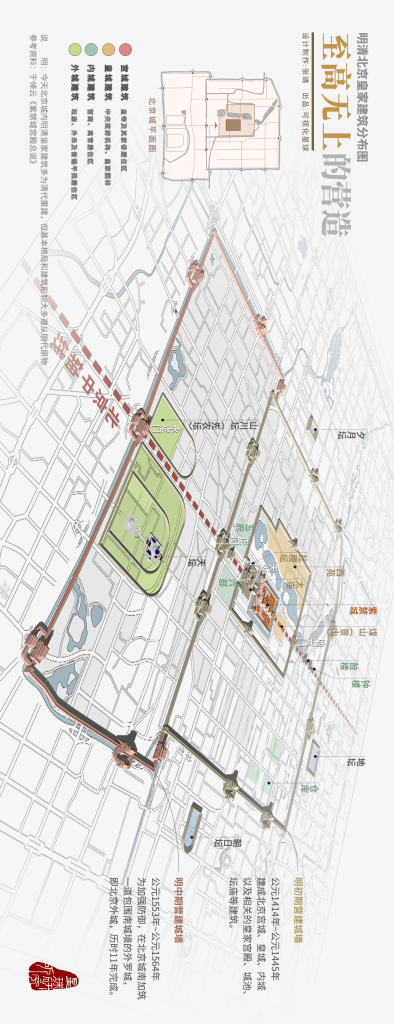
While most structures were renovated in Qing Dynasty, Ming buildings largely retain the configuration and architectural styles of the originals
(diagram: 张靖, Institute for Planets)
The central axis flows like a recounting melody celebrating the ancient capital’s long history. The main entrance of Outer City and the one-way passage through numerous narrow and heavily guarded gateways are merely the prelude and a brief transition. Only after these does the melody arrives at the real climax behind the Meridian Gate, which is the main entrance of Forbidden City. All this progression and building up serve only to bring out the supremacy of the sovereign who ruled by the Mandate of Heaven.
This Sea of Palaces was created with citadel planning ideals of Zhou, configuration blueprints of Yuan and architectural styles of Ming and Qing, and substantiated with thousands of palaces and halls.
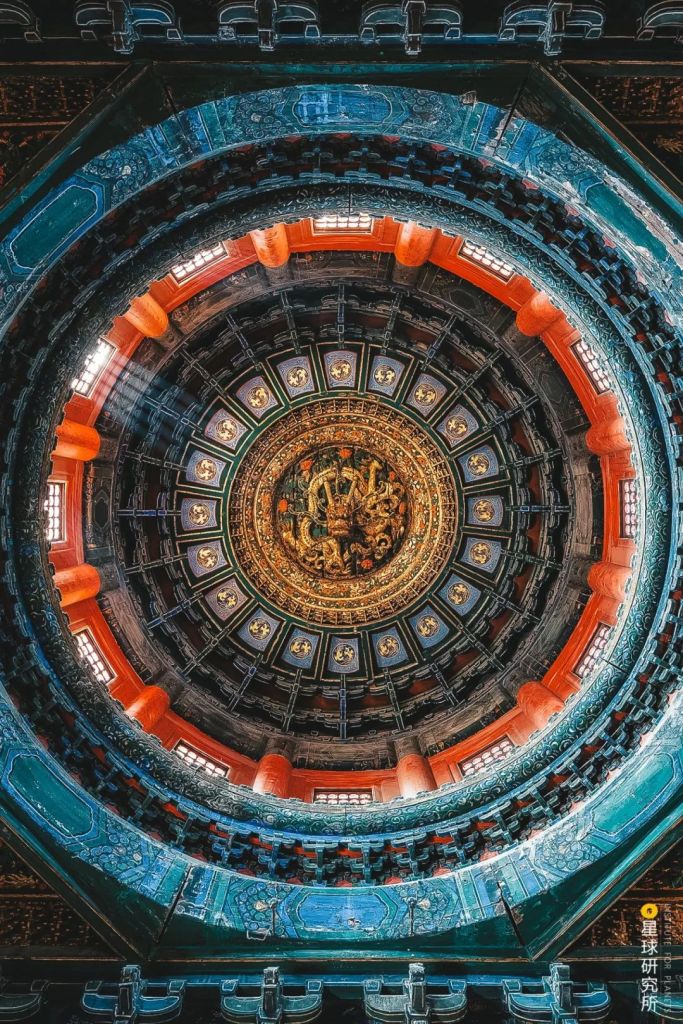
(photo: 焦潇翔)
But the Forbidden City is much more than just a sea of palaces. It had been the imperial city for 6 centuries and a museum for more than 90 years. Over the years, the Forbidden City has slowly become a national treasury.
Out of more than 1.8 million pieces of relics kept in the Forbidden City Museum, almost 1.56 million pieces (approximately 86% of all relics) belong to the Qing Imperial Collection.
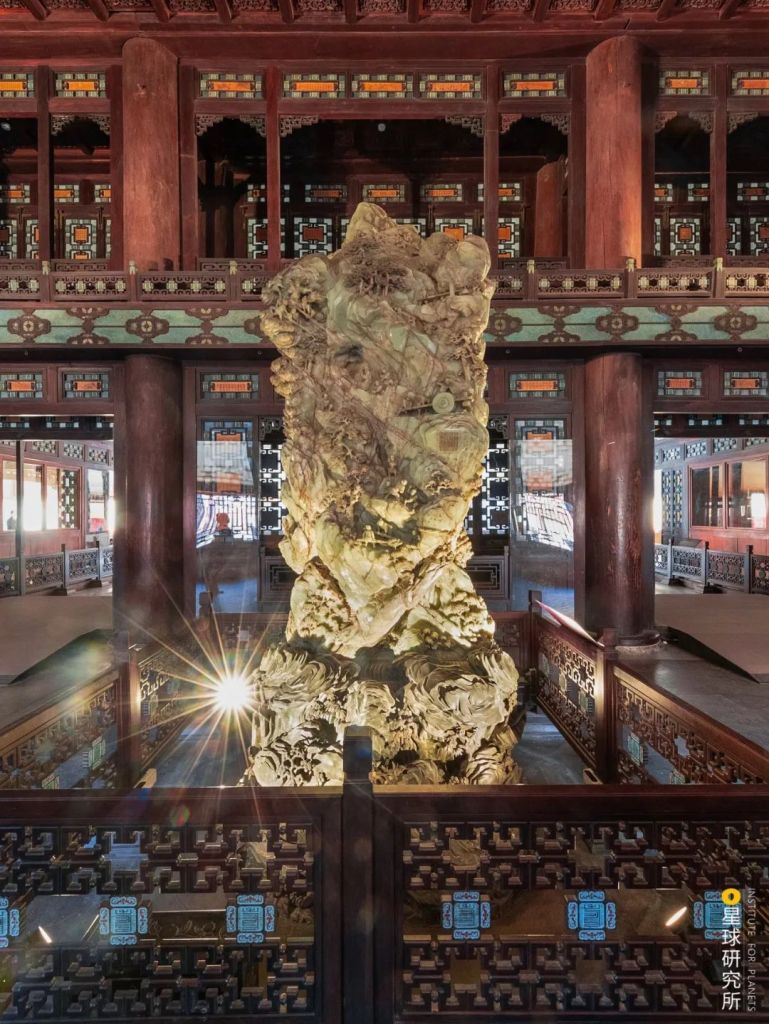
(photo: 柳叶氘)
The collection went through chaotic times in the last century. To avoid their encroachment and destruction during Japanese invasion, some of these relics were relocated to the south, while some of them were eventually transferred to Taiwan. Fortunately, the majority were recovered and returned to the Forbidden City in Beijing.
Since the establishment of New China, the Forbidden City Museum has continued to recover lost relics through various channels, including reallocation by the government and calling for donations. For instance, the Government Administration Council approved special funds in 1951 to bid back precious manuscripts and artworks, including the Mid-autumn Festival calligraphy model (《中秋帖》) by Wang Xianzhi of Jin, Letter to Boyuan calligraphy model (《伯远帖》) by Wang Xun of Jin, and The Night Revels of Han Xizai (《韩熙载夜宴图》).
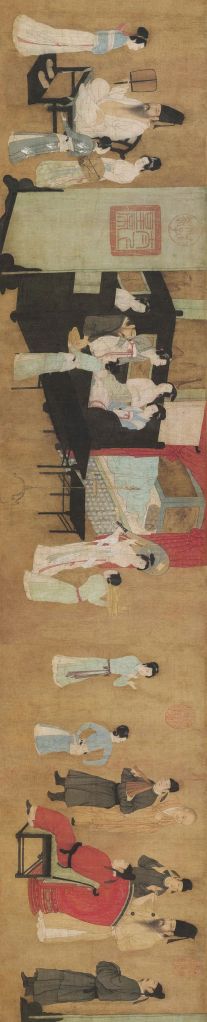
(photo: Wikimedia Commons)
As of 2006, the Forbidden City Museum has bought back more than 50,000 relics and received more than 30,000 as donation, including Consoling Letter calligraphy model (《平复帖》) by Lu Ji of Western Jin and On the Terrace calligraphy model (《上阳台帖》) by Li Bai of Tang.
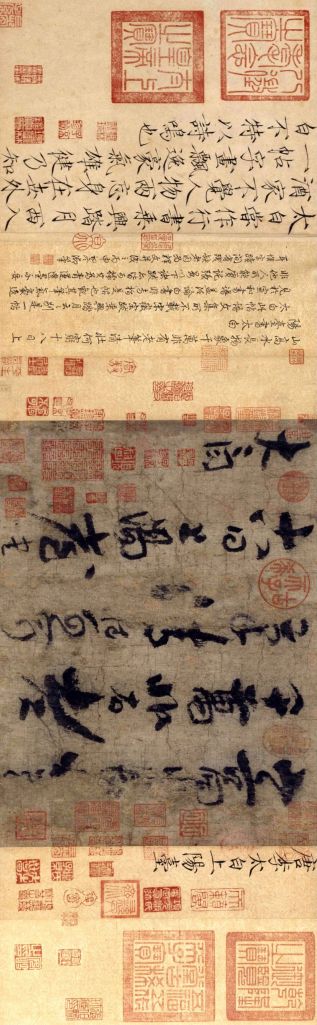
(photo: Wikimedia Commons)
Today, 41.98% of all the grade-one to three cultural relics kept by the National Cultural Heritage Administration are exhibited in the Forbidden City, transforming the latter into a Sea of Relics. Currently, the Forbidden City Museum is accommodating 50,000 visitors every day.
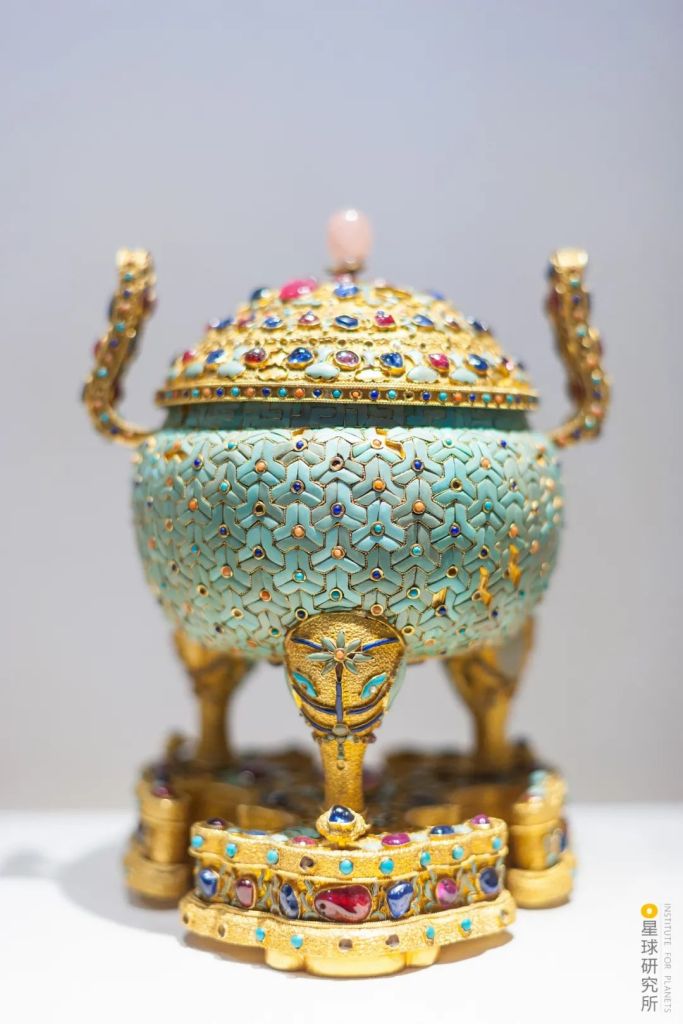
Desktop incense burners were used to show elegance in ancient times
(photo: 柳叶氘)
What is the Forbidden City to us?
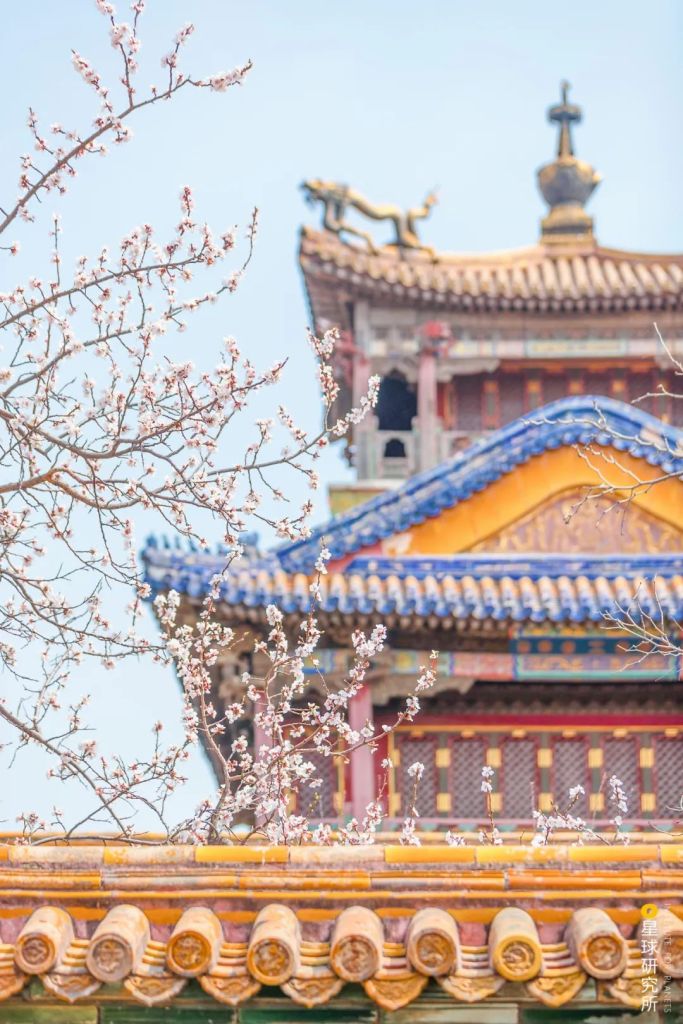
It is the imperial residence for 24 emperors in the past 600 years. It is the largest and best preserved palace complex in the world. It is also an exhibition gallery for more than 1.8 million pieces of precious relics.
(photo: 柳叶氘)
Every person has a different answer to this question.
To me, Forbidden City is a smear of vivid crimson.
It is not just a lofty palace, but also the originating stream of cultural heritage that flows in the blood of every Chinese person.
Emperors and generals, kings and ministers are but mere visitors; and dynasties shall all eventually perish. But the cultural heritage borne by the Forbidden City till this day shall be passed on for generations.
We have to understand it.
We need to discover it.
We should pass it on.
Because we are Chinese.
Production Team
Text: 李张子薇
Photos: 谢禹涵
Maps: 陈志浩
Design: 张靖
Review: 撸书猫、张靖
Feature photo: 李若渔
Expert review
Prof Jia Jun (School of Architecture, Tsinghua University)
References
[1] 于倬云. 紫禁城宫殿[M].人民美术出版社, 2013.
[2] 阎崇年. 大故宫[M]. 长江文艺出版社, 2012.
[3] 赵广超. 大紫禁城——王者的轴线[M]. 紫禁城出版社, 2008.
[4] 周苏琴. 建筑紫禁城[M]. 故宫出版社, 2014.
… The End …

星球研究所
一群国家地理控,专注于探索极致风光
 K in the clouds