
Since several years ago, fairy-like characters from Chinese historical TV drama started walking out of the screens.
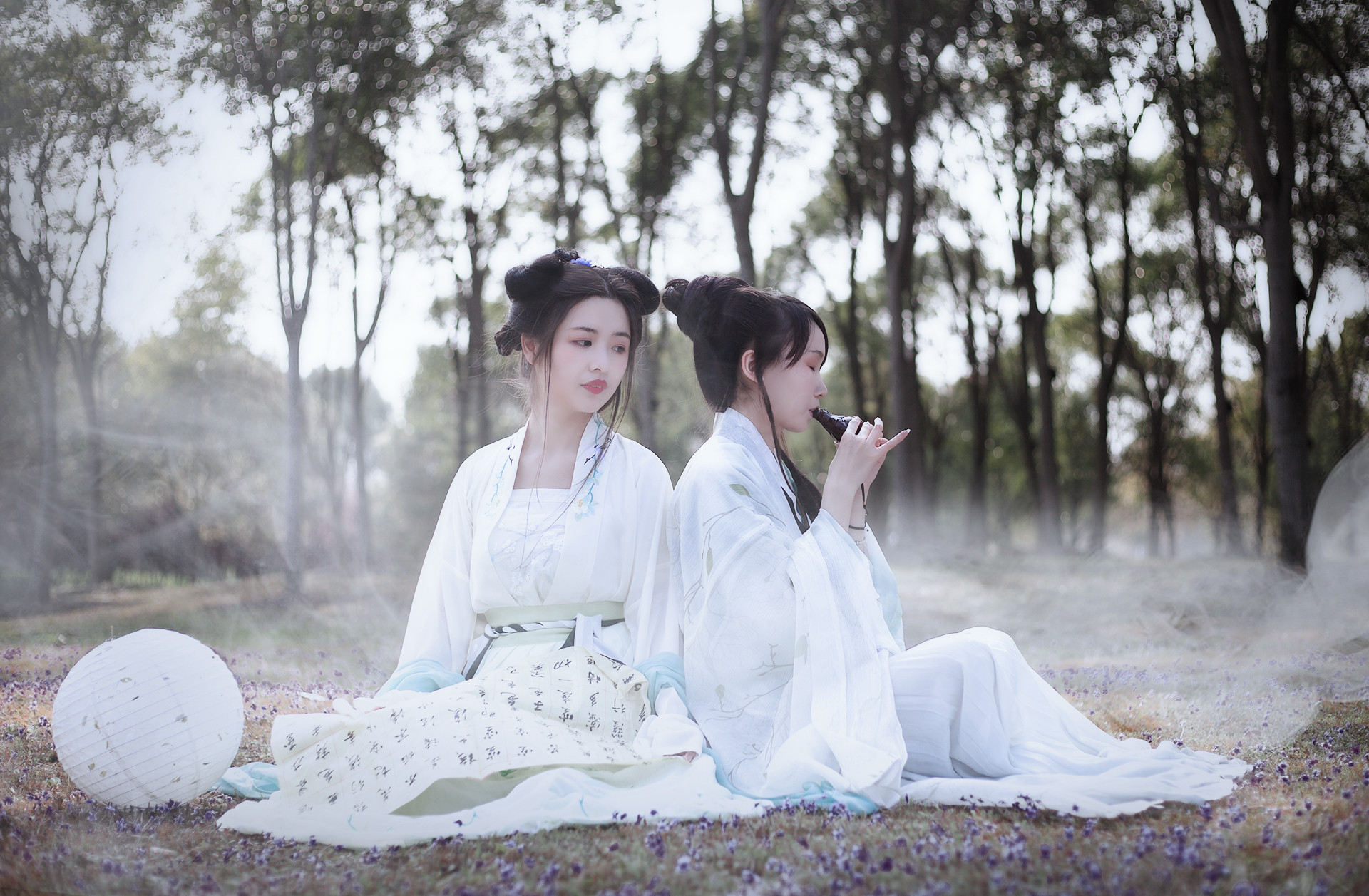
I wish.
If you see one on the streets in China, they are probably just cosplayers or models dressed in ‘hanfu‘ getting ready for a photoshoot.
I am always fascinated by the beauty of hanfu, and have done some pencil sketches for several common hanfu styles back in a while. When I occasionally share them with my friends, I do receive curious questions, but more often see misconceptions.
So, before sharing my sketches below, I thought I will write something about hanfu to clear some common misunderstandings.
Hanfu – what is it really?
Donning long silky robes with swaying sleeves and sweeping skirts has become a trendy activity for many hanfu lovers in what is now known as the Hanfu Movement.
Literally translated as ‘Han clothings’, hanfu (漢服) is a broad collection of historical Han Chinese clothings documented since as early as the Shang Dynasty (~1600 BC – 1046 BC) until the Ming Dynasty (1368 AD – 1644 AD). Some supporters of the Hanfu Movement are simply enchanted by the beauty of elegant garments, while others focus more on promoting ‘traditional Chinese culture’.
The movement has received criticisms, mostly on whether hanfu is merely a modern concept originating from fantasies. Indeed, the term ‘hanfu’ was never officially used in ancient times to describe any particular form of apparel. Nevertheless, clothing style was a big deal in ancient China, as it was closely associated with social hierarchy due to the heavy influence of Confucianism.
黃帝、堯、舜垂衣裳而天下治,蓋取諸乾坤
《周易•繫辭下》The Great Treatise II, Book of Changes
The above quote from the Book of Changes asserts that ancient emperors, including the Huang Emperor, Yao the Great and Shun the Great, established orders all under heaven following the introduction of solemn attires, i.e. upper (衣) and lower garments (裳), which kept to the principles of Yin and Yang. In other words, ancient scholars believed that etiquette (proper clothings) and social order (rules of the nature) are the pillars of a civilisation.
Owing to the significant implications of ancient clothings throughout Chinese history, historians have done rigorous research on their classification and development, as well as how they were influenced by foreign culture. There seemed to be an established system with elaborate rules supported by substantial historical evidence. Perhaps all they lacked was just a proper name.
Qing Dynasty – the ‘gap’
But how was the custom of wearing hanfu lost?
No one is entirely sure. Many believed when the Manchus ruled China during the Qing Dynasty (1644 AD – 1912 AD), they introduced an entirely different system for clothings. Arguments against this view maintain that the Manchus simply modified the traditional hanfu, because they just did not have the repertoire of clothings for a nationwide reform. Being harshly referred to as invading barbarians then, they hoped to establish legitimacy in their governance and ethnic superiority. On one hand, they made extensive adjustments and additions to hanfu, while propagating the view that these variants had a distinct origin. On the other, the queue hairstyle was forced on all Chinese men by brutal laws. While the former slowly dissolved away the concept of hanfu over 250 years or so, the latter abruptly destroyed the Confucian teachings linking hair and body maintenance with filial piety and clothing etiquette.
After the Qing government was toppled, clothings in China underwent several phases of transitions, driven both by continued modification of the Manchu style as well as Western culture. The well-known qipao (旗袍, Banner gown), invented only in the 1920s, was partially based on costumes of previous Manchu administrators, also known as the Banner People. Variants of Banner clothings are still widely accepted as wedding gowns among Han Chinese today, among other styles.
Another example is the Chinese tunic suit, which is also called the Zhongshan suit (中山裝) after the founder of Republic of China, Sun Yat-set. Proposed to be the national dress for men, it was based on Japanese cadet uniform and designed to be a counterpart for Western business suit.
In a way, the Hanfu Movement can be seen as an effort to revive the traditional Han clothings, but skipping those worn in the Qing era which it does not recognise as Han. The appropriateness is of course open to debate.
Ok, that was a brief background for hanfu and its recent revival among the Chinese community. And finally, here come my sketches!
Ruqun (襦裙)
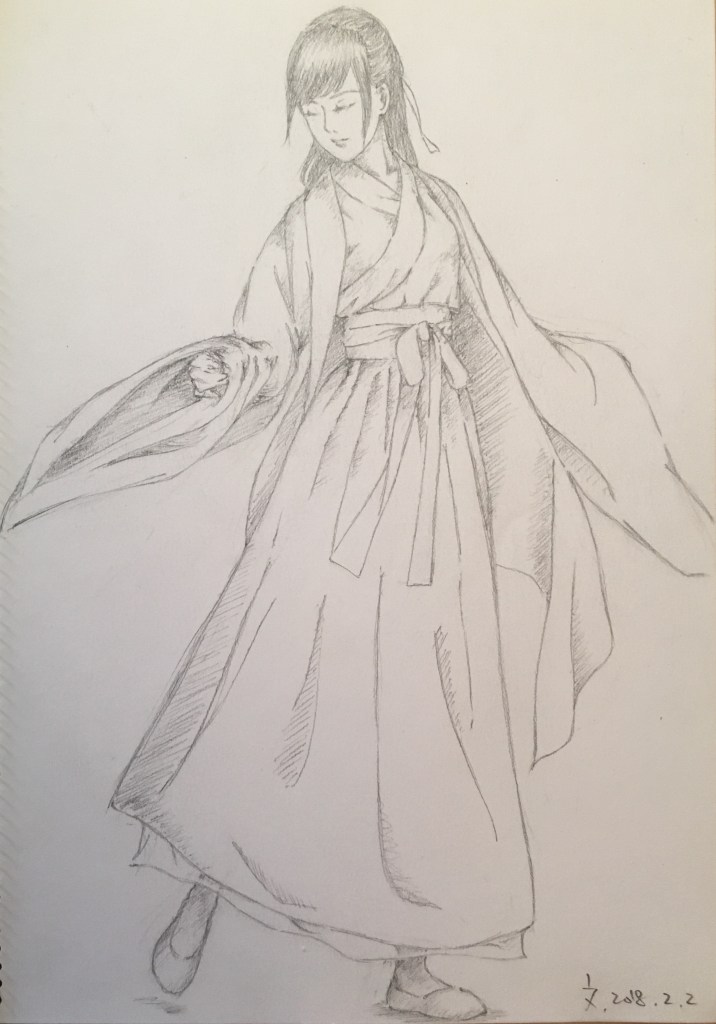
The sketch above shows a girl in ruqun. One of the oldest types of hanfu, it is the classic combination of an upper and a lower garment (上衣下裳), as quoted in the Book of Changes. It consists of a ru (襦, blouse) and a long wrap-around qun (裙, skirt). Depending on the waist height of the skirt, ruqun can be divided into qiyao (齊腰, at the waist) or qixiong (齊胸, high-waisted/above the chest). This girl here is wearing a qiyao ruqun, which is secured by a lengthy sash around the waist. Putting on the lightsome beizi (禙子, coat) with loose and wide sleeves makes the dress more flowing in the breeze.
This dress may look familiar to some.

Yes! Doesn’t it look similar to the miko’s attire which is very popular in the Japanese anime culture? The ruqun is believed to have influenced the initial design for the Japanese dress, although the modern form of the latter was established in the Meiji Era (1868 AD – 1912 AD).
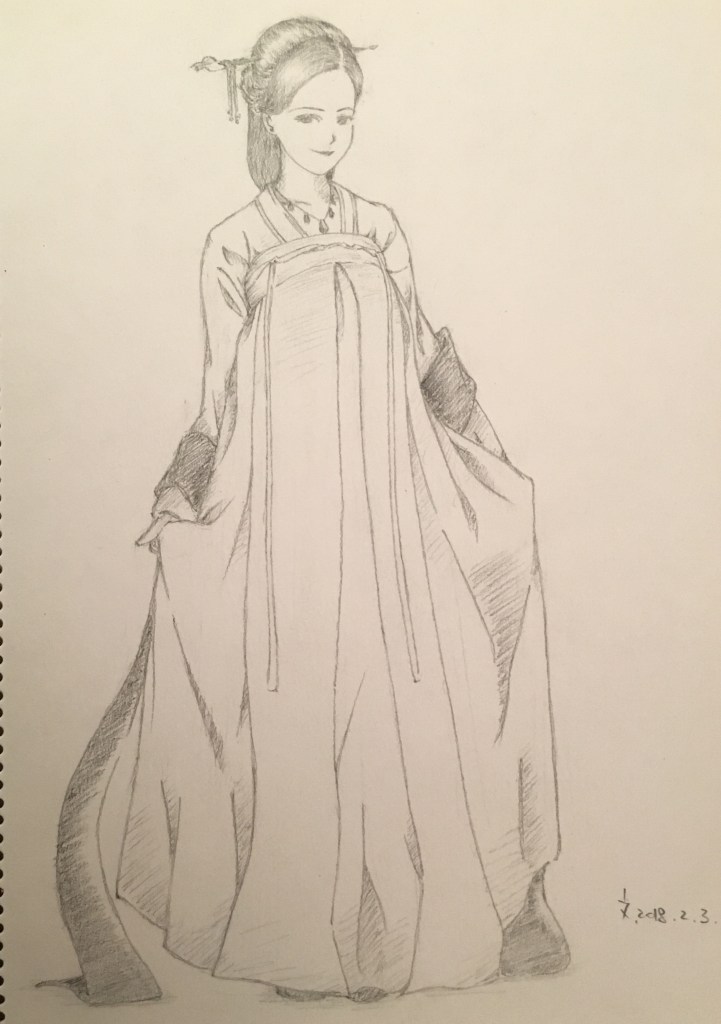
The above sketch shows the qixiong (high-waisted) variation of ruqun, which was very popular in the Tang Dynasty (618 AD – 907 AD). With the prospering economy and constant influx of foreign culture, the society was more relieved from the Confucian codes of traditional manners. Women’s dresses started to become more relaxed and sometimes revealing. Ancient paintings have suggested that the blouse for qixiong ruqun was sometimes replaced with a see-through top or even completely removed. Also more affordable back then were the decorative accessories, like the pibo (披帛, shawl) draping around the lady’s arms in the sketch.
Managing the hairstyle according to the traditional protocol is a form of propriety for both men and women in a Confucian society. The hairdo in the sketch shows a typical style of young single ladies eligible for marriage, as indicated by the zan (簪) pinning the combed hair.
Shenyi (深衣)
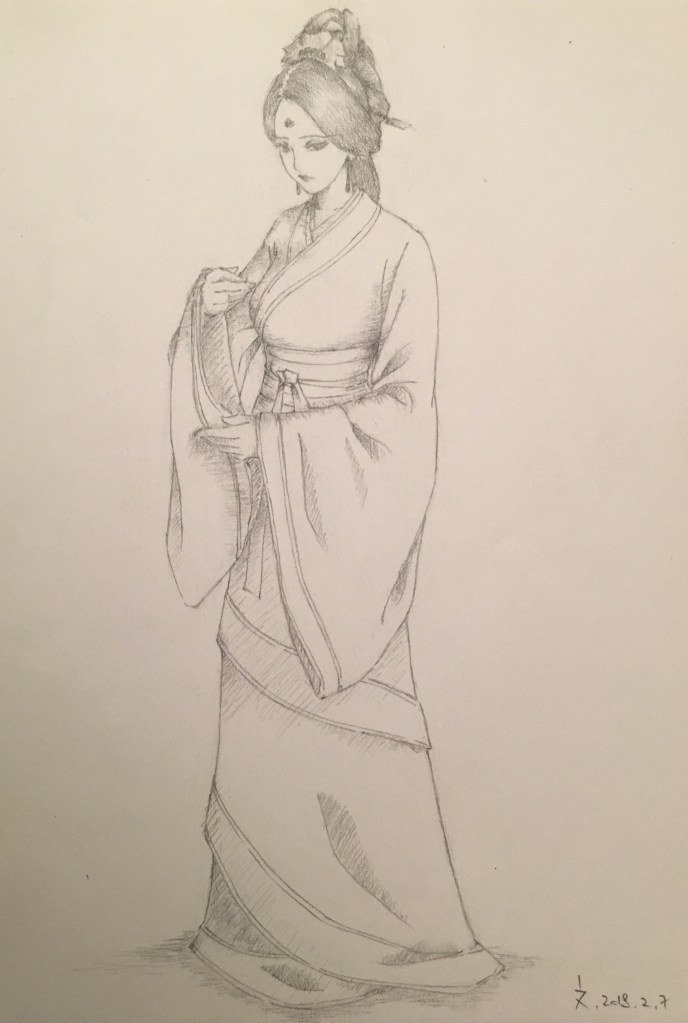
Quju (曲裾, curved-front lapel garment) is a type of shenyi in which the blouse and the skirt are sewn together into a long robe. It is believed to have existed prior to the Qin Dynasty (221 BC – 206 BC). With an extended lapel, the diagonal wrapping of the robe confers elegance and implicitness by providing extra coverage for shoes as well as movements of the lower body.

On the contrary, zhiju (直裾, straight lapel garment) is a simplified version of the quju with a straight cut robe. Beneath the waist belt, the lapel runs down vertically on the side or behind the back. Lacking the neat coverage as in quju, it was regarded as inappropriate for outdoor activities before trousers and underskirts with improved design finally reached the wardrobes.
Conical hats made from bamboo fibre, as shown here, made its first appearance in the Classic of Poetry, which comprises of works produced between the 11th and 7th centuries BC.
爾牧來思,何蓑何笠
In bamboo hat and straw cape you would come over for cattle grazing
《詩經·小雅》Lesser Court Hymns, Classic of Poetry
The stern-faced lady in the sketch is my impression of noble heroines from classic Chinese Wuxia (武俠, martial heros) novels.
Now, again, does anyone feel like they have seen zhiju somewhere before? Well, not surprising.
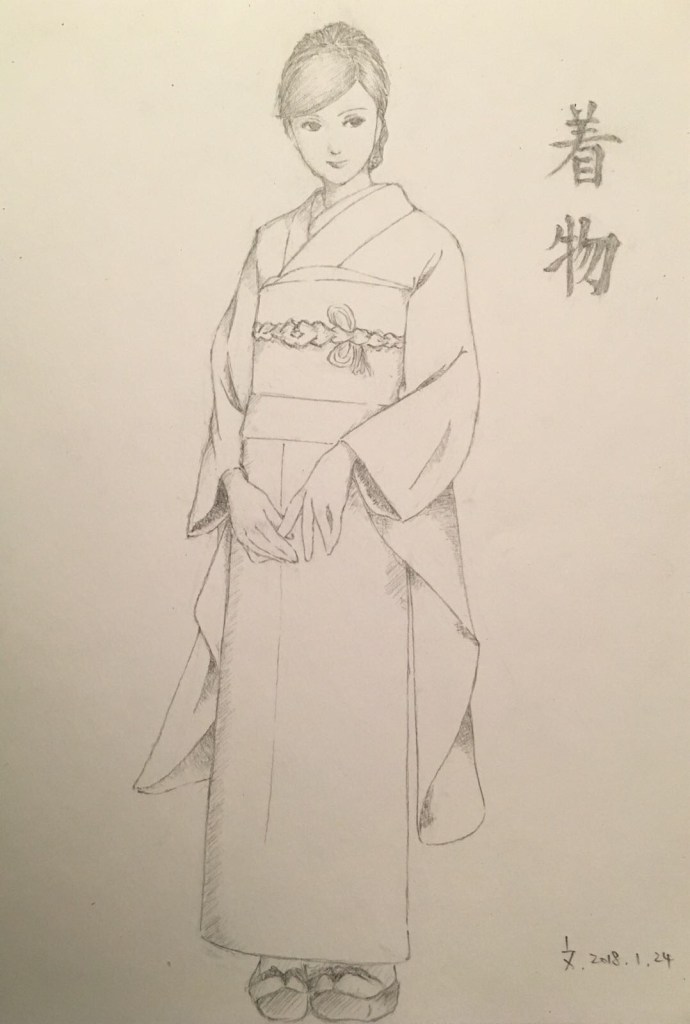
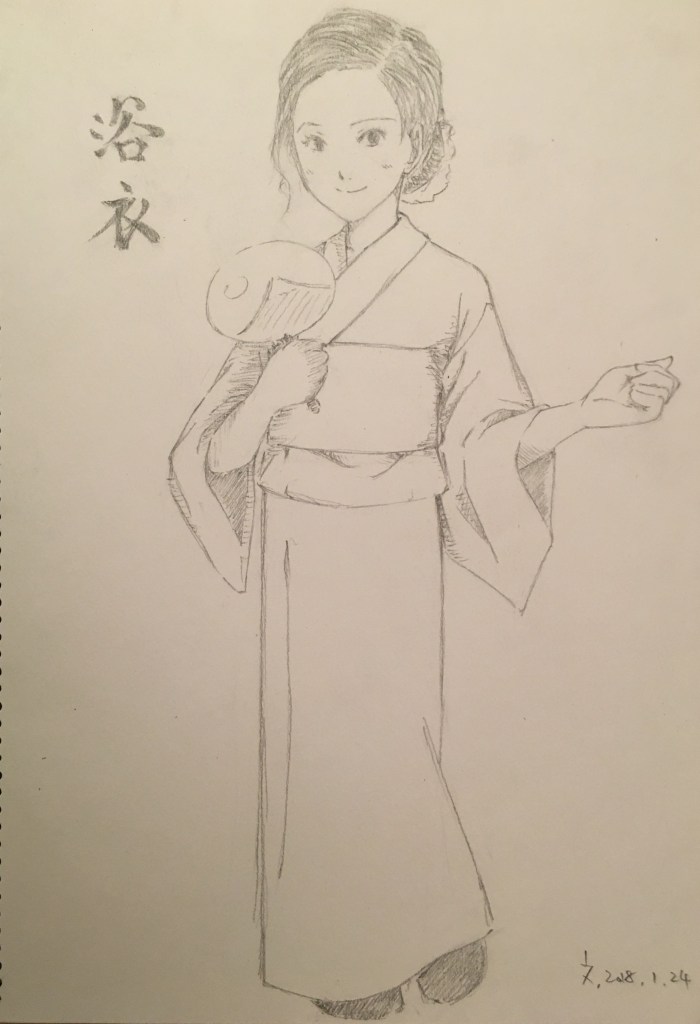
Wafuku (和服)! Also displaying the characteristic straight cut, it was heavily influenced by hanfu during the Three Kingdoms period (220 AD – 280 AD) as well as the Tang Dynasty. Towards the end of the Ming Dynasty, Chinese weaving technologies for various fabrics including brocade and satin were also very popular in Japan. But unlike hanfu, the traditions of wafuku are well-preserved till this day.
Aoqun (襖裙)

Aoqun is a variation of ruqun that diverged since and became popular in the Ming Dynasty. Instead of a longer ru (blouse) to be tugged into the skirt, it consists of a waist length ao (襖, lined coat).
Cuffed sleeves and pleated skirt were a common match for aoqun. The skirt in this sketch is known as the mamian qun (馬面裙), literally meaning horse-face skirt. It has four skirt doors in total at the front and the back with pleats on the side. These skirt doors allow more leg movement without much opening of the skirt, making it a pragmatic choice to match with the convenient cuffed sleeves.
Aoqun also prevailed in China during the Republic period in the first half of the 20th century. School uniforms back then are still one of the all-time favourites today.
But wait, we have definitely seen this so-called aoqun elsewhere, probably Korea?
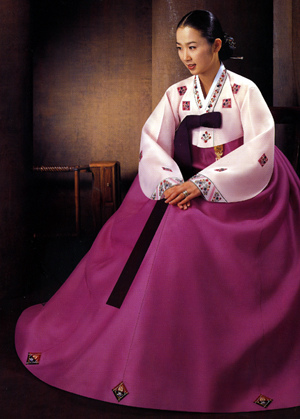
Bingo. Sharing the same lineage with aoqun since the Ming Dynasty, hanbok (한복) is widely worn today for a range of traditional occasions in Korea. To distinguish between aoqun and hanbok, look at the collar. While aoqun retains the classic Han-style left-over-right cross-collar with a concealed xidai (繫帶, coat lace) under the right arm, hanbok has a symmetrical Y-shaped collar with a goreum (고름, coat ribbon) tied with a half-bow knot right underneath.
Remarks
Hope you have enjoyed the assortment of hanfu according to the modern definition. The Hanfu Movement is still very young and, hopefully with increasing awareness and discussions supported by more in-depth research, the controversies will eventually be resolved.
One thing worth mentioning is that all the above are traditional clothings for just one ethnic group in China, out of a total of 56! So please remember that hanfu by no means represent the clothing culture of the entire Chinese people.
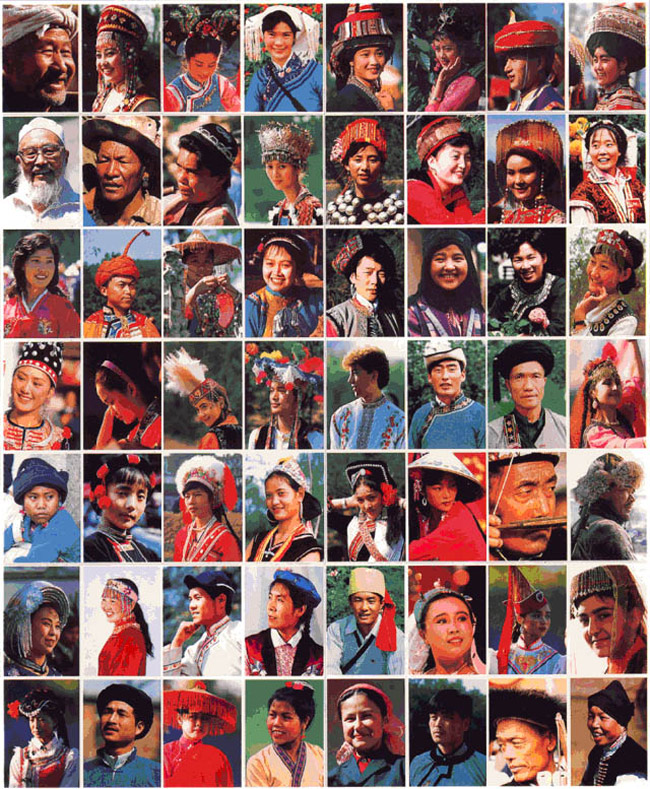
It is also my wish to do sketches for traditional clothings for all the ethnic groups in China. One day…
 K in the clouds